Weather & Climate

Nor’easter threatens 12 states, 80M people with blizzard conditions

Feb. 21 (UPI) — Blizzard conditions are anticipated across a dozen states, from the Mid-Atlantic to New England, with coastal areas especially vulnerable amid a severe weather outlook.

Communities situated near the Atlantic Ocean’s shoreline are most vulnerable to severe winter weather. Some of the nation’s largest cities, including Philadelphia, New York and Boston, are located well within areas that could experience major winter storm conditions.

Those conditions include a blizzard caused by a powerful offshore low-pressure system that is producing high winds and heavy snowfall near its outer edges while centered off the Eastern Seaboard.

Blizzard warnings are in effect into Monday along coastal areas, from New Jersey and Delaware to the southern New England states.

New York City is subject to its first blizzard warning since 2017, and the city’s iconic Central Park could see its first snowfall total of more than 12 inches in at least five years.

Locations situated east of Interstate 95 and between Philadelphia and New York City are expected to see the most snowfall, which would make road travel dangerous.

Forecasters said at least a foot of snow could cover the ground in Philadelphia, New York City and Boston, along with other communities, and affect flights at airports in those locales and others that lie within the winter storm’s path.

Baltimore and other cities in the Mid-Atlantic are predicted to get several inches of snow, and a high potential for power outages exists anywhere affected by the winter storm system that packs winds capable of gusting to 40 mph and more.

The nor-easter’s strong winds also will increase the storm surge that could cause localized flooding in coastal areas from Delaware and New Jersey to southern New England throughout Sunday and into early Monday morning.

The low-pressure system was located off the coast of the Carolinas on Saturday afternoon and is projected to move to the northeast through Sunday, leaving heavy, wet snow and high winds in its wake.

Those who have flights scheduled should pay close attention to likely delays and cancellations that might affect their respective travel schedules.

Actress Michelle Yeoh sits beside her star during an unveiling ceremony honoring her with the 2,836th star on the Hollywood Walk of Fame in Los Angeles on February 18, 2026. Photo by Jim Ruymen/UPI | License Photo

Source link

1M subject to fire watch as Oklahoma fires continue

Feb. 20 (UPI) — Wildfires have burned more than 300,000 acres in the Oklahoma and Texas panhandles, and more than a million people in the region were under a fire watch Friday.

No deaths were reported, but several structures have been damaged or destroyed in Oklahoma’s Panhandle, where a 283,000-acre Ranger Road Fire was 20% contained as of Friday morning, KFOR reported. That fire spread into parts of southwestern Kansas.

The Stevens Fire, 12,428 acres, and the Side Road Fire, 3,680 acres, in Oklahoma’s Texas County were 60% and 75% contained, respectively as of Friday morning.

The Poor Farm Fire in Latimer County was 10% contained after burning some 9,000 acres.

Among other significant fires, the 43 Fire in Woodward County has burned 1,680 acres and was 60% contained, while the 1,400-acre Rattlesnake Fire in Osage and Washington counties was only 30% contained.

Other active fires are the 182-acre Hospital Road Fire in Carter County, which was 40% contained; the 242-acre 615 Fire in Cherokee County, which was 70% contained; and the 126-acre Chelsea Fire in Rogers County, which was 60% contained.

Warm, dry and windy conditions in the area triggered the fires, and Oklahoma Gov. Kevin Stitt on Tuesday declared states of emergency for Woodward, Beaver and Texas counties.

Many residents have evacuated those counties, and a significant fire danger remains in Texas and Cimarron counties in the Panhandle region.

Local forecasters said cooling temperatures and lessening wind speeds are expected to reduce the threat of the fires spreading, but wind speeds of between 25 mph and 35 mph, with gusts of up to 60 mph, continued on Friday morning.

Source link

75% of global coffee supply faces rising extreme heat, analysis says

Climate Central’s researchers found in a new analysis that heat threatens coffee harvests and coincides with recent record highs in prices. File Photo by Fully Handoko/EPA

Feb. 18 (UPI) — An analysis by Climate Central found that the world’s five largest coffee-producing countries, which account for 75% of global supply, are experiencing an average of 57 additional days of extreme heat per year due to climate change.

Its researchers found that heat threatens coffee harvests and coincides with recent record highs in prices.

Climate Central, based in Princeton, N.J., is an independent group of scientists and communicators who research and report the facts about climate change and how it affects people’s lives.

The analysis, released Wednesday, examined daily temperatures between 2021 and 2025 in 25 countries that represent 97% of global production. The report concluded that all of them recorded more days of harmful heat as a result of environmental warming attributed to greenhouse gas emissions.

The two main varieties that supply the global market are arabica and robusta.

Arabica accounts for between 60% and 70% of global supply and is grown mainly in mountainous regions of Latin America and Africa, where moderate temperatures have historically prevailed.

Robusta, which is more heat-tolerant but has a stronger flavor, is produced largely in Southeast Asian countriesm such as Vietnam and Indonesia.

Coffee is cultivated in a tropical belt stretching across Latin America, Africa and Southeast Asia, where it requires specific temperature ranges and consistent rainfall.

Temperatures above 86 degrees F are considered extremely harmful for arabica and suboptimal for robusta, as they reduce yields and can affect bean quality.

The analysis was published after a period in which the planet recorded the warmest years since modern measurements began, with episodes of extreme heat in Latin America.

According to Climate Central, this warming increased the frequency of days exceeding the critical 86-degree threshold in coffee-growing regions.

Brazil, the world’s largest producer and responsible for nearly 37% of global supply, experienced an average of 70 additional days per year with temperatures above 86 degrees. In Minas Gerais, its main coffee-producing state, 67 of these extra days were recorded.

Colombia, the world’s third-largest producer and one of the leading exporters of arabica coffee, recorded 48 additional days per year above the critical threshold. The increase threatens productivity and bean quality, the foundation of its international competitiveness.

Some of the sharpest increases were observed in Central America. El Salvador recorded 99 additional days of extreme heat per year and Nicaragua 77, according to the report.

“Nearly all major producing countries are now experiencing more days of extreme heat that can damage plants, reduce yields and affect quality,” said Kristina Dahl, vice president for science at Climate Central.

“Over time, these impacts can extend from farms to consumers, directly affecting the quality and cost of their daily coffee.”

According to the World Bank, its beverage price index rose 58% in 2024 and in December remained approximately 91% higher than a year earlier, driven by increases in coffee and cocoa amid supply concerns.

In December, the price of arabica coffee rose 13% compared with the previous month and more than 60% year over year, while robusta more than doubled compared with the same period the previous year.

Source link

California reaches clean energy agreement with Britain, Trump critical

Feb. 16 (UPI) — California Gov. Gavin Newsom announced an agreement with Britain on Monday that will bring $1 billion in investments into his state.

The climate agreement sets a framework for British companies to expand their access to California’s market and for cooperation on decarbonization and clean energy technology.

British energy company Octopus Energy is among the companies that will expand its access in California. It has committed nearly $1 billion to clean energy companies and projects based in California. Newsom announced the partnership after meeting with British Energy Secretary Ed Miliband in London.

“California is the best place in America to invest in a clean economy because we set clear goals and we deliver,” Newsom said in a statement.

“Today, we deepened our partnership with the United Kingdom on climate action and welcomed nearly a billion dollars in clean tech investment from Octopus Energy. California will continue showing the world how we can turn innovation and ambition into climate action.”

Newsom visited Octopus Energy’s headquarters in London during his trip.

California has climate agreements with several countries around the world. During the 2025 United Nations Climate Change Conference, it entered new partnerships with Chile, Colombia, Nigeria and Brazil.

President Donald Trump criticized the new agreement between California and Britain on Monday, saying it was “inappropriate” for the two sides to be working with each other.

“The worst thing that the U.K. can do is get involved in Gavin,” Trump told POLITICO. “If they did to the U.K. what he did to California, this will not be a very successful venture.”

The Trump administration has rolled back federal climate-focused initiatives, most recently eliminating greenhouse gas emissions standards.

Source link

Trump administration eliminates greenhouse emission standards for vehicles

1 of 3 | President Donald Trump speaks alongside Administrator of the Environmental Protection Agency Lee Zeldin in the Roosevelt Room of the White House in Washington, D.C., on Thursday. The Trump Administration announced the finalization of rules that revoke the EPA’s ability to regulate climate pollution by ending the endangerment finding that determined six greenhouse gases could be categorized as dangerous to human health under the Clean Air Act and repealing rules that regulate greenhouse gas emissions from vehicles. Photo by Will Oliver/UPI | License Photo

Feb. 12 (UPI) — The Trump administration announced an end to greenhouse gas emission standards for all vehicles made in model year 2012 or later Thursday.

The administration revoked the 2009 Greenhouse Gas Endangerment Finding and all other emission standards related to greenhouse gases. The U.S. Environmental Protection Agency said in a press release that the move will save taxpayers $1.3 trillion.

“The Endangerment Finding has been the source of 16 years of consumer choice restrictions and trillions of dollars of hidden costs for Americans,” Lee Zeldin, EPA administrator, said in a statement.

Zeldin was joined by President Donald Trump for the announcement in the Roosevelt Room of the White House.

The Greenhouse Gas Endangerment Finding set the legal basis for regulating pollution tied to climate change as part of the Clean Air Act, the primary federal air quality law enacted in 1963.

Climate advocates and lawmakers sounded the alarm about the decision, gathering outside of the EPA headquarters in Washington, D.C., on Wednesday.

“This is corruption, plain and simple,” Sen. Sheldon Whitehouse, D-R.I., said at the gathering. “This is an agency that has been so infiltrated by the corrupt fossil fuel industry that it has turned an agency of government into the weapon of fossil fuel polluters.”

Critics of the Trump administration’s rollback on greenhouse gas emission regulation say it may lead to trillions in costs for climate damages and healthcare.

Manish Bapna, president of the Natural Resources Defense Council, said Wednesday that her organization will take legal action.

Thursday’s move follows Trump signing an executive order on Wednesday directing the Pentagon to purchase coal-fired electricity in an effort to boost domestic coal production.

President Donald Trump speaks alongside Administrator of the Environmental Protection Agency Lee Zeldin in the Roosevelt Room of the White House on Thursday. The Trump administration has announced the finalization of rules that revoke the EPA’s ability to regulate climate pollution by ending the endangerment finding that determined six greenhouse gases could be categorized as dangerous to human health. Photo by Will Oliver/UPI | License Photo

Source link

EPA to end ‘endangerment finding’ and funding for climate change

Feb. 10 (UPI) — Officials for the Environmental Protection Agency said they are working to end a 2009 declaration that says climate change is a danger to public health.

During the weekend, EPA officials submitted to the Office of Management and Budget a proposed rule revoking the 2009 endangerment finding that guided U.S. climate and greenhouse gas regulations.

The EPA did not say when the endangerment finding officially would be revoked, but White House press secretary Karoline Leavitt suggested it would happen this week.

“This week at the White House, President [Donald] Trump will be taking the most significant deregulatory actions in history to further unleash American energy dominance and drive down costs,” Leavitt said in a prepared statement.

Revoking the endangerment finding removes the EPA’s statutory authority to regulate motor vehicle emissions that was provided via Section 202(a) of the Clean Air Act of 1970, an EPA spokesperson told The Hill.

The endangerment finding is “one of the most damaging decisions in modern history,” the Leavitt said.

The Clean Air Act forces the EPA to regulate vehicle emissions that produce any pollutant that are reasonably thought to pose a danger to public health or welfare.

A 2007 Supreme Court ruling determined that greenhouse gas emissions that are thought to contribute to global warming meet the standard for air pollutants that require regulation due to their potential for harming public health.

The Obama administration in 2009 issued the endangerment finding for greenhouse gas emissions, which the prior Supreme Court ruling said requires the EPA to regulate them.

The EPA that year decided that greenhouse gas emissions likely would cause widespread “serious adverse health effects in large-population areas” due to increased ambient ozone over many areas of the United States.

“The impact on mortality and morbidity associated with increases in average temperatures, which increase the likelihood of heat waves, also provides support for a public health endangerment finding,” the EPA said in its endangerment finding.

“The evidence concerning how human-induced climate change may alter extreme weather events also clearly supports a finding of endangerment,” the EPA said, while acknowledging that the conclusion was based on “consensus.”

The finding said carbon dioxide, methane and other greenhouse gases are fueling storms, drought, heat waves, wildfires and rising seas, which pose a threat to public health.

Because the finding determined emissions from the burning of coal, gas and oil were said to contribute to climate change, the EPA undertook regulations of power plants, vehicles and other sources of greenhouse gas emissions, including gas stoves, ovens, water heaters and heating systems.

Revoking the endangerment finding ends those regulations, which could be reversed if a future administration reinstates the finding.

Source link

Arctic blast freezes East Coast from Virginia to Miami

Snow, ice and freezing temperatures have blanketed the Eastern half of the United States for the last week — including US 75 north of Dallas — bringing extreme winter weather to parts of the country, including the Carolinas, Georgia and Florida, that do not generally experience it. Photo by Ian Halperin/UPI | License Photo

Feb. 1 (UPI) — Another blast of Arctic winter weather froze the East Coast, as temperatures farther north dropped below zero, the Carolinas were blanketed with snow and freeze warnings were issued as far south as Miami.

North and South Carolina were hit especially hard with nearly two feet of snow expected over the weekend and wind chills expected to be below zero from Virginia south to Georgia, but most of the Northeast region of the country will see its normal cold winter temperatures, the New York Times reported.

In addition to blizzard conditions in North Carolina, two major highways in Mississippi have remained closed because of icy conditions, power is out in some places and 16 people have died, while in Nashville tens of thousands of people were waiting for their electricity to be turned back on as a result of the massive winter storm.

In Florida, decades old records were broken as temperatures dropped below the 30s nearly everywhere in the state, WPLG reported.

According to weather reports, temperatures were as low as 30 degrees in parts of Miami-Dade County, Pembroke Pines in South Florida saw a wind chill of 24 degrees, Orlando broke a 90-year-old record as temperatures dipped below 30 degrees and snow flurries were seen as far south as Tampa.

The extended period of winter weather in places that normally do not expect it will continue into this week, although the Northeast — New York, New Jersey and Massachusetts, specifically — will see bitter cold continue but the chance for snow is expected to increase.

“Kpop Demon Hunters” stars, left to right, Audrey Nuna, Ejae and Rei Ami arrive on the red carpet for the Pre-Grammy Gala on the eve of the 68th Annual Grammy Awards in Los Angeles on January 31, 2026. Photo by Caroline Brehman/UPI | License Photo

Source link

Winter storm triggers states of emergency in N.C., S.C. and Georgia

Jan. 31 (UPI) — A northeasterly storm has created blizzard conditions in the Carolinas and triggered state of emergency declarations in North and South Carolina and Georgia on Saturday.

The intensifying storm system is centered over the Atlantic Ocean and near the Carolinas and Georgia coastline after its central pressure dropped by up to 40 millibars over the past 24 hours.

Hurricane-force wind gusts of between 60 mph and 80 mph are contributing to blizzard conditions along the Outer Banks coastal plains areas, and more than 10,000 flights have been canceled through the weekend.

The Hampton Roads area of Virginia also is getting pummeled with wintry weather from the storm system, and the National Weather Service has issued a winter storm warning through 7 p.m. EST on Sunday for the commonwealth’s coastal areas and parts of North Carolina.

The winter storm is delivering the most snow in two decades to areas that rarely see significant amounts of snowfall.

Icy road conditions caused hundreds of collisions as of Saturday afternoon, and wave action from the storm’s strong winds and a high tide is threatening to damage or destroy homes along the coast.

The National Weather Service is forecasting between 5 and 9 inches of snowfall and sustained winds of between 33 and 41 mph, with gusts up to 50 mph, along the coastal areas of the Carolinas and into neighboring areas in Virginia and northern Georgia.

The snowfall likely will end during the overnight hours, but northwest winds will remain strong, with sustained wind speeds of between 28 and 33 mph and gusts of up to 50 mph into Sunday afternoon.

Although windy, the clouds are predicted to clear during the afternoon hours.

Source link

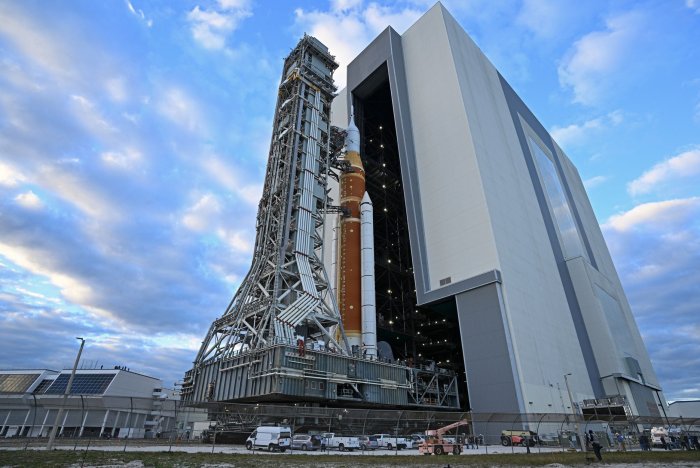
NASA delays Artemis II wet dress rehearsal citing weather

Jan. 30 (UPI) — Frigid temperatures have delayed NASA’s preparations for its wet dress rehearsal for the Artemis II launch, the space agency announced Friday.

NASA was expected to begin the tanking operation Saturday night in preparation for a possible Feb. 6 or Feb. 7 launch date, but those “are no longer viable opportunities,” a release said.

The agency now expects to set Monday as the tanking day with an earliest possible launch set for Feb. 8 at the Kennedy Space Center in Cape Canaveral, Fla.

Tanking operations involve loading propellants into a fuel tank near the launch pad. The outdoor temperature plays a crucial role in that process — it can’t be below 40 degrees Fahrenheit for more than 30 consecutive minutes. The overall average temperature must be above 41 degrees for the rehearsal and launch, WESH-TV in Orlando, Fla., reported.

AccuWeather forecasters said temperatures were expected to plummet this weekend to levels not seen since 1966 in some areas. Temperatures between 20 degrees to 30 degrees were expected Sunday morning in Cape Canaveral.

“Adjusting the timeline for the rest will position NASA for success during the rehearsal, as the expected weather this weekend would violate launch conditions,” a release from NASA said.

In the meantime, the Artemis II crew members are expected to stay in quarantine in Houston. The crew includes Reid Wiseman, commander; Victor Glover, pilot; Christina Koch, mission specialist; and the Canadian Space Agency’s Jeremy Hansen, mission specialist.

Artemis II is NASA’s first crewed mission aboard its deep space rocket, the Space Launch System, and Orion spacecraft. It’s the second flight of the SLS and the first crewed mission near the moon since 1972.

Over 10 days, Artemis II will travel around the moon and back to Earth as the crew tests whether the spacecraft operates as it should in deep space. The long-term goal of the Artemis program is reestablish a human presence on the moon in preparation for the ultimate aim of putting a human on Mars.

NASA has shared a live stream of the launch pad on YouTube as it prepares for the wet dress rehearsal launch.

Source link