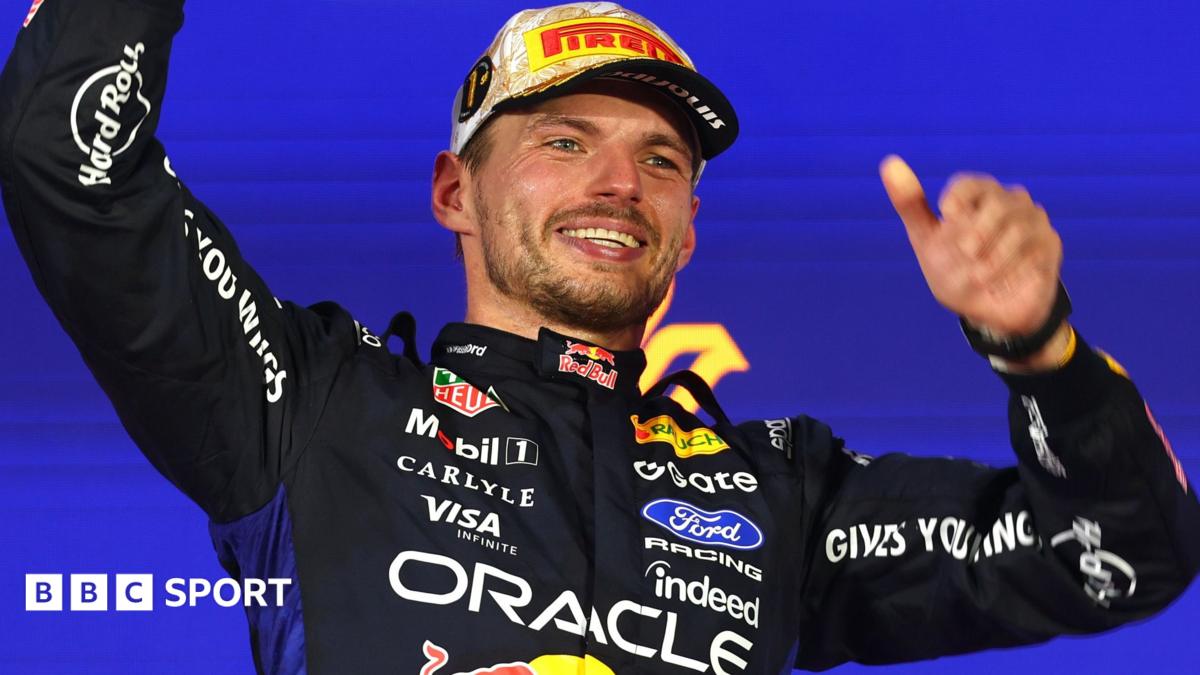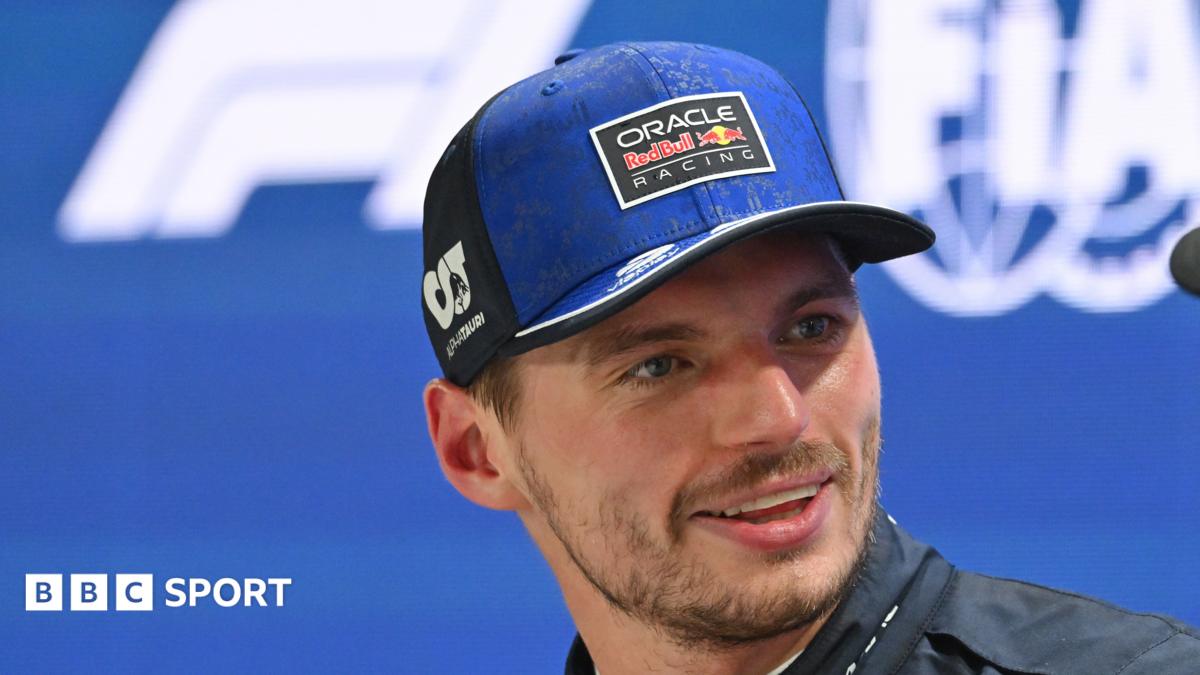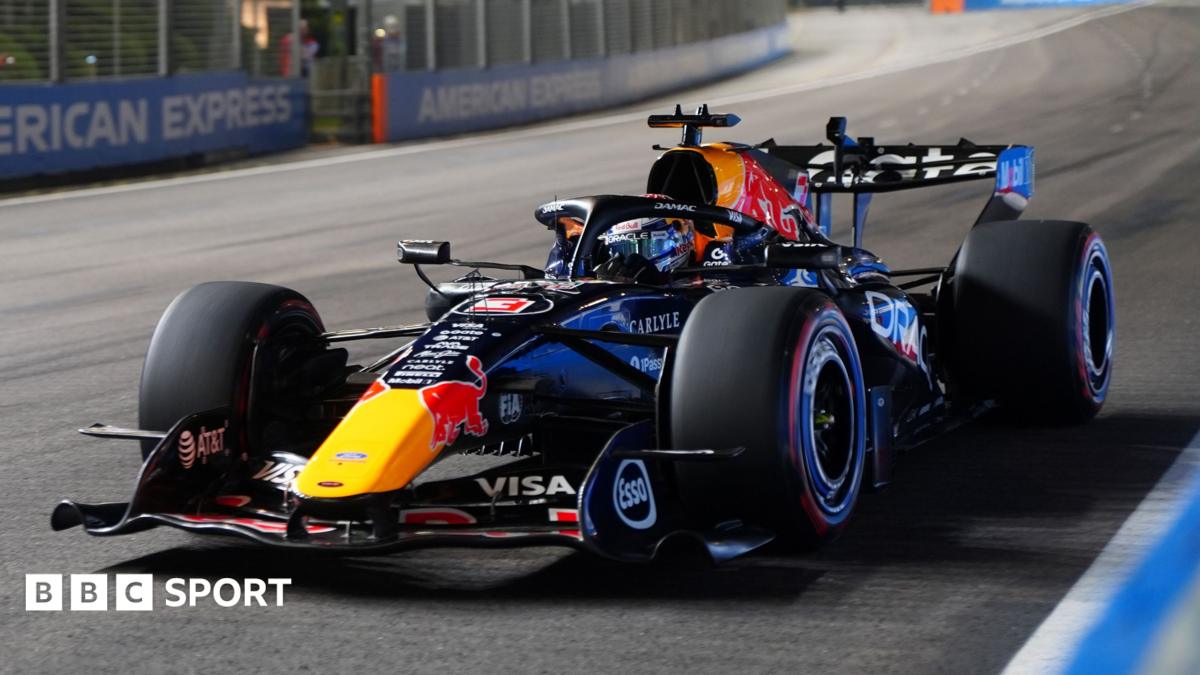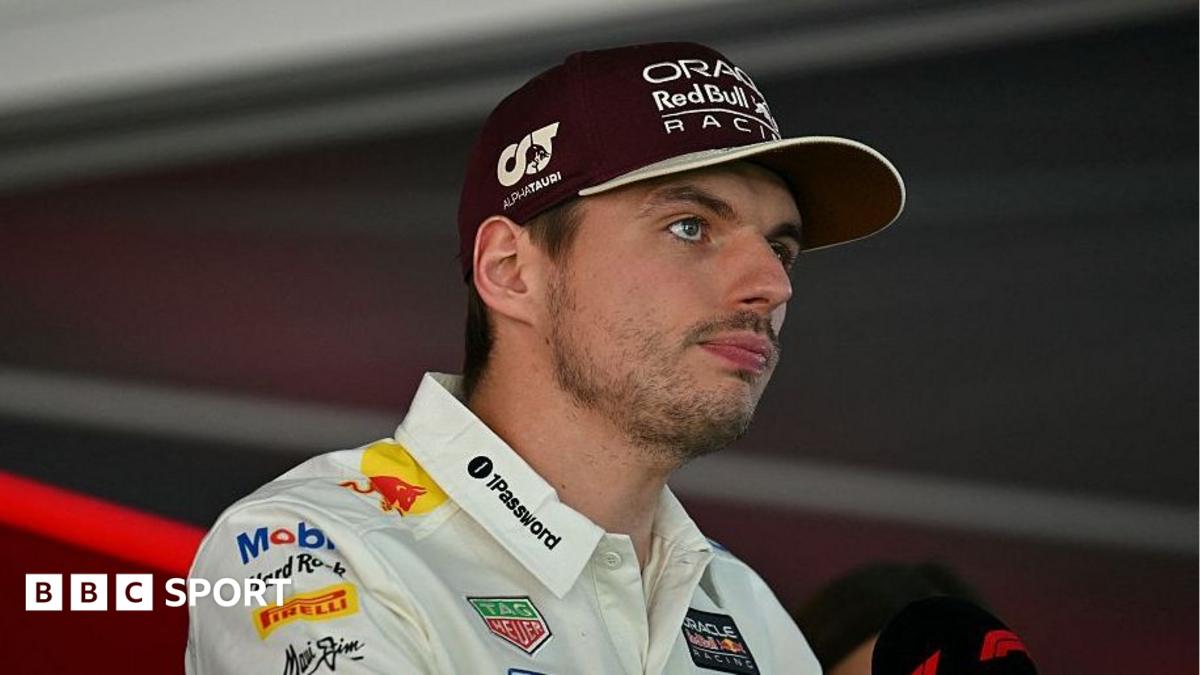
Verstappen

F1 Q&A: Safety-car finish, Verstappen contract, Hadjar and Red Bull

Charles Leclerc added a second win for Ferrari in three races at a dramatic British Grand Prix at Silverstone.

Mercedes’ George Russell finished second and Leclerc’s team-mate Lewis Hamilton third in their home race.

Kimi Antonelli, who won his first sprint on Saturday, ended the race in 16th after car problems, reducing his lead over Russell to 25 points.

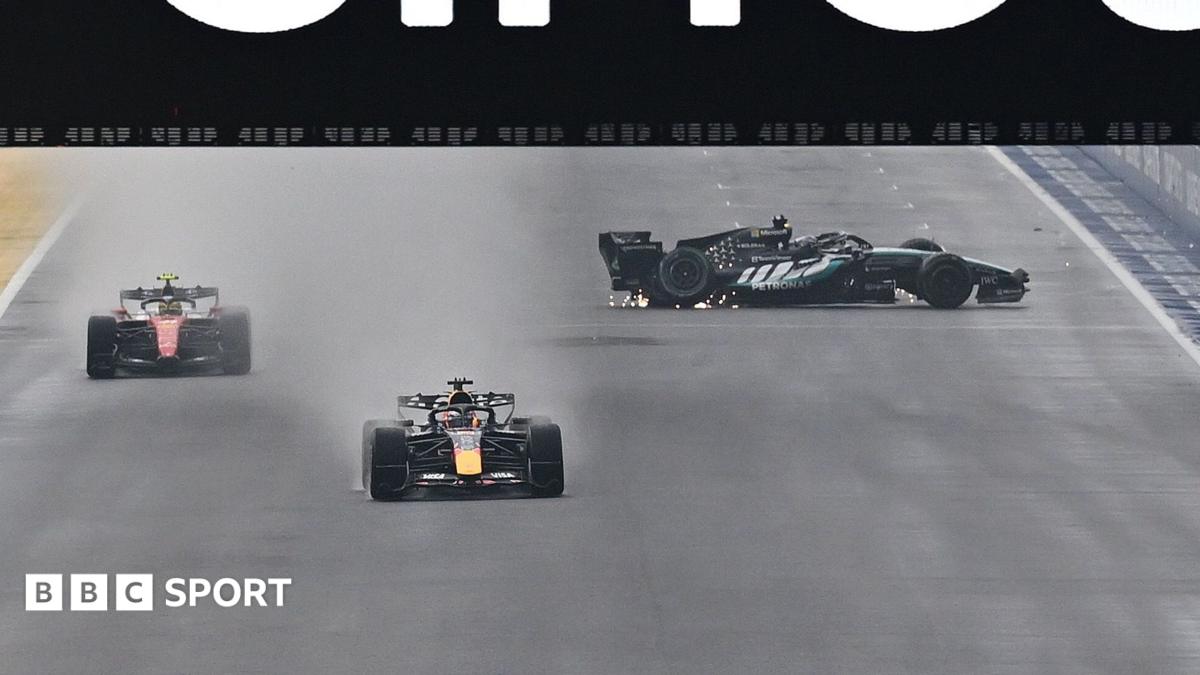
BBC F1 correspondent Andrew Benson answers your latest questions after a race which finished under the safety car after Max Verstappen crashed out.

Did Formula 1 miss a trick with the ending of the British GP? Should they be looking at what happened in a similar situation at this year’s Indy 500? To avoid finishing behind the safety car, they red-flagged the race to enable recovery before then restarting the race and finishing under green-flag conditions – Matthew

This is one of those situations where everyone has their own opinion, each view has its validity, but F1 as a sport has agreed a certain approach based on the lessons of the past.

In an ideal world, it would be better in terms of entertainment if races did not finish under a safety car. It can be argued that it is anti-climactic.

At the same time, it’s hard to argue that the British Grand Prix lacked drama and excitement, notwithstanding the fact that it ended under caution.

Take a step back, and the issue here is the regulations around the safety car and its operation.

These have been built up over many years and developed to the point that the FIA, Formula 1 and the teams are satisfied with them, while always being open to improvements.

F1 has learned the lessons of Abu Dhabi 2021. The context there was that it had been agreed that it was, in ideal circumstances, preferable for races not to end under a safety car.

The problem in that race was that the race director at the time set about trying to ensure the race ended under a green flag, thinking that was the right thing to do, but he made a series of mistakes in doing so, including ignoring the rules.

I’ve seen people say that the race director is free to operate the safety car as they wish. That’s a misinterpretation – they are free to operate it as they wish under the rules as they stand.

That’s what Michael Masi got wrong in Abu Dhabi. The race director can’t just make up the rules. Otherwise, why have them?

Now, yes, the race director on Sunday at Silverstone could have chosen to red-flag the race when Verstappen crashed at Stowe. Some may well have preferred him to.

But if Verstappen’s incident had happened on, say, lap 25 rather than lap 48, would it have been a red flag? Almost certainly not.

So, why should it be a red flag with four laps to go just because the race might end under the safety car?

There is a question of sporting integrity here. Any choice by a race director in this situation has the potential to change the result.

In this case, George Russell did not stop for tyres, and he gained a place as a result of it. Had the race been red-flagged, everyone would have been free to change tyres, there would have been a re-start. Positions could well have changed again.

Who is to say which of these situations is right or wrong, preferable or not? And even the drivers can be conflicted on this, depending on their own personal situation.

Race-winner Charles Leclerc said: ‘It’s not great for the fans that are here around the track. In the helmet, I was kind of happy that there was not a restart to keep that win.”

Russell said: “Of course it’s a shame for any race to finish under the safety car. But then you go back to Abu Dhabi ’21, and that is just how racing goes.

“Nobody can plan for somebody to have an incident, and the way F1 deal with it and FIA deal with it shouldn’t be any different at the end of the race compared to the start of the race.

“Obviously, there was a lot of chat post-Abu Dhabi ’21. If you actually look at the number of races that have finished under the safety car over the past 20 years, it’s not actually a lot. So, it is a shame, but what can you do? I don’t think it should be different.”

Mercedes team principal Toto Wolff said: “Sometimes it doesn’t give for the most exciting finale. Certainly from a spectacle standpoint, everybody would have loved to see Lewis (Hamilton) on a soft (tyre) against us and maybe fighting with Leclerc. But this is a sport. Show follows sport and not the other way around.”

Source link

F1 Q&A: Russell’s controversial pole, Ferrari’s underwhelming Austria, Verstappen key to driver market and Williams’ regression

Mercedes’ George Russell took his second win of the season with victory from pole position at the Austrian Grand Prix.

Max Verstappen recovered from a crash in the final part of qualifying to finish second at Red Bull’s home race, with championship leader Kimi Antonelli in third.

Russell’s win moves him back up to second in the drivers’ standings, 40 points behind team-mate Antonelli.

BBC F1 correspondent Andrew Benson answers your latest questions before this weekend’s British Grand Prix at Silverstone.

I think a pole position under a yellow flag sets a dangerous precedent, because it’s clear that from now on, everyone will continue to push hard after a small slow down, or else their lap will be cancelled. I’d be curious to hear your opinion – Lorenzo

George Russell’s pole position at the Austrian Grand Prix, the foundation for his victory on Sunday, came about in controversial circumstances.

According to the rules, Russell did nothing wrong.

Marshals trackside initially waved a single yellow flag when Max Verstappen crashed at Turn Nine.

Kimi Antonelli mis-read the light board as a double yellow, and backed out of his lap – the correct response for what he thought to be the case. Under a double yellow, drivers have to “slow down and be prepared to stop”.

But under a single yellow, a driver does not have to abandon their lap. They only have to not set a fastest time in the relevant section of the track.

Russell complied with this, but the rest of his lap was fast enough to put him on pole anyway.

The concern here is less the specifics of these rules, but whether the correct flag was shown in the circumstances.

The answer to that has to be no.

Verstappen crashed at the fastest corner on the track, which is taken at close to 140mph.

Turn Nine is notoriously challenging, with its downhill entry, and an exit kerb that’s easy to over-run.

Both Verstappen and Antonelli questioned the decision to show only a single yellow at the time, when Verstappen’s car was in the barrier at this corner as other drivers were seeking to set what would be their fastest laps of the weekend.

Verstappen described it as “quite crazy”.

Antonelli said: “There was a car in the wall in a fast corner. I don’t know why it didn’t go double-yellow straight away, because it’s a super-quick corner, and if you go off at the same time, it can end up very badly. That was a bit confusing.

“For sure it’s something that needs to be reviewed, especially when it happens in a high-speed corner.

“If it’s a slow-speed [corner], single yellow can be OK but fast corners should be double yellow straight away.”

To underline the point, within 20 seconds, race control upgraded the flag to a double yellow, but everyone had completed their laps by then.

Source link

Russell beats Verstappen at Austrian Grand Prix to boost F1 title hopes | Motorsports News

George Russell’s victory over Max Verstappen further reduces teammate Kimi Antonelli’s lead in the drivers’ title race.

A thirsty George Russell won the Austrian Grand Prix from pole position on Sunday to trim Mercedes teammate Kimi Antonelli’s Formula One championship lead to 40 points.

Max Verstappen finished 1.6 seconds adrift, after crashing in qualifying and starting fifth, at his Red Bull team’s home circuit with Antonelli third and 0.3 behind after a thrilling chase to the line at scenic Spielberg.

Recommended Stories

list of 4 itemsend of list

The win was Russell’s second of the season, after he took the opener in Australia, his career seventh and Mercedes’ seventh in eight rounds so far.

Antonelli has 171 points to Russell’s 131 with Ferrari’s Lewis Hamilton, fifth on Sunday after running second and battling Verstappen wheel-to-wheel, dropping to third on 125.

In the constructors’ standings, Mercedes have 302 points to Ferrari’s 204.

“Incredible to be back on the top step. It’s been a little while, so I am definitely going to enjoy this one this evening,” said Russell, who can now head to his home British GP at Silverstone next weekend on a high.

He revealed over the radio after taking the chequered flag that his drinks system had failed during the race, the first of the season to be declared a “heat hazard”. “Nice race for it to do so, I’m a little bit thirsty,” he said.

Oscar Piastri was fourth for McLaren, ahead of Hamilton, with Isack Hadjar sixth for Red Bull.

Reigning champion Lando Norris, last year’s winner in Austria, was seventh with Ferrari’s Charles Leclerc eighth and Racing Bulls pair Liam Lawson and rookie Arvid Lindblad completing the top 10.

“I was having to push every single lap and when you push those boundaries there’s bound to be a small mistake or two,” said Russell.

“I knew how quick the guys were behind. Kimi has been extraordinarily quick this whole season, so every lap I was looking at the timing board.”

George Russell in action.
Russell wins the Austrian Grand Prix at the Red Bull Ring in Spielberg, June 28 [Darko Bandic/Pool via AFP]

Source link

Austrian Grand Prix: George Russell steals pole from Charles Leclerc after Max Verstappen crash

Mercedes driver George Russell controversially stole pole position at the Austrian Grand Prix from Ferrari’s Charles Leclerc with the last lap of the session.

The result came amid late drama as Russell set his lap, beating Leclerc and Lewis Hamilton, despite passing yellow flags for a crash by Red Bull’s Max Verstappen at the penultimate corner.

Russell’s team-mate Kimi Antonelli, who was running just ahead of the Briton, also passed the Verstappen incident, but did not improve his time and will line up fourth.

McLaren’s Lando Norris and Oscar Piastri were sixth and seventh behind Verstappen, who kept fifth despite his crash.

Russell insisted he had slowed sufficiently for the Verstappen incident, and claimed there was just a single yellow flag showing, rather than the double waved yellows which might have been expected for such a situation.

“I had a big lift,” Russell said. “I went into the corner 0.5secs up and I came out 0.25secs up. It was great to get that lap.

“I just spoke with Toto [Wolff, team principal] and he said everything is fine with the yellow flag. Big 100m lift before the corner. So that’s good to hear.”

The late drama was caused by a big crash for Verstappen, who lost control going into the high-speed downhill right-hander and spun across the gravel into the barrier.

Source link

Monaco Grand Prix: Kimi Antonelli pips Max Verstappen pole with Lewis Hamilton third

A Monaco pole is a statement performance for any driver and one of the biggest prizes in Formula 1. To deliver in this fashion, at the age of 19, underlined his potential as the most likely world champion this year at this early stage.

He and Verstappen were separated by just 0.001secs after their first runs in the final session and Antonelli said he had produced a “magic lap” to beat the Dutchman.

Leclerc went out early for the final runs after missing his first lap with a lock-up at Mirabeau, and he put himself at the top with his first effort.

Verstappen then beat that mark by 0.257secs to take top spot, only for Antonelli to displace him.

Leclerc was not finished – he had given himself time to have one final lap as the last driver on track. But he went over the limit and slid wide on the entry to Tabac, crunching his right rear wheel against the wall and breaking his rear suspension.

Antonelli said: “I was able to put everything together. It was such a close qualifying session. The last lap was good.”

Verstappen said he was surprised to be able to compete for pole position.

“If you would have told me yesterday I would be on the front row, I would have taken it,” he said. “So heading into qualifying and being up there was extremely positive. Very happy with how qualifying went. I am happy to be on the front row.”

Ferrari had been quickest on Friday, first and second in both sessions, but Hamilton said the car felt different as soon as qualifying started.

“We were looking so good in practice and then the car was drastically different in qualifying,” Hamilton said, “so we have to take a look at that. But I was giving it everything. What a privilege it is to be one of the 22 drivers who gets to do this. I loved every second of it.”

Russell struggled for grip throughout the session and never looked likely to get into the fight for pole, and he ended up 0.394secs behind his team-mate.

Source link

F1 Q&A: What is going on with Ferrari? Will Max Verstappen quit?

Do you honestly think Max will quit F1 at the end of the season if the engine changes aren’t coming? – Paddy

There is no questioning the fact that Max Verstappen is being genuine when he says he doesn’t think he can face another year driving the cars as they are.

In Montreal, he made it pretty clear that he does not fancy sticking around if the engine rules don’t change. “It’s just mentally not doable for me to stay like this,” he said. “It’s really not.”

After the race, he admitted he had “enjoyed a lot” his battle with Hamilton. But he also expanded on why he doesn’t like the new cars or, more precisely, the new engines, with their need for constant energy management.

Verstappen said that racing in the Nurburgring 24 Hours had reminded him “how pure motorsport can be”.

In F1, this year, he said: “For me, while driving, it’s all a bit confusing. It’s not what Formula 1 should be about. It’s way too complex.

“Most of the rules, the fans don’t even know what we are dealing with while driving, what is allowed when you’re behind or when you’re the car ahead, what we have to do on a formation lap or what we have to do in an out-lap, or how much battery that we’re allowed to charge.

“It’s just such a shame that we have to deal with all these things. F1 just needs to be more pure and I really hope that what they try to do [for] next year will go through because I think that is necessary, the minimum necessary, to make it a bit more natural and a bit more back to normal, or at least a bit more pure racing.

“As drivers, give us any kind of car, we’ll always race and give good entertainment or a good show. Doesn’t matter that people say, ‘Oh, but look now, the show is great, the cars were fighting.’ But it has nothing to do with the car. It just needs to be more pure.”

Verstappen is the most outspoken, but all the drivers basically feel the same way.

Antonelli said after the race that “still sometimes it triggers you a little bit how the system works”.

And Hamilton said: “It still continues to be a weird feeling”, adding: “You go on the power, you open up the [straight-line mode], and then the power dies halfway down the straight and the RPM starts dropping.

“It doesn’t feel what motorsport should be. The engine should be ringing its neck right to the end of the straight and just pulling and pulling.”

Verstappen is referring to the current attempt by F1 bosses to change the split between internal combustion and electrical power to 60:40 next year rather than the nominal 50:50 (in reality about 54:46) at the moment.

This is likely to be done by increasing the fuel-flow limit, and would reduce the need for energy management, especially in qualifying, and make the driving more “on the limit” again.

The regulators also have a chance to address some of the peculiarities of the new rules which are making the cars and engines extremely difficult to handle on warm-up laps because of the requirement not to go over a particular energy limit.

I won’t go into that here because it’s incredibly complex – but when you hear about what the drivers are having to do, the reaction is to scratch your head and wonder how on earth F1 ended up in this mess.

Although the FIA said more than two weeks ago that there was an “agreement in principle” on the 60:40 move, there has so far not been enough support from engine manufacturers for the changes to go through.

However, bosses are trying to lean on the companies opposed – Ferrari, Audi, Honda and Cadillac. And there is hope that an agreement, with suitable compromises addressing the concerns of, particularly, Ferrari and Audi, can be reached this week.

It’s worth mentioning that the rules have had some superficial positives, mainly to do with racing.

The new cars are lighter, smaller, and more nimble. And ‘overtake mode’ – which gives a car behind an extra 0.5MJ of electrical energy per lap if within a second of the car in front – has led to the multi-lap battles in which cars pass and repass a number of times that have become a feature of this year’s racing.

The hope is to be able to retain this while addressing the concerns about the way the new engines have negatively affected the purity of driving.

Source link

F1 Q&A: Max Verstappen and racing in other series, Antonelli at Mercedes, V8 engines and the effect of drivers’ height and weight

This question essentially centres on the push by FIA president Mohammed Ben Sulayem to return Formula 1 to a set of engine regulations that are pretty much the same as the era from 2010-13.

We delved into this topic extensively last week. There’s a link to that article below.

Now, as to the specific question, yes, 2013 was pretty boring, or at least the second half of it was.

The season started relatively competitively – Red Bull’s Sebastian Vettel won four of the first 10 grands prix, but Ferrari’s Fernando Alonso, Lotus’ Kimi Raikkonen and Mercedes drivers Nico Rosberg and Lewis Hamilton all won over that period.

But a change to the specification of tyres following a series of blow-outs at the British Grand Prix led to Red Bull dominating and Vettel won the last nine races in a row to clinch a fourth consecutive world title.

The last years of the V8 era, once refuelling was banned at the end of 2009, fluctuated between intensely competitive and, er, not.

The 2010 and 2012 seasons had gripping title fights. In 2010 there were five drivers in the running until the penultimate race, and four mathematically at the last one.

That was the year Ferrari dropped the ball on strategy in Abu Dhabi and threw away the title, letting Red Bull and Vettel in to win their first title.

In 2012, there were seven different winners in the first seven races, and the title fight between Vettel and Alonso went to the final race again.

In 2011, as in 2013, Vettel and Red Bull dominated.

But there were a lot more factors involved in those scenarios than just engines. Tyres, for one. The relative competitiveness of the cars for another.

However, the naturally aspirated era – and especially the years from 1994-2009 when there was refuelling – was notorious for the lack of overtaking on track.

That has certainly increased this year with the new style of “yo-yo racing” brought about by the new hybrid engines.

There are so many issues wrapped up in this engine debate. Some of it may well be people harking back to the past, one they felt was more attractive than what F1 serves up today.

But there is also a cost issue, whether the essence of F1 has been polluted, noise, the changing road-car market place and on and on.

Source link