
verdict

New York City Marathon winner Albert Korir banned 5 years for doping

Kenyan distance runner Albert Korir has admitted to doping, prompting officials on Monday to ban him for five years.

Long a fixture at the New York Marathon, Korir tested positive for a blood-boosting substance in three separate samples taken in October while he was training to run in the New York Marathon on Nov. 2. He finished third in the race.

A verdict issued by the Athletics Integrity Unit said that Korir’s results since October will be disqualified, including that third-place finish in New York.

The three positive results provide “clear evidence of the athlete’s use of a prohibited substance on multiple occasions which is expressly identified in the definition of aggravating circumstances,” the verdict stated.

The punishment was reduced by one year because Korir, 32, admitted to taking a banned substance without requesting a hearing. He is banned until January 2031.

Korir will keep his 2021 New York Marathon title. He also was runner-up in 2019 and 2023, and finished third in 2024 in addition to 2025. His other first-place finishes came in the 2019 Houston Marathon, the 2017 Vienna Street Race and the 2019 and 2025 Ottawa Race Weekend.

Korir tested positive for Continuous Erythropoietin Receptor Activator (CERA), a long-acting agent that stimulates red blood cell production much like the banned substance EPO. It is used legally to treat anemia associated with chronic kidney disease and typically is administered once every two to three weeks.

The World Anti-Doping Agency said in October that Kenya had made “significant” progress in tackling doping but the country remains on probation while it seeks to improve its monitoring.

The action by WADA occurred after Kenyan runner Ruth Chepngetich, the world marathon record holder, was banned for three years after admitting the use of Hydrochlorothiazide (HCTZ), a banned diuretic used as a masking agent.
Source link

Supreme Court makes it harder for music and movie makers to sue for copyright infringement

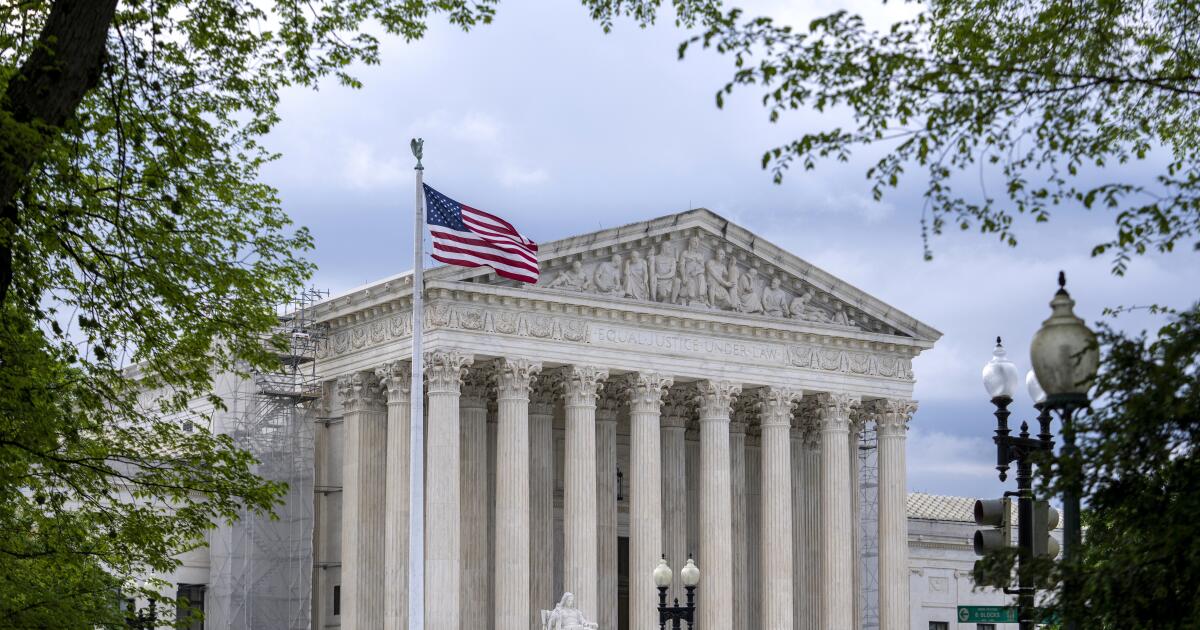
The Supreme Court made it harder for music and movie makers to sue for online piracy, ruling Wednesday that internet providers are usually not liable for copyright infringement even if they know their users are downloading copyrighted works.

In a 9-0 decision, the justices threw out Sony’s lawsuit and a $1-billion verdict against Cox Cable for copyright infringement.

Lower courts upheld a jury’s verdict against Cox’s internet service for contributing to music piracy, which the company did little to stop.

Sony’s lawyers pointed to hundreds of thousands of instances of Cox customers sharing copyrighted works. Put on notice, Cox did little stop it, they said.

But the high court said that is not enough to establish liability for copyright infringement.

“Under our precedents, a company is not liable as a copyright infringer for merely providing a service to the general public with knowledge that it will be used by some to infringe copyrights,” Justice Clarence Thomas wrote for the court.

Two decades ago, the court sided with the music and motion picture producers and ruled against Grokster and Napster on the grounds their software was intended to share copyrighted music and movies.

But on Wednesday, the court said “contributory” copyright infringement did not extend to internet service providers based on the actions of some of their users

“Cox provided Internet service to its subscribers, but it did not intend for that service to be used to commit copyright infringement,” Thomas said. “Cox neither induced its users’ infringement nor provided a service tailored to infringement.”

In its defense, Cox argued that internet service providers could be bankrupted by huge lawsuits for copyright infringement, which they said they did not cause and could not prevent.

Source link

Bill Cosby loses sex assault lawsuit in Los Angeles County

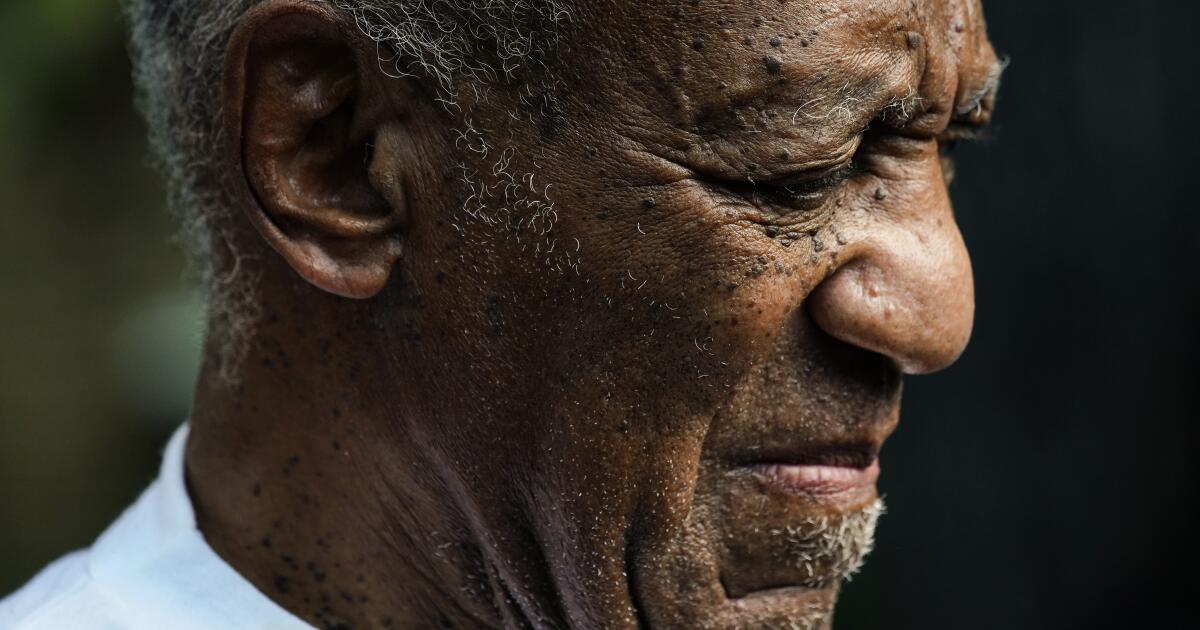
Bill Cosby drugged and sexually assaulted a former waitress in 1972 after escorting her to one of his shows, a civil jury in California concluded Monday, awarding the woman $19.25 million in damages.

The verdict was the latest turn in a series of legal battles the disgraced entertainer, now 88, has faced since allegations that he repeatedly drugged and raped women exploded publicly about a decade ago. Since then, he served about three years in a Pennsylvania prison on sexual assault charges before the case was overturned in 2021.

Donna Motsinger, now 84, said in her lawsuit filed in Los Angeles County Superior Court that Cosby had given her wine and a pill that left her unable to move, and that she woke up in her house wearing nothing but her underwear, according to court records, and that “she knew she had been drugged and raped by Bill Cosby.”

Cosby has denied the allegations, as well as those brought by dozens of other women who claimed they had been drugged and raped. Coming in the early years of the #MeToo movement, a broad social media-inspired campaign to name and prosecute men accused of sexual misconduct, Cosby’s attorneys painted him as an unfair target of mass vigilantism gone awry.

Motsinger sued Cosby in 2023, alleging that, at the time, she was working at a Sausalito restaurant called The Trident that was popular with celebrities, including Cosby, according to the complaint her attorneys filed Sept. 27 of that year. One night, Motsinger accepted Cosby’s invitation to go with him to his show at the Circle Star Theater in San Carlos. Cosby picked her up at her home in a limousine, according to her complaint, and, on the way to the venue, gave her the wine and a pill that she thought was aspirin.

“Next thing she knew, she was going in and out of consciousness while two men attending to Mr. Cosby were putting her in the limousine,” the complaint said. “The last thing Ms. Motsinger recalls were flashes of light,” before waking up in her house in nothing but underwear.

Motsinger didn’t consent to Cosby’s sexual contact and, having been rendered unconscious by drugging, she couldn’t consent to it to begin with, according to the complaint. As a consequence of her ordeal, her complaint says she suffered lost wages, medical bills, pain and suffering and emotional distress.

Source link