utah

Jessi Draper unloads about estranged hubby Jordan Ngatikaura

Escorts. Surveillance. Blackmail. Sex parties?

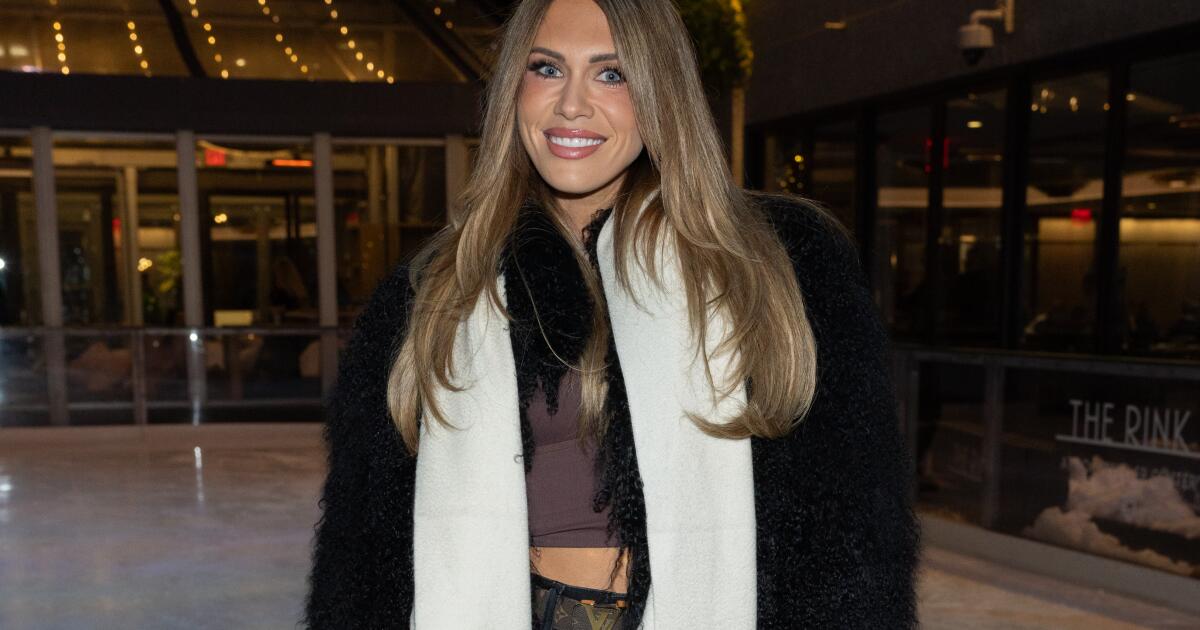
Jessi Draper of “The Secret Lives of Mormon Wives” is accusing her estranged second husband, Jordan Ngatikaura, of being involved in pretty much all of the above.

Ngatikaura filed for divorce Thursday in Utah after five years of marriage to Draper. Though that was far from the start of their marital problems, she told Alex Cooper during Wednesday’s episode of “Call Her Daddy” — which was taped Friday — that the dissolution filing was something they had agreed to do together. Then he changed his mind, she said, and she got the news via TMZ.

“I’m the one who ended it. I told him on Friday the 13th, so not that long ago, and I just said I want a divorce. He definitely didn’t want it. And now he’s the one rushing to do it, which is a little strange,” Draper told Cooper.

Also strange, in her view, was his choice to state on the documents that she had had an affair, though they had agreed previously that the reason would be the tried-and-true and totally non-gossipy “irreconcilable differences.” Plus Draper had only kissed another man twice, she said. She never had a physical affair with Marciano Brunette of “Vanderpump Villa,” though their emotional affair was a big part of the third season of “Mormon Wives.” Also, Utah is a no-fault state when it comes to divorce.

The Times was unable to contact Ngatikaura on Wednesday for comment on Draper’s allegations.

During the chat, Draper called her estranged husband “calculated” and “emotionally abusive” and said he told her he had been advised by someone to file on his own. She also admitted to Cooper that their marriage most likely was what it was because she went too quickly from divorcing her first husband to starting a relationship with her second.

That said, Draper said that right before Season 1 of “Mormon Wives” dropped on Hulu in September 2024, she was given “proof” that Ngatikaura had been using an escort service in Texas. At the time, she presented her evidence to him, she said, only to have him say it had probably been generated by AI.

Draper also said she had heard rumors of “sex parties” that he allegedly attended, though her sourcing on that allegation was definitely of the friend-of-a-friend-who-was-there variety. She further claimed that Ngatikaura had listened in on her personal conversations via cameras in her house — cameras she said he unplugged when he moved back into the house and she moved to a hotel — and had blackmailed her, threatening to post texts between her and Brunette online.

“Any time he was mad at me, he’s like, ‘I’m going to post them. I’m going to ruin your life,’” Draper told Cooper.

One day, she said, Ngatikaura told her he believed in traditional gender roles and that he should be in his masculine and she in her feminine, and therefore she should do Pilates every day. That led to a fight, during which he threatened to post the texts he had been keeping in a draft in his phone. Nobody knew yet what had happened between her and Brunette, and she worried that exposing everything would hurt her business, where she employs dozens of people.

“I went to go grab his phone. I was like, ‘Jordan, no … This could ruin everything.’ And he goes, ‘OK.’ And I’m freaking out. So, I’m trying to get his phone. I’m kind of chasing him, trying to get it. He pulls out his phone, starts recording me, and he’s like, ‘What are you going to do? What are you going to do? Are you going to be like, “Taylor, should I call the cops?”’ (referring to her embattled co-star and best friend, Taylor Frankie Paul, whose season of “The Bachelorette” was nixed before it aired).

“I was like, ‘Whoa,’ ‘cause he’s friends with Dakota [Mortenson, Paul’s on-and-off boyfriend], so he’s like hearing things like that, obviously, and he’s baiting me and he’s trying to be like, ‘Oh, oh, what are you doing?’ And that was the moment where, for me, I was like, ‘What am I doing? I am chasing around my husband trying to get his phone so he doesn’t blackmail me. This is not healthy.’ And I literally left him the next day,” she said.

“I was like, this can’t happen anymore.”

Source link

Alex Killorn and Ducks defeat Mammoth to increase their division lead

Alex Killorn broke a tie off a scramble at 9:09 of the second period, Lukas Dostal stopped 29 shots and the Ducks beat the Utah Mammoth 4-1 on Friday night to pad their Pacific Division lead.

After the puck was cleared off the goal line behind goalie Vitek Vanecek, the Ducks’ Beckett Sennecke ended up with it on the left side and slipped a pass to Killorn for a shot before Vanecek was set. Killorn also had two assists.

Ryan Poehling, Cutter Gauthier and Mikael Granlund also scored to help the Ducks — playing without suspended defenseman Radko Gudas — rebound from a 3-2 overtime loss to Philadelphia on Wednesday night at home. They moved three points ahead of Edmonton in the division.

Gudas served the fourth game of a five-game suspension for kneeing Auston Matthews in a loss at Toronto on March 12. Matthews tore the medial collateral ligament in his left knee and will miss the rest of the season.

Poehling tied it with 6:23 left in the first, beating Vanecek with a nifty move on a shorthanded break. Poehling took a pass from Killorn, sped down the left side, cut right and shot against the grain to the left.

The Ducks (38-27-4) put it away with two empty-net goals, with Gauthier scoring his 36th goal on the first.

Dylan Guenther scored his 34th goal of the season for Utah — at 1:48 of the first of the Mammoth’s second shot on goal.

Utah remained six points ahead of the Kings for the first wild-card spot in the Western Conference.

The Mammoth (36-28-6) opened a four-game homestand. They had won two straight on the road, beating Dallas 6-3 on Monday night to snap a four-game losing streak and topping Vegas 4-0 Thursday night.

Up next for the Ducks: vs. Buffalo at Honda Center on Sunday.

Source link

As Trump voter ID bill stalls, some states making moves

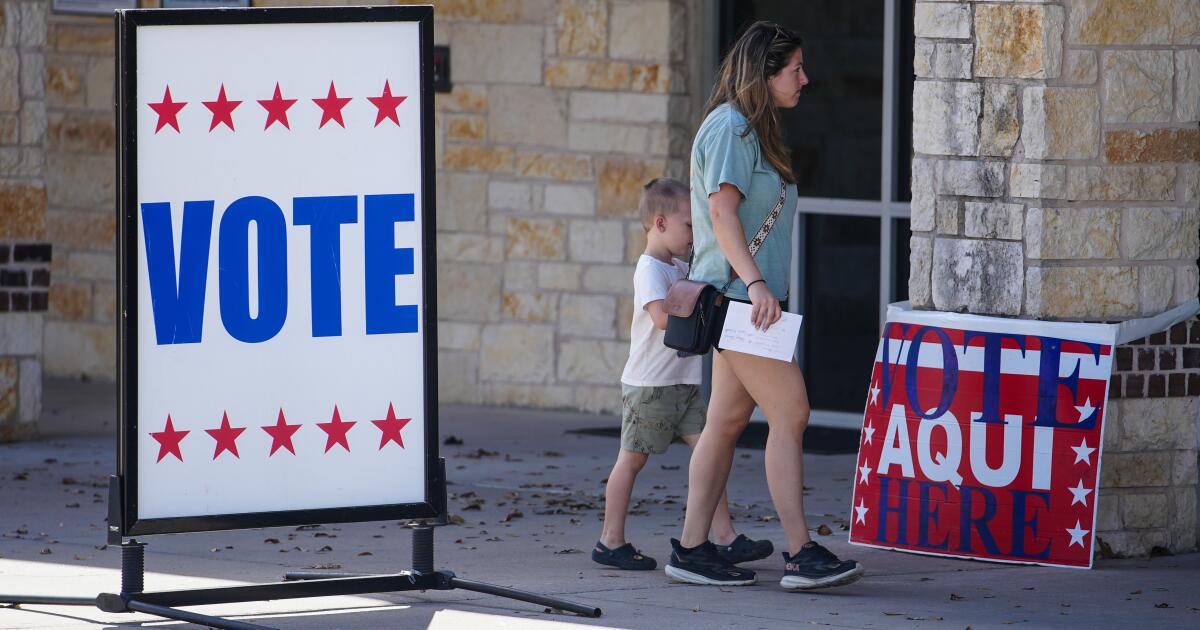
While the U.S. Senate remains deadlocked over President Trump’s call for strict citizenship voting requirements, Republicans in some states are pressing ahead with their own measures that could require documentary proof of citizenship to join or remain on the voter rolls.

Proof-of-citizenship legislation won final approval this week in South Dakota and Utah, already has passed one chamber in Florida and received a committee hearing in Missouri. In Michigan, supporters of voter citizenship documentation submitted 750,000 petition signatures this week in a bid to get a constitutional amendment on the November ballot.

Federal law already prohibits noncitizens from voting in U.S. elections, with violators subject to fines, imprisonment and potential deportation.

When people register to vote, they affirm under penalty of perjury that they are U.S. citizens. But Trump contends that’s not enough. He wants prospective voters to show proof of their citizenship.

Democrats and voting rights advocates say the Republican measures amount to voter suppression, as they may prevent many eligible voters from casting ballots. Similar laws have been overturned by courts as an unconstitutional burden on voting rights.

What would the federal legislation do?

The federal Safeguard American Voter Eligibility Act, or SAVE America Act, would require documentary proof of U.S. citizenship to register to vote. That could be satisfied with such things as a U.S. passport, citizen naturalization certificate or a combination of a birth certificate and government-issued photo identification.

The federal bill also would require a photo identification to cast a ballot, which some states already mandate. The Republican-led House approved the legislation last month on a mostly party-line vote, but it has stalled in the Senate under a filibuster threat from Democrats.

South Dakota and Utah

Legislation passed in South Dakota and Utah would create a two-tier voting system. People who provide documentation of their citizenship could vote in all elections. Those who don’t could vote only in federal elections for president, U.S. Senate and U.S. House.

The bifurcated voting system is modeled after Arizona, where tens of thousands of voters who have not provided proof of citizenship can cast ballots only in federal elections. Arizona implemented its system after the U.S. Supreme Court ruled in 2013 that the state could not require citizenship documentation for federal elections.

The bills in South Dakota and Utah would take effect upon a governor’s signature, meaning they could be in place for newly registered voters ahead of the November elections.

Utah’s bill also directs election officials to use an online service from U.S. Immigration and Customs Enforcement to check the citizenship status of existing voters. Those flagged would be sent notices asking for proof of citizenship to remain eligible to vote in all elections.

Florida and Michigan

Neither the Michigan initiative nor legislation passed by the Florida House would require people to submit proof of citizenship when registering to vote. Instead, the measures would create a behind-the-scenes review that could result in some people being asked for citizenship documentation.

Under the Michigan measure, the secretary of state would review driver’s license records, juror records and federal Homeland Security and Social Security data to determine whether registered voters are citizens. Those flagged would be removed from the voter rolls if they cannot provide proof of citizenship.

The Florida legislation would require election officials to verify the citizenship of all registered voters using the state’s driver’s license database. Anyone whose citizenship could not be verified would be required to submit documentary proof.

Why are some pushing for proof of citizenship?

Trump and some fellow Republicans have complained for years about noncitizens voting in U.S. elections, although evidence of doing so is rare. The few cases found are not nearly enough to affect an election result, studies have shown, and those caught face severe penalty.

In 2024, a student from China was charged with perjury and attempted illegal voting after registering to vote by showing a University of Michigan student ID and signing a document asserting he was a U.S. citizen. He later contacted a local clerk’s office requesting to get his ballot back, and ultimately fled the country.

The case provided part of the impetus for the Michigan ballot initiative, said Paul Jacob, chairman of Americans for Citizen Voting, which is backing the measure.

“We want a system we can have confidence in,” Jacob said. “The way you avoid big problems in elections is to fix the small problems when they rise up and present themselves.”

Voting rights advocates’ concerns

Constitutional amendments limiting voting to “only citizens” have won widespread support when placed on state ballots. But voting rights advocates note that requiring documentary proof can get complicated.

During a recent debate in the Florida House, Democratic state Rep. Ashley Gantt recounted how her aunt was born in a South Carolina home at a time when some hospitals didn’t accept Black patients. As a result, she has no birth certificate and has had difficulty trying to demonstrate her citizenship, Gantt said.

A proof-of-citizenship law “would stop many thousands — if not more — U.S. citizens from voting in Florida,” said Michelle Kanter Cohen, policy director and senior counsel at the nonprofit Fair Elections Center. “It requires documentation that a lot of eligible citizens don’t have, or don’t have access to.”

Nationwide, about 21 million people — 9% of voting-age citizens — lack documentary proof of citizenship or cannot easily obtain it, according to a 2024 report by the Center for Democracy and Civic Engagement at the University of Maryland.

Other states

Legal challenges are common when states pass proof-of-citizenship requirements for voters.

After Kansas adopted a proof-of-citizenship law 15 years ago, more than 31,000 U.S. citizens ended up getting blocked from registering to vote. Federal courts declared the Kansas law an unconstitutional burden on voting rights, and it hasn’t been enforced since 2018.

Two years ago, New Hampshire and Louisiana both passed proof-of-citizenship laws, prompting lawsuits. New Hampshire’s law went to trial last month and is awaiting a ruling. Louisiana’s election commissioner acknowledged in a December court filing that the requirement has not been enforced.

A nonprofit group also filed a legal challenge to a Wyoming proof-of-citizenship law passed last year. But a federal court dismissed that case while ruling the group lacked standing to sue.

Lieb writes for the Associated Press.

Source link

Clippers end losing streak with 20-point win over the Pelicans

Kawhi Leonard scored 23 points, and the Clippers beat the New Orleans Pelicans 137-117 on Sunday night to end a three-game losing streak.

Ninth in the Western Conference, the Clippers improved to 28-31. The Pelicans are 13th in the West at 19-43.

New Orleans star Zion Williamson sat out after injuring his right ankle at Utah on Saturday night. He had played a career-high 35 straight games.

The Clippers never trailed. They led 43-32 after the first quarter and had a 76-70 advantage at the half. It was 107-94 after three, and the Clippers stretched the margin to 26 in the fourth.

Jordan Miller added 19 points for the Clippers. Derrick Jones Jr. had 17, Brook Lopez 16 and John Collins 15.

While Leonard went one for seven from three-point range, the Clippers were 17 for 36 overall. Lopez was four for six, and Jones and Kobe Sanders both were three for four.

Jeremiah Fears led New Orleans with 28 points, hitting five of six three-pointers. Derik Queen scored 19 points, Dejounte Murray had 17, and Trey Murphy III added 16 after missing five games because of a right shoulder injury.

Source link