USVenezuela

US issues Iran-Venezuela sanctions over alleged drone trade | US-Venezuela Tensions News

Washington accuses Tehran and Caracas of ‘reckless proliferation of deadly weapons’ amid spiraling tensions.

Washington, DC – The United States has issued sanctions against a Venezuelan company over accusations that it helped acquire Iranian-designed drones as Washington’s tensions with both Tehran and Caracas escalate.

The penalties on Tuesday targeted Empresa Aeronautica Nacional SA (EANSA), a Venezuelan firm that the US Department of the Treasury said “maintains and oversees the assembly of” drones from Iran’s Qods Aviation Industries, which is already under sanctions by Washington.

Recommended Stories

list of 3 itemsend of list

The department also sanctioned the company’s chairman, Jose Jesus Urdaneta Gonzalez, accusing him of coordinating “with members and representatives of the Venezuelan and Iranian armed forces on the production of UAVs [unmanned aerial vehicles] in Venezuela”.

“Treasury is holding Iran and Venezuela accountable for their aggressive and reckless proliferation of deadly weapons around the world,” Treasury official John Hurley said in a statement.

“We will continue to take swift action to deprive those who enable Iran’s military-industrial complex access to the US financial system,” he said. The sanctions freeze any assets of the targeted firms and individuals in the US and make it generally illegal for American citizens to engage in financial transactions with them.

In its statement, the US alleged Tehran and Caracas have coordinated the “provision” of drones to Venezuela since 2006.

Iran’s Ministry of Defence and Armed Forces Logistics (MODAFL) has been under US sanctions since 2020 for what Washington said is its role in both selling and procuring weapons. The US is by far the largest weapons exporter in the world.

On Tuesday, the US Treasury Department also imposed new sanctions against several Iranians it accused of links to Iran’s arms industry.

The actions came a day after President Donald Trump threatened more strikes against Iran if the country rebuilds its missile capabilities or nuclear programme.

The US had joined Israel in its attacks against Iran in June and bombed the country’s three main nuclear sites before a ceasefire ended a 12-day escalation.

“Now I hear that Iran is trying to build up again, and if they are, we’re going to have to knock them down,” Trump said on Monday during a joint news conference with visiting Israeli Prime Minister Benjamin Netanyahu. “We’ll knock them down. We’ll knock the hell out of them. But hopefully, that’s not happening.”

Iran was quick to respond to Trump’s threats.

“The response of the Islamic Republic of Iran to any oppressive aggression will be harsh and regrettable,” President Masoud Pezeshkian wrote in a social media post.

The Trump administration has also taken a confrontational approach towards Venezuela.

The US president announced this week that the US “hit” a dock in the Latin American country that he said was used to load drug boats. Details of the nature of the strike remain unclear.

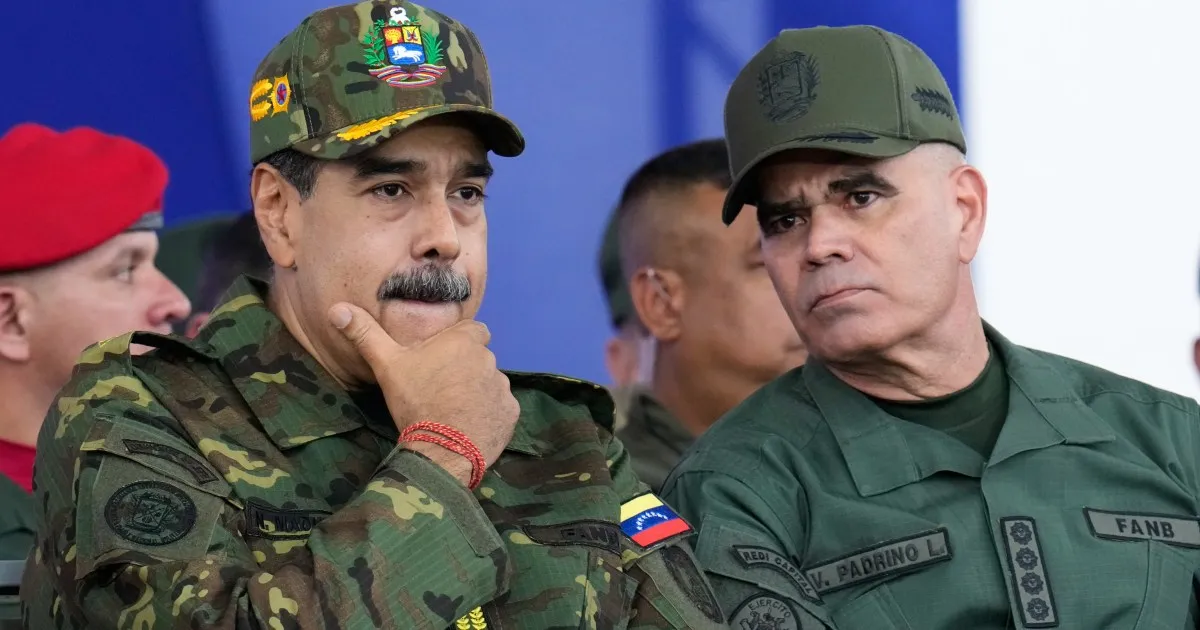
Trump and some of his top aides have falsely suggested that Venezuela’s oil belongs to the US. Washington has also accused Venezuelan President Nicolas Maduro, without evidence, of leading a drug trafficking organisation.

The Trump administration has simultaneously been carrying out strikes against what it says are drug-running vessels in the Caribbean Sea and eastern Pacific Ocean, a campaign that many legal experts said violates US and international law and is tantamount to extrajudicial killings.

Over the past month, the US also has seized at least two oil tankers off the coast of Venezuela after Trump announced a naval blockade against the country.

Venezuela has rejected the US moves as “piracy” and accused the Trump administration of seeking to topple Maduro’s government.
Source link

Venezuela warns US ‘aggression’ is first stage amid ‘continental ambitions’ | US-Venezuela Tensions News

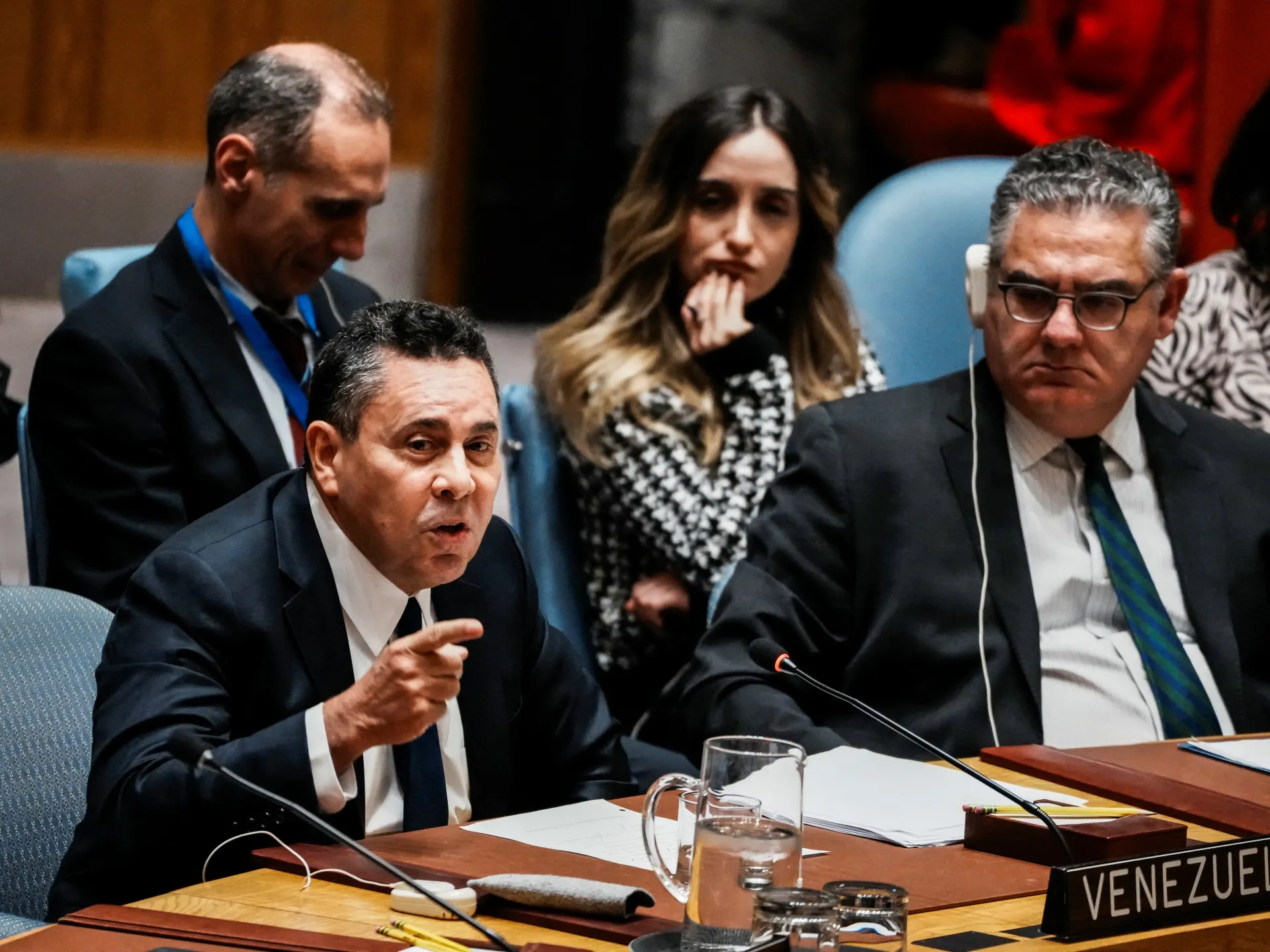
Venezuela’s UN ambassador denounces US military strikes and naval blockade at a meeting of the UN Security Council.

Venezuela has told the United Nations Security Council (UNSC) that the United States has “continental ambitions” over much of Latin America as it wages an unofficial war to remove the government of Venezuelan President Nicolas Maduro.

“It’s not just about Venezuela. The ambition is continental,” Venezuela’s UN ambassador, Samuel Moncada, told a meeting of the 15-member UNSC on Tuesday.

Recommended Stories

list of 4 itemsend of list

“The US government has expressed this in its National Security Strategy, which states that the future of the continent belongs to them,” Moncada said.

“We want to alert the world that Venezuela is only the first target of a larger plan. The US government wants us to be divided so it can conquer us piece by piece,” he said.

Venezuela, earlier this month, requested that the UNSC meet to address the “ongoing US aggression”, which began in September when the White House launched air strikes against vessels in the Caribbean Sea and eastern Pacific Ocean. The White House claimed, without providing any evidence, that the vessels were trafficking drugs to the US.

At least 105 people have been killed so far in the attacks by US forces, which legal experts and Latin American leaders have branded “extrajudicial killings”, but which Washington claims are necessary to stem the flow of drugs to US shores.

At the UNSC meeting, Moncada also accused the administration of US President Donald Trump of violating both international and US domestic law, since the White House has been acting without the approval of the US Congress, whose authority is required to formally declare war on another country.

Moncada said that Trump’s imposition last week of a naval blockade on all Venezuelan oil tankers sanctioned by the US was a “military act aimed at laying siege to the Venezuelan nation”.

“Today, the masks have come off,” Moncada said. “It is not drugs, it is not security, it is not freedom. It is oil, it is mines and it is land.”

US envoy denounces ‘Maduro and his illegitimate regime’

US forces have seized at least two Venezuelan oil tankers and confiscated at least 4 million barrels of Venezuelan oil, according to Moncada, in a move he described as “a robbery carried out by military force”.

The US has defended its naval blockade of Venezuela as a “law enforcement” action to be carried out by the US coastguard, which has the authority to board ships under US sanctions. A naval blockade, by contrast, would be considered an act of war under international law.

The US ambassador to the UN, Mike Waltz, told the UNSC that Latin American drug cartels remain the “single most serious threat” and that Trump would continue to use the full power of the US to eradicate them. Waltz also said that Venezuelan oil is a critical component in funding the cartels in Venezuela.

“The reality of the situation is that sanctioned oil tankers operate as the primary economic lifeline for Maduro and his illegitimate regime,” he said.

The White House earlier this year designated several international drug cartels, including Venezuela’s Tren de Aragua, as terrorist organisations. Washington also added the “Cartel de los Soles,” which it claims is headed by Maduro, to the list in November.

The Venezuelan leader has denied the US allegations and accused the Trump administration of using the drug trafficking claims as a cover to carry out “regime change” in his country.

Russia’s ambassador to the UN separately warned that US “intervention” in Venezuela could “become a template for future acts of force against Latin American states”.

China’s ambassador told the UNSC that the US actions “seriously infringe” on the “sovereignty, security and legitimate rights” of Venezuela.

Source link

Venezuela passes law enacting harsh penalties for supporters of US blockade | US-Venezuela Tensions News

Venezuela’s National Assembly has passed a law enacting harsh penalties for those who support or help finance blockades and acts of piracy, including up to 20 years in prison.

The legislation was passed on Tuesday after the United States seized oil tankers linked to Venezuela, acts that the government of President Nicolas Maduro has denounced as lawless acts of piracy.

Recommended Stories

list of 3 itemsend of list

“This law seeks to protect the national economy and avoid the erosion of living standards for the population,” lawmaker Giuseppe Alessandrello said, while presenting the law before the National Assembly, controlled by Maduro’s governing party.

The US has carried out a series of increasingly aggressive measures over the past several months, deploying sizeable military forces to Latin America, seizing oil tankers, killing dozens of people in military strikes on what it says are drug-trafficking boats, and threatening land strikes on Venezuela itself.

The legality of some of those acts, such as the seizure of oil tankers in international waters, is contested. Others, such as the strikes against alleged drug traffickers, are widely considered illegal.

“We are in the presence of a power that acts outside of international law, demanding that Venezuelans vacate our country and hand it over,” Samuel Moncada, Venezuela’s representative at the United Nations, told the Security Council (UNSC) during a meeting on Tuesday.

“The threat is not Venezuela,” he added. “The threat is the US government.”

China and Russia also criticised US actions. Russia’s ambassador, Vassily Nebenzia, said that the Trump administration was creating a “template” for the use of force that could be used against other Latin American countries in the future.

“We saw clear support for Venezuela from Russia and China, but also from Colombia, and even from some other member states, talking about how the US needs to abide by international law and calling for de-escalation,” Al Jazeera correspondent Gabriel Elizondo said from the UN.

He added that several Latin American countries with right-wing governments, such as Argentina, Panama and Chile, appeared to side with the US.

“The bottom line here is that we have not gotten any better sense from the United States on what their endgame is here, where they plan to take this,” he added.

The Wall Street Journal reported on Tuesday that the US military had moved special operations aircraft and cargo planes with troops into the Caribbean this week.

“We have a massive armada formed, the biggest we’ve ever had, and by far the biggest we’ve ever had in South America,” Trump told reporters on Monday.

Maduro has said the US is seeking to topple his government and seize control of Venezuela’s large oil reserves, which members of the Trump administration have falsely claimed rightfully belong to the US. Trump said on Monday that the US would retain the oil seized from the tankers as well as the tankers themselves.

Addressing the UNSC, the US ambassador, Mike Waltz, said that oil sales were a “primary economic lifeline for Maduro and his illegitimate regime”, repeating an unsubstantiated claim that Maduro oversees a vast criminal enterprise that traffics drugs to the US.

“The single most serious threat to this hemisphere, our very own neighbourhood and the United States, is from transnational terrorist and criminal groups,” Waltz said.

The US pressure campaign has become a useful pretext for the Venezuelan government’s efforts to crack down on internal dissent.

Rights groups have said that Maduro’s government has become more repressive since the presidential election in July 2024, in which Maduro claimed victory despite the widespread doubts about the credibility of the results. The opposition has maintained it was the true winner, and few countries have recognised Maduro’s victory.

Source link