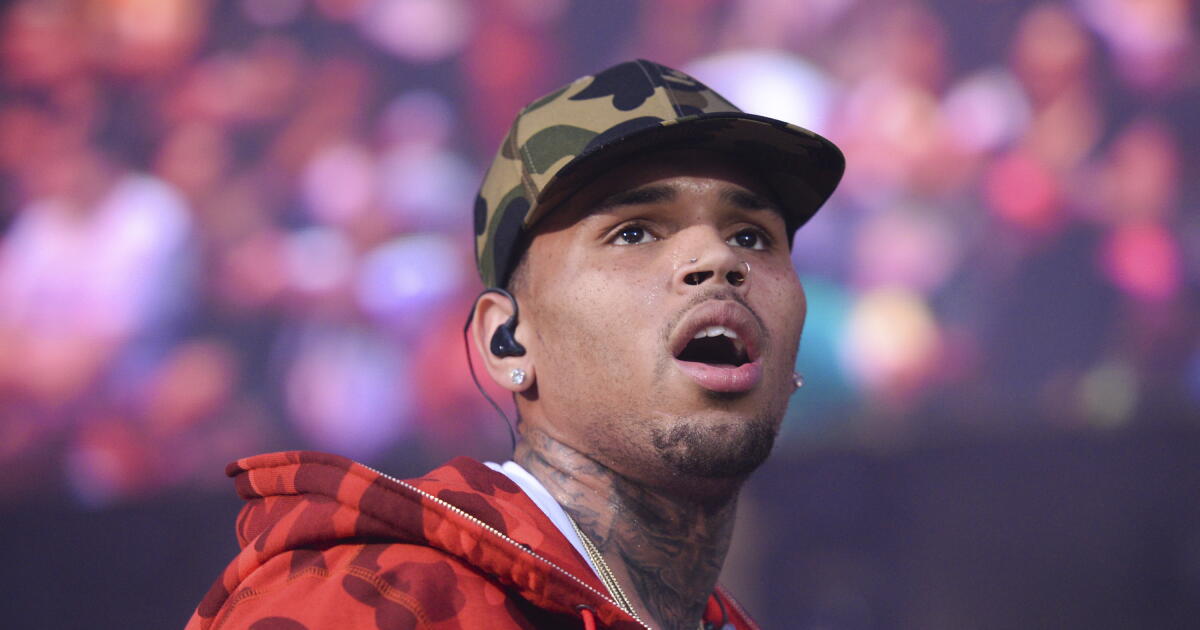
Chris Brown speaks up after politician walks back public recognition
Chris Brown is speaking out after lawmakers honored him during his concert in Arlington, Texas, then apologized for the honor.
On Sept. 12, U.S. Rep. Jasmine Crockett (D-Texas) and Democratic Texas Rep. Venton Jones appeared at AT&T Stadium for Brown and Usher’s R&B Tour, where they honored both singers for their contributions to music. The politicians presented them with a Congressional Record recognition and state proclamation.
“Right now, we are experiencing Black joy to the highest level,” Crockett said on stage. “And I wanted to make sure we document that in the Congressional Record.”
Usher was not on stage when either honor was presented.
The incident sparked public backlash because of Brown’s history of domestic violence. In June 2009, the “Forever” singer pleaded guilty to one count of felony assault for physically attacking Rihanna.
On Monday, the 37-year-old singer and dancer took to social media to apologize to Crockett for the criticism she received following the recognition, uploading a photo of the two to his Instagram story with text that read: “I apologize for any backlash you have to deal with for awarding for me. I’m not political but I move off of frequency and energy and I’m so grateful. Once again, thank you.”
But by Tuesday, Jones released a statement apologizing to his constituents for his role in presenting Brown with a state resolution.
“Over the past few days, I have listened closely to the conversations, concerns, and heartfelt feedback shared across our community following my presentation honoring Chris Brown with a state resolution,” Jones said.
Jones, who first assumed his role in 2023, said that the presentation was an attempt to reach voters ahead of the Nov. 3 midterm election.
“First and foremost, I want to acknowledge the women, the Black women, whom my actions have hurt. In moments like these, I think it’s important to be specific and just as loud with an apology as our original actions were,” Jones added in his statement. “I apologize.”
After Jones’ statement, Brown called out the representative.
“I didn’t ask to be honored because I knew some s— like this would happen and [Venton Jones] immediately started tap dancing and apologizing because he didn’t wanna lose voters and support,” Brown wrote on Sept. 15 on his Instagram. “I have a great idea.. how about [y’all] leave me the f— alone and let me focus on the fans that spent their money to actually see and support me.”
Outside of the most widely recognized incident involving Rihanna — which occurred hours before the couple was set to appear at the 2009 Grammy Awards — there have been multiple domestic violence allegations against Brown, including by his ex-girlfriend Karrueche Tran. She was granted a restraining order against the singer in 2017.
Brown has been accused in several other cases of violence against women from 2018 to 2022, either dismissed, settled out of court, or the investigation dropped.
This summer, the singer pleaded guilty to beating up a man in a London nightclub with a glass bottle in 2023. There is an active $50-million suit against Brown and members of his entourage by four male concertgoers who allege they faced a “brutal, violent assault” backstage following a Fort Worth, Texas, show in 2024.