US-Venezuela Tensions

Colombia can be “part of solution” for Venezuela transition | US-Venezuela Tensions

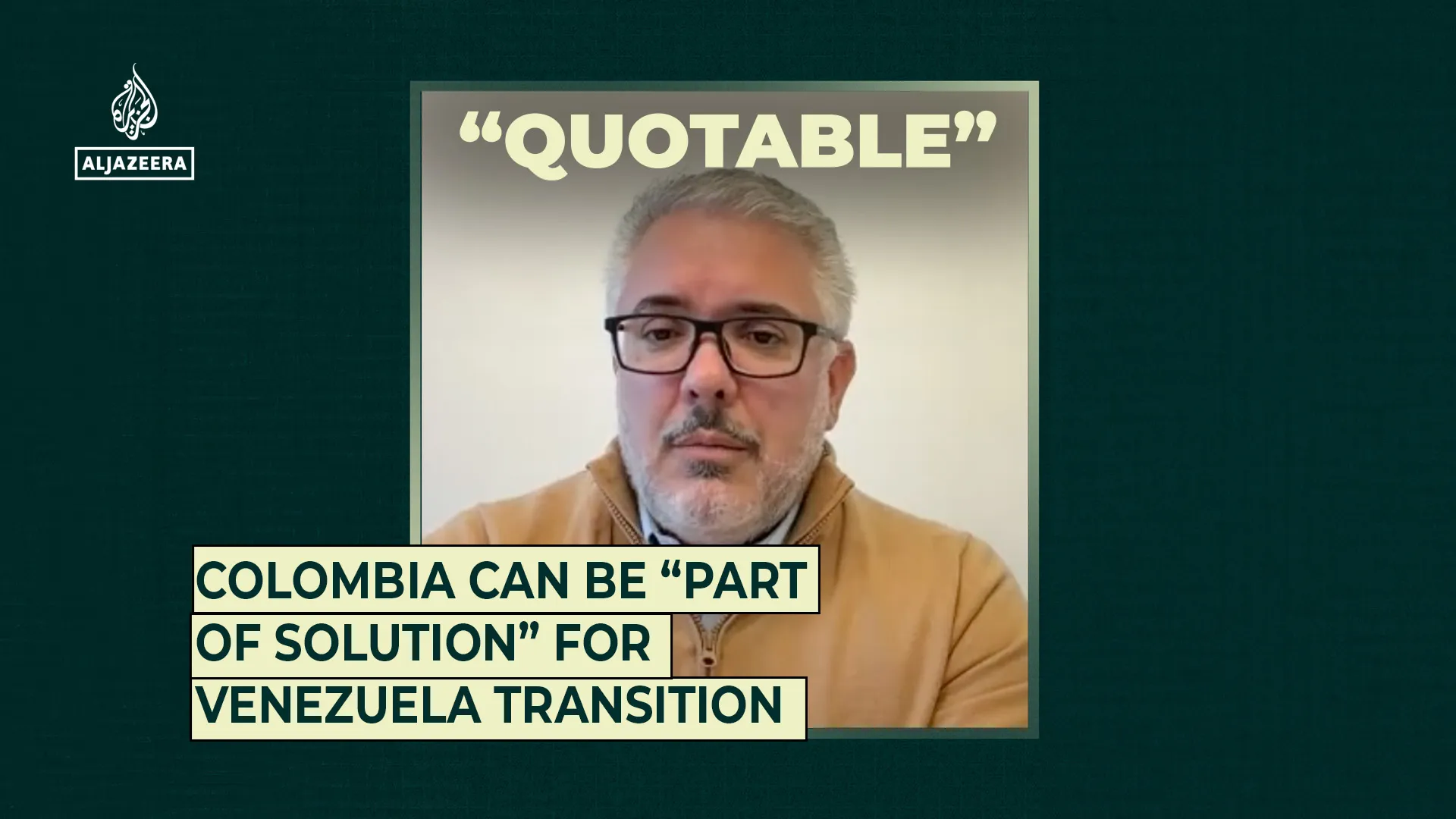
Former Colombian President Ivan Duque Marquez, discusses how Colombia’s could play a supporting role in Venezuela transition after the abduction of Nicolas Maduro. US President Donald Trump has threatened military action against Colombia, accusing its government of making and selling cocaine to the United States.

Source link

Maduro to appear in New York court: What to expect | Courts News

Venezuelan President Nicolas Maduro is to appear in a New York court on Monday, two days after he was abducted by US special forces in a military operation in Caracas.

The US military arrested Maduro and his wife, Cilia Flores, on Saturday and brought them to New York, where they face multiple federal charges, including drugs and weapons charges.

Recommended Stories

list of 4 itemsend of list

Here is more about Maduro’s scheduled court appearance:

When and where will it take place?

Maduro is to appear before a federal judge at noon (17:00 GMT).

The appearance is scheduled to happen in the Daniel Patrick Moynihan United States Courthouse in the Southern District of New York. Maduro is to appear before US District Judge Alvin Hellerstein.

A court spokesperson told NBC News that Flores, who is also listed as a defendant in a US indictment unsealed on Saturday, will appear in court on Monday as well.

What are the charges?

According to the indictment, the US accuses Maduro of being at the forefront of corruption to “use his illegally obtained authority” to “transport thousands of tons of cocaine” to the US with his coconspirators.

Additionally, the indictment alleges that Maduro has “tarnished” every public office he has held. It adds that Maduro “allows cocaine-fueled corruption to flourish for his own benefit, for the benefit of members of his ruling regime, and for the benefit of his family members”.

Maduro faces four counts:

  • Count 1, narcoterrorism conspiracy: US prosecutors say Maduro and his coconspirators knowingly provided something of financial value to US-designated “foreign terrorist organizations” and their members. The indictment lists these organisations as the Revolutionary Armed Forces of Colombia (FARC), a leftist rebel group that signed a peace deal in 2016 but has dissidents who refused to lay down their arms and are still involved in the drug trade; Segunda Marquetalia, the largest dissident FARC group; National Liberation Army, another leftist Colombian rebel group; Mexico’s Sinaloa Cartel; Los Zetas/Cartel del Noreste, another Mexican drug cartel; and Tren de Aragua, a Venezuelan gang.
  • Count 2, cocaine importation conspiracy: It accuses Maduro and his codefendants of conspiring to manufacture, distribute and import cocaine into the US.
  • Count 3, possession of machineguns and destructive devices: The indictment accuses the defendants of possessing, carrying and using machineguns in relation to the above drug‑trafficking counts.
  • Count 4, conspiracy to possess machineguns and destructive devices: It further accuses the defendants of conspiring to use, carry and possess those weapons in furtherance of drug trafficking.

The indictment also says Maduro and his codefendants should forfeit to the US government any proceeds and assets obtained from the alleged crimes.

Is there evidence for these charges?

There is little evidence that drugs are trafficked from Venezuela on a large scale. The 2023 United Nations Office on Drugs and Crime World Drug Report said global cocaine production hit a record of 3,708 tonnes, up nearly one‑third from 2022, with most coca cultivation taking place in Colombia, followed by Peru and Bolivia.

Trafficking routes into the US in 2023-2024 primarily passed through Colombia, Peru and Ecuador, not Venezuela, although it does serve as a minor transit corridor for Colombian cocaine moving into the eastern Caribbean.

Who is named in the indictment?

Maduro

Maduro, 63, who became Venezuela’s president in 2013, was declared the winner of 2024’s election. His re-election was rejected as fraudulent by the US and independent observers, such as the Carter Center. A UN expert panel said the 2024 vote failed to meet international standards.

Nine Latin American countries called for a review of the results with independent oversight.

Maduro defended the election results and accused his opponents of undermining the country’s sovereignty.

Since returning to the White House nearly a year ago, US President Donald Trump has expanded sanctions and punitive measures against Maduro and senior officials in his government.

The Trump administration ramped up military pressure starting in August when it deployed warships and thousand of its service members in the Caribbean near Venezuela. It has since carried out dozens of air strikes on alleged Venezuelan drug boats, killing more than 100 people.

Maduro has pushed back by mobilising Venezuelan military personnel.

During this time, the Caracas-based news network Globovision quoted Maduro as saying: “From the north, the empire has gone mad and, like a rotten rehash, has renewed its threats to the peace and stability of Venezuela.”

But a day before Saturday’s US attack on the country, Maduro had offered to hold talks to combat drug trafficking.

Flores

Flores, 69, has been married to Maduro since 2013.

Known as the “first combatant” rather than first lady, Flores is a veteran lawyer and politician who rose to prominence by defending future President Hugo Chavez after his failed 1992 coup. She helped secure his release and later became a key Chavismo figure and the first woman to preside over Venezuela’s National Assembly. Chavismo, which promotes socialism and anti-imperialist politics, is the political movement started by Chavez, Maduro’s mentor.

The indictment accuses Flores of joining Maduro’s cocaine importation conspiracy.

Other defendants

The indictment names four other people as Maduro’s coconspirators, namely Diosdado Cabello, Venezuela’s interior minister; Ramon Rodriguez Chacin, former Venezuelan interior minister; Nicolas Maduro Guerra, Maduro’s son and a Venezuelan politician; and Hector Rusthenford Guerrero Flores, the leader of Tren de Aragua, which was designated as a “foreign terrorist organization” by the US in February. But most experts do not define Tren de Aragua as a “terrorist organisation”.

It is not clear yet who will represent Maduro, Flores and the other defendants.

Who is the judge?

Hellerstein was born in 1933 in New York. He was appointed to the federal bench in 1998 by former President Bill Clinton.

He is likely on Monday to advise Maduro and Flores about their rights and ask them if they want to enter a plea.

What’s at stake?

Maduro’s freedom is primarily at stake. If convicted, he could face 30 years to life in prison.

“This is less about Maduro as it is about access to Venezuela’s oil deposits,” Ilias Bantekas, a professor of transnational law at Hamad Bin Khalifa University in Qatar, told Al Jazeera. “This is the number one target. Trump is not content with just allowing US oil firms to get concessions but to ‘run’ the country, which entails absolute and indefinite control over Venezuela’s resources.”

Venezuela’s oil reserves are concentrated primarily in the Orinoco Belt, a region in the eastern part of the country stretching across roughly 55,000sq km (21,235sq miles).

While the country is home to the world’s largest proven oil reserves – at an estimated 303 billion barrels as of 2023 – it earns only a fraction of the revenue it once did from exporting crude due to mismanagement and US sanctions.

Last month, Trump accused Venezuela in a post on his Truth Social platform of “stealing” US oil, land and other assets and using that oil to fund crime, “terrorism” and human trafficking.

Trump repeated his false claims after Maduro’s arrest. During a news conference on Saturday, Trump said the US would “run” Venezuela until a “safe, proper and judicious transition” could be carried out.

“Given the opposition of all South American states, save for Argentina, to US dominance in the region, Trump’s plan requires a vast military deployment. We need to see how countries like Brazil and Colombia react to this, including also BRICS,” said Bantekas from Hamad Bin Khalifa University.

In a joint statement released on Sunday, the governments of Spain, Brazil, Chile, Colombia, Mexico and Uruguay said the US actions in Venezuela “constitute an extremely dangerous precedent for peace and regional security and endanger the civilian population”.

“If there was an armed conflict between Venezuela and the USA and, given that Maduro is the head of his country’s armed forces, then he would be a legitimate target,” Bantekas said.

“However, under the circumstances there is no armed conflict between the two countries and in the absence of an armed attack by Venezuela against the US, the latter’s invasion in Venezuela violates article 2(4) of the UN Charter, as does the abduction of the country’s President. It is a blatant act of aggression.”

Article 2(4) of the UN Charter bars UN members from the threat or use of force against the territorial integrity or political independence of any state.

A United Nations Security Council meeting on Monday will determine the legality of the US abduction of Maduro.

“Given that Maduro is already in US custody and in the USA, it is in the interests of all parties that he appear before a court. At the very least, Maduro can challenge the legality of his arrest and the jurisdiction of the court,” Bantekas said.

“The court itself has an obligation to decide if it has jurisdiction and as a preliminary issue decide whether Maduro enjoys immunity from criminal prosecution. If these issues are dispensed the court nonetheless finds that it has jurisdiction and that Maduro does not enjoy immunity, then the prosecutor must prove its case.”

What’s next?

The Trump administration has not explicitly stated a clear plan for Venezuela, with analysts saying the administration has sent out confusing signals.

In an interview with the NBC news channels on Sunday, US Secretary of State Marco Rubio suggested that Washington will not govern Venezuela on a day-to-day basis besides enforcing an existing “oil quarantine”.

Rubio told ABC news on Sunday that the US had leverage over Venezuela and the US would “set the conditions” to ensure that Venezuela is no longer a “narco-trafficking paradise”.

But on Sunday, Trump told reporters that the US is ready to carry out a second military strike on Venezuela if its government refuses to cooperate with his plan to ‘resolve’ the situation there.

She could “pay a very big price” if she “does not do what’s right”, Trump said, refering Venezuela’s new leader, Delcy Rodriguez.

During his Saturday conference, Trump said that Rodriguez told Rubio that she will do what the US needs her to. “She really doesn’t have a choice,” Trump had said.

In his first press conference after Maduro’s illegal abduction on Saturday, Trump ruled out the possibility of working with opposition leader and Nobel Prize winner Maria Corina Machado, who was barred from running in the 2024 presidential elections.

Machado, a member of the Venezuelan National Assembly, is seen as the most credible adversary of Maduro’s leftist government.

On Monday, Rodriguez, the interim leader, offered to cooperate with Trump. In a statement posted on social media, she invited Trump to “collaborate” and sought “respectful relations”.

“President Donald Trump, our peoples and our region deserve peace and dialogue, not war,” she wrote.

Her conciliatory tone came a day after she appeared on state TV declaring that Maduro was still Venezuela’s sole legitimate president.
Source link

Trump’s bid to commandeer Venezuela’s oil sector faces hurdles, experts say | Business and Economy

United States President Donald Trump has promised to “take back” Venezuela’s oil reserves and unleash them onto the global market after abducting Venezuelan President Nicolas Maduro.

But exploiting the Latin American country’s vast reserves would face a host of big hurdles, from decrepit infrastructure and legal obstacles to leadership uncertainty in Caracas and an excess supply of oil in the global market, experts say.

Recommended Stories

list of 4 itemsend of list

Venezuela possesses the world’s largest known oil reserves – estimated to be some 303 billion barrels – but currently produces only a tiny fraction of global output. Its estimated output was 860,000 barrels per day (bpd) in November, less than 1 percent of the world’s total, compared with 3.7 million bpd during peak production in 1970.

The oil sector’s decline has been blamed on the combined effects of US sanctions and years of underinvestment, mismanagement and corruption under Maduro and his left-wing predecessor, Hugo Chavez.

While the Trump administration could boost supply in the short term by lifting sanctions, restoring Venezuela’s output to anything near peak levels would require huge investment and likely take years, according to energy analysts.

‘Venezuela’s oil infrastructure is in poor shape’

Oil prices moved only slightly in trading on Monday amid market expectations that output would remain largely unchanged for the foreseeable future.

“Venezuela’s oil infrastructure is in poor shape overall, due to lack of maintenance for both equipment and oilfield wells,” Scott Montgomery, a global energy expert at the University of Washington, told Al Jazeera.

“The state oil company, PDVSA, is well known to suffer from corruption and lack of expertise – many well-trained people have left the country to work elsewhere – and has been unable to invest in the country’s petroleum sector,” Montgomery added.

Thomas O’Donnell, an energy and geopolitical analyst based in Berlin, Germany, estimated that Venezuela could return to peak production in five to seven years in the “absolute best” circumstances, including a peaceful transfer of power.

“Longer term, if things are sorted out, yes, Venezuela can become one of the world’s biggest producers of oil. As far as how long that takes, that has all to do with the transition and what is put in place to manage that – both the country’s security and also to manage the investments,” O’Donnell told Al Jazeera.

Mixed messaging from Trump administration

Trump’s administration has provided conflicting messages on Washington’s exact plans for Venezuela and its oil reserves.

On Saturday, Trump said the US would “run” Venezuela and that US oil companies were ready to invest billions of dollars to build up the country’s dilapidated infrastructure and “get the oil flowing”.

In interviews with US media on Sunday, US Secretary of State Marco Rubio sought to downplay Trump’s remarks about controlling the country, saying the president was referring to “running policy” and his plans related to spurring private investment, “not securing the oilfields”.

Trump later on Sunday said Washington was “in charge” of the country and was “dealing with” members of the acting administration without providing details.

Under international law, the US has no claim of ownership over Venezuela’s oil reserves, as sovereign states possess the right to control and use their natural resources under the United Nations-endorsed Principle of Permanent Sovereignty over Natural Resources.

Foreign investors, however, can claim compensation when authorities seize their assets.

ExxonMobil and ConocoPhillips were awarded $1.6bn and $8.7bn, respectively, in international arbitration following the Chavez government’s 2007 nationalisation of the oil sector. Caracas did not pay out in either case.

US oil giants, including Chevron, ExxonMobil, and ConocoPhillips, have not commented directly on Trump’s claims about planned investments in Venezuela.

Chevron is the only large US oil company currently operating in Venezuela, the result of an exemption to US sanctions first granted by the administration of former President Joe Biden.

Consultancy Rystad Energy, based in Oslo, Norway, has estimated that Venezuela’s oil sector would need about $110bn in capital investment to return to its mid-2010s output of about 2 million bpd.

Patrick De Haan, an analyst at energy price tracker GasBuddy, said companies may be reluctant to commit to large investments in the country when global oil prices are hovering around $60 a barrel due to a glut of supply.

“It will take a longer amount of time than many likely realise. Oil companies in a low-priced environment of today would likely be cautious investing billions with oil prices already low,” De Haan told Al Jazeera.

“In addition, Trump seizing Maduro could lead to loyalists sabotaging efforts to increase output. A lot would have to go right to yield the most optimistic timelines.”

US companies are likely to carefully weigh political developments in Venezuela following their experiences with the Chavez government’s expropriation of their assets.

“Oil companies are not likely to rush into a situation where the state is in turmoil, security is lacking, and no clear path forward for political stability exists,” the University of Washington’s Montgomery said.

Maduro due in court in New York

Interim President Delcy Rodriguez, who was Maduro’s deputy, is now leading the country following a ruling by Venezuela’s Supreme Court.

Maduro is scheduled to appear in a New York court on Monday to face charges related to alleged drug trafficking and working with criminal gangs.

Venezuela’s government has condemned the Trump administration over Saturday’s bombing and overthrow of Maduro, labelling his capture a “cowardly kidnapping”.

Russia, China, Iran and Brazil, among other countries, have accused Washington of violating international law, while nations including Israel, Argentina and Greece have welcomed Maduro’s forced removal.

OPEC, which sets limits on production for its 12 members, including Venezuela, is another factor in the Latin American country’s potential oil output.

“Venezuela is a member of OPEC, and like many countries, may become more actively subject to quotas if output climbs,” De Haan said.

Phil Flynn, a market analyst at the Price Futures Group, said reviving Venezuela’s oil production would face “significant challenges”, but he was more bullish about the near-term prospects than other analysts.

He said the market could conceivably see a couple of hundred thousand more barrels a day coming online in the coming months.

“We’ve not had a free Venezuela, and sometimes the US energy industry has the capability to do a lot more than people give them credit for,” Flynn told Al Jazeera.

Source link

Venezuelans reflect on Maduro’s removal, grappling with hope and fear | US-Venezuela Tensions News

It was his 26th birthday, so Wilmer Castro was not surprised by the flurry of messages that lit up his phone.

However, as he began scrolling on Saturday morning, he realised the messages were not birthday wishes, but news of something he had long hoped for: Venezuelan President Nicolas Maduro had been removed from power.

Recommended Stories

list of 3 itemsend of list

“I think it is the best gift that I will ever receive, one I will never forget,” the university student said from Ejido.

Castro told Al Jazeera that he was so elated by the news that he began daydreaming about his future self recounting the story of Maduro’s fall to his grandchildren and great-grandchildren.

“I will tell them that on January 3, 2026, a dictator fell, and [that moment] is going to be very beautiful.”

The abduction of Venezuela’s long-time authoritarian leader – and his wife – by the United States followed months of escalating tensions between the two countries, including US strikes on alleged drug-trafficking vessels and the deployment of US ships near Venezuela’s coastal waters.

But by Sunday morning, Castro’s initial jubilation was clouded by a heavy quiet. The weight of uncertainty brought the city to a sombre pause, one that closed in on him and felt unlike anything he had experienced before.

“It’s like being in a field with nothing else around. It’s a mournful silence; I can’t describe it,” he said.

That uncertainty was felt by many Venezuelans on Sunday morning.

Venezuela has had a socialist government since 1999, first under President Hugo Chavez and later Maduro, a period that began with oil-funded social programmes but unravelled into economic mismanagement, corruption and repression – with international sanctions further squeezing the population.

Momentum around the 2024 presidential election raised hopes that the opposition alliance would take control. But when Maduro declared victory, despite opposition claims of a landslide win for Edmundo Gonzalez Urrutia, a crackdown on dissent followed. It left many Venezuelans concluding that any real transition might depend on pressure — or even intervention — from outside the country.

‘Deathly silence’

In southeastern Caracas on Saturday, 54-year-old Edward Ocariz was jolted awake by a loud crash and the vibrating windows of his home near the Fort Tiuna military barracks. He thought it was an earthquake, but when he looked outside, he saw unfamiliar helicopters flying low above smoke rising in the city.

“The noise kept coming,” he said. “I could immediately tell the helicopters were not Venezuelan because I had never seen them here.”

Then, just as suddenly as it had started, it stopped.

“There was a deathly silence,” Ocariz said, adding that the brief suspension of mobile phone services and power outages contributed to the silence. “We were waiting to understand what was happening.”

Fear accompanied the fragments of information that did manage to seep through, Ocariz said. “But it was a fear mixed with joy – tremendous joy. It’s hard to explain.”

On Sunday, when images of a blindfolded and handcuffed Maduro began circulating, Ocariz reflected on the suffering he had endured under the president’s regime.

The human rights activist said he was wrongfully charged with “terrorism” and spent nearly five months as a political prisoner in Tocuyito prison, a maximum-security facility in Carabobo state.

Under Maduro, the country had a long history of jailing those who dissent. After the disputed 2024 election, nearly 2,500 protesters, human rights activists, journalists and opposition figures were arrested. While some were later released, others remain behind bars.

“I felt satisfied. A process of justice is finally beginning,” Ocariz said, fully aware that Maduro will not have to endure the dire prison conditions he did, or be denied food and legal representation.

Despite the joy he and other Venezuelans now feel, Ocariz warns that much remains to be done.

“The population still feels a huge amount of fear [from the authorities] — psychological fear — because it’s well known how the police and justice system use their power to criminalise whoever they choose.”

So far, key institutions remain in the hands of figures from Nicolas Maduro’s inner circle, including Vice President Delcy Rodriguez, who has been named acting president.

But for many Venezuelans — including Castro and Ocariz — seeing a senior Chavista figure still in power is unsettling, particularly as the Trump administration continues to engage with her.

“It is certainly frustrating for me. However, I understand that Venezuela needs to continue with its administrative, functional, and operational management as a country, as a nation,” Ocariz said, adding that the US must maintain some order to control the power vacuum and stamp out repression.

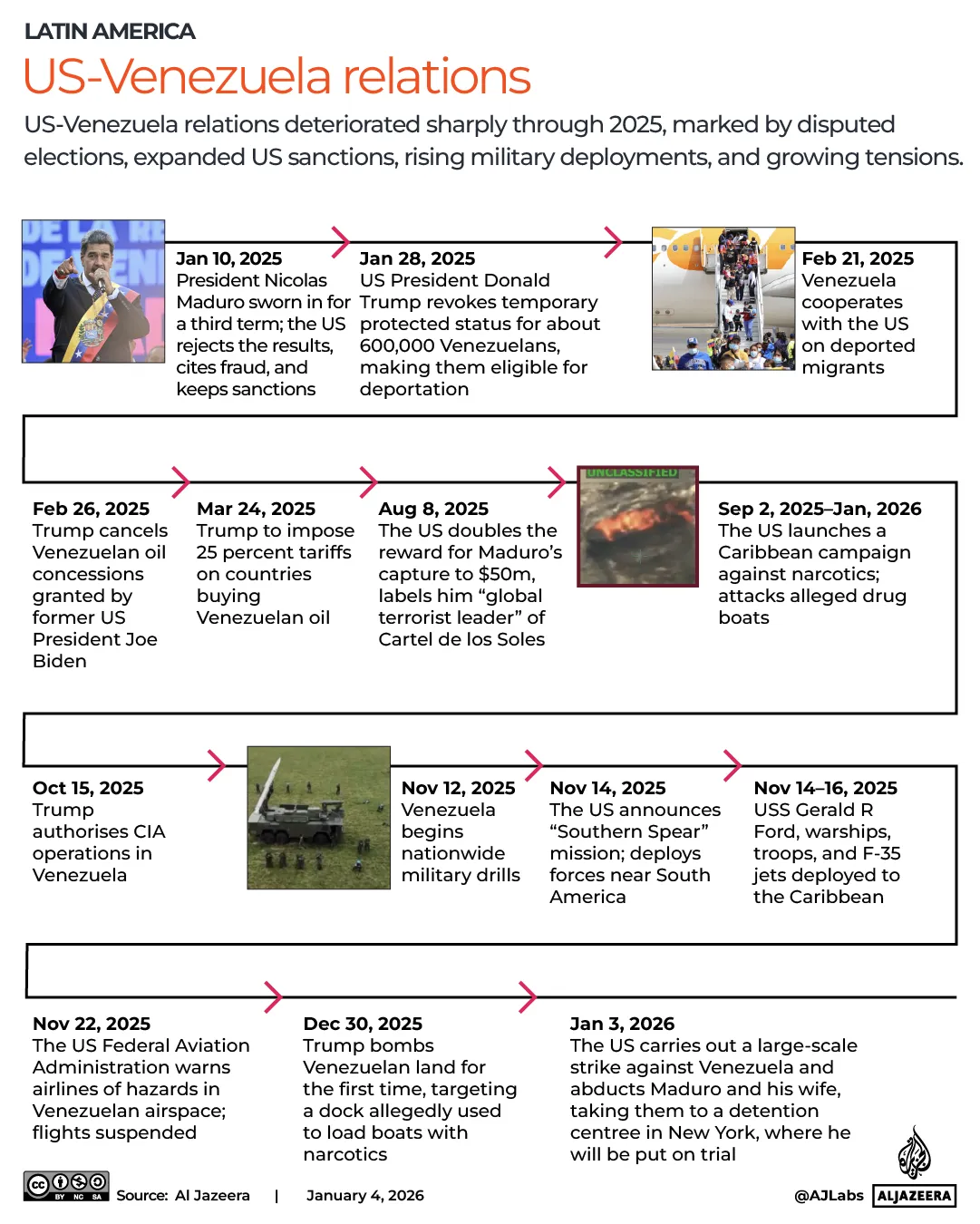
INTERACTIVE - US-Venezuela relations in 2025 - JAN 4, 2026-1767593147

Economic concerns

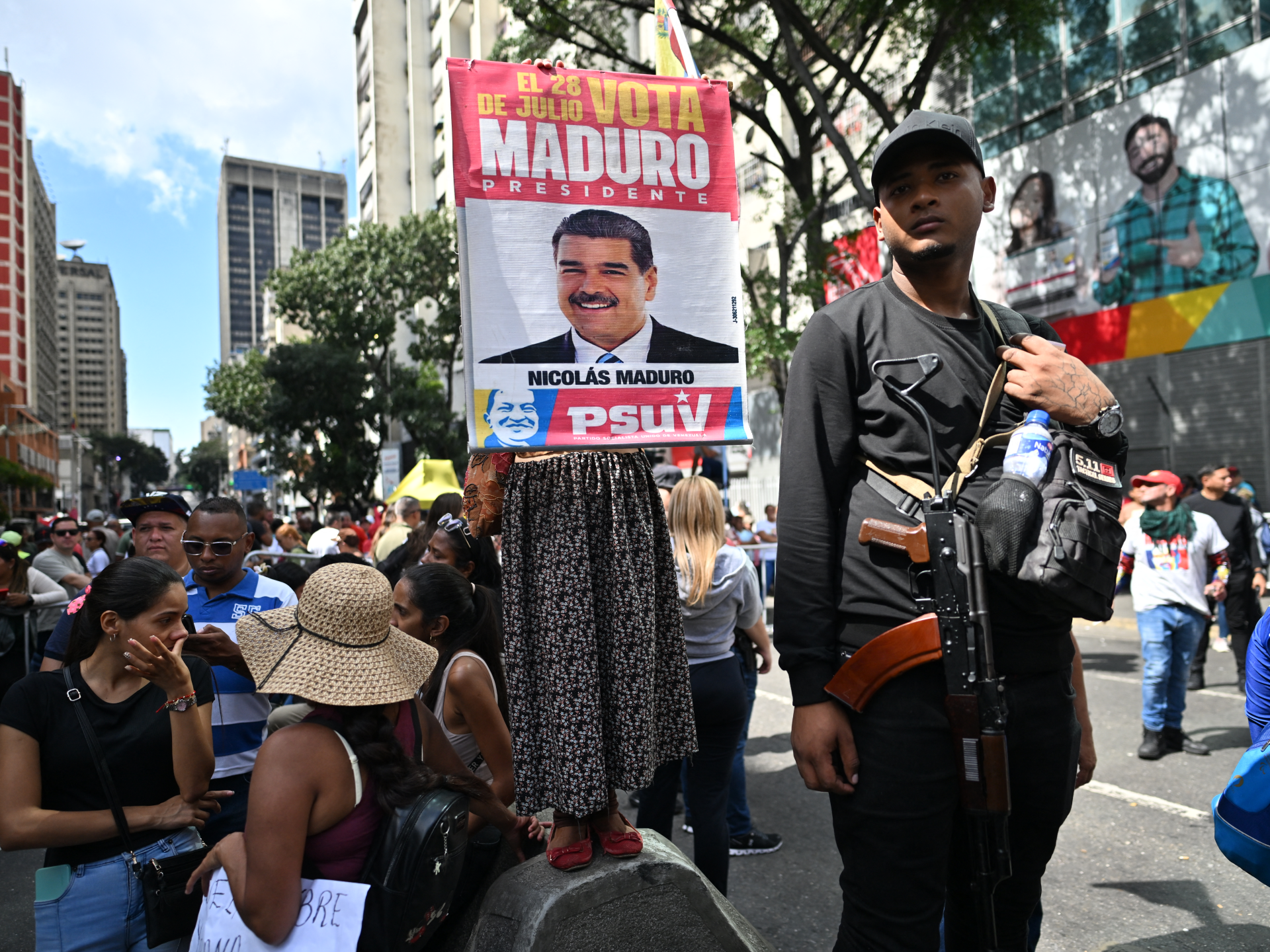
Venezuela remains heavily militarised, and fears of further unrest linger. During periods of dissent, the authorities relied not only on formal security forces but also on “colectivos”, armed civilian groups accused by rights organisations of intimidation and violence.

Jose Chalhoub, an energy and political risk analyst at Jose Parejo & Associates in Caracas, said he is concerned about the possibility of more attacks and social unrest.

“Any potential new government that will move ahead with the cleansing of the top ranks of the armed forces and security and police forces will lead to the disarmament of the colectivos,” he said, adding that fixing the lingering economic crisis should also be one of the main priorities.

“A new government that applies quick economic measures leading to a recovery will outshine the ideological legacy of the Bolivarian revolution,” he said, referring to the ideology of Chavismo, defined by anti-imperialism, patriotism and socialism.

Those loyal to Maduro have long blamed Venezuela’s economic woes on the US — namely, the sanctions it imposed on the oil sector.

Chalhoub said he believed Trump’s promise to boost the country’s oil production could help the economy, though he found the US president’s assertion that the US will “run the country” baffling.

However, not everyone is happy with the Trump administration’s attack.

Alex Rajoy, a mototaxi driver in Caracas, said the US president was on an imperialist crusade with the goal of “robbing” Venezuela of its natural resources.

Despite his anger, Rajoy said he will stay home over the coming days because he is fearful of further attacks.

“These missiles aren’t aimed only at Chavistas,” he said, referring to those loyal to Venezuela’s socialist ideology.

“They threaten opposition people, too,” he said, adding that anyone supporting foreign intervention amounts to a betrayal. “It’s treason against the homeland,” he said.

What now?

For Castro, the university student, the elation he felt on Saturday has been interrupted by fear for his immediate needs – concerns over whether stores would remain open in Ejido and rising costs. Under Maduro, he has long struggled to afford basic items.

“People in the street were going crazy yesterday,” he said. “Everyone was buying food with half of what they had in their bank accounts, buying what they could, because we don’t know what the future holds.”

The scenes brought back memories of the shortages of 2016, when hyperinflation and scarcity plunged the country into crisis, forcing people to queue for hours and rush between shops with limits on how much each person could buy.

But a day after the attack, Castro said Venezuelans are reflecting on the future of their country and the uncertainty of that future.

“There’s happiness, there’s fear, there’s gratitude, there’s the ‘what will happen next?’” he said. “For my next birthday, I want total freedom for Venezuela – and hopefully, God willing, we will have it.”

Source link

Venezuela decries ‘cowardly kidnapping’ as officials back Maduro | US-Venezuela Tensions News

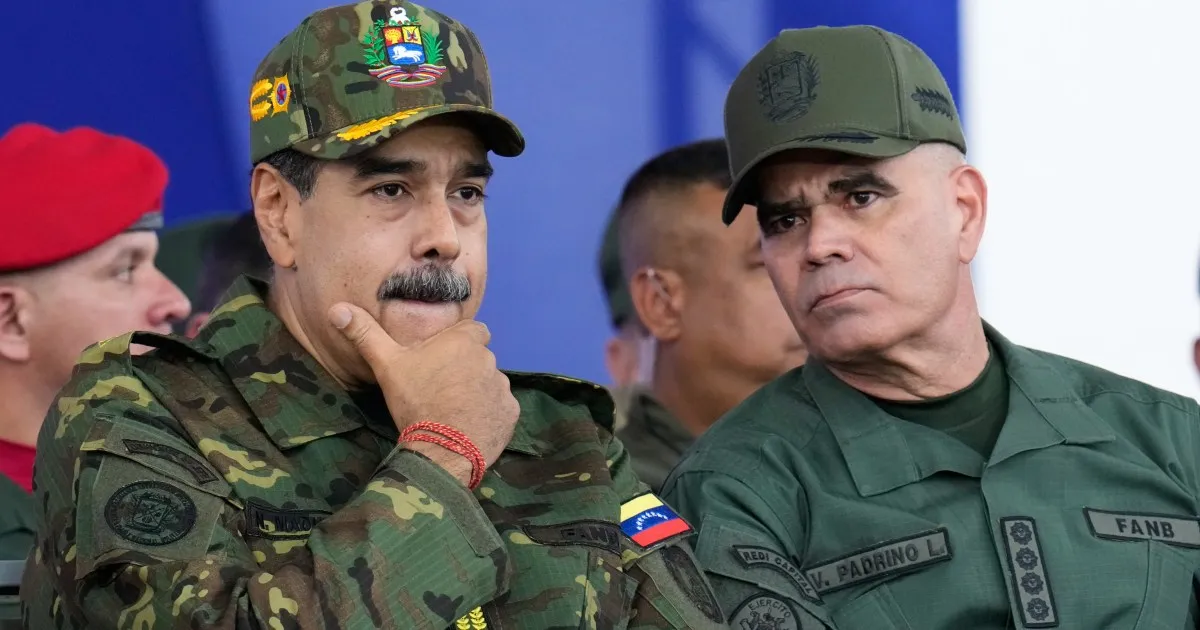
Venezuela’s Defence Minister Vladimir Padrino Lopez has denounced the United States’ move to abduct leader Nicolas Maduro as a “cowardly kidnapping”, adding that some of the president’s bodyguards were killed “in cold blood”, as well as military personnel and civilians on the Venezuelan side.

In his televised statement on Sunday, Padrino Lopez also endorsed a Supreme Court ruling that appointed Vice President Delcy Rodriguez — who also serves as oil minister — as acting president for 90 days.

Recommended Stories

list of 3 itemsend of list

US President Donald Trump threatened that Rodriguez will pay a “very big price” if she doesn’t cooperate with Washington. “If she doesn’t do what’s right, she is going to pay a very big price, probably bigger than Maduro,” Trump told The Atlantic in a telephone interview.

US forces attacked Caracas in the early hours of Saturday, bombing military targets and spiriting away Maduro and his wife to face federal narco-trafficking charges in New York. The Venezuelan president was escorted off a plane at Stewart Air National Guard Base in New York state and taken to a Brooklyn jail.

He is due to make his first appearance on Monday in Manhattan’s federal court.

US to use oil blockade to leverage change in Venezuela

US Secretary of State Marco Rubio on Sunday suggested that Washington would not take a day-to-day role in governing Venezuela other than enforcing an existing “oil quarantine”, using that leverage to press policy changes in the country.

Rubio’s statements seemed designed to temper concerns, a day after Trump announced the US would “run” the oil-rich nation. The Trump administration’s actions drew unease from parts of his own Republican Party coalition, including an “America First” base that is opposed to foreign interventions, as well as from observers who recalled past nation-building efforts in Iraq and Afghanistan.


Rubio dismissed such criticism, saying that Trump’s intent had been misunderstood by a “foreign policy establishment” that was fixated on the Middle East.

Al Jazeera’s Phil Lavelle, reporting from Doral, Florida in the US, said Trump had been elected on an “America First” policy centred around no engagement in foreign wars or sending US service personnel into danger.

“Now we’ve got this situation where he said, less than 24 hours ago, ‘We’re not afraid of putting boots on the ground,’” Lavelle said.

Protests took place in cities across the US against Trump’s military action in Venezuela. Hundreds gathered in the rain in downtown Los Angeles, carrying signs saying “Stop bombing Venezuela now!” and “No blood for oil”.

“I stand against US imperialism altogether. They want oil … They want to help the corporate billionaires. Bombing is just their means to building power like that, of taking control. So again, I’m against it,” said one protester named Niven.

Trump on Saturday delivered a speech in which he made little mention of the so-called “war on drugs” – which for months had been his main justification for bombing Venezuelan ship and assets – but argued that Venezuela had “stolen” oil from the US and that it would now be taken back.

The United Nations special rapporteur on human rights and counterterrorism, Ben Saul, said the US actions in Venezuela were illegal, calling on Trump to be investigated and impeached. “Every Venezuelan life lost is a violation of the right to life. President Trump should be impeached and investigated for the alleged killings,” he said in a social media post.

The UN Security Council (UNSC) was set to meet on Monday to discuss the situation in Venezuela. UN Secretary-General Antonio Guterres said he was “deeply alarmed” by the US strikes, which a spokesperson said could “constitute a dangerous precedent”.

Uncertainty in Venezuela after Maduro’s abduction

Some Venezuelans in Caracas have welcomed the US’s seizure of Maduro, but others said the action could worsen conflict in the country, with protests denouncing the US taking place.

“There should be a positive change for all Venezuelans, because it has been 28 years of government, and now is the time for transition in this country,” said Ronald Gaulee, a motorcycle rider in Caracas.

Merchant Juan Carlos Rincon was more cautious. “The truth is that there is a lot of manipulation behind all this,” he told the Reuters news agency. “We want to be at peace, move forward, and for Venezuela to have, like any other country, the right to choose its own destiny and its own leaders.”

Baker Franklin Jimenez said he would heed the government’s call to defend the country. “If they took him away, I think they shouldn’t have done so, because this will create an even worse conflict than the one we have now,” he said. “And as for the bombings and all that, we have to go out, we all have to go out into the streets to defend our homeland, to defend ourselves.”

Some Venezuelans decided to flee the country amid the uncertainty, crossing the Venezuela-Colombia border to reach the Colombian town of Cucuta. Karina Rey described a “tense situation” in the Venezuelan city of San Cristobal, just across the border.

“There are long lines, and people are very paranoid, or on edge, over food. Supermarkets are closing,” Rey told Al Jazeera. “The lines are very long just to stock up on food, because we don’t know what will happen in the coming weeks. We’re waiting to see what happens.”

Al Jazeera’s Alessandro Rampietti, reporting from Cucuta, said many Venezuelans there initially felt jubilant after Maduro was ousted. “But that quickly shifted to uncertainty,” he said.

“Several people said they expected the United States to immediately bring opposition leader Maria Corina Machado back into the country, along with Edmundo Gonzalez Urrutia, who many Venezuelans believe won the last presidential election,” Rampietti continued.

“Instead, with much of the existing leadership still in place and with Vice President Delcy Rodriguez appointed as interim leader, there is growing fear about what could happen next.”

Tiziano Breda, a senior analyst at the Armed Conflict Location and Event Data Project, said what happens next hinges on the response of Venezuela’s government and armed forces.

“So far, they’ve avoided direct confrontation with US forces, but deployments on the streets point to efforts to contain unrest,” he said. “A smooth transition remains unlikely, and the risk of resistance from pro-regime armed groups – including elements within the military and Colombian rebel networks active in the country – remains high.”

Source link

What might the US do next after Venezuela? | Nicolas Maduro

There are legal concerns about the abduction of Maduro, but little Western criticism.

The United States’ abduction of Venezuela’s President Nicolas Maduro has been sharply criticised by his allies – but not by Western nations, despite questions about its legality.

So, does the operation signal a new aggressive US strategy? And what might the global impact be?

Presenter: Adrian Finighan

Guests:

Charles Shapiro – Former US ambassador to Venezuela under President George W Bush

Stefan Wolff – Professor of International Security at the University of Birmingham in the United Kingdom

Ernesto Castaneda – Director of the Center for Latin American and Latino Studies at the American University in Washington, DC

Source link

Venezuelans divided after US attack and Maduro’s abduction | US-Venezuela Tensions

NewsFeed

Venezuelan officials say US air strikes killed at least 40 people, destroyed parts of the capital and violated their national sovereignty with the abduction of President Nicolas Maduro. Venezuelans are divided between fear of ongoing US intervention and celebrating his removal.

Source link

How the US attack on Venezuela, abduction of Maduro unfolded | US-Venezuela Tensions News

In a move that stunned the world, the United States bombed Venezuela and toppled President Nicolas Maduro amid condemnation and plaudits.

In a news conference on Saturday at his Mar-a-Lago resort in Florida, President Donald Trump praised the operation to seize Maduro as one of the “most stunning, effective and powerful displays of American military might and competence in American history”.

Recommended Stories

list of 4 itemsend of list

It was the riskiest and most high-profile military operation sanctioned by Washington since the US Navy’s SEAL team killed al-Qaeda leader Osama bin Laden in a safe house in Pakistan’s Abbottabad in 2011.

News of the 63-year-old Maduro being abducted took over the global news cycle.

After months of escalation and threats over Maduro’s alleged involvement in shipping drugs to the US, the Trump administration had increased pressure on Caracas with a military build-up in the Caribbean and a series of deadly missile attacks on alleged drug-running boats that had killed more than 100 people and whose legality has been heavily questioned by the United Nations and legal experts.

The US had also previously offered a $50m reward for information leading to Maduro’s arrest.

But while the military was conducting operations in the Caribbean, US intelligence had been gathering information about Maduro, his eating habits, and special forces covertly rehearsed a plan to remove him from power forcibly.

Here’s everything we know about how Maduro and his wife, Cilia Flores, were “captured”.

How was Maduro abducted?

The operation, named “Absolute Resolve”, was carefully rehearsed for months, according to General Dan Caine, chairman of the Joint Chiefs of Staff, who spoke at Trump’s news conference.

Trump also told Fox News that US forces had practised their extraction of Maduro on a replica building.

“They actually built a house which was identical to the one they went into with all the same, all that steel all over the place,” Trump said.

At 11:46pm local time on Friday (03:46 GMT on Saturday), Trump gave the green light.

On Friday night, Caine said, “the weather broke just enough, clearing a path that only the most skilled aviators in the world could move through”, with about 150 aircraft involved in the operation, taking off from 20 different airbases across the Western Hemisphere.

As part of the operation, US forces disabled Venezuela’s air defence systems, with Trump saying the “lights of Caracas were largely turned off due to a certain expertise that we have”, without elaborating.

Several deafening explosions rang out across the capital, with Pete Hegseth, the defence secretary, describing it as part of a “massive joint military and law enforcement raid” that lasted less than 30 minutes.

US helicopters then touched down at Maduro’s compound in the capital at 2:01am (06:01 GMT) on Saturday, with the president and his wife then taken into custody.

There has been no readout on whether there was an exchange of fire, in a chaotic scramble, or if they were taken without a struggle.

At 4:29am (08:29 GMT), just two and a half hours later, Maduro was put on board a US aircraft carrier, en route to New York. Trump later posted a photograph of the Venezuelan leader on his Truth Social social media platform, blindfolded, wearing a grey tracksuit.

After departing the USS Iwo Jima, US forces escorted Maduro on a flight, touching down in New York’s Stewart Air National Guard Base at about 4:30pm (21:30 GMT).

How many people were killed in the US strikes on Venezuela?

The US strikes hit Caracas as well as the states of Miranda, Aragua and La Guaira, according to the Venezuelan government.

To Linda Unamumo, a public worker, the US attacks caused an explosion that was so strong it destroyed the roof of her house.

“Even up until a little while ago, I was still crying … I was crying because I was so scared … I had to leave my house with my daughter, with my family, and go to another house, a neighbour’s house. It was really traumatic. I wouldn’t wish it on anyone, really,” she told the AFP news agency.

While official casualty counts have yet to be released, an official told The New York Times newspaper on condition of anonymity that at least 40 people had been killed in the attacks.

According to Trump, a few US members were injured in the operation, but he believed no one was killed.

What’s next for Venezuela?

During his news conference on Saturday, Trump announced that the US would “run” the country until a new leader was chosen.

“We’re going to make sure that country is run properly. We’re not doing this in vain,” he said. “This is a very dangerous attack. This is an attack that could have gone very, very badly.”

The president did not rule out deploying US troops in the country and said he was “not afraid of boots on the ground if we have to”.

Trump also, somewhat surprisingly, ruled out working with opposition figure and Nobel Peace Prize winner Maria Corina Machado, who had dedicated her prize, which he so wanted to win himself, to the US president.

“She doesn’t have the support within or the respect within the country,” he said.

The Constitutional Chamber of Venezuela’s Supreme Court ordered Vice President Delcy Rodriguez to serve as acting president following the US’s abduction of Maduro.

The court ruled that Rodriguez will assume “the office of President of the Bolivarian Republic of Venezuela, in order to guarantee administrative continuity and the comprehensive defence of the Nation”.

The court also said it would work to “determine the applicable legal framework to guarantee the continuity of the State, the administration of government, and the defense of sovereignty in the face of the forced absence of the President of the Republic”.

Trump had said earlier on Saturday that the US would not occupy Venezuela, provided Rodriguez “does what we want”.

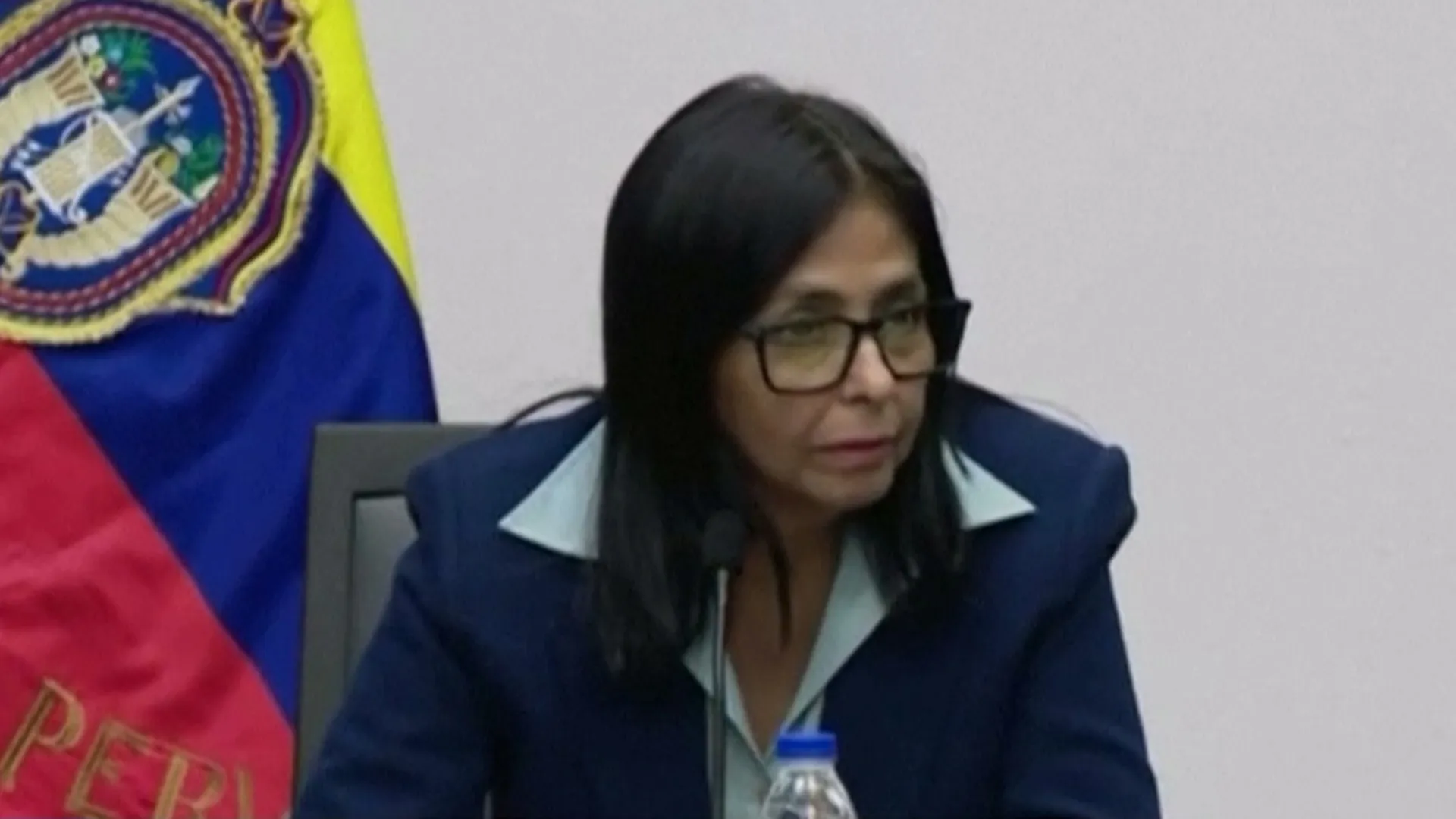
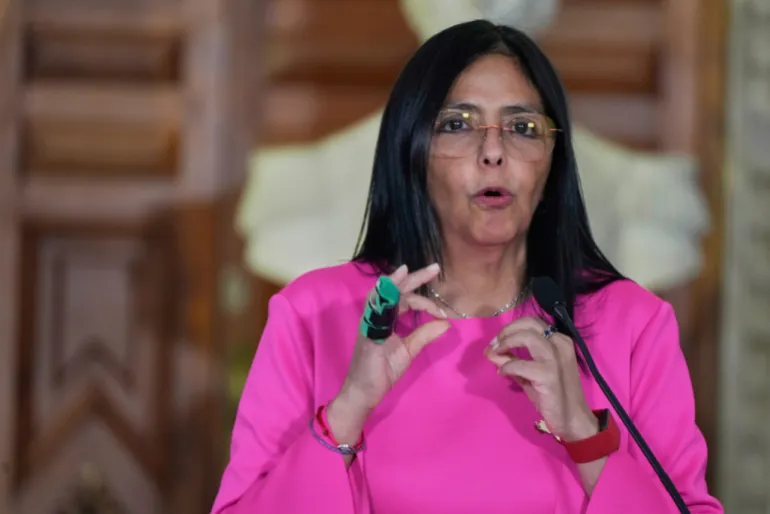
Delcy Rodriguez addresses the press
Venezuelan Vice President Delcy Rodriguez speaks to the press at the Foreign Office in Caracas, Venezuela, on August 11, 2025 [Ariana Cubillos/AP Photo]

Source link

US Republicans back Trump on Venezuela amid faint MAGA dissent | US-Venezuela Tensions News

Since coming down the escalator in 2015 to announce his first presidential run, Donald Trump has presented himself as a break from the traditional hawkish foreign policy in the United States.

The US president has even criticised some of his political rivals as “warmongers” and “war hawks”.

Recommended Stories

list of 3 itemsend of list

But Trump’s move to abduct Venezuelan President Nicolas Maduro and announce that the US will “run” the Latin American country has drawn comparisons with the regime change wars that he built a political career rejecting.

Some critics from Trump’s Make America Great Again (MAGA) movement, who backed his message of focusing on the country’s own issues instead of conflicts abroad, are criticising Washington’s march to war with Venezuela.

Still, Trump’s grip on Republican politics appears to remain firm, with most legislators from the party praising Trump’s actions.

“To President Trump and his team, you should take great pride in setting in motion the liberation of Venezuela,” Senator Lindsey Graham wrote in a social media post.

“As I have often said, it is in America’s national security interest to deal with the drug caliphate in our backyard, the centrepiece of which is Venezuela.”

Graham’s reference to a “drug caliphate” seems to play on Islamophobic tropes and promote the push to liken the US attacks on alleged drug traffickers in Latin America to the so-called “war on terror”.

The US senator heaped praise on the winner of the FIFA Peace Prize – handed to Trump by the association’s chief, Gianni Infantino, in December – and called him “the GOAT of the American presidency”, which stands for “the greatest of all time”.

Muted criticism

While it was expected that Graham and other foreign policy hawks in Trump’s orbit would back the moves against Venezuela, even some of the Republican sceptics of foreign interventions cheered the abduction of Maduro.

Former Congressman Matt Gaetz, one of the most vocal critics of hawkish foreign policy on the right, poked fun at the “capture” of the Venezuelan president.

“Maduro is gonna hate CECOT,” he wrote on X, referring to the notorious prison in El Salvador where the Trump administration sent hundreds of suspected gang members without due process.

Libertarian Senator Rand Paul, who has been a leading voice in decrying Congress’s war-making power, only expressed muted disapproval of Trump’s failure to seek lawmakers’ authorisation for military action in Venezuela.

“Time will tell if regime change in Venezuela is successful without significant monetary or human cost,” he wrote in a lengthy statement that mostly argued against bringing “socialism” to the US.

“Best though, not to forget, that our founders limited the executive’s power to go to war without Congressional authorisation for a reason – to limit the horror of war and limit war to acts of defence. Let’s hope those precepts of peace are not forgotten in our justified relief that Maduro is gone and the Venezuelan people will have a second chance.”

Early on Saturday morning, Republican Senator Mike Lee questioned the legality of the attack. “I look forward to learning what, if anything, might constitutionally justify this action in the absence of a declaration of war or authorisation for the use of military force,” he wrote on X.

Lee later said that Secretary of State Marco Rubio told him that US troops were executing a legal arrest warrant against Maduro.

“This action likely falls within the president’s inherent authority under Article II of the Constitution to protect US personnel from an actual or imminent attack,” the senator said.

Dissent

Republican Congresswoman Marjorie Taylor Greene was one of the few dissenting voices.

“Americans’ disgust with our own government’s never-ending military aggression and support of foreign wars is justified because we are forced to pay for it and both parties, Republicans and Democrats, always keep the Washington military machine funded and going,”  Greene wrote on X.

Greene, a former Trump ally who fell out with the US president and is leaving Congress next week, rejected the argument that Trump ordered Maduro’s “capture” because of the Venezuelan president’s alleged involvement in the drug trade.

She noted that Venezuela is not a major exporter of fentanyl, the leading cause of overdose deaths in the US.

She also underscored that, last month, Trump pardoned former Honduran President Juan Orlando Hernandez, a convicted drug trafficker who was serving a 45-year sentence in a US jail.

“Regime change, funding foreign wars, and American’s [sic] tax dollars being consistently funneled to foreign causes, foreigners both home and abroad, and foreign governments while Americans are consistently facing increasing cost of living, housing, healthcare, and learn about scams and fraud of their tax dollars is what has most Americans enraged,” Greene said.

Congressman Tomas Massie, another Republican, shared a speech he delivered in the House of Representatives earlier this month, warning that attacking Venezuela is about “oil and regime change”.

“Are we prepared to receive swarms of the 25 million Venezuelans, who will likely become refugees, and billions in American treasure that will be used to destroy and inevitably rebuild that nation? Do we want a miniature Afghanistan in the Western Hemisphere?” Massie said in the remarks.

“If that cost is acceptable to this Congress, then we should vote on it as a voice of the people and in accordance with our Constitution.”

While Massie and Greene are outliers in their party, Trump’s risky moves in Venezuela were a success in the short term: Maduro is in US custody at a minimal cost to Washington.

Similarly, few Republicans opposed the US war in Iraq when then-President George W Bush stood under the “mission accomplished” sign on the aircraft carrier USS Abraham Lincoln after toppling Iraq’s leader, Saddam Hussein, in 2003.

But there is now a near consensus across the political spectrum that the Iraq invasion was a geopolitical disaster.

The fog of war continues to hang over Venezuela, and it is unclear who is in charge of the country, or how Trump will “run” it.

The US president has not ruled out deploying “boots on the ground” to Venezuela, raising the prospect of a US occupation and the possibility of another Vietnam, Iraq or Afghanistan.

“Do we truly believe that Nicolas Maduro will be replaced by a modern-day George Washington? How did that work out in… Libya, Iraq or Syria?” Massie warned in his Congress speech.

“Previous presidents told us to go to war over WMDs, weapons of mass destruction, that did not exist. Now, it’s the same playbook, except we’re told that drugs are the WMDs.”

Source link

Venezuela temporarily closes border with Brazil following US strike | US-Venezuela Tensions News

Sao Paulo, Brazil – Venezuela has temporarily closed its border with Brazil following the United States’s early morning attack on Caracas, in which US forces also “captured” President Nicolas Maduro and his wife, Cilia Flores.

The border crossing between the Brazilian city of Pacaraima and Santa Elena de Uairen in Venezuela had been closed on the Venezuelan side for about five hours, blocking citizens from entering Brazil, a Brazilian military official told Al Jazeera.

Recommended Stories

list of 3 itemsend of list

“There was no formal protocol from Venezuela regarding entry and exit criteria. The fact is that Brazilians are allowed to leave, while Venezuelans face restrictions. But this could change at any time,” said the official, who spoke on condition of anonymity because he is not authorised to speak on the matter.

The head of Brazil’s Federal Police also announced the temporary closure, and the governor of the state of Roraima told Reuters that the border had been reopened after the brief closure.

Brazil’s government said it is monitoring the border and has sent military personnel to the region to bolster security.

“The Minister of Defense indicated that there is no abnormal activity on the border between Brazil and Venezuela, which will continue to be monitored, and that he is in contact with the Governor of Roraima,” read a statement from Brazil’s Ministry of Foreign Affairs.

Venezuelans make up Brazil’s largest foreign population, according to the Brazilian Institute of Geography and Statistics. The state of Roraima alone is home to 77,563 immigrants from the country. In all, some 8 million Venezuelans have fled their homes in the past decade, with more than 6 million resettling in other Latin American countries.

“I think it’s very possible that there will be an exodus of Venezuelans to Brazil, and, in fact, we are already seeing concrete signs of it,” Jessica Leon Cedeno, a Venezuelan journalist who lives in Sao Paulo, told Al Jazeera.

“Millions of people have left the country in search of better living conditions and opportunities.”

Lula says US attacks could ‘destabilise’ the region

Brazilian President Luiz Inacio Lula da Silva said on Saturday that US President Donald Trump’s actions inside Venezuela were “unacceptable”.

“The bombings on Venezuelan territory and the capture of its president cross an unacceptable line,” wrote Lula on X. “These acts represent a grave affront to Venezuela’s sovereignty and yet another extremely dangerous precedent for the entire international community.”

Brazil’s leader has urged restraint for months amid an increased US military buildup off Venezuela’s coast.

Analysts worry that Maduro’s removal could plunge Venezuela into chaos, potentially resulting in another wave of mass migration, as it witnessed in 2019 after a failed attempt to remove Maduro.

Joao Carlos Jarochinski Silva, a professor of international relations at the Federal University of Roraima, said that a potential wave of migration would depend on multiple factors, including whether Washington continues its military campaign inside the country and whether what remains of Maduro’s regime will put up a fight.

“What is the resilience capacity of Chavismo within Venezuela?” Jarochinski Silva said, referring to the political movement named after former President Hugo Chavez. “This could have consequences that are truly worrying, but given the current scenario, there is no context of fear.”

He added that Trump has so far focused on applauding his military’s action inside Venezuela and has not addressed key humanitarian concerns. Earlier this year, the Trump administration cut funding to the US government’s main agency for foreign aid, USAID, which heavily affected Venezuela’s neighbours, Brazil and Colombia.

“The United States has been cutting humanitarian resources lately,” he said, adding that there will be consequences to the US military actions inside the country. “For example, refugees, other people who may be affected by this. He doesn’t commit to this agenda at any point.”

Source link

US imposes more sanctions on tankers transporting Venezuelan oil | US-Venezuela Tensions News

The United States Department of the Treasury has issued a new round of sanctions aimed at isolating Venezuela’s oil industry, as part of President Donald Trump’s pressure campaign against the South American country.

The sanctions announced on Wednesday target four companies and their associated oil tankers, which are allegedly involved in transporting Venezuelan oil.

Recommended Stories

list of 3 itemsend of list

Trump has claimed that Venezuelan leader Nicolas Maduro leads a so-called “narco-terrorist” government that seeks to destabilise the US, a charge repeated in the latest sanctions announcements.

“Maduro’s regime increasingly depends on a shadow fleet of worldwide vessels to facilitate sanctionable activity, including sanctions evasion, and to generate revenue for its destabilizing operations,” the Treasury said on Wednesday.

Petroleum is Venezuela’s primary export, but the Trump administration has sought to cut the country off from its international markets.

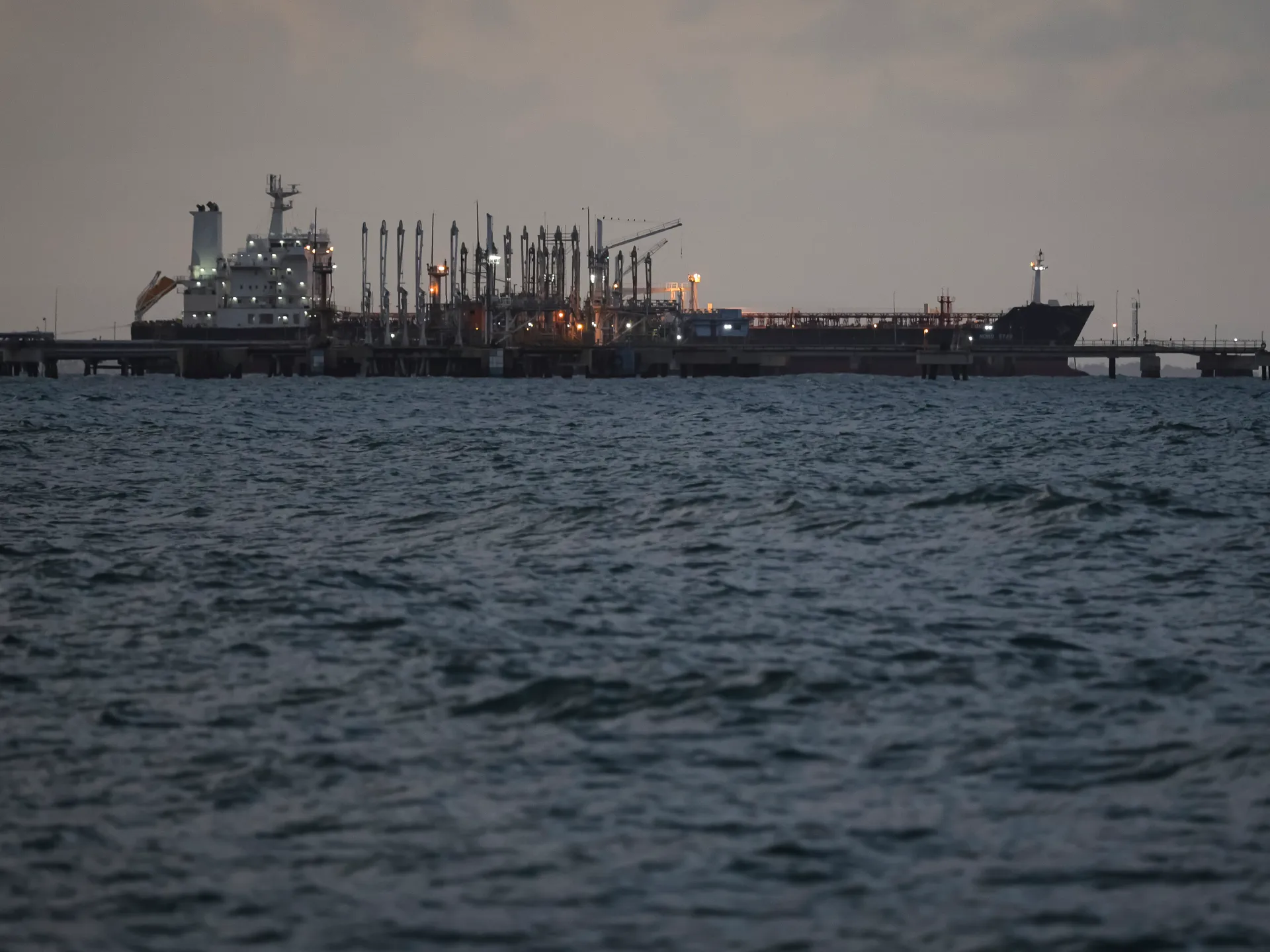
Wednesday’s notice accuses four tankers – the Nord Star, the Rosalind, the Valiant and the Della – of helping Venezuela’s oil sector to circumvent existing sanctions, thereby providing the “financial resources that fuel Maduro’s illegitimate narco-terrorist regime”.

“President Trump has been clear: We will not allow the illegitimate Maduro regime to profit from exporting oil while it floods the United States with deadly drugs,” said Treasury Secretary Scott Bessent.

“The Treasury Department will continue to implement President Trump’s campaign of pressure on Maduro’s regime.”


Claims on Venezuelan oil

The sanctions come a day after Washington imposed sanctions on a separate Venezuelan company it says assembled drones designed by Iran.

In recent months, the Trump administration has cited several motives for ratcheting up pressure against Venezuela, ranging from immigration to Maduro’s contested election in 2024.

Trump, for instance, has framed the pressure campaign as a means of stemming the trade of illegal drugs, despite Venezuela exporting virtually none of the administration’s main target, fentanyl.

Critics have also accused Washington of seeking to topple Maduro’s government to take control of the country’s vast oil reserves.

Trump officials have fuelled those suspicions with remarks seeming to assert ownership over Venezuela’s oil.

On December 17, a day after Trump announced a “total and complete blockade” of sanctioned oil tankers entering and leaving Venezuela, his top adviser, Stephen Miller, claimed that the US “created the oil industry in Venezuela”.

He suggested that the oil was stolen from the US when Venezuela nationalised its petroleum industry, starting in 1976.

That process accelerated after the 1998 election of socialist President Hugo Chavez, who reasserted state control over Venezuela’s oil sector, ultimately leading to the seizure of foreign assets in 2007.

That “tyrannical expropriation” scheme, Miller alleged, “was the largest recorded theft of American wealth and property”.

Still, one major US oil company, Chevron, continues to operate in the country.

Trump has echoed Miller’s claims, writing online that the US “will not allow a Hostile Regime to take our Oil, Land, or any other Assets”.

He added that all of those assets “must be returned to the United States, IMMEDIATELY”.

Military build-up in the Caribbean

In recent months, the Trump administration has tightened its focus on Venezuela’s oil industry, taking a series of military actions against tankers.

On December 10, the administration seized its first tanker, the Skipper, followed by a second seizure 10 days later.

The US military has reportedly been pursuing a third tanker as it crosses the Atlantic Ocean.

The attacks on the oil tankers come several months after the US began surging aircraft, warships and other military assets to the Caribbean region along Venezuela’s coast.

Since September 2, the US military has conducted dozens of bombing campaigns against alleged drug-smuggling boats in international waters in the Caribbean Sea and eastern Pacific, in what rights groups call extrajudicial killings.

More than 100 people have been killed, and the administration has offered scant legal justification for the attacks.

On Monday, Trump told reporters that the US had struck a “dock area” in Venezuela he claimed was used to load the alleged drug boats.

The dock bombing is believed to be the first of its kind on Venezuelan soil, though Trump has long threatened to begin attacking land-based targets.

While the administration has not officially revealed which agency was behind the dock strike, US media has widely reported it was conducted by the Central Intelligence Agency (CIA).

Source link

US issues Iran-Venezuela sanctions over alleged drone trade | US-Venezuela Tensions News

Washington accuses Tehran and Caracas of ‘reckless proliferation of deadly weapons’ amid spiraling tensions.

Washington, DC – The United States has issued sanctions against a Venezuelan company over accusations that it helped acquire Iranian-designed drones as Washington’s tensions with both Tehran and Caracas escalate.

The penalties on Tuesday targeted Empresa Aeronautica Nacional SA (EANSA), a Venezuelan firm that the US Department of the Treasury said “maintains and oversees the assembly of” drones from Iran’s Qods Aviation Industries, which is already under sanctions by Washington.

Recommended Stories

list of 3 itemsend of list

The department also sanctioned the company’s chairman, Jose Jesus Urdaneta Gonzalez, accusing him of coordinating “with members and representatives of the Venezuelan and Iranian armed forces on the production of UAVs [unmanned aerial vehicles] in Venezuela”.

“Treasury is holding Iran and Venezuela accountable for their aggressive and reckless proliferation of deadly weapons around the world,” Treasury official John Hurley said in a statement.

“We will continue to take swift action to deprive those who enable Iran’s military-industrial complex access to the US financial system,” he said. The sanctions freeze any assets of the targeted firms and individuals in the US and make it generally illegal for American citizens to engage in financial transactions with them.

In its statement, the US alleged Tehran and Caracas have coordinated the “provision” of drones to Venezuela since 2006.

Iran’s Ministry of Defence and Armed Forces Logistics (MODAFL) has been under US sanctions since 2020 for what Washington said is its role in both selling and procuring weapons. The US is by far the largest weapons exporter in the world.

On Tuesday, the US Treasury Department also imposed new sanctions against several Iranians it accused of links to Iran’s arms industry.

The actions came a day after President Donald Trump threatened more strikes against Iran if the country rebuilds its missile capabilities or nuclear programme.

The US had joined Israel in its attacks against Iran in June and bombed the country’s three main nuclear sites before a ceasefire ended a 12-day escalation.

“Now I hear that Iran is trying to build up again, and if they are, we’re going to have to knock them down,” Trump said on Monday during a joint news conference with visiting Israeli Prime Minister Benjamin Netanyahu. “We’ll knock them down. We’ll knock the hell out of them. But hopefully, that’s not happening.”

Iran was quick to respond to Trump’s threats.

“The response of the Islamic Republic of Iran to any oppressive aggression will be harsh and regrettable,” President Masoud Pezeshkian wrote in a social media post.

The Trump administration has also taken a confrontational approach towards Venezuela.

The US president announced this week that the US “hit” a dock in the Latin American country that he said was used to load drug boats. Details of the nature of the strike remain unclear.

Trump and some of his top aides have falsely suggested that Venezuela’s oil belongs to the US. Washington has also accused Venezuelan President Nicolas Maduro, without evidence, of leading a drug trafficking organisation.

The Trump administration has simultaneously been carrying out strikes against what it says are drug-running vessels in the Caribbean Sea and eastern Pacific Ocean, a campaign that many legal experts said violates US and international law and is tantamount to extrajudicial killings.

Over the past month, the US also has seized at least two oil tankers off the coast of Venezuela after Trump announced a naval blockade against the country.

Venezuela has rejected the US moves as “piracy” and accused the Trump administration of seeking to topple Maduro’s government.

Source link

Venezuela warns US ‘aggression’ is first stage amid ‘continental ambitions’ | US-Venezuela Tensions News

Venezuela’s UN ambassador denounces US military strikes and naval blockade at a meeting of the UN Security Council.

Venezuela has told the United Nations Security Council (UNSC) that the United States has “continental ambitions” over much of Latin America as it wages an unofficial war to remove the government of Venezuelan President Nicolas Maduro.

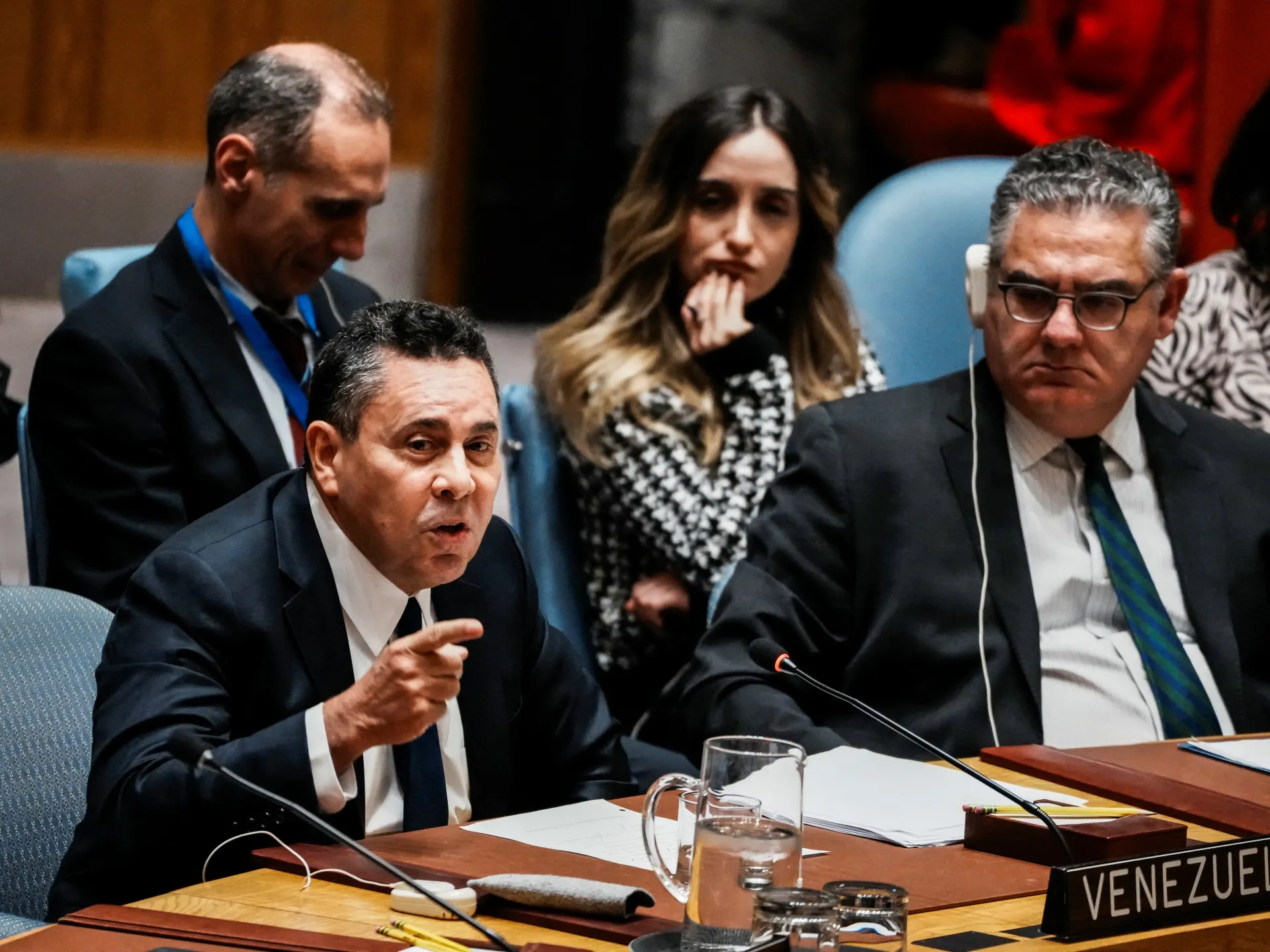
“It’s not just about Venezuela. The ambition is continental,” Venezuela’s UN ambassador, Samuel Moncada, told a meeting of the 15-member UNSC on Tuesday.

Recommended Stories

list of 4 itemsend of list

“The US government has expressed this in its National Security Strategy, which states that the future of the continent belongs to them,” Moncada said.

“We want to alert the world that Venezuela is only the first target of a larger plan. The US government wants us to be divided so it can conquer us piece by piece,” he said.

Venezuela, earlier this month, requested that the UNSC meet to address the “ongoing US aggression”, which began in September when the White House launched air strikes against vessels in the Caribbean Sea and eastern Pacific Ocean. The White House claimed, without providing any evidence, that the vessels were trafficking drugs to the US.

At least 105 people have been killed so far in the attacks by US forces, which legal experts and Latin American leaders have branded “extrajudicial killings”, but which Washington claims are necessary to stem the flow of drugs to US shores.

At the UNSC meeting, Moncada also accused the administration of US President Donald Trump of violating both international and US domestic law, since the White House has been acting without the approval of the US Congress, whose authority is required to formally declare war on another country.

Moncada said that Trump’s imposition last week of a naval blockade on all Venezuelan oil tankers sanctioned by the US was a “military act aimed at laying siege to the Venezuelan nation”.

“Today, the masks have come off,” Moncada said. “It is not drugs, it is not security, it is not freedom. It is oil, it is mines and it is land.”

US envoy denounces ‘Maduro and his illegitimate regime’

US forces have seized at least two Venezuelan oil tankers and confiscated at least 4 million barrels of Venezuelan oil, according to Moncada, in a move he described as “a robbery carried out by military force”.

The US has defended its naval blockade of Venezuela as a “law enforcement” action to be carried out by the US coastguard, which has the authority to board ships under US sanctions. A naval blockade, by contrast, would be considered an act of war under international law.

The US ambassador to the UN, Mike Waltz, told the UNSC that Latin American drug cartels remain the “single most serious threat” and that Trump would continue to use the full power of the US to eradicate them. Waltz also said that Venezuelan oil is a critical component in funding the cartels in Venezuela.

“The reality of the situation is that sanctioned oil tankers operate as the primary economic lifeline for Maduro and his illegitimate regime,” he said.

The White House earlier this year designated several international drug cartels, including Venezuela’s Tren de Aragua, as terrorist organisations. Washington also added the “Cartel de los Soles,” which it claims is headed by Maduro, to the list in November.

The Venezuelan leader has denied the US allegations and accused the Trump administration of using the drug trafficking claims as a cover to carry out “regime change” in his country.

Russia’s ambassador to the UN separately warned that US “intervention” in Venezuela could “become a template for future acts of force against Latin American states”.

China’s ambassador told the UNSC that the US actions “seriously infringe” on the “sovereignty, security and legitimate rights” of Venezuela.

Source link

Venezuela passes law enacting harsh penalties for supporters of US blockade | US-Venezuela Tensions News

Venezuela’s National Assembly has passed a law enacting harsh penalties for those who support or help finance blockades and acts of piracy, including up to 20 years in prison.

The legislation was passed on Tuesday after the United States seized oil tankers linked to Venezuela, acts that the government of President Nicolas Maduro has denounced as lawless acts of piracy.

Recommended Stories

list of 3 itemsend of list

“This law seeks to protect the national economy and avoid the erosion of living standards for the population,” lawmaker Giuseppe Alessandrello said, while presenting the law before the National Assembly, controlled by Maduro’s governing party.

The US has carried out a series of increasingly aggressive measures over the past several months, deploying sizeable military forces to Latin America, seizing oil tankers, killing dozens of people in military strikes on what it says are drug-trafficking boats, and threatening land strikes on Venezuela itself.

The legality of some of those acts, such as the seizure of oil tankers in international waters, is contested. Others, such as the strikes against alleged drug traffickers, are widely considered illegal.

“We are in the presence of a power that acts outside of international law, demanding that Venezuelans vacate our country and hand it over,” Samuel Moncada, Venezuela’s representative at the United Nations, told the Security Council (UNSC) during a meeting on Tuesday.

“The threat is not Venezuela,” he added. “The threat is the US government.”

China and Russia also criticised US actions. Russia’s ambassador, Vassily Nebenzia, said that the Trump administration was creating a “template” for the use of force that could be used against other Latin American countries in the future.

“We saw clear support for Venezuela from Russia and China, but also from Colombia, and even from some other member states, talking about how the US needs to abide by international law and calling for de-escalation,” Al Jazeera correspondent Gabriel Elizondo said from the UN.

He added that several Latin American countries with right-wing governments, such as Argentina, Panama and Chile, appeared to side with the US.

“The bottom line here is that we have not gotten any better sense from the United States on what their endgame is here, where they plan to take this,” he added.

The Wall Street Journal reported on Tuesday that the US military had moved special operations aircraft and cargo planes with troops into the Caribbean this week.

“We have a massive armada formed, the biggest we’ve ever had, and by far the biggest we’ve ever had in South America,” Trump told reporters on Monday.

Maduro has said the US is seeking to topple his government and seize control of Venezuela’s large oil reserves, which members of the Trump administration have falsely claimed rightfully belong to the US. Trump said on Monday that the US would retain the oil seized from the tankers as well as the tankers themselves.

Addressing the UNSC, the US ambassador, Mike Waltz, said that oil sales were a “primary economic lifeline for Maduro and his illegitimate regime”, repeating an unsubstantiated claim that Maduro oversees a vast criminal enterprise that traffics drugs to the US.

“The single most serious threat to this hemisphere, our very own neighbourhood and the United States, is from transnational terrorist and criminal groups,” Waltz said.

The US pressure campaign has become a useful pretext for the Venezuelan government’s efforts to crack down on internal dissent.

Rights groups have said that Maduro’s government has become more repressive since the presidential election in July 2024, in which Maduro claimed victory despite the widespread doubts about the credibility of the results. The opposition has maintained it was the true winner, and few countries have recognised Maduro’s victory.

Source link