US Military Threats

CIA Claimed to Have Launched Strike on ‘Remote Dock’ on Venezuelan Coast

Trump has repeatedly threatened to strike purported drug targets inside Venezuelan territory. (Archive)

Caracas, December 30, 2025 (venezuelanalysis.com) – The United States’ Central Intelligence Agency (CIA) has reportedly bombed a target inside Venezuelan territory.

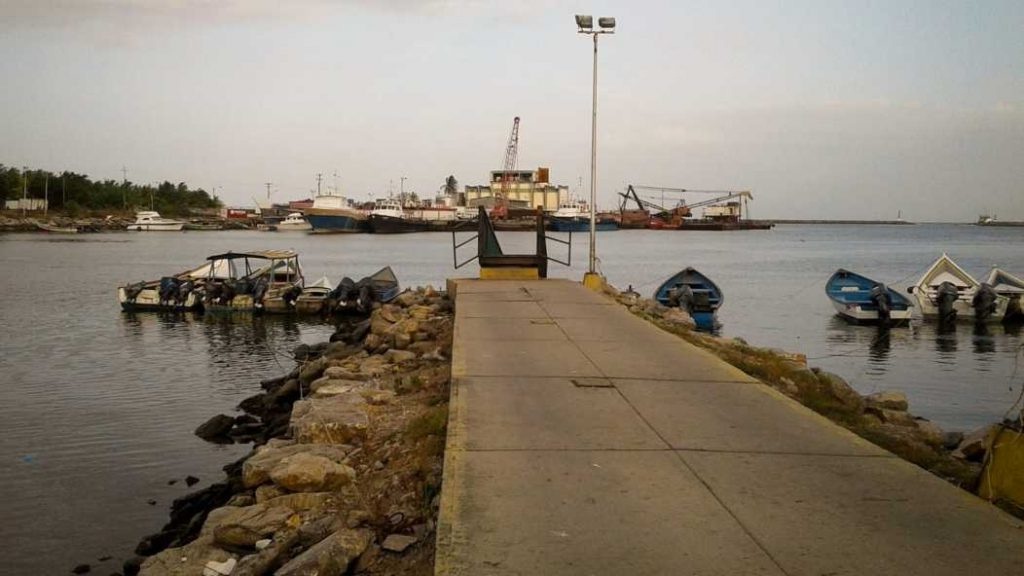
According to CNN, citing “sources familiar with the matter,” the CIA carried out a drone strike against a “remote dock on the Venezuelan.” US officials allegedly believed the facility was being used for drug storage and shipping.

There was reportedly no one present on site during the attack, which is only specified to have taken place “earlier this month.” A New York Times report, likewise relying on anonymous sources, presented similar claims and added that the strike took place last Wednesday.

US President Donald Trump first alluded to a purported strike inside Venezuelan territory during an interview on Friday, claiming that US forces had destroyed a “big facility where ships come from” two days earlier. 

Trump elaborated on a Monday press conference, adding that the site was along the Venezuelan shore and that there was a “big explosion in the dock area where they load the boats up with drugs.”

US agencies have not confirmed the attack, with the CIA, the White House and the Pentagon refusing comment. Analysts relying on open source data tracked no signs of an explosion on the Venezuelan coast in recent days.

For its part, Venezuelan authorities have not released any statements on the matter.

If confirmed, the land strikes would mark a significant escalation in the US’ military campaign against Venezuela. Since August, the Trump administration has amassed the largest build-up in decades in the Caribbean and launched dozens of strikes against small boats accused of narcotics trafficking, killing over 100 civilians in the process.

Trump has repeatedly vowed to bomb purported drug targets inside Venezuelan territory while escalating regime change threats against the Nicolás Maduro government. The White House allegedly approved lethal CIA operations in the country in October.

Despite recurrent “narcoterrorism” accusations against Maduro and other high-ranking Venezuelan officials, Washington has not provided court-tested evidence to back the claims. Specialized agencies have consistently shown Venezuela to play a marginal role in global drug trafficking.

In recent weeks, Trump has turned his discourse toward Venezuelan oil, claiming that the Caribbean nation had “stolen” oil rights from US corporations during nationalization processes in the 2000s and 1970s. 

The US president ordered a naval blockade against Venezuelan oil exports, with US forces seizing two oil tankers carrying Venezuelan crude in international waters earlier this month. A third vessel reportedly refused to be boarded and headed toward the Atlantic Ocean. According to Reuters, US forces have been ordered to enforce a “quarantine” of Venezuelan oil in the next two months in order to exacerbate the South American country’s economic struggles. 

A group of UN experts issued a statement on December 24 condemning the US’ maritime blockade as “violating fundamental rules of international law.”

“The illegal use of force, and threats to use further force at sea and on land, gravely endanger the human right to life and other rights in Venezuela and the region,” the experts affirmed, while urging UN member-states to take measures to stop the blockade and the vessel bombings.

The attempted blockade builds on widespread US economic sanctions, particularly targeting the Venezuelan oil industry, the country’s most important revenue source. US coercive measures have been classified as “collective punishment” and found responsible for tens of thousands of civilian deaths.

For its part, the Maduro government has condemned US “acts of piracy” in capturing oil tankers and blasted the Trump administration’s actions as blatant attempts to seize Venezuela’s natural resources.

Caracas has received diplomatic backing from its main allies, with China and Russia both condemning Washington’s military escalations as violations of international law. However, a recent UN Security Council meeting convened by Venezuela produced no resolutions.
Source link

Venezuelan Armed Forces Vow to Defend Airspace as US Increases Warplane Deployment

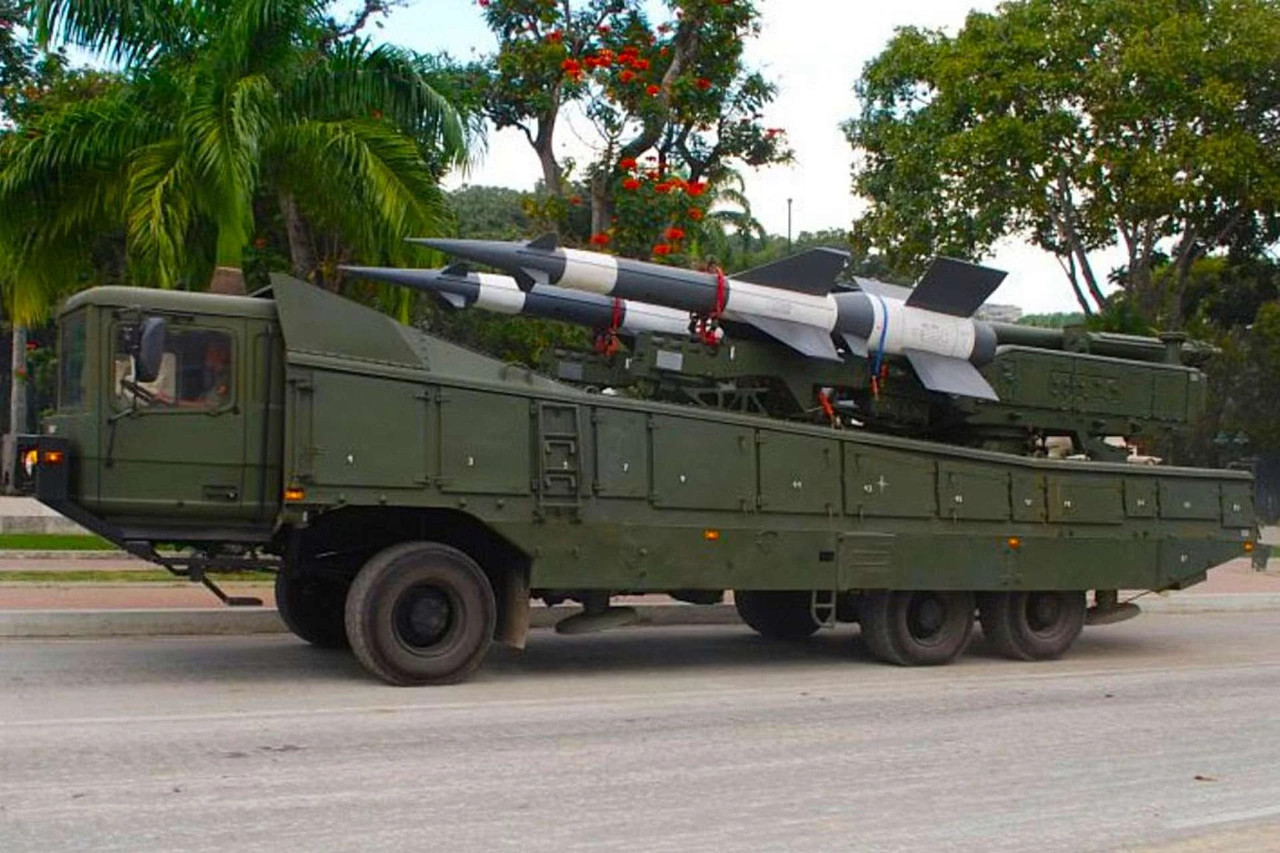
Venezuela’s air defenses include Russian-supplied S-125 Pechora systems. (Venezuelan Defense Ministry)

Caracas, December 15, 2025 (venezuelanalysis.com) – The Venezuelan Armed Forces reiterated their commitment to defend the Caribbean nation’s airspace amid an escalating US military buildup and provocations.

Defense Minister Vladimir Padrino issued a statement Sunday to mark the 47th anniversary of the Venezuelan Integral Airspace Defense Command (CODAI), hailing the system’s “effective and immediate” response capabilities against “imperialist threats.”

“With its modern radars, missile systems and surface-to-air artillery, CODAI has become the vanguard of the country’s defense,” Padrino wrote on social media. The defense minister went on to highlight CODAI’s “technological independence.”

Padrino’s comments occurred amid a large-scale US military buildup in the Caribbean in a self-declared anti-narcotics mission. The Trump administration has repeatedly threatened to launch strikes against purported drug targets inside Venezuelan territory.

After moving their largest US aircraft carrier, the USS Gerald R. Ford, to the region in November, US forces have likewise ramped up warplane deployments to bases in Puerto Rico. According to reports, the US Navy moved six EA-18G Growler electronic warfare jets to the island’s Roosevelt Roads naval station.

Designed by Boeing, the EA-18G Growlers have advanced capabilities to disrupt and deceive enemy military electronic systems, including air defenses.

Open-access flight tracking websites have shown EA-18G Growlers operating in the Caribbean in recent days.  On Tuesday, F/A-18 Super Hornet fighter jets flew for 40 minutes close to the Gulf of Venezuela in the country’s west. Analysts argued that the warplanes could have been mapping air defense systems spotted in the region days before.

On Friday night, social media users watching flight trackers reported that a Growler, codenamed GRIZZLY2, and a Super Hornet, codenamed RHINO61, were flying over Venezuela’s Los Roques archipelago and continental mainland, respectively. However, the false positions were a consequence of trackers such as Flight Radar 24 extrapolating an aircraft’s position for a limited time after losing signal on the basis of the last measured position and speed.

The Venezuelan government and armed forces have consistently denounced the US military maneuvers, accusing Washington of attempting to fabricate a false flag incident to justify an open conflict.

The US’ increased military activity has also affected commercial aviation. On Sunday, JetBlue denounced that an airplane on a Curaçao-New York had to halt its ascent due to the presence of a US Air Force refueling tanker in its path. Curaçao is 40 miles away from Venezuela’s coast.

US authorities have also issued a Notice to Airmen (NOTAM) urging extra caution to planes flying in Venezuela’s Flight Information Region (FIR). For his part, Trump wrote on social media that Venezuela’s airspace should be “considered closed.”

International airlines flying to and from Caracas have suspended their services. Venezuelan companies continue to offer connections to regional destinations including Panama City, Bogotá and Santo Domingo.

ALBA alliance condemns US threats

Amidst the ongoing US military threats and buildup, the Nicolás Maduro government has received diplomatic backing from its main allies. Last week, the Venezuelan leader held phone calls with his Russian, Iranian and Brazilian counterparts to discuss bilateral relations and the threats to peace in the region.

On Sunday, the Bolivarian Alliance for the Peoples of Our America (ALBA-TCP) held a virtual summit and issued a statement condemning the Trump administration’s declared intentions to enforce the Monroe Doctrine in the hemisphere.

The regional body likewise condemned recent US hostile actions, including the seizure of a tanker carrying Venezuelan crude last week. The US Treasury Department followed by imposing new sanctions, blacklisting shipping companies allegedly involved in transporting Venezuelan oil.

Venezuela’s state oil company denounced a cyberattack targeting its operational capabilities but stated that its effects had been minimized. According to Bloomberg, the reported attack caused loading delays in Venezuela’s main oil terminal.

The White House has justified its military buildup and coercive measures escalation with “narcoterrorism” charges against Maduro and other top Venezuelan officials. However, US agencies have not provided court-tested evidence to back the claims, while reports from specialized agencies have shown Venezuela to play a marginal role in global drug trafficking.

International leaders and foreign policy analysts have stated that Washington’s ultimate goal is regime change to seize control of Venezuela’s natural resources.

Edited by Cira Pascual Marquina in Caracas.


Source link

Why Did Trump Send His Warships to Venezuela?

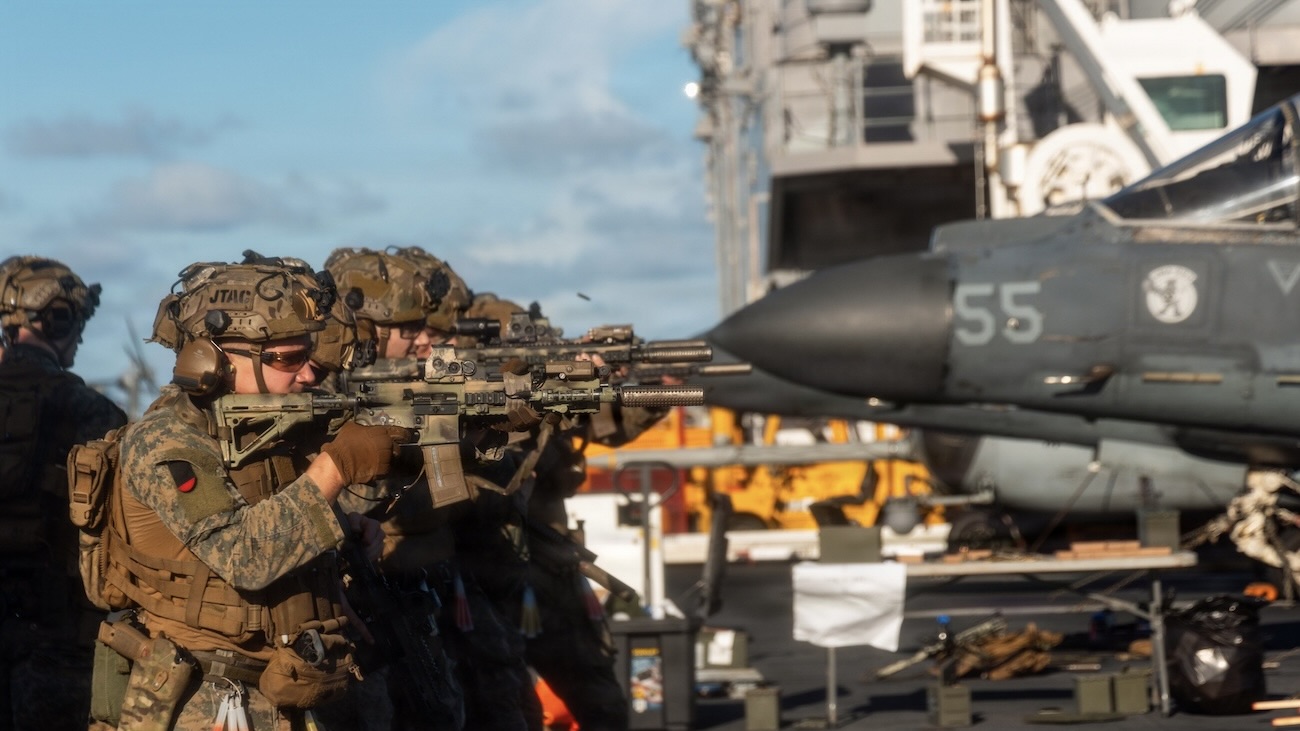
US Marines carrying out exercises on USS Iwo Jima as part of SOUTHCOM’s Operation Southern Spear in the Caribbean Sea. (SOUTHCOM)

Ever since Hugo Chávez came to power in 1998, the United States has attempted to overthrow the Bolivarian Revolution. They have tried everything short of a full-scale military invasion: a military coup, selecting a substitute president, cutting off access to the global financial system, imposing layers of sanctions, sabotaging the electricity grid, sending in mercenaries, and attempting to assassinate its leaders. If you can think of a method to overthrow a government, the United States has likely tried it against Venezuela.

However, in 2025, the escalation became unmistakable. The US sent its warships to patrol Venezuela’s coast, began sinking small boats and killing those on board as they left the South American mainland, and seized an oil tanker bound for Cuba. The quantity of attacks on Venezuela has increased, suggesting the quality of the threats has now reached a different magnitude. It feels as if the United States is preparing for a full-blown invasion of the country.

Donald Trump came to office saying that he was opposed to military interventions that did not further US interests, which is why he called the illegal US war on Iraq a waste of “blood and treasure”. This does not mean Trump is against the use of the US military – he deployed it in Afghanistan (remember the “Mother of all Bombs”) and Yemen, and has fully backed the US/Israeli genocide against the Palestinians. His formula is not for or against war categorically, but about what the US would gain from it. With Iraq, he stated that the problem was not the war itself, but the failure to seize Iraqi oil. Had the US taken Iraq’s oil, Trump would likely have been in Baghdad, ready to build – with Iraqi treasure – a Trump hotel on one of the former presidential properties.

Naturally, the US military buildup in the Caribbean is about Venezuelan oil – the largest known reserves in the world. The US-backed politician, Maria Corina Machado, awarded the Nobel Peace Prize just this week after supporting the Israeli genocide and calling for a US invasion of her own country, is on record promising to open up her country’s resources to foreign capital. She would welcome the extraction of Venezuela’s wealth rather than allow its social wealth to better the lives of its own people, as is the goal of the Bolivarian Revolution started by Hugo Chávez. A hypothetical “President Machado” would immediately surrender any claim to the Essequibo region and grant ExxonMobil full command of Venezuela’s oil reserves. This is certainly the prize.

But it is not the immediate spur. A close reading of the 2025 National Security Strategy of the United States shows that there is a renewed emphasis on the Western Hemisphere. The Trump Corollary to the 1823 Monroe Doctrine is clear: the Western Hemisphere must be under US control, and the United States will do what it takes to ensure that only pro-US politicians hold power. It is worth reading that section of the National Security Strategy:

“After years of neglect, the United States will reassert and enforce the Monroe Doctrine to restore American pre-eminence in the Western Hemisphere, and to protect our homeland and our access to key geographies throughout the region. We will deny non-Hemispheric competitors the ability to position forces or other threatening capabilities, or to own or control strategically vital assets, in our Hemisphere. This ‘Trump Corollary’ to the Monroe Doctrine is a common-sense and potent restoration of American power and priorities, consistent with American security interests.”

When Argentina faced local elections, Trump warned that the US would cut off external financing if candidates opposing pro-US President Javier Milei lost. In Honduras, Trump intervened directly to oppose the Libre Party, even offering to release a convicted drug trafficker (and former President). The United States is moving aggressively because it has accurately assessed the weakness of the Pink Tide and the strength of a new, far-right “Angry Tide”. The emergence of right-wing governments across South America, Central America, and the Caribbean has emboldened the US to squeeze Venezuela and thereby weaken Cuba – the two major poles of the Latin American left. Overturning these revolutionary processes would allow a full-scale Monroe Doctrine domination of Latin America and the Caribbean.

Since the 1990s, the United States began to speak of Latin America as a partner for shared prosperity, emphasizing globalization over direct control. Now, the language has changed. As the Trump Corollary asserts: “We want a Hemisphere that remains free of hostile foreign incursion or ownership of key assets and that supports critical supply chains…We want to ensure our continued access to key strategic locations.” Latin America is seen as a battlefield for geopolitical competition against China and a source of threats like immigration and drug trafficking. The attack on Venezuela and Cuba is not merely an assault on these two countries; it is the opening salvo of direct US intervention on behalf of the Angry Tide. This will not deliver better lives for the population, but greater wealth for US corporations and the oligarchies of Latin America.

Trump is ready to revive the belief that any problem can be solved by military force, even when other tools exist. The Trump Corollary promises to use its “military system superior to any country in the world” to steal the hemisphere’s resources.

The aggression against Venezuela is not a war against Venezuela alone. It is a war against all of Latin America.

Vijay Prashad is an Indian historian, editor, and journalist. He is a writing fellow and chief correspondent at Globetrotter. He is an editor of LeftWord Books and the director of Tricontinental: Institute for Social Research. He has written more than 20 books, including The Darker Nations and The Poorer Nations. His latest books are On Cuba: Reflections on 70 Years of Revolution and Struggle (with Noam Chomsky), Struggle Makes Us Human: Learning from Movements for Socialism, and (also with Noam Chomsky) The Withdrawal: Iraq, Libya, Afghanistan, and the Fragility of US Power. Chelwa and Prashad will publish How the International Monetary Fund is Suffocating Africa later this year with Inkani Books.

Source: Globetrotter

Source link

Trump Issues Venezuela Regime Change Threats as US Steps Up Naval Blockade

The Bella 1 tanker has reportedly avoided capture. (MarineTraffic)

Caracas, December 23, 2025 (venezuelanalysis.com) – US President Donald Trump made new regime change threats against Venezuela and President Nicolás Maduro.

In a Monday press conference, Trump answered “probably” when asked if Washington intended to oust the Venezuelan leader but said it was up to Maduro to leave power.

“That’s up to him what he wants to do. I think it’d be smart for him to do that. But again, we’re gonna find out,” the US president told reporters in Mar-a-Lago, Florida.

Trump went on to warn the Venezuelan president not to “play tough.” “If he plays tough, it’ll be the last time he’s ever able to play tough,” he said.

The US president also said that land strikes against alleged drug cartels would start soon. He has issued such a threat on repeated occasions since September. He likewise repeated past unfounded claims that Venezuela sent “millions of people” to the US, many of them prisoners and mental patients.

Trump’s escalated rhetoric against Caracas followed ramped-up efforts to enforce a naval blockade and paralyze Venezuelan oil exports. On Saturday, the US Coast Guard boarded and seized the Centuries tanker east of Barbados in the Caribbean Sea.

The Panama-flagged ship had recently loaded a reported 1.8 million barrels of Merey crude at José terminal in eastern Venezuela for delivery in China. According to maritime vessel sources, the tanker is owned by a Hong Kong company and had transported Venezuelan oil several times in recent years. 

The takeover operation was led by the US Coast Guard, with White House officials sharing footage of the boarding on social media.

The Centuries’ seizure followed a similar operation targeting the Skipper tanker on December 10. However, unlike the Skipper, the Centuries was not blacklisted by the US Treasury Department. 

US officials referred to the tanker as transporting “sanctioned oil.” Analysts argued that the ambiguous definition is meant to allow US authorities to go after any vessel moving Venezuelan crude in an effort to drive shipping companies away from the Caribbean nation’s oil sector.

The White House’s threats and vessel seizures have already led several tankers to reverse course while en route to Venezuela, with customers reportedly demanding greater oil discounts in Venezuelan crude purchases. The South American oil industry might soon be forced to cut back production if it runs out of storage space.

On Sunday, US forces attempted to board a third tanker, the Guyana-flagged Bella 1 that was headed to Venezuela to load oil. However, the ship’s captain allegedly refused to allow the US Coast Guard’s boarding and turned the vessel back toward the Atlantic Ocean. According to reports, US forces continue to pursue the Bella 1.

Trump announced a naval blockade while demanding that Venezuela return “oil, land and other assets” that were “stolen,” in reference to nationalizations in past decades. Foreign corporations that saw their assets expropriated either agreed to compensation or pursued international arbitration.

The tanker seizures, alongside renewed sanctions targeting the Venezuelan oil industry, came amid a massive US military deployment in the Caribbean on the edge of Venezuelan territory. The build-up was originally declared as an anti-narcotics mission before Washington shifted the discourse toward oil and regime-change.

China and Russia express support

The Venezuelan government has condemned the US military threats and attacks against the oil industry. In a communique issued on Saturday, Caracas decried the second tanker seizure as a “serious act of piracy” and vowed to denounce it before multilateral bodies.

In recent days, the Maduro government received backing from China and Russia, two of its most important allies.

In a Monday press conference, Chinese Foreign Ministry spokesperson Lin Jian criticized the tanker seizures as violations of international law and stated Beijing’s opposition to “unilateral and illegal actions.” The official urged a response from the international community.

Likewise on Monday, Venezuelan Foreign Minister Yván Gil held a phone call with Russian counterpart Sergei Lavrov. According to Gil, Moscow’s top diplomat reiterated support for Venezuela in the face of “US hostilities.”

The UN Security Council is scheduled to meet on Tuesday afternoon at Venezuela’s request to address the most recent US escalations.

Source link