The new boss at work may not be human | Technology
A year ago, engineers at Snowflake, the American cloud-based data platform, still spent part of their day on routine tasks – such as scanning dashboards to ensure systems were running smoothly and chasing colleagues for data to complete trend analyses.
Now, says Qaiser Habib, the company’s Toronto-based head of Canada engineering, AI agents handle much of that groundwork, allowing engineers to focus on higher-level decisions.
Recommended Stories
list of 4 itemsend of list
Habib spends 20 to 30 hours a week interacting with five AI agents. Snowflake has built agents to review product design or to help on-call engineers to help during an outage or an incident, among other uses. He estimates the average engineer works with three or four agents daily, using them to carry out coding projects under human supervision.
“You don’t have to bother a human for basic questions any more,” Habib said, noting that he still collaborates with colleagues on more complex work, such as troubleshooting coding problems.
As companies experiment with AI agents – systems designed to plan, reason and carry out multistep tasks – the technology is beginning to reshape office hierarchies across the United States and Canada. Unlike chatbots, which respond to prompts, AI agents can adapt to changing contexts such as business goals and draw on reference tools including calendars, meeting transcripts and internal databases, to complete work with limited human oversight.
In some workplaces, AI systems are not just completing tasks but also assigning them to human workers. As the technology improves, AI agents are also beginning to manage each other. One agent might generate code, for example, while another reviews it for errors and fixes bugs before a human signs off on the final version.
These agent-to-agent workflows can help companies scale faster. But they also intensify concerns that AI is moving beyond assistance into supervision – and potentially, job replacement.
The leaner office
Anthropic recently expanded access to its cowork agents, allowing users without technical expertise to grant Claude – its AI assistant – permission to specific folders on their computers so it can read, edit, create and organise files autonomously.
The growing use of AI agents is transforming how organisations function around the world, even in companies that aren’t focused on building technology products. For example, some companies are using AI tools to track performance, recommend promotions, role changes, and even identify roles for elimination.
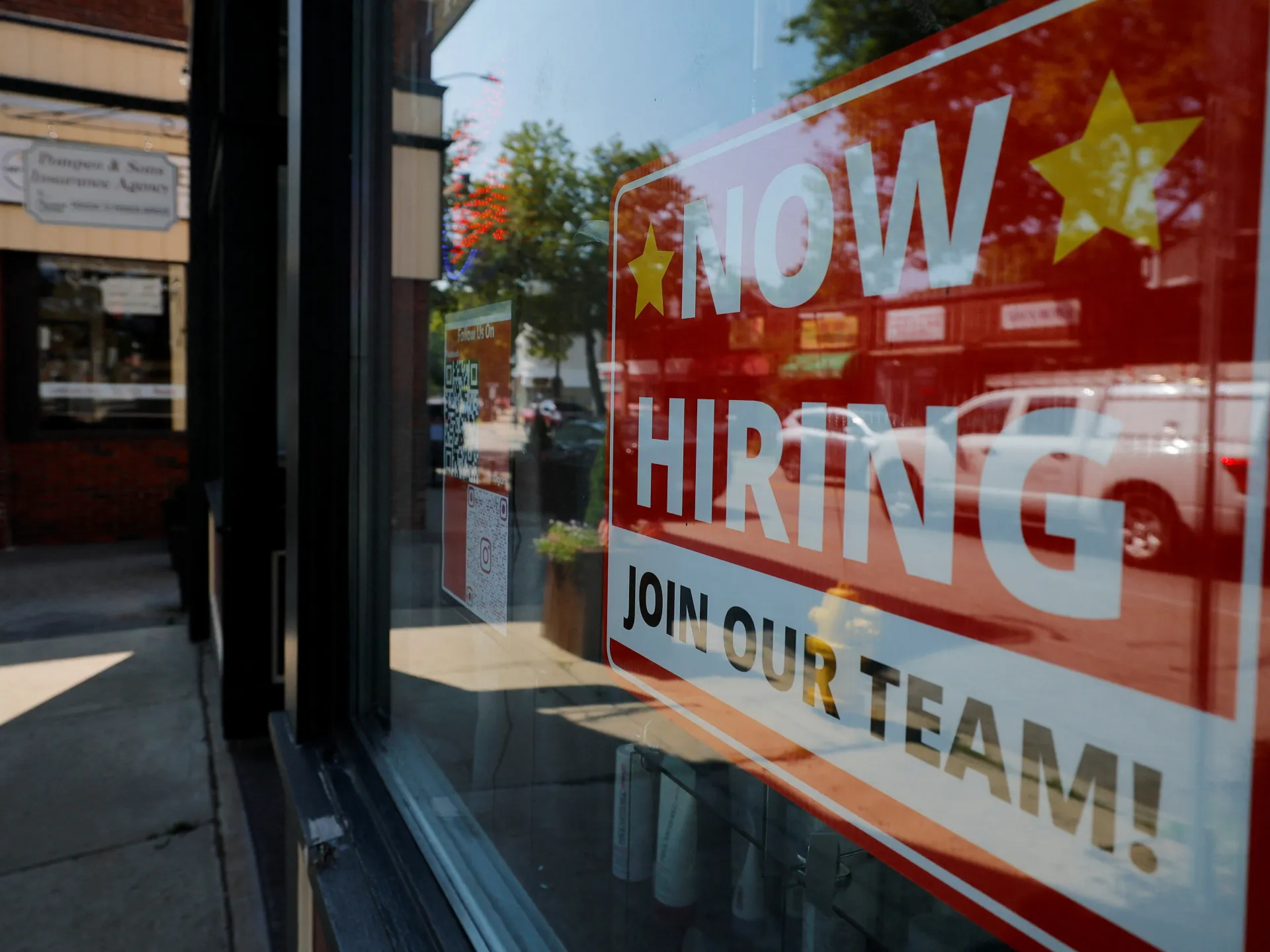
The shift comes as white-collar jobs continue to disappear, particularly in the US. A slew of US employers have announced mass layoffs, mostly affecting entry-level and middle-management workers, and executives have pointed to automation and AI-driven efficiency as part of the rationale. When Amazon said in October that it planned to eliminate about 14,000 jobs, executives cited AI’s potential to help the company operate with fewer layers and greater efficiency. UPS, Target and General Motors also announced deep cuts last year, and this January saw more layoffs than any January in the US since 2009. Several more companies, including Pinterest and HP, continued to cite AI initiatives as part of the reason.
Goldman Sachs has estimated that 6 to 7 percent of US workers could lose their jobs due to AI adoption, with higher risks for computer programmers, accountants, auditors, legal and administrative assistants, and customer service representatives. Overall employment effects, the bank said in August, may be “relatively temporary” as new roles emerge.
Middle management squeezed
Early predictions suggested AI would mainly replace entry-level technical jobs, and some experts tie recent high unemployment rates for new graduates to AI adoption. But the bigger disruption, said Roger Kirkness, founder of AI software firm Convictional in Toronto, is occurring in middle management.
His company’s tools translate executive strategy into operational tasks – a role once handled by supervisors – delivering daily assignments and feedback to employees through a user-friendly inbox interface.
In companies of more than 50 people, “where CEOs can’t speak with each manager, our platform continually surfaces the context that the organisation has that is relevant to leadership decision-making”, Kirkness told Al Jazeera.
This doesn’t mean humans have become irrelevant. But there is growing pressure to reskill, and those who thrive in strategic thinking are better-positioned to adapt to AI-integrated work environments, Kirkness said.
“People are basically becoming managers of their prior jobs,” he said, because AI is now able to perform many of the tasks that previously fell within their roles. Instead of completing tasks such as coding or designing marketing assets, humans are focusing on higher-level strategy while monitoring AI systems, he added.
However, recent research indicates that job cuts reflect companies’ anticipation of AI’s potential, rather than its current ability to replace human workers fully.
A December Harvard Business Review survey of 1,006 global executives found that while AI has played little direct role in replacing workers so far, many companies have already cut jobs or slowed hiring in anticipation of its promised impact.
Most CEOs say they’re still waiting on AI’s payoff: 56 percent report no revenue or cost benefits so far, according to consulting firm PwC’s latest Global CEO Survey of 4,454 executives across 95 countries and territories.
Trust and control
Stefano Puntoni, a behavioural scientist at the University of Pennsylvania’s Wharton School, has found that AI usage is also already affecting workplace communication habits. His research shows employees are often more willing to delegate tasks to AI than to colleagues, which can help to reduce burnout. “There’s no social cost,” he said. “You don’t worry about burdening an AI.”
Still, Puntoni argues the biggest barrier to adoption is psychological, not technical. Even effective systems can fail if workers do not trust them. Generative AI, he said, can threaten employees’ sense of competence, autonomy and connection.
“If workers feel threatened, they may want the system to fail,” Puntoni said. “At scale, that guarantees failure.”
In other words, deploying AI primarily as a cost-cutting tool can backfire. Layoffs framed as efficiency gains may reduce cooperation and limit the productivity benefits companies hope to unlock with technology, Puntoni said.
Trust, Kirkness agreed, is the real constraint. To build staff confidence in the tools it sells – and to avoid layoffs – Convictional adopted a four-day workweek, framing it as a way to share AI-driven productivity gains with employees.
“Mass layoffs in the name of automation destroy trust,” he said.
The human premium
In the US, lawsuits have begun to challenge AI-driven corporate decisions, particularly in areas such as insurance claim denials and alleged AI-enabled hiring discrimination.
Some experts warn that as AI systems become more autonomous, humans risk losing meaningful oversight – and that these agents themselves could become targets for cyberattacks. Yet regulation has struggled to keep pace with innovation. Neither the US nor Canada has clearly defined rules governing AI agents.
Business leaders are testing which functions can be automated and which still require sustained human involvement. For some workers, that uncertainty has become a source of unease.
One employee at a multinational firm, who is based in Vancouver, said she sometimes wonders whether the online “coach” used to support employee development is an AI system or a human relying so heavily on AI tools that the distinction has blurred. She requested anonymity because of concerns about professional repercussions.
Some organisations are setting boundaries. New Ground Wellness, a Canadian clinical counselling and wellness firm, uses AI tools such as chatbots in its daily operations, but recently declined a 20,000 Canadian dollar ($14,600) proposal for an agentic AI intake system that would match therapists with clients.
After receiving feedback from callers, the company concluded that the efficiency gains would not outweigh potential damage to trust. Their decision also reflects multiple surveys showing a strong preference among Western consumers for human customer service workers.
“We are open to revisiting AI systems in the future,” said New Ground Wellness cofounder Lucinda Bibbs, “but at this stage, preserving human connections remains our highest priority.”