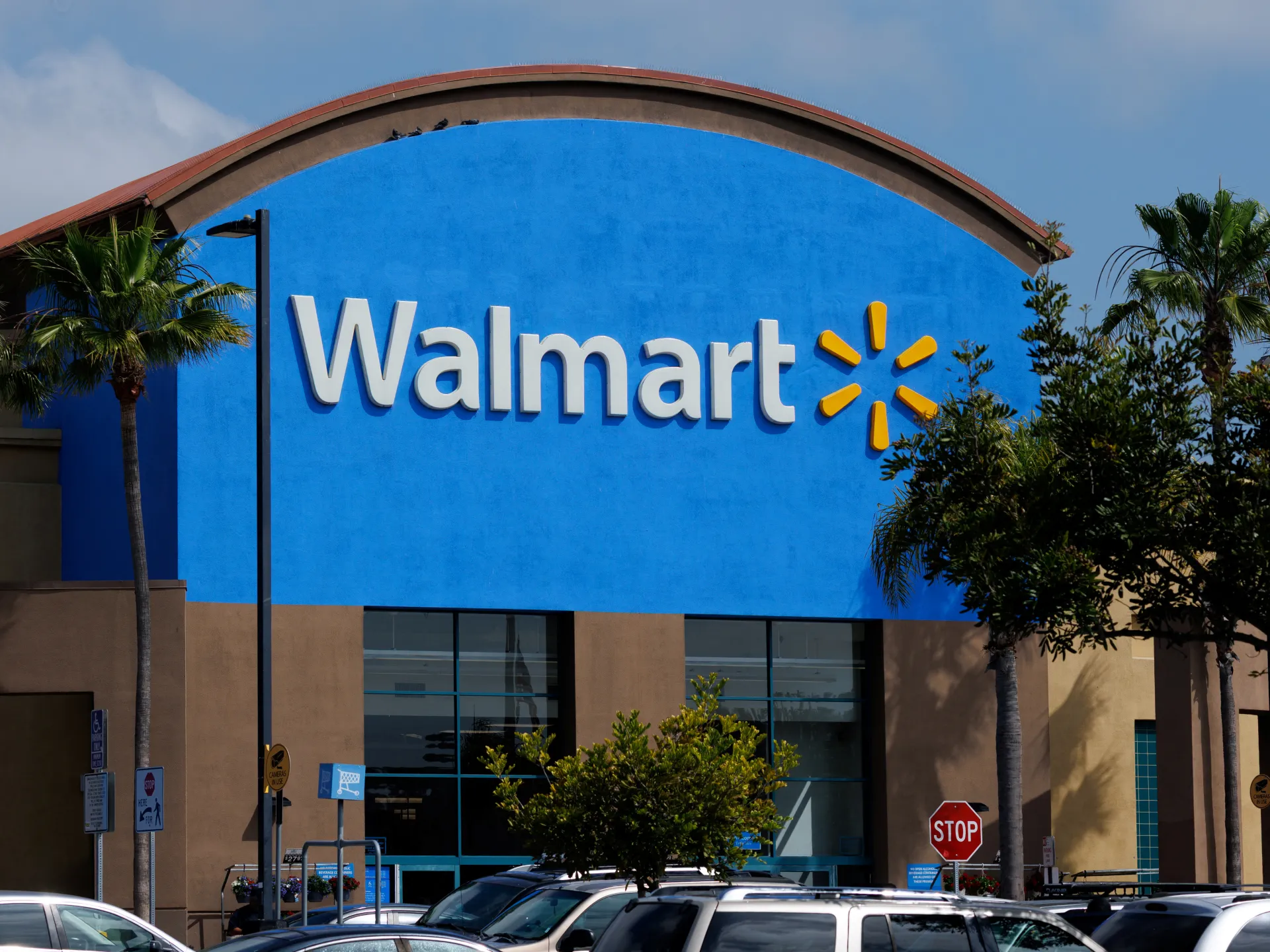
Walmart has reached a $1 trillion market valuation, a first for the big-box retailer.
The company’s shares hit a high on Tuesday morning trade as the stock continues to soar on the news of a new CEO and looming trade negotiations with India, where the Arkansas-based company maintains a large presence both in supply chain and domestic markets within India. The stock was up 2.1 percent from the market open in midday trading.
Recommended Stories
list of 4 itemsend of list
Walmart, which has 11,000 stores in 19 countries, joins a slate of nine corporate giants in the so-called trillion dollar club, including Nvidia, Apple, Alphabet, and Microsoft, among others. Amazon is the only other retailer that has broken the barrier and is now valued at $2.6 trillion.
Trade deal bump
On Monday, United States President Donald Trump announced a trade deal with India that would slash tariffs to 18 percent from 50 percent and that impacts Walmart, which has strategically shifted supply chain operations to India and away from China.
On Tuesday, in an interview with CNBC, US Trade Representative Jamieson Greer said that the White House is still ironing out the details of the deal, but that still hasn’t slowed Walmart’s stock from popping on the looming deal.
“We have an announcement of an India deal, but still no timeline about when it comes into effect and whether the secondary tariffs, the 25 percent linked to India’s purchase of Russian oil, when those would be removed, so I think there’s still a lot of questions,” economist Rachel Ziemba, founder of Ziemba Insights, told Al Jazeera.
While there are limited details on the specifics of the deal, markets are responding to tariffs likely to come down.
“Markets are, of course, forward-looking. I think this sort of reinforces a view in the marketplace that incremental tariffs will be less this year,” Ziemba said.
The big box retailer jumped from 2 percent of its global exports coming from India in 2018 to 25 percent in 2023, according to a Reuters review of import data in 2023. Walmart hopes to source $10bn in goods from India by next year.
At the time, the company also decreased its percentage of goods from China to 60 percent from 80 percent.
Walmart did not respond to Al Jazeera’s request for comment.
The Federation of Indian Export Organisations (FIEO), a lobby for exporters, said the cut in US tariffs will significantly boost Indian exports, including textiles and apparel, putting them on par with Asian peers, such as Vietnam and Bangladesh.
According to data from ImportYeti, a platform that tracks import contracts for major companies, Walmart’s biggest import areas are in home fabrics, apparel and toys.
“Those are the products facing the highest tariffs, while consumer electronics and other categories have largely been shielded. If the India–US deal becomes a reality, it would put tariffs on Indian goods entering the US at roughly the same level as those from Southeast Asia, making that supply-chain realignment more attractive. You also highlight the importance of the Indian market,” Ziemba added.
While the trade deal is in focus, Walmart has also invested significantly in India domestically, as well, and holds an 80 percent stake in India’s e-commerce giant Flipkart.
C-suite changes
The surge also comes concurrently with a shake-up in the C-suite. On Monday, John Furner took over as Walmart’s chief executive, succeeding longtime CEO Doug McMillion who announced his retirement late last year.
Furner, who started at the company in a job stocking shelves, has climbed up the ladder. Most recently, he served as the CEO of Walmart US, where he focused on key initiatives driving growth, including curbside pick-up. Prior to that, he served as the CEO of Sam’s Club, Walmart’s wholesale chain.
Furner’s appointment comes as the company grows as an e-commerce giant and intends to double down in AI tech, healthcare services, e-commerce, and hybrid options with its brick-and-mortar footprint.
“As AI rapidly reshapes retail, we are centralizing our platforms to accelerate shared capabilities, freeing up our operating segments to be more focused on and closer to our customers and members,” Walmart said in a statement last month.
“Walmart is masterful at brick-and-mortar retail and remains highly competitive with Amazon. I love that because it shows consumerism is still alive and well. Five years ago, the narrative was the fall of the mall and the decline of retail. This confirms the opposite. Walmart also has a clear strategy for retaining consumers and managing the customer experience,” Brett Rose, CEO and founder of United National Consumer Suppliers (UNCS), a distributor that focuses on excess inventories, which it provides to more budget-friendly retailers, told Al Jazeera.
The tech-centric focus comes as e-commerce has grown for the company, which reported a 28 percent jump in e-commerce sales compared with the previous quarter. Walmart is slated to release its next earnings report on February 19.
“What you need to look at is that Walmart has successfully become a marketplace, not as big as Amazon, but big enough to give it a run for its money,” said Rose.