If you’re planning a late summer getaway, make sure you take steps to protect your luggage.
People travelling through Spain should be aware(Image: Getty Images)
Summer is drawing to a close, and lots of people are on the hunt for some last of the season sunshine. However, if you’re one of them, there is one holiday location that experts are warning tourists to be careful of over the next month.
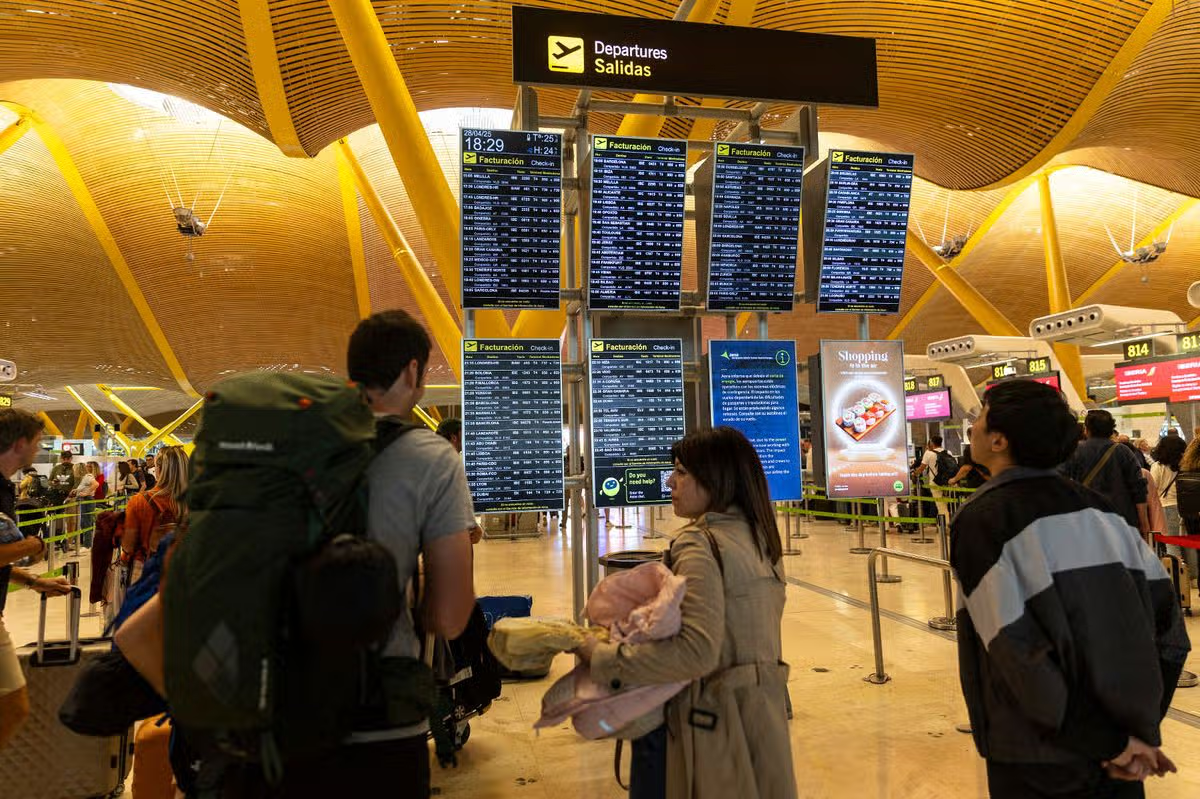
If you have a holiday planned to Madrid in Spain, or are travelling through the airport to get to another location, you should be prepared for a hold up with your checked bags.
Maintenance workers who are responsible for Madrid-Barajas Airport’s baggage handling system are undertaking strike action throughout the rest of August and into September.
The dispute involves workers maintaining the SATE system, which helps transport and sort checked baggage through the airport.
On August 23rd, 28th and 30th, a minimum service level of 50% has been ordered, so luggage won’t stop being processed entirely, however, if you have planned travel on those days, it would be wise to expect delays.
The strikes are expected to continue every Thursday, Friday and Sunday until at least the end of September.
Andrea Platania, travel expert at Transfeero, says passengers should not assume that clearing check-in and boarding successfully confirms their suitcase has reached the aircraft.
He said: “This is a baggage-system maintenance strike, so the disruption may be less visible than a walkout involving check-in or security staff.
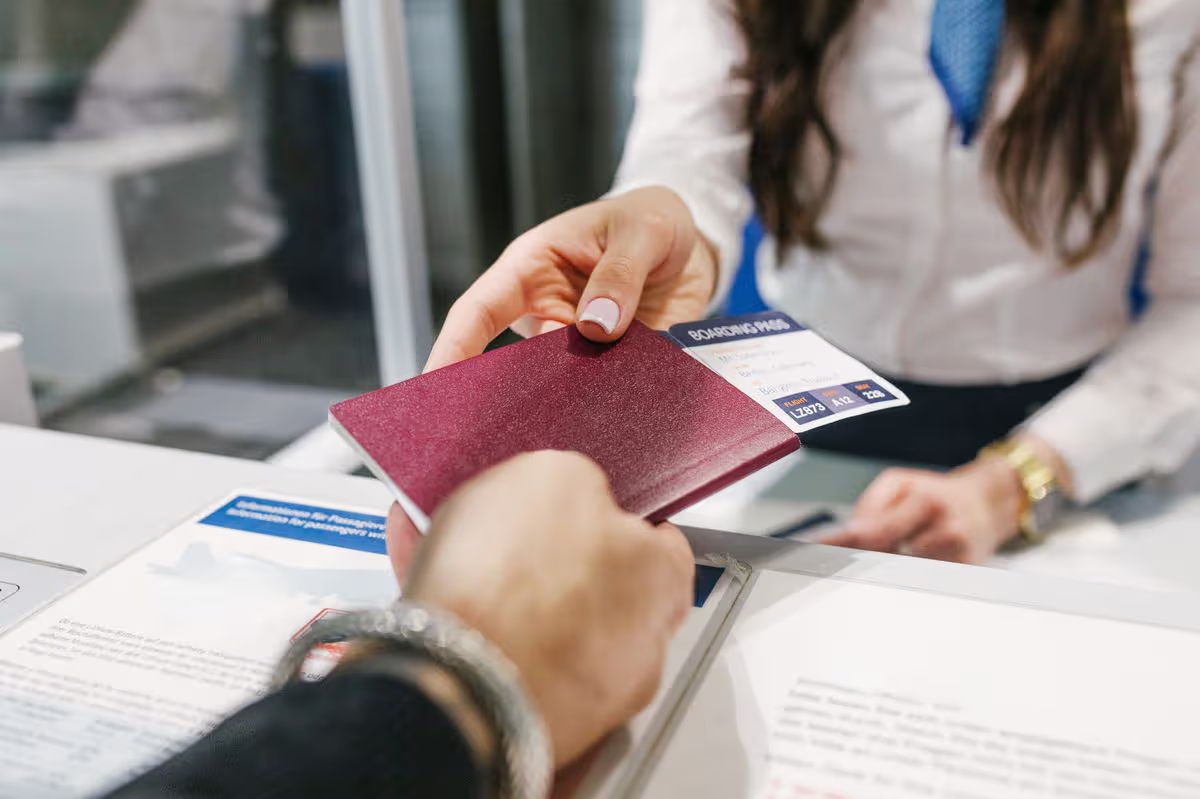
“A passenger could receive a boarding pass, clear security and watch their flight leave on time while their suitcase remains behind. The first sign of a problem may come after landing, when the baggage carousel stops and their bag has not appeared.”
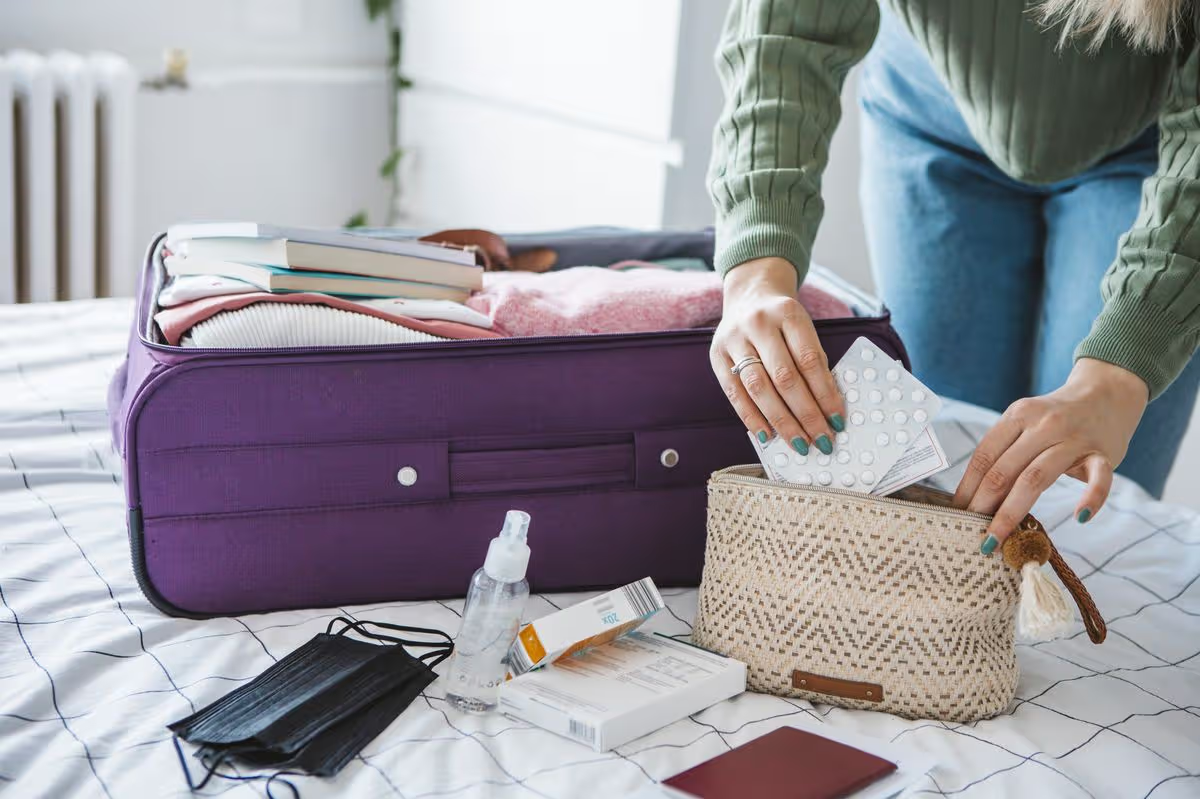
As a good rule of thumb, anything you cannot afford to lose should go in your cabin bag, and board the plane with you. This includes medications, travel documents, house keys and basic necessities.
Andrea said: “Pack your hand luggage as though your checked bag could arrive one day later than you.
“This does not mean trying to carry your entire suitcase into the cabin. It means protecting the small number of items that would create an immediate problem if they disappeared. Medication, keys and documents are far harder to replace than ordinary clothing.”
It’s also a good idea to keep in mind that if your cabin bag is too large, it can be placed in with the checked luggage at the gate.
If this happens, take a few minutes to remove all your essentials from the bag and carry them on to the plane with you to ensure they are not lost if your bag is delayed or missing when you land.
A POLL of 2,000 adults found New Zealand, Japan and Australia were the locations the older generation most wished to visit but had never been to.
While Canada, the Maldives and Iceland also feature in the top 10 destinations which remain on bucket lists.
Taking spontaneous trips without overthinking it, going to bucket list destinations and saying ‘yes’ to adventures rather than prioritising work are also things over 50s wish they had experienced moreCredit: Tom Maddick / SWNSThe study, carried out via OnePoll, found the average adult reckons they’ll experience five truly once-in-a-lifetime momentsCredit: Tom Maddick / SWNS
Taking spontaneous trips without overthinking it (21 per cent), going to bucket list destinations (17 per cent) and saying ‘yes’ to adventures rather than prioritising work (14 per cent) are also things over 50s wish they had experienced more.
But it’s not just older people who have travel pangs, with 42 per cent of Gen Z and 47 per cent of Millennials also wishing they had been able to travel more than they have so far.
Sign up for the Travel newsletter
Thank you!
While seeing the Northern lights tops the once-in-a-lifetime travel experiences they most want to have (41 per cent of Gen Z and 42 per cent of Millennials).
It also emerged 71 per cent of all adults polled are adamant it is never too late to make up for lost time, and many believe seeing new places (37 per cent) or experiencing natural phenomena (18 per cent) will positively impact their lives.
The study was commissioned by Icelandair, which has launched a competition to giveaway tickets to see the next solar eclipse in Iceland – in 170 years – as well as a visit to see the country in September, in a bid to cancel out regrets and reduce FOMO.
A spokesperson for the airline said: “Travel has never been more accessible, but our research shows once-in-a-lifetime experiences still sit firmly on people’s bucket lists and too many never get ticked off, leaving them with regrets about the things they didn’t do.
“We wanted to turn that idea on its head and encourage people to stop putting unforgettable experiences off and go live them.
“And if you’re going to think big, why not think really big? That’s why we’re giving someone the chance to experience the next total solar eclipse visible from Iceland — even though it won’t happen for another 170 years.
“With many often waiting for the right time, it’s a reminder some experiences are worth making happen — whether that’s this year, next year, or something you pass down for generations to come because you never know what might be on the bucket list of your future great-great-grandchildren, or give them the chance to say, ‘I was there.’”
For all adults, a lack of financial security was the top barrier to achieving their travel goals (44 per cent), followed by family responsibilities (24 per cent) and having other priorities that get in the way (22 per cent).
While 19 per cent admitted they are always waiting for the ‘right time’, with this rising to 31 per cent of Gen Zs.
The study, carried out via OnePoll, found the average adult reckons they’ll experience five truly once-in-a-lifetime moments.
But many hope this will increase for their grandchildren’s generation, with 47 per cent hopeful they’ll be able to make the most of life, while 38 per cent want them to enjoy the natural world more.
The spokesperson for Icelandair added: “Travel gives us a great opportunity for lifetime experiences and this week’s eclipse is the perfect reminder to start making those plans.”
TOP BUCKET LIST DESTINATIONS FOR OVER 50S: 1. New Zealand 2. Japan 3. Australia 4. Canada 5. Maldives 6. Iceland 7. Norway 8. Italy 9. Egypt 10. Vietnam
TOP 20 THINGS OVER 50S WISH THEY HAD EXPERIENCED: 1. Travelled more 2. Saved more money 3. Not lost touch with friends 4. Not worried too much about what others think 5. Make the most of life 6. Looked after their health 7. Made the most of their youth 8. Spent enough time with loved ones before they passed away 9. Learned a second language 10. Exercised more 11. Learned to play an instrument 12. Said how they really felt more often 13. Spent enough time with family 14. Taken spontaneous trips without overthinking it 15. Gained more qualifications 16. Not stayed in an unhappy job for too long 17. Been more spontaneous generally 18. Travelled to bucket list destinations 19. Not worked too much 20. Taken more risks
Research suggests the biggest regret among over-50s is not travelling more, with many still having bucket-list destinations they want to tick off.
Over 50s regret not travelling more when they were younger(Image: Getty)
A poll of 2,000 adults found New Zealand, Japan and Australia were the locations the older generation most wished to visit but had never been to. Canada, the Maldives and Iceland also feature in the top 10 destinations which remain on bucket lists. Taking spontaneous trips without overthinking it (21%), going to bucket list destinations (17%) and saying ‘yes’ to adventures rather than prioritising work (14%) are also things over 50s wish they had experienced more.
But it’s not just older people who have wanderlust, with 42% of Gen Z and 47% of Millennials also wishing they had been able to travel more than they have so far.
Seeing the Northern lights tops the once-in-a-lifetime travel experiences they most want to have (41% of Gen Z and 42% of Millennials).
It also emerged 71% of all adults polled are adamant it is never too late to make up for lost time, and many believe seeing new places (37%) or experiencing natural phenomena (18%) will positively impact their lives.
The study was commissioned by Icelandair, which has launched a competition to giveaway tickets to see the next solar eclipse in Iceland – in 170 years – as well as a visit to see the country in September, in a bid to reduce FOMO.
A spokesperson for the airline said: “Travel has never been more accessible, but our research shows once-in-a-lifetime experiences still sit firmly on people’s bucket lists and too many never get ticked off, leaving them with regrets about the things they didn’t do.
“We wanted to turn that idea on its head and encourage people to stop putting unforgettable experiences off and go live them.
“And if you’re going to think big, why not think really big? That’s why we’re giving someone the chance to experience the next total solar eclipse visible from Iceland — even though it won’t happen for another 170 years.
“With many often waiting for the right time, it’s a reminder some experiences are worth making happen — whether that’s this year, next year, or something you pass down for generations to come because you never know what might be on the bucket list of your future great-great-grandchildren, or give them the chance to say, ‘I was there.’”
For all adults, the top barrier to achieving their travel goals was lack of financial security (44%), followed by family responsibilities (24%) and having other priorities that get in the way (22%). A further 19% admitted they are always waiting for the ‘right time’, with this rising to 31% of Gen Zs.
The study, carried out via OnePoll, found the average adult predicts they’ll experience five truly once-in-a-lifetime moments. But many hope this will increase for their grandchildren’s generation, with 47% hopeful they’ll be able to make the most of life, while 38% want them to go out and enjoy the natural world more.
The spokesperson for Icelandair added: “Travel gives us a great opportunity for lifetime experiences and this week’s eclipse is the perfect reminder to start making those plans.”
Top bucket list destinations for over 50s
New Zealand
Japan
Australia
Canada
Maldives
Iceland
Norway
Italy
Egypt
Vietnam
Top 20 things over 50s wish they had experienced
Travelled more
Saved more money
Not lost touch with friends
Not worried too much about what others think
Make the most of life
Looked after their health
Made the most of their youth
Spent enough time with loved ones before they passed away
UK man drove 300 miles with bullet in foot after being shot while travelling
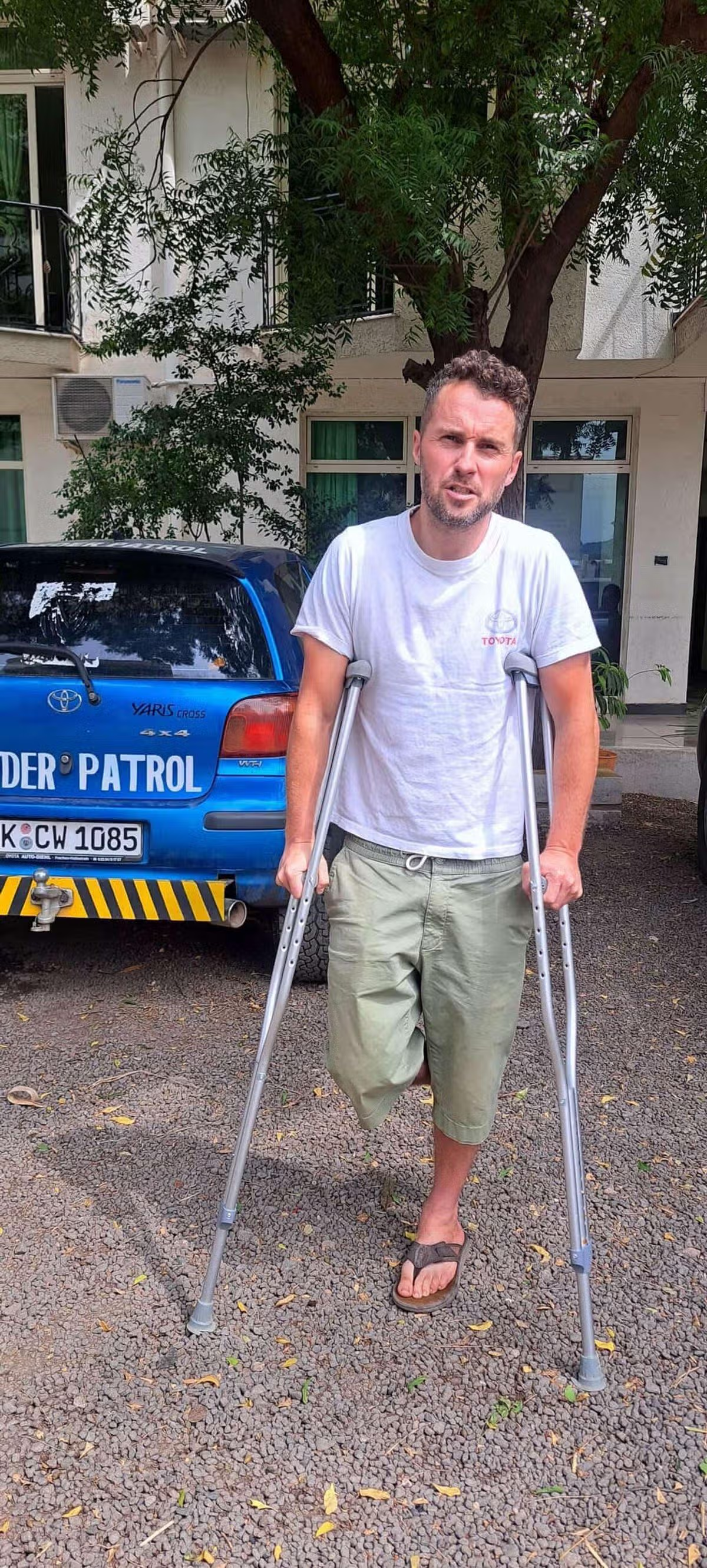
A UK man had to drive 300 miles with a bullet in his foot after being shot at during a road trip. Charles Wright was travelling alone when he says two armed men attempted to stop his Toyota Yaris.
The 40-year-old initially slowed down but claims he spotted one of the men preparing an AK-47 and quickly accelerated away. Charles, from Buxton, Derbyshire, says two shots were then fired at his car, with one bullet hitting the road before ricocheting underneath the vehicle.
It then became lodged in the heel of his right foot, which was on the accelerator at the time. Charles says he didn’t initially realise he had been shot. He had fractured the same foot playing football earlier that day and assumed the pain was connected to that injury.
Instead, he carried on driving, eventually covering around 300miles over roughly 24 hours with the bullet still embedded in his foot. The incident happened during Charles’ latest adventure through Ethiopia, where he spent 32 days travelling in his one-litre Toyota Yaris.
Charles has been travelling on and off for around 15 years and has driven 48,000km through more than 34 countries. But he claims being shot in the foot was only the start of his ordeal.
Charles says he was later shot at for a second time after following Google Maps at a junction in Awash. He claims two federal police officers suddenly emerged from bushes before a large plastic water container was thrown towards his car.
The officers then allegedly opened fire at his tyres, with Charles estimating that four or five shots were fired. Having already been targeted earlier in his journey, Charles says his instinct was to keep driving rather than stop. He managed to travel another four kilometres with a destroyed front tyre before becoming stranded in the desert.
Other police eventually found him after locals reported seeing a Westerner in the area. Charles claims his phone was taken and that, despite his fractured foot and gunshot wound, he was made to run through the desert.
He says he remembers officers laughing as he struggled. When he later returned to his car, Charles also discovered his penknife and some cutlery were missing. With the car disabled, he was unable to continue to Addis Ababa for treatment and instead had the bullet removed at Dawa Haya Hospital in Awash.
Charles praised medical staff for successfully removing it without him developing an infection. But he said the roughly two-hour operation became terrifying when the hospital suffered a power cut. For around ten minutes, Charles claims staff continued the procedure using mobile phone flashlights, with no apparent emergency lighting or immediate generator backup.
He said: “As the patient lying there awake, watching phones and door handles being touched during surgery was terrifying because my immediate concern was infection and potentially losing my foot.”
Charles claims his ordeal continued following the operation when he was effectively kept at a hotel for around six days with an armed officer stationed outside. He says he was never given a clear explanation for why he was being held or when he would be allowed to leave.
Eventually, people he knew within the tourism industry helped apply pressure and he was released. Charles claims it was not his only detention during his time in Ethiopia, saying he was jailed three times during his 32-day stay.
Crossing the border out of the country was one of the biggest moments of relief of his life. He said: “There were several moments during Ethiopia when I genuinely wondered whether I would make it out.”
Charles has travelled by road through 31 African countries and says his experience in Ethiopia was fundamentally different to anywhere else he has visited on the continent. However, he stressed that it was his personal experience and said he also met several Ethiopians who went out of their way to help him.
He stopped short of telling people not to visit the country but urged anyone considering a trip to research the risks carefully. Charles advised travellers to be particularly cautious around checkpoints, police encounters, prices, theft and visa issues.
He is now recovering from his injuries and changes the dressing on his foot every couple of days. Charles has been advised not to walk normally on it yet but hopes to recover over the coming weeks. His car survived the ordeal too, despite being left with at least two bullet holes.
Charles says he refused to abandon the tiny car that has been his travelling companion for years. He now plans to take several months off to recover and repair the Yaris before continuing his adventures, although he no longer intends to travel further north through Africa.
UK tourists have been told common errors can lead to boosting their phone bills when they’re abroad. To avoid the travel mishap, it’s wise to do a few things before you jet off
09:02, 09 Aug 2026Updated 09:02, 09 Aug 2026
UK tourists have been issued advice about phones (stock image)(Image: d3sign via Getty Images)
We all look forward to going on holiday but, as well as being enjoyable, it can be expensive, which is why it’s always handy to know how you can try and save on your phone bill. After all, most of us use our phones while we’re on holiday, but there are ways to ensure we don’t come home with growing bills.
Little you may know, there are some mistakes you likely make with your phone while travelling, but if you take action hefty bills can be avoided. Some travel tips have been shared to help people out, as nobody wants to come home to mounting bills to have to deal with after an already expensive trip.
With major networks having brought back EU roaming charges, and other travel destinations sitting outside standard roaming agreements, using your handset while overseas can prove seriously expensive. Fortunately some expert advice has been shared to help people out, as people often get stung by roaming charges abroad.
Take action before you leave
“Roaming policies vary,” explained Oleksii Pimenov, mobile data and SIM expert at global data eSIM provider SIMBUSTER. “The best way to protect yourself is to check what your plan actually includes before you travel. Don’t rely on the ‘new customer’ ads.”
Oleksii pointed out that some UK plans still include EU roaming, while others charge a daily fee of up to £2.50. Beyond Europe, that charge can climb to as much as £8 per day, which adds up rapidly.
Accidents happen
The most infuriating thing about daily roaming is that on most networks, an accidental search when the hotel’s Wi-Fi drops out can trigger a full day’s roaming fee. According to the expert, ten accidental days during a fortnight adds up to £25 squandered on absolutely nothing – or £80 if you happen to be in Egypt or anywhere else beyond the EU.
With EE, out-of-plan data abroad can set you back £13.90 per gigabyte, according to Oleksii, though the cost varies depending on where you are. For context, downloading a film can eat up 2GB and streaming a live football match would gobble up even more!
“If you’re not using a travel SIM, switch off data roaming and background app refresh until you actually need them,” advised Oleksii. “It can save you more than you think.”
eSIMS may help
If your phone supports eSIMs, it’s another smart way to slash costs. Rather than shelling out for an overpriced SIM at the airport, you can download and activate an eSIM before leaving home, giving you affordable data the instant you land.
“With an eSIM, you know exactly what you’re paying upfront, and you can have everything ready before you even board the plane,” explained Oleksii.
What’s more, if you’re visiting multiple countries, you can get an eSIM that covers a whole region – Europe, for instance – rather than a single country SIM.
Preparation is key
A bit of forward planning can also make a real difference in reducing expenses. Download everything you need – maps, children’s entertainment, music – before you leave.
Hotel Wi-Fi isn’t always reliable enough for hefty downloads and, if you’ve already got everything saved on your phone or tablet, you won’t need to worry about it.
Tips for cruise lovers
Cruise and ferry passengers also need to be vigilant. Maritime mobile networks operate separately from standard roaming, and the charges can be eye-watering.
“Unless you can use the ship’s Wi-Fi, I’d always recommend switching your phone to Airplane Mode while at sea,” added Oleksii.
Extra advice
If you do replace your UK SIM for travel purposes, you risk missing vital messages, including bank verification codes or unexpected calls. By keeping your UK SIM active alongside a data eSIM, you won’t miss anything important.
And, if you travel to a specific destination frequently, whether for work or pleasure, it’s often far more sensible to get a virtual local number.
Passengers carrying the item in their hand luggage need to be aware of restrictions
People should take care when packing their luggage (stock image)(Image: Getty)
Passengers flying from a busy UK airport are being reminded to pack their bags carefully. While most flyers know there are rules around carrying liquid items in hand luggage, there’s sometimes confusion over which beauty items and toiletries count as liquids.
Heathrow Airport has a reminder for passengers online. The airport has answered various security and baggage FAQs for customers on its website. Explaining the restrictions, the airline told its customers: “Liquids, aerosols and gels can now be packed in your cabin bag and are permitted in containers up to two litres. These do not need to be removed from your cabin baggage.”
As Heathrow Airport points out, common shower items such as shaving foam and gels count as liquids. Other items commonly packed in toiletry bags, including toothpaste, roll-on deodorant, and creams, are also classed as liquids, according to the advice.
The airport explained: “We often get asked about hair gels, creams and even yoghurt”. Here is a quick checklist of what is considered a liquid and what is not:
Not considered a liquid:
Solid lipstick
Stick deodorant
All these items are considered liquids:
Drinks, soup and yoghurt
Pastes and puréed food
Formula milk (special rules apply for breast milk)
Shaving foam
Toothpaste
Roll-on deodorant
Atomisers, sprays
Creams
Gels
In the FAQs, the airport added: “Duty free liquids, aerosols and gels purchased after security can be carried as hand baggage. However, these must be sealed at the time of purchase with the receipt inside a security tamper-evident bag.”
More advice is available on Gov.uk. The advice says liquids include: “All drinks, including water. Liquid or semi-liquid foods, for example soup, jam, honey and syrups. Cosmetics and toiletries, including creams, lotions, oils, perfumes, mascara and lip gloss.
“Sprays, including shaving foam, hairspray and spray deodorants. Pastes, including toothpaste. Gels, including hair and shower gel. Contact lens solution. Any other solutions and items of similar consistency.”
However, passengers can carry refillable drink containers if they are empty. These can then be refilled in the departure lounge after security, and most airports have water fountains. For example, Heathrow Airport says there are over 100 water fountains across its four terminals.
Passengers carrying liquids are advised to check travel advice with the airports they are travelling through before departure. This should include the airport they are flying from, any other airports they plan to travel through, and the airport they are flying home to.
HEADING abroad can be stressful, from packing all the essentials to leaving for the airport at the crack of dawn.
To make it as easy as possible, take a look at all of the new rules for a smooth-sailing holiday this summer.
Heading on your summer holiday soon? Make sure you read all these new rules firstCredit: Alamy
EES
The Entry/Exit System (EES) is a new system that has been implemented across 29 European countries in the Schengen Area.
These include holiday hotspots like Spain, France, Italy, Greece, Portugal and Germany.
Sign up for the Travel newsletter
Thank you!
EES tracks when you enter and leave European countries by using biometrics and eventually it will replace passport stamping.
Essentially Brits will have to register at a machine and scan their passport – the good news is that you then you don’t have to do it again for another three years.
If you want to find out more on the step-by-step process – head here.
Something else to be aware of about EES is that it has resulted in long queues, so it’s wise to leave extra time when heading abroad.
There have been reports of up to six- hour delays outside of peak travel time at border control at multiple airports.
During the summer, you might experience queues in the arrivals hall, but there have also been travellers who have missed flights on their way home too.
Brits now have to register with EES before heading to the Schengen AreaCredit: AFPThere have been reports of incredibly long queues at border controlCredit: Getty
eGates
There are new rules at UK airports for children which is actually good news for families.
Now, children aged eight and over can now use eGates when accompanied by an adult – they also need to be at least 120cm tall.
The height restriction is in place as kids need to be able to see and be captured by the biometric screens at the eGates.
The rule change impacts 13 airports across the UK that currently use eGates, including:
London Heathrow
London Gatwick
London City
London Luton
London Stansted
Manchester
Birmingham
Bristol
East Midlands
Newcastle
Cardiff
Edinburgh
Glasgow
Passports
Brits heading on holiday are STILL being caught out by passport rules, so it’s worth reminding yourself beforehand.
Passports must be only be valid for 10 years, with any months rolled over from previous passports no longer allowed.
Figures have shown up to 100,000 holidaymakers a year face being turned away atairportsif their passport is more than a decade old.
Make sure your passport is in date before you travelIf you have a burgundy passport – this is likely to run out of date soonCredit: Alamy
For example, if a passport has June 2016 start date but a November 2026 expiry, it has technically expired.
Alongside the requirement to have between three to six months left on it, enforced by a number of countries, it is still causing confusion for travellers.
Most places in Europe only want three months left on a passport, but places like the UAE, Egypt, and Chile require six months in total.
Another passport rule to be aware of only affects those with dual nationality.
A rule that came into effect at the beginning of 2026 means that you can no longer use your foreign passport to enter the UK.
Instead, you have to use a valid British passport.
If you don’t have this, you can apply for a certificate of entitlement, which costs £589.
Visas and travel requirements
Luckily for Brits, citizens can visit more than 170 countries in the world without a visa.
When heading on holiday, families can enter with just their passport to the Schengen Area and most European countries.
In most destinations, you can travel for up to 90 days within any 180-day period – so if you’re going to the likes of Spain for a two-week break, you’re covered.
But there are certain countries where an additional entry requirement is needed.
Most countries in Europe don’t require an ESTA for British citizensCredit: GettyAnyone heading to the USA for a holiday will need a valid ESTACredit: Alamy
Be sure to check the entry requirements in advance as some take a few weeks to come through – although most holiday visas are approved quicker.
For example, if you’re headed to Florida for a theme park getaway to Orlando, then you’ll need to apply for an ESTA.
It costs around £30 per application and can be approved in as little as 72 hours.
Countries where you’ll need a visa or other travel requirement include India, Australia and parts of Egypt.
Until December 31, 2026, UK passport holders can visit China for up to 30 days without a visa.
FANCY a last-minute break? You aren’t the only one. Holiday Hypermarket has found that one in five Brits are booking trips just two weeks before jetting off.
And there are plenty of great holiday deals too – and we’ve found some holidays all under £300pp.
You could jet off to the Trabukos Beach Complex in Corfu for £260ppCredit: On the Beach
Seven Hills Camping & Village, Italy
There’s a large freshwater pool at Seven Hills Camping & Village in ItalyCredit: Love Holidays
Set in the Italian countryside is Seven Hills Camping & Village which has bungalow-style accommodation.
It has an outdoor freshwater swimmingpool and a sun terrace for soaking up the Mediterranean sunshine.
From the swimming pool to evening entertainment, there’s plenty for guests to do.
All rooms come with a private balcony with outdoor seating so the weather can be enjoyed well into the evening.
A five-night stay including flights departing from London Gatwick to Dalaman on July 20 returning on August 4 will set you back just £289pp.
Trabukos Beach Complex, Greece
Trabukos Beach Complex is an adult-only hotel near the party town of KavosCredit: Unknown
Found on the main strip of Kavos in Corfu is the adults-only Trabukos Beach Complex.
It’s close to the city centre and within walking distance from lots of bars and nightclubs.
The hotel itself has a pretty swimming pool, and some of the spacious rooms have their own balcony.
A five-night stay including flights departing from Manchester Airport to Corfu Airport on July 27 returning on August 1 will set you back just £260pp.
Hotel Cappelli, Italy
The Hotel Cappelli is a beautiful city break spot in Tuscany with deals from £245ppCredit: On the Beach
Hotel Cappelli in Tuscany is labelled the ‘go-to spot for a chilled-out city break‘.
There’s an outdoor pool, terrace, lush garden and when it’s time to eat, Ristorante Giulio serves up classic Italian dishes.
If the Italian heat gets too much, there a cosy TV lounge inside.
A five-night stay including flights departing from Stansted Airport to Pisa on July 30 returning on August 4 will set you back just £245pp – including breakfast.
The Money Saving Expert says one thing that is ‘totally free’ could save holidaymakers loads of money
Martin Lewis has shared his holiday advice (file image)(Image: ITV)
Heading to Europe this summer? Before you jet off, Money Saving Expert says there’s one free card every holidaymaker should have in their wallet – and it could save them money.
The Money Saving Expert has issued a reminder to travellers to get the UK Global Health Insurance Card (GHIC) just in case of an emergency. It can help you access state healthcare in many European countries, however he stresses this shouldn’t be a replacement for travel insurance.
Speaking as part of the National Money Assembly held at St Charles 6th Form College in London, Lewis urged anyone heading to the continent to apply for a GHIC before leaving the UK. He explained how the card is “totally free”, and warned people to never pay a third-party website to apply for one.
“First of all, if you’re going to Europe, you always get your GHIC card, your Global Health Insurance Card,” he said. “That’s totally free, never pay for it. This gives you treatment in a state-run hospital in a European Union country or equivalent at the same cost as a local – so if it’s free for them, it’s free for you.
“If you need to go and see the doctor when you’re abroad and local people don’t pay for the GP, you can go to the GP with your GHIC card. So you should make sure that you have one of those.”
The NHS says the GHIC covers medically necessary healthcare during a temporary stay in the EU and certain other countries. However, it does not cover private medical treatment, mountain rescue, being flown back to the UK or costs such as lost or stolen belongings.
For that reason, Martin Lewis says holidaymakers should never rely on the GHIC alone. He urged travellers to arrange travel insurance as soon as they book a holiday, explaining that it protects them both before and during their trip.
Content cannot be displayed without consent
He said basic travel insurance for a young person spending a week in Europe can often cost as little as £7 to £10. Martin added: “If you can afford the holiday, you can afford travel insurance.”
His long-standing rule is to buy travel insurance “ASAB” – as soon as you book. That’s because policies can protect you if illness, injury or another unforeseen event forces you to cancel your holiday before you even leave home.
Applications for a GHIC are free through the official NHS website, and most people can apply online. Anyone using a website that charges a fee is paying for a service they do not need, as the card itself is available free of charge.
A MASSIVE travelling attraction is set to return to a seaside hotspot next week – and it’s perfect for the whole family.
The popular spot will be open for more than a month throughout the summer.
Sign up for the Travel newsletter
Thank you!
The popular fair is set to return next weekendCredit: Cardiff Bay Fun ParkThis year the site will even feature the UK’s tallest travelling towerCredit: Cardiff Bay Fun Park
Cardiff Bay Fun Park will descend on the Welsh capital once more, as the family-friendly destination is set to return to Roald Dahl Plass next weekend (July 18).
This year also marks the attraction’s newest arrival, Skyfall – the tallest travelling drop tower in the UK.
At 262 ft (80 metres) high, thrill-seekers will be treated with 360-degree panoramic views of Cardiff and the Bristol Channel, before plunging down at speeds of up to 75mph.
The tower even dwarfs the tallest roller coaster in the UK, Hyperia, which stands at 236 ft (72 metres).
THOUSANDS of people have been evacuated across the south of France due to huge wildfires across the region.
Along with flights being forced to divert, we’ve explained everything you need to know.
Sign up for the Travel newsletter
Thank you!
Wildfires have spread across the south of France, resulting in evacuations and flight diversionsCredit: EPASmoke seen over Canet en Roussillon which was evacuatedCredit: Alamy
Emergency services including water-dropping helicopters and firefighters have been deployed, with more than 3,000 people evacuated, after highs of 44C have been reported.
The blaze in France is believed to have been sparked by a discarded cigarette butt.
Officials have spent much of the summer battling with wildfires in France, with over 9,000 reported along the Mediterranean coast.
Jet2 has rolled out a ’72-hour’ update so passengers can check live flight times and its status before even getting to the airport, to help make travel over summer even easier
Jet2 has shared an update for customers(Image: Getty Images)
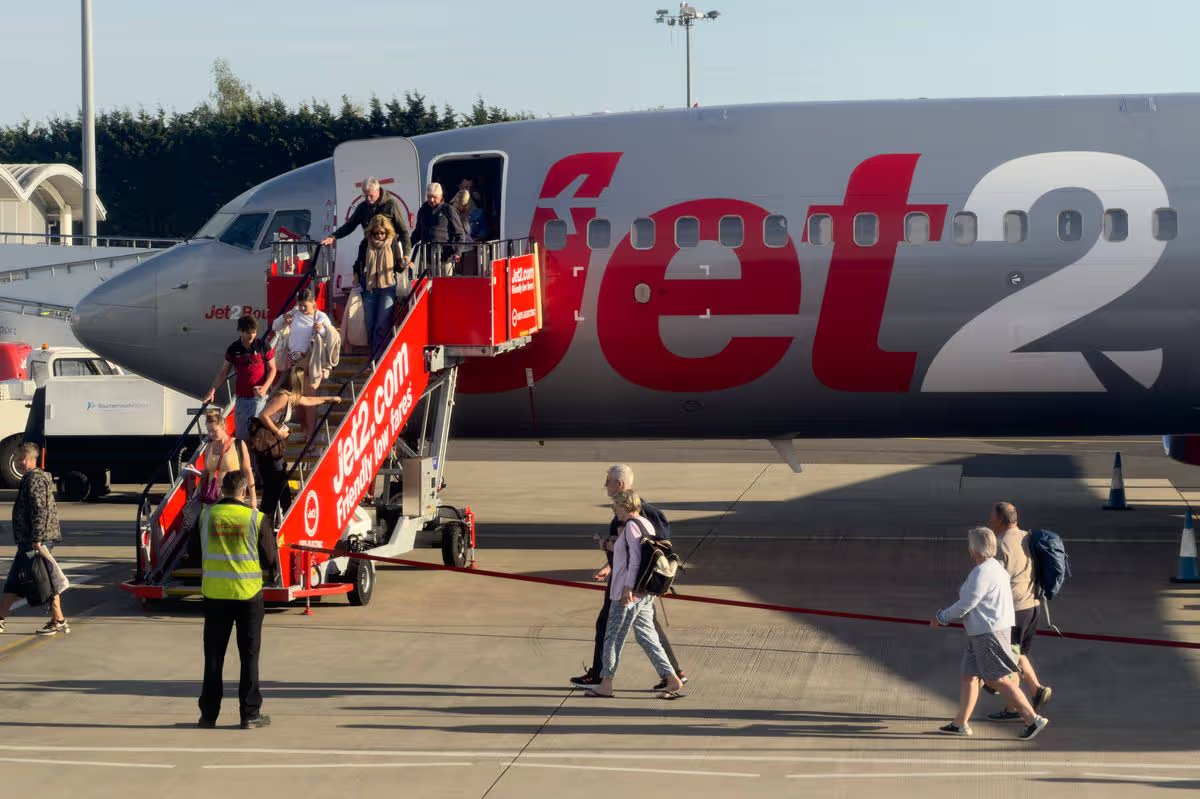
Just ahead of the summer holidays, Jet2 has rolled out a new ’72-hour’ update for passengers.
Travellers flying with Jet2 will now be able to check live flight times, monitor their flight status and receive any updates 72 hours prior to departure. The new functionality was introduced this week and is designed to provide customers with accurate, up-to-date information about their flight to help ensure their journey runs as smoothly as possible.
The new handy features come courtesy of an upgrade to the airline’s app, which will also enable passengers to find out how and when they can meet their Jet2 in-resort Customer Helper. Times, locations and the Customer Helper’s name will be made available to holidaymakers via the app, making it even easier to access assistance and information about their holiday.
The update comes at the ideal moment ahead of the summer holidays, one of the busiest periods for travel. It’s expected to make travel more straightforward for passengers as they’ll have instant access to crucial flight information at the touch of a button, reports Chronicle Live.
David Hills, Chief Customer Officer at Jet2, said: “We are always looking at how we can continually improve the experience for our customers and digital innovation is a critical part of that. We are very pleased to be launching this new app functionality, which makes travelling with Jet2 even easier and more convenient. By putting more real-time information in our customers’ hands, we are improving our industry-leading customer experience even further.”
“This is part of our continued investment in delivering the very best customer service there is, and it is another example of how we are continuing to evolve our app and digital offering in response to what customers want from us.”
Last year, Jet2 introduced its ‘Live Transfer Status’ app feature, enabling passengers to track their coach transfer to the departure airport from their holiday destination in real time. This covers coach services when returning from the Balearics, Canaries, Mainland Spain, Morocco, Turkey, and Bulgaria, and is set to expand to Greece, Cyprus, Malta, Faro, and Madeira this summer.
Elsewhere, Jet2 has urged passengers to take action “at least 12 hours” before their flight.
With a packed summer season on the horizon and thousands of holidaymakers expected to board their flights, Jet2 has published guidance on arrivals and departures on its website. The airline advised customers: “Please check this section of the website at least 12 hours before your flight for the latest flight information.”
It continued: “Further information can be found by using the [above] search panel by entering your flight number or route. We recommend arriving at the airport at least 2 hours before your scheduled departure time.
“Please remember – check in desks close 40 minutes before this. In the event of flight disruption our dedicated Operations teams are working hard behind the scenes at our UK-based HQ to get you on your way as soon as possible.”
Do you have a travel story to share? Email webtravel@reachplc.com
Simple mistakes could not only invalidate travel insurance but also leave the medication ineffective or even ‘unsafe’
It is important to notify travel insurers(Image: GettyImages)
A warning has been issued to thousands of people who will be travelling abroad on weight loss treatments this summer as mistakes could mean they are not only ineffective but could be “unsafe” to use. Millions of people currently use the jabs to help weight loss but there are strict rules around their use.
A survey by ZAVAfound an estimated 337,000 people will holiday on Mounjaro or Wegovy this summer however if it is not carried and stored correctly it can be left “ineffective”. Experts at the firm have now provided three tips for travelling with Mounjaro and Wegovy, alongside the most important things to know before heading off.
You could be invalidating your travel insurance
When taking out travel insurance, you often need to declare any pre-existing conditions during an online application or by calling your insurer directly. Failing to declare the use of weight loss treatment could render your policy invalid, leaving you unable to make a claim should something go wrong, which could result in a bill worth thousands of pounds.
You should also check import restrictions to any country you are travelling to and verify if the medication can be brought into the country and how much you’re allowed to carry for personal use. Make sure to also take evidence of your prescription with you, whether it be in paper or digital form, and that your treatment is in its original packaging.
Insurers like Admiral don’t typically cover GLP-1 injections bought from an unofficial programme, if a medical professional isn’t monitoring them or hasn’t been declared. It is strongly advisable to follow up with a direct call to your insurer to confirm everything is properly documented. When in doubt, contact your insurer and your GP before travelling.
Storing jabs in hold luggage could freeze your medication
Putting injection weight loss treatments in with checked luggage can be a huge risk. The compartments where checked baggage is stored undergo huge changes in temperature and pressure that may alter the effectiveness of, or even damage, your medication. It can get very cold and may freeze and unfreeze the liquid in the pen, making the injections unsafe to take. Make sure to take a carry-on bag with you to store your medication in.
Essential liquid medicines are allowed through security, even if they are over 100ml; security often advises keeping medicines separate in your bag where possible, informing the Security Officer and bringing supporting documentation if possible. After this step, make sure that your medication stays in its original packaging. If you have any specific queries about carry-on luggage and medication, contact your airline provider.
Not having access to a fridge could damage your medication
Both Mounjaro and Wegovy must be stored by following the guidelines outlined in the patient information leaflets. The medication may be kept in a refrigerator at 2°C to 8°C or stored at room temperature, provided it does not exceed 30°C, for a maximum of 28-30 days.
Any pens exposed to temperatures above 30°C, or left unrefrigerated for more than 28 days for Wegovy and 30 days for Mounjaro, should be discarded immediately, as it could be unsafe to take. Patients travelling with weight loss injections are advised to contact their accommodation in advance to confirm refrigerator access and to verify that the appliance maintains an appropriate temperature, as this can vary between units. As the jabs are administered once weekly, most patients will use each pen within the 30-day unrefrigerated window, unless travel is extended or a dose is missed.
A UK woman has vanished in Paris after travelling abroad for a festival, with no contact with her family for over a week. Lucy Stemp has been reported missing by her loved ones. The woman, from Tonbridge, Kent, has been described as “very vulnerable” by her family.
She had travelled over to France for a festival in the city of Brest but her last known location is believed to have been Paris. Lucy is believed to have gone missing on May 30. Her loved ones are pleading with locals and expats to report any information they have on to the police or themselves.
Her last known location was the Bercy neighbourhood in the French capital. Lucy’s stepdad Sean said: “Lucy is my stepdaughter and is very vulnerable, she has been missing for over a week now.”
It is believed that Lucy will have no access to sorting how to get herself back home. The British embassy and Interpol are reportedly working together on a cross-border operation to help track her down.
Paul Arnott, who helps find missing Brits, said: “Lucy Stemp, from Tonbridge, Kent, has been missing in France for approximately one week and her family are becoming increasingly concerned for her welfare. Lucy had travelled to France for a music festival in the city of Brest and is believed to have subsequently been in Paris.
“No one has heard from her for the past week. Lucy is considered vulnerable and efforts to locate her are ongoing. The British Embassy, police authorities and Interpol are involved in the search.
“If you know Lucy, have spoken to her, seen her, or have any information that could help establish her whereabouts, please come forward as soon as possible.”
A travel expert has shared five vital passport checks Brits should make before jetting off on holiday this summer – and failing to do so could mean being denied boarding at the airport
Many people will be going on a holiday soon(Image: Getty Images)
Many people will be counting down the days until their next holiday. With children set to wrap up for the school year, many families are gearing up for a summer of fun. Now a travel business owner has called on all British passport holders to carry out five crucial checks before jetting off abroad this summer.
Kate Donnelly, who posts travel advice on TikTok, urged her followers to take action now to prevent being turned away at the departure gate. While some of her guidance might appear straightforward to experienced travellers, she insists certain issues continue to trip up numerous Brits and wreck their holiday plans at the eleventh hour.
Passport validity
Her initial recommendation is to verify the expiry date – as the majority of European destinations require at least three months’ validity remaining from the date you depart the country.
“This is slightly different if you are travelling to Turkey where you have to have a validity of 150 days on the day you actually arrived,” Kate explained. “So it’s really important you check the country you are travelling to and see what their rule is.”
Content cannot be displayed without consent
10-year rule
Following this, Kate alerted her followers to the 10-year rule, which she states is applicable to most of Europe. “On the day that you enter [the country] your passport has to be less than 10-years-old – so it’s important you check the issue date as well as the expiry, especially if your passport was renewed before 2018 because unused months from your old passport will have likely been added on to your new on meaning that your passport is probably 10-years plus,” she said. “This is catching so many people out.”
Blank pages
Third on Kate’s list is the matter of blank pages in your passport. “This isn’t as important as due to the new Entry-Exit System (EES) in Europe we are slowly phasing out passport stamping,” she admitted. “But the reality is lots of countries are bringing in measures, which means the EES is paused.”
Regrettably, when travelling to such destinations, you won’t discover whether the EES is operational or not until you get there. “Therefore if the airline checks your passport and you have no empty pages left, they are well within their right to refuse boarding,” Kate warned.
Condition
Kate proceeded to emphasise the physical state of your passport is something that is frequently neglected and could present a genuine obstacle to your travel arrangements. “If it has water damage, if it has fake tan on it, if it is torn or you can’t read any of the writing for whatever reason, this is also enough grounds for the airline to deny you boarding,” she elaborated.
Dual-nationals
Kate directed her final piece of advice at dual-nationals, who are impacted by a rule modification that came into effect in the UK in February. “UK citizens have to ensure they have a UK passport or a certificate of entitlement when they are entering or exiting the UK,” she continued. “This means that you can no longer use your non-UK passport – even if you are recognised as a British citizen.
She closed by advising the certificate of entitlement is £589 and therefore it is more “cost-effective” for dual-nationals to apply for their UK passport to keep alongside their non-UK one at all times. “This means you have the two to use freely depending on which country you are travelling to,” Kate said.