transits

Iran says Iraqi ships can pass Strait of Hormuz as transits tick up | US-Israel war on Iran News

Tehran says Iraq will face no restrictions in waterway, praising country’s ‘struggle’ against the US.

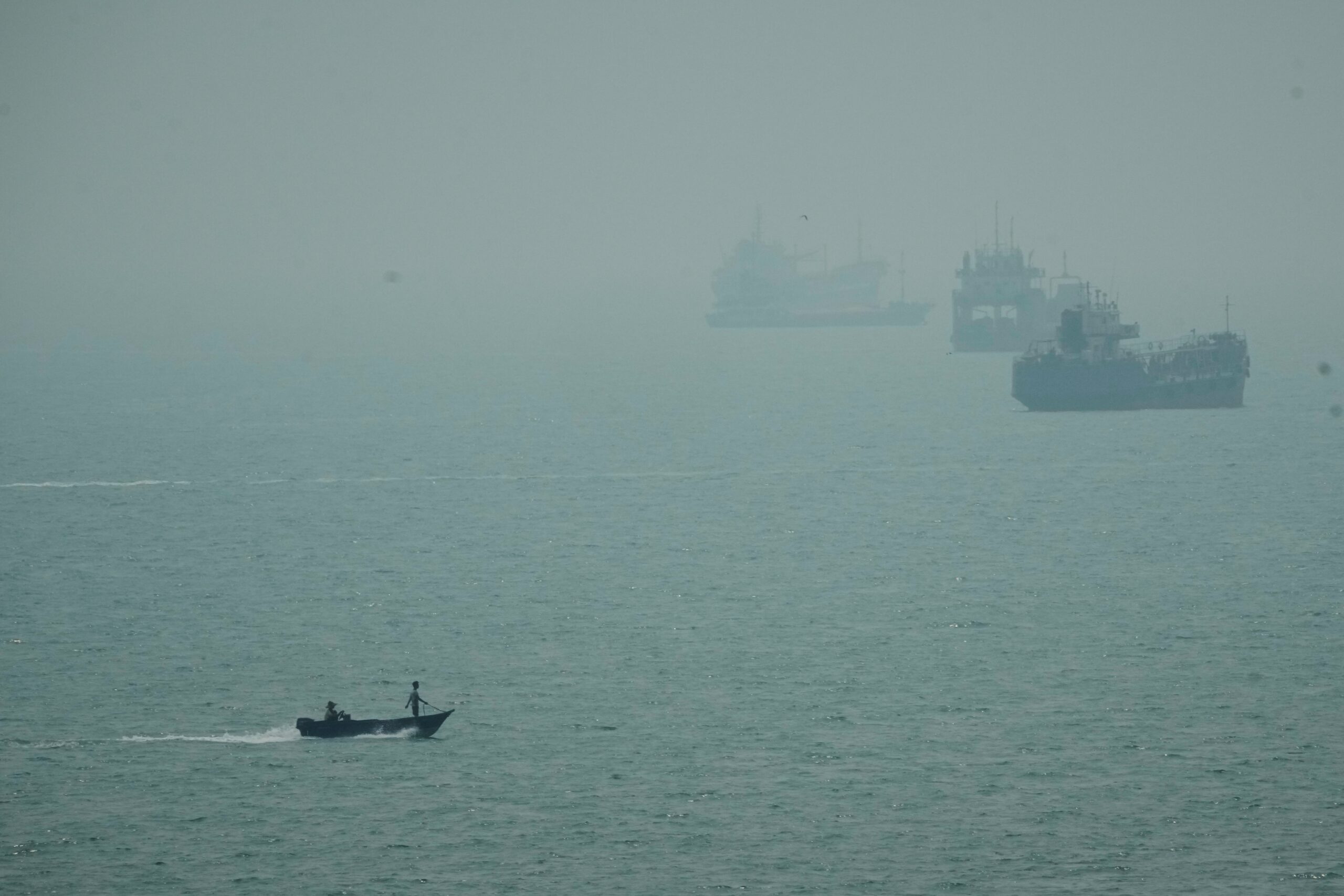
Iran has announced that Iraqi ships are free to pass the Strait of Hormuz, the latest sign of Tehran easing its stranglehold on the critical conduit for global energy supplies.

Iraq will be exempt from all restrictions in the strait, with controls only applying to “enemy countries”, Iran’s Khatam al-Anbiya Central Headquarters said in a statement on Saturday.

Recommended Stories

list of 4 itemsend of list

“We hold profound respect for Iraq’s national sovereignty,” the military command said in the statement carried by the semi-official Tasnim News Agency.

“You are a nation that bears the scars of American occupation, and your struggle against the US is worthy of praise and admiration.”

Iran’s announcement came as US President Donald Trump reiterated his demands for Tehran to make a deal or relinquish control of the waterway, warning in a social media post that “all hell” would rain down within 48 hours otherwise.

Iran’s Khatam al-Anbiya Central Headquarters rejected Trump’s demand, calling his threat a “helpless, nervous, unbalanced and stupid action”.

Iran has effectively blockaded the strait, which usually carries about one-fifth of global oil and liquified natural gas supplies, since the US and Israel launched their war on the country on February 28.

While maritime traffic has ticked up in recent weeks under a de facto toll booth system imposed by Tehran, it is still down more than 90 percent from normal levels, according to ship tracking data.

According to Lloyd’s List Intelligence, there were 53 transits through the strait last week, up from 36 the previous week and the most since the war began.

The collapse of shipping in the waterway has thrown a wrench in global energy markets, pushing up fuel prices and prompting authorities in many countries to roll out emergency energy conservation measures.

Brent crude, the international benchmark, has hovered above $109 a barrel in recent days, with many analysts predicting prices to surge much higher if the waterway is not unblocked soon.

Iraq’s oil production, which provides most of Baghdad’s revenues, has been hit especially hard by the war.

Iraq’s oil ministry announced last month that production had fallen to 1.2 million barrels a day, down from 4.3 million barrels, amid declining crude shortage capacity due to the effective halt of exports through the strait.

Iraq was the world’s six-biggest oil producer in 2023, accounting for 4 percent of global supply, according to the US Energy Information Administration.

Source link

First Western shipping vessel transits Strait of Hormuz since start of Iran war

Many international shipping vessels, such as the one pictured in March, have been anchored and idling in the Middle East after Iran closed the Strait of Hormuz to non-Iranian traffic after the United States and Israel engaged in a war there. Friday, Iran allowed vessels linked to France and Japan to transit the Straight for the first time in weeks. File Photo by stringer/EPA

April 3 (UPI) — A French-owned shipping vessel on Friday was the first Western ship permitted to transit the Strait of Hormuz since the United States and Israel started the war in Iran.

The container ship, owned by the company CMA CGM, is one of several that were permitted to transit the Strait after weeks of Iran permitting few, if any, vessels to pass through it.

The French ship sailed under the flag of Malta and is believed to have been idling in the Persian Gulf since early March, similar to many other vessels, after Iran choked off non-Iranian traffic in response to the war.

The ship switched on its transponder and looked to leave the gulf Thursday afternoon after Iran permitted several ships to transit the Strait, Euronews and The Guardian reported.

The other vessels were three tankers, at least one of which was a liquefied natural gas tanker with a Panamian flag that is owned by a Japanese company.

The Strait of Hormuz is one of the busiest trade routes in the world and, among other things that are shipped through it, sees roughly 20% of the world’s oil and gas supply transit daily under normal circumstances.

The United States has discussed sending U.S. Navy vessels to escort ships through the Strait, although that could be expensive, time consuming and put U.S. troops and assets in danger. Other nations — including Britain — were beginning to look for ways to move vessels through the Strait regardless of the war in Iran.

France, for example, struck a deal with South Korea on Friday to work together to secure safe passage for their vessels through the strait.

Both nations rely on oil and gas from the region, on top of other parts of the global supply chain in which they participate, and said they are working together to deal with the economic and energy crises that have been triggered by the war in Iran.

President Donald Trump delivers a prime-time address to the nation from the Cross Hall in the White House on Wednesday. President Trump used the address to update the public on the month-long war in Iran. Pool photo by Alex Brandon/UPI | License Photo

Source link

French-owned container ship transits Hormuz Strait in first since Iran war | News

It was ​not ⁠immediately clear how the vessel, which Marine Traffic tracking data shows is sailing south along the coast of Oman, secured safe passage.

A container ship belonging to French shipping giant CMA CGM has crossed ⁠⁠through the Strait of Hormuz, the first such passage by a Western vessel since Iran effectively closed the waterway, the Marine Traffic vessel website shows.

The Malta-flagged Kribi, owned by CMA CGM, crossed the Strait on April 2 and is the first French-owned vessel to ‌‌make it through the channel since the US-Israeli war on Iran began on February 28.

Recommended Stories

list of 4 itemsend of list

It was not ⁠⁠immediately clear how the vessel, which the data shows is sailing south along the coast of Oman, secured safe passage.

There was no immediate comment from CMA CGM.

However, LSEG ⁠⁠shipping data showed the vessel on Thursday changed its destination to “Owner France”, ⁠⁠signalling to Iranian authorities the nationality ⁠⁠of its owner, before crossing the strait’s Iranian territorial waters.

INTERACTIVE - Strait of Hormuz - March 2, 2026-1772714221
[Al Jazeera]

The ship had originally been bound for Pointe-Noire in the Republic of ‌‌the Congo.

Only about 150 vessels, including tankers and container ships, have transited the strait since March 1, according to data firm Lloyd’s List Intelligence. Most were linked to Iran and countries including China, India and Pakistan.

Beijing expressed “gratitude” on Tuesday after three of its ships passed through the strait, including two container ships on Monday belonging to state-owned shipping giant Cosco.

Energy crisis

Until the war led to the effective blocking of the Strait, it was the route for about a fifth of global oil and ⁠⁠liquefied natural gas supplies. As a result, fuel prices have skyrocketed worldwide.

On Wednesday, US President Donald Trump insisted that petrol prices would fall quickly once the war concluded, but offered no solution for reopening the Strait of Hormuz. Instead, he invited sceptical US allies to do it themselves. He insisted that the war would be worth it.

French President Emmanuel Macron said on Thursday it would ⁠⁠be unrealistic to launch a military operation to open the strait, and ⁠⁠that only diplomatic efforts would work.

Macron has worked with European and other ⁠⁠allies to build a coalition to guarantee free passage through the strait once hostilities have stopped.

Meanwhile, writing in the US journal Foreign Affairs, Iran’s former top diplomat said that Tehran should make a deal with the United States to end the war by offering to curb its nuclear programme and reopen the Strait of Hormuz in exchange for sanctions relief.

Tehran could “declare victory and make a deal that both ends this conflict and prevents the next one,” wrote Mohammad Javad Zarif, foreign minister from 2013 to 2021.

Source link