Top Stories

Treasury Department drops Booz Allen Hamilton contracts

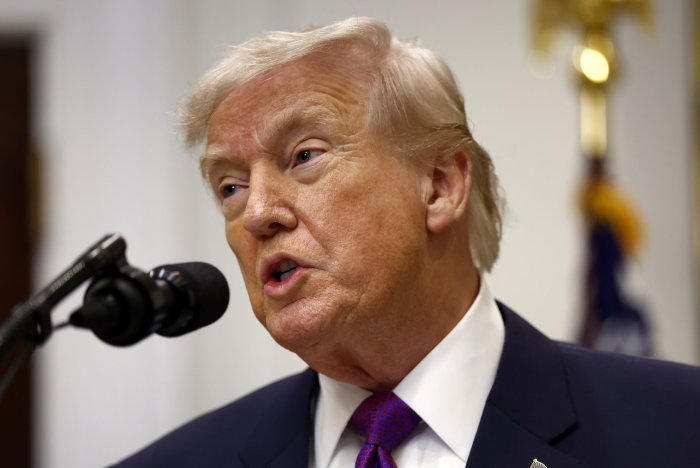
Jan. 26 (UPI) — Treasury Secretary Scott Bessent announced Monday that the department canceled all contracts with consulting firm Booz Allen Hamilton because of a data leak that included President Donald Trump‘s tax returns.

The department has 31 contracts with Booz Allen for a total of $4.8 million in annual spending and $21 million in total obligations, a press release said.

“President Trump has entrusted his cabinet to root out waste, fraud, and abuse, and canceling these contracts is an essential step to increasing Americans’ trust in government,” Bessent said in a statement.

Between 2018 and 2020, a Booz Allen employee, Charles Edward Littlejohn, “stole and leaked the confidential tax returns and return information of hundreds of thousands of taxpayers.”

The breach affected about 406,000 taxpayers, including Trump, Amazon founder Jeff Bezos and Tesla CEO Elon Musk.

“Booz Allen failed to implement adequate safeguards to protect sensitive data, including the confidential taxpayer information it had access to through its contracts with the Internal Revenue Service,” Bessent said.

Littlejohn pleaded guilty in October 2023 to one charge of disclosure of tax return information and was sentenced to five years in prison. He admitted to leaking Trump’s tax information to The New York Times and leaking other tax information to ProPublica.

Booz Allen’s stock price dipped by 8% on the news, CNBC reported.

Source link

Commerce Department takes equity stake in USA Rare Earth

Jan. 26 (UPI) — Critical minerals startup USA Rare Earth announced Monday that the Department of Commerce will give the company a $1.3 billion loan and $277 million in federal funding.

USA Rare Earth will issue Commerce 16.1 million shares of common stock and 17.6 million in warrants. The federal government will have an 8% to 16% stake in the company, depending on whether it uses the warrants, a filing with the Securities and Exchange Commission said.

USA Rare Earth shares rose more than 20% Monday after the announcement, CNBC reported.

The injection of funds will help the company build a magnet manufacturing plant in Stillwater, Okla., and a mine at the Round Top mineral deposit in Sierra Blanca, Texas.

CEO Barbara Humpton said the government deal will turn USA Rare Earth into an industry leader.

“This is a watershed moment in our work to secure and grow a resilient and independent rare earth value chain based in this country,” CNBC reported that Humpton told analysts Monday.

“We have long said that meeting the urgent call to reassure the rare earth and critical minerals industry will require a multiplayer solution, and this establishes our company as one of the leaders,” she said.

Commerce will allocate the funding from 2026 through 2028 based on milestones in USA Rare Earth’s business plan, Chief Financial Officer Rob Steele told analysts.

The company needs about $4.1 billion for its plan, he said. It still needs to raise about $600 million more capital.

“We believe we can raise the remaining capital from attractive sources, and you should assume that’s equity capital but that can come from strategic investments as well as institutional investors,” Steele said.

China dominates the global supply chain of rare earth materials. During trade disputes with President Donald Trump, Beijing tried to cut off rare earth exports.

“USA Rare Earth’s heavy critical minerals project is essential to restoring U.S. critical mineral independence,” Commerce Secretary Howard Lutnick said in a statement. “This investment ensures our supply chains are resilient and no longer reliant on foreign nations.”

“The Department of Energy is ending America’s reliance on foreign nations for the critical materials essential to our economy and national security,” said U.S. Energy Secretary Chris Wright in a statement. “The DOE is partnering with USAR to rebuild the critical minerals supply chain. By expanding domestic mining, processing and manufacturing capabilities, we are creating good-paying American jobs and safeguarding our national security.”

“Accelerating the onshoring of rare earth minerals, metals, and magnets is paramount to national and economic security,” U.S. Investment Accelerator Executive Director Michael Grimes said in a statement. “With the Department of Commerce’s funding for USA Rare Earth’s vertically integrated mine-to-magnet operations, we will significantly increase the domestic supply of crucial components for semiconductors, defense and numerous other industries strategic to the United States.”

Source link

No clear plan to replace aging, but vital, Navy ‘test ship,’ GAO says

The Navy’s Self Defense Test Ship, formerly known as the USS Paul F. Foster, is shown returning to its home port at Port Hueneme, Calif., on June 12 following 14 months of repairs. Watchdogs say the Navy hasn’t developed a clear way to replace the aging vessel, which is used to test self-defense systems for warfighting ships. Photo by Dana Rene White/U.S. Navy

ST. PAUL, Minn., Jan. 26 (UPI) — A aging, decommissioned destroyer that plays a little-known, but vital, role in maintaining the self-defense systems of Navy warfighting ships is on its last legs, but there’s no clear plan to replace it, government watchdogs say.

The Government Accountability Office reported last week that the 564-foot Self-Defense Test Ship, which before being decommissioned in 2003 was a Spruance-class destroyer known as the USS Paul F. Foster, is aging quickly and is beset by problems

That could compromise its one-of-a-kind role as a vessel fitted to undergo missile attacks as a way to test the Navy’s shipboard self-defense systems.

The unique vessel is equipped with the SSDS Mk 2, the command-and-control system aboard the Navy’s amphibious ships and aircraft carriers, which can be operated by remote control without any crew onboard as a safety precaution as it faces incoming missiles.

The insights it provided about the effectiveness of shipboard self-defense systems were used extensively by the Navy to address the needs of the Gerald R. Ford-class aircraft carrier and the DDG 1000 Zumwalt class destroyer in the last decade, and the test ship is expected to continue to carry out more vital tests over the next few years.

But even after extensive upgrades in 2024 and 2025, the ship is on its last legs and could become inoperable at any time, the GAO warned, leaving the Navy without a clear plan for some way to replace its functionality quickly.

“The Self-Defense Test Ship is critical to the Navy’s ability to test and understand how ship self-defense systems will behave as missiles approach a ship,” said Shelby Oakley, director of contracting and national security acquisitions for the GAO and lead author of last week’s report.

He told UPI there’s a risk of a gap in U.S. testing and training capabilities if the test ship goes out of commission with no replacement immediately available — which could have dire repercussions as U.S. naval forces confront missile-wielding foes such as Yemen’s Houthi rebels in the Red Sea.

“Due to the speed of incoming missiles, the systems must function with precision. Without a test ship, the Navy is reliant on computer modeling to evaluate operational performance of self-defense systems at close range,” he said.

“Thus, without a test ship, the Navy would have less confidence that the systems will protect the ship from incoming fire, which could result in disastrous consequences in the heat of battle.”

The risk of having a gap in such test capability is amplified “when considering the steady advances in the weapons available to potential U.S. adversaries,” Oakley added.

The vessel underwent 14 months of repairs at Naval Base San Diego beginning in April 2024, after which it returned to its home base at Port Hueneme, Calif.

While it was out of commission, technicians examined and mended fuel tanks, the firefighting system, the fire main pipe and sea water service valves, according to the Naval Sea Systems Command.

Its superstructure was also inspected for corrosion and its deck was restored.

But Navy officials told the GAO during the lay-up period that regardless of any further maintenance it may receive in the next few years, “continuing to effectively operate it to the end of the decade will be a challenge based on its poor condition.”

The issue has come up as the Navy is struggling to achieve the goals of the Trump administration and bipartisan majorities in Congress to grow the size of the fleet.

The service has failed to consistently produce new ships at the scale, speed and cost demanded by the government due to “a series of interwoven, systemic issues,” such as ever-shifting specifications by military officials and the inability of defense contractors to find a stable and adequate workforce, according to a December report by the Center for Strategic and International Studies.

Amid those challenges, a concrete plan to replace the self-defense test ship remains elusive. The Navy explored several options to do so in the decade between 2013 and 2023, including extending the service life of the current vessel, replacing it with commercial ships or decommissioning and converting another destroyer.

The last option appeared to become less feasible when Secretary of the Navy John Phelan extended the service lives of the five DDG 51 class destroyers that were identified as potential replacements.

A request for comment by UPI to the secretary’s office was not returned. But in a brief written response included in the GAO report, officials of the Navy’s Operational Test and Evaluation Force, or OPTEVFOR, concurred that a new test ship is needed and that a “capability gap” may be created due to the lengthened decommissioning schedule of the DDG 51 class destroyers.

They also confirmed the test ship is scheduled to be retired after a new round of testing for the SSDS Mk 2 system slated to begin in fiscal year 2027.

While the vessel can still be used, its down time due to maintenance needs are increasing and it’s becoming increasingly hard for the Navy to plan around them, said defense analyst Christine Cook, a senior fellow at the bipartisan Center for Strategic and International Studies in Washington.

“The age and condition of the ship means that it would be useful for the Navy to develop a plan and make investments in a new one,” she told UPI. “However, the question is always, what will the Navy not be able to do with the funds spent on a new test ship?

“Recommendations on gaps don’t always ask this question, but it is one that Navy programmers have to grapple with,” she said. “A delay in developing a plan for a replacement ship does not mean that the test ship is not available — but it does create some level of future risk.”

The Navy’s larger shipbuilding challenges are indirectly affecting the situation because the sluggish pace of new production is forcing its leaders to keep existing vessels in service longer, Cook added.

“If the Navy wants to keep ships operational longer because shipbuilding constraints mean that it can’t access sufficient new builds, then there may not be a ship available for retrofitting,” she said.

“The goal of growing the size of the Navy may require delaying ship retirements, which also means that the fleet needs more maintenance, competing with the ability to maintain the test ship.”

Source link