Tilson

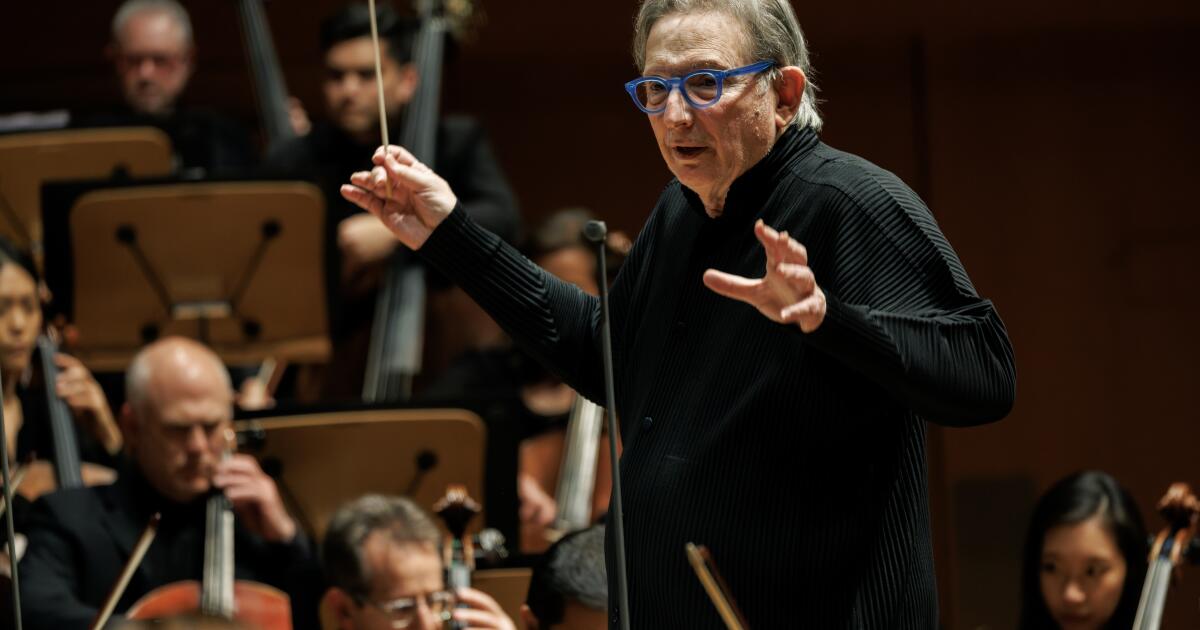
Michael Tilson Thomas embodied L.A.’s musical essence

Michael Tilson Thomas came onto the scene as a great hope for classical music, American music, Los Angeles music, modern music, multifaceted pop music, maverick music, Russian music, Broadway music and just plain music, whatever it might be and from wherever it might be found. He lived his 81 years as conductor, pianist, composer, educator and media personality promoting that hope, and died Wednesday having shown how hope is done. He looked ahead. He looked back. Yet he lived for the now.

It wasn’t always easy. He wasn’t, to say the least, always easy. But MTT made music matter by making hope matter. He was, moreover, one of us. He achieved greatness though an epic amplification of a uniquely L.A. positivity in which grumpy became wistful.

I first encountered MTT as a kid clarinetist and he, Michael Thomas back then, a student conductor at USC and already, at 19, music director of the Young Musicians Foundation Debut Orchestra. He was soon everywhere. A piano prodigy, he regularly performed (and hobnobbed) with the likes of Stravinsky, Copland, Boulez and Cage at Monday Evening Concerts programs when the Los Angeles County Museum of Art opened in 1965. That summer, he appeared at the Ojai Music Festival, which he would go on to lead as music director seven times.

MTT liked to describe his L.A. youth as driving from Jascha Heifetz’s house in the Hollywood Hills (where he accompanied the famed Russian violinist in classes) to LACMA to rehearse Ives and Renaissance music, to composition and conducting classes at USC. Then it was home to the San Fernando Valley to practice Beethoven.

All the while, he listened to the hip L.A. 1960s pop music stations on his car radio. He was particularly keen on, and became friends with, Chuck Berry. Home was where he would also encounter screen legends. Tilson Thomas’ father worked in films and television as a screenwriter, producer and dialogue coach. Theodor Thomas was, as well, a painter with a visionary sensibility and a pianist, self-taught other than a handful of lessons from Gershwin.

But it was Tilson Thomas’ mother and grandmother who may have had the biggest influence. His mother was a public school teacher. She instilled what became a key trait in her only child, who treated conducting as an exercise in learning both for the musicians and the audience (if not for him, because he basically knew it all). His grandmother, Bessie Thomashefsky and her husband, Boris, were stars of Yiddish theater on New York’s Lower East Side.

Boris died in 1939, five years before MTT was born. But Bessie and young Michael were close. She recognized that, like her, he was born for the stage, and regaled him with stage lore that put the stardust in his eyes. As a young kid, MTT played Beethoven piano sonatas so impressively that he wowed his babysitter, an architecture student at USC named Frank Owen Goldberg, who needed extra cash.

Frank Gehry, as he became, told me that MTT was already an entrancing showman. The two remained lifelong friends.

While MTT did not actually reside in L.A. for most of his life, he never really left it. It prepared him for all that was to follow. In high school, he met Joshua Robison, who became his lifelong partner and ultimately husband. Whether in New York, Miami, London or San Francisco, wherever they lived, they always talked about L.A. His father’s paintings were on the walls, as were Boris’ Yiddish theater posters, one proclaiming “King Lear,” translated and improved.

The Tilson Thomas package that emerged from L.A. was unlike any conductor the world had seen. He doted on the music of Rachmaninoff when Rachmaninoff was unfashionable and on Steve Reich when Reich was found unfathomable. He adopted classical music’s neglected outsiders and especially such key West Coast “mavericks” as Lou Harrison and Henry Cowell. He convinced Meredith Monk to write for orchestra and enticed everyone from Sarah Vaughan to the Mahavishnu Orchestra onto the symphony stage.

Studying at Tanglewood, the Boston Symphony’s summer home, MTT won the Koussevitzky Prize in 1969 and, with the encouragement of Leonard Bernstein, was appointed assistant conductor to music director William Steinberg. Before long, MTT became principal guest conductor, filling in frequently for Steinberg, who was in poor health.

MTT in his early 20s was vibrant, arrogant, fearless, full of ideas, a chance taker. Ever the Angeleno, he tooled around town in a Porsche. He talked to staid symphony musicians and audiences who didn’t want to be talked to and often played music they didn’t want to play or hear. And he dazzled them. He got a contract with the distinguished German record label Deutsche Grammophon and made exciting records with the orchestra of Tchaikovsky, Stravinsky, Ives and modern Americans. They remain a thrill to hear.

By 1974, it was Tchaikovsky one moment and a wonderfully crazy avant-garde opera the next. Stanley Silverman’s “Elephant Steps,” which MTT recorded in 1974, was for pop singers, opera singers, orchestra, rock band, electronic tape, raga group, gypsy ensemble and, of course, elephants. Richard Foreman wrote the libretto. There had been nothing like it then or since. A revival could prove a sensation. The Olympic arts festival, anyone?

At the same time, Tilson Thomas, who proved a born educator, succeeded Bernstein in delivering the New York Philharmonic’s Young People’s Concerts. When Steinberg left, the Boston Symphony Orchestra passed over MTT as too young (24) and not ready (he wasn’t, nor was Boston). He was just right, though, for the Buffalo Philharmonic, which he led from 1971 to 1979. It was a wild ride, with lots of exciting new music and no small amount of controversy — arresting performances of arresting new works (Morton Feldman in particular) and an actual arrest at Kennedy International Airport when small quantities of cocaine, marijuana and amphetamines were found in his luggage.

He may have seemed ready for a homecoming in 1981, but MTT’s appointment as principal guest conductor of the Los Angeles Philharmonic did not prove to be the return of the prodigal son. These were the years of Carlo Maria Giulini’s music directorship, and MTT brought currency — new music, Gershwin, flashy showstoppers. Much of it was a breath of freshest air, but he was also remembered for his brash youth, which was now a brash 30s. He ran afoul of some in the orchestra and of its imperious head, Ernest Fleischmann.

Having been branded the next Bernstein, MTT floundered. What he needed was not L.A., but a far distant remove to find himself. That happened in two parts.

In 1987, the educator in him led to his greatest project, the creation of the New World Symphony in Miami Beach, Florida. The training orchestra guides young musicians with conservatory backgrounds into the world of professional orchestras.

Around the same time, Bernstein talked the London Symphony Orchestra into hiring Tilson Thomas as music director. Far from L.A., Boston and New York, a newly mature MTT found his bearings, no longer the next Leonard Bernstein but the first and only Michael Tilson Thomas.

Miami gave MTT meaning, and he commissioned Frank Gehry to design a revolutionary concert hall and teaching facility. In London, his conducting took on depth without losing its surface glamour. What MTT still lacked, however, was a creative outlook. He had always thought himself a composer and could, at a party, make up a clever song at the piano on the spot. He had drawers full of sketches but little finished work.

It took a return to the West Coast for MTT, having turned 50, to put all of his musical, emotional, personal and spiritual parts together and achieve greatness. For 25 years as music director of the San Francisco Symphony, MTT conducted Mahler and Tchaikovsky with a depth of soul that integrated his Russian roots and Bernsteinian character. He advocated for mavericks in summer festivals. He found his voice as a composer. He and Robison were embraced as a beloved San Francisco couple. He alchemized the San Francisco Symphony into a Bay Area beacon.

In the challenging last chapter of his life, MTT turned tragedy into triumph to became a universal inspiration. The lockdown in June 2020 meant cancellation of his farewell concerts as music director, including a production of Wagner’s “The Flying Dutchman” with a set by Gehry. The following summer, MTT fell on stage while conducting the London Symphony in Santa Barbara. He was diagnosed with late-stage glioblastoma. He likely had less than a year to live.

Remarkably, MTT continued to conduct until last April. His appearances with the L.A. Phil and the San Francisco Symphony were transformative. He guest conducted in New York, London, Prague and elsewhere. In L.A., a dying MTT led a profound performance of Mahler’s death-obsessed Ninth Symphony, not as a farewell but as a shamanistic savoring of every moment of life. He asked not for sympathy but for joy.

For MTT, the music never stopped. In his later years, he advanced the theory that what you took away from hearing a performance mattered as much, if not more, than what you experienced. That may explain why this creature of the theater who was so graceful leading an orchestra and so enjoyed talking to the audience turned stiff and awkward when bowing to acknowledged applause. Was it his reluctance to leave? Insecurity? Attempt to remove his ego from the experience, as if he was now handing the music over to you?

It was probably all of those things. During his illness, when his movement became more difficult, he let go. He was simply happy to be there, happy to share music, happy to be alive, very happy to be loved. His final bows were a celebration of life.

Sadly, Robison died Feb. 22, exactly two months before MTT, who died four days short of a year since his final concert with the San Francisco Symphony. But he lives on through about 150 recordings and his website.

He and Robison worked as tirelessly throughout his illness to archive his life. His website provides a treasure trove of compelling radio and television programs, his copious Thomashefsky Yiddish theater archive, a vast legacy of searching and believing. And hope.
Source link

Michael Tilson Thomas versus the helicopter at the Hollywood Bowl

Writing obituaries is a sacred, tricky task. Major news organizations compose advance obits on major figures, a just-in-case endeavor that feels both hugely important and somewhat macabre.

Several years ago, it fell to me to compose an advance death notice for the legendary conductor Michael Tilson Thomas, who was confronting a terminal brain cancer diagnosis by doubling down on his performance schedule and delivering — by all accounts — spectacular performances.

The piece lay blessedly dormant for longer than anyone thought possible as Tilson Thomas persevered in the face of his illness — an inspiration to all who knew and loved him. And then, yesterday morning, it became necessary to publish. There was a rush to update the writing, to fact-check the timeline, to be sure that all salient points were included. Here was the final story of a remarkable human’s life. The sense of responsibility cannot be overstated.

I was surprised to learn that a former colleague at the paper had also written an advance obit on Tilson Thomas, so my editor worked to meld the two together. The other writer included information that I had missed and vice versa, so in many ways it turned out to be a good thing that we had mistakenly doubled up on the weighty task.

One detail that the other writer included that was formerly unknown to me: A Times story from 1985 reported Tilson Thomas walking off the stage at the Hollywood Bowl nearly 15 minutes into the hourlong second movement of Part II of Gustav Mahler’s Symphony No. 8. Tilson Thomas did this, according to the archived news clip, because a noisy police helicopter simply would not go away.

A reader wrote in after the obituary went live to say that he had been there when it happened, and offered up this fresh insight:

“I was at the concert. The helicopter was hovering long, low and loud(!) with a bright searchlight scanning the trees behind the shell. It was an impossible situation which [Tilson Thomas] handled with quiet dignity. And when he returned to the stage he opted to re-start the Second Movement of Mahler VIII from the top! It was a long and memorable night at the Bowl.”

Our obituary described Tilson Thomas as storming off the stage. Not so, said the reader.

“More determination than storm,” he wrote.

And suddenly I could picture it, that moment from more than 40 years ago, with Tilson Thomas displaying the singular determination and love for his craft that would sustain him much later in life when he faced down death with the same quiet grace, the same unwavering resolve. And the music … I can hear it over the chop-chop-chop of the helicopter, until Tilson Thomas is all that remains.

I’m Arts editor Jessica Gelt feeling grateful for stories past. This is your arts and culture news for the week.

You’re reading Essential Arts

Our critics and reporters guide you through events and happenings of L.A.

The week ahead: A curated calendar

FRIDAY

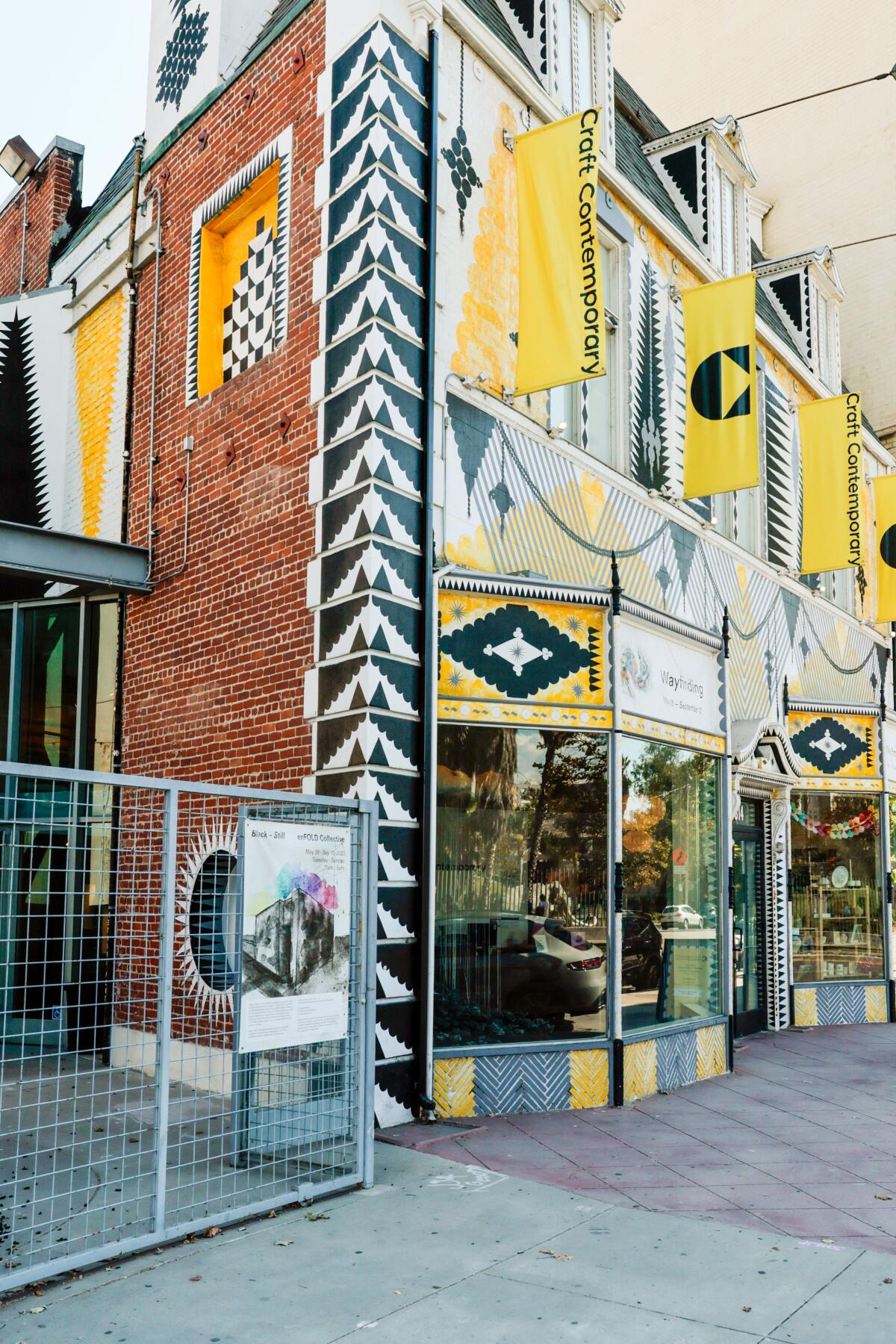
Craft Contemporary hosts CLAY LA this weekend.

Craft Contemporary hosts CLAY LA this weekend.

(Allen J. Schaben/Los Angeles Times)

CLAY LA
Emerging and established ceramic artists gather their wares for Craft Contemporary’s ninth annual fundraiser, a vibrant marketplace with complimentary refreshments, music and hands-on air-dry clay activities. Fun fact: The museum was founded by Edith R. Wyle, grandmother of “The Pitt’s” Noah Wyle.
Market Preview Night, 6-9 p.m. Friday, $20 general admission, $15 members; weekend market, 11 a.m.-5 p.m. Saturday (free with $9 museum admission) and Sunday (pay-what-you-wish admission); regular museum hours, 11 a.m.-5 p.m. Wednesday-Sunday; noon-8 p.m., the first Thursday of the month. Craft Contemporary, 5814 Wilshire Blvd. craftcontemporary.org

Conductor James Conlon of LA Opera.

Music director James Conlon of at L.A. Opera will conduct his farewell concert Friday at the Dorothy Chandler Pavilion.

(Ariana Drehsler/For The Times)

James Conlon Farewell Concert
The maestro, who is stepping down after 20 years as LA Opera’s music director, leads the organization’s full orchestra and chorus for an evening of Mozart, Verdi and Wagner as his grand finale. The event is followed by a celebratory gala on the stage of the Dorothy Chandler Pavilion.
7 p.m. Dorothy Chandler Pavilion, 135 N. Grand Ave., downtown L.A. laopera.org

SATURDAY
John Adams & Conrad Tao
The LA Phil’s John and Samantha Williams Creative Chair conducts the orchestra in a program that includes Piazzolla’s “Two Tangos,” Stravinsky’s “Song of the Nightingale” and Prokofiev’s “Lieutenant Kijé Suite,” plus pianist Conrad Tao performing Adams’ composition “Century Rolls,” inspired by 1920s self-playing pianos.
8 p.m. Saturday; 2 p.m. Sunday. Walt Disney Concert Hall, 111 S. Grand Ave., downtown L.A. laphil.com

Brewery Artwalk & Open Studios
This free semi-annual event at the former Pabst Blue Ribbon Brewery north of downtown features more than 100 artists sharing, discussing and (ideally) selling their work in the very spaces that much of it is created.
11 a.m.-6 p.m Saturday and Sunday. Brewery Arts Complex, 2100 N. Main St., L.A. breweryartwalk.com

Jerrika Hinton and Bradley Gibson in "Fremont Ave." runs April 25-May 23 at South Coast Repertory.

Jerrika Hinton and Bradley Gibson in “Fremont Ave.” runs April 25-May 23 at South Coast Repertory.

(Marc J. Franklin)

Fremont Ave.
The world premiere of Reggie D. White’s multi-generational drama about three Black men in L.A. and the woman who is the glue in their lives. Directed by Lili-Anne Brown. Part of the Pacific Playwrights Festival.
Previews, 8 p.m. Saturday; 7 p.m. Sunday and Tuesday-Thursday; opening night, May 1; regular performances, May 2-23. South Coast Repertory, Segerstrom Stage, 655 Town Center Drive, Costa Mesa. scr.org

The Liminary
It’s 2042 in Last Call Theatre’s latest immersive experience and the U.S. is run by a nationalistic, isolationist government. Do you dare join the resistance? With interactive exhibits on immigration, community and hope, plus multiple endings and narratives inspired by the saga of immigrants.
8 p.m Saturday; 8 p.m. May 1-2, May 7-9 and May 14-16. 1919 3rd Ave. L.A. lastcalltheatre.com

A triptych featuring sculptures by Liz Larner and Rachel Harrison and a painting by Rebecca Morris.

Liz Larner, “smile (abiding),” 1996-2005; Rachel Harrison, “The Prepper,” 2024; and Rebecca Morris, “Untitled (#15-25), 2025” from the exhibition “planchette” at Regen Projects.

(Regen Projects)

planchette
A group exhibition featuring contemporary abstract sculptures and paintings by influential artists Rachel Harrison, Liz Larner and Rebecca Morris.
Opening reception, 6-8 p.m.; exhibit runs through May 23. Regen Projects, 6750 Santa Monica Blvd. L.A. regenprojects.com

SUNDAY
Gabriel Kahane & Roomful of Teeth
The eclectic singer-songwriter-composer teams up with the multi-Grammy-winning vocal group to perform music from their recently-released collaborative album, “Elevator Songs.”
7 p.m. Sid The Cat Auditorium, 1022 El Centro St., South Pasadena. sidthecat.com

WEDNESDAY

The Australian Chamber Orchestra comes to the Segerstrom Center for the Arts on Wednesday, April 29.

The Australian Chamber Orchestra comes to the Segerstrom Center for the Arts on Wednesday, April 29.

(Nic Walker)

Australian Chamber Orchestra
The ensemble from down under performs Purcell’s “Fantasia on One Note,” Handel’s “Concerto Grosso in A Major, Op. 6 No. 11,” a new work by John Luther Adams titled “Horizon,” Vaughan Williams’ “The Lark Ascending” (arranged by Adam Johnson), and Schubert’s ”Death and the Maiden” in the candlelit intimacy of the Samueli Theater.
7 p.m. Segerstrom Center for the Arts, 600 Town Center Drive, Costa Mesa. scfta.org

Jason Delane, left. and Chuma Gault in "Hymn" at the Odyssey Theatre.

Jason Delane, left. and Chuma Gault in “Hymn” at the Odyssey Theatre.

(Cooper Bates)

Hymn
In this drama by British playwright Lolita Chakrabarti, best known for her stage adaptations of the novels “Life of Pi” and “Hamnet,” two Black men meet at a funeral and discover a life-changing connection. Gregg T. Daniel directs this co-production between the Odyssey Theatre and the Lower Depth Theatre.
Previews 8, p.m. Wednesday, Thursday and May 1; 8 p.m. Fridays and Saturdays (an Wednesday, May 27); 3 p.m. Sundays (except May 31), through June 14. Odyssey Theatre, 2055 S. Sepulveda Blvd. odysseytheatre.com

THURSDAY

Poster for Los Angeles Ballet's "Giselle" featuring Kate Inoue

Los Angeles Ballet presents “Giselle” with Kate Inoue at the Ahmanson Theatre, April 30-May 3.

(Alex Lopez)

‘Giselle’
The Los Angeles Ballet’s staging of this classic supernatural romance features the original 1841 choreography by Jean Coralli and Jules Perrot (updated by Marius Petipa) and score by composer Adolphe Adam.
7:30 p.m. Thursday-May 2 and 2 p.m. May 3. Ahmanson Theatre, 135 N. Grand Ave., downtown L.A. losangelesballet.org

The 1967 romantic comedy "Barefoot in the Park," starring Jane Fonda and Robert Redford.

The 1967 romantic comedy “Barefoot in the Park,” starring Jane Fonda and Robert Redford, opens the TCM Classic Film Festival on Thursday.

(Paramount Pictures)

TCM Classic Film Festival
Hollywood Boulevard comes alive with four days of movie magic beginning with the opening night presentation of the 1967 romantic comedy “Barefoot in the Park,” starring Robert Redford and Jane Fonda. Other screenings include “Alice In Wonderland” (1951), “A Place In The Sun” (1951), “Gaslight” (1944), “Out Of The Past (1947) , “Modern Times” (1936), “The Day The Earth Stood Still (1951) and “The Magnificent Seven” (1960), with appearances by Fonda, Barbara Hershey, Carol Burnett, John Turturro and many more.
Thursday-May 3. TCL Chinese Theatre IMAX, 6925 Hollywood Blvd.; Hollywood Roosevelt Hotel; TCL Chinese 6 Theatres multiplex, 6801 Hollywood Blvd.; El Capitan Theatre, 6838 Hollywood Blvd.; Egyptian Theatre, 6712 Hollywood Blvd. filmfestival.tcm.com

Arts anywhere

New and recent releases of arts-related media.

French Violinist Renaud Capucon performing during the 2024 Paris Olympics.

French Violinist Renaud Capucon, seen performing during the 2024 Paris Olympics, has a new live album featuring the works of composer Ernest Chausson.

(Kristy Sparow / Getty Images)

Chausson
This concert album pairs two pieces by French Romantic composer Ernest Chausson: “Concerto for Violin, Piano and String Quartet, Op. 21.,” performed by violinist Renaud Capuçon, the late pianist Nicholas Angelich and the Ébène Quartet, and “Poème” for violin and orchestra, featuring Capuçon and the Brussels Philharmonic led by conductor Stéphane Denève. The show was recorded live in 2020. Warner Classics/Erato: Digital ($10) and CD ($17).

The City Unseen
Emmy-winning producer-director Daniel Sackheim, whose credits include “Law & Order,” “The X-Files” and “The Americans,” is also a serious photographer. His new book of black-and-white images casts Los Angeles as the protagonist in a noir landscape of nocturnal beauty where its darkest secrets lurk in the deepest shadows. Hat & Beard Press: 108 pages, $60.

International Jazz Day
The 15th annual event is Thursday in Chicago, but you can celebrate early with PBS’ broadcast of last year’s International Jazz Day All-Star Concert from Abu Dabai. Hosted by Jeremy Irons, the lineup includes Herbie Hancock, Dee Dee Bridgewater, Kurt Elling, Jose James, John McLaughlin, Helene Mercier, Danilo Perez, Arturo Sandoval and more.
10 p.m. Friday. PBS SoCal and streaming at pbssocal.org

— Kevin Crust

Culture news and the SoCal scene

People in a museum.

Attendees walk around the Los Angeles County Museum of Art’s new David Geffen Galleries in Los Angeles on Sunday, April 19, 2025.

(Ariana Drehsler/For The Times)

The Los Angeles County Museum of Art news did not stop last week as it threw a glitzy opening gala for the new David Geffen Galleries, and — a few days later — welcomed members for previews prior to opening its doors to the general public on May 4. I attended the gala and checked in with a number of wonderful artists, including Mark Bradford, Ed Ruscha and Jeff Koons, about their thoughts on the new building. Then, on Sunday, we sent a team to get member reactions to the new space. Later in the week we published critic Leah Ollman’s review of the inaugural installation. Spoiler alert: Nope, not gonna give you one. You’ll have to read it.

We also ran a lovely profile by contributor Tara Anne Dalbow about Eileen Harris Norton whose jaw-dropping art collection is currently on display at Hauser & Wirth in downtown L.A. “Few people have done more to shape Los Angeles’ art scene than Eileen Harris Norton,” writes Dalbow. “The third-generation Californian, born and raised near Watts Towers in South Los Angeles, bought her first artwork at the Baldwin Hills Crenshaw Plaza, co-founded Art + Practice in Leimert Park, and has spent 50 years collecting artists who were, in many cases, her friends and neighbors.”

Joey Stromberg and Jenny Soo in "For Want of a Horse" at the Echo Theater Company.

Joey Stromberg and Jenny Soo in “For Want of a Horse” at the Echo Theater Company.

(Cooper Bates)

Times theater critic Charles McNulty was — as always — incredibly busy, publishing two reviews and a feature in the past week. First up, his take on “For Want of a Horse” by Olivia Dufault, currently receiving its world premiere in an Echo Theater Company production at Atwater Village Theatre. “The subject is zoophilia, not to be confused with bestiality, though for many of us it will be a distinction without much of a difference,” McNulty writes. Curious? Read on.

McNulty also delivered a thoughtful profile Nicholas Christopher, who he dined with on a recent trip to New York. “A new Broadway star emerges each season, and this year the spotlight has alighted on Nicholas Christopher, who has been dazzling audiences and insiders alike as part of the awe-inspiring triumvirate powering the thrilling new revival of the musical ‘Chess,’” McNulty writes.

Finally, McNulty reviewed “Eat Me,” by Talene Monahon, having its world premiere at South Coast Repertory. A fan of Monahon‘s previous work, McNulty was not as impressed at he would have liked. The play, he writes, “is a relentlessly quirky work that gorges on its own dark whimsy.”

In other news, I got the scoop that new media artist Refik Anadol’s museum of AI arts, Dataland has set its opening date for June 20.

Enjoying this newsletter? Consider subscribing to the Los Angeles Times

Your support helps us deliver the news that matters most. Become a subscriber.

Elinor Gunn in "Joan" at South Coast Repertory. SCR has announced its 2026-27 season.

Elinor Gunn in “Joan” at South Coast Repertory. SCR has announced its 2026-27 season.

(Scott Smeltzer)

South Coast Repertory announced an expanded 2026-27 season, featuring nine productions, including “Hamlet,” starring Raymond Lee; Stephen Sondheim and James Lapine’s “Into the Woods;” Lauren Yee’s “Mother Russia;” and Oscar Wilde’s classic, “The Importance of Being Earnest.” “The 2026-27 season reflects programming changes established in SCR’s recently adopted strategic plan, which includes more classics, modern masterpieces and the continuation of an annual musical on the Segerstrom Stage,” a news release notes.

“GUAC,” the heartbreaking one-man show by a father who lost his son in the 2018 Parkland school shooting, returns Tuesday to Center Theatre Group’s Kirk Douglas Theatre after playing to a packed house last September. Manuel Oliver’s devastating plea for gun control runs for three weeks only, through May 17.

— Jessica Gelt

And last but not least

If you’re sad that you missed Coachella, this story about how much people paid to attend will make you feel all better.

Source link