Japan moves to tighten rules for foreigners, throwing futures into doubt | Migration
Tokyo, Japan – Nearly eight years after moving to Japan for work, Abdul feels more accustomed to life in the East Asian country than in his native Bangladesh.
But as the Japanese government moves to tighten the rules for permanent residency and public sentiment towards immigrants sours, Abdul is reconsidering his future.
Recommended Stories
list of 4 itemsend of list
“I don’t know what the Japanese government will do in the future, if they’ll make things stricter again,” Abdul, a tech engineer who lives in northern Tokyo with his Bangladeshi wife, told Al Jazeera.
Abdul, who is preparing to apply for both permanent residency and citizenship, is aware of the possibility that he may soon have to leave.
“I have to be prepared if both of my applications are rejected,” said Abdul, who asked not to be identified by his real name.
“Right now, I am starting to look for opportunities outside of Japan.”
Under rules set to come into effect in phases from October 1, applicants for permanent residency will need to show that their annual household income exceeds the Japanese average – a stipulation that will be applied retroactively for applications submitted since April – and demonstrate Japanese-language proficiency.
Applicants will also be required to have a pension pot equivalent to 30 years of payouts.
In an announcement detailing the changes, Japan’s Immigration Services Agency stressed the need for foreigners to “live independently” and have “a stable life without the risk of becoming a burden”.

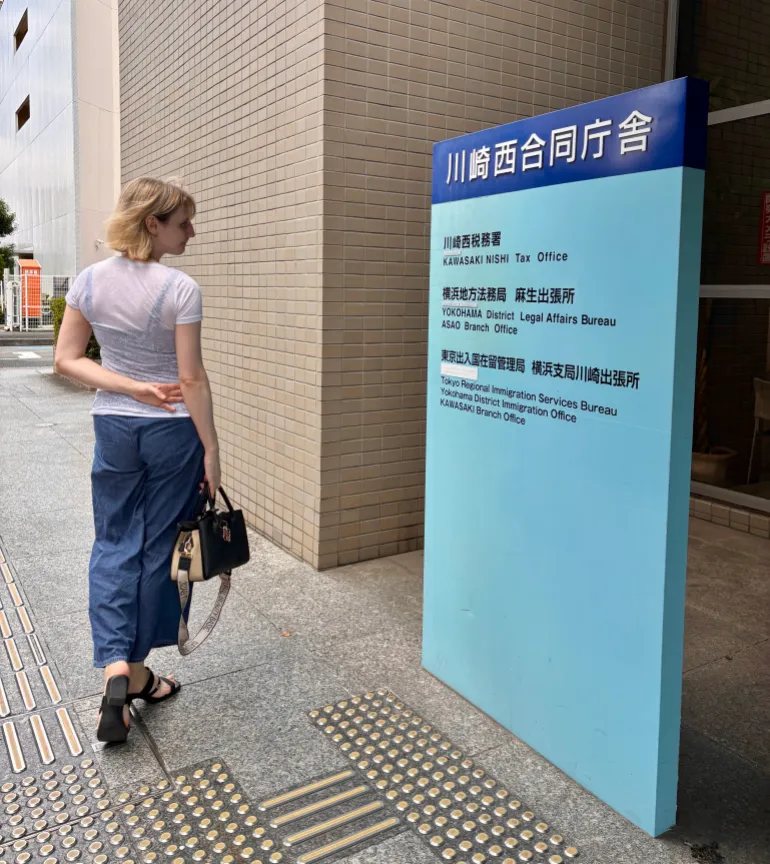
Sarah Nelkin, an American who has lived in Japan for the last 14 years, is among the many long-term residents who fear they will not qualify under the new rules.
A lover of Japanese animation and video games, Nelkin first moved to Japan as a university student and has since built a career in the country’s bustling entertainment industry.
Like Abdul, Nelkin, who submitted an application for permanent residency shortly before the announcement of the changes, is anxious about what the future holds.
If her application is rejected, she plans to apply to become a Japanese citizen – which would mean giving up her US citizenship, as Japan does not recognise dual nationality.
“I’ve lived my entire adult life in Japan … I would rather not give up my American passport. My mother lives in the US, and I want to retain my citizenship for a lot of reasons, like visiting family,” Nelkin told Al Jazeera.
“But at this point, I might have to give up my American nationality.”
Risa Hagiwara, a professor of economics at Meikai University in Urayasu, Japan, said the changes reflect a shift towards a “selective and conditional” immigration policy that is in tension with Japan’s need for labour amid a shrinking population.
“Japan needs foreign workers because of labour shortages. But if the conditions for long-term settlement become substantially more difficult, this could potentially reduce Japan’s attractiveness to foreign workers who are considering Japan as a place to build their long-term lives,” Hagiwara told Al Jazeera.
Hot-button issue
Immigration has become an increasingly hot-button topic in historically homogenous Japan.
Japan’s foreign resident population remains small compared with developed peers such as the United Kingdom and France, where 10 to 15 percent of residents were born overseas.
But it has been growing fast, hitting a record 4.12 million people, or about 3 percent of the total population, as of the end of 2025, according to government data.
By some estimates, Japan’s foreign-born population could reach the OECD average of 10 percent by 2070.
Meanwhile, the number of Japanese nationals fell by more than 900,000 between January 2025 and 2026 amid the country’s rock-bottom birthrate, according to government figures.
Hagiwara said that Japan is at a crossroads as foreign-born residents play an increasingly important role in Japanese society.
“If Japan wants to rely on foreign workers to address labour shortages, it also needs to consider what happens after they come to Japan,” Hagiwara said.
“The question is increasingly not only ‘how many foreign workers does Japan need?’, but also ‘what kind of society does Japan want to build with the people who come here?’” she said.
Japan’s mooted immigration shake-up comes amid a broader rightward shift in the country’s politics.
While campaigning for the leadership of the conservative Liberal Democratic Party last year, Japanese Prime Minister Sanae Takaichi said the country should “reconsider, at least for now, policies that allow in people with completely different cultures and backgrounds”.
Takaichi’s subsequent coalition agreement with the right-wing Japan Innovation Party (JIP) pledged a firm stance against foreigners who break the rules, as well as steps to address “potential social friction” from a growing foreign population.

At the same time, the far-right, anti-immigration Sanseito party has gained ground with its “Japan First” messaging, winning a record 15 seats at the most recent lower-house election to become the third-largest opposition party.
Public opinion has also moved against immigrants.
In a recent survey by the Institute of Social Science at the University of Tokyo, 56.3 percent of Japanese people said they opposed accepting more foreigners, up from 35.6 percent in 2024.
Nelkin and Abdul have both felt the change in sentiment.
“Before 2024, I never felt any discrimination against foreigners, but recently there has been a shift … especially online,” Abdul said.
Nelkin said peers have become outspoken in their dislike of foreigners.
“Even seemingly decent people are just saying racist stuff,” she said.
“I’ve worked for this country and specifically avoided breaking any rules, and they’re saying you are never enough,” she added. “That’s really hard.”