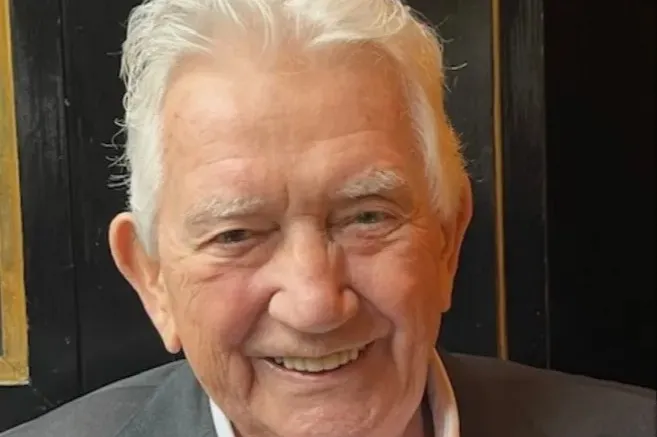
Grammy-winning music producer behind The Beatles’ most popular albums & John Lennon’s Imagine dies aged 80

GRAMMY-winning music producer Phil McDonald has died at the age of 80.
The celebrated music veteran manned the desk for some of The Beatles’ greatest final records, shaping both the White Album and Abbey Road.
He also engineered iconic solo projects including John Lennon’s Imagine and George Harrison’s All Things Must Pass.
Phil’s stellar work on Abbey Road behind the scenes earned him a Grammy.
Born Philip John McDonald in Leeds on February 3 1946, he relocated to Earl’s Court in London with his family during the early 1960s.
Gifted with perfect pitch, he landed a job at EMI Studios in 1964, long before the legendary facility was renamed Abbey Road Studios in 1976.
Starting out in the tape library, he quickly progressed into the cutting rooms before ultimately securing his role as a tape operator and balance engineer.
His inaugural session with The Beatles took place on June 17 1965 to work on Yesterday.
Paul McCartney debuted the track to an exclusive audience of just two people: McDonald and producer George Martin.
The eventual collapse of The Beatles only caused his workload to surge.
Paul McCartney would sneak tapes from his secret debut solo album into Abbey Road’s Studio Three for McDonald to mix and edit.
At the exact same time, the tireless producer was stationed in Studio Two, assisting Ringo Starr with his album of standards, Sentimental Journey.
Phil Spector arrived on the scene a few months later with a mission to salvage the chaotic Let It Be sessions.
Working closely alongside McDonald, the pair successfully transformed the messy tapes into a releasable record.
Spector and McDonald went on to form a formidable studio partnership between the summers of 1970 and 1973.
Together, they delivered George Harrison’s sophomore solo effort, Living in the Material World, alongside the acclaimed All Things Must Pass.
During this highly productive window, McDonald also helped shape John Lennon’s initial post-Beatles output. He engineered both the John Lennon/Plastic Ono Band record and the legendary Imagine.
Away from the Fab Four, he recorded a raft of talent for EMI’s prog and folk imprint, Harvest.
His diverse roster included Roy Harper and Syd Barrett, with McDonald working on the latter’s 1970 release The Madcap Laughs.
He also proved instrumental in the studio for Linda Lewis, steering four of her albums between 1972 and 1975 and later secured credits on the landmark 1970 album Deep Purple in Rock.
That very same year, he collaborated with Eric Clapton to capture the defining Derek and the Dominos record, Layla and Other Assorted Love Songs.
By 1973, he had secured his second Grammy nomination for his work on Harry Nilsson’s A Little Touch of Schmilsson in the Night.
Leaving the music business behind, Phil and his wife Sandra – who survives him – moved to New York in 2001 and remained in the US.