‘NAZA’ review: Documentary collects anonymous testimony of IDF tactics
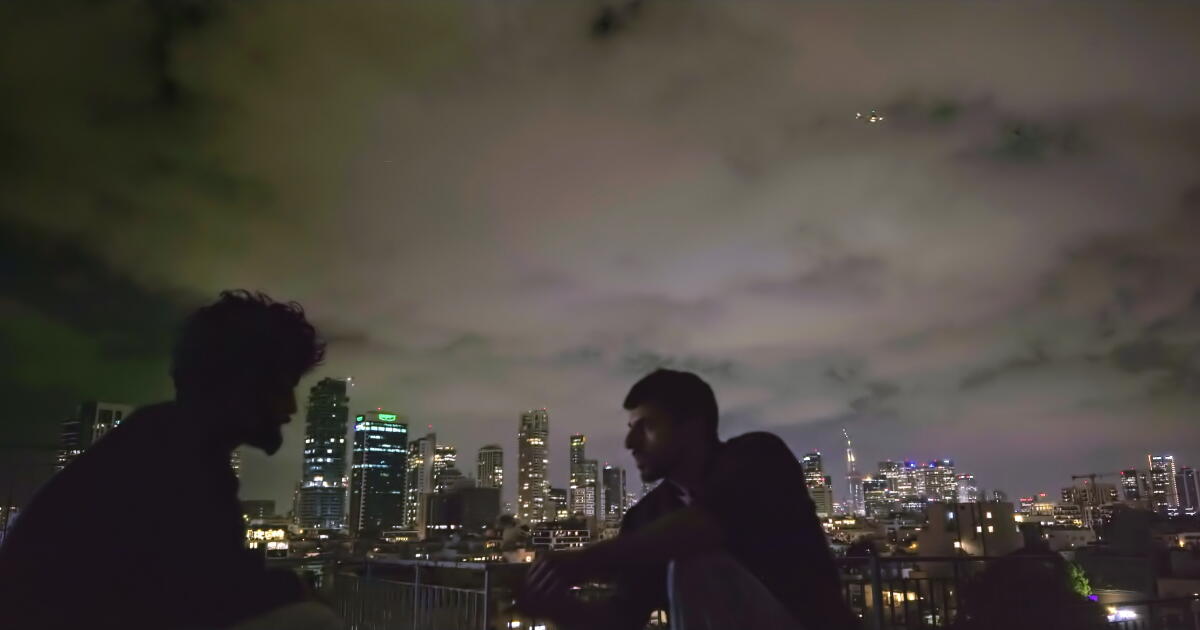
Using interviews filmed on rooftops at night in Tel Aviv, the documentary “NAZA” uncovers Israel’s brutal methodology of warfare in Gaza since the Hamas-led Oct. 7, 2023, massacre that took 250 hostages and killed at least 1,200 people. The testimony offered by these insiders is under the cloak of darkness, but the light it shines on the mass killing of Palestinian civilians is so harsh it burns the conscience. (The title refers to the Israel Defense Forces’ use of an acronym for the Hebrew term for collateral damage: nezek agavi.)
Israeli directors Yuval Abraham and Rachel Szor, half of the quartet (with Basel Adra and Hamdan Ballal) behind the Oscar-winning “No Other Land,” secured one-on-one interviews with 24 Israeli intelligence personnel and soldiers, digitally altering their faces and voices while their silhouettes are framed by the lit cityscape. Sitting across from interviewer Abraham, they recount their participation in a military campaign that has killed over 73,000 in Gaza, according to the Gaza Health Ministry, and is ongoing. Used as an estimation of casualties — just put a number in front, “20 NAZA”— it suggests a battle calculation that has permitted the detachment of moral consquences.
One participant makes his need for anonymity clear: “Israel will put me in jail.” At the same time, there has been clamor for the exposure of these sources so they can be prosecuted for war crimes. The uproar over “NAZA” has also led the filmmakers to be called traitors in their country. Prime Minister Benjamin Netanyahu has threatened to revoke their citizenship.
It all speaks to the power of a well-timed movie, since much of the reporting in “NAZA” has already been published by the Guardian, a co-producer of the documentary, and corroborated by other news outlets. After its theatrical run, the Guardian will stream “NAZA” for free on its website.
The picture painted from the interview subjects, who occasionally draw sketches of weapons-screen interfaces on notepads, is of a computerized tracking-and-killing apparatus, culled from the surveillance Israel keeps of nearly every phone in Gaza. The system is augmented by AI that isn’t always accurate about a target’s presence yet is implemented with airstrikes. Eavesdropping on children is used to track a targeted father’s arrival home in a program called “Where’s Daddy?” As one person says, “You hack her phone and then kill her.”
What’s chilling about these interviews is how they don’t feel like whistleblowing but rather a fact-finding inquiry with available explainers who betray little affect or remorse, even when the topic of personal doubt arises. When one is asked whether this is genocide, the answer comes back, “Yes.” “NAZA” eschews probing for guilty feelings, though, because the point is to unearth a process of obliteration: how it works and what it looks like as implemented by the willing. “My role is technical,” a subject says.
In between these interviews are glimpses of the occasional Israeli news media snippet and at one point an archival reminder of the circumstances of Tel Aviv’s founding. But most insistently, the interstitial visuals are cinematographer Szor’s night shots of apartment facades in modern Tel Aviv: citizens at rest with their loved ones, working out or eating in front of their televisions. It’s a casual surveilling of placidity just up the coast from the atrocities we hear about. “NAZA” isn’t just tough-to-hear journalism, it’s real filmmaking, the visual juxtapositions getting us to think about who doesn’t get to enjoy a quiet evening at home, especially when remote war-waging starts to look like a goal-oriented office shift with a lunch break — or a video game.
Wherever you fall regarding the continued destruction of Gaza, what the filmmakers of “NAZA” make disturbingly clear is that the simplest machinery to spread dehumanization and death is happening now, easing its users into acceptance and rewriting everything about the moral cost of conflict. It’s stone-cold frightening.
‘NAZA’
In Hebrew and English, with subtitles.
Not rated
Running time: 1 hour, 17 minutes
Playing: Opens Friday, Oct. 9 in limited release