WASHINGTON — House lawmakers were digging into Jeffrey Epstein’s sprawling financial portfolio on Wednesday as a committee deposed his former accountant and tried to understand his connections to some of the world’s wealthiest men.
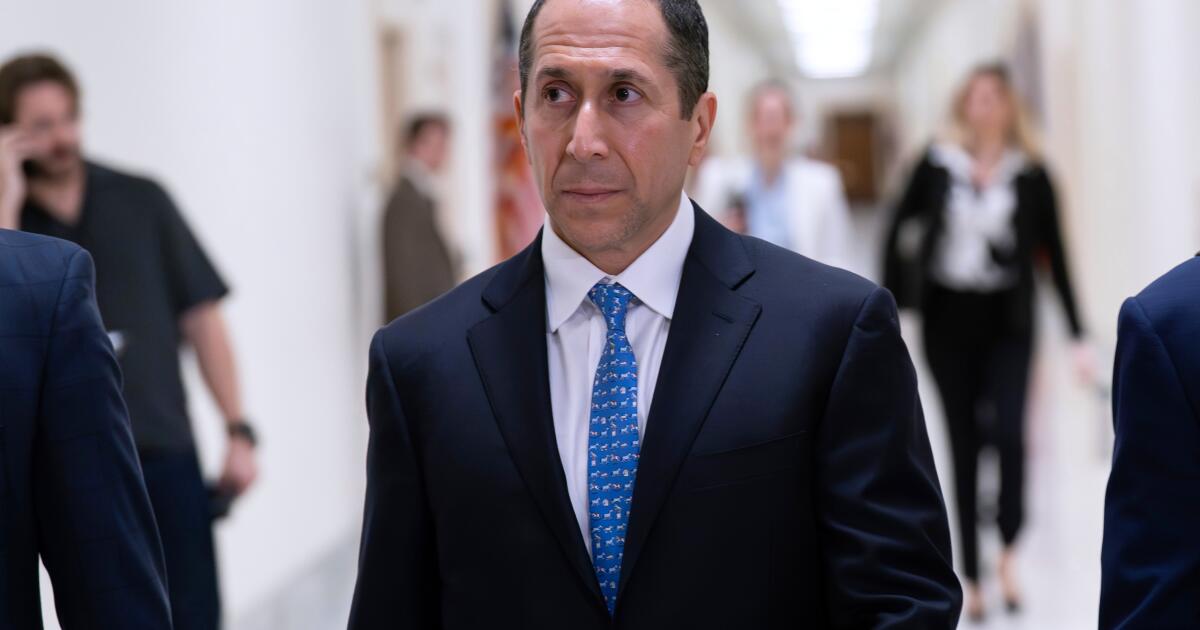
Richard Kahn, who worked closely with Epstein for years and now serves as an executor of his estate, appeared for the closed-door deposition on Capitol Hill. He told lawmakers that he had not personally seen evidence of Epstein’s sexual abuse, but provided a fuller picture of how Epstein acquired his wealth. The wealthy financier made hundreds of millions of dollars over two decades, during which he struck up friendships with some of the world’s most powerful men.
Kahn “was under the impression that Epstein made his money as a tax advisor and a financial planner,” said Rep. James Comer, the Republican chair of the House Oversight Committee. Lawmakers argued that a fuller picture of Epstein’s finances could help the public understand how, for years, he was able to get away with trafficking and sexually abusing underage girls.
“Jeffrey Epstein’s sex trafficking ring would not have been possible without Richard Kahn, who managed Epstein’s money for years, authorized payments, including payments to victims and survivors,” said Rep. James Walkinshaw (D-Va.), who added that Kahn told them he was unable to recall details of some of the transactions and communications that he was asked about.
Kahn has said that he was unaware of Epstein’s sexual abuse and had not seen any of his victims.
Comer (R-Ky.) also said that lawmakers confirmed during the deposition that Epstein received significant amounts of money from former retail shopping chain executive Les Wexner, hedge fund manager Glenn Dubin, tech entrepreneur Steven Sinofsky, investor Leon Black and the Rothschilds, a wealthy banking family.
None of those people have been accused of wrongdoing in their relationships with Epstein, but Democrats on the committee argued that anyone with ties to the wealthy financier should be scrutinized. Wexner was deposed by the committee last month, and Comer has also called on Black, among several others, to appear for transcribed interviews.
Kahn also told lawmakers that Epstein had financial ties to Ehud Barak, who was the prime minister of Israel from 1999 to 2001, according to Democratic Rep. Suhas Subramanyam. Barak has not been accused of wrongdoing and has said he regrets his friendship with Epstein.
Comer also said Wednesday that the committee has reviewed over 40,000 documents that it subpoenaed from JPMorgan Chase and Deutsche Bank. Epstein was connected to at least 64 business entities, according to Comer.
Republican President Trump has strongly denied any wrongdoing in his own ties to Epstein, and Comer said that Kahn had never seen any financial transactions between Epstein and Trump. Comer said that Kahn is the latest witness to testify that they had never seen Trump doing anything wrong with Epstein.
“The investigation’s about getting the truth to the American people, trying to figure out how the government failed, answer questions we all have,” Comer said.
A Los Angeles firefighter said in sworn testimony that he sounded the alarm about the inadequate mop-up of the Lachman fire — and was blown off by a captain — days before the embers reignited into the deadly Palisades fire.
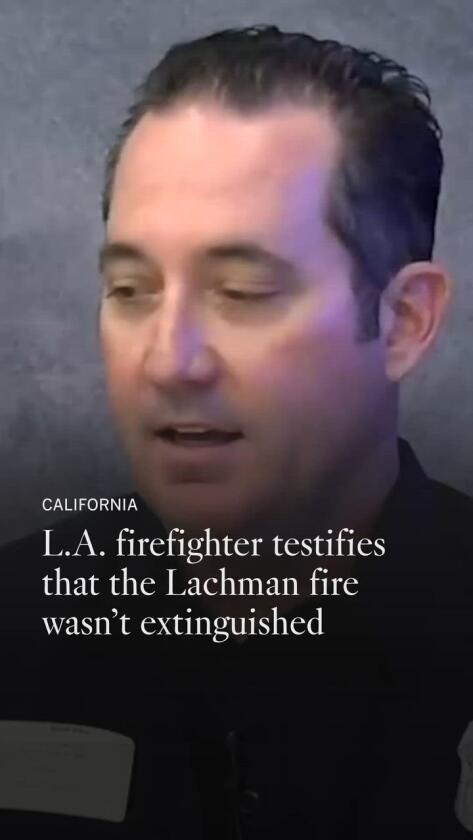
The firefighter, Scott Pike, testified last month in a lawsuit brought by Palisades fire victims against the city and the state.
Pike, a 23-year LAFD veteran normally assigned to a station in Sunland, was working an overtime shift on Jan. 2 when he was assigned to pick up the hoses from the Lachman fire. But he said he saw about five areas that were still smoking.
At one ash pit, he said, “I didn’t even want to use my gloved hand because it was hot. So I just kicked it with my boot to kind of expose it, and there was, like red hot, like, coals … that was still smoldering. And I even heard crackling.”
Share via
Pike’s dramatic retelling, which city attorneys initially blocked from release along with transcripts of deposition testimony from 11 other firefighters, corroborates previous reporting by The Times that a battalion chief ordered crews to pack up their hoses and leave, despite signs that the earlier fire was not completely extinguished.
Pike testified that when he reported his observations to other firefighters at the scene, “I felt like I kind of got blown off a little bit.”
Then he tried the captain.
“That’s how I approached him, is like, ‘Hey, Cap … We have hot spots in general. We have some ash pits,’” Pike said of the captain on the scene, whose name he did not know. “That’s an alert to double-check the whole area and maybe we need to switch our tactics.”
Pike testified that it was not his job “to overstep and tell him what to do. He earned that rank.”
The other firefighters, too, seemed eager to “just get this hose picked up,” Pike said, adding that he was working overtime the day after a holiday “because nobody else wanted to work it.”
“It kind of sits heavy with me that nobody listened to me,” he said.
LAFD commanders have insisted that the flames were completely out and barely mentioned the earlier fire in an after-action review report designed to examine mistakes and prevent them from happening again.
Pike said in his testimony that he was never interviewed for the after-action report.
After the firefighters testified over the course of three weeks, city attorneys invoked a general protective order that any party in the litigation can designate testimony as confidential for up to 30 days. A city attorney previously told The Times that this allowed them to review the testimony and determine which parts, if any, should stay confidential.
Days after the firefighters left the scene, high winds reignited the embers into the inferno that destroyed much of Pacific Palisades and killed 12 people.
Alex Robertson, an attorney representing the Palisades fire victims in the lawsuit, said the 11 other firefighters who were deposed testified that the fire was out and that they did not see hot spots or smoldering.
“Only one of the firefighters we deposed had the courage to tell the truth — that his fellow firefighters and captain ignored his warnings that the fire had not been fully extinguished,” Robertson said.
The fire victims allege that the state government, which owns Topanga State Park, failed in the week between the two fires to inspect the burn scar after firefighters left and make sure a “dangerous condition” did not exist on its property.
The LAFD was responsible for putting out the fire, but plaintiffs’ attorneys argue that the state should have done more to monitor the burn scar and ensure the area was safe.
Several California State Parks representatives also testified in the case. Their testimony and text messages show that their initial concern was whether the fire was on parkland and whether firefighting efforts and equipment would harm federally endangered plants and artifacts.
The Times report about crews being ordered to leave the earlier fire, published Oct. 30, described text messages from firefighters indicating that at the scene of the Lachman fire on Jan. 2, 2025, the ground was still smoldering and rocks were hot to the touch.
In one text message, a firefighter who was at the scene wrote that the battalion chief had been told it was a “bad idea” to leave because of the visible signs of smoking terrain, which crews feared could start a new fire if left unprotected.
“And the rest is history,” the firefighter wrote.
A second firefighter was told that tree stumps were still hot when the crew packed up and left, according to the texts. And a third firefighter said last month that crew members were upset when told to pack up and leave but that they could not ignore orders, according to the texts. The third firefighter also wrote that he and his colleagues knew immediately that the Palisades fire was a rekindle of the Jan. 1 blaze.
LAFD officials were emphatic early on that the Lachman fire, which federal prosecutors believe was deliberately set, was fully extinguished.
“We won’t leave a fire that has any hot spots,” Kristin Crowley, the fire chief at the time, said at a community meeting Jan. 16, 2025.
“That fire was dead out,” Chief Deputy Joe Everett said at the same meeting, adding that he was out of town but communicating with the incident commander. “If it is determined that was the cause, it would be a phenomenon.”
The Lachman fire broke out shortly after midnight on New Years Day. A few hours later, at 4:46 a.m., the LAFD announced that the blaze was fully contained at eight acres.
Top fire commanders soon made plans to finish mopping up the scene and to leave with their equipment, according to another set of text messages obtained by The Times through a state Public Records Act request.
“I imagine it might take all day to get that hose off the hill,” LAFD Chief Deputy Phillip Fligiel said in a group chat early the morning of Jan. 1. “Make sure that plan is coordinated.”
At 1:35 p.m. on Jan. 2, Battalion Chief Mario Garcia — whom firefighters said had received the observations about the smoldering ground and hot rocks, according to the private text messages The Times reviewed — texted Fligiel and Everett: “All hose and equipment has been picked up.”
Five days after that, on the morning of Jan. 7, an LAFD captain called Fire Station 23 to say that the Lachman fire had started up again.
In June, LAFD Battalion Chief Nick Ferrari had told a high-ranking fire official who works for a different agency in the L.A. region that LAFD officials knew about the firefighters’ complaints at the Lachman fire scene, The Times also reported.
After the Oct. 30 Times report, Bass directed Fire Chief Jaime Moore, who started the job in November, to commission an independent investigation into the LAFD’s handling of the Lachman fire.
In an interview last month, Moore said he opened an internal investigation into the Lachman fire through the LAFD’s Professional Standards Division, which probes complaints against department members. He said he requested the Fire Safety Research Institute, which is reviewing last January’s wildfires at the request of Gov. Gavin Newsom, to include the Lachman fire as part of its analysis, and the institute agreed. Moore also pointed to the L.A. City Council’s move to hire an outside firm to examine the Lachman and Palisades fires.
Even with the internal investigation underway, Moore said he spoke with the battalion chief who was on duty during the Lachman fire mop-up.
“He swears to me that nobody ever told him verbally or through a text message that there was any hot spots,” Moore said.
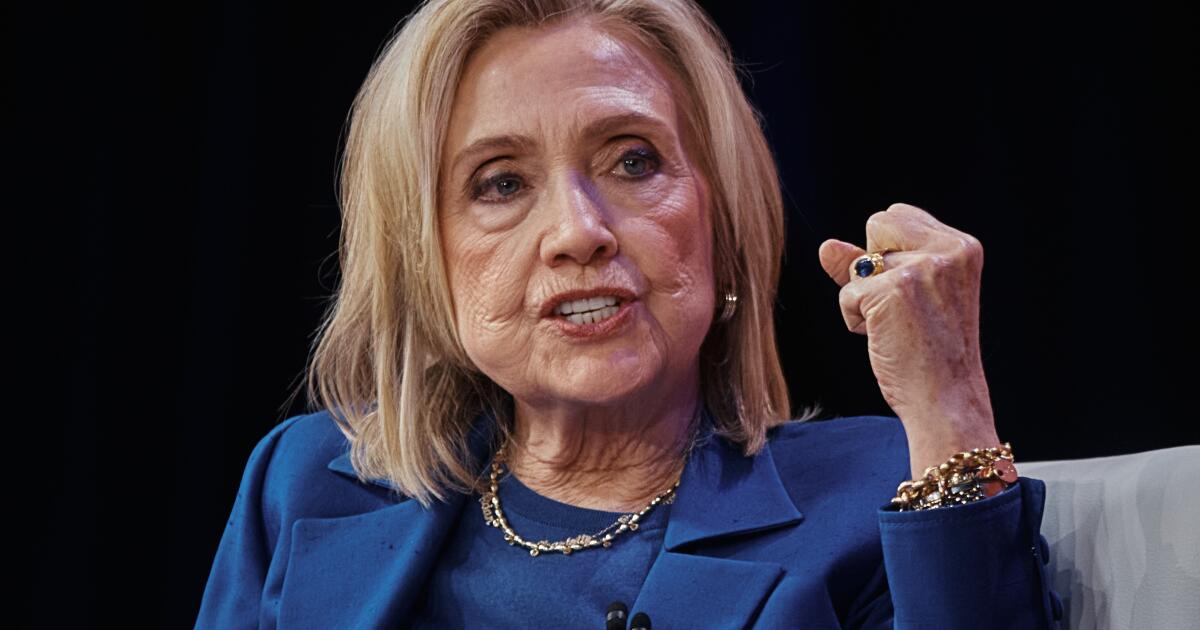
WASHINGTON — Former Secretary of State Hillary Clinton told U.S. House lawmakers on Thursday that she had no knowledge of Jeffrey Epstein’s or Ghislaine Maxwell’s crimes at the start of two days of depositions that will also include former President Clinton.
“I had no idea about their criminal activities. I do not recall ever encountering Mr. Epstein,” Hillary Clinton said in an opening statement she shared on social media.
The closed-door depositions in the Clintons’ hometown of Chappaqua, a typically quiet hamlet north of New York City, come after months of tense back-and-forth between the former high-powered Democratic couple and the Republican-controlled House Oversight Committee. It will be the first time that a former president has been forced to testify before Congress.
Yet the demand for a reckoning over Epstein’s abuse of underage girls has become a near-unstoppable force on Capitol Hill and beyond.
President Trump, a Republican who has expressed regret that the Clintons are being forced to testify, bowed last year to pressure to release case files on Epstein, who killed himself in a New York jail cell in 2019 while awaiting trial. The Clintons, too, agreed to testify after their offers of sworn statements were rebuffed by the Oversight panel and its chairman, Rep. James Comer, R-Ky., threatened criminal contempt of Congress charges against them.
“We have a very clear record that we’ve been willing to talk about,” Hillary Clinton said in an interview with the BBC earlier this month. She added that her husband had flown with Epstein for charitable trips and that she did not recall meeting Epstein but had interacted with Maxwell, Epstein’s former girlfriend and confidant, at conferences hosted by the Clinton Foundation.
Maxwell, a British socialite, also attended the 2010 wedding of their daughter, Chelsea Clinton.
“We are more than happy to say what we know, which is very limited and totally unrelated to their behavior or their crimes, and we want to do it in public,” Hillary Clinton said.
Bill Clinton, however, has emerged as a top target for Republicans amid the political struggle over who receives the most scrutiny for their ties to Epstein. Several photos of the former president were included in the first tranche of Epstein files released by the Department of Justice in January, including a number of him with women whose faces were redacted. Clinton has not been accused of wrongdoing in his relationship with Epstein.
Comer has also pointed to Hillary Clinton’s work as secretary of state to address sex trafficking as another reason to insist on her deposition. The committee’s investigation has sought to understand why the Department of Justice under previous presidential administrations did not seek further charges against Epstein following a 2008 arrangement in which he pleaded guilty to state charges in Florida for soliciting prostitution from an underage girl but avoided federal charges.
Yet conspiracy theories, especially on the right, have swirled for years around the Clintons and their connections to Epstein and Maxwell, who argues she was wrongfully convicted. Republicans have long wanted to press the Clintons for answers.
“I mean if you’re the wife of Bill Clinton, aren’t you going to have some questions about your husband’s activities?” said Rep. Scott Perry, R-Pa., a member of the House Oversight Committee. “We only go where the facts take us. We didn’t put the president and the secretary in this position. They put themselves in it.”
Democrats, now being led by a new generation of politicians, have prioritized transparency around Epstein over defending the former leaders of their party. Several Democratic lawmakers joined with Republicans on the Oversight panel to advance the contempt of Congress charges against the Clintons last month. Several said they had no relationship with the Clintons and owed no loyalty to them.
Rep. Robert Garcia of California, the top Democrat on the Oversight panel, said that both Republican and Democratic administrations “have failed survivors in not getting more information out to the public.” He also said he wanted to ask about Epstein’s possible ties to foreign governments.
Democrats are also coming off an effort this week to confront Trump about his administration’s handling of the Epstein files by taking women who survived Epstein’s abuse as their guests to Trump’s State of the Union address. Even senior Democrats, such as former Speaker Nancy Pelosi of California, said it was appropriate for the committee to interview anyone, including the former president, who was connected to Epstein.
“We want to hear from everyone,” Pelosi said, adding that she did not see why Hillary Clinton was being interviewed and that it was important to “believe survivors.”