Andhra Pradesh’s regional minister of education says he is taking legal action with a committee against those responsible.
Published On 21 Aug 202621 Aug 2026
Authorities in the Indian state of Andhra Pradesh have launched an investigation after a six-year-old child collapsed and reportedly died after he was slapped by his teacher in a school classroom.
The incident was captured on a security camera in the school in Visakhapatnam in the southeast Indian state, before being shared widely by local media on Thursday. The incident is already causing an uproar around corporal punishment in the country.
Recommended Stories
list of 4 itemsend of list
The video clip, which has been verified by Al Jazeera, shows a female teacher holding a child by his clothes before slapping him on the face, after which he collapses.
“We are taking legal action against those responsible and the school management,” Nara Lokesh, Andhra Pradesh’s education and IT minister, wrote on Facebook on Thursday.
Police are also investigating the circumstances around the death of the child, who local media have named as Pranay Tej.
“As a father, I can’t get over what happened to little Pranay Tej. I cannot imagine the pain his parents are going through. Corporal punishment has no place in our schools. No child should ever be subjected to violence in the name of discipline,” Lokesh wrote on X on Friday.
“I have already directed a full investigation and strict action against anyone found responsible. My heart goes out to Pranay’s family in this moment of unimaginable grief.”
Relatives gathered at the hospital after learning about the boy’s death and demanded strict action against those responsible, according to NDTV India.
Pranay Tej’s father said his son appeared healthy in the morning before going to school. “In the morning around 8am, my son woke up and said he wanted to go to school. He insisted on going to school,” he told NDTV.
Police Inspector Pudi Vara Prasad told Press Trust of India: “Following a written complaint from the boy’s father, we have registered a case under Section 194 of the BNSS and launched an investigation.”
Prasad said the body was handed over to his parents after police “completed the inquest and post-mortem procedures”.
He added that “once all relevant reports are received, we will determine the exact cause of death”.
A 2018 study by the Indian NGO Agrasar found that roughly 80 percent of low-income school children in India experience corporal punishment from teachers, despite it being officially illegal.
Palla Srinivasa Rao, Andhra Pradesh state president of the Telugu Desam Party (TDP), told Press Trust of India that “the government has reacted appropriately” in the aftermath of the incident.
“Our IT and Education Minister, Nara Lokesh Garu, has already formed a committee, and based on the committee’s report, we will definitely take action,” he said.
SACRAMENTO — A billionaire-funded political group gave a $5-million donation to the campaign opposing California’s proposed wealth tax, the first of many expected in the expensive fight over a ballot question dividing the state.
If approved by voters, Proposition 40 would impose a one-time 5% tax on the assets of billionaires who were residing in the state at the start of this year to pay primarily for healthcare.
The ballot measure has splintered California Democrats and their allies, who are at odds over which public services would receive a portion of the revenue and Proposition 40’s long-term impact on the state budget.
Gov. Gavin Newsom, Democratic gubernatorial candidate Xavier Becerra and groups including Planned Parenthood Affiliates of California and the California Teachers Assn. oppose the tax, arguing it could push many of the state’s biggest taxpayers to relocate and in effect destabilize the state’s finances.
On Monday, nine Democratic state lawmakers announced their opposition to Proposition 40, writing in an open letter to voters that “while well-intentioned, this measure will blow a massive hole in our state budget in the years ahead and undermine our ability to sustain investments in the very priorities Prop 40 claims to support.” Its signers included Assemblymembers Jacqui Irwin (D-Thousand Oaks), Lisa Calderon (D-Whittier) and John Harabedian (D-Pasadena).
The California Democratic Party, the California Federation of Labor Unions and progressive officials including Sen. Bernie Sanders (I-VT) and Rep. Ro Khanna (D-Fremont) support the tax, which is intended to raise roughly $100 billion over five years to backfill federal cuts to healthcare and other social safety net programs by President Trump and the Republican-led Congress.
To this point, Building a Better California — a group funded by Google co-founder Sergey Brin and other members of the Silicon Valley elite — has focused on qualifying two ballot measures meant to defang the billionaire tax while maintaining a neutral position on Proposition 40 itself.
That changed over the weekend when the group of billionaires officially came out against the measure and reported the $5-million donation to the anti-Proposition 40 campaign backed by teachers and firefighters unions.
A handful of billionaires have pumped more than $156 million into Building a Better California, mostly from Brin, who has given more than $100 million to the group. It has also received more than $17 million from venture capitalist L. John Doerr, $12 million from Ripple Labs founder Chris Larsen and $3 million from philanthropist and former Google Chief Executive Eric Schmidt.
In addition to opposing the wealth tax, Building a Better California announced support for Proposition 3, which would permanently extend an existing tax on certain high earners, along with two housing bonds.
The group has already spent more than $127 million on two competing ballot measures written to weaken or nullify the billionaire tax: Proposition 41 would require audits for new state special taxes and prohibit new taxes from being excluded from the state spending limit. Proposition 42 would ban new taxes on assets such as as personal property, intellectual property and retirement accounts.
If Proposition 40 passes but either Proposition 41 or Proposition 42 receive more votes, the billionaire tax would be voided.
“A few controversial billionaires like Sergey Brin would rather spend millions to fund shady opposition campaigns than simply pay their fair share in taxes so millions of their fellow Californians don’t lose their healthcare. That’s shameful,” said Debru Carthan, executive vice president of Service Employees International United-Healthcare Workers West, the union that collected the signatures to put the measure on the ballot.
Abby Lunardini, a spokesperson for Building a Better California, said the state “is at an inflection point” due to its high cost of living and taxes.
“California’s future rests on both maintaining our economic competitiveness and making smart, accountable public investments that improve affordability and quality of life for all,” Lunardini wrote in a statement. “It’s rare for such a broad coalition to unite around any single cause in California, but it reflects the potentially devastating impact of this measure on healthcare, education, and our state’s economy.”
The $5-million donation is the largest reported by the Proposition 40 opposition campaign, which wrote in a statement that it “welcomes support from everyone — teachers, doctors, hospitals, community clinics, firefighters, housing advocates, blue-collar unions, entrepreneurs, small businesses, Democrats, and Republicans.”
The donation indicates that members of the opposition coalition — and not billionaires — will play a more visible role in campaign ads.
“Two groups in California that have the most credibility with voters are the teachers and the firefighters,” said Garry South, a Democratic strategist who has worked on past ballot measure campaigns. Making them visible messengers against Proposition 40 “is a very important credibility aspect for the No campaign.”
“Nobody likes political consultants or lawyers. They like firefighters and nurses and teachers,” Republican strategist Matt Rexroad agreed.
Adre, Chad – Sahra remembers growing up in el-Geneina, the capital of Sudan’s West Darfur state, determined to outperform the boys in her class.
After sitting her national examinations in 2005 and 2006, she decided she wanted to become a teacher. She volunteered in classrooms while pursuing a university degree, eventually specialising in education administration.
Then, in April 2023, war between the Sudanese Armed Forces (SAF) and the paramilitary Rapid Support Forces (RSF) tore apart the life she had built.
The conflict has devastated Sudan, forcing millions of people from their homes. Chad, which shares a long border with Sudan to the east, has received a large share of those fleeing the fighting.
Sahra is now among nearly one million Sudanese refugees who have crossed into Chad, helping make it one of Africa’s largest refugee-hosting countries.
In eastern Chad, thousands of families arrived to find little more than open ground and trees to shelter under. For many children, there was no school to return to.
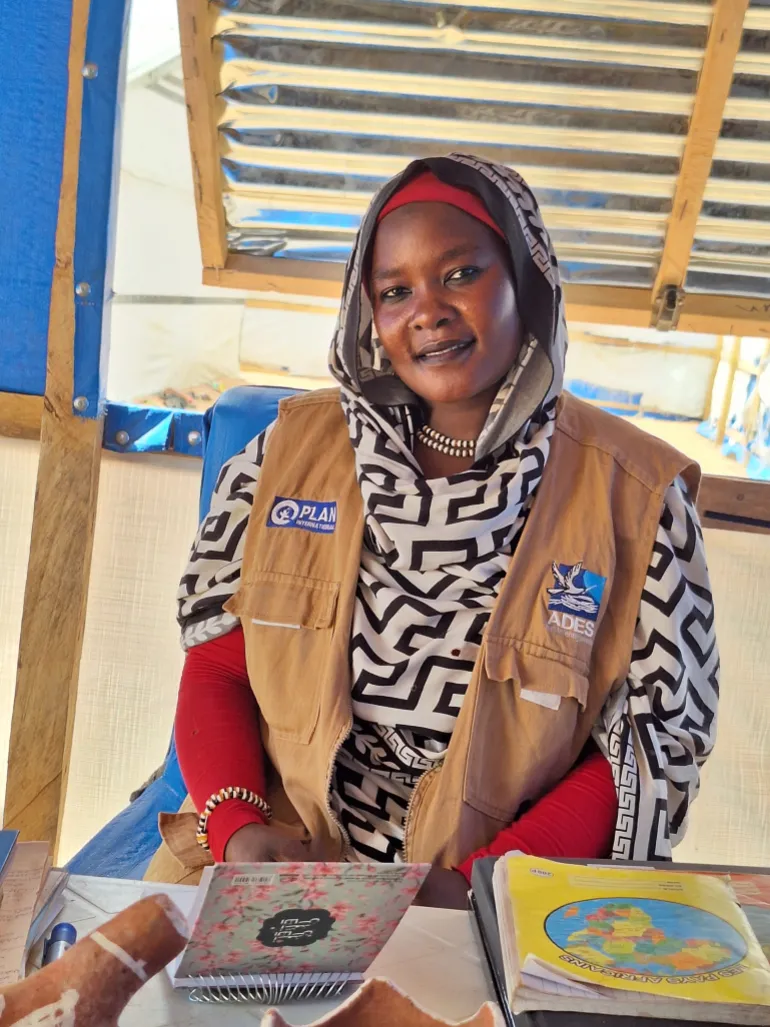
In 2024, Plan International and partner organisations established a primary school in one refugee camp. The school now has 1,059 pupils and 30 teachers – Sahra is the head teacher.
Teachers, administrators and child welfare workers have been recruited from the refugee community, allowing people who fled Sudan to help provide services for families displaced alongside them.
Leading from the front line
Chad was already facing a serious education crisis before the latest influx of refugees from Sudan. More than two million young people cannot read or write, and, according to the United Nations Children’s Fund (UNICEF), three out of four pupils nationwide are taught by people whose own education ended at secondary school.
The refugee influx has added pressure to an education system already short of classrooms, teachers and basic facilities.
Sarah, 32, fled her country, Sudan, with her parents and three sisters in June 2023 to seek safety in Chad. She says she hopes to return home when peace returns to Sudan. [Courtesy of Plan International]
“Illiteracy is very dangerous,” Sahra says. “I want the children to be optimistic about the future because education prevents them from early marriage and violence.”
To accommodate the number of pupils, the school runs two shifts, one in the morning and another in the evening. Lessons cover mathematics, science, history, geography, Arabic and French.
But teaching in exile comes with its own difficulties.
Sudanese teachers have had to adjust to Chad’s curriculum while working across language differences. Chadian children may speak local dialects, while many Sudanese pupils speak Arabic.
“The teaching syllabus in Sudan is easy, but the one in Chad is difficult for us,” says Oummalnas, a teacher who fled el-Geneina in 2024. She teaches mathematics and Arabic.
“We need more workshops to improve our teaching skills and adapt to the Chadian system,” she said.
Protection beyond the classroom
At first, Sudanese and Chadian kids sometimes struggled to get along. Over time, those tensions have eased. The children now learn and play together outside school.
Plan International also provides safe spaces where under-fives can play, socialise and receive psychosocial support in the absence of formal kindergartens.
“We don’t separate education from child protection. It’s an integrated approach that helps create harmony,” said Kefa Mayange, Plan’s Emergency Response Manager for Chad.
For parents in the camp, school is as much about safety as education.
Charfadine arrived with his family during the heavy rains of 2023. Back in West Darfur, his children went to school regularly until the conflict forced them to flee. Three of them now attend primary school in Chad.
“We are happy when they go to school here [in Chad] because it’s a receptive place. It protects them from the violence coming from criminal groups,” he told Al Jazeera.
His hopes remain tied to the country they left behind.
“My ambition is for my children to be teachers to teach coming generations in Sudan and doctors to treat illnesses,” he said.
Arlette, a Child-Friendly Space supervisor at Aboutengue refugee camp in eastern Chad, supports children displaced by the war in Sudan by providing a safe place to play, learn and recover from trauma. [Courtesy of Plan International]
But not every child has made it into a classroom.
Nasradine, another parent, says hundreds of unaccompanied youngsters who lost their parents while fleeing Darfur remain out of school and wander around the camp.
“If those children remain outside school, our camps will be in danger,” he said. “This group could turn to crime and make our place unsafe. We just want help for those children to go to school.”
A struggle against scarcity
For mothers such as Roukhaya and Zenab, memories of their escape from el-Geneina remain vivid. They walked for about 10 hours to reach the Chadian border.
Yet both say life in Sudan, despite the war, had once felt more manageable than life in the camps.
Roukhaya’s children entered formal schooling for the first time after arriving in Chad. But she has watched older teenagers drop out because there are no high schools or vocational training opportunities for them.
Keeping younger kids in school is a daily struggle, too.
Azraa, a Mobile Unit Supervisor with Plan International, and her colleagues go tent to tent, encouraging parents to keep their children in class. In families with six or seven children, parents may send only two or three to school while the others stay behind to collect firewood, fetch water or look for casual work.
Sudanese and Chadian children play together during a break at a refugee camp school in eastern Chad, where education and recreation help restore a sense of normalcy after displacement [Courtesy of Plan International]
Every Friday, community centres hold awareness sessions reminding families that education remains important, even in displacement.
These efforts are happening despite a severe shortage of resources. Kefa says the refugee response in eastern Chad remains one of the most underfunded humanitarian responses in the world.
Children make up more than half of the refugee population, yet the 2026 Sudan Regional Refugee Response Plan received only 17 percent of the funding it required, leaving an 83 percent shortfall. Education remains among the least supported sectors.
At Sahra’s school, the shortage is visible every day.
There are no flush toilets, no electricity and no accessible facilities for children with disabilities. Pupils sit packed together on the ground or share benches.
Teachers and parents are asking for basic improvements: solar panels for lighting, a mobile health clinic, school meals and enough desks for pupils.
Abakar Mahamat Nour, an Education Officer with the Economic and Social Development Agency (ADES), a Chadian nongovernmental organisation supporting education and emergency relief, says the arrival of Sudanese teachers has created an opportunity for solidarity across the border.
“Chad and Sudan are like brothers; we share families,” he told Al Jazeera. “Having people like Sahra coming from Sudan to teach our children is a benefit for our country. They help our students gain new cultural perspectives and build new friendships.”
She lost the life she had built as a teacher and education administrator in West Darfur. In exile, she has found herself doing what she had planned to do all along: teaching children.
“Refugees have skills, experience, and dreams,” said Kefa Mayange, Plan’s Emergency Response Manager for Chad. “Like Sahra, we see them as leaders.”
Note: Full names have been withheld for safety and privacy reasons.
Claire Howard, 48, flew from Birmingham to Beauvais, northern France, for a day of food, sightseeing and sunshine — she was back in the UK by midnight and said the whole trip cost just £70
22:16, 19 Jul 2026Updated 22:16, 19 Jul 2026
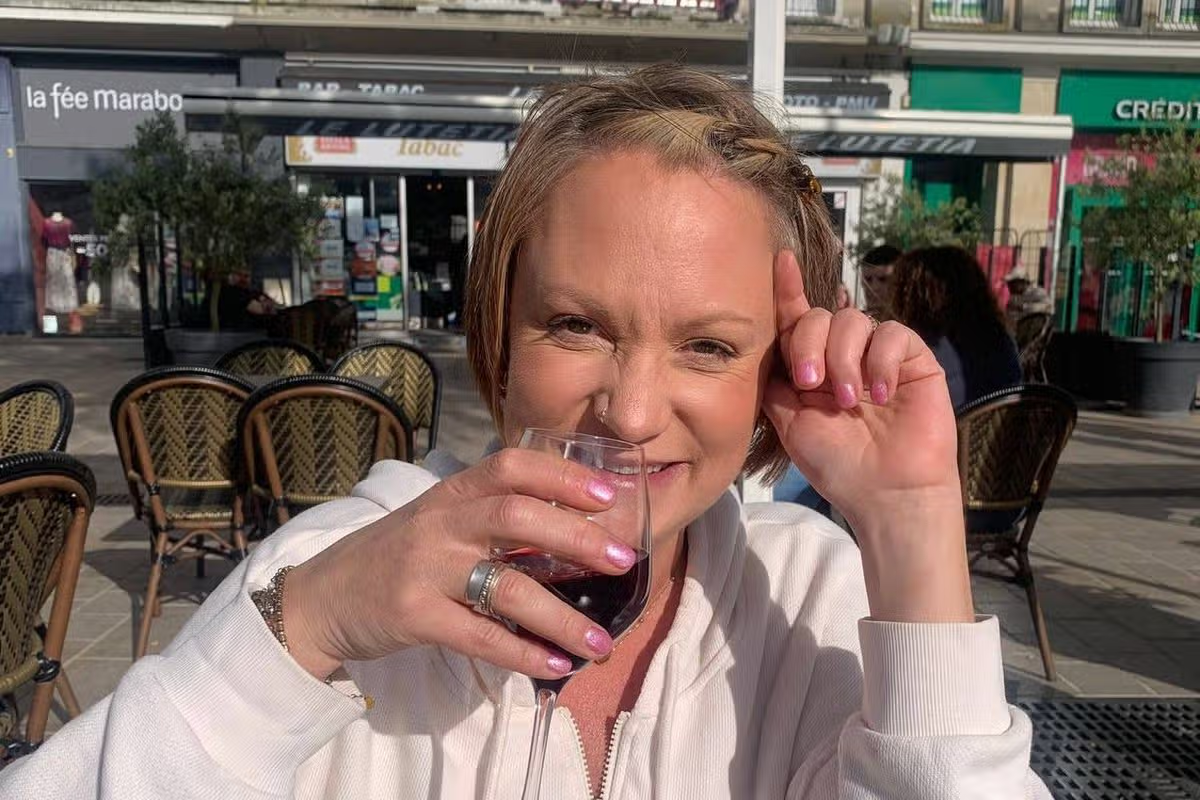
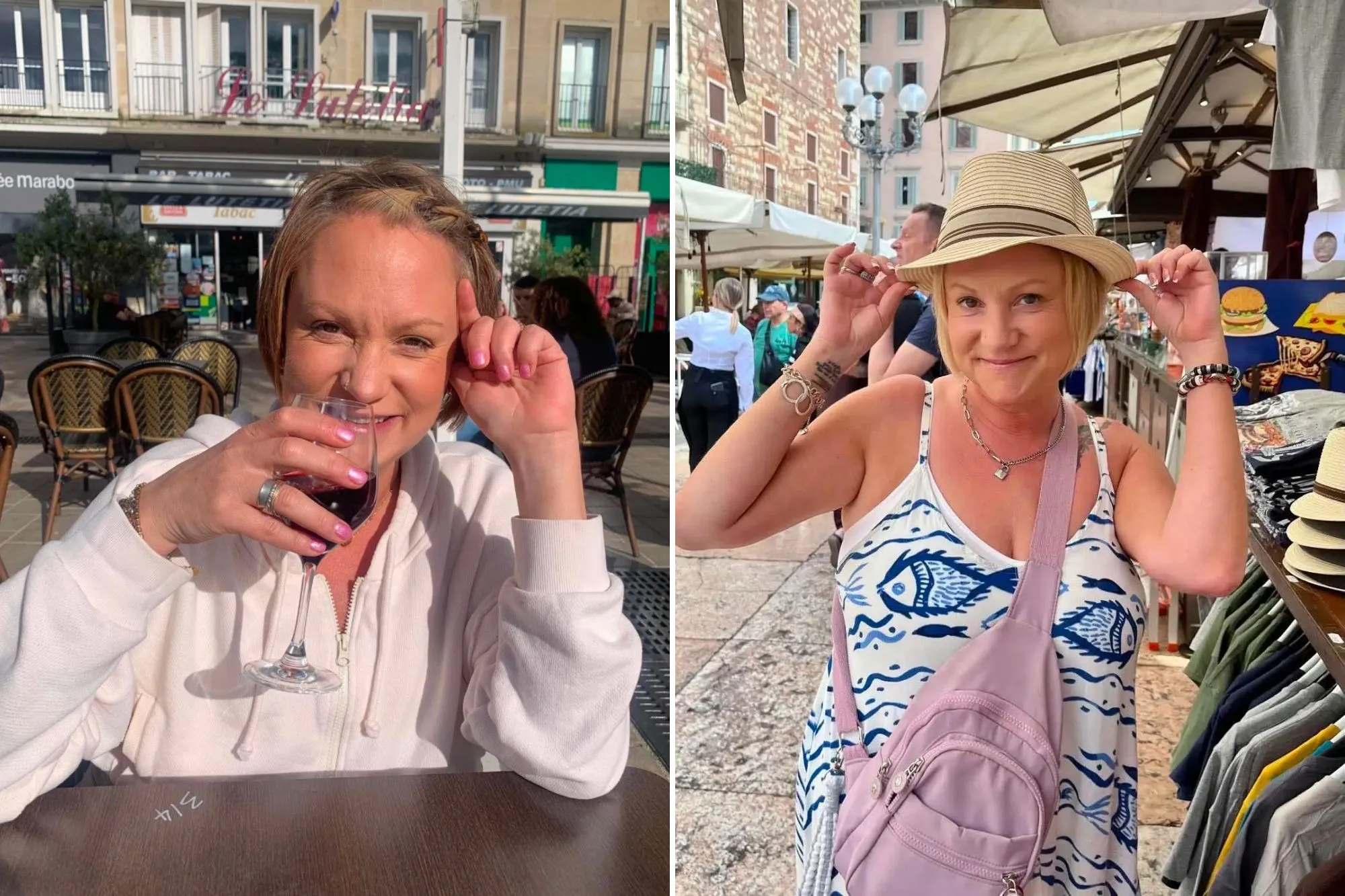
Claire Howard jetted off to France for lunch(Image: Jam Press)
A teacher hopped on a plane to France for lunch and claims it was more affordable than a standard day out in the UK.
Claire Howard jetted off to Beauvais, France, for a leisurely day of dining, exploring and sunshine and was back home before midnight. The 48-year-old woman found return Ryanair flights for merely £27 and secured them a month beforehand.
The early morning flight departed Birmingham at approximately 7.30am, with the homebound journey leaving at 11pm. Her husband gave her a lift to the airport, and she caught a £1.80 bus to Beauvais that took 15 minutes. Claire, who is a mum, believes the entire trip, including flights, buses, food, and drink, came to roughly £70.
Claire, from Birmingham, said: “I’ve been to Paris a few times and didn’t want to travel in from Beauvais as Paris is really pricey and busy.
“I just wanted to see what was actually in Beauvais itself for a relaxing day of wandering, eating, and drinking. I just saw on Skyscanner that return flights were only £27, so I went for it.
“It’s exciting to go to a different country just for lunch or to explore for a day. The bus from the airport to the centre is very cheap. It’s just a different feeling abroad.
“It makes it feel much more like an adventure than just going somewhere at home. I don’t want to pay £50 to go to the cinema and lunch here in a shopping centre when I can go and experience so much more abroad for a very reasonable price.”
The English teacher spent her morning exploring the city’s weekly Saturday market, treating herself to a coffee and a pain au chocolat for just £4. She then unwound with a drink in the town square, soaking up live music before hopping in a £10 Uber to Plan d’Eau du Canada, a beloved lakeside destination.
For lunch, she put together an £8 French-style picnic featuring a supermarket baguette, cheese, and a small bottle of wine, which she enjoyed while reading and sunbathing beside the water. Her packed itinerary also took in Beauvais Cathedral and the neighbouring Musée de l’Oise, both of which were completely free to enter.
The day wrapped up with a Pad Thai supper at a nearby Thai restaurant for roughly £10, before she made her way back to the airport for her evening flight home. She also picked up an £8 bracelet as a memento of her trip.
Claire said: “I’d say it could probably be done even cheaper. I do stay over in some places depending on flight times but it wasn’t necessary for this trip as the flight times fit and I could still have an evening meal and a full day.
“There’s no point in staying over to get a flight home the next morning as it’s a waste of accommodation money.” Claire admits she’s become completely addicted to budget day trips overseas after stumbling across bargain flights from Birmingham Airport, jetting off to a new destination almost every month.
Just this year alone, she’s already ticked off Bergamo in Italy, Malaga in Spain, Valetta in Malta, Poznan in Poland, and Porto in Portugal. She’s already snapped up return flights to Poland and Berlin in August for just £70.
Claire said: “I’m just led by what is possible and affordable. I can’t take time off at all in term time but I have Tuesdays off so I do like to make use of them.
“I just love the way you can do and see so much in the same time that you might waste a day at home just watching Netflix and doomscrolling. I usually find the best prices four to six weeks in advance. My husband doesn’t like short trips so he’s not jealous.”
A TEACHER flew to France for lunch and says it was cheaper than a typical day out in the UK.
Claire Howard flew to Beauvais, France for a day of sightseeing and sunshine – while still being home before midnight, and spending less than £80 all in.
Claire Howard spent just over £70 on an entire day trip to France
The 48-year-old spotted return Ryanair flights for just £27, which left Birmingham at 7:30am and returning at 11pm.
She managed to skip the expensive airport taxis, with her husband dropping her off at the airport before a £1.80 bus.
Sign up for the Travel newsletter
Thank you!
Claire says the whole excursion including flights, buses food and drink cost around £70.
“I’ve been to Paris a few times and didn’t want to travel in from Beauvais as Paris is really pricey and busy,” Claire told creatorzine.com.
“I just wanted to see what was actually in Beauvais itself for a relaxing day of wandering, eating and drinking.
“It’s exciting to go to a different country just for lunch or to explore for a day.
“It’s just a different feeling abroad – it makes it feel much more like an adventure than just going somewhere at home.”
She added that it was much cheaper than a day trip in the UK, where a trip to the cinema and lunch out can easily be £50 alone, before factoring in travel.
The English teacher spent the morning at the city’s weekly Saturday market while enjoying coffee and a pain au chocolat that set her back £4.
Then she relaxed with a drink in the town square while listening to live music before taking a £10 Uber to Plan d’Eau du Canada, a popular lakeside spot.
She has already been to a number of cities in Europe on a day tripOther day trips she has been on include PortoCredit: Alamy
Lunch was an £8 French picnic of supermarket baguette, cheese and a small bottle of wine while reading and sunbathing by the water.
Her itinerary also included visits to Beauvais Cathedral and the nearby Musée de l’Oise, both of which offered free entry.
The day ended with a Pad Thai dinner at a local Thai restaurant costing around £10 before she headed back to the airport for her evening flight home.
She also bagged an £8 bracelet to help her to remember the day.
Claire says she has become hooked on cheap day trips abroad after discovering bargain flights from Birmingham Airport – and flies to a different city nearly once a month.
Just this year, she’s visited Bergamo, in Italy, Malaga, in Spain, Valetta, in Malta, Poznan, in Poland, and Porto, in Portugal.
And she’s already bagged return flights to Poland and Berlin in August for £70.
Claire said: “I’m just led by what is possible and affordable.
“I can’t take time off at all in term time but I have Tuesdays off so I do like to make use of them.
“I just love the way you can do and see so much in the same time that you might waste a day at home just watching Netflix and doomscrolling.
“I usually find the best prices four to six weeks in advance.”
Students and supporters of a Luxembourg teacher fired over social media posts held a demonstration for her this week. Fatima Kurtic was fired in October over a post deemed anti-Israel. She told Al Jazeera about the motivations and costs behind her pro-Palestinian activism.


![Sarah, 32, fled her country, Sudan, with her parents and three sisters in June 2023 to seek safety in Chad. She says she hopes to return home when peace returns to Sudan. [Courtesy of Plan International]](https://i0.wp.com/www.aljazeera.com/wp-content/uploads/2026/08/Sahra-insists-on-going-back-to-Sudan-someday-when-peace-returns-Courtesy-of-Plan-International-1786718554.jpg?w=640&ssl=1)
![Arlette, a Child-Friendly Space supervisor at Aboutengue refugee camp in eastern Chad, supports children displaced by the war in Sudan by providing a safe place to play, learn and recover from trauma. [Courtesy of Plan International]](https://i0.wp.com/www.aljazeera.com/wp-content/uploads/2026/08/School-children-engages-with-Plan-International-and-others-at-the-school-Courtesy-of-Plan-International-1786718558.jpg?w=640&ssl=1)
![Sudanese and Chadian children play together during a break at a refugee camp school in eastern Chad, where education and recreation help restore a sense of normalcy after displacement [Courtesy of Plan International]](https://i0.wp.com/www.aljazeera.com/wp-content/uploads/2026/08/Apart-from-classroom-sessions-the-children-find-joy-in-playing-different-games-Courtesy-of-Plan-International-1786718551.jpg?w=640&ssl=1)