People walk past rubbish accumulating in the streets of Havana on Wednesday. The Caribbean nation has been experiencing a severe energy crisis with the island nation virtually out of fuel. Photo by Ernesto Mastrascusa/EPA
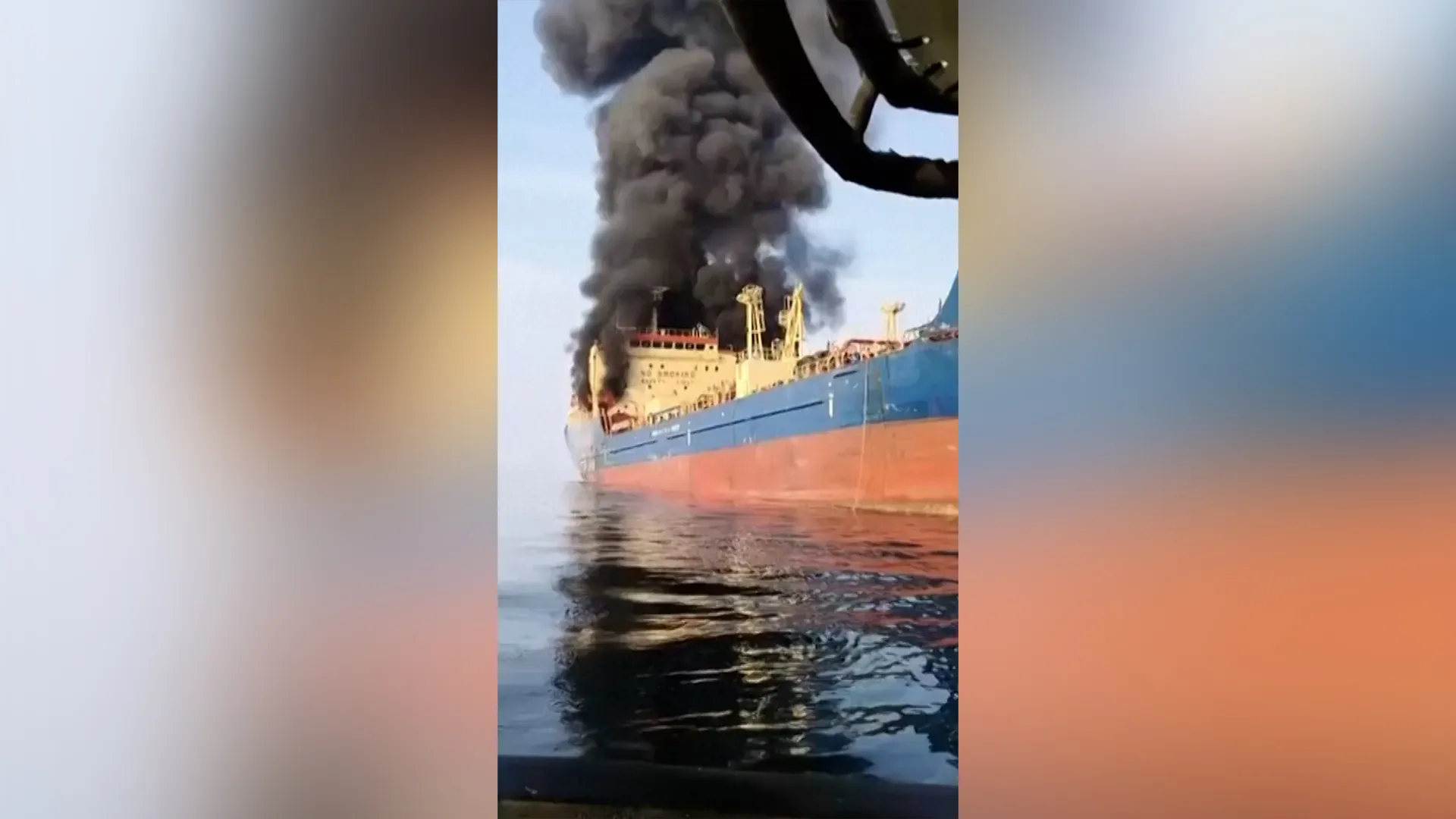
March 27 (UPI) — A tanker carrying Russian fuel initially headed to Cuba ended up docking in Venezuela after weeks of deviations, while a second oil-carrying vessel remains without a clear destination in the Caribbean amid the island nation’s energy crisis.
The vessel Sea Horse, sailing under the Hong Kong flag, had been closely tracked by maritime analysts since it departed from the eastern Mediterranean carrying between 190,000 and 200,000 barrels of Russian diesel initially destined for Cuba.
During its voyage, the tanker repeatedly changed its declared destination. It went from being listed as en route to Havana to indicating “Caribbean Sea” and later Trinidad and Tobago in a pattern that reflected growing uncertainty about its final destination.
Ultimately, the Sea Horse arrived at Puerto Cabello, in Venezuela, on Wednesday morning after nearly 50 days in transit.
The diversion occurred in a context of increasing pressure from the United States to restrict fuel supplies to Cuba, which is facing a severe energy crisis with recurring blackouts and oil shortages.
The case of the Sea Horse is not isolated. Maritime tracking data show that other vessels have altered their routes or avoided declaring final destinations in recent weeks, amid sanctions that explicitly exclude Cuba from relaxed sanctions for Russian oil trade.
The second vessel, the Russian tanker Anatoly Kolodkin, maintains its uncertainty.
The ship, which is carrying roughly 730,000 barrels of crude, continues in the Caribbean Atlantic without a publicly confirmed final destination.
The maritime tracking website VesselFinder shows the destination of the Anatoly Kolodkin as “Atlantic for order,” a designation used in the industry to indicate that the vessel is sailing without a publicly confirmed final destination.
On Tuesday, maritime intelligence analyst Michelle Wiese Bockmann told Politico that the vessel could arrive in Cuba in “two or three days,” although its trajectory remains without clear confirmation.
The most recent AIS tracking data indicate that the vessel is about 487 miles from Turks and Caicos, with an estimated arrival Monday. However, its current vectors do not point directly toward Cuba, reinforcing uncertainty about true destination.
ACTUALIZACIÓN
⚓️ ANATOLY KOLODKIN (IMO: 9610808)
Tanquero ruso cuyo destino ha sido presentado por el Departamento de Exteriores de Rusia como “ayuda humanitaria”.
Distancia más próxima: 487 millas de Turcos y Caicos.
The behavior of the Kolodkin raises questions in a highly monitored environment.
“There are details that just don’t add up,” said Evan Ellis, a professor at the U.S. Army War College Strategic Studies Institute.
“Given the U.S. naval and air assets in the area, the Russian tanker has to know it won’t get in undetected. The question is whether this is some kind of cat-and-mouse game, or if shifting expectations, possibly tied to developments in Cuba, have changed whether it believes it can enter unopposed,” he said.
“Maybe the deliberate attempt was meant to apply pressure, and then once it got a reaction, it was backing off,” he added.
For Ellis, the key point remains outside the public radar.
“The biggest story is what’s going on behind the scenes that we don’t know about,” he said.
The eventual arrival of the Kolodkin also could force a decision from Washington. Analysts cited by the Miami Herald say the options range from diplomatic pressure to a possible interception by the U.S. Navy or U.S. Coast Guard.
“At the end of the day, what we really have to watch for is what actually happens,” said Jorge Piñón, a senior research collaborator at the University of Texas Energy Institute.
Cuba imports about 60% of its energy and depends on external supplies to sustain its electrical system, making each shipment a critical factor within a scenario of growing geopolitical tension.
Weekly insights and analysis on the latest developments in military technology, strategy, and foreign policy.
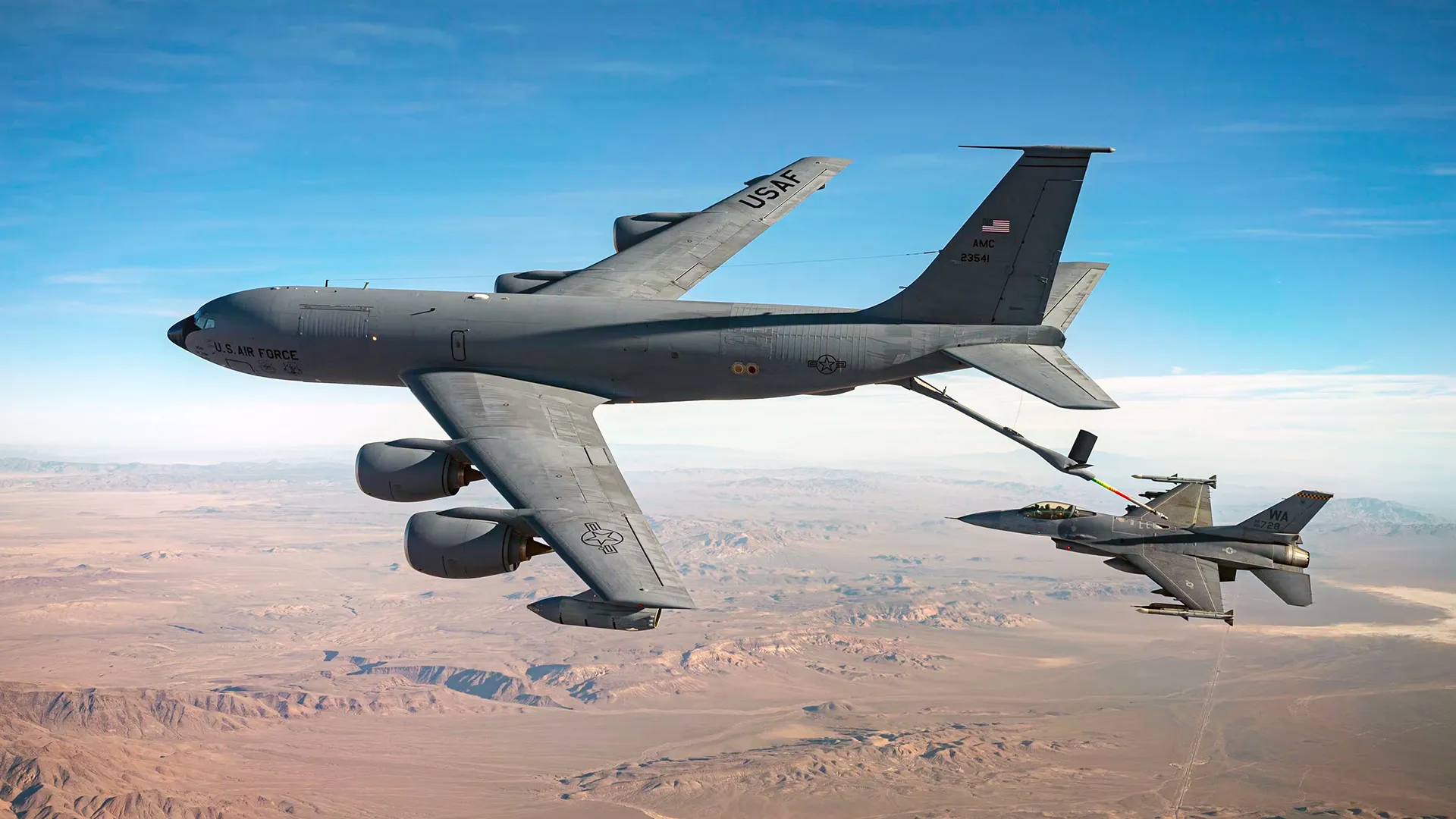
Operation Epic Fury will hit a month old by the weekend. It and the massive military build-up to it were made possible by a global logistics chain that only the Pentagon can supply. At the heart of it is the aerial refueling fleet. These aircraft have flown thousands of sorties to get materiel where it needs to be and fast. These have included stuffing the fuel tanks of C-17s with cargo holds full of Patriot missiles to dragging stealth fighters across the globe. Epic Fury has been one of many operations to heavily tax the tanker fleet in recent years. To get a much better insight into the tanker portion of the war and its impacts, we talked to one man with an extreme level of experience behind the controls of USAF tankers.
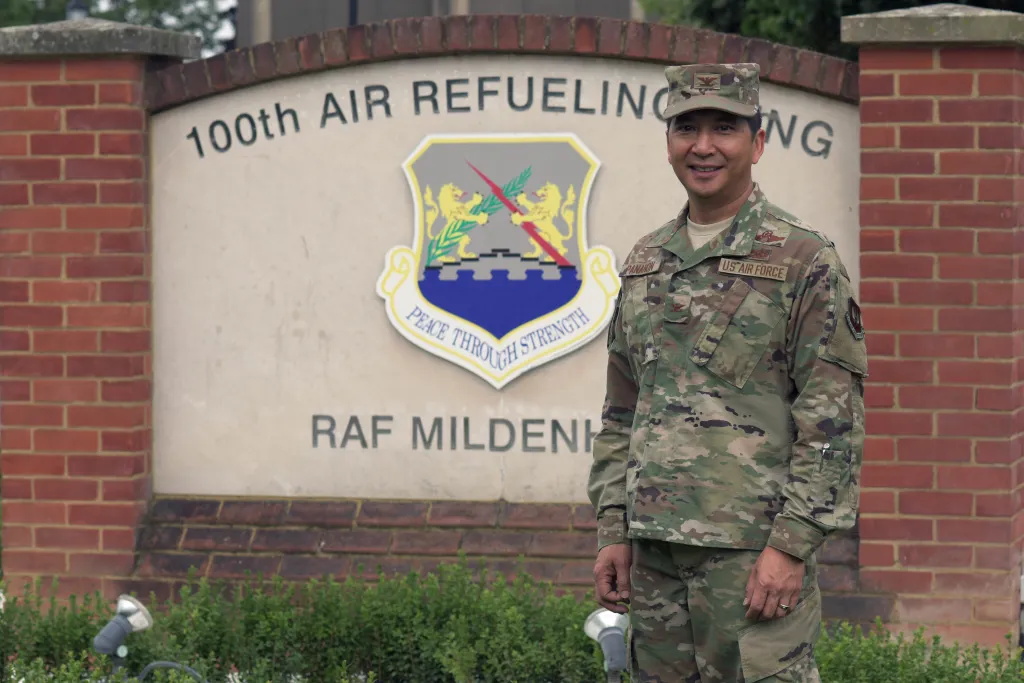
For more than 20 years, Troy Pananon, a retired Air Force colonel, served in the aerial refueling community. He flew KC-10 Extender and KC-135 Stratotanker refueling jets and served as deputy commander of the 6th Air Mobility Wing at MacDill Air Force Base in Tampa, Florida (now 6th Air Refueling Wing), and later as commander of the 100th Air Refueling Wing at RAF Mildenhall in England. Both of these installations and their KC-135s are instrumental in the ongoing war in Iran.
In a two-hour, wide-ranging exclusive interview, Pananon offered insights into the strain of the war on the jets and personnel and the challenges of keeping the aging KC-135s flying as they perform hundreds of sorties gassing up fighters, airlifters and other aircraft. One of those missions resulted in the deaths of six airmen after a suspected midair collision over Iraq. Pananon also addressed a whole host of other issues, including how Epic Fury is affecting readiness for a fight against China, the scourge of drone incursions and much more, which will be addressed in future installments.
Pananon, who began his career as an enlisted Marine, retired from the Air Force in 2023 and is now a 737 first officer with United Airlines. The first installment of our conversation focuses on Epic Fury and the toll on the tankers, crews and maintainers. Some of the questions and answers have been lightly edited for clarity.
U.S. Air Force Col. Troy Pananon, 100th Air Refueling Wing commander, poses for a photo at RAF Mildenhall, England, July 9, 2019. Pananon served five years as an enlisted Marine prior to receiving his commission from Embry-Riddle Aeronautical University, Daytona Beach, Fla., in 1996. He was initially assigned as a maintenance officer at Hurlburt Field, Fla., and then attended Undergraduate Pilot Training at Columbus Air Force Base, Miss. (U.S. Air Force photo by Senior Airman Benjamin Cooper) Tech. Sgt. Benjamin Cooper
A: I would categorically say that there’s a huge strain on the entire ecosystem. The KC-135s were rolling off the assembly line in the 50s and 60s. Some of the technology, and we called it technology back then, was graduated from the Wright brothers technology. Parts on that aircraft are still reminiscent of some of the things that were invented by the Wright brothers. So it’s amazing to me that the KC-135 is able to operate, and it’s due in large part to the maintainers and the relentless effort that they follow through to keep those aircraft air worthy.
If you think about the [airmen], how they’re operating in places you mentioned all over the world, they’re there. We’ve broken their normal routine. They’re away from home, away from their family and friends. So that’s a mental and physical stressor, because they’re in environments that they’re not accustomed to.
We don’t know how long this conflict could last. We’re approaching a high heat of summer in that region, and so depending on where some of these personnel are based or stationed, they’re certainly out of their normal circadian rhythm, their normal environmental routines. It is a huge strain on those maintainers and the airframes that we’re placing in different parts of the world, exposed to different elements than they may have been exposed to at their normal pace. Maintaining these aging aircraft is a strain on the entire ecosystem, and we are operating them at a high operations tempo, and surely that puts a lot of a significant strain on the KC-135.
We do have the KC-46 that is helping to fill some of that void, but we just retired the KC-10, which was a tremendous workhorse. And so I would say that there’s a significant strain on the ecosystem.
U.S. Air Force 100th Maintenance Squadron, aircraft maintainers conduct maintenance on the KC-135 Stratotanker at RAF Mildenhall, England, Dec. 10, 2025. (U.S. Air Force photo by Airman 1st Class Iris Carpenter) Airman 1st Class Iris Carpenter
Q: What are the biggest challenges in keeping these Cold War-era jets like the KC-135 flying? How difficult is it to find parts, and what do you do when you can’t?
A: That’s 100% accurate. There have been some breakthroughs in technology. I know that they’ve used 3D printing to help source some parts. They’ve even gone back to the boneyard and pulled parts off of older KC-135s. So resources will always be a great puzzle for our entire team to source.
There’s no new assembly line. They shut that assembly line down back in the ’50s and ’60s. Some of the parts for those aircraft in general were from the ’60s, ’70s and ’80s. And then, you have to take those back and refurbish those certain parts. There’s not a lot of new technology that’s going on to these core platforms. The avionics, for sure, is newer. But everything that you add to this aircraft, I call it the Frankenstein effort – taking bolt-on technology to try and help modernize the fleet. And by modernizing that means that you’re also helping with the parts availability. But going back to the age of these aircraft, some of these parts were developed back in the ’40s and machined back in the ’50s and ’60s. Our teams have to get creative with the acquisition. And that’s a huge, huge challenge. But they currently have done a great job of putting new engines on the aircraft. And so that means that the parts availability is better in some cases, but it’s not a solution.
Davis Monthan AMARG Boneyard tour with KC-135s and Boeing 707s
Q: What are some of the old parts you’re talking about that go back to the ’40s, or to the Wright brothers era?
A: Just think about the flight controls. If you, for whatever reason, need to replace certain pulleys or elements within the flight control system, those parts were thought-up and developed way back in the ’40s. Machined maybe back in the ’50s and ’60s. It’s still not a fly-by-wire aircraft like some of the modern aircraft that we have nowadays. And so you have to go back and machine some of these parts if they get wear and tear.
Two guardsmen from the 171st Maintenance Group, 171st Air Refueling Wing, Pennsylvania Air National Guard, work on top of a KC-135 Stratotanker aircraft while it undergoes an isochronal inspection, Aug. 17, 2021, in Pittsburgh, Pennsylvania. (U.S. Air National Guard photo by Staff Sgt. Zoe M. Wockenfuss) Tech. Sgt. Zoe Wockenfuss
Q: What are the complexities of supporting such a high tempo operation like the war against Iran with aerial refueling? We’ve heard that the airspace over Iraq is chaotic and that the lack of onboard situational awareness is a major issue with tanker crews and receivers. What have you heard about this?
A: Obviously I haven’t operated over there in a number of years, but I do go back to the times when I was operating aircraft in that theater. That puts me back into the Enduring Freedom, Iraqi Freedom timeframe. We have deconfliction procedures. We have airspace procedures that we study and that we follow. We have aircraft in there that help us deconflict the airspace and ensure that we have safe separation. And it goes to training, it goes to situational awareness.
Back then, we didn’t have some of the avionics and software suites that we have available to us today, so our situational awareness wasn’t as high, but yet we had good, solid procedures and processes that ensured clear deconfliction and separation in the airspace that they’re operating in. Now, I would assume that it’s congested and it’s contested, and so having the ability to have higher situational awareness with onboard avionics suites that are connected is probably more and more essential as we go forward.
A view from inside the cockpit of a Block 45 KC-135R during a land approach. The wide-area digital multi-function display in the center of the cockpit is another key feature of the upgrade package. (USAF)
Q: But have you heard anything about the chaotic nature of the current airspace and lack of onboard situational awareness? Is it a major issue right now with the tanker crews and receivers?
A: I really can’t comment on it, because I don’t have firsthand knowledge. What I can say is that it’s in a contested environment, and our crews are definitely trained to operate in these kinds of environments. And you know, it’s just like anything there. There are elements that we have little control over, and I call it the fog and friction of warfare. But I have 100% absolute trust in the personnel. They’ve been trained. They are equipped. Could they be equipped better? Could they be resourced better? Sure. But again, it still goes back to the fact that even if we resource them with the newest technology, they then have to go back and be trained to understand how to integrate it and how to use it effectively.
There is still an opportunity here. You can’t solve it overnight, but it does need to happen so it would help. I’m certain that if we ever get into conflict with a near peer, it’s going to be even more challenging.
A U.S. Navy F/A-18F Super Hornet aircraft refuels from a U.S. Air Force KC-135 Stratotanker aircraft during a mission in support of Operation Epic Fury over the U.S. Central Command area of responsibility, March 8, 2026. (U.S. Air Force photo) U.S. Central Command Public Affa
Q: When was the last time tanker crews flew in contested airspace against adversaries with more robust air defenses than we have seen in past conflicts?
A: I would like to say that any time that you’re operating within a conflict zone, that’s considered contested airspace, right? The tankers are considered a high-value, low-density. We don’t have an infinite number of tankers, so they’re going to tend to operate outside the reach of the adversary’s missiles, or fighter aircraft that would try to reach and take down one of these tankers. So they’re really going to try and operate within a safe, safe zone. I would frankly say that in a conflict, tankers operate in contested airspace all the time, and it’s really contingent on the ability of our joint force to clear that airspace and to allow our tankers to move closer to the tip of the spear, but generally speaking, it is really sacrosanct to keep tankers an arm’s reach away from an adversary’s ability to take them down.
U.S. Air Force airmen prepare for aerial refueling on a KC-135 Stratotanker aircraft during Operation Epic Fury over the U.S. Central Command area of responsibility, March 20, 2026. (U.S. Air Force photo) U.S. Central Command Public Affa
Q: Do you have any sense of what happened in the fatal March 12 KC-135 crash in Iraq that led to the deaths of Maj. John “Alex” Klinner, 33, of Auburn, Alabama; Capt. Ariana G. Savino, 31, of Covington, Washington; Tech. Sgt. Ashley B. Pruitt, 34, of Bardstown, Kentucky; Capt. Seth R. Koval, 38, of Mooresville, Indiana; Capt. Curtis J. Angst, 30, of Wilmington, Ohio; and Tech. Sgt. Tyler H. Simmons, 28, of Columbus, Ohio?
A: There’s an investigation taking place and it’d be wrong of me to comment on what I think took place. These crews are highly trained. They have a process. They have procedures. I don’t know what was taking place on the flight decks of both of those aircraft. There was probably some confusion as to who and where each aircraft was supposed to be, but I don’t know what led to that. There’s a lot of speculation out there. It’d be hard for me to really say what I think actually did happen.
A: Well, I have a deep background in the KC-10, and that also gives gas and takes gas. So I’ve been within 10 feet of another aircraft, operating at close to 350 miles an hour. It’s an inherently dangerous occupation when you’re trying to receive fuel from another aircraft. I don’t think that was the case in this particular incident over Iraq. But at all times, everything we do is inherently dangerous because we operate within safe operating margins, but they’re tight. So, a simple split-second decision or maybe error puts you in a precarious position. But we have procedures that, if we make a mistake and we come close to another aircraft – there is a term that we use, which is ‘breakaway.’ And that tells both aircraft, ‘hey, we’re in a situation where we need to create some space between our aircraft,’ and we follow our procedures. It’s a safe maneuver, but probably makes the hair on the back of your neck stand up a little bit. I’ve been in this, I’ve been in situations where I’ve had to rapidly escape from another aircraft.
But again, we get trained for this. We are highly trained. And I think because of the training, when a situation like that occurs, your instinct kicks in and you know what to do. And so, I don’t recall instances where two KC-135s had a midair collision, but certainly, we have had air-to-air collisions, just none in my recent memory.
Aerial refueling missions, which require close contact between aircraft traveling at high speeds, are inherently dangerous. (USAF) (USAF)
Q: The air refueling tanker community is tight. You served at MacDill Air Force Base in Tampa, Florida, with Tech. Sgt. Pruitt, one of the airmen who was killed in the crash. Tell me about how the crash affected the community. Tell me a little bit about Pruitt.
A: From my time at MacDill, I do remember her family. In general, losing anyone is just a shock to the system. And especially somebody that you may have worked with in the past, and you know. I just feel for their families. And we have a community. The tanker community – it’s just a system, a brotherhood and sisterhood. We are just one big family. Anytime we have a tragedy that strikes our community, especially like this, it’s tough.
I know that there are teams of people out there that are remorseful for the loss and that are doing anything in their power to support the families of these airmen. And I know there’s a lot of effort right now within our tanker community and outside of our tanker community with Go-Fund-Me pages. This is critical, because the families that have been affected by this lost a parent, right? A brother or sister or a spouse. I really do feel for these families, and I applaud the efforts of the supporters out there that are contributing to help with some of the things that are going to end up financially costing these families; but emotionally, you know that they will need support, probably for the rest of their lives. And so it’s a huge, huge loss.
U.S. Air Force airmen attend a vigil held by the 909th Air Refueling Squadron at Kadena Air Base, Japan, March 20, 2026. The vigil brought airmen together in remembrance of six airmen who died in a KC-135 Stratotanker crash while supporting Operation Epic Fury. (U.S. Air Force photo by Senior Airman James Johnson) Senior Airman James Johnson
Q: What can you tell me about Tech. Sgt. Pruitt?
A: Ashley was full of energy and was extremely bright, tenacious, and had an unmatched work ethic. She was a real, genuine people person. When you walked into a room, you knew she was there. But she was incredibly talented and someone that you could rely upon to help others, and she was absolutely an incredible boom operator and highly skilled and her death is this huge, huge loss. For her legacy, she impacted so many people and so many of these airmen and their families were certainly enriched by her being in their lives. At the time, I was the vice commander of the [then-6th Air Mobility Wing] at MacDill. And on occasion, I would go out and go fly with the KC-135 crews. I didn’t have a daily interaction with her, but everybody knew her, and everybody knew of her. And that’s the important part. There are many other airmen that are in our ranks right now that have benefited from being introduced to her and being taught by her and being mentored by her. So she’s surely missed.
An undated photo of Tech. Sgt. Ashley B. Pruitt, 34, of Bardstown, Ky., assigned to the 6th Air Refueling Wing at MacDill Air Force Base, Fla. Pruitt was one of six airmen who died March 12, 2026, when a KC-135 aircraft crashed in western Iraq while supporting Operation Epic Fury. (Courtesy photo)
Q: Give me a sense of how RAF Mildenhall and other bases in Europe and elsewhere keep these aircraft flying to generate sorties and deploy to combat zones like the Middle East.
A: The best part about having a forward operating base like Mildenhall is that you have all the resources in place, and in this particular case, they’re closer to where the conflict is. You don’t have as much of a long logistical chain, but you still have a logistics chain that you have to support. And so operating at a place like Mildenhall, a round the clock operation every day of the year, you do have weather to contend with on occasion, and you do have airspace constraints that you do have to contend with. But again, all of these crews are highly trained and so I would say that the operations tempo at a place like Mildenhall is extremely high.
Just being able to have the support of the government there and the host nation that there is, and the local community is a big deal. I enjoyed my time there. Of course, we were there during COVID, during the global pandemic, and the lengths and support that we received from the host nation to ensure the safety of our community and our airmen was incredible.
Seven U.S. Air Force KC-135 Stratotanker aircraft line up on the flight line at Royal Air Force Station Mildenhall, United Kingdom, on March 13, 2006. (DoD photo by Staff Sgt. Jeanette Copeland, U.S. Air Force. (Released)) Staff Sgt. Jeanette Copeland
Q: The 100th Air Refueling Wing has 15 tankers and more transit through. What are the concerns and checklists of objectives for a Mildenhall commander during a major contingency operation like Epic Fury?
A: It’s just our ability to support, right? You mentioned there are 15 tankers, but the airfield itself was able to surge to support twice as many. I currently don’t know how many aircraft that we’re currently supporting out of Mildenhall, but the ability to support that means that you have to be able to flex to the surge of the operation that you’re encountering. You have personnel that are helping to fuel the aircraft. You need personnel to maintain and sustain the aircraft. And so I would assume that we are getting support from bases in the United States. And they’re deployed there from all parts of our country and major units. The tanker fleet is a total force effort. Nearly half of the force resides in the [Air Reserve Component] ARC, and so personnel from Reserve, Guard, active duty, I’m sure, have been sent to help support operations like that.
In our next installment, Pananon talks about the KC-46’s lack of a boom pod, how Epic Fury is affecting the ability to potentially fight China and the dangers of flying long distances over the Pacific against an adversary with robust and plentiful modern air defenses.
The homepage of South Korean shipping company Sinokor Merchant Marine (Janggeum Shipping) is shown in this screenshot. Captured by Asia Today from Sinokor website
March 16 (Asia Today) — A bold bet by a South Korean shipping heir on ultra-large oil tankers is paying off handsomely as the war involving Iran disrupts global energy markets and drives tanker demand sharply higher.
Bloomberg reported that Sinokor Merchant Marine, a major South Korean shipping company, positioned itself to profit from the crisis after securing a large fleet of very large crude carriers (VLCCs) months before the conflict escalated.
The strategy was led by Jeong Ga-hyun, a director at Sinokor Petrochemical and the son of Sinokor Chairman Jeong Tae-soon, according to the report.
Bloomberg described the move as an unprecedented large-scale bet in the global tanker market, executed well before the outbreak of the Iran conflict.
Tankers deployed to Gulf before war
On Jan. 29, weeks before the war erupted in late February, Sinokor reportedly deployed at least six empty VLCCs to the Persian Gulf, positioning them to wait for cargo.
After disruptions in the Strait of Hormuz pushed tanker demand and charter rates sharply higher, the strategy began generating massive returns.
The Strait of Hormuz is one of the world’s most critical energy chokepoints, handling roughly 20% of global oil shipments.
Tanker rates surge to $500,000 a day
With oil exports disrupted and storage facilities across the Middle East filling rapidly, oil producers have increasingly turned to tankers as floating storage units.
According to Bloomberg, Sinokor is now chartering vessels for about $500,000 per day, roughly ten times last year’s average tanker rates.
Industry estimates suggest that by late February the company controlled around 150 VLCCs, representing roughly 40% of available tankers not already tied up in sanctions or long-term contracts.
Quiet heir behind massive shipping strategy
Jeong is known in the shipping industry as the low-profile heir to one of South Korea’s major maritime families.
Bloomberg reported that he rarely appears publicly and is known internally for a military-style management approach. Industry anecdotes even describe him challenging employees and business partners to arm-wrestling contests.
Oil supply disruptions reshape tanker market
The Iran war has dramatically altered global oil transportation patterns, forcing ships to reroute and increasing the need for offshore storage.
Under those conditions, Sinokor’s aggressive tanker acquisition strategy is now being viewed as one of the biggest winners of the crisis, Bloomberg said.
WSJ: Sinokor among winners of Hormuz crisis
The Wall Street Journal earlier identified Sinokor as one of the companies benefiting from the Strait of Hormuz tensions.
According to the newspaper, the company purchased dozens of oil tankers and deployed some of them to the Gulf region even before the conflict intensified.
Sources told the Journal that Sinokor is leasing several vessels to ADNOC, the United Arab Emirates’ state-owned oil company, to be used as floating storage facilities.
These vessels can earn up to $500,000 per day in charter fees, the report said.
As land-based storage in Gulf oil-producing countries approaches capacity, producers have increasingly stored crude at sea. Drilling firms in Iraq and Kuwait have even slowed production due to storage shortages.
The WSJ also noted that Greek shipping magnate George Prokopiou adopted a similar strategy, sending at least five tankers to the Strait of Hormuz through his company Dynacom, which is reportedly earning up to $440,000 per day – about four times pre-war rates.
Weekly insights and analysis on the latest developments in military technology, strategy, and foreign policy.
A KC-135 Stratotanker that was taking part in Operation Epic Fury has crashed in Iraq, U.S. Central Command announced.
“U.S. Central Command is aware of the loss of a U.S. KC-135 refueling aircraft,” the command stated Thursday afternoon in a media release. “The incident occurred in friendly airspace during Operation Epic Fury, and rescue efforts are ongoing. Two aircraft were involved in the incident. One of the aircraft went down in western Iraq, and the second landed safely.”
“This was not due to hostile fire or friendly fire,” the CENTCOM statement added. “More information will be made available as the situation develops. We ask for continued patience to gather additional details and provide clarity for the families of service members.”
U.S. Central Command is aware of the loss of a U.S. KC-135 refueling aircraft. The incident occurred in friendly airspace during Operation Epic Fury, and rescue efforts are ongoing. Two aircraft were involved in the incident. One of the aircraft went down in western Iraq, and the…
Three American crewed aircraft are known to have been lost during Operation Epic Fury prior to today’s KC-135 loss. These were F-15Es that were shot down in a bizarre friendly fire incident.
This is a developing story. We will update this post with new information as soon as we get it.
UPDATE: 6:15 PM EDT –
The Times of Israel has reported that the second aircraft involved was another KC-135. That outlet also says that the KC-135 in question was one that landed at Israel’s Ben Gurion Airport earlier in the day after declaring an in-flight emergency. Online flight tracking data shows that tanker is a KC-135RT variant, one of a small subset of KC-135Rs that are themselves capable of being refueled in flight. This, in turn, allows them to make use of tanker support themselves to remain on station longer or to conduct longer-distance missions. You can read more about these “receiver-tankers” in this past TWZ feature.
The second tanker involved in the incident landed at Ben Gurion Airport earlier this evening. The aircraft had sent a “squawk code” of 7700, an international emergency signal, according to flight tracking data.
— Emanuel (Mannie) Fabian (@manniefabian) March 12, 2026
The loss of a KC-135 today appears to be the first time one of these tankers has crashed in support of combat operations since May 3, 2013, when one went down over Northern Kyrgyztan, killing all three crew aboard. That aircraft had been supporting operations over Afghanistan.
This is the first loss of a KC-135 in support of combat operations since 3 May 2013 when KC-135 63-8877 of the 22nd ARW suffered a structural failure and crashed over Northern Kyrgyzstan after supporting operations in Afghanistan killing all 3 crew members. https://t.co/sn7G8itmwP
Reuters also reports that the second aircraft was a KC-135 and added that the jet that crashed had six service members on board.
An official says the other aircraft, which is safe, was a KC-135. There were six service members onboard the aircraft which crashed. https://t.co/0AYR1TSjUu
Russian President Vladimir Putin accuses Ukraine of carrying out a ‘terrorist attack.’
Published On 4 Mar 20264 Mar 2026
Share
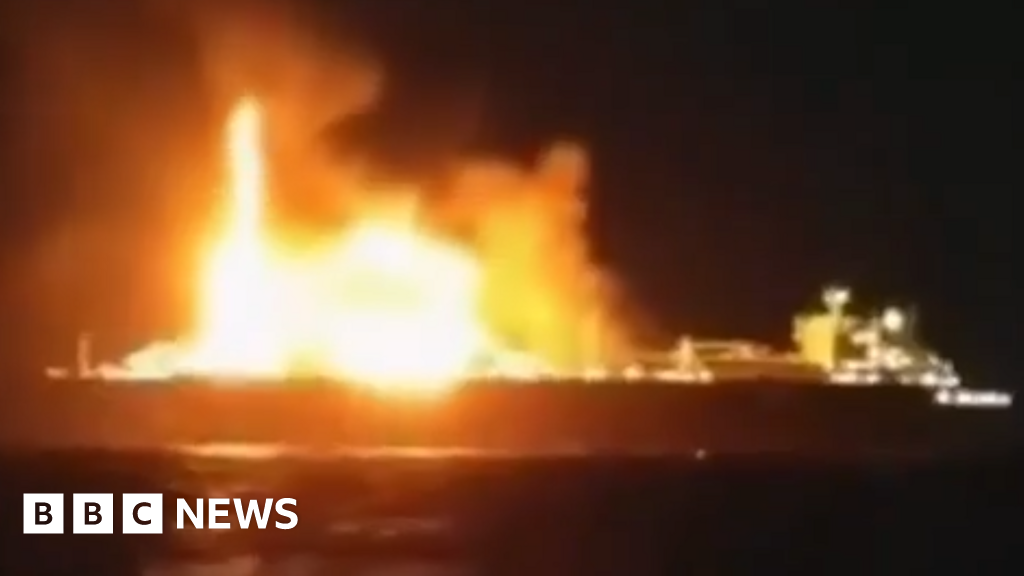
A Russian tanker carrying liquefied natural gas (LNG) has sunk in the Mediterranean between Libya and Malta, as Moscow accused Ukraine of attacking the vessel.
The Libyan port authority said the tanker was hit by “sudden explosions followed by a massive fire, which ultimately led to its complete sinking” on Tuesday night north of the port of Sirte, Libya.
Recommended Stories
list of 3 itemsend of list
Russian President Vladimir Putin accused Ukraine of attacking the gas carrier.
“This is a terrorist attack. This isn’t the first time we’ve seen this kind of thing,” Russia’s Putin told a reporter from Russian state television on Wednesday, accusing Kyiv of responsibility.
There was no immediate comment from Ukraine.
Russia’s Transport Ministry said that the Arctic Metagaz, which had been carrying LNG from the Arctic port of Murmansk, was attacked by Ukrainian naval drones launched from the coast of Libya.
It said the 30 crew members, all Russian nationals, were safe, and thanked Maltese rescue services.
“We qualify what happened as an act of international terrorism and maritime piracy, a gross violation of the fundamental norms of international maritime law,” the ministry said.
According to an advisory from Libya’s maritime rescue agency, the Arctic Metagaz sank in waters between Libya and Malta after catching fire on Tuesday night.
It warned vessels to avoid the site where the carrier sank and asked them to report any pollution in the area.
The Libyan port authority said the ship was carrying an estimated 62,000 metric tons of liquefied natural gas (LNG) on its way to Port Said, Egypt.
Egypt’s Petroleum Ministry has denied any connection with the tanker.
“The tanker is not listed under any contracts to supply or receive LNG cargoes to Egypt,” the ministry said.
The Arctic Metagaz has been sanctioned by the United States and the European Union as part of Russia’s fleet of ageing tankers that carry oil and gas exports around the world, skirting Western restrictions.
Ukraine has frequently targeted Russian oil refineries and other energy infrastructure in an attempt to deprive Russia’s war machine of funding.
In December, Ukraine said it had hit a Russian tanker with aerial drones in the neutral waters of the Mediterranean Sea, in what was the first such strike there in Russia and Ukraine’s more than four-year war.
Russian President Vladimir Putin said that the sinking of a Russian gas tanker in the Mediterranean Sea was the result of a terrorist attack by Ukraine. The tanker sank between Libya and Malta after explosions and fire were observed by Libyan port officials. File Photo by Sergei Ilnitsky/EPA
March 4 (UPI) — A Russian liquefied natural gas tanker sank in the Mediterranean Sea on Wednesday after catching fire from what Russian officials said was an attack by Ukrainian drones.
Libyan port officials said there were explosions on the ship and it ultimately erupted in flames between Libya and Malta. The tanker was carrying about 62,000 metric ton of liquefied natural gas.
Thirty crew members were rescued and no deaths have been reported, TASS Russian News Agency reports.
Ukraine‘s security service has not commented on the incident.
The Russian Transport Ministry said in a statement that the tanker was attacked by unmanned Ukrainian boats.
The tanker was about 130 nautical miles north of the Sirte, Libya, port when it sank. It departed from the port of Murmansk, Russia.
“We qualify what happened as an act of international terrorism and maritime piracy, a gross violation of the fundamental norms of international maritime law,” the Russian Transport Ministry said in a statement.
“Such criminal actions, carried out with the connivance of the authorities of European Union member states, must not remain without assessment by the international community.”
Russian President Vladimir Putin echoed the statement of the transport ministry, calling it a “terrorist attack.”
The ministry adds that the tanker was operating in “full compliance with all international regulations.”
March 2 (UPI) — Belgium has seized a Russian oil tanker believed to be part of a shadow fleet of vessels the Kremlin uses to sell its energy products blocked by sanctions, Belgium’s defense minister said.
The armed forces of the European nation, with the support of French navy helicopters, boarded the oil tanker in the North Sea over the weekend, Defense Minister Theo Francken said in a statement.
The vessel was being escorted to the Belgian port city of Zeebrugge where it would be seized by authorities, he said.
French President Emmanuel Macron, who announced that French helicopters were used in Operation Blue Intruder, published a 23-second video online of clips from the night siege edited together, showing soldiers rappelling down ropes from a helicopter to the vessel’s deck.
A major blow to the shadow fleet: in the North Sea, our French Navy helicopters helped last night in the boarding by Belgian forces of an oil tanker under international sanctions.
Europeans are determined to cut off the sources of funding for Russia’s war of aggression… pic.twitter.com/CnoxyND7BB— Emmanuel Macron (@EmmanuelMacron) March 1, 2026
Macron described the mission as having dealt “a major blow to the shadow fleet.”
“Europeans are determined to cut off the sources of funding for Russia’s war of aggression in Ukraine by enforcing sanctions,” he said.
The vessel was identified by Belgian federal prosecutors as the Guinean flag-flying Ethera. The federal prosecutor’s office said it has opened an investigation into potential violations of the Belgian Navigation Code.
The office said an on-board inspection confirmed evidence of a “false flag,” public broadcaster RTBF reported, which said the operation was conducted over Saturday night and into Sunday morning.
The vessel had departed the Moroccan west coast port city of Mohammedia on Feb. 21 and arrived in Zeebrugge on Sunday morning, according to Marinetraffic.com.
British, European and U.S. governments had all previously sanctioned the vessel.
Ukrainian President Volodymyr Zelensky said despite its repeated blacklisting, Ethera continued to illegally transport Russian oil with the use of a false flag and forged documents.
“We welcome this strong action against Moscow’s floating purse and thank France for supporting the operation,” he said in a social media statement.
“We must be resolute. Russia operates like a mafia organization, and the response must match that reality,” he continued, calling for modern European laws permitting tankers carrying Moscow oil to be seized and its oil repurposed for Europe’s security.
“If they reject the rules for the sake of war, the rules must foresee a clear and firm answer.”
The seizure comes as Europe has been targeting Russia’s shadow fleet of vessels to further increase the impact of sanctions.
Western allies have imposed thousands of sanctions on Russia over its four-year invasion of Ukraine. It is now the most blacklisted in the world.
Oil is a significant revenue source for the Kremlin, and Ukraine’s allies are trying to hinder is ability to pay for its war.
This shadow fleet consists of between 600 and 2,500 ships, according to an October 2025 document from the European Union. An S&P Global report from the month before estimated the fleet consisted of 978 tankers alone. Meanwhile, a Brookings report estimated the fleet comprised 343 tankers, though stating its true scope is likely far larger.
With the seizure, Belgium is the second European nation to detain a tanker of Russia’s shadow fleet. France became the first in January when its forces seized the Grinch oil tanker.
Footage from near the Strait of Hormuz shows a Palau-flagged oil tanker ablaze after what Oman’s maritime security centre said was a hit from an unidentified projectile. At least three ships have been struck in the area. More than 150 others have dropped anchor to avoid entering the strait.
Weekly insights and analysis on the latest developments in military technology, strategy, and foreign policy.
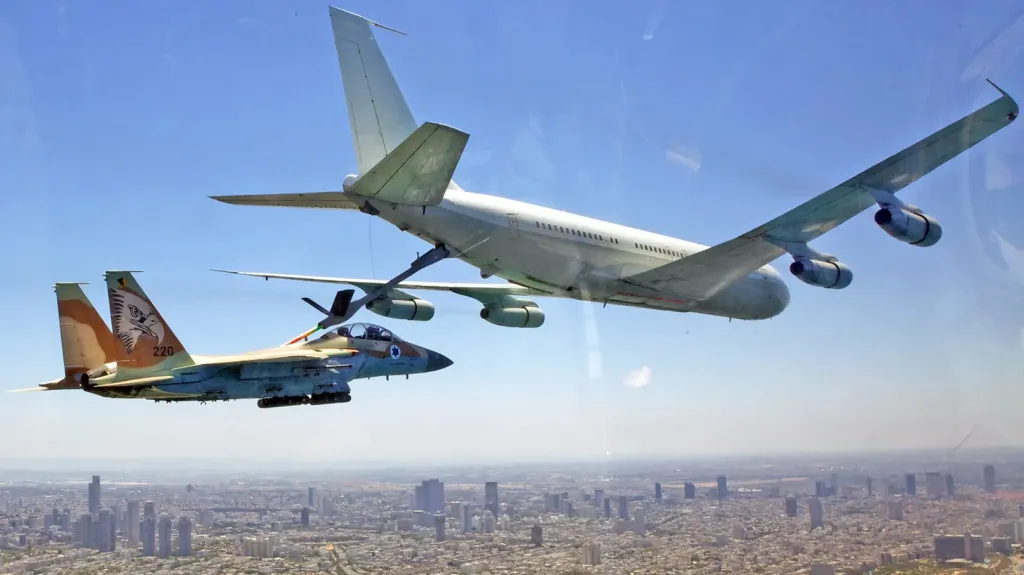
The U.S. Air Force now has at least 14 aerial refueling tankers forward-deployed in Israel ahead of potential strikes on Iran. Beyond supporting U.S. aircraft, an equally important role the tankers — and those spread across the region — could play is refueling Israeli fighters joining in the fight. The Israeli Air Force’s (IAF) entire tanker fleet consists of just seven nearly antique KC-707s, which imposes inherent limits on range, loiter time, sortie rates, loadout options, and other aspects of tactical air operations. Giving the IAF the full tanking resources of the U.S. would unlock its full combat potential.
Nine KC-46s and five KC-135s have arrived at Ben Gurion Airport since the start of this week. Ben Gurion is Israel’s main international airport, and is situated just to the southeast of Tel Aviv, roughly in the center of the country.
At least nine American refueling tankers arrived at Israel’s Ben Gurion Airport overnight as part of the United States’s massive buildup of military forces in the Middle East.
At least nine US Air Force refueling tankers have arrived at Israel’s Ben Gurion Airport as part of the US’s massive buildup of military forces in the Middle East. Jack Guez, AFP. pic.twitter.com/qNFy677lnE
At least 11 U.S. Air Force F-22 Raptors are also now forward-deployed to the IAF’s Ovda Air Base in the southern tip of Israel. The F-22s had flown there after making a stop at RAF Lakenheath in the United Kingdom. A 12th Raptor reportedly had to return to Lakenheath due to a technical issue, but whether it may now have made its way to Israel is unclear.
Intersting choice.
USAF F-22 fighter jets redeployed from the UK will be stationed at the Ovda Air Base in southern Israel, per reports.
H/t to @EISNspotter as I believe that he broke the news first.
The tankers at Ben Gurion and the F-22s at Ovda are relatively small parts of the massive buildup of U.S. military forces across the Middle East in recent weeks. The large influx of U.S. airpower has caused crowding at other available bases in the region that sit outside the range of Iran’s short-range ballistic missiles and other standoff weaponry, which clearly played a part in deciding to utilize Israeli facilities for the deployment of additional aircraft. Israel would also be under threat of heavy retaliation in the event of any new U.S. operation targeting Iran. U.S. aircraft in Israel would be well-positioned to help provide more immediate defense against incoming Iranian threats, but those assets could also contribute heavily to strikes on Iran.
At the same time, as TWZ has previously noted, there are very strong signs that Israeli forces will be fully integrated into the defensive and offensive components of any potential new U.S. operation against Iran. The KC-46s and KC-135s now at Ben Gurion are a tanker force twice as big as what the IAF has in its inventory today. Each KC-46 also carries more fuel to offload to receivers than a KC-707 or a KC-135. All of this could offer a major boost in aerial refueling capacity, and the operational benefits that come along with that, to Israeli forces.
One of the IAF’s KC-707s seen refueling an F-15. IAF
From the very start of what became the 12 Day War between Israel and Iran, TWZ pointed out that committing U.S. tankers to the fight could have massive force multiplying impacts for the IAF. In the weeks that followed, there were reports that the United States had done just this, but clandestinely and to a very limited degree, to help sustain the Israeli air campaign. The U.S. Air Force subsequently denied that this had been the case, after which we delved deep into what Israel would have otherwise had to have done to keep up the operational tempo.
“Fitting as much external fuel on the fighters – the IAF’s F-15 fleets and F-16Is are all notably fitted with conformal fuel tanks and have the ability to carry drop tanks – was clearly necessary. Even dropping external tanks once they are empty to maximize range appears to have been part of the plan during the initial high-volume strikes. While drop tanks are expendable, they are not cheap and are usually retained unless performance has to be regained due to enemy threats or an in-flight emergency occurs. Dropping them to maximize an aircraft’s range is also an established tactic, but not a very sustainable one over the long term. It’s also one that is not needed if tanker support is readily available, nor is equipping the jets with maximum external fuel in the first place, in many circumstances.”
“Flying very carefully planned flight profiles to squeeze every bit of efficiency out of the range of IAF tactical jets was also clearly a tactic employed, although it leaves very little margin for error or combat contingencies. In addition, we know that Israel’s F-35Is have been tweaked to provide extra range. We don’t know exactly what this entails, and it could be a cocktail of measures, from software tweaks to internal or external fuel tanks. Regardless, it was reported that many IAF fighters landed on fumes after their initial sorties.”
“Regardless, maximizing Israel’s fighter force of close to 300 aircraft (total inventory, not what is actually available at any given time) in the opening waves of the war with just seven tankers may have been a feat that can be explained by careful planning, drop tanks, and the use of long-range standoff weaponry, at least early on. As the war continued, the magnitude of the sorties may have dropped, but the geographical depth and power of their strikes increased. These operations were sustained for nearly two weeks.”
“During the conflict, TWZ discussed how, at a certain point, Israel would have to drastically reduce its cadence of operations or wrap up the war. If the U.S. had not struck Fordow with B-2s, it’s possible the war would not have ended until the IDF was able to deal with that very hardened target, which would have likely required a ground operation very deep into a highly-defended area of Iran. Strikes would have eventually slowed as the IAF’s sortie rates degraded, and especially those of its overworked and geriatric tankers.”
As an aside, Israeli Ambassador to the United States Yechiel Leiter offered what looks to be the first official confirmation that range-extending fuel tanks for the F-35I are in service in an interview earlier this month. “We developed fuel tanks that extend the aircraft’s range without compromising stealth,” Leiter told the Israel Hayom newspaper.
Questions remain about these tanks, including whether they are internally or externally mounted. To date, no pictures have emerged that definitively show them fitted to an F-35I.
An Israeli F-35I with a so-called ‘beast mode’ loadout, including ordnance on pylons under the wings. IAF
Regardless, truly robust tanker support would fundamentally change the IAF’s planning processes and operational possibilities. Access to the USAF’s tanker ‘bridge’ that will cover large swathes of the Middle East, keeping combat aircraft in the fight, will be an unprecedented operational reality for the IAF. More aerial refueling capacity would enable tactical jets to fly further, loitering over areas of the battlespace longer, and carry heavier ordnance loads. Greater reach and time on station could be extremely valuable when hunting for mobile high-value targets, like Iranian ballistic missile launchers. More range and loiter time could be equally important for responding to large waves of incoming Iranian missiles and drones in retaliation.
Far greater tanker support would also provide much higher safety margins for aircraft returning low on fuel from longer-range and/or long-duration missions. As noted earlier, it was reported that IAF fighters often landed on fumes after their initial sorties during the 12 Day War. It is somewhat shocking that aircraft were not lost to fuel starvation alone considering how closely they were operating to the edge of their endurance. Tankers forward-deployed in Israel could be similarly critical for providing recovery tanking, giving IAF aviators an extra margin of flight time, especially if everything doesn’t go as planned. The same can be said for U.S. fighter aircraft operating out of Israel. The F-22 has a notoriously short combat radius, for instance. Fuel starvation was an issue even in the mission to capture Maduro, for instance.
All around, U.S. tankers refueling Israeli jets during a future operation against Iran could only help greatly magnify the contributions of the latter, which would already be substantial in this scenario. IAF involvement would add hundreds of fighter aircraft, unique munitions, and more to the equation. On top of materiel aspects, Israeli pilots would bring immense experience about operations over Iran gained during the 12 Day War, as well as the benefits of analysis of lessons learned from the conflict. The rest of the Israel Defense Forces (IDF) and the Israeli intelligence apparatus would be able to provide other kinds of critical support.
12 Days of Precise Action
All of this also underscores the importance of Israel’s effort now to acquire a new fleet of six KC-46 tankers to replace its aging KC-707s. At least as of 2022, Boeing was expected to deliver the first KC-46s to the IAF before the end of this year.
It is still to be seen whether the U.S. will launch a new operation against Iran, and what role Israel will play if that decision is ultimately made. Many other questions remain to be answered, as well, as TWZ just recently explored in detail.
“It’d be nice if we could do it without, but sometimes you have to do it with,” U.S. President Donald Trump told reporters as he left the White House earlier today in response to a question about possible strikes on Iran. “We have the greatest military anywhere in the world. There’s nothing close. I’d love not to use it, but sometimes you have to.”
Trump on military force against Iran: “It’d be nice if we could do it without, but sometimes you have to do it with. We have the greatest military anywhere in the world. There’s nothing close. I’d love not to just it but sometimes you have to.” pic.twitter.com/kDh9oOeoPK
“They should make a deal, but they don’t want to quite go far enough. It’s too bad,” Trump also said today. “We’re not happy with the negotiation.”
“They don’t want to say the key words, ‘We’re not going to have a nuclear weapon,’ and they just can’t get there… So I’m not happy with the negotiation,” says @POTUS on Iran. pic.twitter.com/XN0S4ObS2x
“I met Vice President J.D. Vance today and shared details of the ongoing negotiation between the United States and Iran and the progress achieved so far,” Omani Foreign Minister Badr Albusaidi also wrote in a post on X today. “I am grateful for their engagement and look forward to further and decisive progress in the coming days. Peace is within our reach.”
I met Vice President JD Vance today and shared details of the ongoing negotiation between the United States and Iran and the progress achieved so far. I am grateful for their engagement and look forward to further and decisive progress in the coming days. Peace is within our… pic.twitter.com/fMHxWV0jgl
U.S. and Iranian officials met in Oman yesterday for a second round of talks aimed at avoiding a conflict, and focused on Iran’s nuclear ambitions. The results of that engagement were inconclusive, though there are publicly stated plans for another round of talks next week.
If the U.S. government does decide to take action against Iran, the tankers at Ben Gurion are among the forces now in place to swing into action, and could easily find themselves refueling Israeli jets, as well as American ones. U.S. Air Force tanker support would be a massive force multiplier for the IAF that would allow it to have an even greater impact than it had in the 12 Day War.
Weekly insights and analysis on the latest developments in military technology, strategy, and foreign policy.
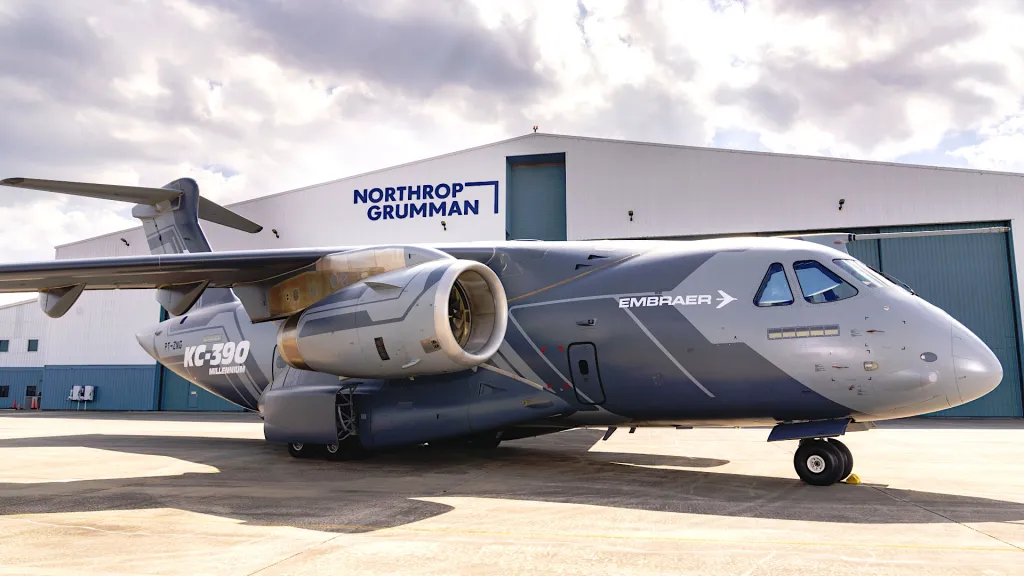
Newly teamed-up Northrop Grumman and Embraer are hoping that a boom refueling system-equipped version of the latter’s KC-390 Millennium twin jet engine tanker-transport will catch the eye of the U.S. Air Force. The two companies say the KC-390’s size and other attributes make it ideally suited to kinds of ‘agile’ distributed operations the Air Force sees as essential for success in future conflict, especially one in the Pacific against China. This is exactly the case TWZ laid out in detail when the concept for a version of this aircraft fitted with a boom first emerged four years ago.
TWZ‘s Jamie Hunter spoke with representatives from Northrop Grumman and Embraer about current plans for the boom-equipped KC-390 on the show floor at the Air & Space Forces Association’s (AFA) annual Warfare Symposium. The two firms first announced their new partnership on this aircraft last week. Embraer had originally unveiled this version of the KC-390 together with L3Harris, but the latter was no longer involved in the project, at least at a high level, by October 2024.
A KC-390 seen at Northrop Grumman’s facility in Melbourne, Florida, last week for an event. Northrop Grumman
“We are excited to announce the partnership to get started on the development of this capability, because we believe it’s a significant advantage to our U.S. Air Force, as well as our international allies,” Craig Woolston, Vice President and General Manager of Research and Advanced Design within Northrop Grumman’s Aeronautics Systems sector, said at the Warfare Symposium. “Partnering our advanced manufacturing and experience in the past in this domain with a proven design, modern capability, we think is a differentiator in this mobility space.”
“With the KC-390, the boom is adding a capability to the refueling capability that is already there with the probe-and-drogue system,” Frederico Lemos, Chief Commercial Officer for Defense and Security International Business at Embraer, also said. “So, adding that capability, and the target is to maintain the multi-mission capability, to bring the KC-390 even more … Agile Combat Employment type of capability, [and be] able to perform all of these missions in a distributed, dispersed operation type of employment.”
Lemos also said his company is committed to investing in a U.S. production facility for the KC-390, but said those plans, including the choice of location, are still to be finalized. Melbourne, Florida, has been raised as one possibility. Embraer and Northrop Grumman both have facilities already, and they held an event there last week to unveil their partnership.
Agile Combat Employment (ACE) is the term the U.S. Air Force currently uses to describe a set of concepts for distributed and disaggregated operations. ACE is focused heavily on short notice and otherwise irregular deployments, often to remote, austere, or otherwise non-traditional locales. We will come back to this later on.
Visualizing ACE
Development of the Millennium dates back to the early 2000s, originally just as a medium-sized jet-powered transport aircraft called the C-390 capable of operating from short and improvised runways. The ability to refuel receivers via the probe-and-drogue method was subsequently added to the design, resulting in its current “KC” designation. The aircraft can itself be refueled using this method via a probe that extends out from the front end of the fuselage above the cockpit. The KC-390 is loosely comparable in size and other respects to the turboprop-powered C-130 Hercules.
Further KC-390 versions configured for maritime patrol, electronic warfare, and intelligence, surveillance, and reconnaissance (ISR) missions are also now in development. Millennium variants are in service today in Brazil, Portugal, and Hungary, with a number of other countries set to begin operating the aircraft in the coming years.
Embraer | C-390 Millennium: Innovation, Performance and Reliability
The U.S. Air Force’s preferred aerial refueling method is the boom, and it is used by the vast majority of its aircraft. L3Harris had previously talked about several options for integrating a boom onto the KC-390, including ones involving remote operation, broadly akin to what is found on the KC-46, or more direct operator control, as is the case on the KC-135. On KC-390s currently configured for probe-and-drogue refueling, an operator manages those systems from a station in the cockpit.
“We’re starting that development. We’re exploring the trade space of what is the best solution,” Northrop Grumman’s Woolston said when asked for more details about the boom integration plan. “I’ll say those decisions haven’t been made. Like I said, it’s a trade space to explore.”
Woolston did highlight a particular focus on “autonomous boom” capabilities to help “rapidly integrate with whatever aircraft or system we’re refueling,” but didn’t elaborate further. This may refer to more automated boom capabilities, which Boeing and Airbus have also developed, which can help speed up the refueling process, increase safety margins, and reduce operator strain. The future development and fielding of new aerial refueling-capable air combat drones will also benefit from, if not require, these kinds of capabilities.
Boeing KC-46A Tanker Refuels Military Aircraft Using 3D
Airbus achieves world’s first fully automatic refuelling contacts
“You know the [KC-]390 is a full fly-by-wire airplane, low-workload for the crew,” Embraer’s Lemos noted. “We already have a third position in the cockpit that is there, has access to all the information that comes in and out of the airplane. Helps today with their refueling missions, monitoring the cameras … , good situational awareness of what’s happening.”
Overall, the boom integration depends “on what multi-mission capabilities we want to retain on the KC-390,” according to Woolston.
“We already have additional tanks on the [KC-]390. They are roll-on, roll-out. They are the same size as a pallet, standard 463 pallet,” Lemos added. “So you can combine additional tanks with cargo and with passengers. That’s a big advantage in terms of flexibility, in terms of employment. And you can use the fuel of [sic] those tanks to fly further or to offload the fuel for a receiver. So the moment you connect those tanks to the airplane, it’s an integral fuel system, you can use that fuel the best way you see fit.”
Lemos also stressed that retaining the KC-390’s existing capabilities in the boom-equipped version means the aircraft will still be able to operate from short and/or unimproved runways.
All of this underscores how a version of the KC-390 with a boom could fit into an ACE scenario just like TWZ previously explored in-depth. As we wrote back in 2022:
“Overall, a KC-390 would provide a significantly smaller footprint than that of a traditional boom-equipped tanker, allowing it to work out of tighter airfields. L3Harris says that the boom-equipped KC-390 itself will still be capable of receiving fuel in flight. However, the model at the Air & Space Force Association Conference shows that it will have a boom receptacle above the cockpit instead the standard type’s refueling probe. Paired with its own refueling boom and the ability to carry out ground refueling operations for other aircraft, the KC-390 will be able to provide ACE deployments with a critical fuel lifeline, not just in the air, but also on the ground, and do so at significantly extended ranges.”
“With its own aerial refueling capability, an Air Force KC-390 could fly out to refuel from a larger tanker, such as a KC-46, and then return that fuel to austere airfields to be used by combat aircraft. Currently, only the service’s special operations-configured M/HC-130s can do that and they do not have a boom of their own so they cannot also provide fuel to Air Force receptacle-equipped aircraft, which accounts for nearly all of the force’s fleet. Basically, the KC-390 could allow for true ‘hub and spoke’ tanker operations, including from austere areas, during a major conflict. This could be especially attractive for refueling tactical aircraft, like fighters and eventually drones, from forward locales. Once again, currently, the Air Force doesn’t have a solution for this problem, which could make the KC-390 very attractive.”
“There are also the multi-role capabilities this aircraft provides, being able to move cargo and personnel to far-flung locations at jet speeds. Once again, this would support a hub-and-spoke concept of operations across a vast theater like the Pacific.”
…
“As noted earlier, the ACE concept will become especially prevalent as the United States continues to keep a pulse on China and any corresponding developments in the Pacific. Considering the sheer size of the region, maintaining the flexibility to disperse aircraft and other assets in less condensed groups will not only ensure widespread U.S. presence, but also prevent adversaries like China from targeting and taking out large amounts of aircraft and other capabilities by attacking just a handful of installations. It also greatly complicates the enemy’s own defensive strategy.”
Another rendering of a boom-equipped KC-390. Embraer
As an additional point, in the scenarios described above, KC-390s could refuel fighters right after takeoff from austere airstrips. Those tactical jets could, in turn, launch with lower gross weights to help get safely airborne from shorter runways. Part of the initial fuel load could also be traded for more munitions while retaining sufficiently low weight. Topping off after takeoff, as well as being able to refuel closer to a forward operating location on the way back from a mission, would give those fighters greater overall operational reach.
The KC-390’s capabilities could be further expanded by the use of podded and/or roll-on/roll-off communications, electronic warfare, and other capabilities. The U.S. Air Force’s Air Mobility Command (AMC) is already heavily investing in new networking and self-protection systems that can be added to tankers and airlifters, as necessary.
Beyond supporting the ACE construct, KC-390s could just help provide the Air Force with valuable added tanker capacity in general, including to help meet day-to-day training and other non-combat requirements. AMC has previously raised the possibility of acquiring a business jet-based tanker, which could also act as a similar gap-filler. U.S. military officials have been sounding the alarm for years now about the strain on existing tanker fleets and raising concerns about their capacity to meet even existing demands, let alone what would be required for a major sustained conflict.
A KC-135, at right, prepares to link up with a KC-46, at left, during a test. USAF
For some time now, the Air Force has been working to refine requirements for what it is currently calling the Next-Generation Air Refueling System (NGAS). The NGAS plan could include new stealth tankers, as well as other types of aircraft and new capabilities for existing types. The service has said in the past that it hopes to see elements of NGAS begin to enter operational service by 2040, if not much sooner.
One concept for a stealth tanker that Lockheed Martin’s famed Skunk Works advanced projects division has presented in recent years. Lockheed Martin Skunk Works
“I cannot have a 90-year-old tanker refueling a B-21 [Raider stealth bomber],” Lt. Gen. Rebecca Sonkiss, head of AMC, separately told TWZ and other outlets at a roundtable yesterday on the sidelines of the AFA Warfare Symposium. “If you do math, as we reach end of programs for things, that’s reality, right? I cannot have that. I must recap[italize] the tanker force.”
“There is also an element of that, that is the NGAS portion of it, which is a more specific problem set within the theater to be able to ensure that we deliver lethality, effectively and survivably,” she continued, noting that the Air Force is also looking to acquire additional KC-46s.
“They’ve put some money in to maintain that NGAS AOA [analysis of alternatives], and they’re working through [it] right now,” Sonkiss added. “I don’t think they’ve solidified the final pathway to NGAS, and I really don’t want to comment on the half work on that space.”
An analysis of alternatives is a process that the U.S. military uses to assess available options and further refine requirements for further weapon systems and other capabilities.
Another Skunk Works stealth tanker concept. Lockheed Martin Skunk Works
“Of course, we’re open to a family [of] systems,” Lt. Gen. Sonkiss also said. “It has to fit in with the greater Air Force scheme maneuver of what do those platforms need? And then we make the NGAS platform get after that portion.”
“How far do they need to get into the threat ring?” she added, noting that there could be various avenues to providing more protection for aircraft operating in more contested environments. “And that’s what that NGAS piece is going to work through.”
It should be made clear here that there is no expectation that a boom-equipped KC-390 would be a single ‘silver bullet’ solution to the NGAS question. Aviation Week reported last week that Northrop Grumman is presenting it as just one part of a three-tiered proposal for NGAS that also includes a larger blended wing body design and a smaller tanker drone. Northrop Grumman has so far declined to confirm or deny that it is making this multi-part pitch. The company is already partnered with JetZero on a project to build a blended wing body demonstrator for the Air Force that could be configured as a tanker and/or a cargo aircraft, which you can read more about here.
A rendering of JetZero’s blended wing body design configured as an aerial refueling tanker. JetZero
“The reaction we’ve gotten here at AFA has been very positive,” Northrop Grumman’s Woolston told us when asked about current Air Force interest in the boom-equipped KC-390, specifically.
“We are now starting to have that dialog,” he also said when asked about whether there had been any formal meetings with representatives from AMC or other Air Force officials.
“I haven’t really looked at that,” Secretary of the Air Force Troy Meink had told TWZ and other outlets in response to a direct question about whether the KC-390 might have a future in his service’s tanker plans at another roundtable yesterday at the AFA Warfare Symposium.
A boom-equipped KC-390 could also be of interest to non-U.S. air arms that operate aircraft with the ability to refuel via this method. Aircraft built, at least in part, in the United States by an American firm could also open doors to acquiring them through a U.S. government foreign assistance mechanism.
Overall, it remains to be seen how the new partnership between Northrop Grumman and Embraer proceeds now, as well as how the Air Force’s vision for NGAS evolves. Still, as TWZ explored in detail four years ago, a new ‘agile tanker’ like boom-equipped KC-390 would seem to slot right into the operational scenarios the Air Force is now planning around, especially when it comes to a future conflict in the Pacific.