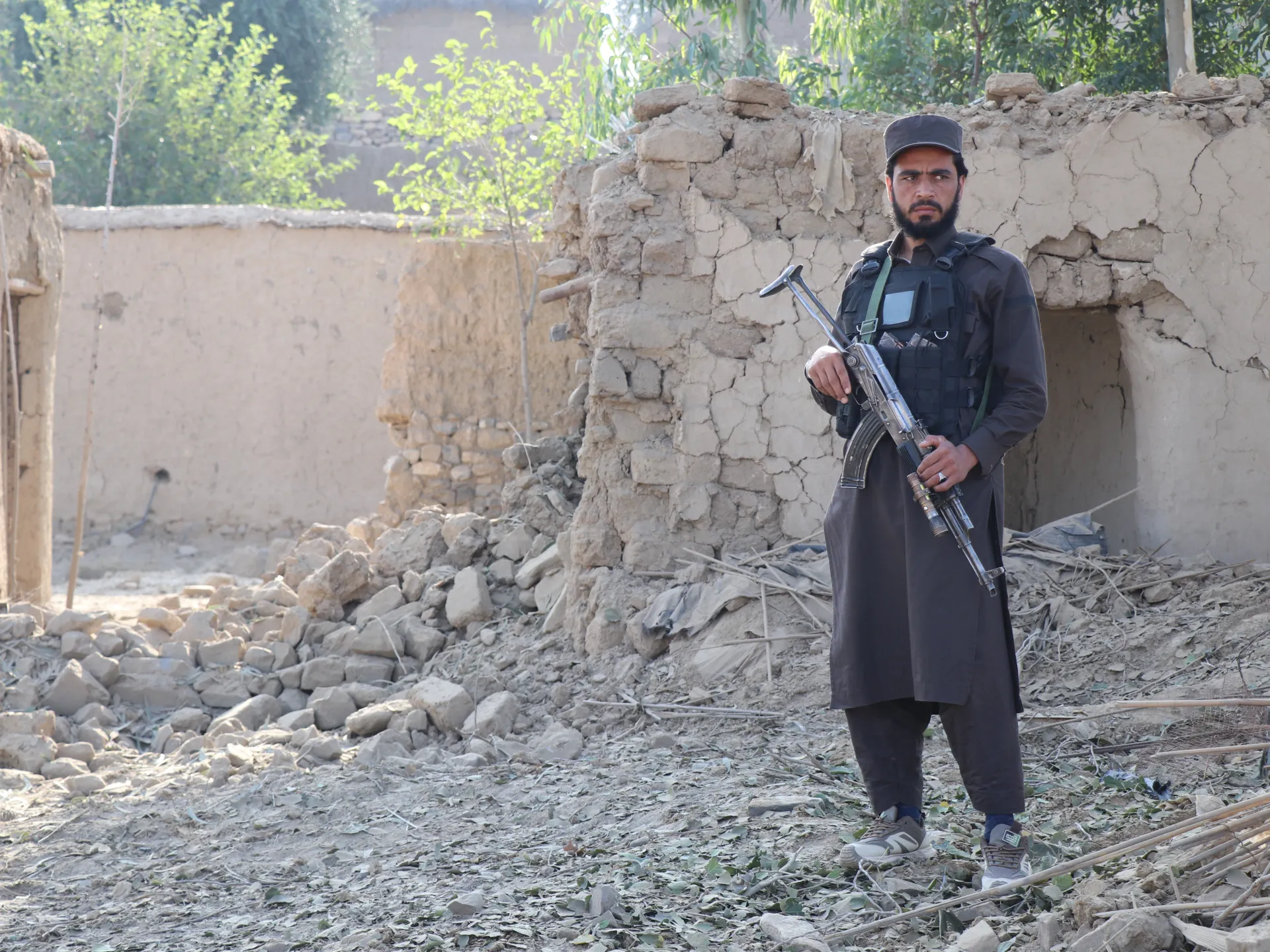
Taliban

EU meets with Taliban about deportation

June 23 (UPI) — The European Union and the Taliban met in Brussels on Tuesday to negotiate the return of Afghan refugees to the country.

Officials from the European Commission and 15 member states met discreetly with the regime, and several Europeans criticized the move.

“I am shaken and deeply disturbed by this,” Nobel laureate Malala Yousafzai told Radio Free Europe.

Yousafzai was shot in the face at age 15 by the Taliban for defying its ban on education for girls.

“This is the same Taliban that banned girls from secondary schools and forced them into marriage. The same Taliban that, earlier this month, arrested dozens of women in Herat for how they were dressed. The same Taliban that detains, beats and executes women who dare to speak out or break their rules.”

Brussels has defended the meeting saying European countries need to have a system to deport asylum seekers who commit violent crimes.

Sweden, which has one of the largest Afghan populations, co-chaired the meeting outside the EC’s premises. The meeting was called strictly technical because the EU doesn’t recognize the Taliban government.

Members of the European Parliament have repeatedly backed resolutions condemning the Taliban, which contrasts with the EC’s willingness to meet with the regime, said Socialist Workers’ Party MEP Juan Fernando López Aguilar.

“I’m appalled,” he said. “It’s absolutely an outrage and a total loss of faith and the credibility of the European Union that it can hold such a double standard,” The Guardian reported.

López Aguilar rejected the EU’s argument that it needed to be able to deport migrants.

He accused the EU of allowing the far right to set the agenda.

“We’re 450 million people all together. There’s no reason to panic when you talk about a certain number of migrants fleeing from despair or from a lack of opportunities. Let alone persecution, which is grounds for them to seek international protection,” he said. “Migration is not a threat, not even a crisis. It’s a constant fact of the history of mankind.”

Swedish Migration Minister Johan Forssell told a different story to local media.

“It is incredibly important that these criminals are deported,” Forssell said. “And that is not possible today. They do not want to participate. They do not want to go home.”

Socialist MEP Cecilia Strada called the meeting a “shameful chapter for Europe,” telling Euronews that it grants legitimacy to “a regime that tramples on the rights of women and girls and imposes a system of gender apartheid.”

The European Council on Refugees and Exiles said Afghanistan isn’t safe for return because of deteriorating human rights, the lack of effective legal protection and the ongoing risks of persecution.

Green MEP Hannah Neumann, of Germany, said on social media: “If Europe returns young Afghan men into poverty and hopelessness, many will end up dependent on the only structures still offering shelter and food: Taliban networks and madrassas.”

She said it plays right into the Taliban’s hands.

“This is how authoritarian systems hold power. Not only through violence, but through dependency, social control and enforced loyalty,” she said. “By deporting people into desperation, we are not weakening the Taliban. We risk strengthening the very structures that keep them in power.”

Source link

EU to hold migration meeting with Taliban officials in Brussels | Taliban News

Belgium has issued five visas to a Taliban delegation to attend a European Union meeting on migration in Brussels and discuss the deportation of Afghan asylum seekers from European nations.

The meeting, expected to take place on Tuesday, will be the first time the EU has hosted the group since it returned to power in Afghanistan almost five years ago.

Recommended Stories

list of 3 itemsend of list

A spokesperson from the Belgian Foreign Ministry told reporters that the five visas were granted on Monday after a security assessment and that they are valid for Belgium for one day only.

The European Commission said it has invited the Taliban officials for discussions on irregular migration from Afghanistan to the 27-member bloc, and to also discuss the deportation of Afghan people in the EU who have had their asylum applications rejected.

The EU has not identified which Taliban representatives were invited to the meeting. Several senior Taliban leaders are also under EU sanctions.

“Member States are looking into ways to return persons who have committed serious crimes and who are possibly a security threat. So this is the initiative that the Commission is now following up on,” Commission spokesman Markus Lammert told the EU’s daily news briefing on Monday.

According to a letter seen by the Reuters news agency and addressed to Abdul Qahar Balkhi, a Taliban Foreign Ministry spokesman, the meeting will focus on “the return and readmission of Afghan nationals without a right to stay in the European Union”.

The Commission, however, emphasised that this meeting does not mean Brussels is formally recognising the Taliban.

Since returning to power in August 2021, the Taliban have steadily curtailed rights, restricting women’s freedom of movement, banning girls from education beyond primary school, and enforcing morality laws that limit free expression and access to employment. European governments also shut their embassies in Kabul when the Taliban authorities returned to power.

Rights organisations have asked the Commission to abandon its plans to talk with the Taliban.

“Any engagement with the Taliban needs to prioritise protecting human rights and accountability – not deporting people to danger there,” Fereshta Abbasi, Afghanistan researcher at Human Rights Watch, said.

Earlier this month, the EU’s migration chief Magnus Brunner defended the outreach, saying Brussels had no other option than to talk to the Taliban government about returning Afghan asylum seekers who had entered the 27-member bloc irregularly.

European governments have sought a tougher stance on migration as public opinion has hardened, spurring far-right electoral gains across the continent.

EU countries have received about a million asylum applications filed by Afghans between 2013 and 2024, according to the bloc’s migration agency.

Although Afghans are among the nationalities with the highest asylum recognition rates in the EU, overall acceptance has tightened as migration ⁠policies become more restrictive.

About 20 of the EU’s 27 member states expressed interest in returning numbers of migrants without a right to stay, particularly those with criminal convictions, to Afghanistan in a letter last year.

EU law allows for deportations of people convicted of serious crimes or ⁠deemed security threats in certain cases, but returns to Afghanistan have been limited due to the lack of diplomatic relations.

“The focus for member states is very much on persons who have committed serious crimes or who pose a security threat,” Commission spokesman Lammert told journalists Monday.

Afghanistan is, however, currently mired in a deep humanitarian crisis. According to the United Nations World Food Programme, more than 17 million Afghans – or one-third of the population – are “food insecure”, while the country is absorbing tens of thousands of people returning from Iran and Pakistan.

“The desperate scenes of people – including EU staff – fleeing Afghanistan are a recent memory,” Eve Geddie, director of Amnesty International’s European Institutions Office, said in a statement.

“It is unconscionable that the EU would now try and deport people to Afghanistan, which has only become more dangerous in the meantime,” she added.

Source link

Two roadside bombs kill at least seven in northwestern Pakistan | Border Disputes News

No group has yet claimed responsibility for the attacks.

Two roadside bomb blasts in northwestern Pakistan have killed at least seven people.

The first explosion on Saturday hit a vehicle, and the second was detonated as rescuers responded, police said.

Recommended Stories

list of 3 itemsend of list

“A private pick-up truck carrying passengers was targeted with a remote-controlled IED,” said Yasir Afridi, a police officer in Bannu district in Khyber Pakhtunkhwa province bordering Afghanistan, using a common acronym for a homemade bomb.

“The injured were being transported to hospital in a car for emergency treatment when a second IED exploded,” he said, adding that three people were wounded.

Prime Minister Muhammad Shehbaz Sharif condemned the attack and said the government would bring those responsible to justice.

There has been no claim of responsibility for the blast, but the Pakistan Taliban, known by the acronym TTP, and other armed groups operate in the area.

Pakistan has blamed Afghanistan for a surge in attacks near the border, although the Taliban government in Kabul has repeatedly denied Pakistani accusations that Afghan territory is used as a sanctuary for armed groups.

Frosty relations have escalated into clashes in recent months, including Pakistani air strikes on Afghan cities.

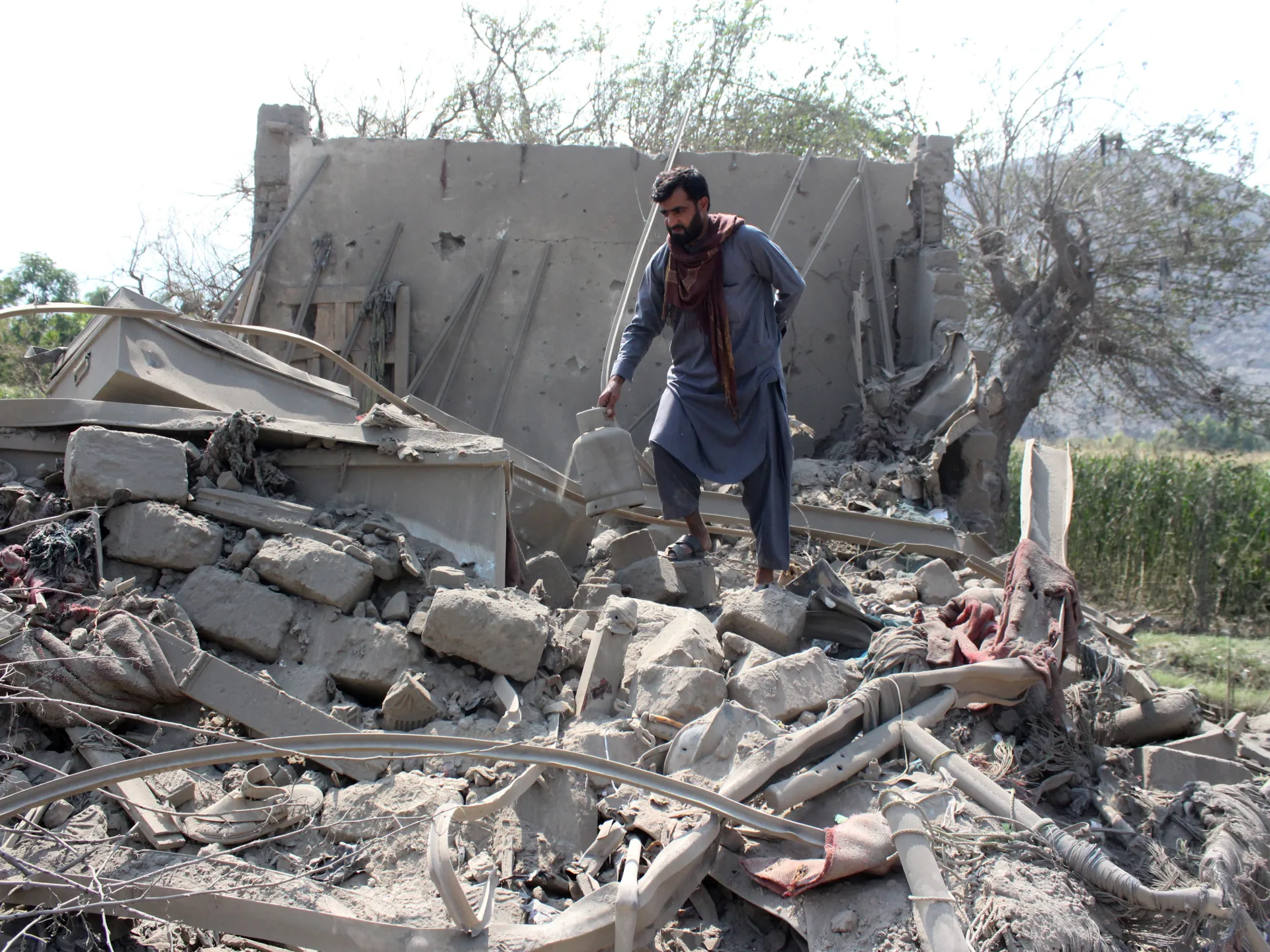
Pakistani air strikes near the border this month killed at least 26 Taliban fighters, the Pakistani government said, while the Afghan government said 12 civilians were killed.

The border has remained largely closed since violence escalated in October, freezing bilateral trade and disrupting the movement of people and goods.

Source link

Can new Pakistan-Afghanistan tensions lead to another border clash? | Pakistan Taliban News

Both sides target each other despite a pause in fighting mediated in March.

Relations between Pakistan and Afghanistan have been tense since the Taliban took power in 2021.

On Monday, Pakistan summoned a senior Afghan diplomat after an attack claimed by the Pakistan Taliban, known by the acronym TPP. The group said it carried out two more attacks since, mostly against security forces.

Islamabad accuses Kabul of backing the fighters, which it denies.

The latest violence started with a major border skirmish in February. Mediation efforts by Saudi Arabia, Qatar, Turkiye and China led to a pause in the fighting.

But the two sides have continued to target each other. This includes a Pakistani strike on a drug rehabilitation centre that killed more than 250 people.

Will these breaches lead to a resumption of hostilities? And is lasting peace possible between the neighbours?

Presenter: James Bays

Guests:

Masood Khan – Former permanent representative of Pakistan, United Nations

Michael Kugelman – Senior fellow, Atlantic Council

Obaidullah Baheer – Adjunct lecturer, American University of Afghanistan

Source link

Afghans displaced by Pakistan conflict survive in tent camps | Pakistan Taliban

NewsFeed

Tens of thousands of Afghans have been displaced by recent fighting along the Pakistan border, forced into tents with little access to food, healthcare, or education. Pakistan says its strikes target armed groups attacking its territory, but displaced families now fear for their safety and are uncertain if they will ever return home.

Source link