sweep

Rugby League World Cup 2026: New Zealand sweep Samoa aside to reach Women’s World Cup final

New Zealand (8) 32

Tries: Wiki, Waaka 3, Hufanga, Atai, McGregor Goals: Kiria-Ratu 2

Samoa (0) 0

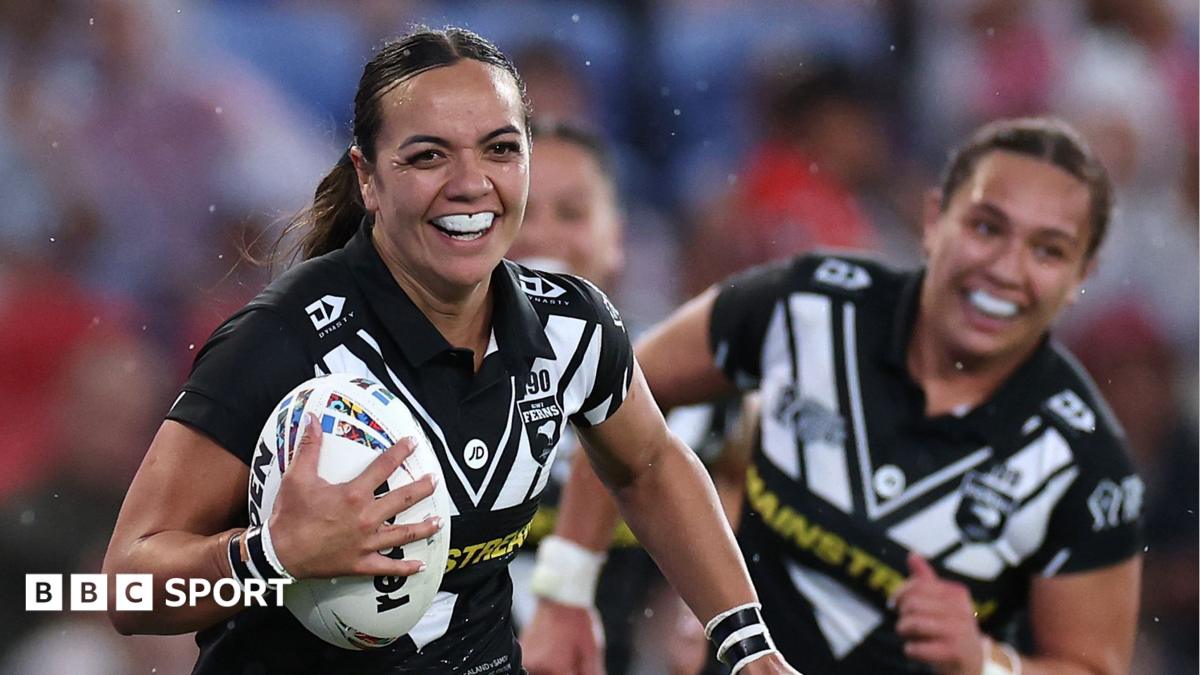
New Zealand’s women will hope it is fourth time lucky after defeating Samoa 32-0 to reach next Sunday’s Rugby League World Cup final.

It will be the Kiwi Ferns’ seventh successive appearance in the showpiece match, but having won the first three between 2000-2008, three trips to the final since then have all ended in heartache.

Three consecutive losses to Australia included a blowout 54-4 scoreline four years ago at Old Trafford and unless debutants Fiji spring one of the greatest upsets in the tournament’s history in the other semi-final, the Jillaroos are likely to again provide the substantial obstacle to New Zealand becoming four-time champions.

However, on Saturday, New Zealand made light of the blustery and difficult conditions inside Newcastle’s McDonald Jones Stadium, in New South Wales, to make their case as potential winners.

Mackenzie Wiki’s try – less than two minutes into proceedings, off the back of a Samoa error – set the tone for the Kiwi Ferns.

As the storm clouds began to gather overhead, New Zealand’s dual-code international Stacey Waaka capitalised on some indecision from Samoa winger Mercedez Taulelei-Siala to collect and ground Raecene McGregor’s kick.

It was efficient and highly professional from New Zealand, who conceded just 24 points across their three group games and once again exhibited their defensive parsimony during a hard-fought first period.

A combination of that and Samoa’s inability to make the most of field position, with a smattering of handling errors thrown in as well, laid the platform for New Zealand’s triumph.

There were notable bright spots for the Samoa fans to enjoy.

Fanua Rimoni was a powerful and dominant presence at lock forward, while teenage winger Anastasia Leatupue produced a nerveless showing on her international bow.

Samoa’s biggest disappointment was that they could not get the ball into the hands of the 18-year-old in good attacking positions – with Pauline Piliae-Rasabale twice pulled up for forward passes on the right edge in an error-strewn display.

But just like in the first 35 minutes, they had no answer to New Zealand’s more potent attacking threat.

Waaka was again the beneficiary of a pinpoint McGregor kick as she crossed for her second try and Mele Hufanga held off the attentions of three Samoa defenders tfor her score.

It was a feat that was matched by Kaiyah Atai just over two minutes later as New Zealand went through the gears.

With Samoa’s resistance gradually waning, Waaka capped a fine individual display with her hat-trick and McGregor scored the try her performance richly deserved to round off a fine New Zealand display.

Source link

Democrats sweep California’s down-ballot races but one remains too close to call

Democrats swept California’s statewide down-ballot races — no surprise in a state where registered Democrats outnumber Republicans by a nearly two-to-one margin, and voters haven’t elected a Republican to a statewide office since 2006.

The dominance was evident in the Democratic candidates’ victories for attorney general, secretary of state, lieutenant governor, treasurer and controller.

“When you look at the results so far, the thing that’s most striking, I think, is that the percentages are almost identical for every statewide race between the two parties,” said Kim Nalder, director of the Project for an Informed Electorate at Sacramento State University. One might have imagined that some candidates would have received a larger or smaller share of votes than others, based on voters’ personal feelings toward them, but Californians instead hewed strongly to party lines, she said.

“I think that says that Californians are probably voting based on nationwide trends, as much as anything else,” she said, referencing the blue surge that swept the country, with Democrats taking control of both the House and Senate.

“It also just means, honestly, that people don’t know a lot about most of these statewide offices and don’t necessarily do their homework, so they’re reverting to the cue that’s simplest, which is party cues,” she added.

The AP called the victories for the down-ballot races.

One contest remained too close to call Wednesday afternoon: The race between two Democrats to succeed Ricardo Lara as insurance commissioner. With 51.7% of expected votes in, former San Francisco Supervisor Jane Kim held a slight lead over three-term state Sen. Ben Allen, with 52% versus 48%. The commissioner regulates the state’s insurance industry and has the authority to approve or reject rate increases and investigate fraud.

A former director of the Working Families Party, Kim has proposed a novel “single payer” state-run insurance plan to cover catastrophic fire damage, earning her endorsements from U.S. Sen. Bernie Sanders (I-Vt.) and the California Federation of Labor Unions. Allen, who has blasted Kim’s plan as too short on details, has campaigned on improving the current system, pointing to his long record of insurance industry reform bills. He’s backed by the California Democratic Party and top elected party officials, including U.S. Sens. Adam Schiff and Alex Padilla.

Elsewhere down the ballot, incumbent California Atty. Gen. Rob Bonta, a former Democratic state legislator, handily won releection as the state’s top prosecutor. He beat out former Huntington Beach City Atty. Michael Gates, a Republican, receiving 63.8% of the vote with 59.6% of expected votes in.

Bonta was first appointed to the office by Gov. Gavin Newsom in 2021, and then elected in 2022.

Democrat Shirley Weber was reelected as secretary of state, besting Orange County Supervisor Donald Wagner, a Republican, with 64.7% of the vote when 59.4% of expected votes were in. The secretary of state is in charge of administering statewide elections, providing information about ballot measures and candidates to voters, overseeing campaign finance and handling business licensing and filings.

Weber, a former state Assembly member, was initially appointed to the role in 2020 by Newsom and then elected by voters in 2022.

Voters chose state Treasurer Fiona Ma, a Democrat, to succeed termed-out Lt. Gov. Eleni Kounalakis. Ma defeated former State Senate Majority Leader Gloria Romero, a Republican, receiving 63.8% of the vote with 59.5% of the expected vote in. The job is largely a ceremonial post, but if the sitting governor dies, resigns or is removed from office, then the lieutenant governor would be elevated to take over.

Kounalakis, meanwhile, won the race to succeed termed-out Ma as state treasurer, beating Republican Jennifer Hawks, who had billed herself as a political outsider. With 59.1% of the expected vote in, Kounalakis received 64%. The California treasurer is the state’s chief financial manager and responsible for overseeing public investments and issuing bonds to fund major projects like roads, sewers, schools and affordable housing.

Incumbent Controller Malia Cohen won reelection over challenger Herb Morgan, a Republican finance and investment advisor. With 58.9% of the expected vote in, Cohen received 63.8%. The controller is the state’s fiscal watchdog, responsible for auditing government agencies, administering payroll for state employees and reuniting abandoned assets with their owners.

Cohen was elected in 2022 after serving as a member of the state Board of Equalization from San Francisco.

Times staff writers Laurence Darmiento, Iris Kwok, Summer Lin, Kevin Rector and Dakota Smith and correspondent Jon Regardie contributed to this report.

Source link

Palestinians, Israelis react after Democrats sweep US midterms | US Midterm Elections 2026

Palestinians and Israelis are divided in their opinion following the win by Democrats in the US midterm elections. The win could reshape the next two years of President Donald Trump’s administration.

Source link

What the Democratic Sweep Means for Venezuela

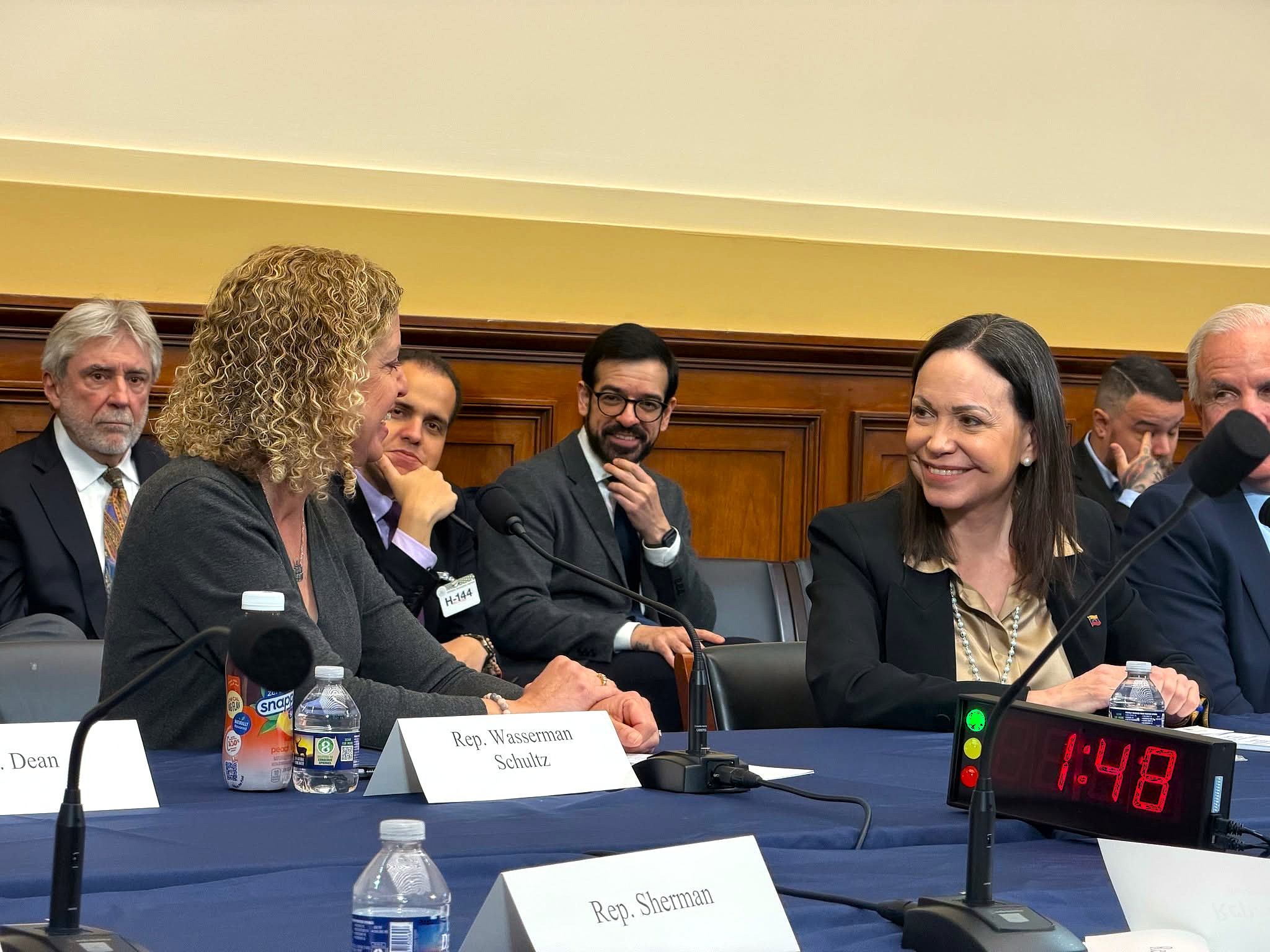
Rep. Debbie Wasserman Schultz (D) with María Corina Machado and her aides in January 2026.

Last night’s results confirmed what had long been signaled. As of this writing, Democrats are winning the House of Representatives with at least 228 seats, and the Senate with 54. Beyond Congress, they secured a majority of governorships for the first time in 16 years.

The White House’s reaction is a preview of what the next two years will look like. This morning, they posted a photo of the president with the caption: “Notice: Trump is still your president,” an idea echoed on X by his communications director, Steven Cheung. With this message, the administration appeared to signal that Trump will continue governing by executive fiat, bypassing Congress.

For Venezuelans, the question today is: what changes with this new majority? The answer remains the same: oversight. The tools Democrats have just regained could enable them to pressure the administration into accelerating an electoral process in Venezuela.

The races behind the shift

The surprise of the night came in South Carolina, where Annie Andrews won by four points in a state Trump carried by 18 in 2024. Results in Texas (James Talarico against Ken Paxton), Ohio (Sherrod Brown), Kansas (Adam Hamilton), Iowa (Josh Turek), and Maine—where Troy Jackson defeated Susan Collins—illustrate how White House policies exacted a toll on congressional Republicans.

This pushback was not confined to Congress: Democrats took governorships in Georgia, Ohio, Iowa, Nevada, Michigan, Wisconsin, Pennsylvania, and Arizona. In Texas, Gina Hinojosa alongside James Talarico became the first Democrats to win a statewide race in more than three decades.

Even in Florida, which remains predominantly Republican, the figures make voter discontent clear. Byron Donalds won the governorship with 50% against David Jolly’s 48.7%. In a state Trump won just two years ago by 13 points, the margins secured by Republicans last night ought to worry them.

The line that could work for Democrats is the one led by Wasserman Schultz and Garcia: accepting that what happened on January 3 cannot be undone, while demanding that priorities shift.

In Miami, margins collapsed for Republican representatives. María Elvira Salazar leads Eliott Rodríguez by roughly 1,100 votes in a district Trump won by 20 points in 2024, and every sign points toward a recount. Mario Díaz-Balart is winning by less than a point in District 26, while Carlos Giménez dropped from 64.6% to 53% in District 28. Despite a district map redrawn to favor Republicans, Democrat Jared Moskowitz won District 25.

Debbie Wasserman Schultz retained her seat, now in District 20, with 74.4% of the vote. Her campaign exemplifies the platform currently working for Democrats in South Florida: she publicly distanced herself from the Democratic Socialists of America (DSA); criticized Trump for leaving Maduro’s inner circle in charge of Venezuela; and spearheaded the legal defense of Temporary Protected Status (TPS) for Venezuelans. Her unyielding stance against chavismo paired with protections for the diaspora reflects both deep familiarity with the country and a roadmap for how Democrats may operate starting in January.

Translating victory into effective oversight

Over the past two years, the Republican Congress served more as Trump’s shield than as a check on his power. The president’s policies may stay the course or harden, but oversight is where the real shift occurs. Starting in January 2027, when the new Congress convenes, Democrats can leverage their victory across four fronts.

First, subpoenas. House committees will shift to Democratic hands. Robert Garcia and Gregory Meeks—previously ranking members on the Oversight and Foreign Affairs committees—will no longer be in the minority. They will have the authority to compel document production and testimony from the administration. In the Senate, the Judiciary and Foreign Relations committees will also change leadership.

Second, the budget. Unlike the past two years, Republicans must now negotiate spending bills with Democrats. This gives Democrats the leverage to condition funding on greater executive transparency.

Third, appointments. High-level officials require confirmation from a Senate Trump no longer controls. Should a Supreme Court vacancy arise, that same Senate will confirm the replacement.

Alongside Meeks, Garcia requested a copy of the agreement with Alejandro Betancourt’s firm and received only a single document. Come January, those letters can become subpoenas.

Fourth, legislation. War powers resolutions that stalled in a Republican-led Congress could now pass with both chambers under Democratic control. Immigration bills long shelved in Republican drawers might finally see progress.

Real constraints remain: most legislation requires 60 votes in the Senate, and overriding a presidential veto requires a two-thirds majority in both chambers. Trump will continue advancing policies unilaterally, but sustained pressure on information flow and budgetary purse strings can alter outcomes.

Venezuela is a clear example of this new dynamic. Robert Garcia has spent the year probing the management of Venezuelan oil revenues. He has demanded accountability over more than $13 billion in proceeds and requested communications between the administration and companies including Chevron, ExxonMobil, Vitol, and Trafigura. Alongside Meeks, Garcia requested a copy of the agreement with Alejandro Betancourt’s firm and received only a single document. Come January, those letters can become subpoenas, and Salazar—who blocked Joaquín Castro’s subpoena request in September—will no longer chair the Western Hemisphere subcommittee.

Venezuela in the new dynamic between Trump and Dems

In September, I wrote that Democrats would likely take the House, that reclaiming the Senate was an uphill climb, and that Venezuela was not a party priority. The first proved accurate; the second underestimated the field. While polls anticipated Democratic gains, yesterday’s wave reshapes Venezuela’s place in the broader policy conversation.

With the White House on the defensive, Venezuela stands as one of the few accomplishments Trump can point to. Consequently, the administration will likely double down on its Venezuela policy—not out of concern for Venezuelans, but because it yields political capital. For Democrats, Venezuela exemplifies what Trump can execute without Congress, while underscoring that the diaspora does not tolerate leniency toward chavismo.

If Democrats approach Venezuela as an anchor for institutional oversight and work to make it a bipartisan cause, it will serve as one of the few issues where this new majority exercises its mandate while projecting moderation.

In other words, amid this anti-Trump wave, the reflexive impulse will be to oppose everything the president does regarding Venezuela. That would also be an error. The viable path forward for Democrats is the one charted by Wasserman Schultz and Garcia: acknowledging that the events of January 3 cannot be undone, while demanding that priorities shift—placing free elections and the release of political prisoners ahead of oil contracts.

This approach mirrors the incentives driving Republicans in Miami. Even as they supported Trump’s hardline immigration policies (only voicing reservations weeks before the election), they also urged the White House to back María Corina Machado.

If Democrats treat Venezuela as an anchor for institutional oversight and steer it toward bipartisan consensus, it will become one of the few areas where this new majority executes its constitutional duties while projecting moderation, turning Congress into a venue for governance rather than another theater in the partisan war.

State governments also act as counterweights: governors determine whether to cooperate with ICE, sign 287(g) agreements, and administer election systems. Holding a majority of statehouses, including Texas and Georgia, gives Democrats greater influence over how the 2028 presidential race is run.

A first step toward 2028

This outcome is not a blank check for Democrats. Just as yesterday’s results served as a reprimand to the governing party in the White House, failure to convert this win into tangible outcomes will leave Democrats with little leverage by 2028. To preserve their gains, they must deliver on three fronts:

First, visible results. Voters penalized the cost of living, not just the president. If the new majority limits itself to holding hearings and releasing findings, it will alienate those who voted based on economic concerns.

Second, safeguarding the coalition. The margins in Texas and Florida demonstrated that Latino voters shifted over immigration and the economy rather than an ideological realignment. Retaining the Latino vote through 2028 will require legislative momentum on immigration reform.

Third, discipline. If oversight devolves into a weekly spectacle or a bid for social media engagement, Republicans will frame it as obstruction. Limiting executive overreach is not a partisan campaign; it is a constitutional imperative. Republicans who have broken with Trump on select issues remain natural allies.

What matters is forging a shared vision among potential Democratic contenders that enables them to demand swift, free elections in Venezuela.

Throughout the campaign, Republicans routinely characterized Democrats as socialists—a narrative fueled by statements from the DSA, some of whose members went so far as to demand Maduro’s release. Yet the DSA’s actual leverage within the party remains far smaller than Republicans suggest. Its candidates expanded margins primarily in safe Democratic seats.

The decisive shift in this election occurred where centrists won over independent voters by substantial margins, such as Jon Ossoff taking 59% in Georgia or Chris Pappas winning by 14 points in New Hampshire. A sensible Venezuela policy should therefore focus on building bipartisan ground: advancing mechanisms like the Jeanne Shaheen–Ted Cruz resolution or Jared Moskowitz’s transition framework.

It is too early to settle on Democratic presidential contenders, but early discussions include Alexandria Ocasio-Cortez, Jon Ossoff, Kamala Harris, Pete Buttigieg, and Gavin Newsom.

Beyond Ocasio-Cortez’s consistent critique of interventionist foreign policy and former Vice President Harris’s familiarity with the Biden administration’s stance toward Caracas, none of these figures has really managed a deep portfolio on Venezuela.

Harris endorsed Machado while running against Trump, while AOC refused to recognize Maduro as the winner of the July 28, 2024 election. Among the potential candidates, AOC, Newsom, Buttigieg, and Harris have all commented—some with sharp criticism, others with calculated ambiguity—on the events of January 3.

What matters moving forward is forging a shared vision among these leaders that enables them to demand swift, free elections in Venezuela. At its core, Venezuelans are demanding a government that improves everyday life, rather than one distracting the public with opaque oil deals that benefit a narrow few.

Democrats now have an opening to help shape Venezuela’s transition. Doing so requires activating the oversight and transparency tools they have long championed, including demanding visibility into the White House negotiations that began this past August.
Source link

Key moments as Democrats sweep to victories in US midterms | US Midterm Elections 2026

Democrats have been celebrating across the US after a series of victories saw them take control of both chambers of Congress, flipping Republican seats in traditionally conservative states and scoring historic victories.

Source link

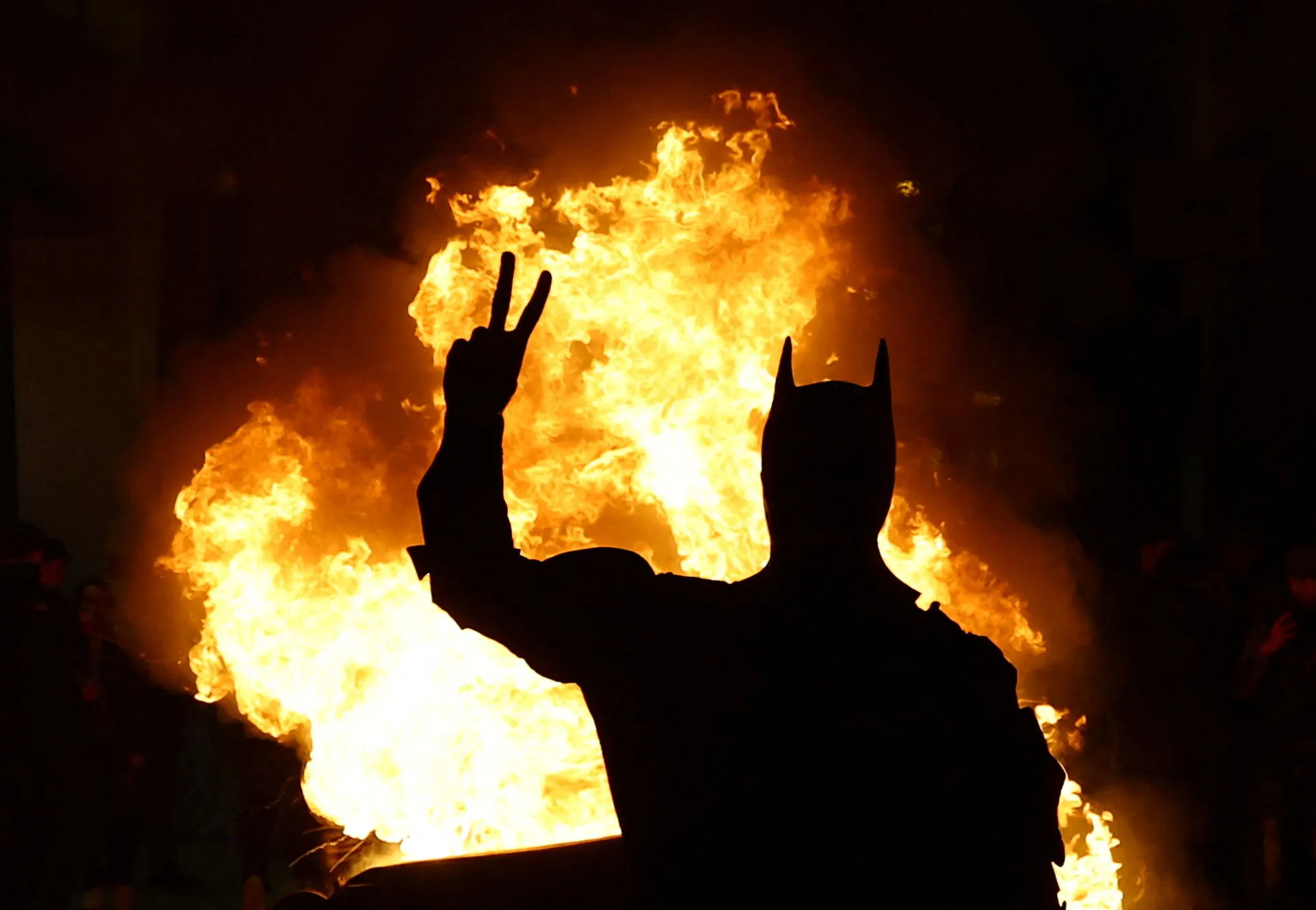
Photos: Youth-led rallies sweep Germany | Protests News

Large demonstrations have taken place across Germany, and some have descended into violence with police firing water cannon at people throwing Molotov cocktails.

Several police officers were injured on Saturday after tens of thousands of people joined youth-led protests across the country organised by the group “Gen Z regelt” (Gen Z has got this).

The demonstrations, inspired by similar movements in France and Italy, remained largely peaceful during the day.

But tensions escalated in the evening as groups of young people refused to disperse. Violence was reported in major cities, including Frankfurt, Berlin, Cologne and Hamburg.

“Gen Z regelt” said about 120,000 people took part in the protests, below the roughly 180,000 it had expected.

Source link

At least five people missing as flash floods in Nepal sweep away houses | Climate Crisis News

Authorities urge villagers to move to safer places after a river bursts its banks in the central part of the country.

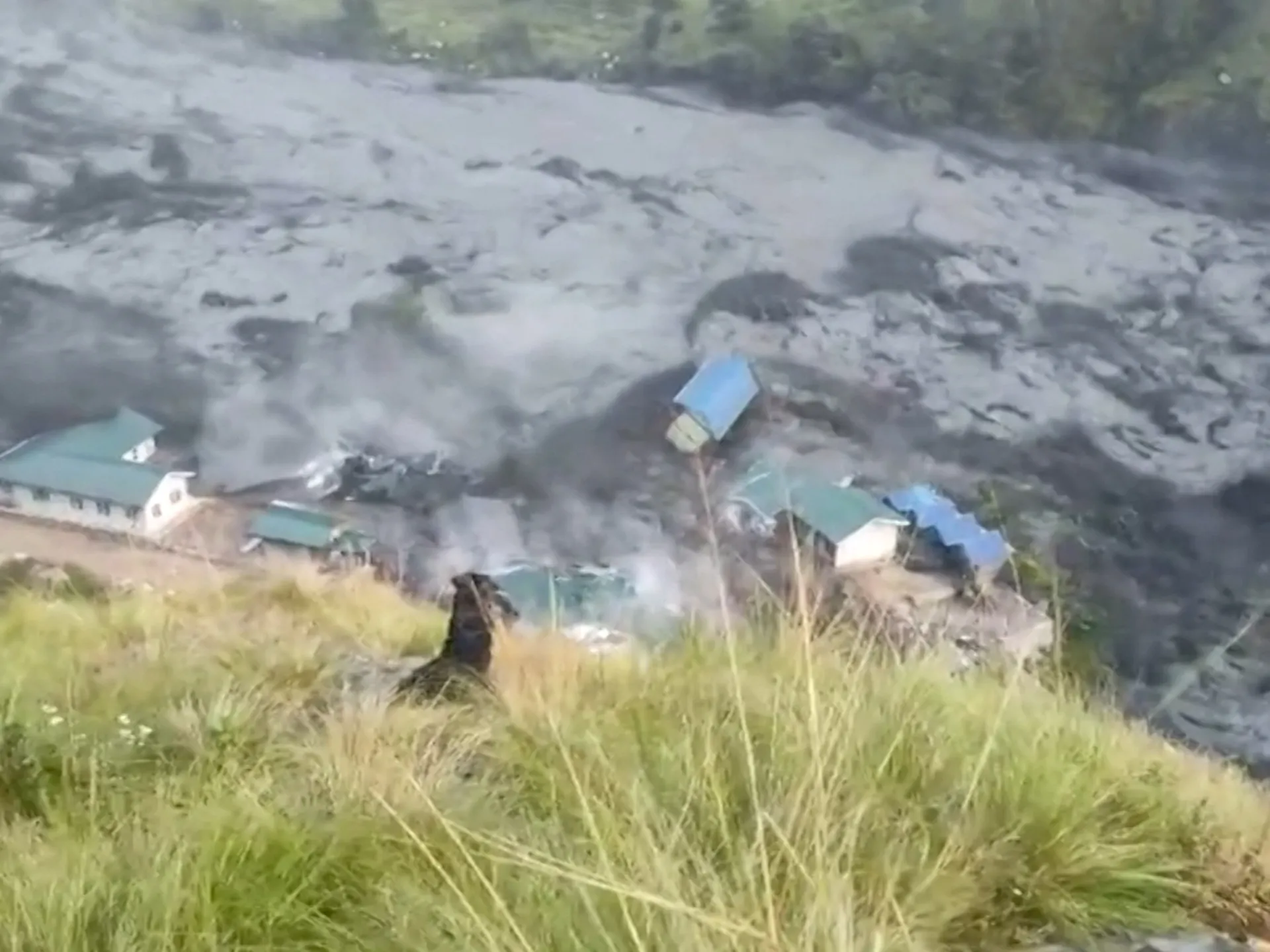
Flash floods have hit central Nepal, sweeping away houses and leaving at least five people missing, according to officials, weeks after devastating flooding in the country that killed hundreds.

A landslide in Chumnubri village in Gorkha district, about 100km (62 miles) west of Kathmandu, blocked the Budhi Gandaki River on Saturday, leading to downstream flooding, authorities said.

Recommended Stories

list of 4 itemsend of list

Two women and three men were unaccounted for, and there are no reports of casualties, said the National Disaster Risk Reduction and Management Authority (NDRRMA).

According to the agency, at least 82 people, including nine foreigners, have been rescued from the affected areas.

The flood swept away about a dozen houses and two suspension bridges and damaged a hydroelectric project camp, carrying some of the construction equipment away, authorities said.

A muddy torrent washed away a highway bridge connecting Gorkha with the neighbouring Dhading district, said NDRRMA Chief Executive Dharam Raj Uprety.

Evacuation order

The Budhi Gandaki is a tributary of the Trishuli River, downstream from another tributary where a glacier collapse caused a catastrophic flood in August that killed 1,457 people, with thousands still missing.

“We have asked villagers living along the riverbanks downstream to evacuate and remain safe,” said Dharmendra Kumar Mishra, Gorkha district’s most senior bureaucrat.

National disaster authorities alerted people living along the river in the Gorkha, Tanahun, Chitwan, East Nawalparasi and West Nawalparasi districts about the flood.

“Please help ensure that people in at-risk areas are moved to safe locations in time and assist search and rescue operations as needed,” the NDRRMA said in a social media post.

Officials said army and police rescue personnel had reached the area and were also monitoring the situation from a helicopter.

“The flood looked similar… It was very scary, and it still feels like a nightmare for us,” said local official Laxmi Gurung of Chumnubri rural municipality.

“Our house is gone, we have no electricity… but there have been no casualties.”

Heavy rainfall in late September also triggered floods and landslides, killing at least 21 people, according to the disaster agency.

Source link

Don’t expect Dodgers to sweep Milwaukee Brewers again in NLCS

A growing scrum of reporters around Andrew Friedman, the Dodgers’ president of baseball operations, in the locker room Wednesday night after the Dodgers defeated the Atlanta Braves to advance to the National League Championship Series, didn’t put a damper on the celebration.

Tanner Scott stuck upside-down beers in Friedman’s shirt. Alex Freeland dumped beer into his mouth and all over his face. Eric Lauer coordinated a sneak attack, announcing that he was heading to the showers before reappearing from a side entrance.

Friedman never stopped grinning. But it almost looked like he had an extra glint in his eye when asked whether he’d rather take on the Milwaukee Brewers or San Diego Padres in the NLCS.

“I just want chaos,” Friedman said.

Later that night, the Brewers advanced, locking in an NLCS rematch that could certainly deliver chaos.

The Dodgers and Brewers are meeting in the playoffs for the fourth time in nine years. Last season, the Dodgers swept Milwaukee in the NLCS.

Usually before playing a big-market team like the Dodgers, Brewers manager Pat Murphy leans into the underdog narrative by saying he suspects the opponent can’t name many of the Brewers players. But by becoming perennial playoff contenders, and posting the best record in the majors over the past two seasons, the Brewers have given up whatever anonymity they may have had when they promoted Murphy a few years ago.

The cast of characters on both sides has remained relatively consistent since last October. But even after trading away top pitcher Freddy Peralta, Milwaukee is a more complete team than last season.

But losing talented players hasn’t stopped the Brewers from winning the last four NL Central titles. They keep saying goodbye to top players — including Cy Young winner Corbin Burnes, closer Devin Williams and shortstop Willy Adames — then raise their win total.

Many of the players remain the same, although the Brewers added former Dodgers starting pitcher Dustin May and reliever JoJo Romero in a trade with the St. Louis Cardinals at the deadline, after losing in the Tarik Skubal sweepstakes. Several players also took important steps forward.

The biggest difference-maker has been Jacob Misiorowski, who had the lowest ERA (1.80) in the majors this season and is the NL Cy Young favorite. As a rookie last year, the flame-thrower was relegated to the postseason bullpen until the NLCS. This year, he was the Brewers’ Game 1 starter in the NLDS against the Padres.

The Brewers have long hung their hat on playing sound baseball, from pitching and defense to baserunning. But the knock on them has been the lack of thump in their lineup.

First baseman Jake Bauers had a career season, leading the team in home runs (26), on-base percentage (.389) and on-base-plus-slugging percentage (.873). Jackson Chourio, who was hobbled by a hamstring injury in the last NLCS, hit a career-high 25 home runs and led the team in slugging percentage (.487). And though the Brewers likely won’t out-slug the Dodgers — they hit 50 fewer home runs during the season — they have a pesky roster that stole 90 more bases.

The Brewers also had a better regular-season record (103-59) than the Dodgers (100-62), so the series will begin in Milwaukee on Sunday.

Signs point to a more competitive series than last year. The Brewers even entered the postseason with the better World Series odds (18.5%) than the Dodgers (16.7%), according to Baseball Prospectus’ PECOTA standings.

The Dodgers certainly won’t take the matchup lightly. They made sure not to underestimate the No. 3 seed Braves.

“The mistake that the outside perspective kind of gets sometimes is to underestimate certain teams,” said Kiké Hernández as the Dodgers celebrated their NLDS victory. “And we knew we had a tough task ahead of us. [The Braves are] a team that was playing really good baseball, had a lot of momentum, and they were throwing the ball really well. They had a really good bullpen, a lot of different kinds of arms, and, fortunately for us, they were a little bit short on starting pitching, so they had to tax their bullpen to a point where it paid off for us.”

The Dodgers ended the series before it returned to Los Angeles for an if-necessary Game 5. So they got to turn their attention to the Brewers a couple days early.

“I think the strength of our team is our rotation,” Friedman said. “And so even if we weren’t able to reset it, we still feel like it would be a strength of ours. But to be able to line it up the way we want to, certainly advantageous. To be able to have a few days off our feet and rest up for Sunday, also really helpful.”

Then the chaos begins.

Source link