In-depth study also says the royal house made huge profits from the Dutch colonial policies in past centuries.
Published On 2 Oct 20262 Oct 2026
A historical study has found that the Dutch royal house benefited from the country’s colonial policies in past centuries and helped the slave trade to survive.
The in-depth study, commissioned by King Willem-Alexander and conducted by Leiden University, showed the House of Orange-Nassau “actively supported Dutch colonialism for centuries, but only rarely determined colonial policy”, according to the university’s statement, published on Friday.
Recommended Stories
list of 3 itemsend of list
“The involvement of the House of Orange-Nassau was wholehearted and without any real reservations,” Dutch historians and human rights experts concluded after a three-year study looking at the period from 1600 to the present.
“The research leaves us in no doubt that the House of Orange shares responsibility for the survival over the centuries of the Dutch slave trade and slavery,” the study said, noting that most of the rulers showed no objections to slavery.
King Willem-Alexander said on Friday he was personally affected by the “explicit” conclusions of the study.
“It is a painful and confronting conclusion. A conclusion that affects me, even though I am three generations removed,” Willem-Alexander said in a speech at the presentation of the research.
“We know the effects of colonialism and slavery are still being felt today. Discrimination and economic exploitation unfortunately happen every day,” he added.
The study also showed that the royal family at times profited substantially from the colonial system, mostly from trade in the Dutch East Indies, modern-day Indonesia.
In the 19th century, for instance, profits accumulated to about $650m in modern terms, the researchers said.
On the other hand, the royal family earned “almost nothing” from the slave trade, the research showed.
Apologies without reparations
The Dutch monarch, who in 2023 apologised for his ancestors’ lack of action against slavery, highlighted their lack of “counter-current leadership” in the face of colonialism.
Dutch historian Gert Oostindie, right, presents a volume of an independent study into the role of the House of Orange-Nassau in Dutch colonial history to King Willem-Alexander in Leiden, the Netherlands, on October 2, 2026 [Piroschka van de Wouw/Reuters]
The House of Orange has ruled the Netherlands since the late 16th century, first as “stadtholders” who presided over the republic, and later as the royal house when the Netherlands became a monarchy.
For most of this time, the Dutch ruled over vast colonies in Southeast Asia and the Caribbean, including what is now Indonesia and Suriname.
The findings could stir up the debate around reparations in the Netherlands. The Dutch government apologised in 2022 after acknowledging the Dutch state bore responsibility for transatlantic slavery. King Willem-Alexander apologised the following year.
The government at the time ruled out reparations, instead creating a 200 million euro ($238m) fund for social initiatives, which anti-racism campaigners have dismissed as insufficient.
The National Institute for the Dutch Slavery Past and Heritage (NiNsee) lauded the king for commissioning the study but said it should lead to a next phase.
“Research impacts society when the new insights into the past contribute to awareness, dialogue, corrections and additions to our national history in the school curriculum and the conversation about responsibility and reparatory justice,” NiNsee director Bianca Groen Gallant said.
The Dutch played a major role in the global slave trade from the 17th century until the Netherlands abolished slavery in the second half of the 19th century.
Tulkarem, occupied West Bank – Hakim Mar’i spends his days lying on a single bed, his disfigured leg raised. The windows of Mar’i’s dilapidated apartment, his latest temporary shelter, are covered with old blankets. Unable to work, Mar’i has no money for electricity, so the blankets have to do. At night, his family lives in near darkness.
The apartment is just around the corner from mounds of rubble and gnarled iron structures that mark one entrance to the now-emptied Tulkarem refugee camp. For Mar’i and other Palestinians, the camp was a home once considered temporary. But now, even the physical structure – their home – that tied those generations together is gone.
Recommended Stories
list of 4 itemsend of list
The apartment is just around the corner from mounds of rubble and gnarled iron structures that mark one entrance to the now-emptied Tulkarem refugee camp. For Mar’i and other Palestinians, the camp was a home once considered temporary. But generations lived there, and now, the physical structure – their home – that tied his family together over the years is gone.
Impoverished, Hakim’s family is in disarray. With its debts mounting and its members facing another eviction, he said he has considered taking his life several times over the past year and a half.
Mar’i cannot afford treatment for his debilitating leg injury, which has developed severe infections. He said he sustained it while working as a labourer inside Israel in 2019. The wound worsened after Israeli soldiers severely beat him when they forced his family from the Tulkarem camp. Diabetes and other untreated conditions have piled on, but he is unable to pay for the needed medical care.
“This joint here is completely gone,” he said, gesturing at the swollen, blackened lower leg that prevents him from working.
“The medicine – by God, the medicine, I haven’t been able to get. My wife and kids tell me: get out travel. Go to America, Turkey – so I can the medical treatment I need… I’m a sick man.”
His mother, Salwa, sat beside him, less than a kilometre (0.6 miles) from their former four-storey home. She wept when asked about the family home that was built floor by floor after they were first displaced in 1948 from al-Khudayra, the Arabic name for Hadera, a city in Israel. “We really put a lot into that house,” she said.
After their removal, the Israeli military razed the Mar’i home so a road traversing the now-emptied camp could be built. “Seeing it destroyed was really painful for us – all of us,” she said.
It has been more than 20 months since Israeli forces emptied the Jenin, Tulkarem and Nur Shams refugee camps in a sweeping military operation in the northern West Bank, displacing tens of thousands of Palestinians whose families had already been refugees for three generations. Constantly renewed orders for a closed military zone now prevent their return.
Since January 2025, Hakim’s family has been forced to move four times. First, they fled to a converted youth centre before landing in a cramped apartment with their four children, all under 15.
Unable to pay rent, the family could see the landlord’s generosity run its course as this once-temporary housing arrangement now has no end in sight. Hakim owes money at the local shops for food he bought on credit. Some nights, the children eat at neighbours’ houses.
“I have children. I have food. I have drink,” he said. “My hands are empty. Nobody is with me. Nobody is standing beside me.”
Hakim Mar’i in his family’s apartment with his injured leg, which prevents him from working [Al Jazeera]
‘We’re already at the brink’
The Mar’i family is among more than 33,000 Palestinians forcibly removed from the Jenin, Nur Shams and Tulkarem camps by Israeli forces in early 2025. This is the largest single episode of forced displacement in the West Bank since Israel’s occupation began in 1967, according to the United Nations agency for Palestinian refugees (UNRWA).
UN satellite imagery shows that 20 percent of all buildings across the three camps have been destroyed and another 28 percent are damaged.
“The level of destruction we are seeing is severe and unprecedented,” said Roland Friedrich, director of West Bank affairs for the UN agency for Palestinian refugees, UNRWA.
According to Friedrich, 85 percent of those displaced have no regular income after many lost jobs when the camps were emptied. More than 80 percent of residents are renting, an unfamiliar expense for families who never paid for housing or utilities inside the camps.
The closed military zone covering the camps is renewed every two months, Friedrich said, with no indication of when – or whether – residents will be allowed to return. “What we saw there is forced displacement,” Friedrich said. “The UN’s position is very clear: People have to be allowed to return. The camps must be rebuilt.”
Unlike after the 2000-2005 second Intifada when the Jenin camp was rebuilt, displaced families and UNRWA staff fear there is no return plan this time.
The Israeli military stated the camps were emptied for “operational security” in its effort to root out fighters from the camps. Friedrich worried the aim of the military operations is to “change the geographical expression of the Palestinian refugee issue”.
Now more than 20 months into what was meant to be an emergency response, funding shortages have left UNRWA unable to cover the vast needs of the displaced population. It has moved some operations to keep schools and basic health clinics functioning. With funds dwindling, the agency has shifted to a “targeted approach”, leaving thousands without support.
Friedrich pointed to a rise in gender-based violence linked to the economic strain on families and to growing depression and anxiety among displaced children observed by UNRWA’s psychosocial teams. “We’re already at the brink now,” he declared.
Members of the Zbeidat family sit on couches outside. The room they stay in is on the left [Al Jazeera]
‘Everyone went their own way’
While Hakim’s displacement plays out in the shadow of the camp, the family of Khadija Zbeidat face their own imminent eviction on the outskirts of Tulkarem. They live in the neighbourhood of Dhinnaba, where sparse houses are interspersed with greenhouses. They are unable to afford a residence closer to the city centre.
As Khadija sat on a couch in the middle of the yard, her many children and grandchildren ran past a small patch of plants she has planted – one of her few remaining joys. “I love plants,” she said. “We had many flowers in our home in the camp. Having the plants here is all I have to feel like myself,” she told Al Jazeera.
Khadija, a widow, shares a tiny spartan room with nine family members, nearly all children, along with a small bathroom and a kitchen barely big enough for one person to cook in. A worn couch takes up one corner. The ceiling is peeling above it.
The room was given to them rent free by a relative of Khadija’s brother-in-law after they spent four months crammed into her daughter’s house with nine other people. “It got really cramped, the pressure on each other,” Zbeidat said. “And we became a burden too.”
Khadija’s family was displaced in January 2025 from the Tulkarem camp’s Haret al-Nadi section, a significant part of which has been destroyed, she said.
“The camp was excellent,” she said of their life before. “I swear, I wish they’d take us back. Everything was close to us, dear – … the closeness, that sense of belonging and the warmth, the company and the neighbours.”
The memories that she cherishes most dearly and that bring her to tears are of food: the stuffed grape leaves and the maamoul cookies made as a neighbourhood together for Eid. This year, there was none of it.
“Nothing. No cookies,” she said. “Nobody even had it in them to do anything any more. Everyone went their own way – scattered.”
Like the Mar’i family and others, they were not allowed to bring their belongings during their abrupt displacement. Some residents have since been allowed to retrieve belongings once or twice from their homes in the camps, but much of what they own remains left behind. Khadija’s daughter-in-law at one point returned to the ruins of the camp – at the risk of being shot – to retrieve a doll left behind that Khadija’s granddaughter Sandy would not stop crying about.
In Tulkarem, displaced families live either in the poorest areas closest to the camp, like the Mar’is, or on the cheaper outskirts, like the Zbeidats, remaining close enough to the health and schooling services that UNRWA still provides. But even a simple trip to buy groceries requires Khadija, who has no car, to travel 2km (1.2 miles).
At night, the family sits outside rather than in the stifling heat of the poorly ventilated room, watching Israeli military drones pass low overhead. “What to do? We’re used to seeing them, to having them around, to them raiding houses,” Khadija said. “It doesn’t matter any more.”
The military raids that always haunted life in the refugee camps have now come to wherever the displaced refugees have fled to. “We don’t feel safe,” Khadija said. “Nor the kids. It’s dangerous. When they want to go out somewhere, my heart stays busy until they come back.”
The kitchen and bathroom the Zbeidats have are in the same room they sleep in [Al Jazeera]
Waiting to be kicked out again
For months after the displacement, landlords, relatives and shopkeepers absorbed much of the shock, allowing families to stay for free or buy food on credit. But as the emergency stretches to almost two years now, that informal safety net is fraying. The pressure is felt particularly in economically moribund Tulkarem, where many families had relied on jobs inside Israel before Palestinian work permits were revoked after the Hamas-led attacks in southern Israel and the start of Israel’s genocidal war in Gaza in October 2023.
The owner of the property where Khadija’s family is staying recently sent his sister to tell Khadija’s family to leave. “They think it’s been too long,” Khadija explained. “They want the land, to benefit from the land and the room. … But where can we get money, where to pay from? The rent is very high, and we can’t afford it. We don’t know what to do if she comes again and kicks us out.”
Hakim’s family is on the brink of eviction too. Like others, he received from UNRWA a one-time rental subsidy of 3,000 shekels ($985) and a separate 1,700-shekel ($560) multipurpose cash payment for short-term assistance. “Every minute, I am waiting for the landlord to kick us out,” he said.
Khadija’s family survives on credit from shopkeepers who know their situation and, for now, still extend it – but patience is wearing thin.
Hakim said this goodwill is collapsing: “You tell them: ‘Give me a day, two days. Be patient with me.’ They won’t bear it.”
As distant as a return to her family’s lands in 1948 feels now, Khadija still hopes to return to the camp one day. But she worries that her children may inherit an even more precarious existence than the one that preceded this latest dispossession – refugees for generations displaced yet again. “Only God knows what tomorrow will bring us,” Khadija said.
If you or someone you know is at risk of suicide, theseorganisations may be able to help.
Senegal draw with Mozambique, and Nigeria edge past Madagascar, but Cape Verde beaten by Mali in AFCON qualifying openers.
Published On 26 Sep 202626 Sep 2026
Former France star Patrick Vieira debuted as Senegal coach by drawing 1-1 in Mozambique, and Nigeria survived a scare to edge Madagascar 2-1 in Africa Cup of Nations qualifying on Friday.
Cape Verde, admired for holding eventual 2026 World Cup winners Spain and taking Argentina to extra time before bowing out, crashed 3-1 away to Mali.
Recommended Stories
list of 4 itemsend of list
Egypt were held 0-0 at home by Angola while Morocco and Algeria won comfortably against Gabon and Zambia respectively.
Aston Villa striker Nicolas Jackson put controversial 2026 AFCON runners-up Senegal ahead after 32 minutes with a close-range tap off a low cross.
But Geny Catamo from Portuguese giants Sporting levelled in first-half added time, firing a shot from outside the box through a crowded goalmouth into the far corner of the net.
Senegal had plenty of second-half possession in Maputo, but could not find a way past a well-organised Mozambican defence.
Originally scheduled for Senegal, the matchday one fixture in Group J was moved to Maputo as no stadium in the West African nation currently meets international standards.
Vieira, 50, was a midfielder in the French teams that won the 1998 World Cup and 2000 European Championship, and also starred for Arsenal.
But he has had less success as a coach with clubs in the United States, France, England and Italy. He left Genoa last November with the club winless and bottom of Serie A.
Dakar-born Vieira has inherited from sacked Pape Thiaw a Senegal team in transition during a dramatic year in which they were stripped of the AFCON title and flopped at the World Cup.
The Teranga Lions temporarily walked off the pitch to protest a penalty awarded in the AFCON final to hosts Morocco, who missed the kick when Senegal returned.
Senegal won 1-0 after extra time only for the African confederation CAF to later award Morocco a 3-0 victory.
An appeal by the West Africans against the decision will be heard by the Court of Arbitration for Sport on October 8.
After losing to France and Norway at the World Cup, Senegal hammered Iraq to squeeze into the round of 32, where they fell to Belgium after surrendering a two-goal lead.
Against Mozambique, Senegal were without recently retired goalkeeper Edouard Mendy and injured striker Sadio Mane. Fellow stalwarts Kalilou Koulibaly and Idrissa Gueye were on the bench.
Nigeria, shock non-qualifiers for the past two World Cups, fell behind at home to Madagascar when Ehsan Kari scored after 16 minutes in Uyo.
A Super Eagles side lacking injured star striker Victor Osimhen were then rescued by two international debutants.
Saudi Arabia-based George Ilenikhena, 20, burst through to equalise in first-half added time and substitute Moses Usor from Austrian champions LASK snatched the 65th-minute winner.
Cape Verde goalkeeper Vozinha, a star at the World Cup, gifted Mali their third goal in the defeat before a wildly excited crowd of 50,000 in Bamako.
He dashed outside his area to control the ball with his chest, then lost possession and Dorgeles Nene struck the loose ball into an unguarded net.
Mali, arguably the strongest football nation never to win the AFCON, dominated from start to finish and led within five minutes through Martial Tia.
Cape Verde levelled when a Sidny Cabral free-kick was deflected into the net. Mali regained the lead as half-time approached through Nene.
WASHINGTON — Supreme Court nominee Clarence Thomas and law professor Anita Faye Hill gave sworn testimony Friday so starkly irreconcilable that members of the Senate–and millions of other Americans–could not avoid a simple but devastatingly difficult question: Who is lying?
Thomas, eloquent in his injured defiance, “categorically denied” that he ever had asked Hill for a date or talked to her about sex. “I cannot imagine anything that I said or did to Anita Hill that could have been mistaken for sexual harassment,” he said.
An hour later, Hill delivered a prepared statement that was staggering in its specificity. Among other things, she said, Thomas “spoke about acts that he had seen in pornographic films involving such matters as women having sex with animals and films showing group sex or rape scenes.”
After such testimony, there seemed no way to finesse the allegations with a compromise. This could not be put down to differing interpretations of events or a regrettable misunderstanding. Thomas’ nomination could survive only if Hill’s seeming credibility did not.
As a result, members of the committee–almost all of them lawyers–quickly turned the hearing into the highly adversarial “trial” that they had vowed to avoid.
They bombarded Hill with the kinds of questions lawyers use to impeach, confuse and trip up witnesses in criminal trials. And, like the complaining witness in a rape trial, she became a defendant–called on to explain and justify her motives and her conduct in minute detail.
The Republicans, serving as the defense attorneys for Thomas, tried to shake Hill’s testimony by suggesting that she had “fantasies” about a more personal relationship with the fast-rising chairman of the Equal Employment Opportunity Commission.
They suggested that she had had such fantasies before, about at least one other associate.
Why did she wait so long to go public with her accusations? Sen. Arlen Specter (R-Pa.) asked. Why did she follow Thomas from the Department of Education to the EEOC? she was asked again and again in different ways?
Because she feared retaliation, Hill said in response to the first question. And because, as a special assistant to Thomas, she might not have been kept on by his successor at the Education Department, she replied to the second.
Did she not understand that, under civil service rules, she was protected? No, she said, and President Reagan at that time was trying to abolish the entire Education Department.
Why did she maintain a “cordial” relationship with Thomas after years of allegedly abusive treatment? Because she was afraid he would retaliate, she answered.
Back and forth, through the day and into the evening, the interrogation and the answers continued. The Democrats, apparently afraid of appearing partisan, only occasionally rose to Hill’s defense.
As an explosive face-to-face clash over who was telling the truth, the scene recalled the 1948 hearing in which Whittaker Chambers charged ex-State Department official Alger Hiss with being a closet communist.
But times have certainly changed. If a person’s communist sympathies were the most personal of secrets in the politics of the late 1940s, even sex was not entirely private in the politics of the 1990s.
Later Friday night, it was Thomas’ turn to answer questions, and he immediately went on the offensive, calling the hearing a “travesty” that “should never occur in America.” And he suggested that his attackers were motivated by racism. “From my standpoint as a black American, as far as I’m concerned, it is a high-tech lynching for uppity blacks,” he said.
Under solicitous questioning by Republican Orrin G. Hatch of Utah, Thomas repeated his unqualified denial of Hill’s allegations. And, although professing himself baffled as to her motives, he gently suggested that she may have been disgruntled at failing to win a promotion while on his staff, that she sometimes had temper tantrums and that an aide had once warned him she was his “enemy”–a suggestion that, he said, he had loyally dismissed out of hand.
Faced with such testimony, how could the senators, or the millions watching on television, decide who was telling the truth?
Congressional committees rarely face such directly contradictory testimony, but judges and jurors do in courtrooms every day. And criminal law experts say that jurors rely on three means of judging the truth: the demeanor of the witnesses, the detail of their testimony and their motivations for telling the truth.
Both Thomas and Hill spoke with the demeanor of truthful witnesses. Both described themselves as the real victims of the bitter controversy.
During his five days of testimony in mid-September, Thomas often seemed hesitant and uncertain as he discussed his legal views. But, in his opening statement Friday, he spoke with force and emotion as he angrily denied Hill’s allegations.
“I have been racking my brains and eating my insides out trying to think of what I could have said or done to Anita Hill to lead her to allege . . . that I talked with her about pornographic or X-rated films,” he declared.
Thomas noted that he had written his own statement without the help of political handlers or advisers and said that he was “shocked, surprised, hurt and enormously saddened” by Hill’s accusations. “I have not been the same person since. I am a victim of this process.”
Hill, a 35-year-old University of Oklahoma law professor, seemed to be nervous and reluctant as the hearing began. But, as she testified, her confidence seemed to grow. She spoke in the quiet but firm manner of a person forced to recount painful incidents in her past.
“It is only after a great deal of agonizing consideration and a great number of sleepless nights that I am able to talk of these unpleasant matters to anyone but my close friends,” she said.
Hill gave far more detail than Thomas. She spoke of lunches in government cafeterias and meetings in Thomas’ office. She said that he once spoke of a pornographic film actor named “Long Dong Silver” and that he talked of his own anatomy. The explicit details surprised committee Republicans, because her account of Thomas’ sexual comments went beyond what FBI agents reported after interviewing her.
She recounted in some detail her humiliation and dismay at Thomas’ behavior. In 1983, she said, she entered a hospital for an acute stomach pain that she blamed on stress over sexual harassment.
Thomas spoke more generally, explaining how he hired Hill and how they had worked together. In his opening statement, Thomas said that he would not enter into specific discussions of strictly “private” matters.
Who had a motivation for not telling the truth?
Committee Republicans tried with increasing force as the hearing wore on to suggest that Hill might have reason for concocting a “fantasy” about Thomas. Specter, a former Philadelphia prosecutor, tried with little visible success to suggest that she came forward with her 11th-hour accusations because she wanted to derail Thomas’ confirmation to the Supreme Court.
“Are you a scorned woman?” asked Sen. Howard Heflin (D-Ala.) “Are you a zealot (sic) civil rights believer? Do you have a martyr complex? Are you interested in writing a book?”
Heflin’s questions, nominally critical, were a friendly ploy. They gave Hill an opportunity to attempt to convince her audience that she had no reason to lie and nothing to gain from making up such a story.
“I’m not given to fantasy,” Hill said. “I can only tell you what happened.”
Hill’s sexual harassment charges were especially powerful because her supervisor, Thomas, was then EEOC chairman. As such, he was the nation’s chief official with responsibility for enforcing federal laws against sex discrimination and sexual harassment.
By nightfall, Heflin, a former chief justice of the Alabama Supreme Court, summed up the day’s proceedings–and how the contradictions might be resolved.
“I, and I suppose every member of this committee, have to come down to the ultimate question of who’s telling the truth,” Heflin said.
“My experience as a lawyer, a judge, is that you listen to all the testimony and then you try to determine the motivation for the one that is not telling the truth.”


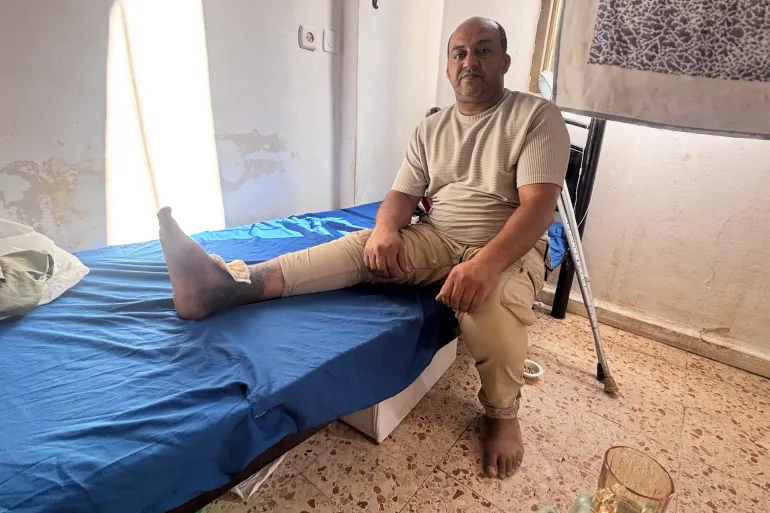
![Hakim Mar’i in his family’s apartment with his injured leg, which prevents him from working [Al Jazeera]](https://i0.wp.com/occasionaldigest.com/wp-content/uploads/2026/09/d9-1790406476.jpg?w=640&ssl=1)
![Members of the Zbeidat family sit on couches outside. The room they stay in is on the left [Al Jazeera]](https://i0.wp.com/occasionaldigest.com/wp-content/uploads/2026/09/s2-1790406485.jpg?w=640&ssl=1)
![The kitchen and bathroom the Zbeidats have are in the same room they sleep in [Al Jazeera]](https://i0.wp.com/occasionaldigest.com/wp-content/uploads/2026/09/s4-1790406489.jpg?w=640&ssl=1)