France is sending its military to protect key Yanbu oil terminal; Pakistan and Turkiye to hold military talks with Riyadh.
By Al Jazeera Staff, AP, DPA and Reuters
Published On 25 Sep 202625 Sep 2026
Saudi Arabia’s allies are rallying to support the country as the Houthi rebels step up attacks.
France confirmed on Friday that it is sending troops to guard the major oil terminal at Yanbu. Meanwhile, Saudi officials are meeting with peers from Pakistan and Turkiye to discuss options under their mutual defence pact.
Recommended Stories
list of 4 itemsend of list
French President Emmanuel Macron told broadcasters TF1 and France 2 that Paris is to send “soldiers, radars, and defence systems” to the Red Sea port of Yanbu.
“Not to involve ourselves in any conflict, but to protect the site,” he said.
Yanbu hosts major oil storage and refining facilities and is connected by the East-West Pipeline, which can carry up to seven million barrels a day.
The Houthis, also known as Ansar Allah (supporters of God), have repeatedly fired missiles and drones into Saudi Arabia, disrupting oil flows from the world’s largest energy exporter.
On Thursday, the rebel group said it had struck the facilities of state oil firm Aramco in Yanbu, and a “sensitive target” in Riyadh. Saudi forces said they had intercepted six ballistic missiles. Authorities have not confirmed any damage.
The foreign ministers of Saudi Arabia, Pakistan and Turkiye met on Thursday to arrange an “urgent meeting” of their military chiefs of staff under the Mecca Joint Defence Agreement, which treats an attack on one member as an attack on all, the Saudi foreign ministry said in a statement.
They also condemned Houthi attacks that they claimed targeted Mecca and other civilian sites.
However, doubt persists over what action Turkiye and Pakistan might take under the pact, which is yet to be officially triggered. Both of the Saudi allies are heavily involved as mediators seeking to bring an end to the conflicts across the Middle East.
Saudi Arabia’s grand mufti called on soldiers to be ready to lay down their lives to fight the Houthis, according to the Saudi state news agency.
The Iran-aligned Houthis have been battling the Saudi-backed government of Yemen for more than a decade. That conflict has been rekindled amid Israel’s wars against the Iran-aligned Hamas group in Gaza and the Hezbollah group in Lebanon, and the United States war on Iran.
At the United Nations General Assembly in New York, Yemen’s Vice President Abdullah Abdulkader al-Alimi-Bawzer warned that the Houthis were using shipping security “as a tool for blackmail”.
“It is taking hostage the entire global economy,” he said.
The US has not renewed military involvement, but Saudi Foreign Minister Prince Faisal bin Farhan Al Saud said the kingdom was “continuing to work with our partners in the US”.
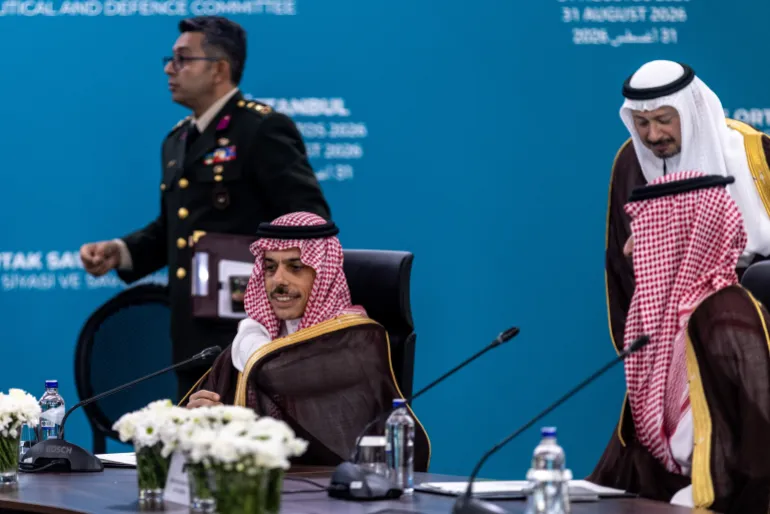
Saudi Foreign Minister Prince Faisal bin Farhan Al Saud in Istanbul, Turkiye [Burak Kara/Getty]
The Houthi targeting of Yanbu adds to the pressure on Saudi Arabia’s oil exports.
Earlier this month, the Houthis seized the Yemeni port of Mocha and several Red Sea islands, giving them significant control over the Bab al-Mandeb strait, which usually carries about 12 percent of global oil trade.
Strikes have also disrupted the operation of the East-West Pipeline linking Yanbu to export routes. Riyadh had been using it to export crude bypassing the Strait of Hormuz, which is restricted amid the Iran-US war.
However, the Houthis have now forced the Saudis to switch some exports back to Hormuz.
Brent crude rose more than 3 percent on Thursday, briefly topping $108 a barrel, before easing to $105.77 on Friday morning.
June Goh, a senior oil market analyst at Sparta Commodities in Singapore, said oil would likely stay above $100 a barrel as long as the war on Iran continued.
“With no clear resolution in sight, the gap in oil inventories globally is getting wider,” Goh told Al Jazeera.
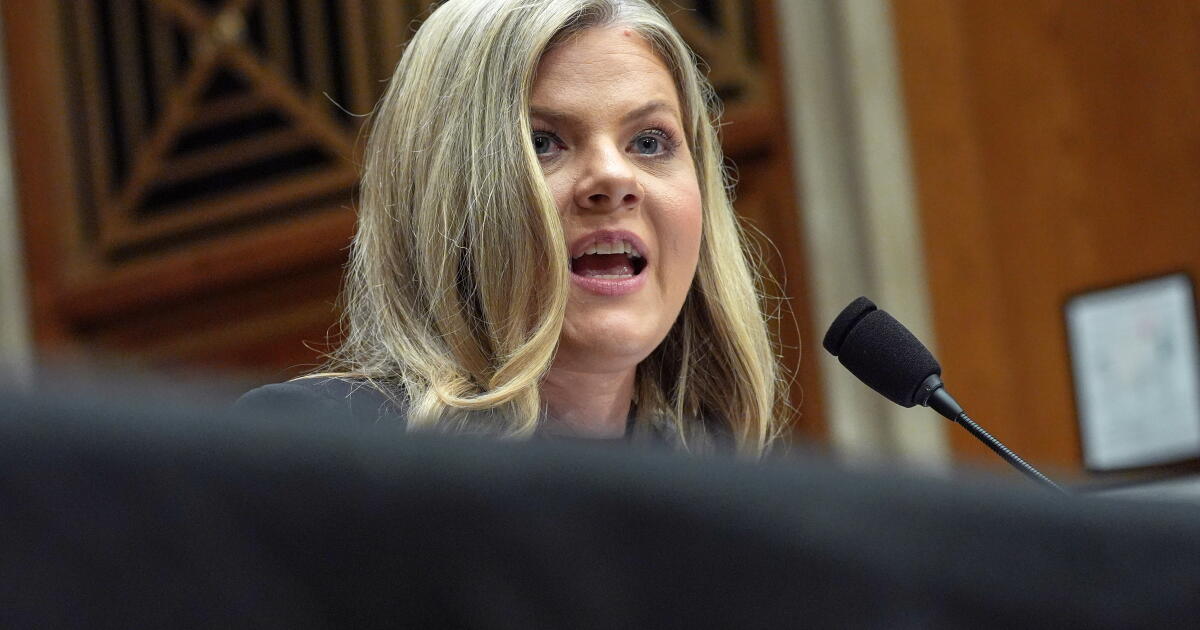
WASHINGTON — President Trump’s pick to lead the Food and Drug Administration voiced support for the safety of long-established vaccines at a hearing Thursday, even as senators questioned her about the White House’s efforts to upend childhood immunizations.
Dr. Heidi Overton, a physician serving as a White House adviser, has worked on a series of Trump health initiatives, including an executive order last month that called for splitting up and spacing out decades-old childhood vaccinations. Overton stood beside Trump in the Oval Office when he falsely remarked that the combined measles, mumps and rubella, or MMR, vaccine is “quite lethal.”
Senate Health Committee Chairman Sen. Bill Cassidy, a physician from Louisiana, pushed Overton to reject that statement and affirm the safety of FDA-approved vaccines.
“Right now every vaccine that is on the market has been determined to be safe and effective,” including the MMR vaccine, Overton said.
Cassidy repeatedly has tried to extract commitments from Trump health nominees to uphold vaccine standards, including from Health Secretary Robert F. Kennedy Jr., only to see the Republican administration push forward with efforts undermining their use.
“Kennedy gave me guarantees, and he did not keep them,” said Cassidy, a Republican. “If the president asks you to do something that goes against those guarantees you give us today, what will you do?”
Overton said she would “follow the statutory requirements” for FDA commissioners and give Trump her best advice.
If confirmed by the Senate, Overton would inherit a raft of other controversial projects at the agency, including a safety review of the nation’s principal abortion drug and new rules that make it easier to sell flavored electronic cigarettes. Both issues were a focus for Republicans and Democrats on the panel, who will vote on Overton’s nomination.
Overton sidesteps past statements on abortion pill
The FDA approved the abortion pill mifepristone in 2000 and repeatedly has affirmed its safety while broadening access, including allowing it to be sent through the mail. But Kennedy ordered an FDA review of the drug’s safety last year, following calls from antiabortion groups and lawmakers favoring abortion restrictions.
While working at the Trump-aligned America First Policy Institute, Overton called the FDA decision to allow mail delivery of mifepristone “dangerous for women,” referring to the practice as “chemical abortion on demand.”
In response to questions from Washington Sen. Patty Murray, Overton sidestepped her personal views on the drug, stating that it “has met the safety and efficacy determinations of the FDA.” Overton said she didn’t want to “prejudge” the FDA’s safety review of the pill.
“The FDA has said this is safe,” responded Murray, a Democrat. “We need someone in FDA to make sure this is done by science.”
Overton’s abortion views could complicate her efforts to win over two moderate Republicans on the panel: Maine Sen. Susan Collins and Alaska Sen. Lisa Murkowski. Both have bucked their party on the issue, supporting federal access to abortion. Collins is locked in a tight reelection race in which abortion access is a central issue.
But Collins focused her questions Thursday on a different issue: recent FDA decisions allowing new flavored e-cigarettes onto the market. Under previous administrations, including Trump’s first term, the agency had restricted sweet flavors that appeal to kids.
Overton pointed out that approval of the fruit-flavored products had the backing of FDA scientists, who determined the products met the standard of “appropriate for the protection of public health,” by helping adult smokers quit cigarettes.
“They believed that standard was met because so many adult smokers are using flavors preferentially,” Overton said.
To become commissioner, Overton will need a majority of votes from the 21-member health committee, followed by a positive vote from the full Senate.
Under the current administration, leading the agency has involved balancing Trump’s demands for slashing regulations — such as those for vaping products — alongside Kennedy’s interests in scrutinizing vaccines, drugs and food ingredients.
The previous FDA head faced numerous challenges before quitting
Those challenges dogged the tenure of the previous FDA head, Dr. Marty Makary, who resigned in May. Makary’s time at the agency was defined by scientific disputes, leadership changes and a string of media stories detailing low morale and internal dysfunction among staffers. The FDA has lost about 20% of its employees to layoffs, buyouts, retirements or resignations since Trump took office.
Overton studied under Makary at Johns Hopkins University, where she received a doctoral degree in clinical research after earning her medical degree at the University of New Mexico.
Like Makary, Overton has no experience running a large bureaucracy, a critical skill for steering the FDA’s 16,000 staffers spread across numerous U.S. and international locations.
In financial disclosure forms, Overton reported no investments in healthcare or food companies. That’s a stark contrast to Makary and other recent FDA nominees who have had to divest investments or cut other financial ties with companies regulated by the FDA.
Overton reported $50,000 to $100,000 in student loans.
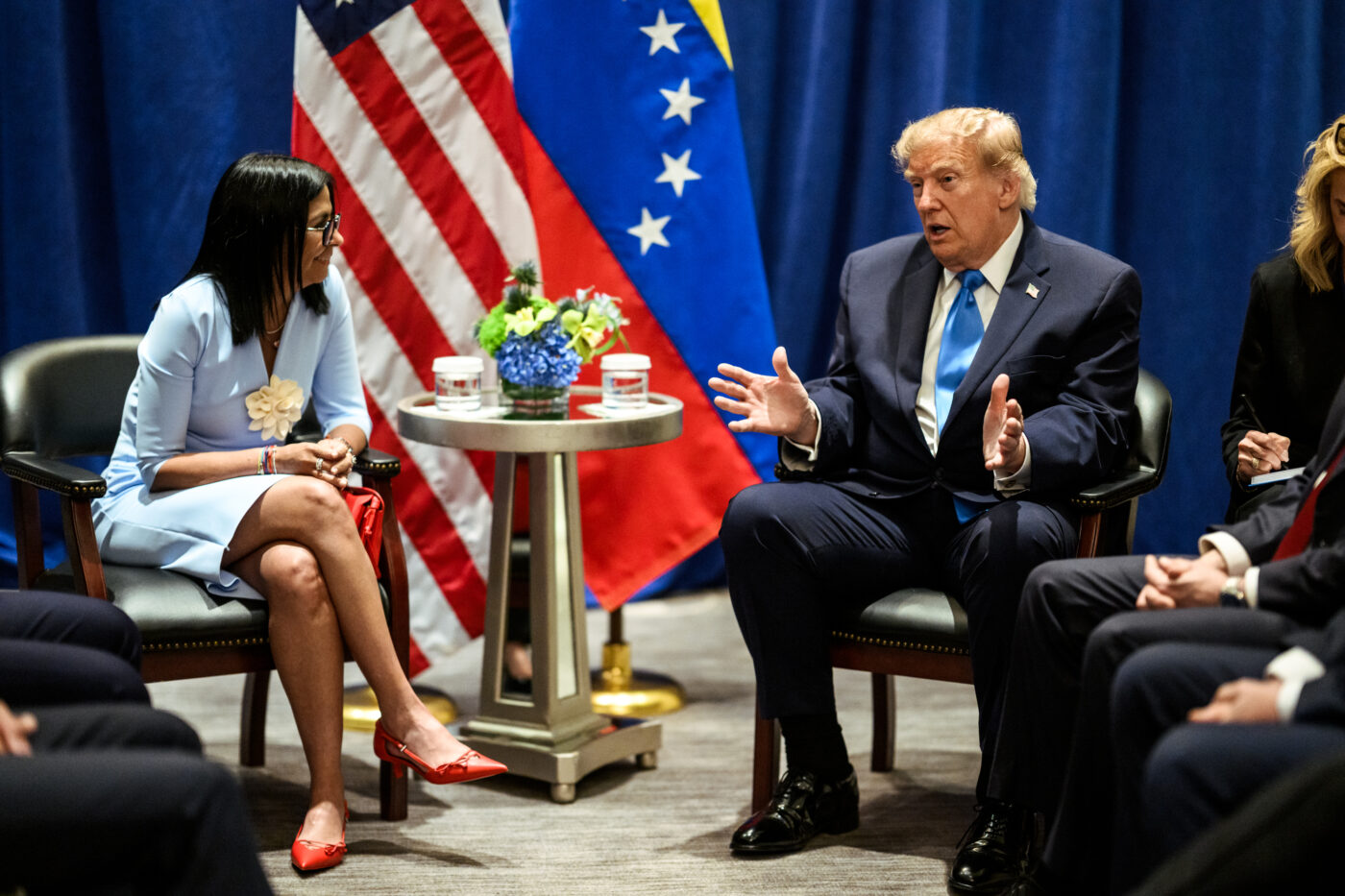
Trump boasted that “to the victor belong the spoils” in reference to a recent oil deal with Venezuela. (Presidential Press)
Caracas, September 22, 2026 (venezuelanalysis.com) – Venezuelan Acting President Delcy Rodríguez and US President Donald Trump held a first face-to-face meeting on Tuesday night in New York amid the rapid rapprochement between Washington and Caracas.
The closed-door gathering took place at the Lotte New York Palace hotel during a reception for world leaders participating in the ongoing 81st session of the United Nations General Assembly. Trump was flanked by Secretary of State Marco Rubio, Treasury Secretary Scott Bessent, and other White House officials, while Rodríguez was joined by Foreign Minister Félix Plasencia.
The Venezuelan government published photos of the meeting, with the two leaders smiling for the cameras in front of the countries’ flags.
On her social media channels, Rodríguez praised the “historic” sit-down with Trump and reported that the discussions focused on strengthening “cooperation in strategic areas such as energy and mining.”
“We thanked President Trump and his government […] for its support for Venezuela’s reinsertion into multilateral spaces,” she stated. “Venezuela and the United States share a historic relation that, in this new era, we must drive forward through dialogue.”
Tuesday’s summit was the first between US and Venezuelan leaders since a brief encounter between Barack Obama and Nicolás Maduro during the 2015 Summit of the Americas in Panama.
Rodríguez is also set to be the first Venezuelan head of state to participate in the UN General Assembly since Maduro in 2018, during Trump’s first term. In 2019, then as vice president, Rodríguez addressed the UN General Assembly, denouncing US sanctions as a form of “state terrorism” and accusing Trump of “sticking his imperial claws” against Venezuela and Cuba
The high-level meeting follows a rapid diplomatic rapprochement between Caracas and Washington following the January 3 US bombings and kidnapping of President Nicolás Maduro and First Lady Cilia Flores. In the months since, the acting Rodríguez administration has fast-tracked energy and mining reforms tailored to US and Western corporate interests while also realigning the country’s foreign policy.
The Venezuelan acting president and her diplomatic team have yet to mention Maduro in their New York trip. Maduro and Flores are presently detained in Brooklyn, some 10 miles from the UN headquarters, and facing drug trafficking conspiracy charges. Both pleaded not guilty.
At the time of writing, the White House has offered no details on Tuesday’s summit with Rodríguez.
However, in his UN speech earlier in the day, Trump hailed the US’ military operation to kidnap “outlaw dictator” Maduro.
“Our actions in Venezuela are proof that the United States will no longer permit threats to America to gain a foothold anywhere in the Western Hemisphere. And if necessary, we will use our unmatched military might to secure the vital national interests of the United States,” he said.
Trump went on to boast about US corporations entering the Venezuelan energy sector and praised a recent deal giving privileged access to more than 20 percent of the Caribbean nation’s reserves to a Pentagon-controlled firm as “perhaps the biggest deal ever made.”
“To the victor belong the spoils,” he added. Rodríguez and the Venezuelan delegation were shown listening to Trump’s speech in the UN live broadcast.
Prior to the high-profile Trump sit-down, Venezuela’s acting president held meetings with Inter-American Development Bank (IDB) President Ilan Goldfajn, International Monetary Fund (IMF) Managing Director Kristalina Georgieva, and World Bank President Ajay Banga to discuss Venezuela’s reintegration into international financing and cooperation mechanisms.
“We are promoting new stages of engagement with the international financial system and working to ensure joint efforts for the benefit of the Venezuelan people. Venezuela’s future is built through partnerships, hard work, and the firm determination to keep moving forward and creating opportunities for our nation,” Rodríguez said.
She also met with UN Secretary-General António Guterres, with whom she reportedly discussed Venezuela’s political and economic situation, cooperation with the UN, human rights, and dialogue.
The Venezuelan leader likewise held a brief conversation with Spanish Prime Minister Pedro Sánchez and Foreign Minister José Manuel Albares.
PM Anthony Albanese asks Apple CEO Tim Cook to back Canberra’s online safety laws to ‘keep Australians safe’.
Published On 20 Sep 202620 Sep 2026
The Australian government is seeking support from global tech giants as it works to strengthen the country’s online safety laws and artificial intelligence (AI) regulations.
Prime Minister Anthony Albanese, who met Apple CEO Tim Cook at the tech company’s headquarters in Cupertino, California, on Saturday, said that “Australia can’t do it alone” when it came to protecting children from the dangers of the internet.
Recommended Stories
list of 3 itemsend of list
“We spoke about what we’re doing to protect children from online harm and the work ahead,” Albanese wrote on social media.
“We’re putting stronger rules in place to keep Australians safe online,” he said. “And now, big tech companies like Apple are stepping up too.”
Albanese, who is also in the United States for the United Nations General Assembly, used his trip to call for stronger AI regulation after dire safety warnings from industry leaders.
Australia will introduce new standards for AI by the end of the year, he said.
In a video posted to his X account, Albanese said his Labor government is “making sure technology works for Australians”, and not the other way around.
In a post on X, Cook also said he shared with Albanese new “strong and intuitive controls to help keep kids safe online”.
New Australian legislation unveiled this month would place a “duty of care” requirement on the firms behind popular platforms, such as Facebook, TikTok and Instagram, and allow users to turn off their algorithms.
The draft laws will be introduced to parliament later this year after consultation with social media companies, industry bodies and civil society groups.
The opposition Liberal-National Coalition opposes the bill “in its current form”, according to a statement published on September 10, saying that it “contains inadequate safeguards for free speech and journalism, and leaves too much power in the hands of the Communications Minister”.
Australia implemented legislation barring children under 16 from social media platforms last year as part of a world-first crackdown designed to protect children from online bullying and “predatory algorithms”.
However, data last month found that Australians under 16 continued using social media apps such as Instagram and TikTok despite the ban.
Kremlin calls UK’s support for Ukraine an endorsement of ‘terrorism’ after recent escalation of weapons supplies.
Published On 18 Sep 202618 Sep 2026
Russia has stepped up pressure on Ukraine’s allies, summoning Britain’s top diplomat in Moscow over arms shipments to Kyiv and seizing Russian assets of several Western firms.
The Russian Ministry of Foreign Affairs summoned Britain’s charge d’affairs, Danae Dholakia, on Friday, issuing a formal protest over the UK’s “further increase” in weapons to Ukraine.
Recommended Stories
list of 3 itemsend of list
“London is placing itself in the position of an accomplice to the bloody atrocities committed by the Kyiv regime, which can only be characterised as terrorism and war crimes,” the ministry said in a statement.
Britain has maintained its support for Ukraine and says it will stand “shoulder to shoulder” with Kyiv and will provide whatever military equipment it needs, saying just last month that it will share classified weapons information.
Moscow’s move comes the day after Polish Prime Minister Donald Tusk warned that Russia might be preparing to launch hybrid drone and missile strikes against countries that support Ukraine, including Poland. He said that such attacks would be framed as accidental, with the intention of weakening NATO states’ resolve to invoke collective defence provisions in the event of an attack on one of its countries.
French President Emmanuel Macron said on Friday that the threat posed by Russia’s shadow operations was growing across Europe and that Moscow had targeted France with hybrid attacks in the past few weeks.
“The Russian hybrid threat against Europeans and against France has intensified,” he said after a meeting with French political leaders.
France’s interior minister had met regional prefects to step up “vigilance in response to the Russian hybrid attacks”, Macron said, adding that he had ordered “the government to prepare a plan to protect our critical infrastructure” and the “most sensitive” defence industry and technology sites against drone and cyber-attacks.
Moscow seizes French, Swiss firms
As Russia steps up pressure on Ukraine’s political allies, it is also targeting Western companies.
Moscow has ordered the seizure of Russian businesses and assets of Swiss food giant Nestle and three French firms: retailer Auchan, DIY chain Lemana Pro (formerly Leroy Merlin) and logistics firm FM Logistics.
President Vladimir Putin signed a decree late on Thursday that changed the firms’ Russian operations to a new entity, LEV Management, which is managed by a Russian Ministry of Interior general, according to Novaya Gazeta Europe.
Nestle said it was still “assessing” the situation and its options but it remains “committed to taking all necessary steps to protect its rights”.
Kremlin spokesman Dmitry Peskov told reporters on Friday that one of the reasons behind the decision was because Nestle and Auchan are companies from “unfriendly” countries.
Their assets are only under “temporary administration” and that no decisions have been taken as of yet, Peskov added.
Overnight Russian strikes hit multiple regions in Ukraine, sparking several fires across the country, as President Volodymyr Zelenskyy is to host the inaugural Carpathian Eight summit of several European countries.
They include Romania, Poland, Slovakia, Czech Republic, Austria, Hungary and Serbia, with the European Union also set to discuss regional cooperation.
Hungary and Slovakia have refused to send Kyiv direct military assistance in the past, though Poland and Romania remain staunch allies.
World Cup winners Spain choose Cueta to announce Nations League squad in solidarity with migration crisis in region.
Published On 18 Sep 202618 Sep 2026
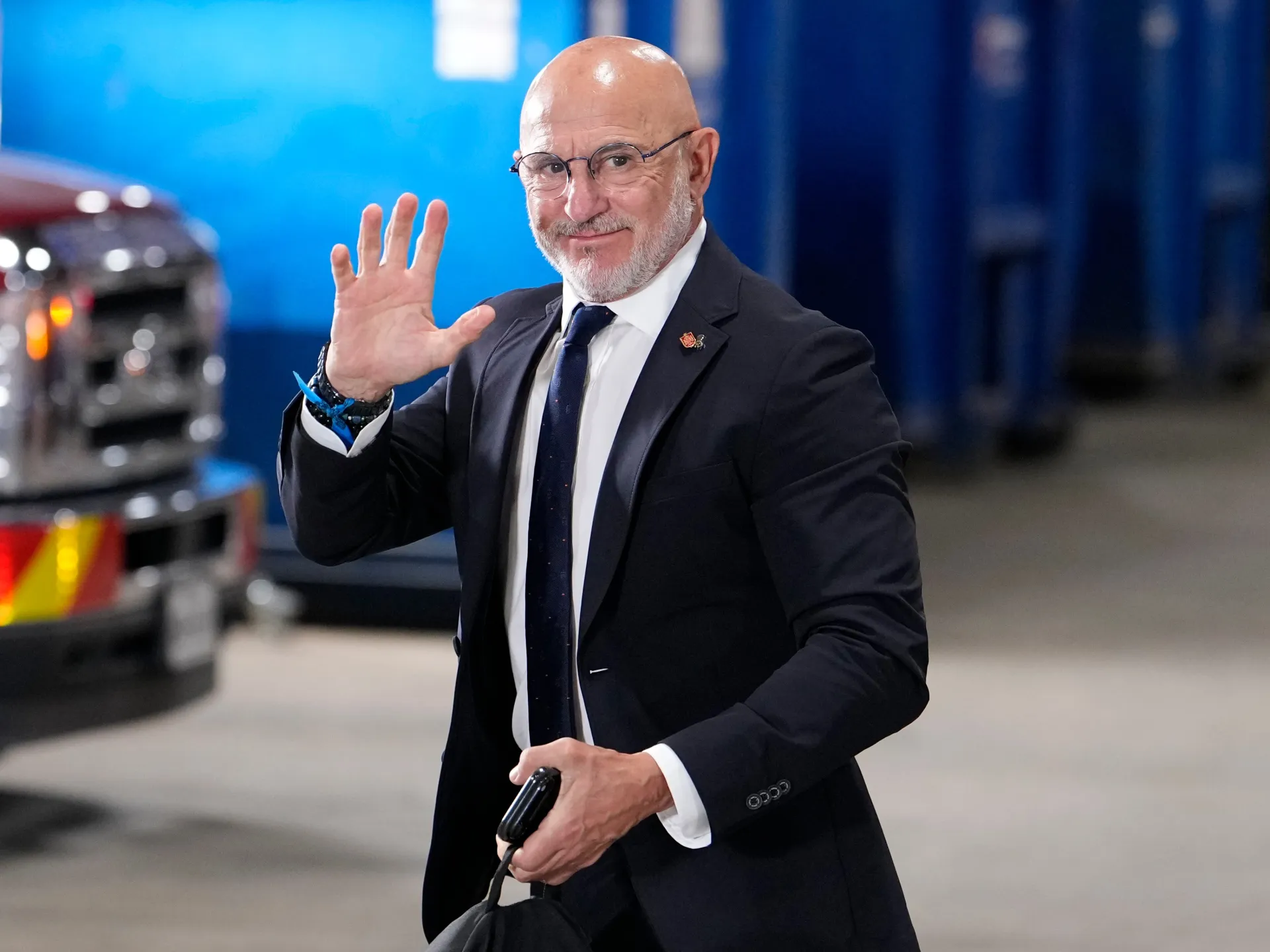
Spain coach Luis de la Fuente announced his Nations League squad from Ceuta on Friday in a show of support for the Spanish city in northern Africa that has become the centre of a migration crisis.
For his first squad announcement since Spain won the World Cup in July, De la Fuente revealed his list in a video featuring him in Ceuta accompanied by residents of the Spanish exclave. More than 70,000 people stormed across the border in late July from Morocco, with more than 100 dying in the chaos. Most quickly returned, but a few thousand remain in the city of just over 80,000.
Recommended Stories
list of 4 itemsend of list
De la Fuente did not directly mention the border crossing or its impact, but did say: “This is Ceuta, this is Spain.” It echoed the rise in sentiment in Spain that Ceuta – a territory that until the mass crossing was mostly an afterthought for most mainland Spaniards – needs to be supported.
Spain opens the Nations League against England at Wembley Stadium on September 26 , when its players will wear two stars on their shirts for the first time since winning their second world title.
After visiting London, Spain will host Croatia on September 29 and the Czech Republic on October 3 , before visiting Croatia on October 6 .
De la Fuente kept his World Cup squad mostly intact.
Inter Milan goalkeeper Josep Martinez replaces Barcelona’s Joan Garcia, who is out with a minor knee issue. Real Madrid defender Dean Huijsen is in for Marcos Llorente, who retired from international football. Fermin Lopez replaces fellow Barcelona midfielder Gavi, while Espanyol striker Roberto Fernandez got his first call-up, replacing Borja Iglesias.
Ceuta is one of two Spanish territories on the north African coast along with Melilla. Ceuta has been in Spanish possession since 1580. Christians and Muslims, Spanish and Moroccan residents and day workers all live there in relative harmony behind a border fence that many migrants from across Africa attempt to cross or swim around for a better life in Europe.
A Real Madrid supporters’ group has demanded a public apology from their star striker Kylian Mbappe and two of his teammates after the trio declined to fully wear a T-shirt in support of the people of Ceuta.
Mbappe, Vinicius Junior and Ibrahima Konate wore a tribute shirt along with the rest of the squad ahead of Madrid’s 3-2 win at Elche on Tuesday in La Liga, although theirs were partially rolled up to cover the message.
Spain’s Nations League squad:
Goalkeepers: Unai Simon (Athletic Bilbao), David Raya (Arsenal), Josep Martínez (Inter Milan)
Defenders: Aymeric Laporte (Athletic Bilbao), Pau Cubarsi (Barcelona), Eric Garcia (Barcelona), Marc Pubill (Atletico Madrid), Alejandro Grimaldo (Atletico Madrid), Marc Cucurella (Real Madrid), Dean Huijsen (Real Madrid), Pedro Porro (Tottenham).
Midfielders: Rodri Hernandez (Barcelona), Pedri Gonzalez (Barcelona), Fermin Lopez (Barcelona), Martin Zubimendi (Arsenal), Mikel Merino (Arsenal), Fabian Ruiz (Paris Saint-Germain), Alex Baena (Atletico Madrid).
Forwards: Lamine Yamal (Barcelona), Dani Olmo (Barcelona), Ferran Torres (Paris Saint-Germain), Yeremy Pino (Crystal Palace), Nico Williams (Athletic Bilbao), Mikel Oyarzabal (Real Sociedad), Victor Munoz (Liverpool), Roberto Fernandez (Espanyol).
Liam (L) and Noel Gallagher are returning with their band Oasis next year on a European and U.S tourCredit: PAOne of the bands tipped to support Oasis is CastCredit: Getty
Indie rockers Cast have already supported Oasis on their 2025 reunion to and bookies now have the at 5/4 favourites to play at Oasis’ Knebworth concerts.
Bookies William Hill also have Manic Street Preachers as the next favourite band to join the Hertfordshire gig after first supporting Oasis there in 1996.
Sign up for the Showbiz newsletter
Thank you!
Other rumoured acts rumoured to appear include, The Charlatans, Ocean Colour Scene, Kula Shakers, and The Chemical Brothers.
Bookies are also anticipating Noel and Liam Gallagher will release a new album as Oasis next year and have them headlining Glastonbury at 14/1.
And Manic Street PreachersCredit: GettyOasis will also perform in Paris for the first time since 2009Credit: Getty
But they are also giving odds that the brothers will split up before the Paris leg of next year’s tour.
“With the inclusion of Knebworth in Oasis’ 2027 tour dates announcement – on what will be 31 years since their historic concerts at the Hertfordshire venue – there’s a frenzy of speculation on who will support the Britpop titans,” spokesperson for William Hill, Lee Phelps.
“It is safe to say next year’s Knebworth gig will be nostalgic for many, and we make it 1/5 for any of their 1996 support to make a reappearance in the 2027 revival of one of Britpop’s most iconic performances.”
From they they will perform at Manchester City’s ground, Noel, 59, and Liam, 53, will fly to Europe for a round of shows including France, where Oasis will play for the first time in Paris since the group split in 2009.
The shows in Paris will begin on 23 July, before they fly to Italy for shows at the Stadio Olympico in Rome which start on 29 July.
Noel and Liam will then move stateside after the European shows before returning to Ireland and, as The Sun exclusively revealed earlier this year, Noel and Liam will then end their triumphant run of shows at Knebworth.
The four performances there will begin on September 11.
SACRAMENTO — SEIU United Healthcare Workers West President Dave Regan allegedly tried to “extort” an SEIU state council endorsement of the billionaire tax ballot measure from other California union leaders, according to an investigation commissioned by Service Employees International Union.
The investigation and a second inquiry conducted on behalf of SEIU California found that Regan allegedly threatened and intimidated women who worked for the state council, and in one instance, physically assaulted a former executive director of the labor organization.
Regan, in an interview with The Times, denied the allegations that he attempted to extort from union officials. He also denied assaulting the executive director and said he did not threaten female labor leaders. He repeated a counterclaim he made to the union: The allegations against him are retaliation for his advocacy for Proposition 40, the proposed wealth tax that will be on the Nov. 3 ballot.
“They are internally contradictory, they are fundamentally biased, and maybe most importantly, they are politically motivated,” Regan said about the probes.
The law firm hired by the national union investigated Regan’s claim of retaliation but found the allegation could not be substantiated.
David Huerta, the president of SEIU United Service Workers West, and three other labor leaders filed a rare formal union charge against Regan in February.
The national union of SEIU has ultimate authority to resolve charges filed under its constitution and hired the New York labor law firm Cohen, Weiss and Simon to independently investigate the claims. The firm interviewed 18 current and former SEIU leaders and others in the California labor movement over nearly three months, according to its report.
The law firm’s report, reviewed by The Times, supported Huerta’s claim that on Dec. 3 Regan suggested the state council could be investigated for “governance issues” if the council did not endorse the billionaire tax on the November ballot. Huerta was then president of SEIU California.
“During the investigation, Huerta reported that he left the conversation with Regan feeling ‘extorted’ and believing that Regan might report unspecified governance concerns to the U.S. Department of Labor, which is known to be unfriendly to labor unions under the Trump administration, if state council did not support the billionaire tax,” the report said.
The law firm’s investigation substantiated an allegation that on the same day, Regan threatened Tia Orr, executive director of SEIU California, over the council’s position on the ballot measure. The SEIU probe found an allegation that Regan also assaulted one of Orr’s predecessors in the job, Courtni Pugh, in 2009, to be credible.
“SEIU California leaders filed charges against Dave Regan alleging a pattern of bullying, threats, abuse, harassment, physical violence and attempted extortion,” Christopher Calhoun, a spokesperson for SEIU California, said in a statement. “Initial investigations pertaining to these charges substantiated most of SEIU California leaders’ allegations.”
State union officials have temporarily banned Regan from the offices of SEIU California, a council of union leaders that coordinates political operations for all SEIU-affliated unions in the state, to protect female employees, according to the state council’s report.
Democratic National Committee delegate Courtni Pugh speaks at the California Democratic Party breakfast in Chicago on Aug. 20, 2024.
(Myung J. Chun / Los Angeles Times)
“Sufficient evidence was also found to substantiate that Regan has engaged in a pattern of subjecting former and current SEIU California female directors to intimidating and threatening physical behavior and verbal abuse,” the report commissioned by the state council said.
Leaders and workers within the labor movement describe Regan’s alleged behavior as an open secret at SEIU, which represents more than 2 million members nationwide and is the largest union in California.
The law firm hired by SEIU submitted its investigation report on July 28. Regan remains in his job as an administrative process moves forward with hearings. Regan will get a chance to make his case before SEIU determines any appropriate disciplinary action.
SEIU President April Verrett has the power to temporarily suspend Regan as the process plays out.
“SEIU is deeply committed to the safety and well-being of all people, including our members, staff, and the public, and takes these matters seriously,” said Dan O’Sullivan, a spokesperson for SEIU. “As soon as these concerns were raised, we initiated a deliberate and thorough process and retained independent, outside investigators to look into these allegations. Our process is active and ongoing, and the next steps include appointing a hearing officer and holding an evidentiary hearing through which all parties will be afforded due process.”
At a California Federation of Labor event on Dec. 3, Regan told Orr that “state council better endorse this measure by Jan. 1 or I’m coming for you,” she told investigators in both probes.
Regan rode to the airport with Orr and sat next to her on the plane “as part of a continued effort to intimidate her into providing state council’s support for the billionaire tax,” Orr told the investigators. As they left, Regan tapped his watch to suggest her time was running out, the report stated.
Regan told investigators that he learned last year that Orr was working behind the scenes to undermine his billionaire tax proposal. If approved by voters, the measure will retroactively apply a one-time 5% tax on the net worth of billionaires who were residing in California as of Jan. 1, 2026.
Regan denied that he threatened Orr, calling the claims “completely fabricated.”
“And again, the source of that is somebody who is not in favor of Proposition 40, and somebody who has not been leading the state council with practices of good governance,” Regan said in an interview.
Regan also denied intimidating Orr to investigators hired by the national union, but offered a different perspective on the SEIU California executive director. He said he traveled with Orr as a friend that day, had previously supported her professionally and offered her a job, according to the report.
The law firm said Orr believed that Regan was a “bully” who mistreated women of color and made it difficult for them to do their jobs at SEIU and had even “fought someone” when he didn’t “get his way.” Regan denied those allegations, including that he mistreated women of color.
“Orr therefore took Regan’s statement that he was ‘coming for’ her as a threat to her job security and her physical safety. She contemporaneously shared this fear with a colleague. Moreover, her response to Regan’s statement is reasonable because three interviewees — both current and former employees of state council — corroborated that Regan has verbally berated and at times physically intimidated or assaulted former state council executive directors,” the report stated.
The investigation commissioned by the national union concluded that UHW then launched a “fishing expedition” into the state council’s finances under Orr’s leadership, but did not substantiate a claim that Regan defamed her to allies of the labor movement.
The SEIU investigators also wrote that the claim that Regan assaulted Pugh was substantiated.
Pugh told investigators that Regan kicked open her office door and “jacked” her against the wall, according to the investigative report. While she was “pinned,” Regan pressed his finger into her chest and screamed that she was a “dumb ass,” the report said.
When he left her office, Pugh fell to the ground and began to hyperventilate, according to the report. Two colleagues found her, helped her breathe into a paper bag and walked her home, the report said.
Regan denied the allegation.
“It is a complete fabrication and a fiction made by somebody who has all of the incentive possible to critique or trash or criticize UHW generally, and me specifically, and no, there was no mention of it for 17 years,” he said.
The report also concluded that Regan recently threatened to sue SEIU Local 221 President Crystal Irving in an attempt to silence her from warning others about the alleged assault against Pugh.
Regan said the national union’s investigation was “fundamentally flawed” because it stated that Pugh “had nothing to gain from sharing her story” with Irving. Pugh, now a political consultant, has worked against the billionaire tax ballot measure, something Regan said gave her a reason to lie about him.
Pugh called Regan’s response “offensive to the women” who she said objected to his behavior. She said she detailed the alleged incident at the time to board members who oversaw her work and SEIU leadership. The encounter, she said, was well-known.
“I told my colleagues and organization leaders when it occurred,” Pugh said in a statement. “I was asked to participate in the later investigation because so many people had heard about the 2009 incident over the years. I chose to participate in the investigation because I saw that his behavior had continued and in hopes that no one else would have to endure this kind of treatment from him.”
Regan, in his interview with The Times, also denied the allegation that he attempted to force the state council to support the billionaire tax.
David Huerta, president of SEIU-USWW, speaks during a Memorial Day action in Los Angeles on May 21.
(Kayla Bartkowski / Los Angeles Times)
“Huerta then asked Regan if it was his intention to initiate an investigation,” according to the report. “Regan replied, ‘I don’t have to; there are others who would.’ In that conversation, Regan demanded a full endorsement of the billionaire’s tax initiative measure by the state council by Jan. 1.”
Regan told investigators he raised governance issues with Huerta and could not remember if he demanded the council’s support for the billionaire tax during the conversation, though he said he had been seeking the endorsement for months, according to the national union’s report.
“The investigation found that Regan likely suggested he would cause the DOL to investigate state council,” the report said. “According to Regan, he did discuss with Huerta that an investigation was possible.”
The executive board of SEIU California later voted in July to remain neutral on Proposition 40, marking a blow to Regan’s efforts to overcome an onslaught of opposition from California Gov. Gavin Newsom, billionaires and liberal groups concerned that the measure could backfire and reduce state tax revenue collected from the ultra wealthy.
Regan filed a counterclaim with SEIU in April, alleging that the state council initiated the complaint and launched its own investigation into him as a retaliatory “character assassination” for his advocacy for the billionaire tax, something the SEIU report said was not substantiated.
The investigative report submitted to the national union raised questions about Regan’s tactics to earn support for his causes.
Investigators said their probe “revealed that Regan has been associated with similar extreme efforts to secure political endorsements in the recent past.”
The firm reported that it reviewed text and email messages in which a representative for Regan offered to drop part of his counterclaim “in exchange for the state council’s endorsement of Tom Steyer for governor.”
“In an email response to that offer, a State Council representative stated they have ‘no interest in a behind-the-scenes trade involving dropping internal charges of misconduct in exchange for the making of a political endorsement.’”
The person working with Regan who sent the offer denied to the law firm that the conversation constituted extortion.
“This denial is not credible,” the firm wrote in the report. “The Regan Offeror stated that they were ‘extremely careful’ with their language when conveying Regan’s offer, as they were aware that what they said could be misconstrued as extortion. That the Regan Offeror took such care suggests that the offer was likely extortion.”
Regan also denied the claim, which he called a “complete fabrication.”
A second investigation by the Los Angeles law firm Barboza & Associates, which was hired by SEIU California, found sufficient evidence to substantiate a complaint that Regan bullied Jessica Bartholow, the council’s government relations director.
Bartholow reported to her superiors at SEIU California that Regan stood uncomfortably close and hovered over her at the bar at a fundraiser for the state Senate leader in San Diego in March as tensions flared over the billionaire tax. He then screamed an expletive at her in front of a crowd of lawmakers and lobbyists when she walked away from him, according to the state council’s report.
“Bartholow was scared and her heart was pounding,” investigators wrote in the report for the state council that was reviewed by The Times. “Bartholow had heard that Regan could be violent, and she did not know what he was going to do.”
Regan told investigators and The Times that he swore at Bartholow but denied that he physically intimidated her. Regan said he was upset with her over an allegation that she previously threw “four staff members of UHW out of the state council office.” The report commissioned by the state council discredited his claim and said “Bartholow did not throw UHW staff out of the SEIU California office or treat them rudely or disrespectfully.”
Lawyers hired by the state council said Regan intimidated another woman within the union during their investigation.
The state council investigation included an allegation that Regan physically and verbally intimidated Susan Li, an assistant director of external organizing for SEIU Local 721, on April 30 after a meeting with the Assembly Speaker’s Office and the California Primary Care Assn. Regan was allegedly upset with David Green, president of SEIU Local 721 who had just left for the airport, and began randomly screaming at Li, according to the investigative report on the probe commissioned by the state council.
Regan described the encounter as a conversation and said he did not scream at Li.
The state report said Regan “attacks female staff members instead of taking his concerns to the individuals who had the authority to make decisions.”
“Time and again, Regan unleashed his hostility toward the women who worked for SEIU California, and one from Local 721, in a physically intimidating and verbally abusive manner,” the report concludes.
Regan vigorously denied this assertion.
The state council report said Regan often berated Pugh when she worked at SEIU.
“Every week it was, ‘What the f— were you doing in this meeting? Why did you say that? You dumb ass bitch,’” the SEIU state report said. “Every time Regan called Pugh, she put him on speaker phone so everyone could hear him call her a f—up and tell her to f— off. Not one person said anything.”
Pugh told investigators hired by the national union that Regan continued to belittle her in meetings until she eventually resigned from the state council. She said she believed he formed a coalition to force her out of her job and that she would have been fired if she had not stepped down.
Terry Brennand, director of pensions, revenue and budget at SEIU California, told investigators that he and Mary Gutierrez, now deceased, heard Pugh sobbing in her office after Regan allegedly assaulted her.
“Brennand believed Pugh was in shock and traumatized,” the state SEIU report stated. “Pugh seemed frozen, terrified and not quite clear-headed. It was not the usual Pugh, who was direct, thoughtful and expressive. She was shaking and clearly traumatized.”
Three current and former SEIU California executive directors, all women of color, told Brennand that Regan had bullied them, the report said.
“That’s his forte,” Brennand said to investigators. “That’s his wheelhouse.”
Regan denied that he has a problem with women, or women of color.
“It is 100% false,” he said.
Lorena Gonzalez, president of California Labor Federation, said Regan’s union is overwhelmingly composed of women and women of color, who just reelected him to a position he’s held for 16 years.
“Ultimately they have the ability to make this determination of whether he’s an appropriate leader, which they just made again,” she said. “I think what’s most important is that we have to keep our eyes on the fact that Medi-Cal is being cut and we have no solution but the billionaire’s tax to fill that cut.”
Times staff writer Kevin Rector contributed to this report.
KATIE Piper has called out cruel abuse from online trolls over her National Television Awards look – as celebs rallied with their support.
Taking to Instagram, the writer and presenter shared a video addressing upsetting online comments she’d received.
Katie Piper spoke out after receiving cruel online comments about her appearanceCredit: Instagram / katiepiper_Presenter and writer Katie attended the National Television Awards on Tuesday nightCredit: Getty
She was left with severe facial burns and blindness in one eye after an acid attack in 2008Credit: GettyWhile at the event, Katie posed for photos with her fellow stars of Loose WomenCredit: Getty
Katie noticed notifications popping up on her phone after Woman & Home posted a red carpet interview featuring her.
She continued: “The comments are going mad. I thought, “Oh why?” and it’s just endless.
“Oh, look at her. What happened to her face? Oh, she’s overdone it on the filler.
“Oh my God, why are we talking about the hair, the hair’s not the problem. The face, blah blah.”
“And you’re just like, “I am a normal person, I am a real person”. I’m just out here trying to do my best, trying to live my life.
Katie added she had replied to these commenters, but later felt it wasn’t the right move.
She said: “I started replying to them all saying, “What’s it got to do with you how I look? Why are you policing women’s appearance?
“What if this was even a choice? Why does it matter to you how I look?”
Celebrities soon offered support, as Lisa Snowdon wrote: “You are the most beautiful inside and out Katie- never forget that.”
Morning Live‘s Rav Wilding penned: “Pipes, as your husband knows as your kids know and how all your friends know, you ARE beautiful.”
Matt Goss shared: “This breaks my heart you’re amazing and you have every right to let people know how you feel.
“You are genuinely an inspiration. sending so much love.”
Myleene Klass posted: “Katie. I was with you that night and I was over the moon to be with you.
“Your company, your energy, your funny one liners….and you also happened to look incredibly BEAUTIFUL. They don’t matter. They’re trying to. They just don’t x.”
Dannii Minogue wrote: “Katie – you, your words, your kindness and your digital footprint, you can be proud of. By all means take time for you, but do not let them take your light.”
NEW YORK CITY: Saudi Arabia’s ambassador to the UN warned the Security Council on Thursday that “the international community cannot call for de-escalation” in Yemen “while at the same time allowing the continued flow of support that enables this (Houthi) militia to continue its hostile and criminal conduct.”
The warning from Abdulaziz Alwasil came during an emergency council session to discuss Houthi attacks against the Kingdom this week. It was requested by the UK, the penholder on Yemen, and Bahrain.
He said the latest strikes on Saudi cities, which began on Tuesday, were not an isolated episode but “an extension of a systematic, hostile approach pursued by this militia since its coup against the legitimate Yemeni government in 2014,” and part of a pattern that has also targeted commercial shipping and threatened freedom of navigation in the Red Sea and the Bab Al-Mandeb Strait.
He said a press statement by the council on Aug. 7 condemning Houthi missile strikes on the Kingdom since July 13, and attacks against commercial vessels since July 22, had gone unheeded, and the militia had answered the international warnings with further escalation.
Alwasil said Saudi Arabia had backed nearly every major effort to end the Yemen war — including the Gulf Initiative, the transitional period, the National Dialogue Conference, the Geneva, Kuwait and Stockholm talks, a 2021 initiative and the UN-brokered truce in 2022 — but the Houthis had repeatedly met those efforts with renewed violence.
“My country affirms its legitimate right to defend itself, its citizens and residents, and to safeguard our national resources,” he said, adding that Riyadh “will not hesitate to take all measures necessary to deter Houthi attacks and to protect our security, sovereignty and territorial integrity.”
He called on the council to enforce Resolutions 2216, which imposed an arms embargo and sanctions on the Houthis, and 2722, which demanded an immediate halt to Houthi attacks on commercial shipping in the Red Sea, and to send “a clear and firm message” that leaves no room for misinterpretation that attacks on the Kingdom must stop.
Yemen’s ambassador, Abdullah Alsaadi, affirmed Sanaa’s “full solidarity with the Kingdom of Saudi Arabia, its leadership, government and people,” and its “absolute rejection of the use of any part of the Yemeni territory as a platform for launching missiles and drones, or for threatening the security of the Kingdom or any neighboring country.”
He said the attacks amounted to the “hijacking” of Yemen’s own sovereign decisions over war and peace, carried out by a militia that operates outside of state institutions and was “militarily and technically supported by the Iranian terrorist regime.”
Saudi Arabia had shown “a great degree of restraint,” Alsaadi said, and been “the principal partner of the Yemeni people and state” in supporting institutions, salaries and services throughout the war. But he cautioned that “restraint should not be misconstrued as weakness.”
The security of Yemen and of Saudi Arabia “cannot be separated from one another,” he added, as he called for full enforcement of the arms embargo on the Houthis, and accountability for those who finance and arm the group.
NEW YORK CITY: A five-member international bloc known as the “Quintet” on Thursday rejected the prospect of any “parallel governing structures” in Sudan.
As its representatives wrapped up a “Good Offices” mission to Khartoum, they reaffirmed the need for full respect for the country’s sovereignty, unity and territorial integrity.
The rebuke, a reference to a rival administration the paramilitary Rapid Support Forces seeks to establish amid its conflict with the Sudanese Armed Forces, came after the Quintet — the African Union, the Intergovernmental Authority on Development, the Arab League, the EU and the UN — held talks with Sudanese leaders in an effort to revive a Sudanese-led political process to end the civil war, which began in April 2023.
The delegates met the chair and deputy chair of Sudan’s Transitional Sovereignty Council, the prime minister, and the undersecretary of the Ministry of Foreign Affairs and International Cooperation. They also attended a working dinner hosted by the finance minister that drew a number of political and civilian figures.
Beyond government officials, the Quintet said its representatives met a range of political and civilian groups, including the Democratic Bloc, and heard from a committee tasked with fostering the conditions for a nationwide “Sudanese Dialogue,” which briefed the delegates on its work. A meeting with independent women’s and youth groups concluded the Quintet’s mission.
The bloc described the visit as being “in the spirit of listening to the stakeholders on the ground,” with the aim of linking its diplomatic engagement outside of Sudan with initiatives emerging within the country.
“There is no military solution to the conflict in Sudan,” the Quintet said, adding that any durable political process must be paired with concrete steps to protect civilians and end hostilities.
The bloc said it remained convinced that a “credible and inclusive Sudanese led and Sudanese owned” political track can still deliver a transition to a democratic, civilian-led government that reflects the aspirations of the Sudanese people.
FFF aligns position with of other European federations, such as Belgium, England, Italy, Scotland, and Sweden.
Published On 10 Sep 202610 Sep 2026
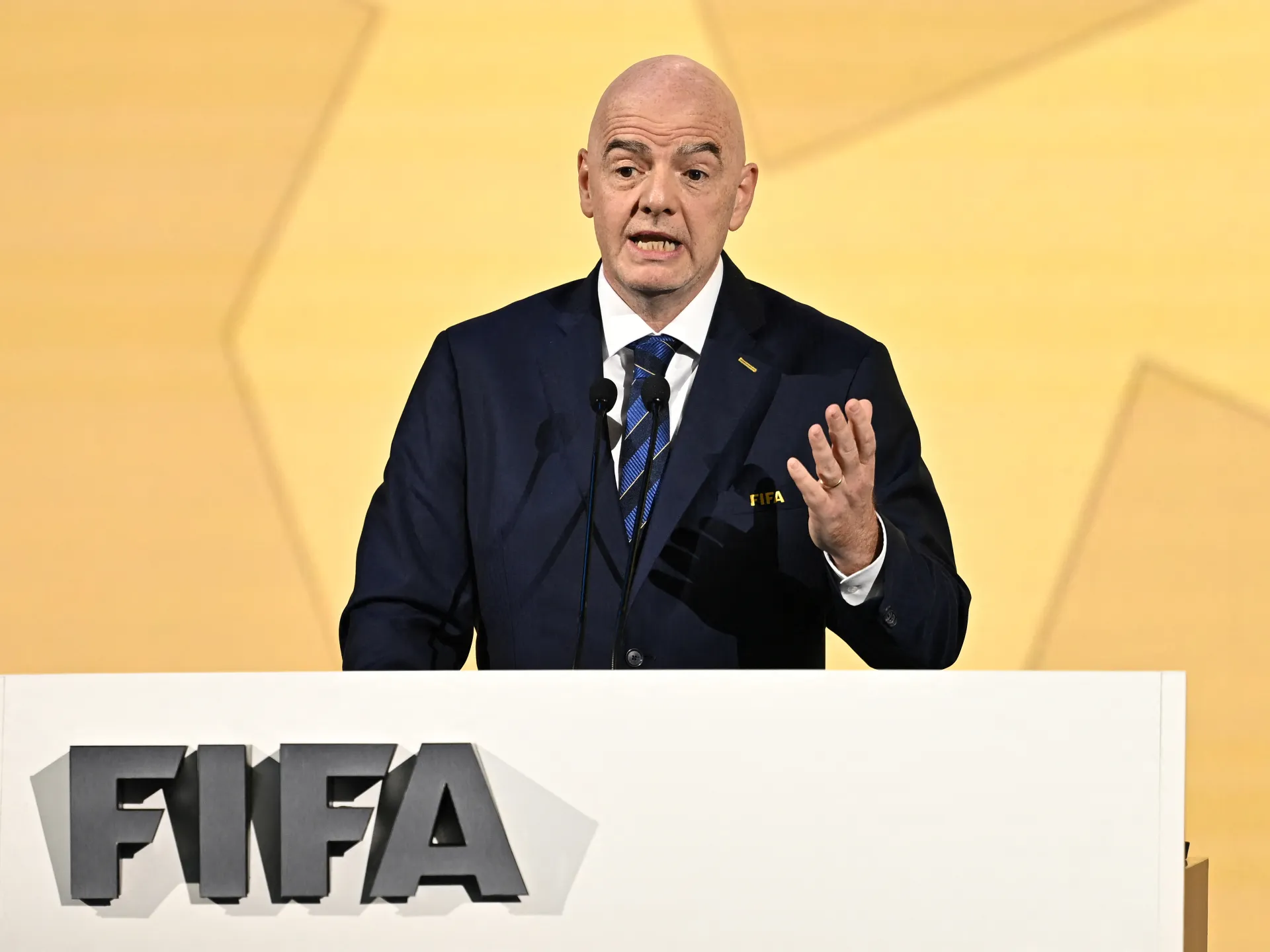
The French Football Federation is withdrawing its support for Gianni Infantino’s re-election bid as FIFA chief next year, FFF President Philippe Diallo has said, saying trust in the head of world football’s governing body had been broken.
The decision was taken unanimously by the FFF’s executive committee, Diallo said on Thursday.
“The trust placed in the FIFA president has been broken,” Diallo told reporters. “The way in which we envisage the running of world football no longer corresponds with the way it is being conducted.”
Infantino, who is seeking another term as FIFA president, has faced mounting criticism since his failed proposal to sell a 20 percent stake in FIFA competitions, including the World Cup, to private investors was abandoned in July following widespread opposition from football’s regional confederations.
Diallo said France had initially backed Infantino’s candidacy at the end of June, when he was the only declared candidate, but that subsequent events had fundamentally changed the circumstances.
“The conditions for our support for his candidacy were no longer there,” he said.
Diallo added that the proposed stake sale, which emerged without what he described as proper consultation or information being provided to federations, had raised serious questions over FIFA’s governance and decision-making.
Several European federations, including England’s and Italy’s, have withdrawn their backing for Infantino since the collapse of his proposal.
UEFA, the Asian Football Confederation and North America’s CONCACAF have called for change at the top of FIFA and are seeking a credible alternative before the March election.
Diallo said France’s decision formed part of a broader movement within UEFA and beyond and that discussions would now focus on governance reform and finding a candidate capable of defeating Infantino.
“It is not enough simply to criticise if you want things to move forward. You also have to make proposals,” Diallo said.
He added that UEFA would need to define a platform for the next FIFA leadership cycle and, when the time came, choose a candidate for the election.
“We will need to be ready by then to put forward a candidacy capable of winning the FIFA presidency,” Diallo said.
Infantino still has the support of South America’s CONMEBOL and Africa’s CAF.
The FIFA presidential election will take place in Rabat on March 18, 2027, with the deadline for candidacies on November 18.
A sweeping bipartisan bill that seeks to prevent catastrophic wildfires and restore fire-ravaged forests has revealed a schism in the nation’s environmental movement as some conservation advocates find themselves allied with a longtime foe: loggers.
The Fix Our Forests Act, which Congress is close to passing, aims to speed up forest management projects on public and tribal lands by reducing regulatory and legal hurdles.
The proposed legislation comes at a time of increasingly devastating wildfires and has garnered wide support among Republicans and the timber industry.
However, the traditional Democratic coalition of environmental groups is split over the role humanity has to play in forest management. Some argue ecosystems are best protected when humans leave them alone — a view that dominated during the timber wars of the ’80s and ’90s. Others argue that humans have a responsibility to intervene — an increasingly popular idea as climate change threatens ecosystems around the world.
Among the major environmental groups that oppose the legislation are the Sierra Club and Center for Biological Diversity. They worry that limiting environmental review and litigation will allow timber companies to heavily log these areas instead of gently thinning them. Meanwhile, some Southern California groups worry the bill would allow well-meaning land managers to approve misguided projects that ultimately harm local shrublands, which have a very different relationship with fire than the bill’s namesake, forests.
“It’s really handing the keys to the Trump administration to be able to push forward a lot of their timber agenda,” said Anna Medema, deputy legislative director for forests and public lands at the Sierra Club.
But the Nature Conservancy and other groups have voiced support for the bill, citing the constant and imminent threat that increasingly severe wildfires pose to communities and ecosystems.
“We do advocacy at a twofold level. We are doing defensive work to fight back against bad things, and we’re also trying to promote the good things that are happening on the ground,” said Morgan Cashwell, North America director of legislative affairs for the Nature Conservancy. Right now, that good work needs to “meet the moment in the current wildfire crisis.”
That sentiment appears to have motivated Western lawmakers in particular.
In the House of Representatives, roughly half of the Democrats from Western states voted for the bill, compared to about a quarter of Democrats from elsewhere in the country. Republicans voted overwhelmingly in favor. The legislation is now awaiting a final vote in the Senate. Congress has until Jan. 3, 2027, to pass it.
“Wildfires today are very different than wildfires from a generation ago,” said Sen. Alex Padilla (D-Calif.), who co-introduced the Senate version of the bill. “Oftentimes, they’re irreversibly devastating ecosystems and watersheds.”
“So,” he said, “ the status quo is clearly not working.”
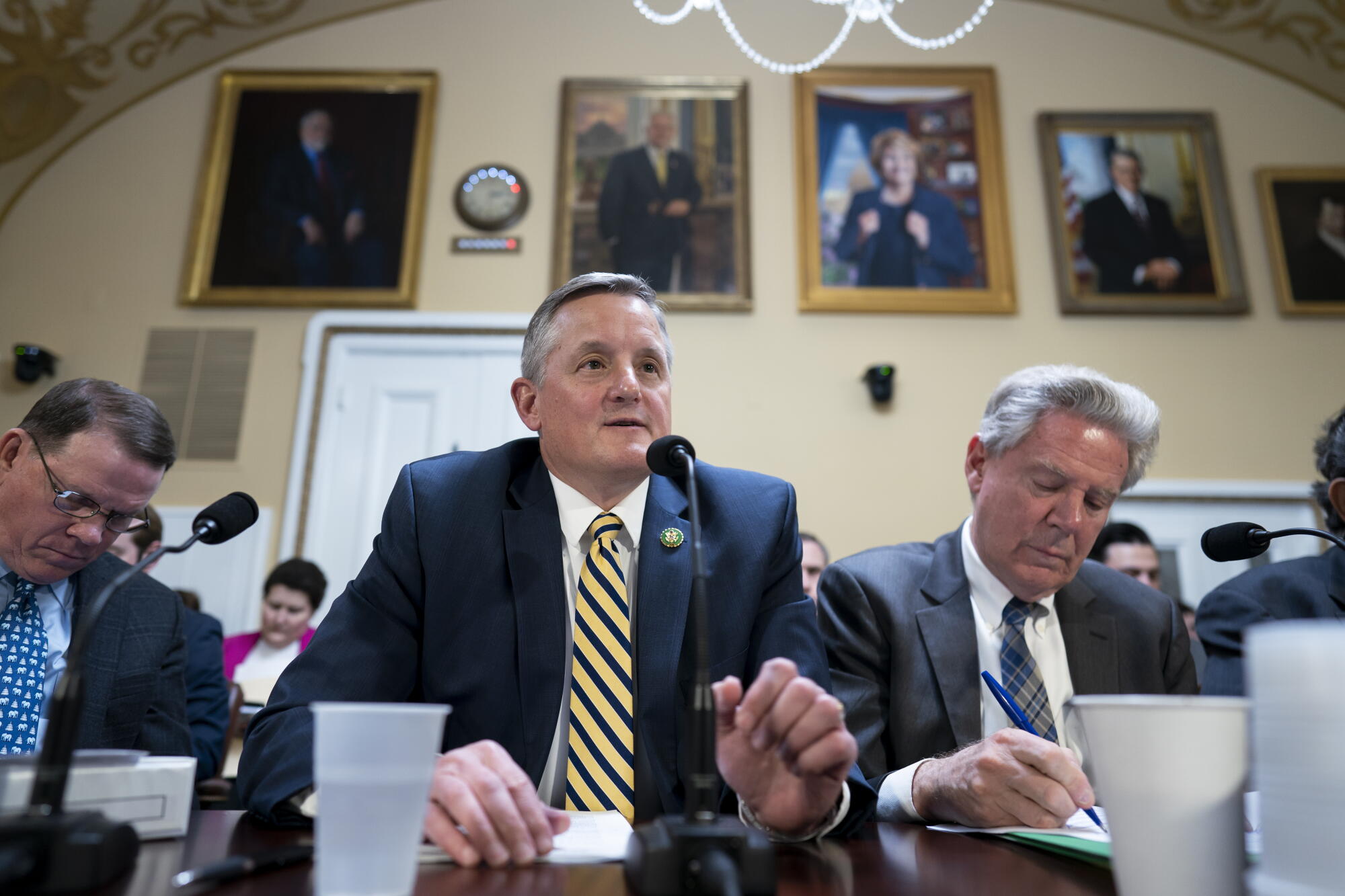
Rep. Bruce Westerman (R-Ark.), center, chairman of the House Committee on Natural Resources, delivers remarks at the Capitol in March 2023.
(J. Scott Applewhite / Associated Press)
The act was born when Rep. Bruce Westerman (R-Ark.), a former forester, stole a seat on a plane next to Rep. Scott Peters (D-San Diego). He used the opportunity to talk Peters’ ear off about a beloved species of tree that is under threat from worsening wildfires: the giant sequoia.
The two introduced a bill to protect them, called the Save Our Sequoias Act, and quickly saw an opportunity for something bigger.
“I knew right away that this could be a gateway to talking about permit reform,” Peters said. So, “we started working on a bigger, nationwide reform of forestry practices which have been really, really clogged up.”
While California grasslands, shrublands and woodlands are adapted to different frequencies and intensities of wildfire, research has found that high-severity fires — which kill the vast majority of trees in their path — are scorching 30 times more land area than in the 1980s.
The result: California is losing, on average, more than 200,000 acres of forest every year — or roughly 2.5% of all woodlands in the state every decade. U.S. Forest Service efforts to resuscitate these ecosystems have failed to keep pace. In recent years, the agency has reforested only about 1% of woodlands that are unlikely to recover on their own.
Californian supporters of the Fix Our Forests Act argue the problem has more to do with permitting delays than finances.
Marin County firefighters train during a prescribed burn in June in San Rafael.
(Heather Diehl / Getty Images)
Rep. George Whitesides (D-Santa Clarita), who co-sponsored the Fix Our Forests Act, pointed to nonpartisan research that found it takes the Forest Service more than five years on average to complete a full environmental review and begin work on forest thinning projects that use mechanical equipment like bulldozers and wood chippers. For prescribed burns, it takes more than seven years on average.
“That’s insane,” he said, that it “takes as long as a kid growing up to be a first grader to be able to move on this.”
The Fix Our Forests Act would exempt projects from the full permitting process if they were in areas with the most extreme fire risk and would expand existing exemptions for projects under 3,000 acres to cover projects up to 10,000 acres. It also would limit the window during which environmental groups can sue over project approvals.
These projects tend to employ a combination of harvesting timber and thinning smaller trees and plants with heavy machinery (often the favored tools of Republicans and the timber industry) and using prescribed fire to clear out the forest floor (often favored by environmental groups).
The “environmental left” has “made it endlessly time-consuming and ultimately cost prohibitive to maintain our forests, all with the promise that this would improve the forest environment,” said Rep. Tom McClintock (R-Elk Grove), a co-sponsor who authored some of the permitting exclusions. “Well, after 50 years, I think we’re entitled to ask, how’s the forest environment doing?”
In March 2025, President Trump issued an executive order that blamed “our inability to fully exploit our domestic timber supply” as a contributor to disastrous wildfires. In response, the U.S. Forest Service set a goal to increase the amount of timber open to logging by 25% nationwide over five years.
Scott Dane, executive director of the American Loggers Council, argued the nightmare scenarios of expansive clear-cutting from the timber wars are not on the table for America’s public lands.
“It’s a boogeyman position that they love to take from 100 years ago,” he said. “It’s not, in reality, in modern forest management at all.”
Watchdogs in Southern California have a different concern: While research shows forest thinning is an effective tool in overgrown Sierra Nevada woodlands, the state’s coastal shrublands are not denser than they historically have been. Consequently, the type of projects the Fix Our Forests Act would expedite are far more controversial and contested in shrublands. Local advocates fear the act would undermine their ability to push back on proposals with questionable scientific backing.
Goats and sheep graze on top of Kite Hill in May 2025 in Los Angeles for wildfire prevention.
(Juliana Yamada / Los Angeles Times)
In contrast to projects in conifer forests that aim to decrease the density of trees and vegetation across the landscape, shrubland projects are typically centered on creating a network of corridors hundreds of feet wide with no vegetation throughout the wildlands and clearing plants away from existing buildings.
While firefighters rely on these networks of fuel breaks to access the wildlands during fires and build containment lines, research has found that when firefighters cannot reach the fuel breaks — which is often the case during extreme winds — the lines only stop fires about 13% of the time. If they are not routinely maintained, they also risk supporting the growth of flammable invasive grasses.
In Los Padres National Forest, near Santa Barbara, officials proposed in 2022 creating roughly 187,000 acres of fuel breaks and structure defense zones. After organizations like Los Padres ForestWatch pushed back on the plan through the environmental review process, the national forest ultimately scaled the proposal down to about 22,000 acres this July.
“You had community input, and you had the federal government incorporating that input into a plan that is grossly improved,” said Benjamin Pitterle, director of advocacy and field operations at Los Padres ForestWatch. “It’s arguably a perfect example of how the process should work.”
Businesswoman Hayley Parsons had already called for them to stand down before Davies did the same, while former Principality Building Society chief operating officer Rob Regan has offered to oversee an interim board.
The board also doubled down on its commitment to cut the number of professional teams from four to three by 2028, with WRU-owned Cardiff and privately-backed Dragons set to be given licences.
That announcement has plunged the futures of Scarlets and Ospreys into doubt, with the west licence either being awarded to the Llanelli-based side or their Swansea-based rivals.
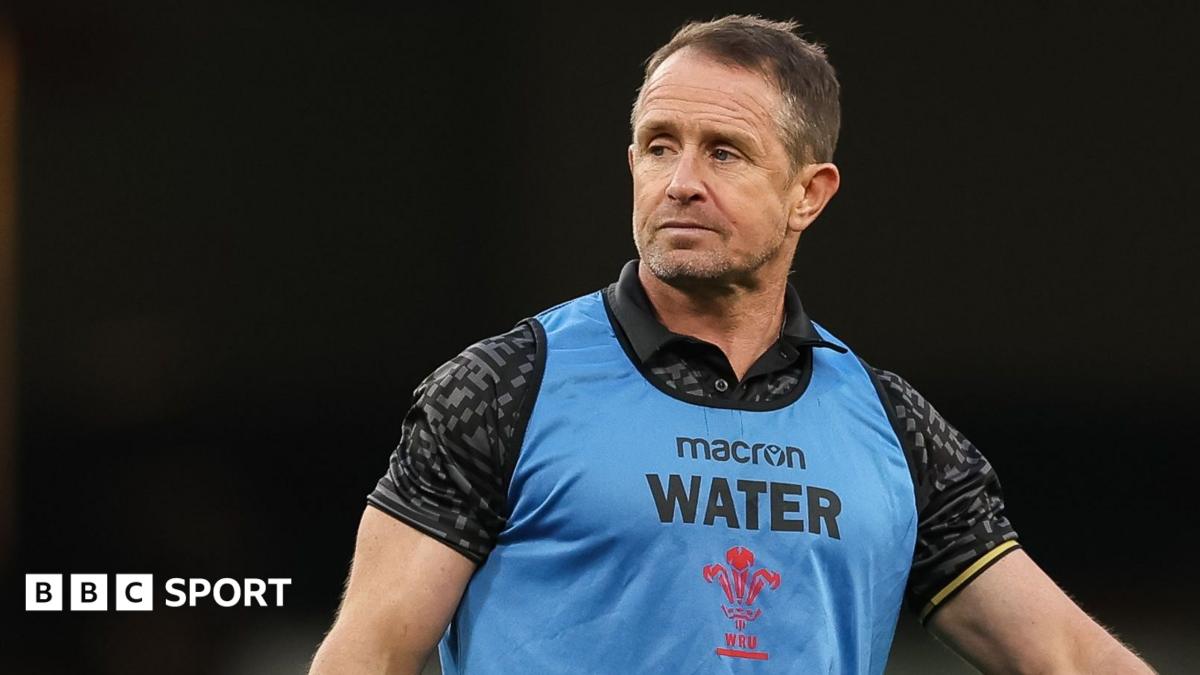
Asked whether he still had faith in those running the game in Wales, Williams, who coaches in west Wales, said: “No, I don’t have much faith, to be honest with you.”
“I think we’re still none the wiser.
“I think they just took a little break in deciding what was going to happen, but knowing deep down in their hearts that they wanted it to be three regions.
“We as coaches know the uncertainty of who’s going to remain as a region next year and that is very difficult.
“But what we are trying to do and what we do need is a bit more support in the pathway side of the rugby.
“We talk about the regions, we talk about the national team, but where do they think these players come from?
“I can answer that for you straight away. That is schools and colleges.”
In its response the WRU stated: “The schools game in Wales is an integral part of our future strategy and we already provide significant funding and support in this area.
“After restructuring our community rugby department in 2025 we are now able to provide dedicated support to all clubs and schools throughout the country.
“We fund and run a number of competitions for schools including those which culminate in National Finals days held at either Principality Stadium or Rodney Parade each year.”
China has long been a rare partner to Iran, with the economic heft to blunt the United States’ efforts to strangle the Iranian economy.
Yet even as China opposes US President Donald Trump’s latest pressure campaign, few observers expect it to go much further than the modest economic links it has thus far forged with Iran to shield it.
Recommended Stories
list of 4 itemsend of list
While China opposes the Trump administration’s military attacks and sanctions against Iran, Beijing’s relationship with Tehran is just one consideration in a foreign policy that seeks to balance relations with numerous countries, including the US and the Gulf states, limiting its appetite to prop up the Iranian leadership at any cost, analysts say.
“China, with broader global interests, can only actively promote de-escalation of the US-Iran conflict, and cannot and will not engage in fierce confrontation with the US for Iran’s sake,” said Hongda Fan, director of the China-Middle East Center at Shaoxing University in China.
“Ultimately, the US-Iran conflict must be resolved by the two countries themselves,” Fan said.
China and Iran share substantial trade links, particularly in energy, and a mutual suspicion of US dominance, but their relationship is heavily lopsided, with Tehran depending on Beijing far more than vice versa.
That asymmetry in ties was on full display this week at the annual gathering of the Shanghai Cooperation Organisation, a 10-member bloc widely seen as a counterbalance to US hegemony, where Chinese President Xi Jinping joined more than a dozen non-Western leaders, including Iranian President Masoud Pezeshkian.
While Iranian state media reported that Pezeshkian held a “brief meeting” with Xi on the sidelines of the summit in Bishkek, Kyrgyzstan, Chinese outlets made no mention of the encounter.
Xi immediately followed his attendance at the summit with his first visit to Egypt in a decade on Tuesday, using the visit to call on countries in the Middle East to oppose “external interference” and reiterate his calls for a diplomatic resolution to the Iran war.
As Iran’s top trade partner, China has taken up to 90 percent of Iranian oil exports since the US and Israel launched their war in late February.
Iranian crude, however, accounts for only about 2 percent of China’s overall energy mix.
While China’s oil purchases have been an economic lifeline for Tehran, Chinese importers have not been immune to fears of exposure to US sanctions.
China’s major state-owned refiners such as Sinopec and PetroChina have shunned Iranian oil for years, leaving the trade to independent “teapot” refiners with minimal links to the dollar-based global financial system.
Though the Trump administration has imposed sanctions on these “teapot” refiners and a limited number of China- and Hong Kong-based firms and individuals, it has yet to target major Chinese banks accused of facilitating Iranian oil purchases.
The Trump administration has hinted at targeting China’s financial system as part of its ramped-up sanctions campaign, dubbed “Operation Economic Outcast”, though analysts are sceptical that Washington will risk provoking Beijing’s ire as the sides seek to lower the temperature in their trade war before a scheduled summit between Xi and Trump on September 24.
“The legitimate question is why third countries should be expected to adopt Washington’s unilateral economic policy towards another sovereign state,” said Zichen Wang, deputy secretary-general of the Center for China and Globalization (CCG) think tank in Beijing.
“That does not, however, mean that Beijing will provide Tehran with a blank cheque,” Wang said.
“China is likely to continue opposing US secondary sanctions politically and to defend what it considers legitimate Chinese commercial interests. But past behaviour also shows that major Chinese banks and state-owned companies are highly conscious of sanctions exposure.”
Rhetoric versus reality
Even as Beijing and Tehran have forged closer ties, their relations have for years been marked by a substantial gap between rhetoric and reality.
While China pledged to invest up to $400bn in Iran over 25 years as part of a “comprehensive strategic partnership agreement” signed in 2021, few projects have materialised amid what analysts say is Chinese firms’ reluctance to navigate sanctions and the opaque Iranian bureaucracy.
In 2023, Iran’s then deputy economy minister, Ali Fekri, complained that he was “not satisfied” with China’s level of investment since the agreement, saying it had only amounted to about $185m.
“Iranian experts often blame their government for not doing enough to attract Chinese investors or not pushing Chinese companies to share more technology,” said Andrea Ghiselli, head of research at the ChinaMed Project.
“However, the reality is that there is no point for Chinese companies to give up their ties with the international financial system to expand their business in Iran,” Ghiselli said.
“It is much easier and more profitable to trade and invest elsewhere. Iran’s own domestic physical and bank infrastructure is also an obstacle.”
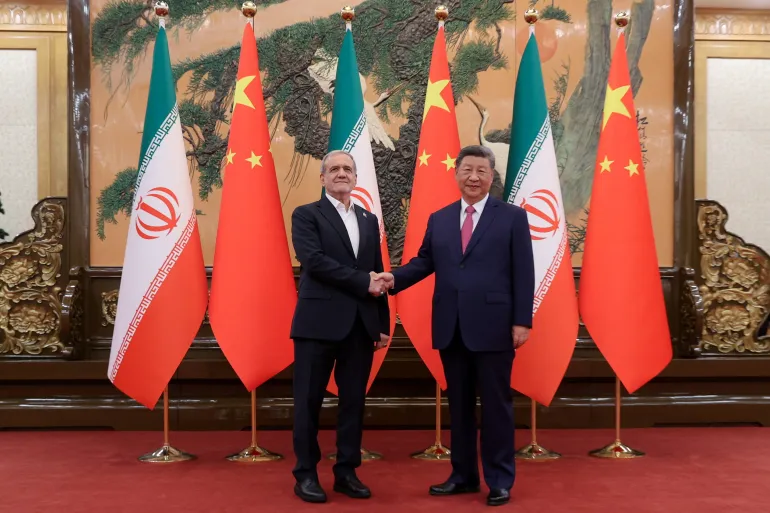
Iranian President Masoud Pezeshkian and Chinese President Xi Jinping shake hands as they meet in Beijing, China, on September 2, 2025 [Iran’s presidential website/Handout via Reuters]
Meanwhile, the most tangible measure of China’s economic support, purchases of Iranian oil, has been dwindling amid the US blockade of Iranian ports.
Iranian crude exports via the Strait of Hormuz, mostly bound for China, fell from an estimated 1.85 million barrels per day (bpd) in March-April to just 240,000bpd in August, according to data from ship-tracking platform Kpler, though millions more barrels shipped before the blockade are still at sea.
In an interview with CNBC on Monday, US Treasury Secretary Scott Bessent said “only” about 30 million barrels of Iranian oil remained on the water and Chinese remittances to Iran were “going to run out”.
Kpler last month estimated that about 80 million barrels were in on-water shortage, enough to provide revenues to Tehran for up to six months.
“For China, Iran is valuable – but replaceable across many dimensions. Iranian oil matters, but China can obtain energy from Saudi Arabia, Russia, Iraq, the UAE, and numerous other suppliers,” said Mordechai Chaziza, an expert on China’s Middle East policy who lectures at Ashkelon Academic College in Israel.
“Iran offers geopolitical access, but China possesses relationships throughout the region. Iran supports China’s multipolar agenda, but so do many other states.”
China’s support for Iran is also not risk-free for Beijing, given its important relationships with Iranian rivals such as Saudi Arabia and the United Arab Emirates, Chaziza said.
“Saudi Arabia and the UAE are major energy and commercial partners.
“Gulf stability is vital because China obtains roughly half of its crude imports from the Middle East,” he added.
The “ideal outcome” for Beijing, Chaziza said, would be “a stable, sovereign, economically connected, and internationally non-Western” Iran, but not one “whose confrontation with Washington, Israel, or the Gulf monarchies forces China to choose sides”.
Wang, at the CCG, said that while Beijing appears determined to defend Chinese commercial interests, it is unlikely to sacrifice its broader interests in the region or elsewhere.
Beijing’s warning that it is ready to take countermeasures against unilateral sanctions is “not the same thing as promising to underwrite the Iranian economy”, Wang added.
For China, Iran is seen more as a customer than an ally, said Kerri Bitsoff, a former senior official at the US Treasury’s Office of Foreign Assets Control.
“I don’t think this is the alliance some people think it is, even though there’s real support. I think of a more like a customer relationship that Iran can’t walk away from,” Bitsoff said.
“And it was good for China – they got cheap oil, they got a US tied up in the Middle East, but I think that only lasts up until the point where it threatens China’s other interests,” she added.
The administration of former US President, Joe Biden, knowingly allowed Israel’s genocide in Gaza to continue long after it had lost any clear military objective, with senior officials in Washington privately admitting it amounted to “killing and destroying for the sake of killing and destroying”. This damning assessment, along with revelations of political manipulation, diplomatic cover-ups and sabotaged peace efforts, comes from a bombshell investigation aired by Israel’s Channel 13. Details of the investigation have been translated by Drop Site News and shared on X.
The Biden administration allowed Israel unprecedented leeway to carry out its military offensive, despite the enormous death and devastation it inflicted on Gaza. Former Israeli ambassador, Michael Herzog, made a startling admission about Biden’s support: “God did the State of Israel a favour that Biden was the president during this period. We fought [in Gaza] for over a year and the administration never came to us and said, ‘ceasefire now.’ It never did. And that’s not to be taken for granted.” His remarks encapsulated a broader sentiment that the White House gave Benjamin Netanyahu all the political space he needed to execute the military offensive, which has claimed the lives of more than 52,000 Palestinians, mainly women and children.
The investigation, which included interviews with nine current and former US officials, reveals a deeply troubling portrait of US complicity in Israel’s genocide in Gaza. Former national security aide, Ilan Goldenberg, stated that the war amounted to “killing and destroying for the sake of killing and destroying”, with no viable political alternative ever established. Despite the White House’s public messaging about restraining Israel, the internal consensus appeared to be that the administration had no intention of exerting real pressure on the Occupation state.
The Biden administration also shielded Israel from allegations of war crimes, prompting a major backlash from staffers in the State Department. Lawyer Stacy Gilbert, for example, resigned in protest after being excluded from a key report that falsely claimed Israel had not violated US arms laws. Gilbert described the report as “shocking in its mendacity”, pointing out that aid obstruction and settler attacks were well documented, yet ignored. Meanwhile, Washington continued to certify Israeli compliance with US law, ensuring the uninterrupted flow of weapons.
The investigation also revealed that Israeli Prime Minister, Benjamin Netanyahu, deliberately sabotaged hostage negotiations in order to prevent a ceasefire. US officials confirmed that Netanyahu tanked talks out of fear that a deal would compel him to halt the war.
Despite public backlash, Biden’s private approach remained deferential. Even after reportedly telling Netanyahu he was “full of shit” and hanging up mid-call, Biden ultimately maintained support. After briefly halting a shipment of 2,000-lb bombs due to concerns about their use in densely populated areas of Gaza, Netanyahu publicly accused Washington of broader arms delays. Biden, rather than escalating pressure, resumed the shipment process shortly thereafter.
The Channel 13 exposé further confirms that Biden’s reluctance to push Israel was deeply tied to a failed diplomatic initiative with Saudi Arabia. A landmark normalisation deal was in sight, but it required Israeli recognition of Palestinian statehood. These were flatly rejected by Netanyahu’s far-right coalition. Former US ambassador, Jack Lew, said he found Israel’s refusal “shocking”, while Amos Hochstein expressed disbelief that such a strategic opportunity was squandered. Sources confirmed that Netanyahu deliberately stalled negotiations in hopes that President Trump would return to office and claim the diplomatic win for himself.
These revelations lend significant weight to long-standing accusations that the Biden administration has not only provided diplomatic cover for Israel’s propaganda by repeating lies, but also actively enabled what many view as a campaign of ethnic cleansing. Critics note that Biden himself amplified false Israeli claims, such as the widely discredited allegations of Hamas beheading babies, rhetoric that helped to dehumanise a population in order to carry out genocide.
Sparks center Cameron Brink condemned former NBA player Enes Kanter Freedom for his behavior that got him removed from a WNBA game this week while also declaring her support for transgender women.
Kanter, who recently claimed he is eligible for the WNBA draft because he declared himself a transgender woman, was removed from the Chicago Sky’s game against the visiting Indiana Fever at Wintrust Arena on Sunday after he confronted Sky guard Natasha Cloud.
He has been banned by the Sky from attending Wintrust Arena.
“Personally, I think when it comes to the trans issues, I think it’s a non-issue, and I think it’s people trying to just come for the trans community, and I just don’t stand for that,” Brink said before blasting Freedom, whom she said is “just trying to stay relevant.”
Brink then added: “I think people are tuned in for the right reasons, and it’s great that we can all talk about things that are important and hard and even have your own opinions on that. But I think taking something that’s a non-issue right now and just trying to use it for clickbait or for views for likes, and then targeting a vulnerable community, is just really low.”
Brink, 24, has previously expressed support for transgender athletes, saying in an interview with Dime Magazine in 2024: “Some of my teammates go by they/them pronouns. I want to bring more acceptance to that and not just have people support us because of the way that we look.”
In an ESPN profile in July, Fever guard Sophie Cunningham said she did not support transgender women playing women’s sports, referring to them as “biological men.” Since then, Kanter and fellow former NBA player Royce White have claimed they should be eligible for the WNBA draft.
The WNBA ruled both players ineligible, according to Front Office Sports.
The WNBA’s collective bargaining agreement includes only a single line addressing gender eligibility, stating in Article XIII, Section 1(a): “Only players who are women are eligible to play in the WNBA.”
Several other players have spoken out against the ire directed at transgender women, including Cloud, the Valkyries’ Gabby Williams and Storm’s Stefanie Dolson.
There is currently no transgender athlete playing in the league.
Italian football federation says its decision is based on Infantino’s recent initiatives on international competitions.
Published On 27 Aug 202627 Aug 2026
Italy’s football federation (FIGC) has withdrawn its support for embattled FIFA President Gianni Infantino over his failed attempt to sell off stakes in the World Cup.
“This decision is intended to clearly and transparently express the FIGC’s position… regarding the recent initiatives promoted by the FIFA president concerning the governance and development of international competitions,” said a FIGC statement on Wednesday.
The move comes as a host of European national associations, including England, Ireland and Wales, have already scrapped their backing of Infantino, who is seeking re-election at next year’s FIFA Congress.
Infantino has come under increasing pressure to step down as head of world football’s governing body over his now-abandoned plan to secure private investment in FIFA tournaments, including the World Cup.
“We will continue to work alongside UEFA and the other European federations to promote a vision of football based on merit, solidarity, sustainability and the central role of the fans,” said FIGC head Giovanni Malago.
“We identify with a model of dialogue, listening and shared responsibility which has, to date, enabled football to grow, innovate and, at the same time, defend its founding principles.”
However, Italy’s World Cup-winning captain, Fabio Cannavaro, and his Brazilian counterpart, Cafu, have joined a group of former footballers backing Infantino.
Their social media messages expressing support came after another group of former players, led by Frenchman Mikael Silvestre, called for “change” in FIFA’s leadership.
“Over the last ten years, world football has improved,” and footballers “have once again taken centre stage,” Cannavaro – who was part of Italy’s 2006 World Cup-winning team, posted on social media on Wednesday.
“Infantino has done a great job… Not acknowledging that would be intellectually dishonest,” added the former centre-back, who coaches the Uzbekistan national team.
Similar messages were posted on Tuesday night by Brazilians Cafu and Roberto Carlos, Argentines Javier Zanetti and Esteban Cambiasso, Colombia’s Ivan Ramiro Cordoba and Mexico’s Jared Borgetti.
“We have followed the work of FIFA and president Infantino to promote the representation of players in football, something that didn’t exist before,” wrote Cafu, who lifted the World Cup with Brazil in 1994 and 2002.
Infantino, the 56-year-old former UEFA secretary general, had the broad backing of European nations when he succeeded Sepp Blatter as FIFA president in 2016.
European football body UEFA said it would formally withdraw its threat to boycott FIFA competitions after receiving assurances that Infantino’s failed sell-off plan will not be revived.
UEFA, which oversees European football, had threatened to boycott FIFA competitions.