Sunshine holidays

Stunning island is abandoned tropical paradise with £35 flights and £2.60 pints

It’s a blissful (and affordable) sanctuary for those yearning to avoid the swarming hordes and tourist mayhem of other popular European sunshine hotspots.

A breathtaking island boasting a fascinating history and spectacular scenery is being championed as a ‘deserted paradise’ – ideal for UK residents seeking a peaceful retreat in February or March to flee the miserable winter weather (and heaving masses at other popular holiday hotspots).

Having established itself as the ‘sister island’ to another well-known destination, this European holiday gem is genuinely distinctive and celebrated for its untouched appeal.

Spanning merely 3.5 square kilometres, this obscure island within the Maltese Archipelago is practically uninhabited, with just two permanent residents living there.

In that sense, it’s genuinely a ‘deserted paradise’ – a perfect escape for those yearning to avoid the bustling crowds and tourist mayhem of other European sunshine destinations.

February and March bring average temperatures between 16C and 18C to this secluded island, making it a perfect spot for those wanting to bask in the winter sunshine without getting burnt, reports the Express.

Amazon cabin bag meets Ryanair requirements for less than £15

This article contains affiliate links, we will receive a commission on any sales we generate from it. Learn more
Ryanair bag

£20.99

£14.99

Amazon

See the deal

Travellers keen to beat the bag charges without breaking the budget have made an Amazon travel bag a bestseller. Rated 4.7 stars out of 5 from almost 3,000 reviews, the Xkdoai bag comes in six colours with prices from £14.99, saving 29% on the usual price.

Regarded as a sanctuary for swimmers, snorkellers, walkers and photographers – visitors are known to journey from across the globe simply to savour a taste of life in this deserted paradise.

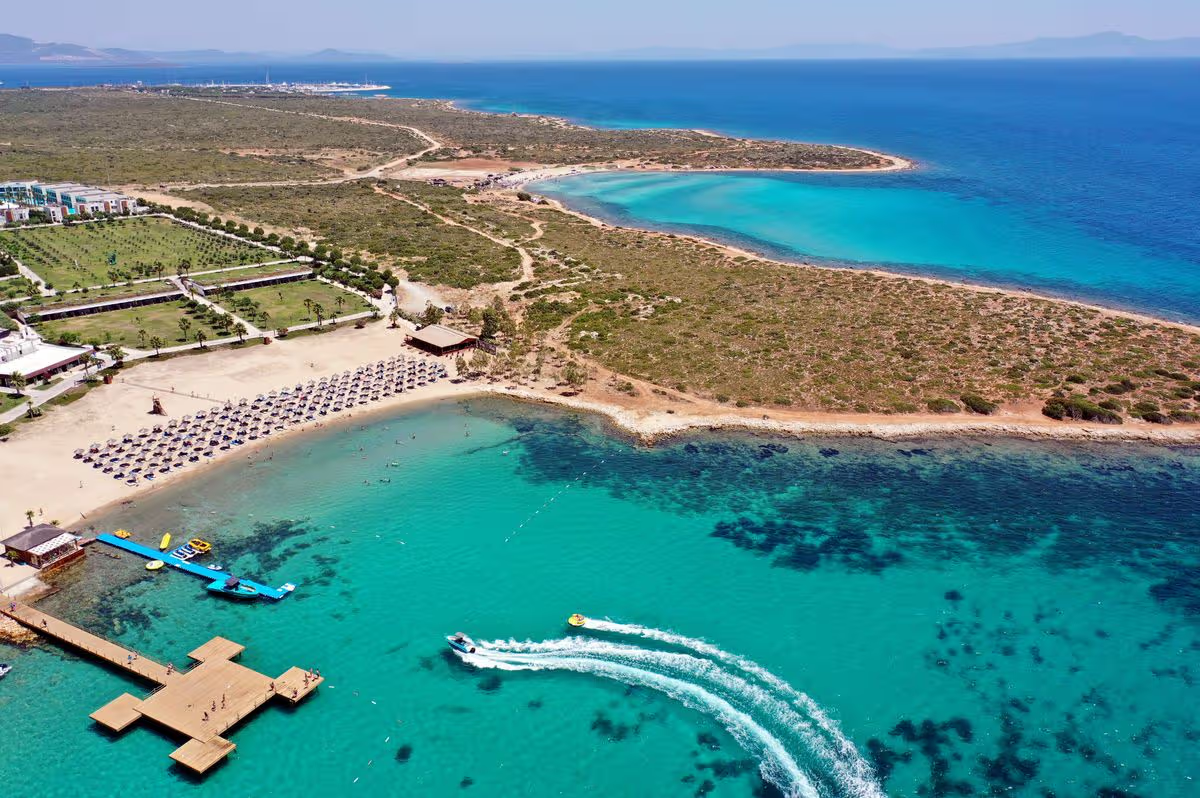
Comino, renowned for its absolutely stunning Blue Lagoon, is a treasure hiding in plain sight just begging to be discovered. With no towns – and therefore no vehicles – experiencing Comino is genuinely an adventure unlike any other.

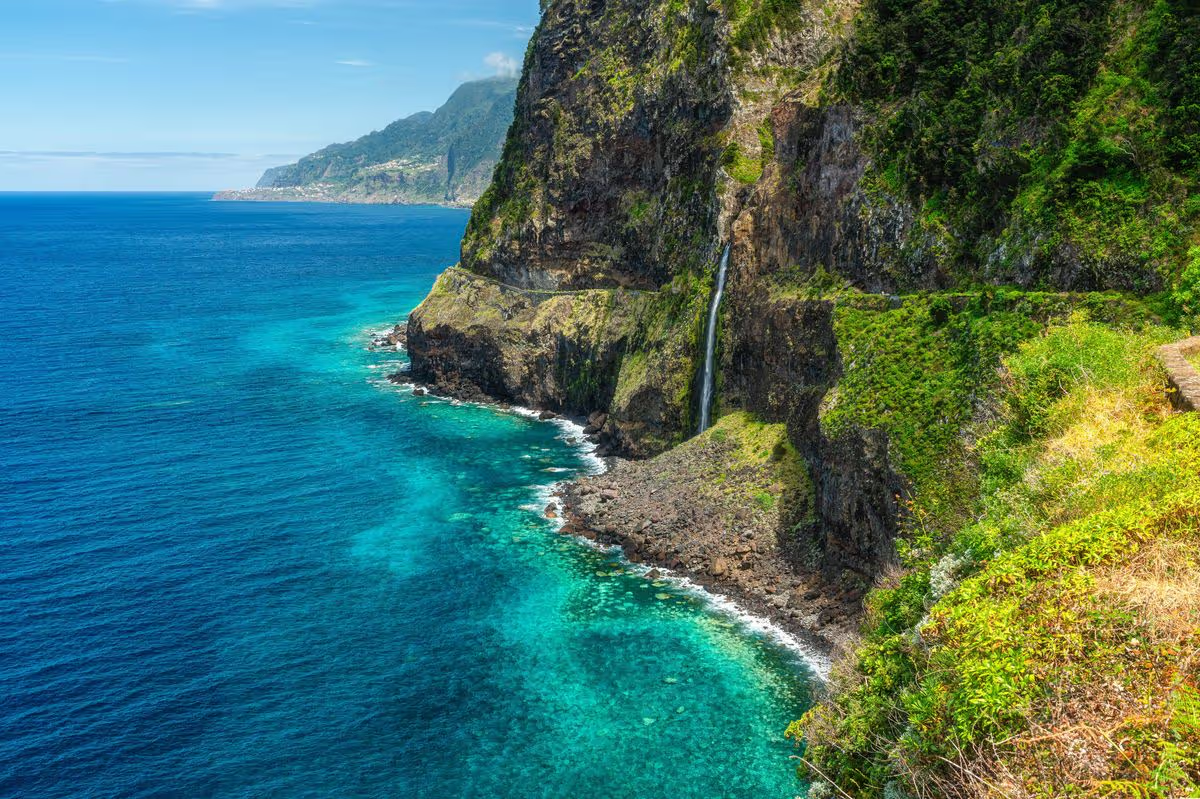
A dramatic limestone terrain, impossibly blue crystalline waters, secluded bays and breathtaking vistas are merely some of the features that set this tiny European isle apart from the crowd.

Delivering both excitement and serenity, Comino boasts a captivating landscape, ideal for those seeking to immerse themselves in nature – all whilst keeping costs pleasantly manageable.

Getting to Comino from the UK is remarkably simple – visitors can fly into Malta International Airport, which serves as the sole major commercial aviation hub in the Maltese islands.

At the time of writing, a one-way ticket from London Stansted Airport to Malta on February 26 would cost holidaymakers just £35, including one complimentary cabin bag.

From there, travellers on mainland Malta can hop aboard one of the regular ferries departing from Ċirkewwa ferry terminal, which will transport you to Comino in approximately 35 minutes.

Meanwhile, those already on Malta’s sister island of Gozo can complete the brief journey to Comino from Mġarr Harbour in a swift 15 minutes using water taxis or compact ferries.

If the balmy weather and budget-friendly flights weren’t enticing enough – Comino, despite being largely uninhabited, provides reasonably priced drinks.

While the island itself doesn’t offer a huge amount of food and drink options – a small price to pay for absolute tranquillity – the few available spots (food and drink kiosks near popular snorkelling and hiking areas) are known to sell pints ranging from £2.60 to £4.

However, holidaymakers seeking a wider variety of culinary choices need not worry, as Comino’s neighbouring sister islands, Malta and Gozo, have plenty to offer.

An island steeped in history

As of 2026, the island is inhabited by just one family, the globally recognised Vella family, who hold the distinction of being the last people on Comino within the Maltese archipelago.

Despite its diminutive size, Comino has a rich and complex history that belies its physical dimensions. The sun-drenched island was once a favoured hideout for pirates during the medieval period, owing to its numerous sea caves.

In 1618, the Knights of St. John fortified the island by constructing the still-standing Santa Marija Tower, which served as both a guard station and a signalling point between the Maltese islands.

The island’s name, Comino, derives from ‘kemmuna’, meaning cumin, a spice that was once harvested extensively on the island. Historically, the island has also functioned as a quarantine station during the Napoleonic era and was renowned for being a game reserve abundant with wild boar and hares.

Today, Comino is celebrated for its pristine landscapes and historical sites, drawing day-trippers from Malta and Gozo seeking the perfect natural retreat steeped in peace and quiet.

Things to do in Comino

Despite its modest size, Comino boasts an impressively diverse range of activities and attractions, guaranteeing something to captivate every visitor who arrives on its compact coastline.

The island’s crowning glory – and arguably that of the entire Maltese archipelago – is the world-famous Blue Lagoon, which lives up to its reputation as a jewel in Comino’s crown, luring visitors to its strikingly white sands and sparkling turquoise waters throughout the year.

Nestled between Comino and the tiny islet of Cominotto, it’s an idyllic destination for snorkellers and swimmers, offering unparalleled glimpses of the exotic marine life inhabiting this shallow bay.

By contrast, Santa Marija Bay sits on Comino’s more peaceful side, presenting a tranquil beach and gentle waters – minus the throngs of tourists found at the Blue Lagoon.

The Santa Marija Caves also rank among Comino’s must-see attractions, showcasing a complex system of sea caves and striking underwater rock formations that delight snorkellers and divers alike.

History enthusiasts and hiking aficionados can make the journey up to the iconic Santa Marija Tower, or St Mary’s Tower, the magnificent 17th-century stone fortress constructed by the Knights of St John. Cinema lovers might recognise this famous tower as the Château d’If from The Count of Monte Cristo.

The whole of Comino can be traversed on foot in roughly three hours, establishing it as a prime destination for walkers as they navigate thyme-bordered wilderness trails, catching glimpses of exotic migratory birds, remarkable lizards and stunning coastal vistas.

Source link

Sunny island just 4 hours from UK has £3 pints and 22C weather in March

Brits looking for warm and sunny weather in March may want to consider the beautiful island in the Canaries that has cheap drinks, beautiful beaches and 22C weather

The British winter has felt particularly drizzly in the past few months, so it’s no surprise that most of us are dreaming of sunnier and balmier climates.

While the truly hot destinations tend to require a long-haul flight, the good news is that there are parts of Europe where you can still get warm and sunny weather, at least enough so you can enjoy the outdoors without having to don about 500 layers.

Fuerteventura in the Canary Islands is a destination that just about ticks all of the boxes; affordable holidays, beautiful beaches and 22C weather in March.

The good news is that because Fuerteventura is a popular destination for Brits, there are plenty of cheap deals and offers that can be found especially for a last-minute break. Jet2Holidays currently has a sale with £150 off holidays before June, while TUI, Loveholidays and On the Beach are just some of the other firms that offer packages with various UK airport departures.

Once on the island, you can find budget-friendly options for dining out too. Pints tend to cost £3 on average, while according to research from Numbeo, it’s possible to find a three-course meal for two people costing a total of €70 in Corralejo (approximately £61).

Speaking of Corralejo, this tends to be one of the more popular towns on the island thanks to the array of restaurants and bars on offer, as well as the hotels and its beautiful Corralejo Grandes Playas beach, famed for its soft sands and clear waters. It may not be warm enough in March to go in for a dip, but it’s still warm enough to enjoy a waterfront stroll, or get a cocktail and take in those beautiful beach views while eating al fresco.

Of course there are plenty of other beautiful spots around the island. For example, the beaches at El Cotillo, Cofete and Sotavento are regular favourites with British holidaymakers, given their soft sands and waters that are ideal for a wide array of watersports if you’re feeling adventurous.

Back on land, the volcanic landscape is packed with brilliant hiking and cycling trails to suit a whole array of levels, whether you’re a beginner who wants an easy stroll, or a seasoned rambler looking for a challenge. Meanwhile the Corralejo Natural Park is the largest area of dunes in the Canaries, and you can take buggy tours along the dusty roads to explore the beautiful scenery, if you don’t fancy donning your hiking boots.

Of course if March doesn’t work for you, the great thing about the Canary Islands is that they boast year-round sunshine. Temperatures may drop come December/January, but there’s still plenty of sunshine and the weather is much warmer than the UK, so there’s ample opportunity to make the most of these picturesque islands!

Ensure our latest stories always appear at the top of your Google Search by making us a Preferred Source. Click here to activate or add us as your Preferred Source in your Google search settings.

Source link

Easy flight hack could help you save money on holidays with little effort

Choosing this option when you book your flights could help you save hundreds of pounds, and it’s especially useful during peak seasons such as half-term or the summer holidays

When it comes to booking a flight, we all want to save money, especially when we need to travel during peak times such as the dreaded school summer holidays.

Luckily, there are still some hacks that can help you cut the cost of flights, and Laura Lindsay who works at SkyScanner has offered up some of her expert travel tips. She said: “Last-minute doesn’t have to mean bad value. Whether you’re staying at home or going abroad, the travellers who take the time to shop around and compare deals will get the best prices. Being a little bit flexible could make a big difference in cost, as well as opening up options for destinations and accommodation you may not have considered.”

One of her clever tricks? Look at the school holiday dates for the counties and regions on the border of your own; these dates can differ, which means you might be travelling in your county’s own peak season, but your neighbouring towns might be ‘off peak’, causing a price difference.

For example bargain hunters who live in the north of England can often bag a cheap flight by flying from a Scottish airport. This is because school holidays in Scotland tend to be slightly different, for example, the six-week summer holiday begins early-July and ends around mid-August.

That means if you have a Scottish airport within reasonable travelling distance, you can save a lot of money by flying from Scotland in the last two weeks of August. And on the flipside, Scots can pick up cheaper flights by jetting off in early July from English airports.

In the meantime, check out more of Laura’s money-saving hacks below…

Search ‘everywhere’ for the best prices

Not fussy about where you want to go? On sites such as Skyscanner you can select ‘everywhere’ as your destination and will be able to find the cheapest destination for your dates. This will give you a number of options from city breaks to beach destinations, and you may be able to find an inexpensive hidden gem.

Skyscanner also have a cheapest destinations tool, where you simply choose the month you want to travel and get a list of the ten cheapest destinations for that period. For example, in March the cheapest flights can be found to Milan and Tirana in Albania for city breaks, while those seeking sunshine could find deals for Lanzarote and Marrakech.

Search nearby airports

Another feature on flight comparison sites that’s worth trying is including nearby airports in your search. On Skyscanner you simply tick the box under your destination or departure airport.

If you live close to London, for example, don’t just look at your nearest airport. Searching for nearby airports looks up the cheapest options around the capital, so a short tube journey could save you a lot of money. This works in any area where there are airports nearby, for example, comparing flights from Birmingham and East Midlands, which are just 45-minutes apart.

You can also choose to search nearby airports at your destination. Just make sure you work out how far away the airport will be from your accommodation before you book. Some airports with city names can still be miles away from the destination. For example, Paris Beauvais Airport is actually about 90-minutes from the French capital, so best avoided for a short break.

Have a story you want to share? Email us at webtravel@reachplc.com

Ensure our latest lifestyle and travel stories always appear at the top of your Google Search by making us a Preferred Source. Click here to activate or add us as your Preferred Source in your Google search settings.

Source link

Sunny town hailed as ‘new Benidorm’ with £1.50 pints and 24-hour clubs

If you’re looking for alternatives to Benidorm, there’s a destination that’s becoming increasingly popular with Brits who are seeking sunshine, inexpensive pints, and lively nightlife

Benidorm is the perfect choice of destination if you like a lively atmosphere, plenty of beach space, and clubs within walking distance of your hotel. However, in recent years, many tourists have been looking for alternatives to the Spanish town, and if you’re bored of Beni, there’s another fun destination about 3.5 hours from the UK.

Sunny Beach in Bulgaria has many similarities to Benidorm. Both resorts were developed in the 1960s with the package holiday boom, and Sunny Beach’s promenade with its high rise hotels could easily be mistaken for Benidorm’s Levante Beach area.

However, with some tourists complaining about Benidorm prices in recent years, Sunny Beach offers a cheaper alternative. YouTuber Travel with Col made a video of some of Sunny Beach’s prices in June of last year and showed deals such as two cocktails for £4.60, and beers for £1.50.

As the name implies, Sunny Beach sits on a long stretch of sandy coast. The Blue Flag beach is about six miles long, and there are quieter spots to be found for those who want to relax or enjoy more of a family-friendly atmosphere. The sand gently slopes into the Black Sea, and waters are shallow, clear, and calm, ideal for swimming or snorkelling.

Central Beach is at the heart of the action, and along the coast is a huge number of beach bars, nightclubs, and large hotels. By day, you’ll see people lounging on sunbeds with cocktails and enjoying DJ sets, while at night, the clubs are packed with people dancing until dawn. Many clubs open until five or six am, just as the sun comes up, but some spots such as Cacao Beach open 24-hours a day, so the party never stops.

Inland, the town is a tourist haven, full of shops selling beachwear, a market with lots of colourful stalls, and inexpensive fast food joints. You’ll find restaurants serving cuisine from around the world, as well as a few Bulgarian places where you can try Balkan dishes. Sunny Beach Amusement Park is popular with families, offering fairground rides and rollercoasters, while the Action Aquapark has pools, slides, and a lazy river.

Most Brits arrive via Burgas Airport, which has seasonal connections with airlines including easyJet, Jet2, Ryanair, TUI, and Wizz Air. It’s about half an hour from Sunny Beach, and has good public transport connections.

READ MORE: Ibiza and Majorca could end up restricting tourist numbers under radical plansREAD MORE: Tourists flock to UK’s ‘lost city’ to see hidden gem – only to find it’s a toilet

It’s worth taking a day trip to Burgas to explore this historic Bulgarian city. Attractions include The Sea Garden, famous for its pier which looks a lot like something you’d see at the British seaside. Dino Park is an amusement park with animatronic dinosaurs, allowing you to feel like you’ve stepped back in time, and there’s the vast Mall Galleria where you’ll find lots of popular European chains.

Finish your day with a boat trip to St. Anastasia Island. Dating back to medieval times, this tiny 2.5 acre island has a monastery, museum, and historic lighthouse to explore.

Have a story you want to share? Email us at webtravel@reachplc.com

Source link

6 key passport checks Brits need to do ahead of the school holidays

Every year, Brits end up stranded at the airport due to issues with their passports but you can make sure you’re not one of them by making these 6 vital checks now

There’s nothing quite like that holiday excitement as you arrive at the airport, ready to jetset off somewhere sunny and get a well-deserved week or two off. However, every year thousands of Brits get caught out with documents that are invalid; and it means their trip gets cut short.

Not only can you be denied boarding on your flight, but your travel insurance is unlikely to cover the costs if you can’t travel because of invalid documents including your passport.

Luckily, we’re here to help as we’ve rounded up six vital passport checks to do now, so if there’s anything amiss you have plenty of time to get it fixed ahead of the summer (and avoid the pre-summer rush that the Passport Office always faces).

Check out our top tips below…

1. Validity duration

This one often catches holidaymakers out. When travelling to the EU, Brits need passports with at least three months validity, and the key thing to remember is this is based on your return date, not your departure. For example, if you’re on holiday from July 25 to August 1, your passport will need to be valid until at least November 1 2026.

Some countries such as Thailand, the United Arab Emirates, and Singapore require six months of validity, so always check before you book your trip.

It’s also worth remembering that child passports only last for five years, not ten, so for those travelling with kids these checks are especially important.

2. The 10 year rule

The ’10 year rule’ often catches Brits out at the airport. Pre-Brexit, passports that were renewed before expiry could carry over a certain amount of validity. This meant some passports issued before September 2018 were valid for as long as ten years and nine months. Passports issued after this date are valid for ten years only.

However, since Britain has left the EU, UK passport holders are now classed as third-country nationals, meaning all passports must be issued less than 10 years before your departure date. This means some holidaymakers with older passports are being caught out, as while they may have enough validity on their passport, the document could be over ten years old.

If your passport will be passing the ten year mark soon, make sure you get it renewed before you go.

3. Damage

Even minor damage to a passport can see you denied boarding. According to the Passport Office, a passport is considered damaged if:

  • you cannot read any of your details
  • any of the pages are ripped, cut or missing
  • there are holes, cuts or rips in the cover
  • the cover is coming away
  • there are stains on the pages (for example, ink or water damage)

You can replace a damaged passport online at a cost of £94.50 for adults. While this might sound pricey, it’s often cheaper than the expenses that come with being denied boarding. Keep your passport in a plastic wallet to protect it from damage.

4. Number of blank pages

With many countries moving away from manual stamps and onto more sophisticated processes such as the EU’s new Entry/Exit System (EES), you might assume that you don’t need to check the number of pages left in your passport.

However, most countries still require a certain amount of blank space, and many EU countries are still making the switch to EES, so Brits may find they still need to get their passport stamped. EU destinations including Germany, Italy, and Belgium require two blank pages for stamps, some long haul destinations in Africa ask for four, while Nambia holds the record with visitors asked to present six blank pages.

A standard adult passport comes with 34 blank pages, but frequent travellers can opt for a 54-page passport which costs £107.50 instead of the standard £94.50 fee.

5. Signature

It’s something most of us forget to do when a new passport arrives, but make sure you sign it. An unsigned passport can be rejected as invalid, and it takes just a couple of seconds to do.

While it’s not a legal requirement, take some time to fill in your emergency contacts too. This is important in case of an accident, and could also be useful if your passport gets recovered after being lost or stolen.

READ MORE: Cheapest dates to travel during the 6-week summer holidays – including ‘golden’ weekREAD MORE: EasyJet, Jet2 and BA cabin bag rules as big Ryanair change kicks in ahead of half term

6. Correct passport

It may sound obvious, but it’s easy to accidentally pick up the wrong passport and not realise until your train is halfway to the airport. A quick check before you leave could save a lot of hassle.

When you renew your passport and the old one is returned, consider shredding and disposing of the expired document. Never store your old passport alongside the new one, otherwise this could lead to a costly mix-up when you head out to catch your flight.

Have a story you want to share? Email us at webtravel@reachplc.com

Source link