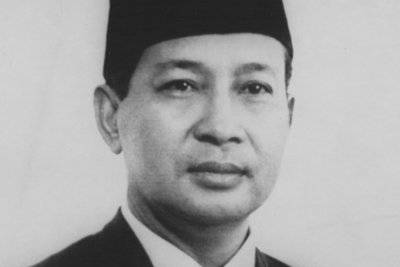
Indonesia names late President Suharto national hero despite opposition

Nov. 10 (UPI) — Indonesian President Prabowo Subianto designated his father-in-law, former President Suharto, a national hero on Monday, according to reports, despite opposition from critics who accuse the late dictator of committing human rights abuses during his 33-year rule.
Prabowo designated Suharto along with nine others for the prestigious title during National Heroes Day commemorations at the State Palace in Jakarta, The Jakarta Post and Indonesian news agency Antara reported.
National Heroes Day falls on November 10 to mark the day that in 1945, when Indonesians fought the British and allied forces in pursuit of an independent Indonesia following the fall of Japan.
Suharto became president after Sukarno was stripped of his power in 1967 and was then formally elected in 1968. He remained president until his resignation amid mass protests in 1998, which were sparked by his re-election in an uncontested election.
Often called Indonesia’s strongman, Suharto’s anti-communist stance during the Cold War secured him support from Western nations, which helped shield him some of his regime’s alleged human rights abuses.
Critics have accused the authoritarian leader of overseeing the killings of an estimated 500,000 to 1 million alleged communists during 1965-66. He is also accused of being responsible for the so-called Petrus Killings of 1982-85 when thousands of state-ordered extrajudicial killings were carried out, as well as alleged genocide in East Timor, among many other allegations.
The Indonesian Legal Aid Foundation criticized the Subianto administration Monday as “unethical, destructive to law and human rights, indifferent to anti-corruption efforts and demeaning to the true values of heroism” over Suharto’s designation.
“This title should only be bestowed upon those who truly fought for independence, justice humanity and the sovereignty of the people — not upon a leader whose rule was marked by authoritarianism and human rights violations,” the YLBHI said in a statement.
“YLBHI strongly condemns this conferral of the hero title, which further demonstrates that Prabowo’s regime has become a government that betrays the 1945 Constitution of the Republic of Indonesia, betrays and harms the people and has clearly engaged in disgraceful conduct.”