suggests

US envoy suggests it would be ‘fine’ if Israel expands across Middle East | Israel-Palestine conflict News

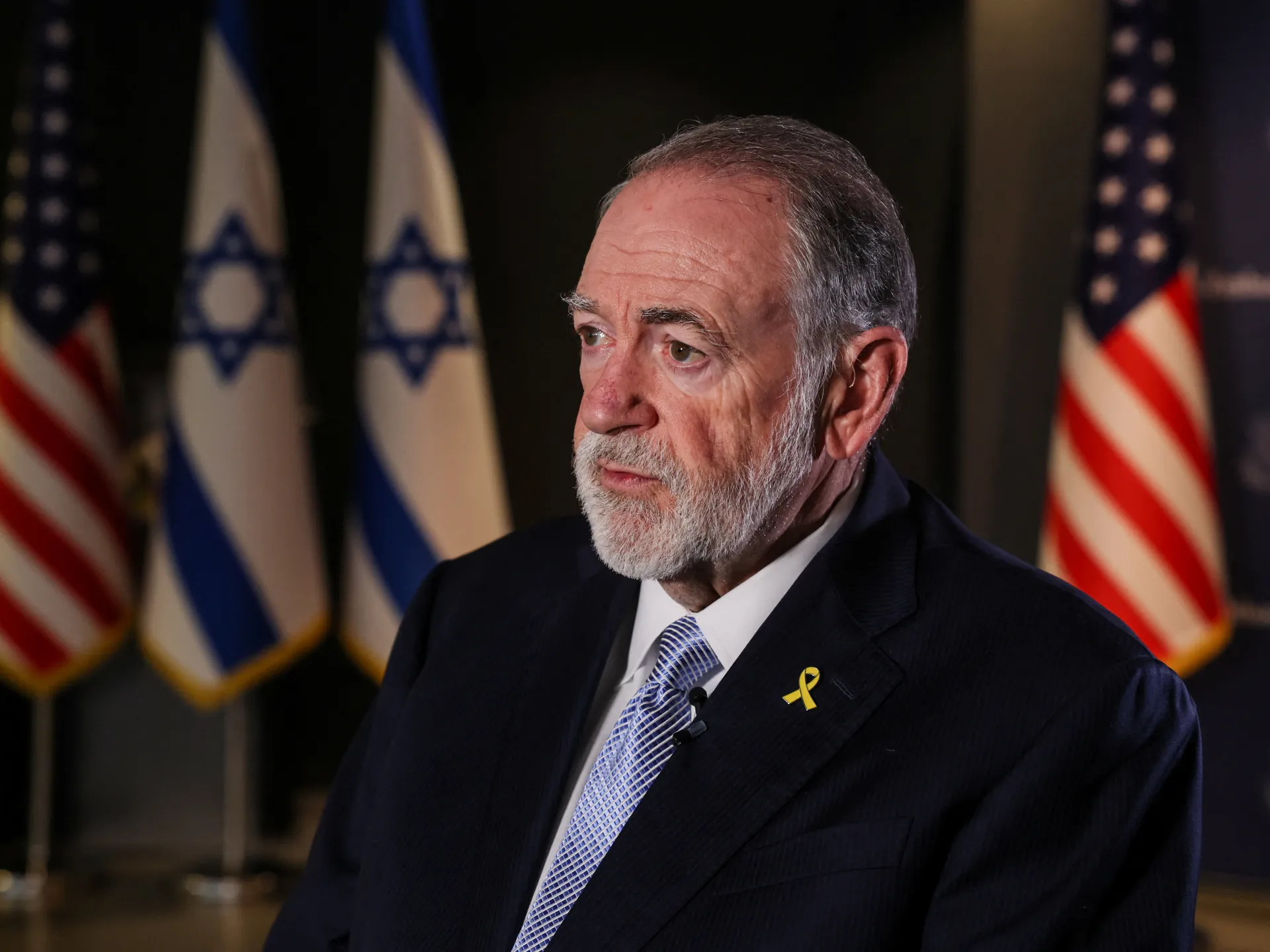
Mike Huckabee, the United States ambassador to Israel, has suggested that he would not object if Israel were to take most of the Middle East, stressing what he described as the Jewish people’s right to the land.

In an interview with conservative commentator Tucker Carlson that aired on Friday, Huckabee was pressed about the geographical borders of Israel, which he argues are rooted in the Bible.

Recommended Stories

list of 3 itemsend of list

Carlson told Huckabee that the biblical verse had promised the land to the descendants of Abraham, including the area between the Euphrates River in Iraq and the Nile River in Egypt.

Such a swath would encompass modern-day Lebanon, Syria, Jordan and parts of Saudi Arabia.

“It would be fine if they took it all,” said Huckabee, who was appointed by President Donald Trump last year.

Carlson, who appeared taken aback by the statement, asked Huckabee if indeed he would approve of Israel expanding over the entire region.

“They don’t want to take it over. They’re not asking to take it over,” the ambassador replied.

The US envoy, an avowed Christian Zionist and staunch defender of Israel, later appeared to walk back his assertion, saying that it “was somewhat of a hyperbolic statement”.

Still, he left the door open for Israeli expansionism based on his religious interpretation.

“If they end up getting attacked by all these places, and they win that war, and they take that land, OK, that’s a whole other discussion,” Huckabee said.

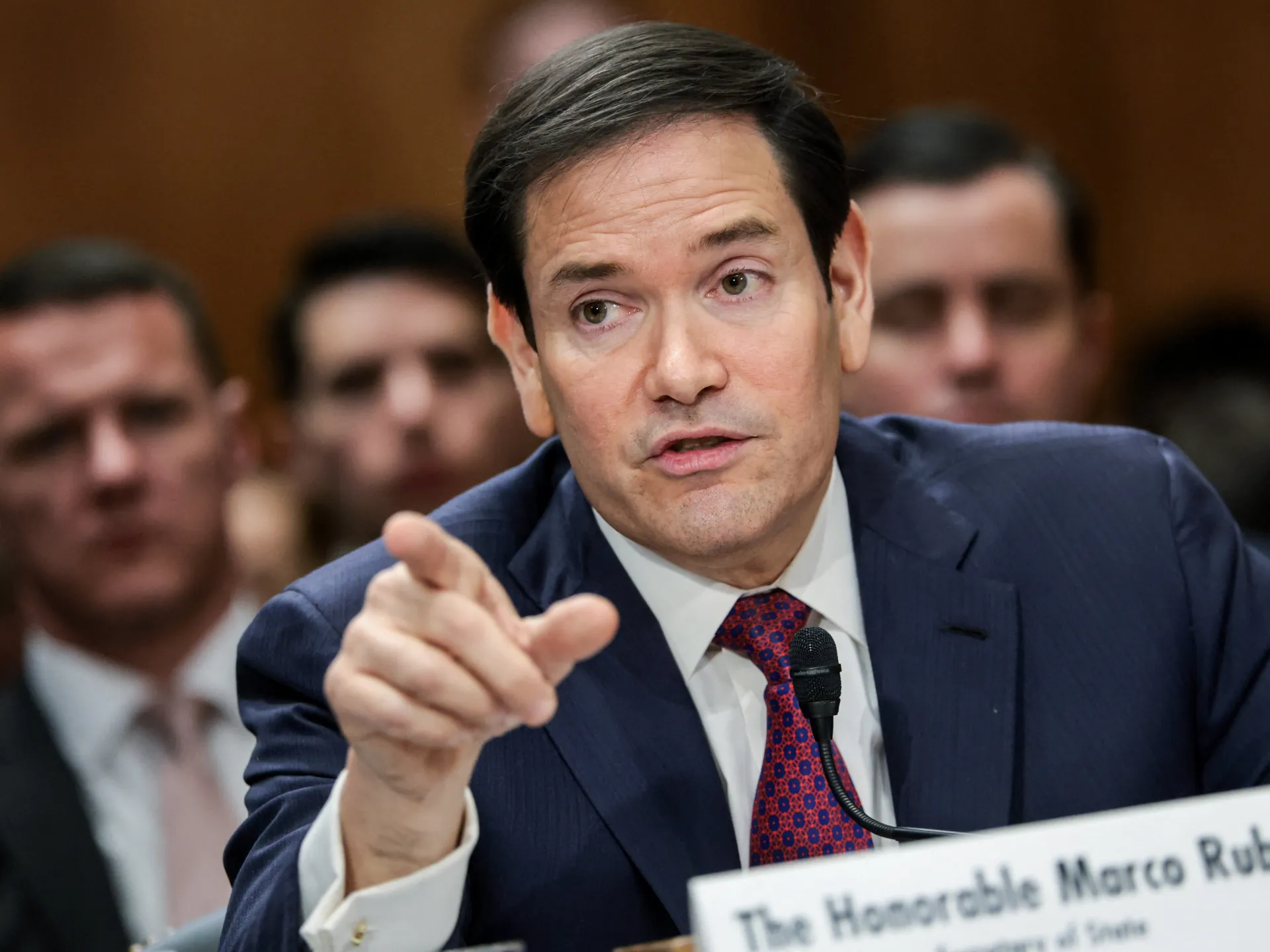
The Department of State did not respond to Al Jazeera’s request for comment on whether Secretary of State Marco Rubio shares Huckabee’s views on Israel’s right to expand.

The principle of territorial integrity and the prohibition against the acquisition of land by force have been a bedrock of international law since World War II.

In 2024, the International Court of Justice (ICJ) ruled that Israel’s occupation of the Palestinian territories is illegal and must cease immediately.

But Israeli law does not clearly demarcate the country’s borders. Israel also occupies the Golan Heights in Syria, which it illegally annexed in 1981.

The US is the only country that recognises Israel’s claimed sovereignty over the Syrian territory.

After the 2024 war with Hezbollah, Israel also set up military outposts in five points inside Lebanon.

Some Israeli politicians, including Prime Minister Benjamin Netanyahu, have openly promoted the idea of a “Greater Israel” with expanded borders.

Israel’s Finance Minister Bezalel Smotrich stirred international outrage in 2023 when he spoke at an event featuring a map that included the Palestinian territories and portions of Lebanon, Syria and Jordan as part of Israel, set against the colours of the Israeli flag.

In his interview with Carlson, Huckabee tried to argue that Israel’s right to exist is rooted in international law, but he also attacked the legal institutions that oversee international law for their opposition to Israeli abuses.

“One of the reasons I’m so grateful President Trump and Secretary Rubio are pushing hard, trying to get rid of the ICC [International Criminal Court] and the ICJ is because they have become rogue organisations that are no longer really about an equal application of law,” he said.

Beyond his professed religious devotion to Israel, Huckabee has faced criticism for failing to speak up for the rights of US citizens who have been killed and imprisoned by Israeli forces during his ambassadorship.

Last year, Huckabee even sparked anger from some conservatives in the US when he met with convicted spy Jonathan Pollard, who sold US intelligence secrets to the Israeli government, details of which later made it to the Soviet Union at the height of the Cold War.

Pollard, a former civilian analyst in the US Navy, served 30 years in jail and moved to Israel in 2020 after his release. He never expressed regret for his crimes, and in 2021, he called on Jewish employees in US security agencies to spy for Israel.

Huckabee said he does not agree with Pollard’s views, but he denied hosting him, arguing that he simply held a meeting with him at the US embassy in Jerusalem.

Asked if anyone can walk into the embassy to meet the envoy, Huckabee acknowledged that such a meeting requires a pre-approved appointment.

“He was able to come to the US embassy to have a meeting at his request. I did, and frankly, I don’t regret it,” Huckabee said.

“I met with a lot of people over the course of the time I’ve been here and will meet with a lot more.”

Source link

Trump suggests Iran has 10 days to reach agreement with US | Donald Trump News

US president says at inaugural Board of Peace summit that Washington and Tehran should make a ‘meaningful deal’.

Donald Trump has renewed his threats against Iran, suggesting that Tehran has about 10 days to reach a deal with Washington or face further military strikes.

Speaking at the inaugural Board of Peace meeting in Washington, DC, on Thursday, the United States president reiterated his argument that the joint Israeli-US strikes against Iran in June of last year paved the way to the “ceasefire” in Gaza.

Recommended Stories

list of 3 itemsend of list

Trump argued that without the US attack on Iran’s nuclear facilities, the “threat” of Iran would have prevented countries in the region from agreeing to “peace in the Middle East”.

“So now we may have to take it a step further, or we may not,” Trump said. “Maybe we’re going to make a deal. You’re going to be finding out over the next probably 10 days.”

Trump’s comments come days after the US and Iran held a second round of indirect talks.

On Wednesday, Iran’s Minister of Foreign Affairs Abbas Araghchi said the two sides made “good progress in the negotiations” in Geneva and “were able to reach broad agreement on a set of guiding principles” for an agreement.

But the US has continued to amass military assets in the Gulf region, including two aircraft carriers and dozens of fighter jets.

Iran, which denies seeking a nuclear weapon, has said it would agree to curbing its uranium enrichment and placing it under rigorous international inspection.

But the Trump administration has said that it would oppose any Iranian enrichment. Washington has also sought to place limits on Tehran’s missile arsenal, but Iranian officials have ruled out any concessions over the issue, which they say is a non-negotiable defence principle.

On Thursday, Trump said his diplomatic aides Steve Witkoff and Jared Kushner have had “very good meetings” with Iran’s representatives.

“We have to make a meaningful deal. Otherwise, bad things happen,” he said.

Last week, Trump said the US and Iran should come to an agreement “over the next month”, warning Tehran with “very traumatic” consequences.

But Iranian officials have expressed defiance against the US president’s threats.

“The Americans constantly say that they’ve sent a warship toward Iran. Of course, a warship is a dangerous piece of military hardware,” Iranian Supreme Leader Ali Khamenei wrote on X on Thursday.

“However, more dangerous than that warship is the weapon that can send that warship to the bottom of the sea.”

Tensions between the Washington and Tehran have been escalating since late 2025, when Trump – while hosting Israeli prime minister Benjamin Netanyahu in December – vowed to strike Iran again if attempts to rebuild its nuclear or missile programmes.

Days later, antigovernment protests broke out in Iran. Trump encouraged the demonstrators to take over state institutions, promising them that “help is on the way”.

Trump appeared to step back from the brink of attacking Iran last month, saying that the country agreed to halt the execution of dissidents under US pressure.

The two countries later renewed negotiations with the first round of talks since the June war taking place in Oman on February 6.

But threats and hostile rhetoric between Washington and Tehran have persisted despite the ongoing diplomacy.

In 2018, during his first term Trump nixed the multilateral nuclear deal that saw Iran scale back its nuclear programme in exchange for lifting international sanctions against its economy.

Source link

Iran suggests it could dilute highly enriched uranium for sanctions relief | Nuclear Energy News

Iran’s atomic energy chief says Tehran is open to diluting its highly enriched uranium if the United States ends sanctions, signalling flexibility on a key demand by the US.

Mohammad Eslami made the comments to reporters on Monday, saying the prospects of Iran diluting its 60-percent-enriched uranium, a threshold close to weapons grade, would hinge on “whether all sanctions would be lifted in return”, according to Iran’s state-run IRNA news agency.

Eslami did not specify whether Iran expected the removal of all sanctions or specifically those imposed by the US.

Diluting uranium means mixing it with blend material to reduce its enrichment level. According to the United Nations nuclear watchdog, Iran is the only state without nuclear weapons enriching uranium to 60 percent.

US President Donald Trump has repeatedly called for Iran to be subject to a total ban on enrichment, a condition unacceptable to Tehran and far less favourable than a now-defunct nuclear agreement reached with world powers in 2015.

Iran maintains it has a right to a civilian nuclear programme under the provisions of the nuclear Non-Proliferation Treaty, to which it and 190 other countries are signatories.

Eslami made his comments on uranium enrichment as the head of Iran’s Supreme National Security Council, Ali Larijani, prepares to head on Tuesday to Oman, which has been hosting mediated negotiations between the US and Iran.

Al Jazeera’s Ali Hashem, reporting from Tehran, said Larijani, one of the most senior officials in Iran’s government, is likely to convey messages related to the ongoing talks.

Trump said talks with Iran would continue this week.

Negotiations ‘very serious’

Both the US and Iran have given mixed signals about their progress in the negotiations. Iranian Foreign Minister Abbas Araghchi said Iran is “very serious in negotiations” and is eager to “achieve results”. However, he said, “There is a wall of mistrust towards the United States, which stems from America’s own behaviour.”

Iranian President Masoud Pezeshkian said the ongoing negotiations are an “important opportunity to reach a fair and balanced solution”, IRNA reported. He stressed that “Iran seeks guarantees for its nuclear rights” and the lifting of “unjust sanctions”, the agency added.

Trump, for his part, praised the latest round of talks on Friday as “very good” but continued to warn of “steep consequences” for Iran if it does not strike a deal.

“They want to make a deal as they should want to make a deal,” the US president said. “They know the consequences if they don’t.”

Before the two sides agreed to talks, Trump had repeatedly threatened Iran with a “far worse” attack than the US strikes on three Iranian nuclear facilities during June’s 12-day Israel-Iran war. He has escalated the pressure by deploying an aircraft carrier and accompanying warships to the Middle East.

Trump is expected on Wednesday to meet with visiting Israeli Prime Minister Benjamin Netanyahu, who is pushing the US to take a hardline stance in its negotiations with Iran, demanding not just concessions on its nuclear programme but also on its ballistic missiles and regional alliances.

Andreas Krieg, an associate professor in security studies at King’s College London, said the US and Iran appear to be “pivoting closer to a deal” than they were several weeks ago, even though there’s still a high risk of conflict.

“The [US] ‘armada’, as Trump calls it, is still in the area, so we still have that coercion going against the [Iranian] regime by the Americans,” Krieg told Al Jazeera. “But it seems to be fruitful in the way that the pressure works, and the Iranians have to make concessions.”

He added: “All the messaging from the Gulf countries – from Qatar, from Oman – from everyone involved, including from the Americans, has been very positive. And the Iranians’ feedback themselves was very positive.

“I think the problem that we have right now is how do we translate this momentum that we have right now on a strategic framework into the nitty-gritty of the details.”

Source link

U.S. suggests June deadline for ending Russia-Ukraine War

Representatives for Ukraine and Russia might meet in the United States in February to negotiate an end to the war and continued aerial attacks on Ukrainian infrastructure after U.S. officials suggested a June deadline for peace. Photo by EPA/State Emergency Service

Feb. 7 (UPI) — Representatives for Ukraine and Russia might meet in the United States in February after U.S. officials suggested a non-binding June deadline to end the war.

Ukrainian President Volodymyr Zelensky announced the proposed June deadline on Saturday and said the United States has invited Russia and Ukraine to meet very soon.

“America proposed for the first time that the two negotiating teams — Ukraine and Russia — meet in the United States of America, probably in Miami, in a week,” Zelensky told the BBC and other news outlets.

“We confirmed our participation,” he added, but Russia has not responded to the offer or proposed June deadline.

“They say they want everything done by June, and they will do everything to end the war,” Zelensky said, as reported by CNN.

U.S. officials “want a clear schedule of events,” the Ukrainian president said. “If the Russians are really ready to end the war, then it is really important to set a deadline.”

Russian forces have continued their aerial attacks on Ukraine’s energy facilities, which have caused power blackouts during the cold winter months.

Russian President Vladimir Putin has demanded that Ukraine surrender the entire Donbas region in southeastern Ukraine, which Russia invaded on Feb. 24, 2022.

Ukrainian forces hold about a fourth of the region, which bridged the gap between Russia and the Crimean Peninsula, which Russian forces occupied in 2014.

U.S. and Russian officials have not commented on the proposed bilateral meeting in the United States, and Zelensky said talks between U.S. and Russian officials might lead to demands that he would reject.

“Ukraine will not support even potential agreements about [Ukraine] that are made without us,” he said.

If any peace agreement is made, it would have to be approved via a referendum in Ukraine, which could take several months to complete.

Attorney General Pam Bondi speaks during a press conference at the Department of Justice Headquarters on Friday. Justice Department officials have announced that the FBI has arrested Zubayr al-Bakoush, a suspect in the 2012 attack on the U.S. Embassy in Benghazi, Libya, that killed four Americans. Photo by Bonnie Cash/UPI | License Photo

Source link