Last month, veteran Hollywood producer Roy Lee got three calls in a single day from executives at three different studios. Each believed they had found the next internet-native short poised to become a Hollywood blockbuster — an online monster named Siren Head — and each was ready to make an offer and wanted Lee’s help to develop a movie.
The frenzy traces back to the enduring global box-office runs of two low-budget horror films, Curry Barker’s “Obsession” and Kane Parsons’ “Backrooms,” which have earned $403 million and $349 million, respectively. Studios have become fixated on hunting down every short film, internet meme and indie video game with the potential to “put something new and fresh on the screen,” Lee said.
“In the past, whenever we were putting together movies with the studios, they would resort to going back to safer bets with filmmakers who’ve made movies before,” Lee said, whose L.A.-based horror production company, Spooky Pictures, secured three Barker films before “Obsession” hit theaters. “But because of the [ongoing] success, bosses are going to their lower-level executives saying, ‘You better find the next person and bring them to us.’”
The race for Hollywood to capture new-age internet intellectual property, or IP, is well underway. And, in some cases, it’s happening on terms decided by the online creators themselves, according to interviews with agents and producers.
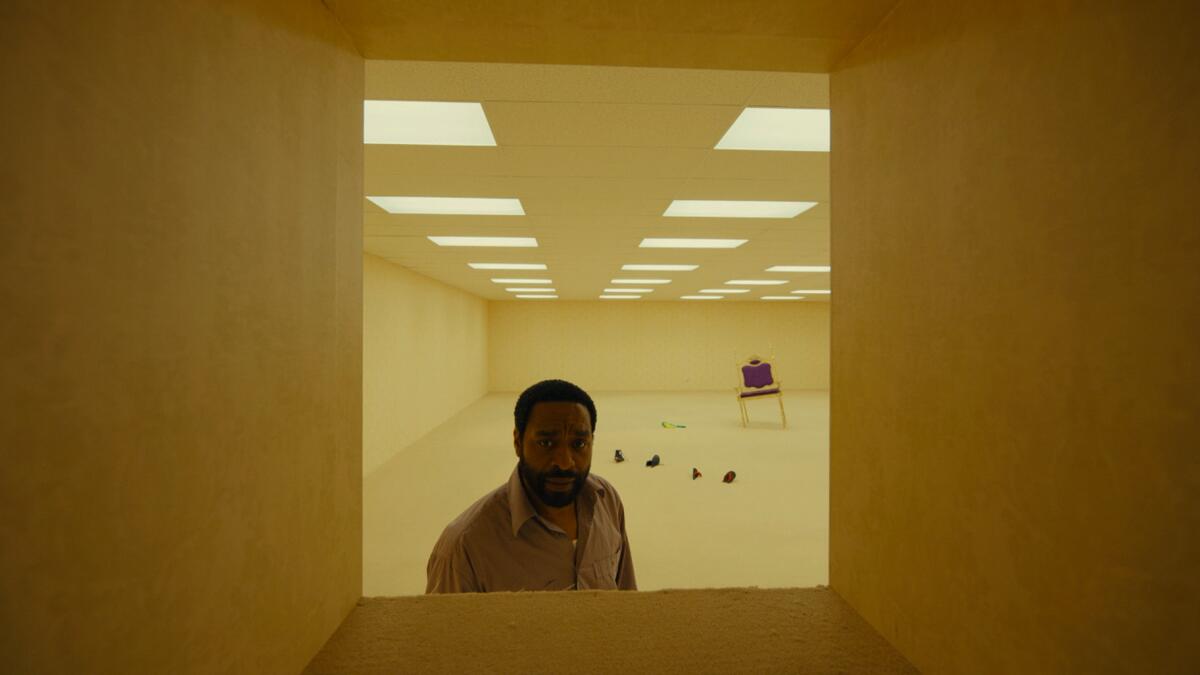
A still of leading actor Chiwetel Ejiofor in “Backrooms.”
(A24)
A new kind of scouting
Mining the internet for the next big thing isn’t a new idea. What’s changed is how major studios approach the creators behind it. In the past, studios have plucked influencers from their online niche and slotted them into whatever mainstream production needed a face. Under the precedent set by Barker and Parsons, studios are now looking to acquire a fully developed idea from creators who already have a built-in audience, agents say.
The industry has long been criticized for leaning too hard on sequels, franchises and remakes led by well-seasoned directors. But after “Obsession” and “Backrooms” were released, it became clear what kind of story could still pull audiences into a theater. Both films came from digital-native storytellers in their 20s who arrived with sizable online followings already attached. In the wake of their success, Parsons is reportedly working on a “Backrooms” sequel for A24, and Barker has another horror movie in the works for Universal Film Group.
“Hollywood is realizing that they have to take more chances,” said Jordan Lonner, Barker’s agent at United Talent Agency. “You have to take those leaps to attract a younger audience. They can feel when something is authentic and that they’re being served something by filmmakers that actually understand them, versus when they’re being served by a big corporate giant.”
Creators are calling the shots
As Hollywood looks to the internet for answers, agents and executives say creators may soon have more leverage than ever at the negotiating table. For example, creators probably will retain ownership and control of their IP, said Ty Flynn, a partner and agent at UTA’s Creators division.
“[Creators] can really have the final say in the creative oversight of their project,” Flynn said. “It’s definitely something that is unique to the space, because they’re obviously the masters of their audience. They know better than anyone else how their audience responds. It’s in the best interest of any partner to [have it] play out, versus trying to control it from the start.”
“Obsession” stars Inde Navarrette and Michael Johnston.
(Focus Features)
While creators break into the mainstream, their representatives say traditional companies are growing more comfortable betting on digital stars. UTA‘s roster includes Alix Earle, Jake Shane and Markiplier — the last of whom recently landed his own box-office breakthrough with “Iron Lung.” The YouTuber, whose real name is Mark Fischbach, self-financed the horror film for $3 million, distributed it on his own and earned roughly $50 million in 4,000 theaters worldwide.
Creative Artists Agency is also teaming up with private equity firm TPG to buy creator-led companies.
Kori Adelson, president of North Road Films — one of the financiers behind “Backrooms” — predicts this shift also will change how studios weigh “price point to risk.” If major companies are willing to diversify their budgets, she said, it could open the door for small-, mid- and big-budget projects to reach a wider range of viewers.
“There’s a direct relationship between budget and authenticity,” Adelson said. “The bigger the budget, the more protections that are in place to ensure that it makes money, because the investment is so big, so you are by definition not able to take risks. And the lower the price point is, the more freedom you have to be bold and to take big swings and to be original.”
Even before the release of “Obsession” and “Backrooms,” multiple studios competed for the theatrical rights to the popular online video game “99 Nights in the Forest,” hosted on Roblox. Disney’s 20th Century ultimately won, with the game’s developers signing on as executive producers.
“Studio people were bending over backwards to make all these promises that would never happen in the past,” Lee said.
There are limits to this model, however
Replicating this success at scale won’t be easy, said Paul Dergarabedian, head of marketplace trends for Rentrak. Because major studios operate with far bigger budgets, he said, the low-budget, indie playbook doesn’t simply transfer over.
Buzz Lightyear and Woody in Disney and Pixar’s “Toy Story 5.”
(Disney / Pixar)
“The whole point is that [‘Obsession’ and ‘Backrooms’] were made by independent filmmakers with very modest budgets,” Dergarabedian said. “It makes sense that everyone’s looking for what’s next, but it’s not an easy task. Both of those films came about very organically and authentically.”
Many studios will remain “inherently risk-averse,” said Darrell Miller, an L.A.-based entertainment lawyer — largely because of how much cash flow they need just to operate. He said, “Obsession’s” $403-million worldwide gross is a “big win” for Focus Features, the indie distributor backed by Universal, but it doesn’t compare to what a major studio needs from a tentpole release.
“Major studios have to generate over a billion to pay for the overhead, the operation and the size of their business model,” Miller said. “Blockbusters average between $200 [million] and $400 million [to make] and they’re spending another one to two times for marketing. The major studio game is much bigger.”
Every film, regardless of budget, carries a degree of unpredictability. Plenty of indie productions flop at the box office or never land distribution at all — just as plenty of big-budget releases continue to resonate with mass audiences. “Toy Story 5,” for one, has taken the 31-year-old franchise to new heights. The animated film, made with a budget between $150 million and $200 million, has earned upward of $763 million globally less than a month after its release.
Some creators are saying no
Even as studios chase internet-native IP, some of the most sought-after creators are turning them down. For Luke Pounder and Tristan Tales of L.A.-based TalesVision, traditional Hollywood isn’t the goal. The duo, known for fictional young adult content on YouTube, plans to keep leveling up their material while keeping it native to the internet.
“We never wait on a green light from anyone to tell the stories that we want to tell, and social media has already given us that opportunity,” Tales said.
The pair had been in talks with traditional studios about a few of their ideas, but timeline constraints and the potential loss of creative control steered them away. Even as creators become bigger stakeholders in these deals, for Pounder and Tales, that still isn’t enough.
Later this year, they‘ll launch their first premium series, “Lostlings,” with Lion Forge Entertainment. The eight-episode, half-hour series will premiere on their own YouTube channel.
“YouTube isn’t just like this discovery platform where you pluck the talent or the IP and then throw it into the traditional system. YouTube can be that next phase as well, where you take the talent or the IP and distribute it on there,” Pounder said. “YouTube has to catch up to its creators and their ambitions.”
Meanwhile, the competitive bidding war for the internet urban legend Siren Head closed last week, with Warner Bros. winning the theatrical rights for an undisclosed amount. The film will be directed by Brian Duffield (“No One Will Save You”) and co-written by Zach Cregger (“Weapons”). Trevor Henderson, the artist who created the monster online, will serve as an executive producer.
Lee, who will serve as a producer on the “Siren Head” movie, sees this as just the beginning.
“We’re talking about making films the traditional way using the talent that learns their craft either by doing shorts on YouTube, or doing things in a non-traditional manner.”
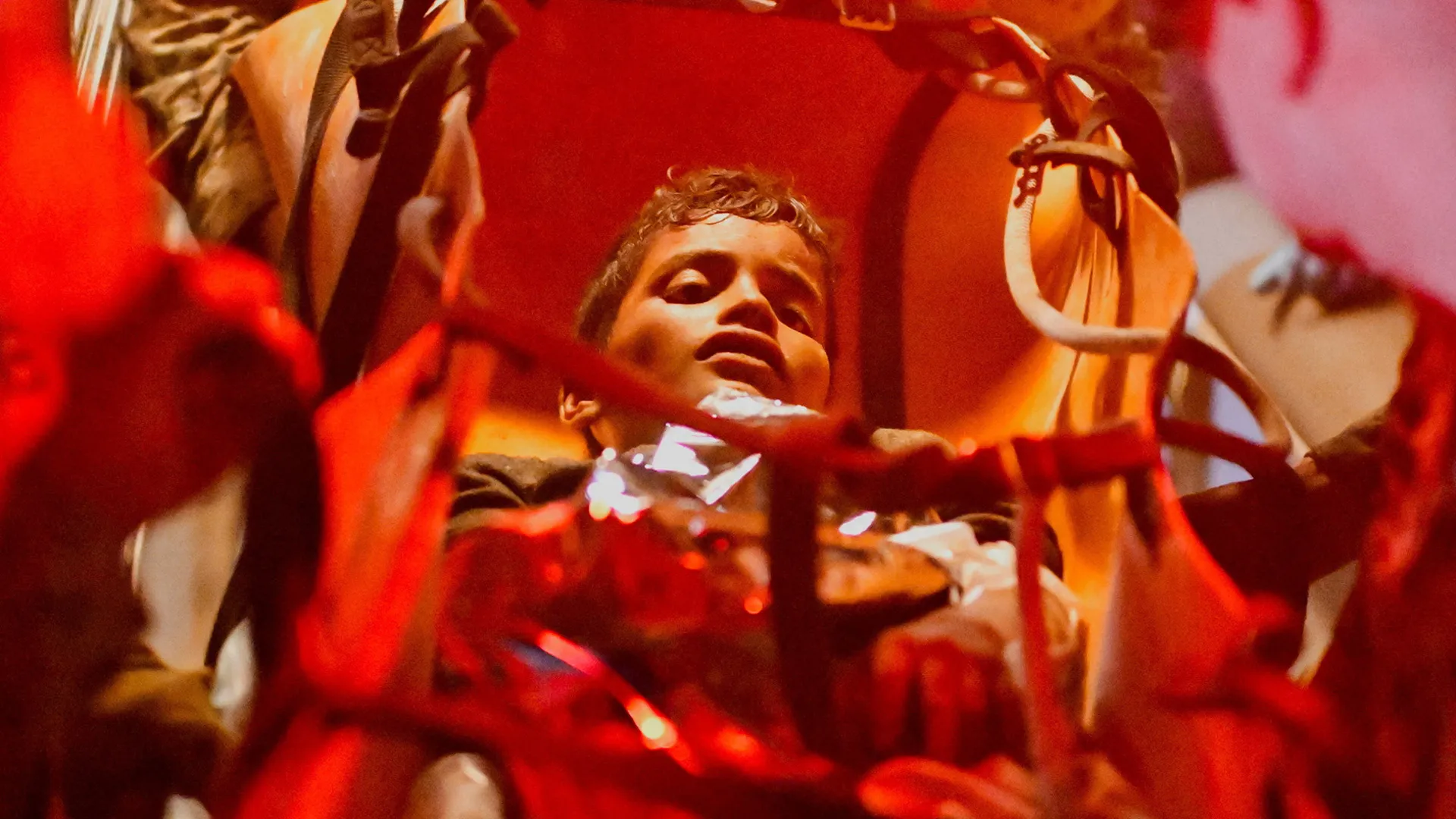
Rescuers in Venezuela are racing against time to find survivors after twin earthquakes left thousands missing. International teams have pulled several people from the rubble alive, including 11-year-old boy Moises rescued after a six-hour operation and a newborn reunited with their family.
Approximately 1.3 million Syrians returned from abroad in 2025, nearly three times the figure recorded the previous year, while a further two million internally displaced Syrians went back home, cutting the global Syrian refugee population from 6 million to 4.9 million.
On December 8, 2024, the al-Assad dynasty, which lasted 54 years, was removed from power by a rebel offensive.
The 14-year-long war led to one of the world’s largest migration crises, with some 6.8 million Syrians, about a third of the population, fleeing the country at the war’s peak in 2021, seeking refuge wherever they could find it.
More than half of these refugees, about 3.74 million, settled in neighbouring Turkiye, while 840,000 found refuge in Lebanon and 672,000 in Jordan.
Hiam told Al Jazeera she returned to Syria with her family after more than a decade of living in a host country. “The reason that pushed us to return was the high cost of living we were facing in the host country. We stayed there for 12 years, and it was a great hardship for us as refugees.”
We returned to Syria, thank God, but in the beginning it was difficult because we didn’t find homes or anything. Syria now is completely different from when we left. The return was very difficult at first – the scene was very hard for me.
“But thank God, I became stronger. The first period was very difficult, and at the beginning, it was hard to cope,” Hiam explained.
Syrian families living in Turkiye walk towards the Cilvegozu border gate to cross into Syria, after Syrian rebels ousted President Bashar al-Assad on December 13, 2024, in Cilvegozu, Turkiye [Burak Kara/Getty Images]
According to UNHCR data, some 556,00 Syrians returned from neighbouring Turkiye, 465,000 from Lebanon and 256,000 from Jordan.
More than seven in 10 returnees have reported improvements in security and freedom of movement in Syria, according to the UNHCR. Almost three-quarters of Syrian refugees abroad have also said they would eventually like to return home.
Returns in 2026 reached 549,800 by mid-May, driven by deteriorating conditions in Lebanon.
Julia Donaldson and the BBC have a long festive association with hits including The Gruffalo, Zog and last year’s The Scarecrows’ Wedding
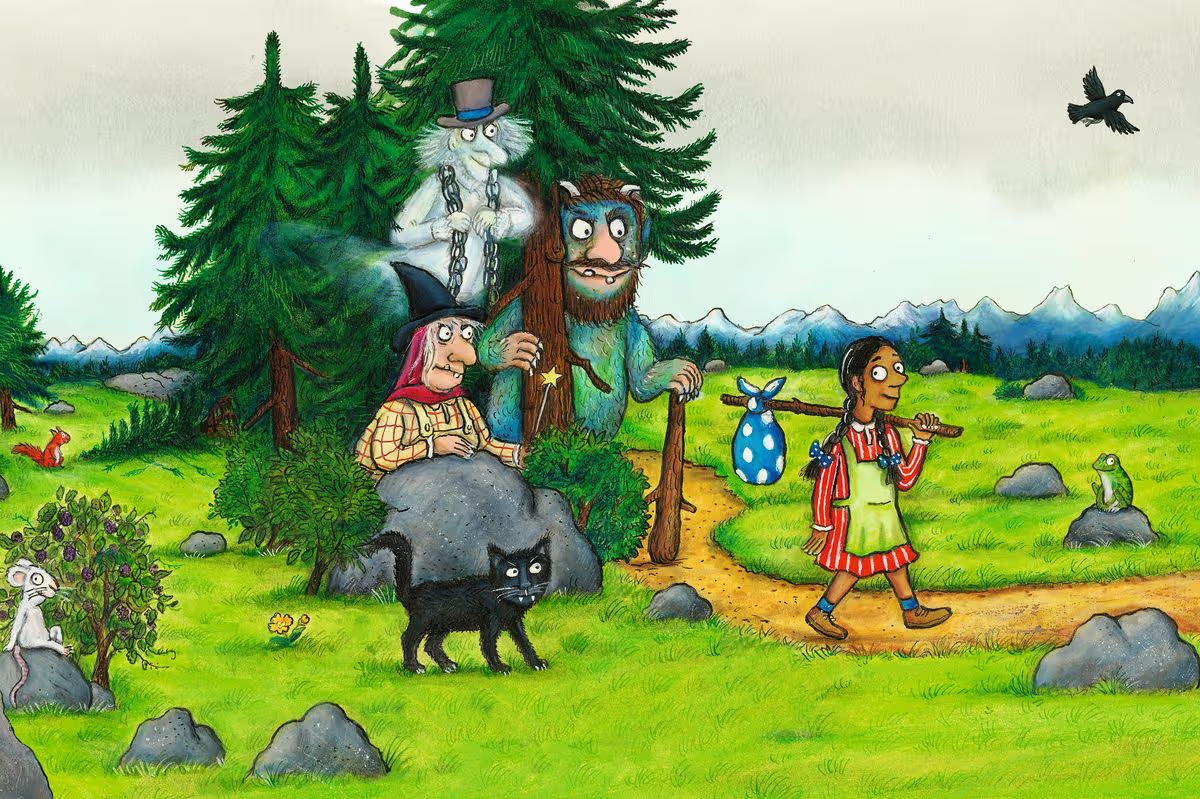
The Baddies is picture book written by Julia Donaldson and illustrated by Axel Scheffler(Image: Axel Scheffler)
Children’s Author Julia Donaldson and the BBC have announced which of her stories they will be turning into an animation for Christmas 2026.
A half hour special of The Baddies is being made by production company Magic Light Pictures. It will feature all-star voice cast, with returning favourite Rob Brydon voicing Ghost, Alison Steadman as Witch, Hammed Animashaun as Troll, Robyn Cara as Girl, Francesca Mills as Mouse alongside Sheridan Smith as the Narrator.
Author Dame Julia Donaldson said: “The Baddies was enormous fun to write because I loved inventing these gloriously wicked characters and then thinking about what might happen when they finally meet someone brave enough to outwit them. Magic Light has done a brilliant job bringing the story to life and the cast have captured all the humour, silliness and spookiness perfectly.”
The Baddies is about the worst Baddies in the world – a troll and a ghost and a witch, who love nothing more than being bad and boasting about it. When a girl with a blue spotty hanky moves into a cottage nearby, the Baddies quarrel about all the nasty tricks they want to play on her.
Then a mouse sets a challenge for the Baddies to see who can steal the hanky. Soon they learn that they may have met their match in the little girl. The story is described as being “packed with mischief, humour and heart”, and is a celebration of courage, kindness and the power of standing up to bullies.
Narrator Sheridan Smith said: “I’ve always loved Julia Donaldson and Axel Scheffler’s stories, so it was such a joy to be part of bringing The Baddies to life. The film is funny, spooky and full of heart, and the animation is absolutely beautiful. I think families are going to have enormous fun watching these wonderful characters causing chaos this Christmas.”
The Baddies is adapted from the hugely successful picture book written by Julia Donaldson and illustrated by Axel Scheffler.
Previous adaptations include The Gruffalo, Zog and last year’s The Scarecrows’ Wedding which pulled in 8.7 million viewers across the festive period
Lindsay Salt, Director of BBC Drama, said: “It’s with a mix of excitement and trepidation that we welcome The Baddies to BBC iPlayer and BBC One this Christmas. I’d like to assure everyone at home that we’ll be working very closely with Julia, Axel and the team at Magic Light to keep viewers safe from Ghost, Witch and Troll’s dastardly deeds.”
The aniamation will go out and Christmas Day on BBC1. Previous adaptions of Julia Donaldson and Axel Scheffler’s works are available to stream on BBC iPlayer.
CANNES, France — Greeting from the Croisette, where the 79th Cannes Film Festival is underway — and where the Envelope has its inaugural Cannes issue.
I’ve been hard at work since before the Oscars assigning and editing stories about the global film industry and this storied event’s role in it, albeit with an L.A. twist. And with this special edition of the newsletter, you too can be a part of the “Entourage,” at least vicariously. Read on for more highlights from the issue, and be sure to check out Amy Nicholson and Joshua Rothkopf’s conversation about the Cannes films they’re most excited to see before you block out your schedule.
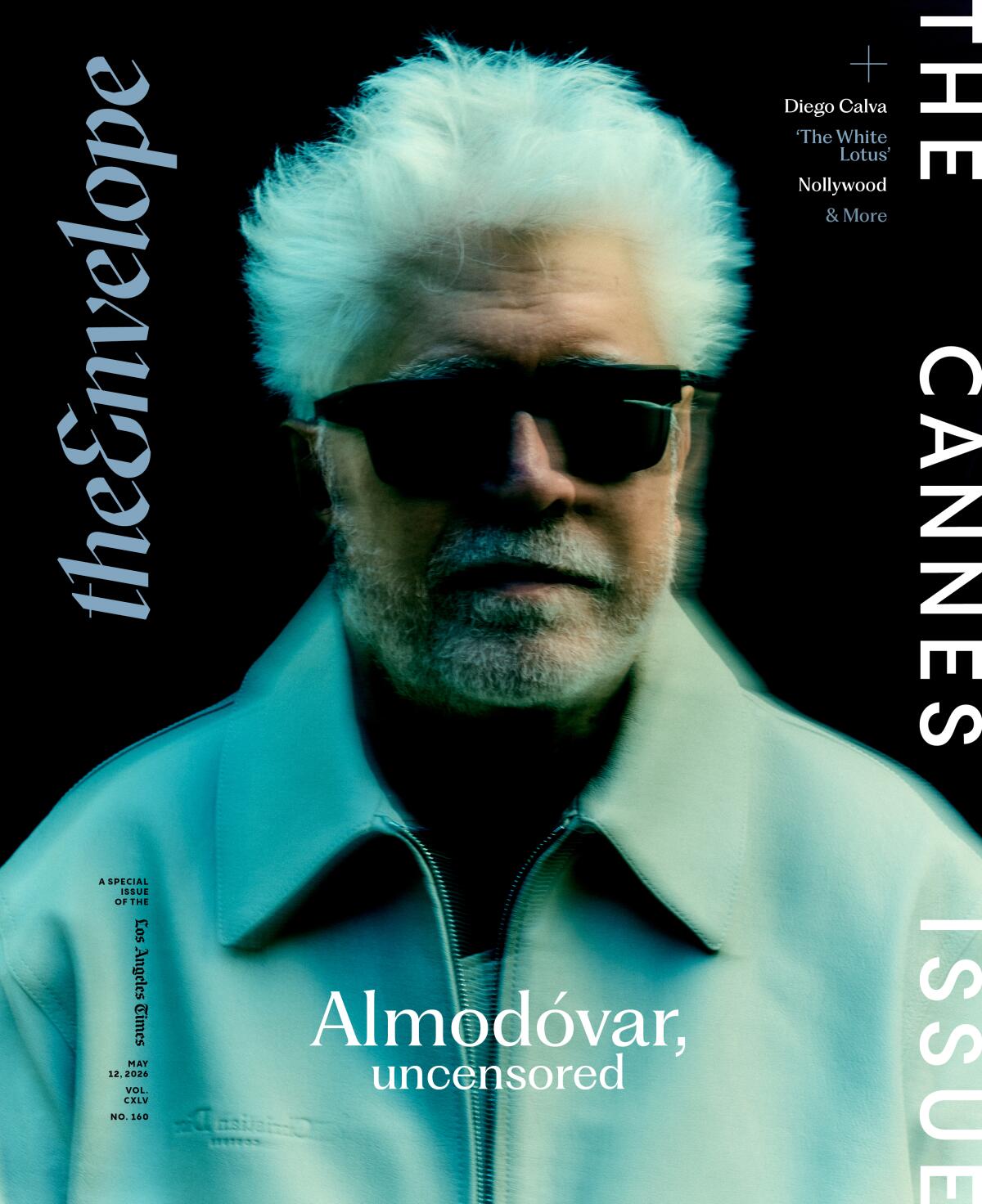
Cover: Almodóvar, uncensored
(Shayan Asgharnia / For The Times)
You know you have a juicy interview on your hands when you wake up to it being aggregated by the trades, and I can’t really blame them: Columnist Glenn Whipp’s cover profile of Spanish auteur Pedro Almodóvar, in competition here with his new film “Bitter Christmas,” is chock full of pungent quotations.
At 76, the filmmaker is unafraid to speak his mind, whether it be about the apolitical Oscars or the decline of American democracy. But his metafictional treat, in which an acclaimed filmmaker falls out with an old friend over pilfering real life for inspiration, shows that he’s equally willing to turn that critical lens inward. It’s the film, he says, “where I’ve been cruelest with myself.”
Digital cover: Cannes kid Diego Calva
(Ian Spanier / For The Times)
In one of those serendipitous intersections editors dream off, it’s Almodovar that our digital cover star is most amped to meet during the fortnight: “If Almodóvar shakes my hand, I can die in peace,” Diego Calva tells contributor Carlos Aguilar.
With two films at the festival — Jordan Firstman’s “Club Kid,” playing in Un Certain Regard, and Nicolas Winding Refn’s highly anticipated out-of-competition title “Her Private Hell” — Calva, who appeared earlier this year in “The Night Manager” Season 2, may be hard for Almodóvar to miss. But the actor isn’t letting the auspicious moment go to his head. “My friends don’t care whether I have seven Golden Globes or if I’m not working at all,” he says. “To them, I’m just Diego.”
What’s next for Nollywood
(Photo illustration by Stephanie Jones / For The Times; photos courtesy of Anthill Studios, African International Film Festival)
I admit I didn’t know much about the Nigerian film industry beyond the term “Nollywood” before reading Daron James’ deep dive on how the West African country is charting a new course after its recent streaming boom went bust. Now I’m eager to see if its embrace of theatrical exhibition — including, gasp, building more cinemas — can rub off on its American namesake.
Nollywood may produce “the second most movies globally after India,” as James writes, but “creative hustle… is still as important as ever.”