Scotland assistant coach Steven Naismith hailed Curtis’ drive to move out on loan and not be content with being a squad player at Rangers.
“This desire, this instinctive nature to get chances,” Naismith added on BBC Sportscene when analysing the youngster’s weekend goal.
“He’s got a bit of pace, he’s direct, he commits defenders – these are all things that have caught the eye.”
Former Celtic and Hibernian midfielder Scott Allan added on the BBC’s Scottish Football Podcast: “When we don’t have Gannon-Doak, we don’t have someone who can really travel with the ball. Curtis does have that.
“Yes, he’s still developing and doesn’t always have that final ball, but that can be worked on. We aren’t blessed with a lot of pace, especially in the attacking areas.
“You have to have pace in those areas, especially when at times we’ll be forced back and when we’re then trying to get up the pitch. Players with pace can be the difference.”
“I respect there’s lots of discussion around our tactical plans – when you look at the end point, look at the result and you the number of tries scored, that’s completely understandable,” said Borthwick
“I think it’s more about improving that incisiveness with our attack and getting over the try line rather than necessarily any major overhaul.
“You have an overview, a structure of ‘this is how we want to approach the different aspects of the game’, and then talk about the players bringing their points of difference.”
Borthwick says that he speaks with Sweeney “at least once or twice a week” and Conor O’Shea, the RFU’s director of performance rugby, “pretty much on a daily basis”.
“Ever since I started this role back in late 2022, we have always worked very, very closely together,” Borthwick added.
“I think that I’ve always been very clear on the vision of the team, initially going very quickly into that 2023 Rugby World Cup which was just around the corner, and ever since then building through each of these competition windows since.
“We are all disappointed and frustrated.
“We came to this tournament with really high aspirations, as did the players, and we’ve been unable to meet those targets we set for ourselves.”
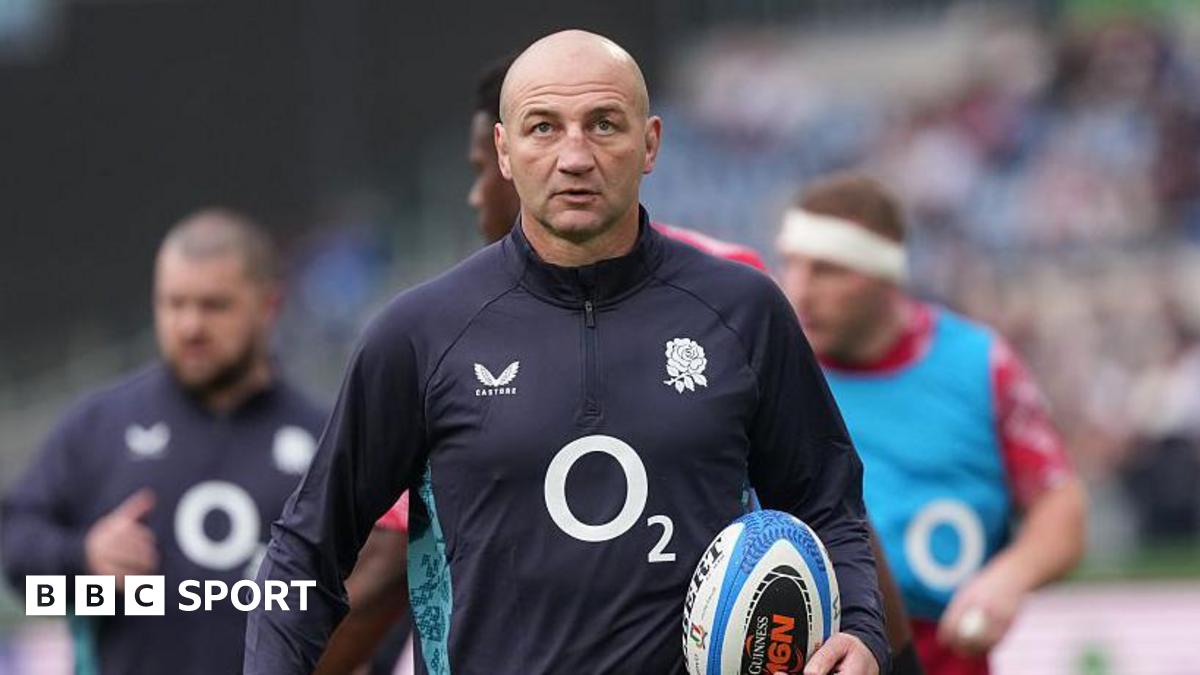
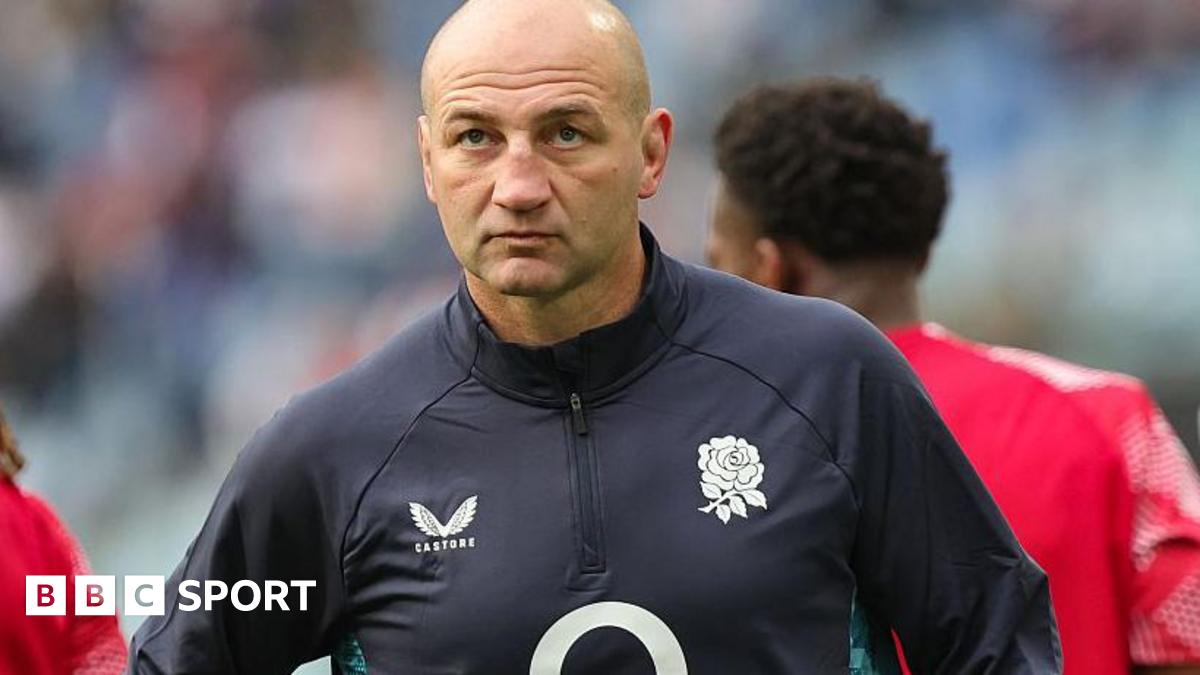
Steve Borthwick’s boss has given the England coach his backing, but says there will be a full examination of the woeful Six Nations campaign after the team’s final-round match against France on Saturday.
England are fifth in the table and well out of the title running after successive defeats by Scotland, Ireland and Italy – which was the first ever loss to the Azzurri – ruined their ambitions and prompted questions over Borthwick’s future.
“After a 12-match winning run, these past three results have been hugely disappointing, and we feel that just as much as everyone else,” said Rugby Football Union chief executive Bill Sweeney.
“Steve and his coaching team are working tirelessly to make improvements, and we remain fully committed to supporting them and the players as they face France this weekend and then look ahead to the Nations Championship.
“Part of that support is being open about what hasn’t gone right during this Six Nations and making sure everyone has a clear sense of how we move through those challenges together. That’s something we’ll be talking through and working on in the days and weeks ahead.
“We will work together to understand and rectify why we have been unable to meet the expectations and anticipation going into these games.
“England fans rightly expect a team that learns and grows through adversity, and we’re confident this group will do everything they can to deliver that.”
Borthwick defended his record and the direction of the team after Italy, who had lost their previous 32 games against England, ran out 23-18 winners in Rome.
“Absolutely,” replied the 46-year-old when asked if he was the right man for the job.
“Right now this is a tough period, but what we will do is learn from it and make sure we are stronger going forward.
“It is tough right now and we are not hiding away from the fact it is tough.”
In “Rooster,” a genial comedy premiering Sunday on HBO, Steve Carell, comfortable as an uncomfortable person, plays Greg Russo, the author of a best-selling series of books whose hero is named Rooster. He has come to leafy, fictional Ludlow College to give a reading, but also because it’s where his daughter, Katie (Charly Clive) teaches art history, and because it’s all over school that her husband, Archie (Phil Dunster), a history professor, has left her for Sunny (Lauren Tsai), a graduate student in neuroscience. He’s a concerned father.
“They are light; they are fun. The characters that you like have sex, the ones you don’t get shot in the face,” Greg tells poetry professor Dylan (Danielle Deadwyler) of the “beach read” books he writes, as she ushers him to an auditorium. Unlike his fictional alter ego, Greg is by his own account a self-conscious introvert, heightened by the fact that his ex-wife, Elizabeth (Connie Britton) — “a philanthropist, a pioneer in corporate gender equality and an accomplished CEO” whose name adorns the school’s new student center — left him five years earlier and he never moved on. Additionally, Greg likes nuts and cocoa, can toss a penny into a jar from across a room, and played minor league hockey, which will put him back on skates here.
College president Walter Mann (John C. McGinley) decides it would be “a feather in his cap” to hire a reluctant Greg, “a best-selling author that the parents have actually heard of,” as an artist-in-residence — a deal he makes impossible to refuse by agreeing to keep Katie on staff after she accidentally burns down Archie’s house. (She was only trying to burn his first edition of “War & Peace.”) It’s a role quite like the one McGinley played/plays on “Scrubs,” but more politic and better dressed, when dressed — he takes meetings in his backyard sauna.
And they’re off.
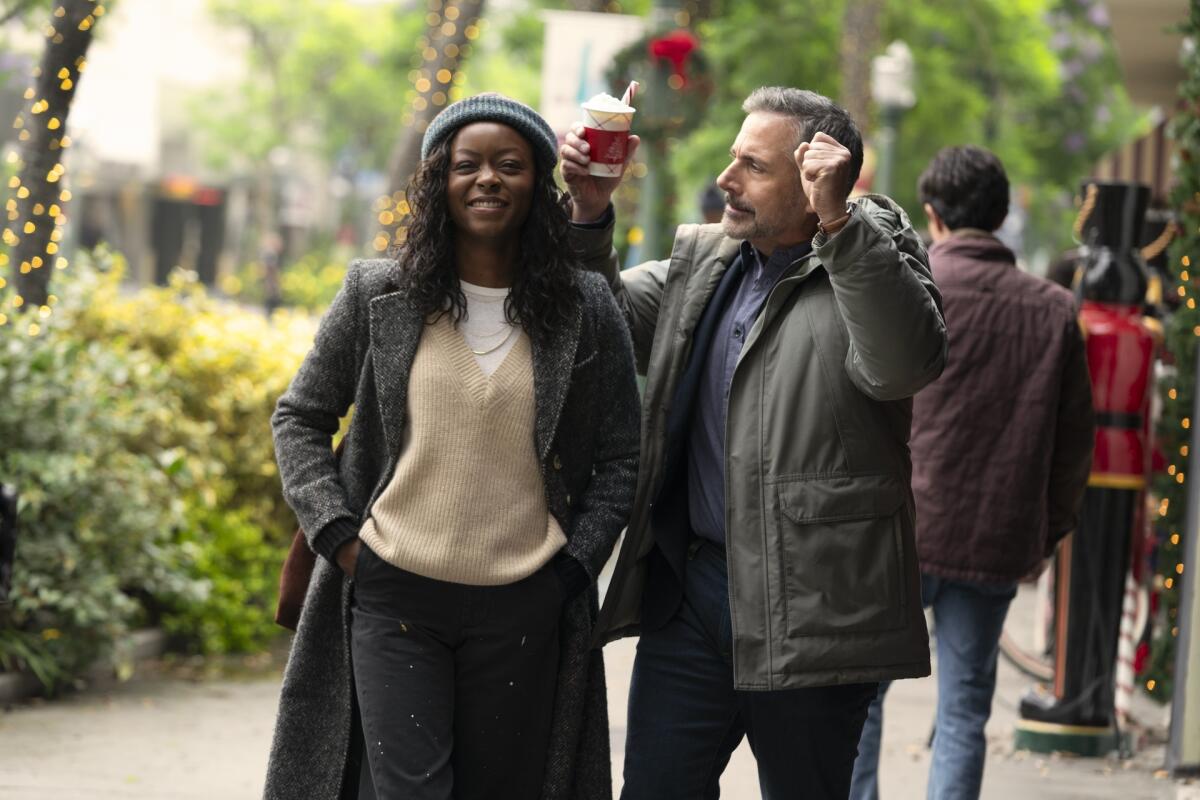
Poetry professor Dylan (Danielle Deadwyler) and author Greg (Steve Carell) become colleagues when Greg is named artist-in-residence.
(Katrina Marcinowski / HBO)
The series was created by Bill Lawrence (“Ted Lasso,”“Shrinking,”“Scrubs,”“Bad Monkey”) and frequent collaborator Matt Tarses, and as men of at least a certain age, the view is slanted from experience back toward innocence; students play a secondary, though not insignificant role in the story. There are some pro forma jokes about the sensitivities of the young, with Greg getting into not-very-hot water over misunderstood references to “white whale” and the Bangles’ “Walk Like an Egyptian.” (“Liberal arts college used to be havens for free thought, Greg,” says Walt. “When did you and I become the bad guys?”) Not that the olds are reliably smart about life — the ways in which they’re not power the series — but they have a better notion of where they’re stupid.
“No one must be humiliated,” Greg says to Archie, quoting Chekhov, as Archie goes off to talk to Katie. (The quote is in the animated opening titles as well, so you can take it as important.) But no one here is out to humiliate anyone, which is nasty and unkind and not at all the sort of humor Lawrence trades in. Of course, characters will be put into embarrassing positions, or embarrass themselves, embarrassment being the root of all comedy, or near enough. (There’s a good bit of slapstick knitted in.) And though we’re told that “there are real villains lurking around this place,” niceness reigns — at least through the six episodes, of 10, available to review — with the possible exception of Alan Ruck as the dean of English. (“There’s no way she wrote all these poems,” he says of Emily Dickinson.)
Though there are couples, and ex-couples and new couples, one doesn’t necessarily feel invested in their getting together, or staying together, or getting back together. Indeed, as in other Lawrence projects — which typically feature divorced or separated characters — romance is a sort of side dish, less the issue than whether people are managing to treat one another well. We knew Ted Lasso wasn’t going to get his wife back, but it wasn’t the point (nor was winning games, really); kindness was what mattered. Greg’s possibly pre-romantic friendship with Dylan is no more significant than his cross-generational friendship with a group of goofball students (led by Maximo Solas as Tommy); they treat each other as peers, while knowing they aren’t. He teaches them that peanut butter can make celery better, and they teach him that he’s cooler than he thinks.
Katie, who says she still loves Archie — who says he still loves her — will also call him “a run-of-the-mill narcissistic a— who sometimes smells like wildflowers.” (As for Sunny, practical and deadpan — that no one gets her jokes is a running joke — not even Archie can see what she sees in him, a problem you might have as well, but, as is true of most everyone here, we’re not meant to merely write him off. Funny secondary characters, who get some of the best business, notably include Rory Scovel as a cop who can’t keep track of his gun, Robby Hoffman as Sunny’s intense, anti-Archie roommate and Annie Mumolo (co-writer of “Bridesmaids”) as Walt’s arch assistant.
Old-but-not-that-old-fashioned, “Rooster” has a tinge of Gen X nostalgia, underscored by the ’80s college radio classics that line the soundtrack. (R.E.M.’s Michael Stipe co-wrote and sings the series’ theme, and Greg, drunk and in a mood, will kill a party getting the DJ to play “Everybody Hurts.” Directed by Jonathan Krisel (“Portlandia,” “Baskets”), it’s low stakes, soft-edged, humane, basically gentle, a little fantastic, a little farcical, well cast and well played in every instance — qualities I happen to like, and maybe you do, too.
In the build-up to the match, Borthwick had urged his side to chance their arm and throw one more pass. But Italy looked quicker witted and more ambitious throughout.
A pair of clever kicks from fly-half Paolo Garbisi – the second, a well-weighted sideways nudge to release Ioane – set up the field position from which the fly-half kicked the first points of the match on 21 minutes.
An accurate long line-out throw and an Earl rumble gave England the momentum to put Tommy Freeman in for his ninth Test try, although Smith pushed the kickable conversion wide and Italy lurked dangerously as England continued to splutter.
Five minutes before the break, Menoncello – Italy’s leading metre-maker, clean-breaker and defender-beater so far in the championship – made good on the threat.
The 23-year-old carved past a startled Heyes on the fringe of a breakdown and galloped over to put Italy 10-5 in front.
England recovered. Albeit briefly.
A smart kick from Smith switched play to Tom Roebuck, and the Sale wing showed deft footwork to scamper in on the stroke of half-time.
A pair of Smith penalties after the break stretched England’s lead out to 18-10 and England seemed to be turning the tide of the contest, with Underhill and Itoje both burrowing deep for turnovers.
However, with 25 minutes to go and the match seemingly there for the taking, England’s contrived to hand the initiative back to Italy.
Underhill and Itoje watched on grimly from the sidelines as first Garbisi’s boot and then their backline’s all-court brilliance – Ioane stepping Roebuck in a sliver of space, Menoncello bullocking on and Marin gleefully scampering in – wrenched the contest out of their grasp.
England found some late urgency as they vainly chased the game. Ollie Chessum bust a hole to spin the Italian defence, but the scramble snuffed out the danger.
England looked dazed and at the end of days, as the clock went red, the ball went dead and the Stadio Olimpico lit up and leapt to its feet around them.
Defeat by France in Paris next weekend would mark only the third time in the 115-year history of the Five and Six Nations that England have lost four games in a single campaign.