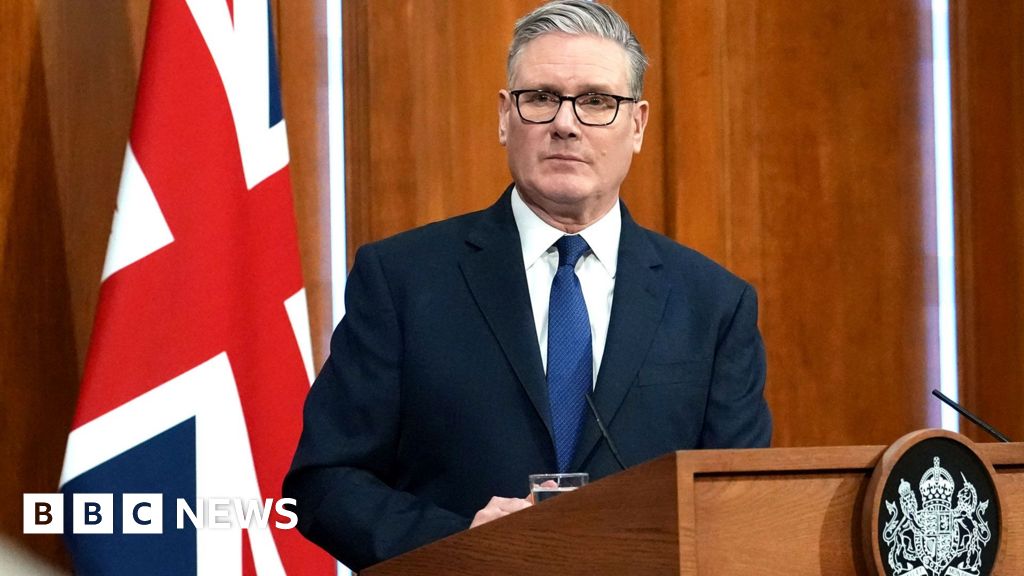
UK will seek closer ties with EU in light of Iran war, Starmer says
It comes as UK-US relations have been strained by the PM’s refusal to be dragged further into the Iran war.
Source link
It comes as UK-US relations have been strained by the PM’s refusal to be dragged further into the Iran war.
Source link
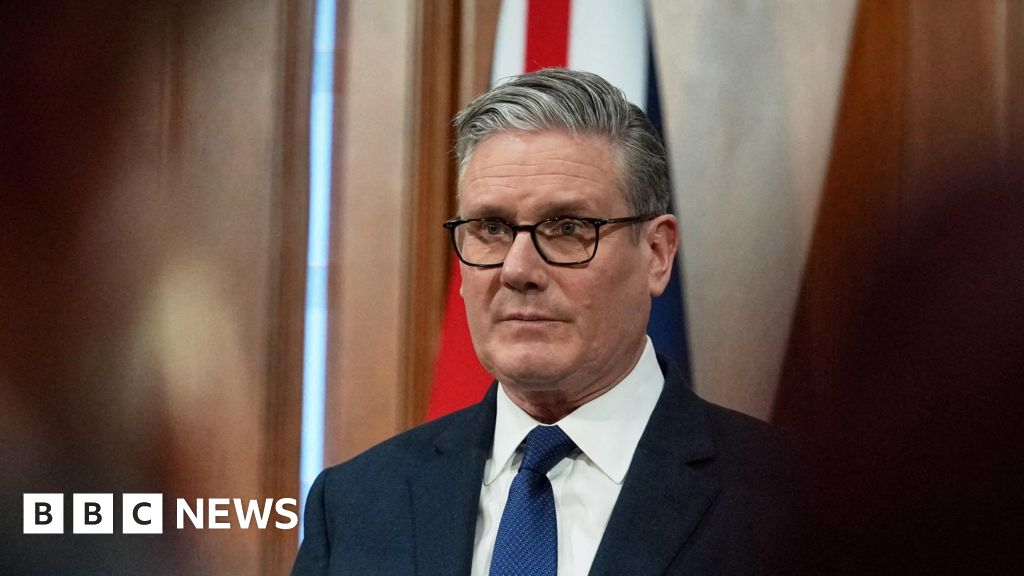
The prime minister used a Downing Street news conference to make three big calls on the Iran war and cost of living pressures.
Source link
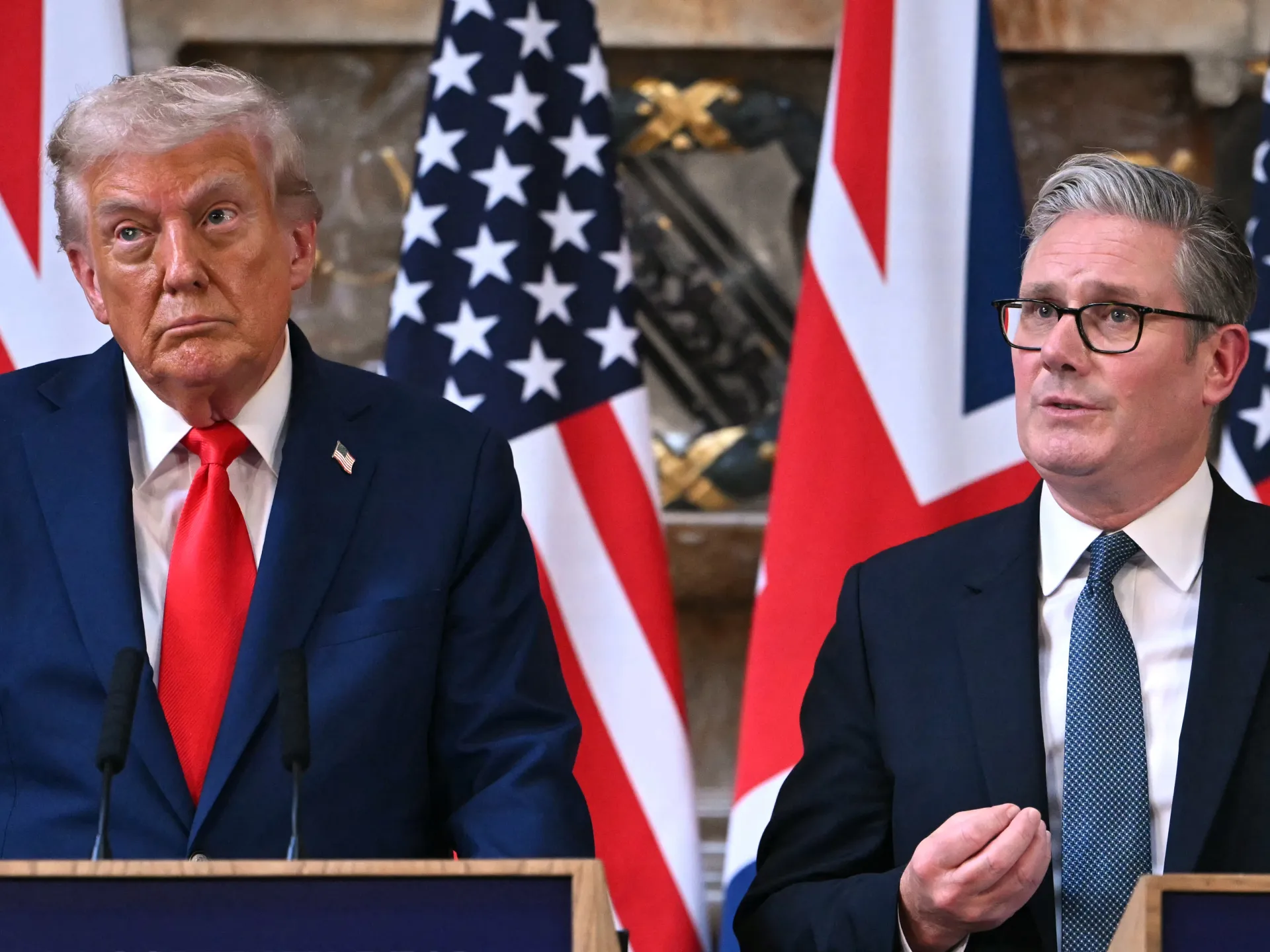
United States President Donald Trump has shared a Truth Social video of a TV comedy skit showing a panicked United Kingdom Prime Minister Keir Starmer trying to avoid his call, on the same evening the two leaders spoke about the US-Israel war on Iran.
The skit, aired on the premiere of the new British version of Saturday Night Live (SNL), adapted from the long-running US show, shows Starmer, played by George Fouracres, panicking inside 10 Downing Street at the prospect of a call with Trump.
list of 4 itemsend of list
Starmer turns to a fake David Lammy, his deputy prime minister, and says, “What if Donald shouts at me?”
When Trump picks up the phone, Starmer immediately hangs up, asking why it is so difficult to talk to “that scary, scary, wonderful president”.
“Sir, just be honest and tell him we can’t send any more ships to the Strait of Hormuz,” Lammy says, the vital shipping lane effectively blocked by Iran since the US and Israel launched strikes on Iran on February 28.
“I just want to keep him happy, Lammy. You don’t understand him like I do – I can change him,” Starmer says.
Trump did not post any comment alongside the video.
Trump has lashed out at his NATO allies, including Starmer, for not joining the US efforts to break the de facto blockade of the Strait of Hormuz, through which 20 percent of global oil passes. A week ago, he asked the UK to be more supportive of the US war efforts because Washington spends “a lot of money” on NATO.
The US president last week called the NATO countries “cowards” for their refusal to join the war. This, after European leaders rejected Trump’s demands to help ensure freedom of navigation in the Strait of Hormuz.
“Now that fight is militarily WON, with very little danger for them, they complain about the high oil prices they are forced to pay, but don’t want to help open the Strait of Hormuz, a simple military maneuver that is the single reason for the high oil prices. So easy for them to do, with so little risk,” he wrote on the Truth Social platform.
The closure of the strait has sent oil prices soaring, creating the biggest energy crisis since the 1970s. On Sunday, Trump threatened to “obliterate” Iran’s power plants if it did not reopen the strait within 48 hours.
Separately, on Sunday evening, Starmer spoke with Trump to discuss escalating tensions in the Middle East, his office said in a statement. It was not clear if the call took place before or after Trump posted the SNL skit on Truth Social.
In a readout of the call, the Prime Minister’s Office said the two leaders focused on “the need to reopen the Strait of Hormuz to resume global shipping” amid growing concerns over energy security and regional stability.
“They agreed that reopening the Strait of Hormuz was essential to ensure stability in the global energy market,” the statement said.
The leaders also agreed to remain in close contact as the situation develops and “to speak again soon”, it added.
On Monday, Starmer said there had been no assessment that mainland Britain was being targeted by Iran.
Starmer asserted that any attempt to reopen the Strait of Hormuz needed careful consideration and a viable plan, and that his number one priority was to protect British interests and de-escalate.
The US leader has repeatedly railed against Starmer since the start of the war, accusing him of not doing enough to support the US.
“This is not Winston Churchill that we’re dealing with,” Trump said earlier this month, after Starmer initially declined to let US warplanes use UK bases to strike Iran.
“I’m disappointed with Keir,” Trump has also said, slamming Starmer’s “big mistake”. “I like him, I think he’s a nice man, but I’m disappointed.”
On Friday, the UK government gave authorisation for the US to use its military bases to carry out strikes on Iranian missile sites that were attacking ships in the Strait of Hormuz.
Starmer initially rejected a US request to use British bases for the strikes on Iran, saying he needed to be satisfied that any military action was legal.
But the prime minister modified his stance after Iran conducted strikes on British allies across the Middle East, saying the US could use RAF Fairford and Diego Garcia, a joint US-UK base in the Indian Ocean.
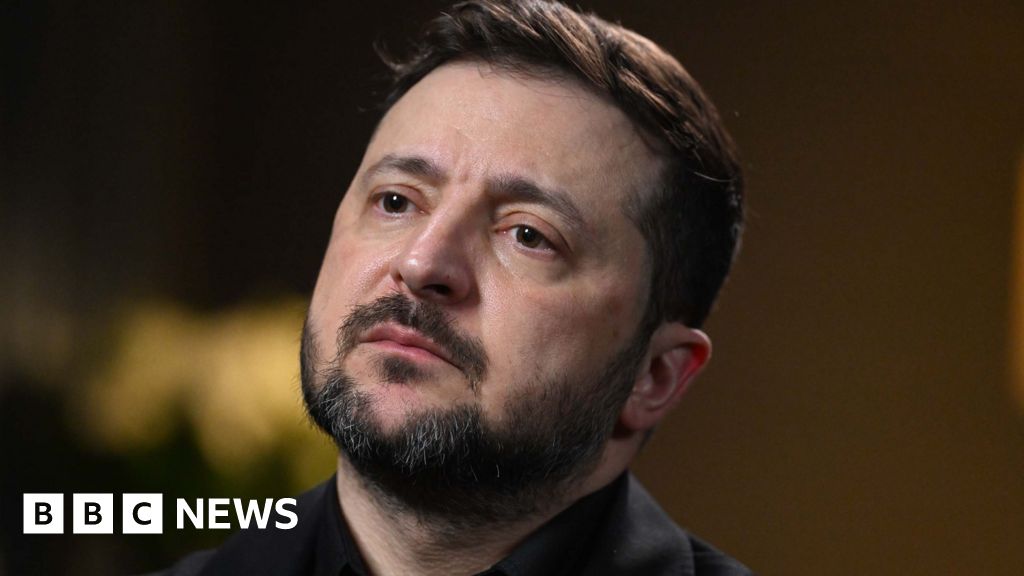
In an exclusive interview with the BBC after talks with Starmer, the Ukrainian president says the pair should meet to “re-load the relationship”.
Source link

Households have faced a sharp rise in the cost of heating oil since the outbreak of the US-Israeli war with Iran.
Source link
WASHINGTON — New signs of a widening regional conflict emerged Thursday as the war with Iran entered its sixth day, with European allies pledging warships and access to military bases for the U.S. campaign, Israel intensifying strikes in Lebanon against Hezbollah militants, and Kurdish forces preparing for a potential incursion into northern Iran.
Iran continued retaliatory missile and drone attacks against Israel and U.S. military sites across the region. The strikes hit at least “10 countries that did not attack [Iran],” British Prime Minister Kier Starmer said at a news conference Thursday.
Starmer announced new military deployments and confirmed the U.K. will allow American forces to use British bases for defensive operations against Iran. The move was a reversal of Starmer’s initial cautious approach, which drew criticism from President Trump, who said, “He’s no Winston Churchill.”
“I took the decision that the U.K. would not join the initial strikes on Iran by the U.S. and Israel,” Starmer said. “That decision was deliberate. It was in the national interest. And I stand by it. But when Iran started attacking countries around the Gulf and the wider region, the situation changed.”
The United Kingdom will send four additional RAF Typhoon jets to reinforce its squadron in Qatar, deploy Wildcat helicopters with anti-drone capabilities to Cyprus and dispatch the Royal Navy destroyer HMS Dragon to the eastern Mediterranean.
The moves place Britain among the most active European partners supporting the U.S. war effort, as Starmer warned that the conflict will likely “continue for some time,” he said. It comes after an Iranian drone struck a British military base in Cyprus on Monday, which has led to a mounting of European naval resources.
Located just 150 miles from Israel in the eastern Mediterranean, the island of Cyprus has emerged as a strategic — and exposed — nerve center in the U.S. offensive against Iran. It hosts vital British military bases and acts as an intelligence, surveillance, and logistics hub in countering Iranian influence and proxy attacks.
On Thursday, Italy’s defense minister, Guido Crosetto, said Thursday that his country would follow the lead of France, Spain and the Netherlands to aid in the defense of Cyprus.
“Within the EU it made sense to send a message of support to Cyprus,” he said.

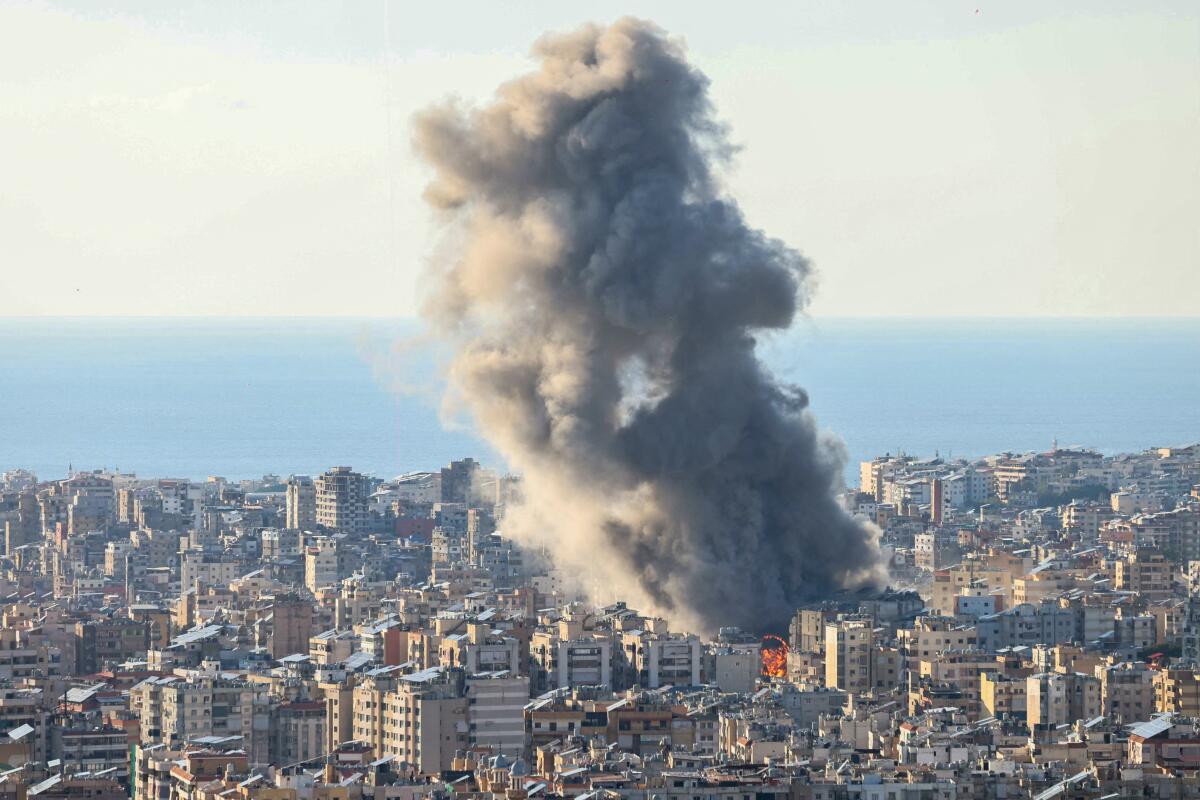
Smoke plumes billow following Israeli bombardment on Beirut’s southern suburbs on Monday.
(Ibrahim Amro/AFP via Getty Images)
Spain announced Thursday it would dispatch its advanced frigate Cristóbal Colón to Cyprus, after initially maintaining a “no to war” stance.
France also authorized temporary access to U.S. aircraft on bases located on French soil, a French army general staff official told Reuters.
And Germany, a country that has explicitly ruled out military participation in war with Iran and has criticized the legality of the initial U.S.–Israeli strikes, said Western powers must prepare for further escalation.
“Europe must remain united in the face of this crisis,” German Foreign Minister Annalena Baerbock said during an emergency meeting of European leaders. “We will not allow ourselves to be divided while regional stability is threatened.”
Meanwhile, conflict has reached a fever pitch between Israel and Hezbollah, the Lebanese-based Iranian proxy and key pillar of what Iran has called the “Axis of Resistance.” Overnight, Israel launched heavy airstrikes across southern Lebanon and issued urgent evacuation warnings for the southern suburbs of the capital, Beirut.
The outbreak of hostilities in Lebanon marks the end of a Israeli-Hezbollah truce and the opening of a major second front in the war with Iran. The fighting erupted after Hezbollah launched a barrage of drones and rockets at Israeli military sites—a retaliation for the joint U.S.-Israeli assassination of Iranian Supreme Leader Ayatollah Ali Khamenei.
Lebanon’s health ministry reported that at least 102 people have been killed by the Israeli strikes so far. In the Beirut suburbs, the Israeli military ordered residents of the Hezbollah-dominated Dahieh district to “save your lives and evacuate your homes immediately.”
“Dahieh? There’s not going to be a Dahieh any more,” one young man said as he talked to a family member on the phone at a media vantage point in the nearby hills.
The widening conflict has also drawn in Ukraine, which has some of the world’s most extensive experience in defending against Iranian-made Shahed drones. Such drones have been deployed by Russia in its war on Ukraine.
Ukraine President Volodymyr Zelensky said late Wednesday that the United States and other allies in Europe and the Middle East have sought Kyiv’s “expertise and practical support” to help them stop Iranian drones.
“Of course, any assistance we provide is only on the condition that it does not weaken our own defense in Ukraine and that it serves as an investment in our diplomatic capabilities,” Zelensky said in a social media post. “We help protect against war those who help us — Ukraine — bring the war to a dignified conclusion.”
While the aerial and naval battle intensifies across the Middle East, a ground war may also be on the horizon.

People arrive to sign a condolence book in memory of Iran’s Supreme Leader Ayatollah Ali Khamenei at the Embassy of Iran in New Delhi, India, on Thursday.
(Raj K Raj/Hindustan Times via Getty Images)
The United States and Israel have increased coordination with Kurdish armed groups along Iran’s western frontier, hoping to exploit longstanding tensions between Tehran and Kurdish factions opposed to the Iranian government, Kurdish officials told the Associated Press.
Iranian forces have already launched missile and drone strikes against Kurdish-controlled areas in northern Iraq following the initial U.S.–Israeli assault on Iranian targets.
Those strikes targeted areas around the city of Erbil and on Kurdish opposition groups operating near the Iranian border, locations where U.S. military forces and diplomatic facilities are also present.
Officials have not publicly confirmed whether Kurdish groups will mount cross-border operations, but security analysts say an incursion into Iranian territory could open a new front in the conflict.
U.S. Central Command, meanwhile, is asking the Pentagon to send more military intelligence officers to its headquarters in Tampa, Florida, to support operations against Iran for at least 100 days, but likely through September, according to a notification obtained by Politico.
The moves come as the House prepares to vote Thursday on a war powers resolution that would withdraw U.S. forces from hostilities in Iran, and limit the president’s power to wage war in the region. A similar measure failed Wednesday in the Senate, mostly along party lines.
Quinton reported from Washington and Bulos from Beirut.