Israel Is Bringing SPICE 1000 Standoff Weapon To The F-35
Israel’s Rafael and Lockheed Martin are working to accelerate integration of the 1,000-pound-class SPICE standoff weapon with the Israeli Air Force’s F-35I Adir. The development could potentially open the door for the precision-guided munition to be offered to other Joint Strike Fighter operators.
Rafael Advanced Defense Systems announced the effort September 15 during the Air & Space Forces Air, Space and Cyber Symposium that TWZ is attending. The work is being conducted as a joint project with Lockheed Martin at the U.S. contractor’s facilities in the United States and is expected to take several months.
Rafael says the effort could eventually make the weapon available to other F-35 operators. “At a later stage, F-35 operators worldwide will be able to field SPICE 1000,” the company said.
The effort was previously referenced in U.S. government documentation before Rafael’s announcement. Published in August, the Pentagon F-35 Modernized Selected Acquisition Report identified the weapon as the “Israel-unique Smart, Precise Impact, Cost-Effective 1000B,” or SPICE 1000B, and said its integration was progressing “with a strategy to accelerate the implementation via a SPICE Lite process.”
The report does not explain what the “SPICE Lite” process entails.
SPICE — which stands for Smart, Precise Impact, and Cost-Effective — is a family of electro-optically guided standoff weapons developed by Rafael. The family includes SPICE 2000, SPICE 1000, and SPICE 250, with the numbers corresponding broadly to the weight class of the underlying warheads.

SPICE 250, SPICE 1000 & SPICE 2000 Air-to-Surface Missiles
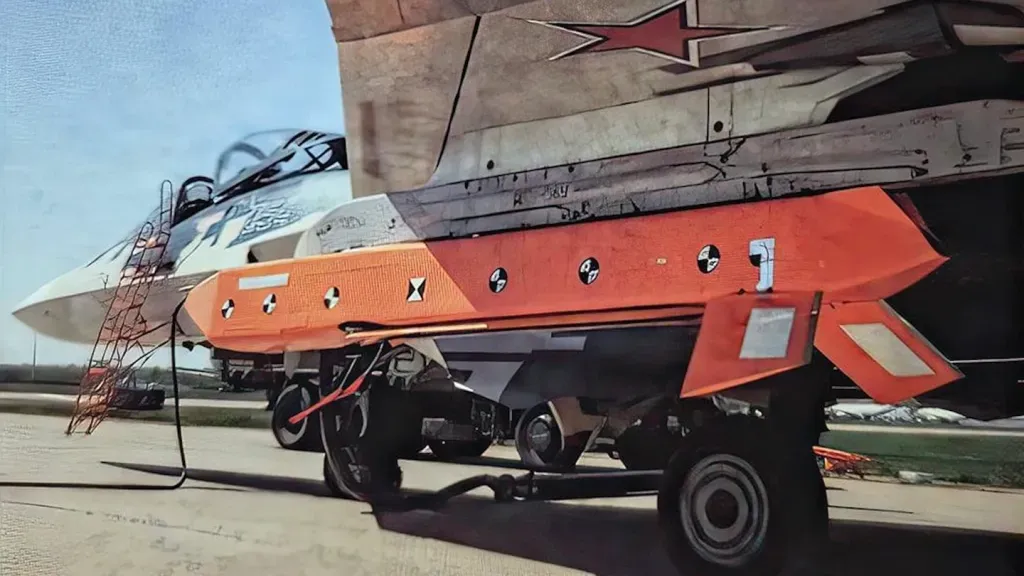
Based around a 1,000-pound-class bomb, SPICE 1000 uses pop-out wings to achieve a manufacturer-stated range of approximately 125 kilometers, or 78 miles. Rafael gives the weapon a claimed circular error probable of around three meters.
The glide bomb combines inertial and satellite-aided navigation with an electro-optical seeker. During the terminal phase, its seeker can compare the observed target area with stored imagery using scene-matching algorithms, allowing the weapon to continue its attack without relying exclusively on GPS. That feature allows it to engage targets autonomously, offering the launch aircraft a true ‘fire and forget’ capability, and provides resilience in GPS-denied or GPS-degraded environments.
SPICE can also be programmed to approach a target from a particular azimuth and impact angle. This provides flexibility in selecting the terminal attack geometry and can support steep attack profiles against targets where penetration from above is desirable.
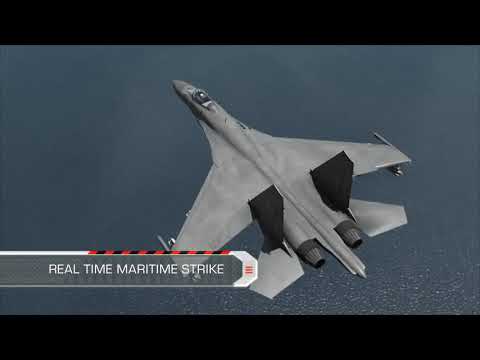
SPICE 1000 is not a new Israeli capability. It has been operational with the Israel Air Force since 2017 and is already integrated with Israeli F-16I Sufa, F-16C/D Barak, F-15I Ra’am, and F-15 Baz fighters.

“SPICE 1000 has been sold to several countries and is in operational service with a number of air forces worldwide,” Rafael said. “It has served as a primary munition of the Israeli Air Force for several years, including extensive use in recent long-range operations flown from F-15 and F-16 aircraft.”
The Israeli Air Force has released footage showing SPICE weapons being used during recent operations, including imagery from the weapon’s own perspective during its terminal attack.
Israel’s F-35I is already unusual within the international Joint Strike Fighter fleet. The IDF has developed and demonstrated an external Joint Direct Attack Munition (JDAM) carriage capability, and said in March 2025 that the Israeli Adir was the only F-35 to have conducted operational strikes with an external weapons configuration. You can read more about that here.

However, according to The Jerusalem Post, the SPICE weapon is expected to be carried internally by F-35Is equipped with Technology Refresh 3, or TR-3, hardware, which would maintain its low-observable configuration. Neither Rafael nor Lockheed Martin has publicly detailed the specific carriage configuration, aircraft modifications or software associated with the current integration effort.
The long-delayed TR-3 is a major upgrade to the F-35’s computing architecture and provides the processing infrastructure required for subsequent Block 4 capabilities. Israel received its first three F-35Is equipped with TR-3 hardware in January of this year.
Lockheed Martin describes Block 4 as the F-35 program’s “most significant evolution of F-35 capabilities to date,” encompassing more than 70 major upgrades, including increased weapons capacity, advanced electronic warfare capabilities, and improved target recognition.

It remains unclear if the SPICE 1000 integration itself requires the full Block 4 configuration.
The potential significance of the Israeli integration extends beyond the Israel Air Force. If SPICE 1000 ultimately becomes available to other F-35 operators, the completed Israeli integration could provide those countries with another pathway toward fielding a precision standoff weapon rather than requiring them to begin an integration effort entirely from scratch.
Integrating national weapons onto the F-35 can be a lengthy process. It involves not only the weapon itself, but aircraft software, interfaces, weapons-bay compatibility, flight testing, mission-system integration and certification within the U.S.-led F-35 program.
The United Kingdom’s experience with MBDA’s SPEAR 3 provides a good example of the challenges.
In 2022, the U.K. Ministry of Defence said that scheduled delivery dates for SPEAR 3 had been delayed because of “prioritisation in the overall F-35 development programme,” which is managed by the U.S.-led F-35 Joint Program Office.

The program has continued to progress, including F-35B integration work and flight testing. But in June 2026, the U.K. government said that completion of mission-systems integration and jettison trials remained part of a wider weapons-integration program and that SPEAR 3 integration and subsequent release to service would occur in the early 2030s.
The United Kingdom has consequently approved the acquisition of the GBU-53/B Small Diameter Bomb II as an interim standoff weapon for the F-35B until SPEAR 3 enters service.
Nevertheless, another F-35 operator would not be able to adopt the Israeli SPICE integration without additional work. National configurations, software baselines, certification requirements, weapons procurement, and export approvals would still have to be addressed.
Already, however, aided by its uniquely configured test jet, Israel has demonstrated an unusual ability to integrate nationally developed capabilities onto its F-35I. This has been aided by privileged access to the Joint Strike Fighter’s closely guarded software codes.

A U.K. parliamentary report noted delays in integrating British weapons onto the F-35B while contrasting that with Israel’s ability to integrate domestic electronic warfare systems, sensors, and communications technology onto its Adir.
Meanwhile, Rafael and Lockheed Martin already have experience working together on the SPICE family.
The companies signed a teaming agreement in 2019 covering the joint development, marketing and manufacture of SPICE guidance kits for the U.S. market. In 2021, they expanded the agreement to include SPICE 250, including development for potential sales to the United States and Poland. With some unque capabilities, SPICE could be of particular interest to the U.S. military, especially as it seeks to leverage multiple sources of precision munitions.
The SPICE family also extends beyond the 1,000-pound-class weapon now being integrated with the F-35.
At the other end of the family is SPICE 250, a much smaller weapon designed around a 250-pound-class payload. It incorporates a man-in-the-loop capability that allows an operator to redirect the weapon during its flight and abort the attack if necessary.

SPICE 250 – Stand-Off Air-to-Surface Weapon System
Its smaller dimensions also allow substantially greater weapon carriage. Rafael has marketed configurations in which a fighter can carry as many as 16 SPICE 250 weapons.
SPICE 1000, by comparison, is a substantially heavier weapon intended to provide longer-range precision attack capability with a larger warhead.
The SPICE effort is taking place alongside several other Israeli initiatives aimed at extending the F-35I’s range and weapons capabilities.
The Pentagon’s F-35 documentation has referenced ongoing work on extended-range fuel tanks and electronic warfare pods for the Israeli Air Force, although it did not provide fielding dates.
In May 2026, Israel’s defense ministry awarded an extended-range capability development contract for the F-35I to Elbit Systems subsidiary Cyclone. The capability is intended to increase the aircraft’s radius of action and reduce its reliance on aerial refueling during long-range missions.
Israel has also announced a major expansion of its F-35I fleet, with plans to increase the number of aircraft from 50 to 100. The country is simultaneously expanding its forthcoming F-15IA fleet from 25 to 50 aircraft.

For the F-35I, SPICE 1000 adds a long-range strike option that pairs the aircraft’s low observability with substantial standoff range and a relatively heavy warhead. This offers a survivability advantage in increasingly contested environments, allowing attacks from farther outside capable air defense systems and under heavy electronic warfare conditions. This factor will only become more important as integrated air defense systems become more capable and the F-35 more detectable.
Exactly how the weapon will be integrated remains undisclosed. Rafael and Lockheed Martin have not announced the final carriage configuration, aircraft software requirements, flight-test schedule, or expected date for operational clearance.
At the same time, Rafael is explicitly positioning the effort as a potential pathway for SPICE 1000 to become available to the wider F-35 community. This would conceivably give other operators another option at a time when integrating a new standoff weapon onto the fighter can take years.
Contact the author: thomas@thewarzone.com