A workers’ union at the World Cup venue has asked FIFA to keep ICE agents away from the venue to alleviate their fears.
Published On 7 Apr 20267 Apr 2026
A union representing about 2,000 food service workers at the Los Angeles Stadium has asked FIFA to keep United States Immigration and Customs Enforcement (ICE) away from World Cup operations in the city and warned workers could strike if their concerns are not addressed.
Unite Here Local 11, which represents cooks, servers and bartenders at the Inglewood venue, said on Monday that the workers remain without a labour contract as the World Cup approaches.
Recommended Stories
list of 4 itemsend of list
The union laid out three main demands to FIFA and stadium owner Kroenke Sports & Entertainment: A public commitment that ICE and Border Patrol will play no role in the tournament, protections for union jobs and working conditions, and support for affordable housing for hospitality workers.
Acting director of ICE, Todd Lyons, has said ICE would play a “key part” in the World Cup, a prospect the union said threatened worker and guest safety in Los Angeles.
Local 11 said it also wanted assurances that artificial intelligence and automation would not be used during the tournament to eliminate union jobs.
The union linked its labour demands to broader concerns over housing costs in the Los Angeles area, particularly in Inglewood, and called for support for a workforce housing fund, restrictions on short-term rentals and tax measures aimed at funding affordable housing and immigrant family protections.
“FIFA and its corporate sponsors will pocket billions from Los Angeles while refusing to even acknowledge the cooks, servers, and stand attendants who make this event possible,” Kurt Petersen, co-president of Local 11, said in a statement.
The union said it had repeatedly sought meetings with FIFA since Los Angeles was chosen as a host city, but had been ignored.
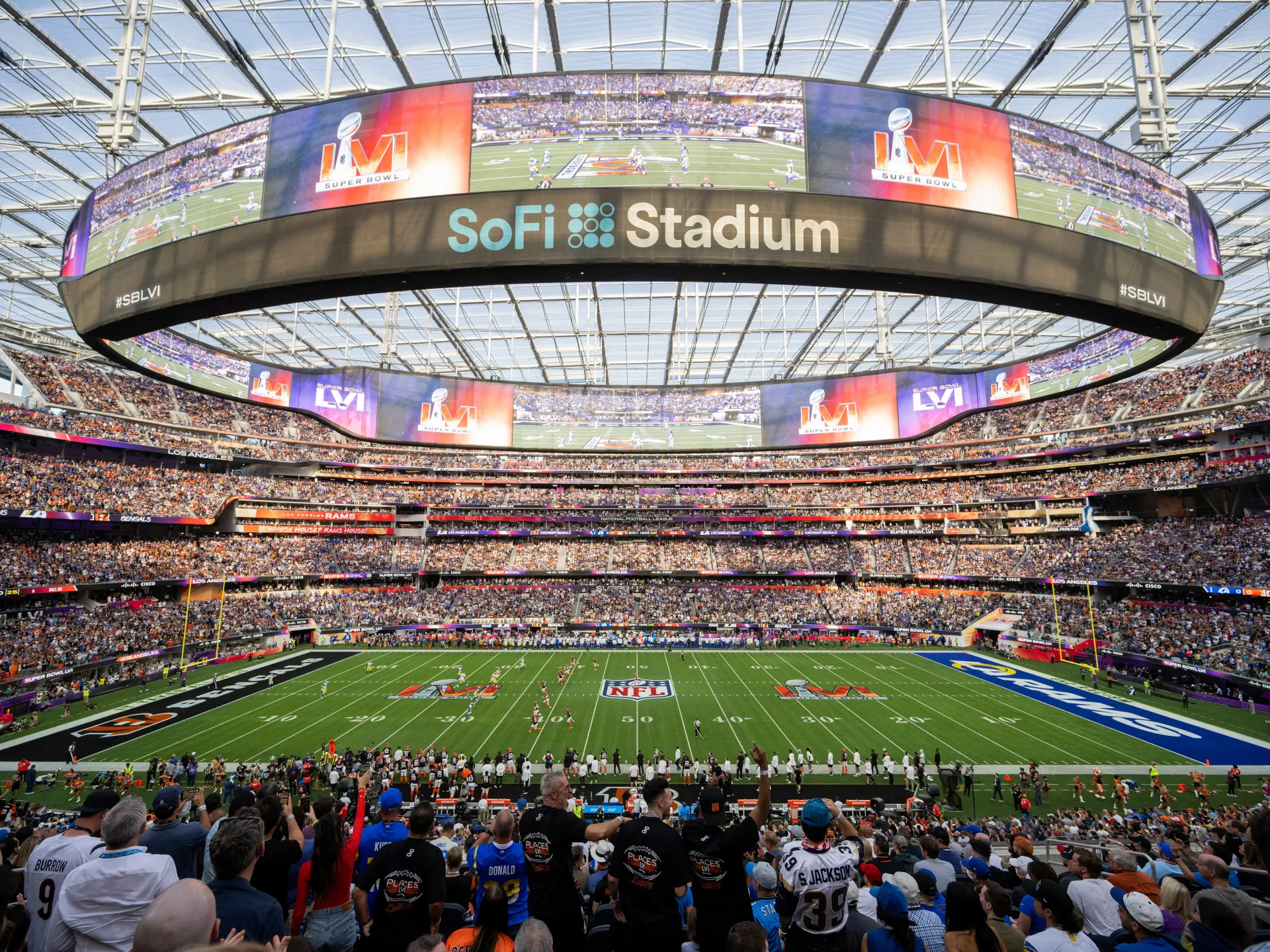
The venue is known as the SoFi Stadium, but has been rebranded to the Los Angeles Stadium for the World Cup due to sponsor clashes.
Los Angeles is set to host eight World Cup matches at the stadium, the first being the US against Paraguay on June 12.
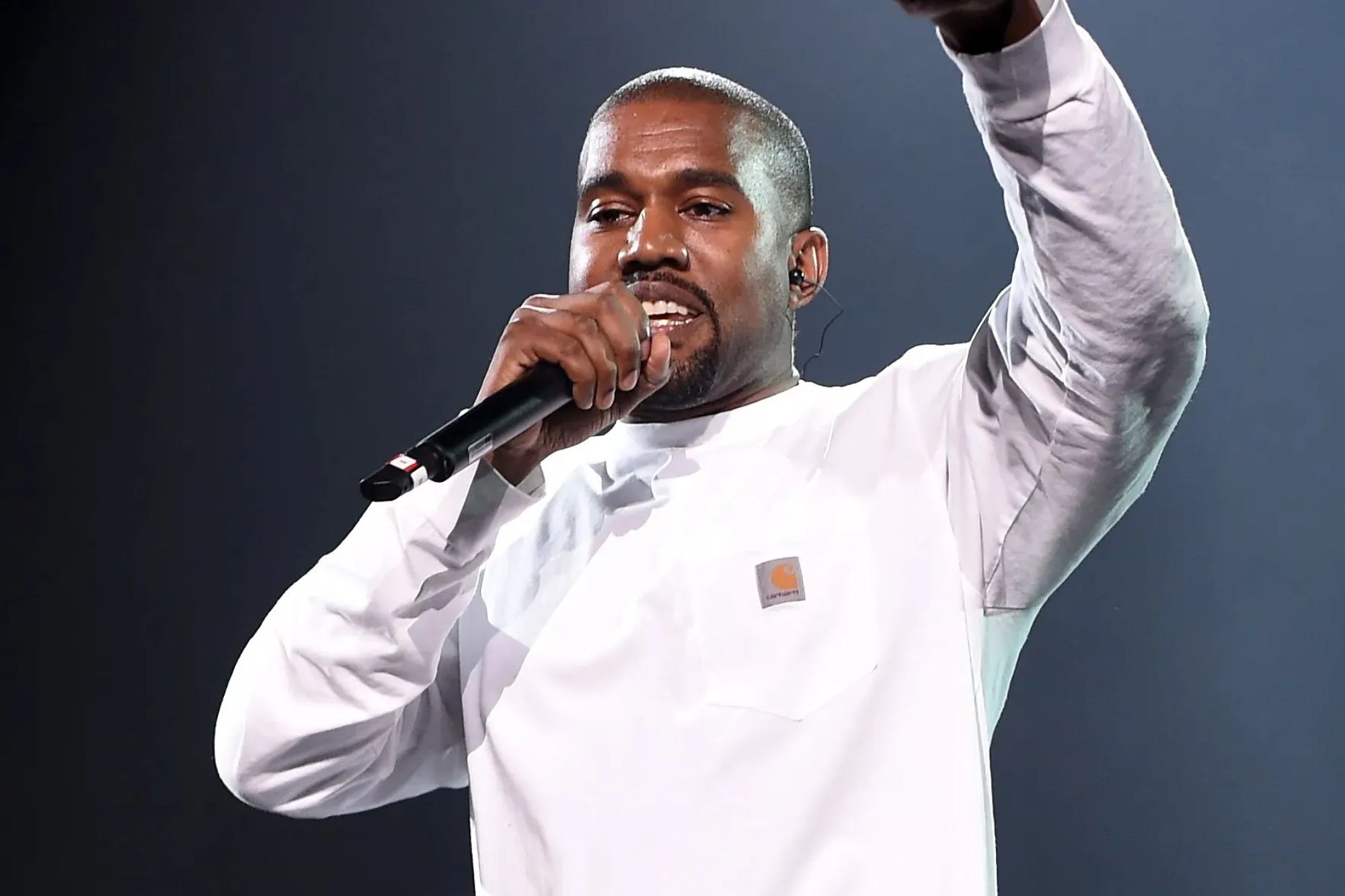
CONTROVERSIAL rapper Kanye West asked to perform at Tottenham Hotspur’s stadium — but was turned down due to the club’s historical connection to London’s Jewish community.
Rapper Kanye West asked to perform at Tottenham Hotspur’s stadiumCredit: GettyKanye’s team chose Tottenham’s stadium as their ‘venue of choice’Credit: Getty
Miami captain scored his team’s first goal after David Beckham said the Nu Stadium was a ‘dream come true’ for Miami.
Published On 5 Apr 20265 Apr 2026
Lionel Messi marked the opening of Inter Miami’s gleaming new stadium with a goal as the Major League Soccer (MLS) champions battled to a 2-2 draw against Austin FC.
Inter Miami’s co-owner, David Beckham, was among the star-studded crowd as the club’s 26,000-capacity Nu Stadium made its debut on Saturday, marking the end of a more-than-a-decade-long journey to find a permanent home.
Recommended Stories
list of 4 itemsend of list
“To see this stadium come to life, after years and years of trying to get this stadium up and running in Miami, is something that’s very special,” Beckham said shortly before kickoff.
“I came to America in the MLS 20 years ago, and I made a lot of promises. And 13 years ago, I made a lot of promises again, announcing I was coming to Miami.
“Today it’s just a dream come true for us.”
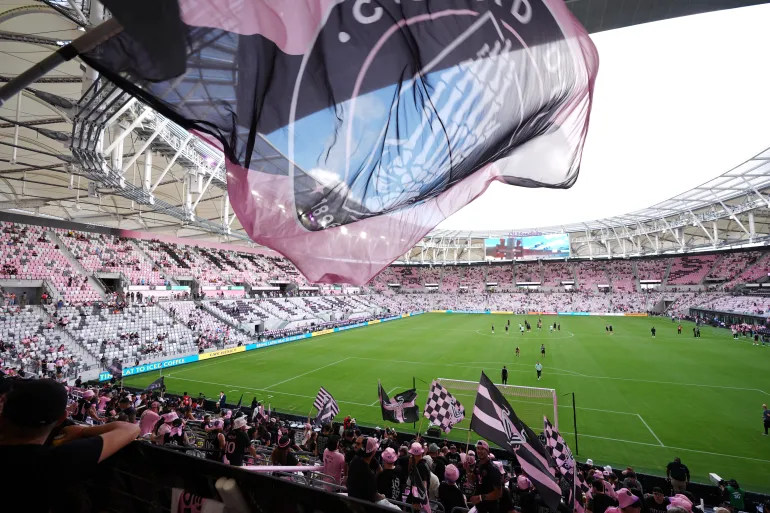
Inter Miami fans wave flags in Nu Stadium before the team’s first MLS match at their new home stadium [Rebecca Blackwell/AP]
While the match kicked off in celebratory fashion, with Beckham joining billionaire Inter Miami managing owner Jorge Mas in a pre-game ribbon-cutting ceremony, Austin refused to follow the script.
The Texas club, who went into the game with only one win from five matches, stunned the home crowd after only six minutes, with Guilherme Biro nodding in a corner from Facundo Torres to make it 1-0 to the visitors.
Messi, though, did not take long to open his account in his new surroundings.
Right-back Ian Fray burst down the flank and crossed for Messi, who equalised with a rare headed goal to make it 1-1 four minutes later.
Inter Miami dominated possession thereafter and carved out a string of chances, with Mateo Silvetti twice going close with a shot in the 34th minute before heading wide four minutes later.
But Austin’s dogged defence and speed on the counter continued to pose problems for the hosts, and they once again took the lead after 53 minutes.
Messi was dispossessed deep in the Austin half by Joseph Rosales, who released Myrto Uzuni, who in turn sent substitute Jayden Nelson clean through on goal to score.
With Miami increasingly desperate, coach Javier Mascherano sent on veteran striker Luis Suarez in the 73rd minute.
The Uruguayan duly delivered eight minutes later, prodding home from close range after a Messi corner was flicked on by German Berterame in the Austin defence.
Suarez thought he had scored a dramatic winner when he finished from close range after Messi’s free-kick came back off the woodwork, but it was ruled out for offside.
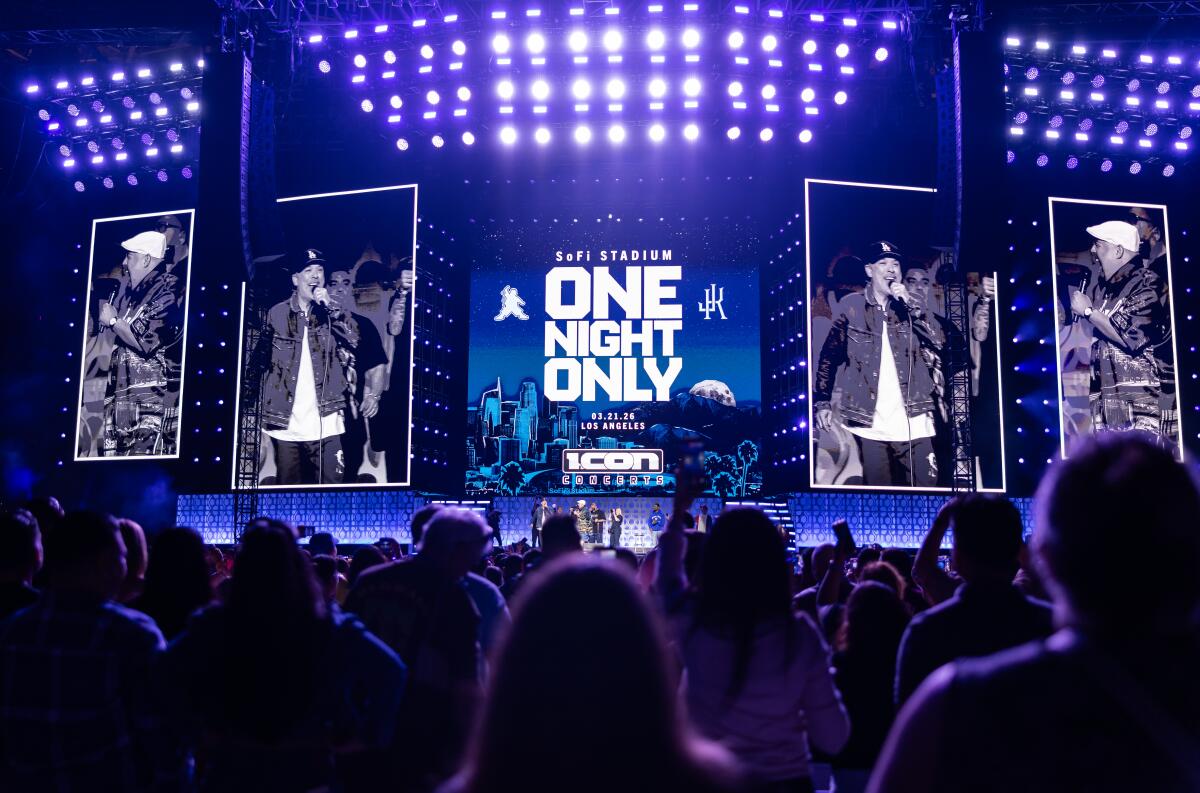
On the first night of Passover, Ye — the superstar rapper, the artist formerly known as Kanye West, the man who once threatened in a tweet to go “death con 3 On JEWISH PEOPLE” — performed for what looked like a full house at Inglewood’s SoFi Stadium.
The first of a pair of Ye concerts this week at the gigantic NFL palace, Wednesday’s show came two months after the 48-year-old musician apologized for his past antisemitic comments, attributing his behavior to injuries he sustained in a 2002 car crash.
More to the point, perhaps, the gig came on the heels of last week’s release of “Bully,” Ye’s first solo LP since 2022’s “Donda 2,” which the trade journal Hits predicts will enter the album chart at No. 2, right behind the latest from BTS.
In other words, Ye’s trying to get a comeback going — and, to judge by the very warm reception he got at SoFi, he might prove successful.
Wednesday’s concert — Ye’s first full live performance in Los Angeles since a 2021 gig at the L.A. Memorial Coliseum — lasted about two hours and featured guest appearances by Don Toliver and Ye’s 12-year-old daughter, North.
The rapper performed atop an enormous dome set up on the stadium’s floor; for much of the night, a spinning globe was projected onto the dome so that Ye looked to be — well, on top of the world is how he might’ve put it.
Early in the set, Ye asked his technical crew to “make the earth move slower,” which somebody made happen.
Accompanied by what sounded like prerecorded backing tracks, Ye opened with a handful of songs from “Bully,” which seeks a middle ground between the soulful, sample-heavy sound of his early work and the gloomier, synthed-up vibe of more recent records like “Donda” and his and Ty Dolla Sign’s “Vultures 1” and “Vultures 2.”
After an extended version of the new album’s “All the Love,” he reached back for an assortment of oldies, including all-timers like “Father, Stretch My Hands, Pt. 1,” “Mercy,” “Black Skinhead” and “Can’t Tell Me Nothing,” which he stopped and restarted after telling the crew to mute the music during the song’s line about getting his money right so that he could hear the crowd join in.
He also did his and Jay-Z’s collaborative 2011 hit — the one whose title contains the N-word — which made you think about how he and his old frenemy are both mounting comebacks at the same time, Jay-Z as a kind of retiree’s victory lap and Ye in hopes of moving past a mess of his own making.
Other classics Ye performed included “Bound 2” and “Heartless,” to name two of his most emotionally potent songs, though thick smoke in the stadium made it hard to feel a sense of connection with him as he moved back and forth atop the dome.
Ye brought out Don Toliver to perform “Moon” and Toliver’s “E85,” then cycled again through the “Bully” tracks he’d done earlier. North West came out to perform “Talking” and “Piercing on My Hand,” after which Ye did his and Ty Dolla Sign’s “Everybody,” which prominently samples the Backstreet Boys’ “Everybody (Backstreet’s Back).”
Then he finished with a sprint through some of his most beloved hits: “All Falls Down” into “Jesus Walks” into “Through the Wire” into “Good Life,” which he restarted several times because he said the lights were “corny.”
“Is this like an ‘SNL’ skit or something?” he asked when nobody made the changes he was looking for.
Ye ended the show with “All of the Lights,” which got a huge pryo display, and “Runaway,” his epic 2010 warning to anyone foolish enough to consider falling in love with him.
“Run away fast as you can,” he sang, and the crowd roared right along.
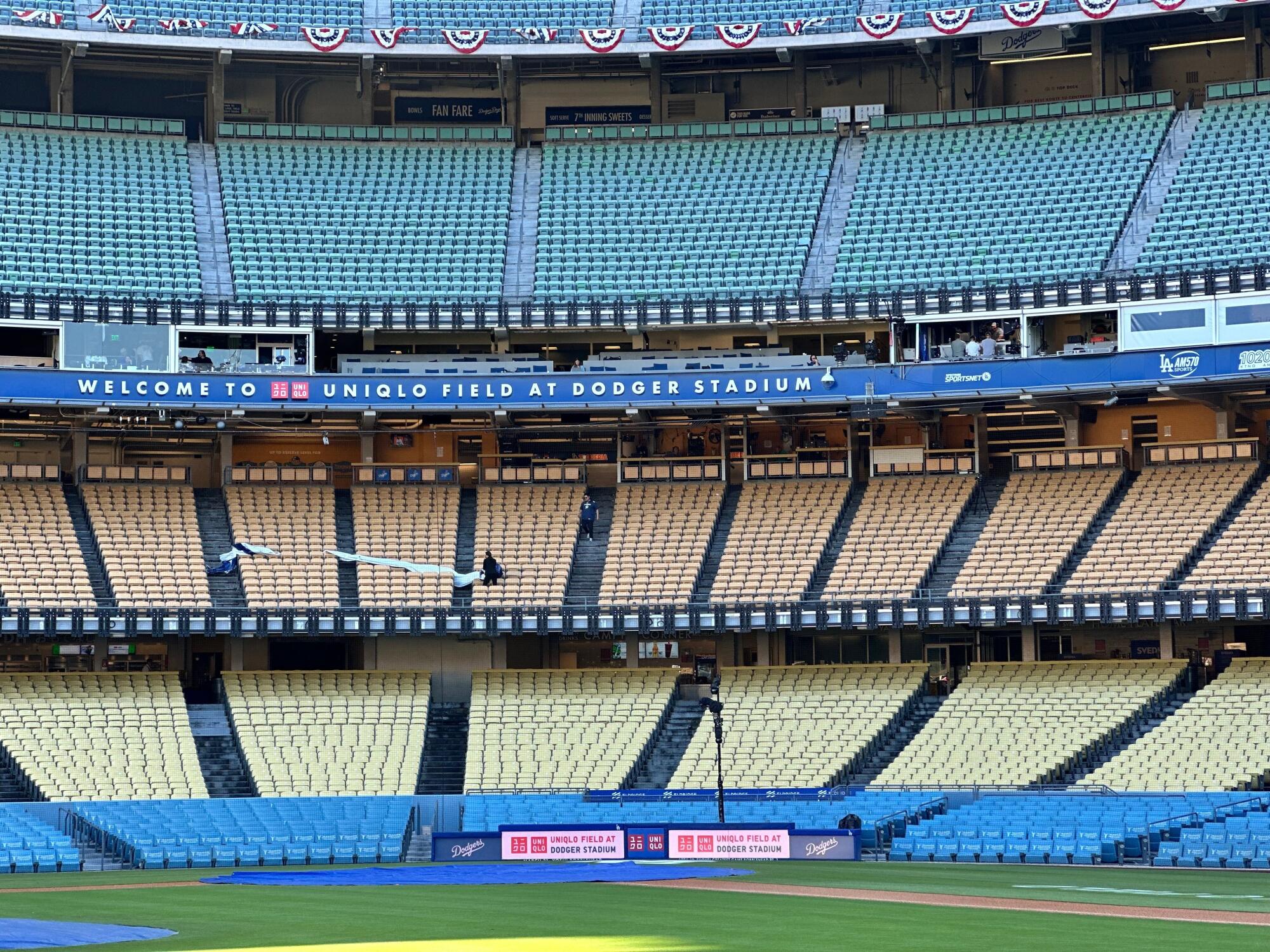
It was Dodger Stadium on Wednesday, when the grass outside the baseline and the bright red sign high above center field read “UNIQLO FIELD.” It will be Dodger Stadium on Thursday, when the defending World Series champions open their new season, and forevermore.
The official name of our summer home is now Uniqlo Field at Dodger Stadium. The team announcers will say that, and so will some of the signs. The fans won’t, and the founder of the company that just spent nine figures on the name you won’t use said he completely understands.
“That’s a very natural reaction,” Uniqlo founder Tadashi Yanai told me through an interpreter. “We respect that.”
Yanai said his company’s deal with the Dodgers covers five years. He would say only that the total value was “more” than $125 million. That provides the Dodgers with an annual naming rights payment in line with the ones at Crypto.com Arena, Intuit Dome and Sofi Stadium, without the Dodgers having to sell naming rights to the actual venue.
Are the Dodgers baseball’s version of a gold mine? Yes. Do they spend big and win big? Also yes. Do you mind if Uniqlo essentially covers Freddie Freeman’s salary this season?
“We need a lot of revenue to put out the product that we do,” Dodgers president Stan Kasten said. “That’s not a secret. And we’re proud of everyone who helps us do it: all of our fans, all of our media partners, and all of our sponsor partners. They are all important. It is how this all comes together.”
While Uniqlo would be delighted if you used its name, whatever local fans choose to call the stadium is not critical to the success of the partnership.
Ohtani made an estimated $125 million in endorsements and sponsorships last year, Sportico reported, a larger annual haul “than any other athlete in the history of sports.”
“The Dodgers are such a popular team,” Yanai said. “I usually ask my wife, after I come back from the office, whether Shohei hit a home run. I think all the Japanese people do that.”
Uniqlo Field signs were unveiled Wednesday at Dodger Stadium in the wake of the team’s naming rights deal.
(Beth Harris / Associated Press)
According to Forbes, Yanai is the richest man in Japan, where baseball teams carry corporate names. Why not buy a team and call it, say, the Uniqlo Bears?
“I always keep saying that could be very interesting,” he said, “but my wife turned it down. She keeps telling me, ‘Tadashi, you are not cut out to manage sports teams.’”
Instead, he is managing Uniqlo, an apparel company that pitches itself as blending comfort with quality. “We do not make disposable clothing,” Yanai said in the company’s last annual report.
Uniqlo has 794 stores in Japan but only 77 in the United States, including 14 in the Southland. Koji Yanai, a senior executive officer and Tadashi’s son, said the company aspires to grow annual U.S. revenues from $6 billion to $30 billion.
He shared what might be a more challenging aspiration.
“The Uniqlo Field at Dodger Stadium name may be very new for everyone,” he said, “but I hope in the near future the fans will like it and will love it.”
Jeff Marks, the chief executive of Los Angeles-based Innovative Partnerships Group, once brokered a naming rights deal in which the Cal football team would play on Kabam Field at California Memorial Stadium. He tried to find a receptive audience for the name.
“We educated a lot of freshmen, sophomores, and newcomers,” Marks said. “Are you going to go after alumni who have been calling it Memorial Stadium? No. So you didn’t focus on that. You focused on people that could be more impressionable, and it worked.”
With Dodger Stadium, we’ll see. For the 2026 season, it is now time for Dodgers baseball, but not before one reporter at a press conference Wednesday asked company officials whether Uniqlo would provide the Dodgers players with free clothing.
Kasten could not pass up the chance to interject.
“We pay them enough,” he said with a grin, “to shop at Uniqlo stores.”
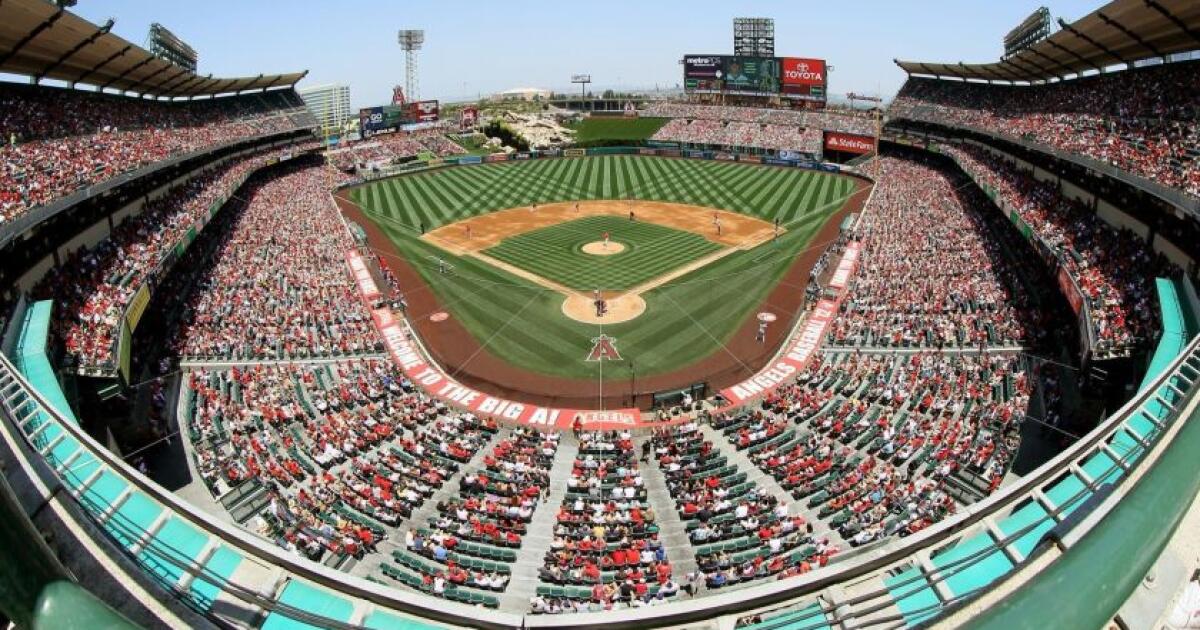
At the dawn of the 2025 season, we published a column with the headline, “What’s the future for aging Angel Stadium? It feels like an increasingly uncertain one.”
With opening day 2026 upon us, we’d like to update that: “What’s the future for the Angels? It feels like an increasingly uncertain one.”
I don’t mean to be an alarmist. Nothing is happening today, or tomorrow, or in the very near future.
However, the Angels’ stadium lease expires in six years, so what might happen beyond then is starting to come into focus. Angels owner Arte Moreno turns 80 this summer. Moreno — or a new owner, if Moreno eventually sells the team — could simply exercise options to extend the lease for another six years.
But that would not resolve the larger issue of replacing or renovating Angel Stadium. In the coming months, the city expects to release an assessment of what it would take to keep the stadium up and running for years to come, and that could trigger a debate between the city and the Angels about who should pay for what.
The Angels are frustrated by all of this, and in particular by what they consider the curiously timed skirmishes over their 21-year-old Los Angeles name. They are annoyed that, for the second consecutive season, city issues have detracted from the hope and faith and joy that surrounds opening day. It is the city, after all, that walked away from two deals that would have secured the Angels’ long-term future in Anaheim.
During negotiations for the last deal, city officials made clear that keeping the Angels was the top priority, even if Anaheim could make more money selling the stadium property to a developer that would not need to retain the stadium.
Now, with six years left on the lease and no commitment beyond then, the mayor of Anaheim says it is time to prepare for a future with or without the Angels.
“We need to plan for what we see as a vision for that property when the lease has expired,” Mayor Ashleigh Aitken told me. “That’s going to take time. No matter how that deal goes, we’re not breaking ground on any project next year.
“But what we need to do, whether it includes the Angels — which I hope it does — or not, is come up with a vision that includes everything residents want to see happen on that land. And only then can we truly advocate for a project that makes sense for us.”
On the day of the home opener last season, Aitken issued an open letter inviting Moreno to meet with her for “an open and honest conversation about the future of baseball in Anaheim” and listing eight starting points for negotiations on a new deal, including the Angels’ restoration of the Anaheim name.
“They have not reached out to us about reopening negotiations for potential development around the property,” Aitken said.
Moreno previously explored other potential ballpark sites, including Tustin in 2014 and Long Beach in 2019.
In Tustin, the targeted land is no longer available. In Long Beach, the proposed waterfront lot remains vacant, but the challenge remains too: Over 81 games each season, how would tens of thousands of fans drive into and out of a ballpark primarily accessible by a single freeway?
For the Los Angeles Angels, perhaps the solution could be found in Los Angeles County.
The Dodgers could bar every other major league team from moving into L.A., but not the Angels. Under MLB rules, neither team could stop the other team from moving anywhere within Los Angeles County or Orange County.
The logical landing spot would be Inglewood, where the Rams, Chargers and Clippers have moved since 2020. Inglewood Mayor James Butts said Sofi Stadium and Intuit Dome have helped to revitalize the city, with unemployment down, home prices up, and municipal revenue up.
“Before, we were known for gangs and crimes and poverty,” Butts told me.
“Now, we are known as the sports and entertainment capital of the western United States.”
How about a baseball stadium in place of the Forum?
“The Forum parcel is absolutely not large enough for a baseball stadium,” Butts said.
Butts said he believes a baseball stadium there would require about 170 acres for the stadium and surrounding parking. Angel Stadium and its surrounding parking lots cover about 150 acres.
On the other hand, the Athletics are building a ballpark on a nine-acre site in Las Vegas, where nearby parking, entertainment and dining options already exist, with more on the way, and with the A’s not responsible for any of that. The same could be true for the Angels in Inglewood, with Rams owner Stan Kroenke and Clippers owner Steve Ballmer developing the land around the sports facilities.
However, Butts said he did not envision baseball coming to Inglewood, at least so long as he remains the mayor. Not enough room in town, he said.
“We’re maxed out when it comes to sports,” Butts said. “We are not going to reduce the housing stock and move residents out to have a baseball team.”
Anaheim has one, plus a 150-acre site perfect for a new stadium surrounded by restaurants and shops and homes. There will be days to be anxious and worried about the Angels’ future in the city they have called home for 60 years. Today is not one of them.
Take it from the mayor of Anaheim, who told me that even after telling me why she wants the city attorney to look into whether the Angels are violating their stadium lease.
“Opening day, to me, is nothing about clauses in a contract,” Aitken said. “It’s about family traditions. It’s about kicking off summer. And it’s about getting so many factions and neighborhoods of Anaheim together for a singular purpose, which is cheering on our hometown boys. That’s the beauty of baseball.”
And, as a lifelong Angels fan, she had one more thing to say.
“Right now,” Aitken said, “we’re tied for first place.”
Dodgers fans generally hiss at the mention of Frank McCourt — the former owner took the team into bankruptcy, after all — but today is about tipping our cap to him.
Without him, fans would have no option to take public transit directly to Dodger Stadium. On his watch, the Dodgers helped secure government funding for the shuttle buses that provide free rides between Union Station and Dodger Stadium.
Sixteen years later, beyond the addition of a sister shuttle from the South Bay, that’s it.
The Dodgers boast the best team in the world. Shohei Ohtani is a tourist attraction. So is their historic ballpark. The Dodgers sold a record 4 million tickets last year.
In 1990, the last year Fernando Valenzuela pitched for the Dodgers, Los Angeles County unveiled a report that suggested ways to improve access to Dodger Stadium “for those who cannot or do not wish to drive.”
The options: a monorail, people mover, or light rail extension from the Chinatown Metro station; the shuttle buses that McCourt and Metro launched 20 years later; the gondola that McCourt first pitched in 2018 and continues to pursue; and a walking path.
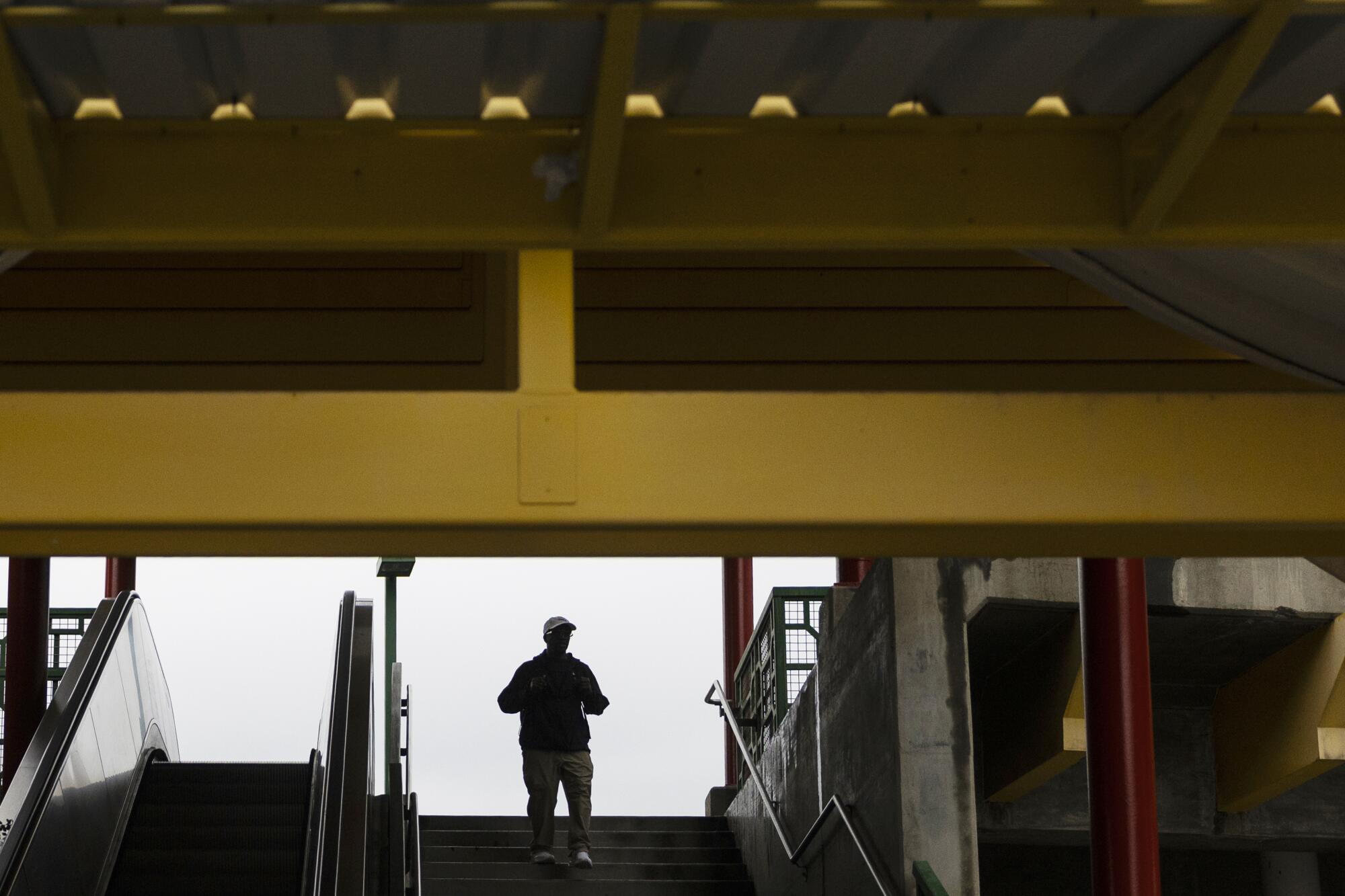
A passenger exits the Chinatown Metro station in January.
(Etienne Laurent/For The Times)
L.A. is all about the car. You will most likely drive to Dodger Stadium, and so will your children.
For decades, the Dodgers have promised to ease traffic by adding amenities that encourage fans to come early and stick around after the game. That has not materialized, and notorious congestion within and around the stadium is as much a tradition as Dodger Dogs.
What if you could walk, for real? What if you could head into the stadium along a beautifully landscaped and wide Dodgers-themed path, a blue ribbon of fans coalescing into a community, with decorations and food carts, shade and lighting, and chants of “Let’s Go Dodgers!” along the way?
You can walk now, sort of. It’s about a mile.
There’s a map at the Chinatown Metro station displaying the pedestrian path toward Dodger Stadium.
(Etienne Laurent/For The Times)
At one end of the Chinatown station, there is a map with a pedestrian route, in a glass case that faces away from Dodger Stadium. If you walk out of the station at the other end, or if you just start heading in the direction of Dodger Stadium, good luck finding the map.
There are Metro signs leading you back to the station from Dodger Stadium, but none leading you along the route there.
The Dodgers actually would prefer you did not take that route, or at least the last part of it. I walked it with Alissa Walker, whose Torched newsletter is the go-to place to learn how major sporting events impact the everyday lives of Angelenos.
We entered the Dodger Stadium property at an intersection with no crosswalks, where cars enter and exit the 110 freeway. We stood atop a dirt patch next to a crumbling curb.
“To go a very short distance safely with a feeling that you’re not going to die,” Walker said, “is very difficult.”
With Game 3 of the World Series underway at Dodger Stadium last October, a few folks scurried across a pedestrian bridge with LED lights and blue glow sticks.
The bridge connects Chinatown with Dodger Stadium, traversing the 110. Without this bridge, there is no walking path to Dodger Stadium.
“Our goal was, just by adding some lights, to make the really dark path at the top of the bridge at night a little bit brighter, so that it felt a little less scary,” transit advocate Jeremy Stutes said, “and to add a little bit of fun and whimsy.”
Glow sticks forming the “LA” logo of the Dodgers were placed on a pedestrian bridge over the 110 Freeway connecting Chinatown to the area where Dodger Stadium is located during the World Series and for several months after. As of last week, the glow sticks were no longer there.
(Etienne Laurent/For The Times)
From the Chinatown Metro station, the bridge is three blocks up College Street and one block down Yale Street. It’s an easy walk, and for now you pass an elementary school, a church, a row of Chinese restaurants, a dirt lot where a hospital once stood, parking lots, and an auto repair facility with a Dodgers flag hung on a wall.
When I did the walk last week, the trash at the foot of the bridge included a plastic cup, socks, a piece of rotting fruit, a half-full bottle of tequila, and half of a turkey sandwich, peeking out from torn plastic wrapping that indicated the sandwich had gone bad three days earlier. On the bridge: shopping bags, a pair of flip-flops, stray clothes scattered at one end, and graffiti everywhere.
A sign painted on the sidewalk indicates the direction toward the Chinatown Metro station.
(Etienne Laurent/For The Times)
That was the point those volunteers made last October: Clean up the bridge and light up the bridge — as they did for three days — and fans will walk there.
“It’s not that it’s not used,” Stutes said. “It’s not designed to be a safe space to use as an alternative to driving.”
When you cross the bridge, you can turn right or left along Stadium Way to get to a stadium entrance.
Turn right, as the map tells you to do, and you’ll encounter decaying sidewalks, with cracked and buckled concrete that turns a modest uphill walk into an obstacle course. Once you get onto the stadium grounds, the paint is fading along the pedestrian path, which offers you no protection from passing cars.
Turn left, and you’ll have to walk part of the way in the street, on an unprotected bike lane. You also could walk along the road behind the Fire Department training center, a path with no sidewalks and passing fire trucks. Either route takes longer than the one on the map, but you would enter Dodger Stadium through a pair of protected and brightly painted pedestrian paths. (That entrance, along Vin Scully Avenue, is a quarter-mile from Sunset Boulevard, where two Metro bus routes stop.)
If the primary choices for getting out of Dodger Stadium after a game are car congestion or Dodger Stadium Express shuttle bus congestion, a downhill walk to Chinatown Metro station — 12 minutes, Metro says — would be a nice option. That’s why those folks lit up the bridge over the freeway during the World Series.
“The lights were just a fun way,” transit advocate Kevin Dedicatoria said, “to show, ‘Hey, here’s a bridge so you don’t have to play, ‘Dude, where’s my car?’ or have to worry about waiting for the bus.’”
McCourt hails from Boston, where the local subway drops Red Sox fans a few short blocks from Fenway Park. When McCourt owned the Dodgers, I asked him if he could envision a subway or light rail extension to Dodger Stadium.
He’d love it, he said then, but the Dodgers were a private business, and government should pay for public transit.
Homes line a street in Eylsian Park, where Dodger Stadium is located.
(ETIENNE LAURENT/For The Times)
It was a fair point. The Dodgers pay taxes. In an era where teams regularly demand stadium and arena deals that exempt them from property tax, the Dodgers have paid $12.8 million in property taxes over the past three years, according to Los Angeles County tax collection records.
Would demand for public transit amid a car culture justify the investment? The Dodger Stadium Express indicates it could: Ridership has just about quadrupled since its inaugural season, from 122,273 in 2010 to 463,147 last year, according to Metro.
Even along the poorly maintained, poorly lit and poorly advertised pedestrian path, Metro said more than 700 riders returned to the Chinatown station on each of the three nights of World Series home games last year.
“As seen in social media videos during the 2025 postseason, the walking path continues to explode in popularity,” Metro spokesman Jose Ubaldo said.
Next steps?
“It’s astonishing to me that the Dodgers have not taken it upon themselves, as this great community partner, to fix this problem,” Walker said. “It is the city’s responsibility, but the Dodgers should be doing this, as part of what they want to represent to this community.”
The walking path includes segments along city streets, a Caltrans bridge, and Dodger Stadium property. Just who is the responsible party?
A Caltrans spokesman said the city is responsible for maintaining the bridge. A spokesman for the city’s department of street services did not provide an answer. A spokesman for the Dodgers declined to comment.
You could almost hear the sigh from city councilwoman Eunisses Hernandez, whose district includes Dodger Stadium.
“That’s what my job is: to bring people and agencies and organizations together to accomplish a goal,” Hernandez said. “We’re already in conversation with all these entities.
“We’re looking at some of the things we can enhance to make this a more walkable and accessible option for people.”
City Council member Eunisses Hernandez, center, talks with Circle outreach workers in Los Angeles.
(Allen J. Schaben/Los Angeles Times)
How much might those enhancements cost?
Without a look at a city-commissioned Dodger Stadium traffic mitigation study, expected to be completed this fall, Hernandez said she could not put a price tag on it.
“What I can tell you,” she said, “is that it will be less than half a billion dollars, for sure.”
By year’s end, the Los Angeles City Council is expected to vote on McCourt’s gondola project, estimated to cost $500 million and proposed as privately financed. Last November, the council voted 12-1 to urge Metro to kill the project.
Metro granted its approval, but with conditions that included a requirement to explore supplementing the gondola with other Dodger Stadium transit options, including more buses along Sunset Boulevard and a designated walkway from there to the stadium.
The walking path proposed in that 1990 study would have avoided Sunset Boulevard and the current Stadium Way routes — the ones with crumbling sidewalks, or no sidewalks at all — by using escalators and walkways to get fans up and down the hill between Lookout Drive, just off Stadium Way, and Dodger Stadium.
“Pedestrians could be directed through Chinatown,” the study read, “where numerous restaurants, shops and pedestrian amenities are provided.”
It’s hard to sell Chinatown businesses on the benefits of the gondola when fans would ride between Union Station and Dodger Stadium, soaring over Chinatown. It would be easier if a walking path led at least some of those fans through Chinatown, even if only on the way back from the game.
Even if the gondola system really can accomplish what its proponents say it can — loading 35 people into a cabin every 23 seconds — thousands of riders leaving when the game ends could mean a long line to board.
One of the entrances to Dodger Stadium on Stadium Way, the easiest access when walking from Chinatown Metro station.
(Etienne Laurent/For The Times)
“Also,” the 1990 study said, “passenger waiting following a game is psychologically perceived as being three to four times longer than actual waiting time.”
From this perspective, McCourt might win a few council votes by funding a first-class walking path. The cost, I’m told, would depend on what the enhancements include: signs, lights, trees, shade canopies, sidewalk repairs, escalators, and so on. For something close to $5 million — one one-hundredth of the projected cost of gondola construction — McCourt likely could do an exceptional job.
Is there any sign of progress here? Happily, yes.
In an internal report last December, Metro said Zero Emissions Transit (ZET) — the nonprofit organization now shepherding the gondola project — is pursuing ways to link pedestrians and bicyclists to the transit system and to Dodger Stadium. Those potential improvements include sidewalk repairs and a revitalized pedestrian pathway from the Chinatown Metro station to the bridge across the 110 and then across Stadium Way, to Lookout Drive and the hill above.
“Dodger Walk is envisioned as a series of switchbacks,” the report said, “inspired by the original walking path up Lookout Mountain that existed prior to the construction of Dodger Stadium.”
Whether such switchbacks would make the walk to the stadium longer or shorter than the current path remains to be determined.
In a statement, ZET said: “We embrace and include active transit solutions to increase pedestrian and bike access throughout the project area.” In particular, ZET said, it was “supportive” of a walking path to Dodger Stadium.
The Metro report cautioned the concepts “are in the early planning stage,” so L.A. might get an extravagant walking path, a utilitarian one, or none at all.
Here’s hoping McCourt gives us a path of some kind — whether the city approves the gondola or not — because a pretty walk generations can enjoy would be a prettier civic legacy than driving a team into bankruptcy.
Comedians Jo Koy and Gabriel “Fluffy” Iglesias are used to delivering big laughs on large stages. But in the world of major L.A. venues, there’s big, there’s massive, and then there’s SoFi Stadium.
The show starring both comedians was billed as a record-breaking feat for stand-up when they sold out the 70,000-seater. Though the pressure to fill up the stadium was off, it still remained to be seen how the two comics would make their most dedicated fans laugh from more than a football field away. By that criteria, Saturday night was definitely a win.
Kicking off the early portion of the show at 7 p.m., fans were already filling the seats as opening acts from Iglesias’ camp, including Matt Golightly, Joey Guila, Alfred Robles, Martin Moreno (who celebrated his 58th birthday on stage) and ventriloquist funnyman Jeff Dunham got the crowd warmed up for about an hour before Iglesias took the stage first.
Comedians Jo Koy and Fluffy perform Saturday at SoFi Stadium.
(Christina House / Los Angeles Times)
It was almost 8 p.m. when Iglesias emerged following a video skit playing on the jumbo screens and the stadium’s massive halo scoreboard with his funny misadventures of a routine doughnut run at Randy’s Donuts that turned into the plot of “Sons of Anarchy” spinoff “Mayans M.C.” featuring lead actors Emilio Rivera, a.k.a. Miguel Golindo, and Clayton Cardenas, known for playing Angel Reyes. Reyes caused the first major eruption of noise in the crowd by pressing a detonation device that triggered columns of smoke that filled the stage as Fluffy made his entrance in a white flat cap and custom Los Angeles button-up to greet the sold-out stadium.
“Thank you for being here, all I have to say is we did it!” Iglesias proclaimed as the crowd cheered.
Pointing and waving to fans in the nosebleeds, he took time to embrace the moment that topped his previous triumph of performing at Dodger Stadium.
Fluffy takes the stage at SoFi Stadium in Inglewood.
(Christina House / Los Angeles Times)
Though the stage couldn’t have been bigger, both comedians used their ability to make a large event feel intimate by drawing the crowd in through storytelling and making them feel like they were part of a conversation. Iglesias set the tone of his set right away by telling us about the chisme (a.k.a. salacious gossip) surrounding his newly married stepson that weaved into stories about his travels all over the world including his controversial stop at the Riyadh Comedy Festival.
Iglesias also took a pause to relate one other historic fact about the two stadiums in L.A. he’s now been able to sell out.
Santino Villalovos of Tracy, Calif., shows his Fluffy tattoo during the Jo Koy and Fluffy show at SoFi Stadium.
(Christina House / Los Angeles Times)
“The two biggest shows in comedy were Dodger Stadium and SoFi Stadium. … And what did they both have in common? They both featured a Mexican,” he said.
Even though he thought about retiring as a comedian after filling up Dodger Stadium (twice) to film his special “Stadium Fluffy,” Iglesias said the SoFi show inspired him to keep pushing himself. And alongside Koy he knew they could do it.
Fans react to special guest Jamie Foxx during Jo Koy’s performance at SoFi Stadium in Inglewood on Saturday.
(Christina House / Los Angeles Times)
“Jo I know you’re in the back, thank you for trusting me man, we did it brother. And I’ll say it in front of an entire stadium, love you. Things like this for me is a huge deal because it inspired me and gave me another reason to keep doing what I love to do. And tomorrow I’m gonna be in the same situation I was after Dodger Stadium — what am I gonna do now? But until then I’m enjoy the hell outta tonight and I still have more stories to share with you.”
Fluffy’s most controversial (and true) bit of the night was breaking the news to his fans that his name is mentioned in the Epstein files, which sent collective shock through the stands.
“I’ve never been to the island, I’ve never been on the plane and I have never met Jeffrey Epstein,” he clarified.
Fans light up SoFi Stadium during Fluffy’s set on Saturday.
(Christina House / Los Angeles Times)
The comedian said that according to reports in the Epstein files, the late convicted pedophile apparently tried to buy tickets to his show at an Improv in West Palm Beach, Fla., in 2014 but was told by his assistant via email that both his shows were sold out.
“Jeffrey Epstein, one of the most diabolical human beings to ever walk the face of the earth. Had the ability to connect with politicians, with influencers, with celebrities. He put people in very compromising positions. He got people on planes. He put people on islands. He was involved in trafficking. He was able to accomplish all these evil, crazy things, but at the end of the day, he still couldn’t get tickets to see my show,” Iglesias said.
Jo Koy reveals himself with the Jabbawockeez at SoFi Stadium.
(Christina House / Los Angeles Times)
After a brief intermission, things transitioned to Jo Koy’s portion of the show featuring warm-up sets from TikTok skitmaster King Bach and longtime friend and stand-up star Tiffany Haddish, who came to the stage looking ready for the red carpet with a flowing silk dress, hair blowing in the man-made wind to deliver her brand of high-energy stories about becoming a real estate tycoon in South-Central.
When it was Koy’s turn to enter the stadium, he slipped in undercover, dressed as one of the Jabbawockeez — the legendary masked hip-hop dance troupe that danced onstage to a medley of West Coast hip-hop dressed in red with acrobatic swagger. At the end of a brief routine, Koy unmasked himself as one of the dancers, eliciting cheers from the crowd as his son helped him change onstage into his regular attire, Dodgers hat and a jean jacket.
Jo Koy performs at SoFi Stadium in Inglewood on Saturday.
(Christina House / Los Angeles Times)
Always a man of the people, his set also reminded us that he’s also a man of the pets, specifically dogs, launching into a long bit that felt worthy of a slightly more adult version of a Pixar movie. But beyond jokes and stories, Koy kept coming back to the idea that laughter, more than fame, marketing or money, is what helped the comedians’ big plans for SoFi come together.
“This place is full, all the way to the top, people laughing and having a good time. I know there’s a lotta s— going happening in the world right now but guess what, we don’t wanna hear it right now. We came to have a good f— time. I’m not here to debate s—, everybody’s in here, everything they said wasn’t supposed to happen happened. Look around, every f— color of the rainbow is in SoFi Stadium tonight.”
Jamie Foxx, left, sings with Jo Koy at SoFi Stadium.
(Christina House / Los Angeles Times)
The vibe of the set was all about escaping the problems of everyday life. For most of the night that was taken care of by comedy. And sometimes that escapism was aided by the power of R&B. Twice during the night Koy shocked the crowd with special guest sing-alongs, first with Babyface coming out to serenade the crowd with a brief yet un-relenting hit fest he wrote and/or sang including “Can We Talk,” the ‘90s hit he wrote for Tevin Campbell, and the Boyz II Men anthems “I’ll Make Love to You” and “End of the Road.”
The second surprise came courtesy of Jamie Foxx, who popped out in shades and 10-gallon hat to sing the Ray Charles homage-driven hook of Kanye West’s “Gold Digger.”
Aside from any historic accolades, Saturday night was the culmination of a show that was a year in the making and a victory lap for the careers of two comics who’ve been in the game for decades. It was also a moment where comedy’s past met its stadium-size future in the L.A. comedy world. Though it’s hard to say when the next big comedian will have enough fans to fill a stadium in L.A., Saturday didn’t feel like it was the last time comedy fans will show up to fill SoFi for a pair of comedians who put in the work to make themselves a team worth rooting for.
Tom Brady‘s return to the football field will take place on U.S. soil.
Right here in Los Angeles, to be specific.
The Fanatics Flag Football Classic, featuring Brady and a slew of other NFL stars and athletes, will take place March 21 at BMO Stadium, the venue that is also slated to host flag football during the 2028 Summer Olympics.
The event was originally scheduled to take place on the same date, but at a location more than 8,000 miles away at Kingdom Arena in Riyadh, Saudia Arabia.
No official reason for the relocation has been given, although the move was made amid increased tensions in the Middle East after the United States and Israel began military strikes against Iran this month. Last week, Iran used two drones to strike the U.S. Embassy in Riyadh, Saudi Arabia’s capital city.
The event will feature three 12-player teams. Brady, the retired seven-time Super Bowl champion and minority owner of the Las Vegas Raiders, and Philadelphia Eagles quarterback Jalen Hurts will co-captain the Founders FFC team, which will be coached by Denver Broncos’ Sean Payton.
A second team, Wildcats FFC, will be co-captained by Cincinnati Bengals quarterback Joe Burrow and Washington Commanders quarterback Jayden Daniels, with San Francisco 49ers’ Kyle Shanahan coaching. During a March 18 draft, the two teams will be built from a pool of athletes that include Philadelphia Eagles running back Saquon Barkley, Cleveland Browns defensive end Myles Garrett, former Rams receiver Odell Beckham Jr., four-time Super Bowl-winning tight end Rob Gronkowski and WWE star Logan Paul.
The third team in the event is the U.S. national flag football team, the reigning IFAF flag football world champion coached by Jorge Cascudo and captained by Aamir Brown and Darrell “Housh” Doucette.