Venezuelan Business Spokesman Says Privatizations Will Boost ‘Efficiency,’ Reduce State Payroll
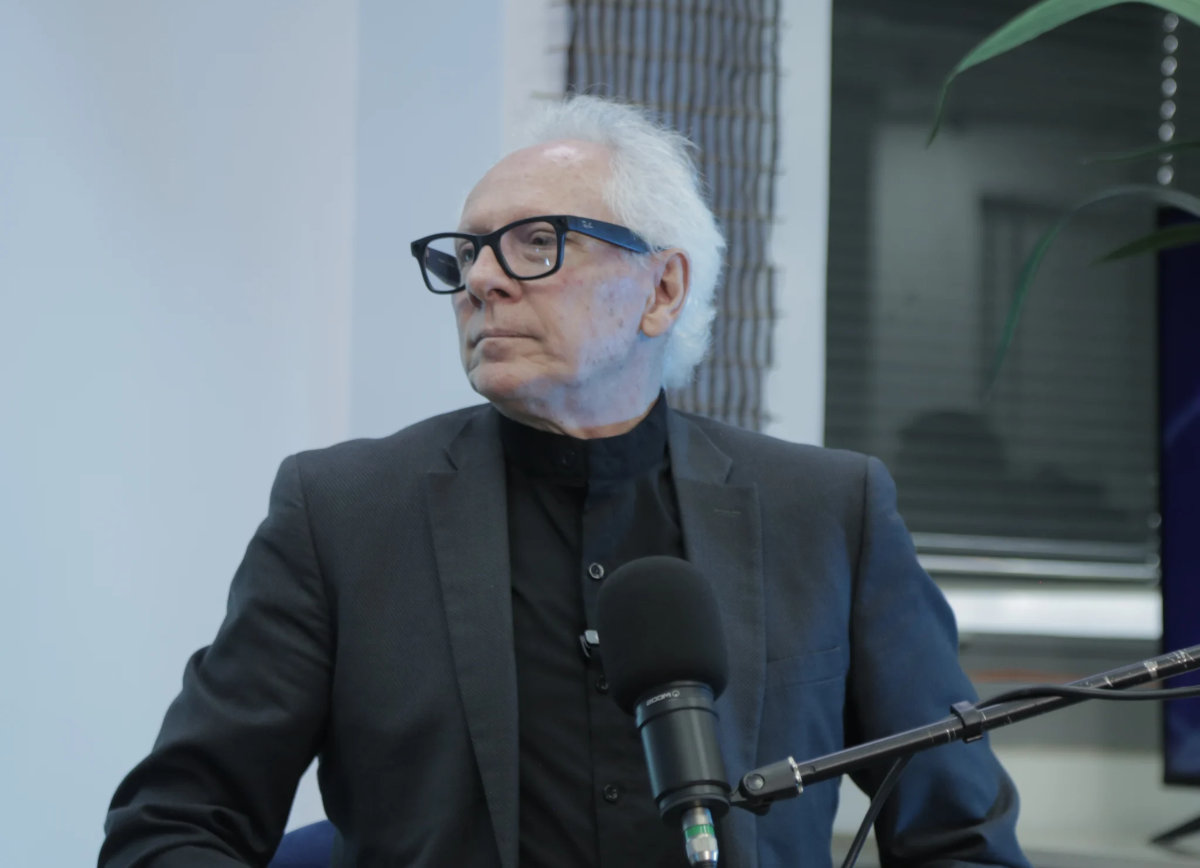
Pisella has advocated for policies favoring the Venezuelan private sector. (Al Día)
Caracas, August 10, 2026 (venezuelanalysis.com) – Venezuelan business sector representative Luigi Pisella has urged the privatization of public assets in a string of recent appearances on state-affiliated media.
“Our main goal is to create an efficient state, one that retains only strategic assets while opening them to private capital and technology,” Pisella said in an interview on Friday with La Iguana, a media outlet founded and owned by current Communications Minister Miguel Pérez Pirela.
He added that privatized state-owned companies would “create wealth, create jobs, and pay taxes.”
The former president of major pro-business lobby CONINDUSTRIA, Pisella was chosen by Acting President Delcy Rodríguez to represent the private sector in a commission tasked with evaluating state-owned assets, with companies, landed estates, and other properties deemed “non-strategic” set to be privatized or liquidated.
Other commission members include Economic Sector Vice President Calixto Ortega, Finance Minister Anabel Pereira, and Communes Minister Ángel Prado.
In his interview, Pisella went on to claim that the commission had an opportunity to “fix past mistakes,” in reference to nationalizations under former President Hugo Chávez, who sought to impose state control over sectors such as telecommunications, electricity, and the basic industries.
“We have to create conditions for foreign corporations, the former owners, to return,” he vowed. “And if it is not possible, find investors that will purchase these [state-owned] companies.” The private sector spokesman added that privatizations will help shrink the public sector payroll, which he placed at 3.1 million workers.
Pisella has featured prominently both in public and private news outlets to speak on the Rodríguez administration’s economic policy goals.
In an August 2 appearance on state broadcaster VTV, he pledged that the government’s economic agenda aims to make the country “more competitive” and is “on the right track.”
“The laws that we are adjusting and updating, alongside the commission to evaluate state assets, have the same goal of attracting foreign investment,” Pisella underscored.
Following the January 3 US bombing and kidnapping of President Nicolás Maduro, the acting Rodríguez government has fast-tracked legislative reforms offering new concession models, tax breaks, and legal assurances to private corporations in key formerly state-run sectors including energy, mining, and electricity.
In the wake of the June 24 double earthquake, the National Assembly likewise approved a new law aimed at “encouraging” property owners to rent out houses and apartments. The bill establishes conditions for lease agreements and mediation mechanisms for landlord-tenant disputes while also facilitating evictions.
Since January, the Trump administration has seized control over Venezuelan export revenues, especially from crude sales, with Secretary of State Marco Rubio insisting that Venezuelan authorities must submit a “budget request” to access the funds.
Neither Washington nor Caracas have disclosed any figures, with the Financial Times estimating that more than US $13 billion from Venezuelan oil exports has been deposited at a specially designated US Treasury account.
In a radio interview, Pisella stated that the Trump White House has deducted the cost of its “military mobilization,” which he placed at $4.7 billion. According to the business lobbyist, there are also imports from US manufacturers and debt payments to Chevron to be deducted, leaving around $7 billion to be transferred directly to private sector importers via foreign exchange tables run by public and private banks.
Pisella’s claims have yet to be confirmed or denied by the acting Rodríguez government. In recent months, an official “rapid response” social media account has been quick to dismiss news Caracas deems to be “fake.”
For his part, Trump has recurrently boasted that his administration has recouped the cost of the January 3 military operation “many times over.”
Edited by Lucas Koerner in Philadelphia, USA.