Spain holidays

Brit floored by price after ordering fish and chips from Benidorm chippy

Harry Poulton, who moved to the Alicante region from the UK, visited the Duke of Wellington pub and Ray’s Chippy in Benidorm to find out if they serve the best fish and chips in the city

A Brit living in Benidorm has voiced his astonishment at the cost of fish and chips in the popular holiday spot after popping into a takeaway in the Spanish tourism hotspot. Harry Poulton, who provides travel tips and insights into the Alicante region, paid a visit to the Duke of Wellington pub in the Costa Blanca resort, which also houses Ray’s Chippy.

“I’m here to find out if this really is the best fish and chips in the whole of Benidorm,” he kicked off in a TikTok video. Settling down, Harry chose cod and chips, served with a pot of curry sauce and a can of Coca-Cola to wash it down.

Once his meal arrived, he complimented the waitress, saying it looked “absolutely amazing” before tucking in.

Sprinkling salt on the chips and dunking one in the curry sauce, Harry expressed his delight: “Oh, proper chip shop fries. It’s really nice. You can’t beat a chip shop fry, can you?”

Turning his attention to the fish, meanwhile, Harry, who selected the smaller option from the menu, described it as looking “gorgeous” before taking a bite.

Content cannot be displayed without consent

“That is amazing,” he proclaimed. “Super crunchy – the batter is really nice and it’s proper fresh. Really, really tasty – it’s absolutely gorgeous.”

Harry headed to the till to pay the bill afterwards which, at €13.50 (£11.69), he hailed as an “absolute bargain”.

On TripAdvisor, The Duke of Wellington and Ray’s Chippy boasts a rating of 3.8 out of five based on 289 reviews.

Reacting to Harry’s post, one TikTok user commented: “Great place, we go every time we are in Benidorm.”

A second visitor praised: “Very good when we both went. 10/10 Good prices too.”

While a third recommended: “You should try Gwen’s Bar in La Cala on a Friday tea time. Their fish and chips are unbelievable.”

Harry also offered guidance to Brits heading to Benidorm while the Cheltenham Festival is taking place back home. The annual horse racing spectacular is being held at Cheltenham Racecourse from today (March 10) through to Friday.

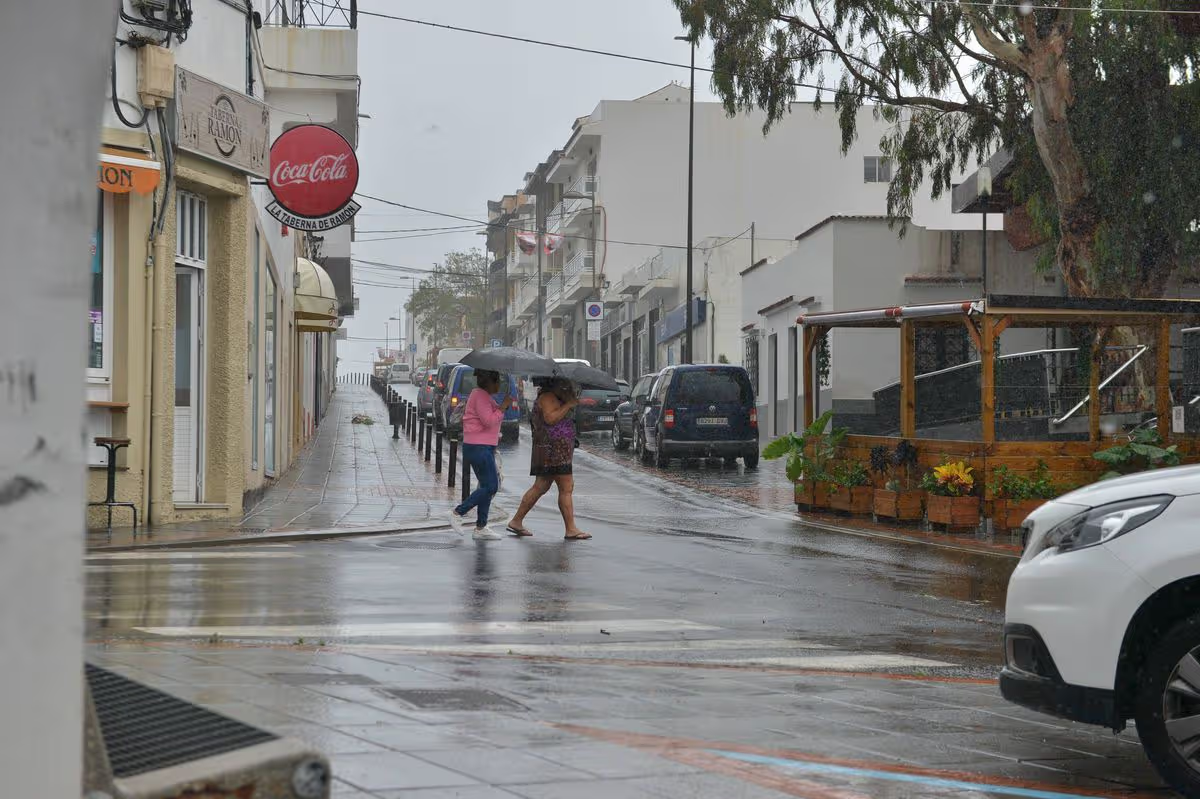
“It’s a little bit cloudy here at the moment,” Harry cautioned those planning to watch the races while abroad. “It’s quite cold as well – currently just 13 degrees and it looks there is more rain and wind on the way.”

He concluded by urging those travelling to the Costa Blanca this week to pack jumpers and jackets alongside summer clothing. “You know what Benidorm is like,” he remarked. “Cloudy one minute, but blue skies the next. It’s good to be prepared.”

Source link

Sunshine island destinations for March – including two secret islands and stunning ocean waterfall

Escape the UK’s unpredictable weather with these toasty March and April holiday destinations within easy reach of Britain — cheap flights and even cheaper pints, what’s not to love?

With British weather continuing to swing between dreary downpours and (marginally) pleasant spring sunshine, holidaymakers are still hunting for getaway spots with guaranteed warmth and gentle breezes. That’s where we step in.

If you’re seeking holiday destinations within easy reach of Britain that are gloriously warm at this time of year, whilst remaining incredibly budget-friendly, look no further, because we’ve got you covered.

As the UK starts to shake off winter’s chill, we’ve compiled the finest options for a March-April escape in the meantime, with temperatures across these destinations hovering between 16C to 24C.

Picture yourself enjoying glorious sunshine as you plunge into crystal-clear waters surrounded by some of the most striking and awe-inspiring landscapes on earth – all whilst enjoying inexpensive drinks.

Amazon cabin bag meets Ryanair requirements for less than £15

This article contains affiliate links, we will receive a commission on any sales we generate from it. Learn more
Ryanair bag

£20.99

£14.99

Amazon

See the deal

Travellers keen to beat the bag charges without breaking the budget have made an Amazon travel bag a bestseller. Rated 4.7 stars out of 5 from almost 3,000 reviews, the Xkdoai bag comes in six colours with prices from £14.99, saving 29% on the usual price.

Without further delay, here’s our selection of sunny destinations within easy reach of the UK you can explore in March and April without emptying your wallet, reports the Express.

La Graciosa

This diminutive Canary Islands treasure is remarkable in every respect – it features absolutely no tarmac roads owing to its heavily protected designation as the largest Marine Reserve in Europe and as a National Park, meaning there are no vehicles on this island whatsoever.

It’s the first hidden island on our list, and an absolute paradise for travellers yearning for tranquillity and isolation, with the island’s untamed, pristine and genuinely secluded nature ideal for those weary of overcrowded tourist hotspots and constant travel mayhem. Reaching La Graciosa couldn’t be simpler.

Take a direct flight from the UK to Lanzarote followed by a short ferry crossing to the island. At the time of writing, a direct one-way flight from London Stansted Airport to César Manrique-Lanzarote Airport on March 11 costs just £29.

From there, jump on a 30-minute ferry from the port of Órzola, which will carry you across to La Graciosa. Prices on this tiny island haven are affordable, with a pint of local beer costing around £2.

Caleta del Sabo, the island’s only village, is a must-see attraction during your stay and Playa de las Conchas is the island’s most celebrated beach.

The breathtaking sandy stretches of Playa de las Cocinas and Playa Francesa are also top-rated draws, providing magnificent views of the imposing Famara cliffs over in Lanzarote.

Del Ámbar, Del Salado, and De la Laja are among the other pristine beaches found on Graciosa. You can even indulge in a boat excursion to the neighbouring Isla de Lobos for some birdwatching.

Comino

The relatively unknown Maltese island of Comino, famous for its dazzlingly brilliant Blue Lagoon, is a gem hiding in plain sight, and our second under-the-radar secret island haven.

With no towns – and therefore no cars – visiting Comino is truly an experience like no other.

Considered a haven for swimmers, snorkellers, hikers and photographers – tourists are known to travel from around the world just to sample a slice of life in this deserted paradise.

To get to Comino, travellers can fly into Malta International Airport – a one-way flight from London Stansted Airport to Malta International Airport on 12 March would set holidaymakers back £51 – and then from mainland Malta, you can hop on one of the regular ferries from Cirkewwa Ferry Terminal, which will whisk you off to Comino in roughly 35 minutes.

As for beverages, pints on Comino can cost anywhere between £2.60 to £4.

Undeniably, the crown jewel of Comino – and arguably the entire Maltese archipelago – is the world-renowned Blue Lagoon, enticing visitors with its pristine white sands and shimmering turquoise waters all year round.

Santa Marija Bay, nestled on the quieter side of Comino, offers a serene beach, shallow waters and none of the tourist throngs found at the Blue Lagoon.

The Santa Marija Caves are another major draw on this island, and trekking up to the iconic Santa Marija Tower is a favourite pastime.

Gran Canaria

Often described as a ‘miniature continent’ due to its near-circular shape, Gran Canaria offers affordable flights, with a direct one-way flight on 13 March (including one carry-on bag) from London Luton Airport to Gran Canaria Airport priced at £29 at the time of writing.

A pint of beer in many spots across Gran Canaria will only set you back £2, and if that’s not tempting enough – there are numerous pubs offering the famed Canary Islands Happy-Hour €1 pints, which equates to roughly £0.87.

Las Alcaravaneras and Las Canteras, sandy beaches bordering Las Palmas – Gran Canaria’s biggest city, are major tourist attractions catering extensively to holidaymakers.

Additional popular beaches across the island include Maspalomas, Playa del Inglés, San Agustín, Amadores, and Puerto de Mogán. The bustling tourist destination of Puerto Rico is also essential viewing for those wanting a vibrant atmosphere.

Anfi del Mar, Playa de Taurito, and Meloneras Beach are equally excellent choices for visitors to explore.

Roque Nublo, the 80-metre volcanic monolith rock is a major draw for hikers, whilst the ‘Dragon’s Tail’ in the Tamadaba Natural Park offers unrivalled panoramic vistas of the island in the north west.

Charming villages such as Tejada, Artenara, Fataga, and beautiful towns including Santa Lucía de Tirajana and Agüimes are equally worth exploring.

Natural pools, secluded coves off dramatic coastlines, untamed beaches, and vibrant cities – Gran Canaria offers everything.

Lanzarote

As the fourth biggest island in the perpetually popular Canary Islands in Spain, Lanzarote is a breathtaking destination.

Boasting black sand beaches in one area and a rocky landscape in another, the island’s terrain features the Famara mountain ranges in the north and Ajaches to the south.

At the time of writing, a direct one-way flight from London Stansted Airport to César Manrique-Lanzarote Airport on March 11 was just £29, and pints will set you back just £1.30 on this tropical paradise. Lanzarote’s all-inclusive resorts are a massive hit with budget-conscious holidaymakers, with luxurious options available for those looking to indulge.

The island’s unique landscape is another magnet for tourists – boasting mountains, vast craters, red terrain, black sand beaches, crystal clear turquoise waters, white sands, and the cherry on top; an active volcano named Mount Timanfaya which features lava fields formed centuries ago.

When it comes to leisure activities, there’s a wealth of options on this compact island, with activities such as surfing, scuba diving, kiteboarding, and windsurfing popular amongst visitors. Lanzarote also boasts numerous family-friendly beaches, particularly suitable for young children.

Gozo

Despite its small size, Gozo delivers in spades. The island can be accessed via various routes – initially by flying to Malta’s main international airport, then either taking a short yet scenic 25-minute ferry from Cirkewwa Terminal in northern Malta or a 45-minute ferry from the stunning capital Valletta to Gozo.

At the time of writing, a one-way ticket from London Stansted Airport to Malta International Airport on March 12 cost £51. The best part?

Drinks in Gozo are reasonably priced – chilled pints of delicious local beer for just £1.80.

Ramla Bay, regarded as one of Gozo’s best beaches, is a popular attraction, whilst the gantija temples, among the world’s oldest and best-preserved free-standing structures, are must-sees.

The Ta’ Kola Windmill stands as another significant landmark on the island, whilst the Cittadella, Gozo’s recently refurbished historic settlement at the heart of the island’s capital Victoria (Rabat), is another essential destination should you travel to this magnificent retreat.

It’s not just spectacular views on offer in Gozo, as the island also boasts four Michelin guide restaurants – Tmun, Level Nine at The Grand, Al Sale, and Ta’ Frenc.

The culinary and wine scene in Gozo is unmatched, with food and wine tours proving a popular activity amongst visitors.

For those wanting distinctive experiences, look no further than the traditional milking of sheep and goats in Gozo, which is then transformed into traditional Gozitan cheese.

For activity fans, clifftop hiking, kayaking and cycling are superb options for a perfect day out.

Fuerteventura

The oldest island in the Canary Islands Archipelago, Fuerteventura is genuinely stunning. Recognised as an ideal destination for watersports, especially for those passionate about surfing, waterskiing, and windsurfing, this exotic Spanish island embodies sun-drenched enjoyment.

A direct one-way flight from London Luton Airport to Fuerteventura Airport on March 15 costs just £29, and pints are reasonably priced at £1.70 on this vibrant island. With a staggering 152 individual beaches, this Canary Islands jewel boasts a unique landscape.

Some of Fuerteventura’s top beaches include Playa de Sotavento, Playas de Corralejo, Playas de El Cotillo, Playa de Cofete, Playas de Jandia, and Playa de Ajuy.

Popular resort destinations such as Corralejo, Caleta de Fuste and El Cotillo draw in hordes of tourists, with Corralejo’s historic quarter exuding authentic Spanish charm through its narrow lanes, tapas bars and seafood eateries.

The area is particularly renowned for the Corralejo Dunes, while the Calderón Hondo volcano trail is just a stone’s throw away, offering breathtaking panoramic views.

Family-oriented Caleta de Fuste boasts an upscale marina and traditional markets, making it a must-visit on any Fuerteventura itinerary.

El Cotillo is a charming, bustling fishing village famed for its surfing conditions and serene lagoon, whilst the secluded Cofete Beach and the ancient Ajuy Caves are also must-see attractions on the island.

Madeira

Madeira is a truly awe-inspiring destination offering a plethora of activities and experiences for travellers to indulge in, and getting to the island is remarkably straightforward.

A direct one-way flight from London Luton Airport to Madeira Airport on March 16 costs £43 at the time of writing, whilst the average price of a pint of beer is around £2.10.

Often dubbed the ‘Pearl of the Atlantic’, this small Portuguese volcanic island certainly deserves its glowing reputation, with one social media user calling it “unfairly beautiful”, whilst another labelled it “Europe’s Hawaii”.

Calheta Beach and Machico Beach rank amongst the island’s most popular destinations, whilst the Natural Pools of Porto Moniz represent another jewel in this Portuguese island’s collection – and undoubtedly its most famous attraction.

Another essential location in Madeira is Seixal Beach – a stunning natural black sand beach celebrated for its striking lush green setting, towering cliffs and the tumbling waterfall, Miradouro do Veu da Noiva, which flows straight into the sea and presents a magnificent spectacle.

Funchal, the lively historic capital of Madeira, proves a major attraction, with the city famous for the Old Town (Zona Velha), Monte Cable Car & Toboggan Ride, the Monte Palace Tropical Garden, and the Mercado dos Lavradores market.

The Laurissilva of Madeira is a 20-million year old forest praised for its incredible biodiversity, and a walk along its woodland paths is essential. Pico do Areeiro – Madeira’s third-tallest peak represents another unmissable spot, especially for keen hikers.

The trek from Pico do Areeiro to Pico Ruivo delivers an exciting mountain expedition, connecting the island’s three loftiest peaks whilst providing unforgettable panoramas.

A nod to Madeira’s famous wine is unavoidable, with Funchal, the town of Câmara de Lobos, and the adjacent island of Porto Santo celebrated as the premier destinations for wine tastings and vineyard excursions.

Tenerife

Those visiting this breathtaking island can enjoy palm-lined beaches, dramatic volcanoes, enchanting landscapes, verdant forests, and mouth-watering cuisine – all during a single holiday.

The white sand, 1.3-kilometre-long Playa de las Teresitas beach remains a firm favourite with holidaymakers, as does the 850-metre long golden sand expanse of Playa de las Vistas.

Playa Jardin beach with its volcanic black sand also draws those wanting something distinctive during their coastal getaway.

Direct flights to this sun-drenched holiday island are wallet-friendly – at the time of writing, a one-way flight from London Luton Airport to Tenerife South Airport on March 24 was priced at £27 with one free cabin bag allowance, whilst pints cost just £1.30 on average.

The sophisticated Playa del Duque is ideal for upscale dining and relaxed family activities, whilst the sprawling natural beach of Playa de la Tejita provides stunning views of Montaña Roja aka the Red Mountain.

The secluded cove of Playa de Abama is celebrated for its golden sands and excellent snorkelling, and arguably, Tenerife’s most magnificent beach, Playa de Benijo is perfect for an isolated retreat surrounded by nature, remarkable cliffs and gorgeous black sand.

The south-west coastline of Tenerife, especially the area between Los Gigantes, Costa Adeje, and Los Cristianos, is renowned for dolphin and whale watching, while a visit to the Teide National Park and the Corona Forestal Natural Park is absolutely essential.

The colonial town of San Cristobal de la Laguna provides a unique retreat within Tenerife, whilst the island’s capital, Santa Cruz de Tenerife, acts as the lively heart of this sun-drenched paradise.

Source link

Brits ditch Balearics for other hotspots leaving livid locals asking ‘where are our customers?’

Visits to the Balearic Islands dropped in January of this year, and restaurant bookings are also down causing concern in the industry. However, plans to cap visitor numbers on one island are going ahead

Tourism bosses in Spain have been left concerned over dropping numbers in the hospitality industry amid a ‘disastrous’ start to the year for the Balearic Islands.

The islands, which include the popular destinations of Majorca, Ibiza, and Menorca, saw a drop in international visitor numbers of 8.83% in January. While restaurants also saw a drop in footfall, attributed to rising prices, across 2025.

Overall, across the Balearic Islands there was a 3% drop in restaurant footfall across 2025. While the amount might sound small, the tight profit margins in hospitality and the islands’ heavy reliance on tourism mean that modest drops can have a substantial impact.

The decline in restaurant customer numbers is being partly attributed to rising prices across the islands, the Majorca Daily News previously reported. Data analysts pointed out that in areas where dining is the most affordable, such as the mainland regions of Castile-La Mancha and Extremadura, customer numbers grew.

The analysis concluded: “This behaviour suggests that consumers have reached a price ceiling, which limits price increases in the most expensive areas and reinforces the idea of a restraint in real spending, even in areas traditionally less price-sensitive.”

The restaurant industry is also concerned about the numbers for 2026. Juanmi Ferrer, president of the CAEB Restaurants Association, representing island outlets, remarked that the year kicked off with a “disastrous January” and predicted it would be “like last year, or at most a little worse”.

He explained: “The last thing a restaurant owner wants is to raise prices, because that means fewer customers. This year we’ll try to absorb those extra three to four percentage points of inflation as much as we can.”

One option being considered is a restaurant voucher scheme, similar to a recent initiative across the island that supported shops. The retail scheme gave all residents aged over 16 four vouchers worth €15 each, which could be used on purchases of €30 or more, to encourage people to shop locally.

During summer 2025, concerns emerged that certain Majorcan resorts had become “completely dead”, with Miguel PérezMarsá, chairman of the nightlife association, saying: “The tourists we’re interested in are being driven away; they don’t feel welcome and are going to other destinations.” His comments came as thousands took to the streets in overtourism protests.

At last year’s World Travel Market (WTM) in London, Ibiza’s Tourism Minister, Jaume Bauza, acknowledged declining visitor numbers, revealing that 20,000 fewer British tourists visited the renowned party destination during the 2025 peak season compared to the previous year. Industry experts have suggested this decline may reflect holidaymakers deliberately shifting their travel dates to October and November to capitalise on more affordable rates.

However, it should be noted that such a dip comes at the end of several record years for tourism on the island chain, with Brits and other Europeans flocking in huge numbers to the Balearics post-Covid.

READ MORE: 20 iconic UK film sets you can enter for free for one week onlyREAD MORE: Holiday blow for Brits as new European visa will be three times more expensive

Despite the drop in numbers causing alarm, the islands are continuing with measures to tackle overtourism. Plans have been announced to slash the number of daily cruise ship berths from 8,500 to 7,500 between June and September in Palma, Majorca, meaning fewer cruise ship passengers arriving once the change is implemented between 2027 to 2039.

Only three cruise ships would dock in Palma each day, with only one of these vessels allowed to transport more than 5,000 passengers. Opposition party PSOE – a socialist party for the Balearic Islands – also put forward a proposal recently for visitor numbers to be capped across the islands at 17.8 million a year. However, its proposal was rejected.

Have a story you want to share? Email us at webtravel@reachplc.com

Source link

Holiday blow for Brits as new European visa will be three times more expensive

After many delays, ETIAS should be in place by the end of this year, but many holidaymakers have been surprised by the fee that has been hiked to nearly three times as much as originally announced

The European Travel Information and Authorisation System (ETIAS) is set to become mandatory for Brits travelling to 30 European countries in the last quarter of 2026. Citizens of the UK and 58 other visa-exempt countries will need to apply for travel authorisation ahead of visiting EU countries including France, Spain, and Portugal.

This means that Brits heading off to the Costas or Dordogne, among other holiday hotspots, will need to apply for an ETIAS before they travel, and all passengers will need to complete a form online. While the plan is for most ETIAS approvals to take minutes, those who need further checks could be waiting up to 30 days for approval, so it’s something that should be sorted as soon as a holiday is booked.

While the process sounds simple enough, the fee that comes with an ETIAS application has become the latest blow for British holidaymakers. When it was first announced in 2018, the fee was planned to be €7, just over £6, but it was announced late last year that the fee will actually be €20, about £17.37, almost three times the original cost.

Passengers of all ages will need to get an ETIAS, but the fee is waived for children and seniors, so luckily only visitors aged 18-70 will need to pay it. However, for a couple travelling together, this adds another €40 cost to a holiday that needs to be budgeted.

A statement on the European Commission website says: “ETIAS fee has been set at EUR 20 instead of the previous EUR 7. The new fee takes into account the rise in inflation since 2018 and additional operational costs related to new technical features integrated into the system. It also brings the cost for an ETIAS travel authorisation in line with similar travel authorisation programmes around the globe.”

Once approved, an ETIAS is valid for three years, or until your passport expires, depending on which date comes first. It can be used for multiple trips.

Brits heading to the EU in recent months have also had to use the new EU Entry/Exit system at airports. Set to replace manual passport stamping, it involves taking a photo and fingerprints of anyone entering the Schengen area.

READ MORE: Foreign Office issues fresh Cyprus travel update for BritsREAD MORE: Closed UK airport unveils latest plans to finally reopen 12 years after it was abandoned

The EES system aims to increase security and easily identify overstayers, and once fully-implemented should reduce queues for non-EU citizens such as Brits. However, many travellers have reported delays due to technological issues, with three hour waits reported in Tenerife.

Unlike the ETIAS, Brits don’t need to register in advance for EES. However, they can download the official Travel to Europe app, which allows them to register their details in advance, potentially helping to speed up the process.

At the time of writing, there’s no official start date for the ETIAS. The European Commission has previously said it will announce the date several months in advance, allowing travellers and airports time to prepare. Brits do not currently need to pay for an ETIAS, and once launched, should only use the official ETIAS website for applications.

Have a story you want to share? Email us at webtravel@reachplc.com

Source link

‘I’m a Brit in Spain and have noticed 1 big difference after leaving UK behind’

A British man in Spain has shared one big difference between the UK and Spain, claiming it’s something you’ll only notice once you leave the UK – but not everyone agreed with him

Spain has remained a firm favourite amongst Brits seeking a sun-soaked getaway for several years in a row. And It’s not just the brief flight time that appeals for holidaymakers, as the country also enjoys glorious weather throughout the entire year.

Data from the Office of National Statistics reveals that Brits clocked up more than 17.8 million trips to the Mediterranean nation in 2024, with figures projected to have climbed to 19.1 million in 2025. These holidays included trips to the Canary Islands and Costa Blanca, home to Benidorm. Further hotspots include the various Costas, the Balearic Islands, whilst the Northern regions are also seeing a surge in popularity.

Whilst the prospect of swapping Britain’s bleak and overcast winter months for brighter, warmer climes is undeniably attractive, there are certain contrasts many travellers might not have considered.

A British expat has now highlighted one major distinction between Spain and the UK, which may well explain why countless Brits are lured to the southern European nation.

Content cannot be displayed without consent

On TikTok, a man called Mark posted footage of himself strolling through British streets back in January, showcasing murky skies with the sun conspicuously absent.

“You don’t realise how depressing it is until you leave the UK,” he captioned the clip, which then switched to show him wandering through Spain’s bright streets, lined with palm trees along the pavements.

“Why does the UK have a grey filter?” he pondered in the post’s caption.

Is the UK weather more grey than Spain?

From March 2026, the UK is forecast to see average temperatures ranging between 9C and lows of 2C, though some regions might also benefit from sunny spells with temperatures reaching up to 17 degrees in Eastern England on 5 March, according to the Met Office’s long range forecast.

Northern parts of England and Scotland are anticipated to face rain and storms, and potentially even some snow on higher ground, with overnight frost still possible between 4-13 March.

In contrast, Spanish March days are typically sunny, offering 6-8 hours of sunshine daily, alongside average temperatures of between 12-18 degrees. However, occasional brief rain showers should be expected, according to Tui.

Southern regions like Andalusia and the Canary Islands are the warmest (up to 21°C), whilst central and northern areas are cooler, creating perfect conditions for exploring the spring-blooming countryside.

Despite Mark’s post, numerous people quickly flocked to the comment section of his video to argue the UK weather isn’t as ‘depressing’ as he suggested.

“will never understand why people think grey skies are depressing,” one viewer commented.

Multiple people also pointed out that the UK can be equally sunny and warm at times, and that it’s unfair to judge the weather based on cold and overcast winter days, as the sunny summer days we experience deserve recognition.

Source link

Popular Spanish beaches closed due to ‘faecal contamination’ ahead of Easter

Two Spanish islands have closed beaches due to the presence of ‘faecal contamination’ and both are in hotspots that are expecting large numbers of Brits for the Easter break

Two popular beaches on Spanish islands have been closed off due to an unpleasant, stomach-churning water issue.

Due to the presence of ‘faecal contamination’ just weeks ahead of the peak Easter season, two sandy stretches that’ll see huge numbers of visiting Brits in the coming weeks have been shut down.

The first beach to close to the public is in Playa Blanca, Lanzarote, a popular spot in the spring thanks to its warm weather. An area known locally as the ‘small beach’ closed yesterday (March 24), with reports from local news outlet Canarian Weekly showing barriers in place preventing people from entering the sea.

Officials have said in a statement that the closure will last for 48 hours while laboratory results are analysed. Tests showed an elevated level of intestinal enterococci, a type of bacteria found in human and animal gastrointestinal tracts.

However, public health officials have said that nearby beaches, including Playa Dorada and Playa Flamingo, are still open. Local government organisation Ayuntamiento de Yaiza is expected to give updates soon.

On another popular tourist island, Majorca, a beach in Cala Millor, has been closed after a broken pump led to a sewage spill. According to Majorca Daily News, locals reported seeing large amounts of wastewater running from the promenade and into the waters of Platja Petita.

The incident was reported yesterday, with the spillage continuing into the night. While the situation is now described as ‘under control’, the beach will remain closed for two to three days.

Cala Millor is found on the east coast of Majorca, and this tourist resort is particularly popular with Brits thanks to its long sandy Blue Flag beaches and large number of bars and nightclubs.

It’s not the first time the Balearic Islands’ beaches have faced closure due to contamination. Earlier this year it was revealed that incidents of ‘faecal contamination’ had doubled in 2025, with 92 cases recorded in 2025 alone.

Of the 92 incidents, 20 resulted in bans on swimming and bathing, while the other 72 led to advisories that warned visitors not to enter the water.

While a recent report by the Marilles Foundation showed that, overall, 70% of the Balearics’ beaches received an excellent rating for water quality, the figures varied between islands. In the little-visited island of Formentera, 100% of its beaches were rated as excellent, and in Menorca, the figure was 80%. In Ibiza, 63% were excellent, while 32% had a good rating and 5% were sufficient. According to the report, all the areas of insufficient water quality were in Majorca, highlighting Albercuix in Pollensa and Cala Egos in Santanyí as two particular areas of concern.

READ MORE: Five beautiful countries that will pay Brits up to £70,000 to move thereREAD MORE: Unspoilt English town with cobbled lanes and independent shops is like stepping back in time

The foundation, who raise awareness of marine conservation, has recommended tighter monitoring of the number of beachgoers and boats. At the moment, only Menorca keeps track of numbers, although plans over the next three years are to implement a new project using sensors to monitor numbers at 150 beaches, which is set to cost the islands €4 million (about £3.5 million).

Have a story you want to share? Email us at webtravel@reachplc.com

Ensure our latest stories always appear at the top of your Google Search by making us a Preferred Source. Click here to activate or add us as your Preferred Source in your Google search settings.

Source link

Hidden gem in Spain has colourful houses and delicious food

This town has been named among “Spain’s most secret destinations” by European Best Destinations, with colourful houses, fresh seafood and vibrant festivals

Tucked away between verdant rolling hills and the Cantabrian Sea lies a hidden gem of a village that European Best Destinations has crowned amongst “Spain’s most secret destinations”. Cudillero, situated in the Asturias region, is celebrated for its enchanting winding alleyways, vibrant houses down the slopes, and thriving fishing harbour.

Fishing has long been the lifeblood of the village’s economy, and today you can still observe fishermen carrying out their age-old routines along the waterside. Tourists can meander along the harbour, observe the fishing vessels gently rocking in the water, and savour fresh seafood and traditional northern specialities in the village’s eateries.

Asturian gastronomy, originating from the Asturias region in northern Spain, is celebrated for its robust and richly flavoured fare that frequently showcases fresh seafood, substantial stews, and locally procured produce, reports the Express.

Arguably its most iconic offering, the Fabada Asturiana, is a sumptuous and soul-warming bean casserole prepared with large white beans (fabes), chorizo, morcilla (blood sausage), and pork.

Another comforting treat worth sampling during the chillier seasons is the Caldereta de Pescado, an Asturian seafood casserole that highlights the region’s maritime treasures.

It comprises an assortment of fish and seafood including hake, monkfish, prawns, and clams, simmered in a richly flavoured stock with tomatoes, onions, and garlic.

The Empanada Asturiana, a savoury pastry filled with tuna, chorizo, or other ingredients is a beloved snack in Asturias and often taken on picnic trips and to family events by locals.

Visitors to this corner of Spain simply must sample the traditional Asturian Cider, known locally as Sidra Asturiana, which is customarily poured from a considerable height to oxygenate it and amplify its taste.

Cudillero is a village that invites discovery, boasting a historic quarter resembling a labyrinth of narrow, twisting lanes flanked by quintessential Asturian dwellings, many decorated with vibrant balconies with pots brimming with flowers.

Perched atop the village on a clifftop commanding views of the ocean sits the Church of Santa María, providing sweeping vistas across the vegetation-clad surrounding landscape.

Nature lovers will find Cudillero offers abundant opportunities for adventure, with neighbouring walking routes winding through dramatic coastal terrain and lush woodland.

Beyond its scenic splendour and seafaring character, Cudillero is also celebrated for its lively festivals held year-round, including L’Amuravela, which occurs every June 29th and commences with a local resident delivering, in rhyme and “pixueto” dialect, a sermon wittily recapping the year’s events whilst seeking divine protection for the 12 months ahead.

Ensure our latest headlines always appear at the top of your Google Search by making us a Preferred Source. Click here to activate or add us as your Preferred Source in your Google search settings.

Source link

Balearic Islands could be hit by anti-tourism protests this summer

The island has seen a number of anti-tourism protests in recent years, with locals demanding caps on visitor numbers, and summer 2026 could potentially see more people taking to the streets

Visitors to a Spanish island that welcomes millions of British tourists each year could be facing disruption over the summer with fresh waves of protests planned.

Menys Turisme Més Vida (Less Tourism, More Life), a group behind protests across the popular island of Majorca, are set to hold an assembly on Friday (February 20) to potentially plan further actions such as protests.

The meeting is planned due to the perceived failure of the Balearic Government’s sustainability pact, and inability to control overcrowding on the islands. A press release stated: “the constant increase in overtourism in Mallorca can only be confronted through grassroots organisation”.

Speaking to Majorca Daily News , Margalida Ramis of environmental group GOB (Grup Balear d’Ornitologia i Defensa de la Naturalesa), claimed that the government “has not done anything and will not do anything” to tackle overtourism.

Visitor numbers to the Balearic Islands have been steadily rising, and are expected to follow the same pattern in 2026. 2024 saw the number of visitors hit 18.7 million, then rising to over 19 million in 2025. In total, the Balearic Islands has a population of just 1.2 million, which includes around 18,000 British expats.

Opposition party PSOE recently took to the Balearic parliament to present a motion arguing that tourist numbers should be capped at 17.8 million a year. However, in a relief for UK travellers, the motion was rejected this week.

Groups such as Menys Turisme Més Vida have been involved in a number of protests in Majorca in recent years, alongside protests against overtourism across Spain. In May 2024, around 10,000 protestors took to the streets of Palma, while in July 2025, numbers reported as high as 50,000 people joined the protests. The 2025 protest was timed to coincide with the start of the school holidays in England and Wales, when many families would be arriving on the island.

Menys Turisme Més Vida’s Instagram account sets out a manifesto with their demands including a ban on tourist rentals across Majorca, a 50% reduction in rental prices for locals, and more stable jobs in what has become a precarious labour market.

However, in recent weeks there has been concern across the hospitality industry over a reduction in customer numbers, with a discount voucher scheme being considered to get more people to eat at local restaurants.

READ MORE: Spain’s ‘ghost islands’ deliberately cut off from the mainland to keep tourists outREAD MORE: TUI launches new route to gorgeous city that looks like nowhere else in Spain

In 2025, Jet2 CEO Steve Heapy warned that “anti-tourism protests and derogatory comments from local administrations make tourists feel unwelcome” amidst rising tensions in the Canary Islands, which included a number of protests, and signs appearing in some hotspots asking tourists to stay away.

At the time he added: “People don’t come to the Canaries to be mistreated or to witness protests. Such incidents tarnish the region’s image, pushing tourists toward destinations like Turkey and Morocco, where they feel valued.”

Have a story you want to share? Email us at webtravel@reachplc.com

Ensure our latest lifestyle and travel stories always appear at the top of your Google Search by making us a Preferred Source. Click here to activate or add us as your Preferred Source in your Google search settings.

Source link

TUI launches new route to gorgeous city that looks like nowhere else in Spain

While this lesser-known region in Spain is growing in popularity, it still gets only a fraction of visitors that other cities see, and it allows you to enjoy a completely different type of Spanish culture

TUI has added a new city break destination to its roster for spring, and it’s in a part of Spain that’s growing in popularity with Brits and has a unique look.

If you’re bored of the Spanish Costas and want to escape the usual packed tourist spots, then Northern Spain is becoming an alternative for Brits who want to see a different part of the country. The Basque Country alone saw a 40% increase in visitors last year, although this still only puts the area at 182,000 tourists a year- a fraction of the visitors to Southern Spain.

At the heart of the Basque Country is Bilbao, and if you’ve never been to this part of Spain, it’s an excellent starting point for immersing yourself in the area’s unique beauty and culture.

TUI will offer city breaks to Bilbao from four major UK airports this spring: Bristol, London-Gatwick, London-Heathrow, and Manchester. With flights from London taking just under two hours, it’s ideal for a long weekend or mini break.

Have a story you want to share? Email us at webtravel@reachplc.com

In a Lonely Planet article, one travel writer wrote: “When your plane banks toward Bilbao Airport for the final approach, the lush forest passing below looks nothing like the Spain you thought you knew.”

The climate and landscapes of this region are worlds away from the dry, sunny south, with milder weather that can be a respite from summer heatwaves. In March and April, daily highs are around 17C, while over the summer, it hits around 26C, and the south often bakes in temperatures in the mid-30s. It also gets more rain than the south, giving the surrounding area a fresh green look.

Bilbao sits on the banks of the Nervión River, and one of its most popular spots is its old town, also known as Casco Viejo. With colourful buildings dating back to medieval times, a grand cathedral, and the beautiful neoclassical Plaza Nueva, full of bars and restaurants, it’s the perfect city break destination.

In contrast, the Guggenheim Museum, with its unique Frank Gehry-designed exterior, looks different from anything else in the city, yet draws people in with its vast collection of contemporary art. Even if you don’t venture inside, it’s worth walking past to see its titanium-clad exterior shining in the sun.

In addition to its cultural delights, Bilbao is known for its colourful food scene, and as you wander the streets, you’ll find plenty of pintxos bars. A northern alternative to tapas; pintxos are bite-sized pieces of bread topped with ingredients from jamón to seafood or cheese, held together by a cocktail stick.

Another famous product of Northern Spain is its Rioja wines, which are the perfect pairing for a plate of pintxos. You can enjoy a day trip to wineries near the city, or simply visit one of the many wine bars for a tasting.

TUI’s deals include a 7-night stay 4T NYX Hotel Bilbao by Leonardo Hotels on a room only basis from £583 per person. Price is based on two adults sharing a Double or Twin Comfort Room departing from London Gatwick on the 14th of April 2026 with hand luggage only.

Or you can book a seven-night holiday staying at Hotel Sirimiri on a room-only basis from £451 per person. Price is based on two adults sharing a Double or Twin Standard Room departing from London Heathrow on the 21st of April 2026 with hand luggage only. Prices are subject to availability and may change. To find out more, visit the TUI website or download the official app.

Ensure our latest headlines always appear at the top of your Google Search by making us a Preferred Source. Click here to activate or add us as your Preferred Source in your Google search settings.

Source link

Sunny island has 85p ‘happy hour’ pints and 22C weather in March with £25 flights

The island is popular with Brits who can’t wait until summer to get some sunshine, with 22C weather and plenty of sunshine to enjoy in March, and lots of stunning unspoilt beaches

Those looking for a cheap, sunny escape for March might want to take a look at this island that offers plenty of sunshine and inexpensive pints. Best of all, it’s a short haul destination so you don’t have to spend hours on a flight.

Gran Canaria is often overlooked when it comes to the Canary Islands, with Tenerife welcoming the most visitors, but it’s growing in popularity as a destination especially for winter sun. In March, the island enjoys daily highs of 22C and seven to eight hours of daily sunshine; a tempting prospect seeing as the UK only gets three to four hours on average in early spring.

Flights from the UK average about four-and-a-half hours, and there’s a range of routes to choose from. EasyJet has flights from Bristol, London Luton, and Manchester year-round, as well as offering seasonal services from regional airports. Meanwhile Jet2 offers routes from airports including Belfast, Birmingham, and Glasgow, with a new London-Gatwick service beginning end of March.

TUI flies from Cardiff and Newcastle upon Tyne year-round, while Ryanair offer routes from Birmingham, Bournemouth, and London-Luton among many others. Flights from London-Stansted on Ryanair start from just £24.99 in March.

Most Brits head to the south of the island, the warmest part of Gran Canaria. Maspalomas is famous for its sand dunes which cover an area of about 1.5 miles. Dunas de Maspalomas is a protected nature area that has hiking trails that allow you to explore the desert landscape surrounded by palm trees and set around a natural lagoon.

Walk along the promenade and you’ll reach the lively Playa del Inglés neighbourhood. Known for its bars, restaurants, and lively nightlife including live music, it’s also home to several shopping centres. In Maspalomas, you’ll also find the Yumbo Centre, which is where many of the island’s LGBT+ friendly bars and clubs can be found. At night, the area is known for its colourful drag shows and it’s especially busy in May with the arrival of Pride.

Pint prices vary across the island, but are generally inexpensive as you’d expect in a Spanish destination. You can generally find pints from €2 to €3 (about £1.74 to £2.60), although some bars notoriously offer happy hour deals from €1 (about 85p).

Across the island, there’s plenty to do, from visiting volcanoes to days at water parks. Many people hike the Roque Nublo trail, which takes just over an hour and takes you to one of the island’s highest points. A relatively easy hike, it offers incredible views of the volcanic landscapes, and looks particularly lush and green in spring.

READ MORE: UK airline announces 4 major new routes – and ticket prices start from £84.99READ MORE: World’s longest flight where passengers are strapped in for 19 hours

Palmitos Park is a fun family day out set in the mountains and has nature walks, exotic reptiles, and even dolphin shows, while the Angry Birds Activity Park is a colourful playground that’s a must for kids who love the mobile game.

Puerto de Mogán is often called the ‘Venice of the Canary Islands’ and is well worth a visit for its sheltered beach and stylish marina. It even has canals, and you can take a boat ride through its narrow waterways with whitewashed traditional houses along the way. The capital of Las Palmas is also a popular day trip, especially the old town of Vegueta where you’ll find museums, historic sites, and art galleries.

Have a story you want to share? Email us at webtravel@reachplc.com

Source link