Kinship and surveillance: The return of Somali piracy | Shipping News
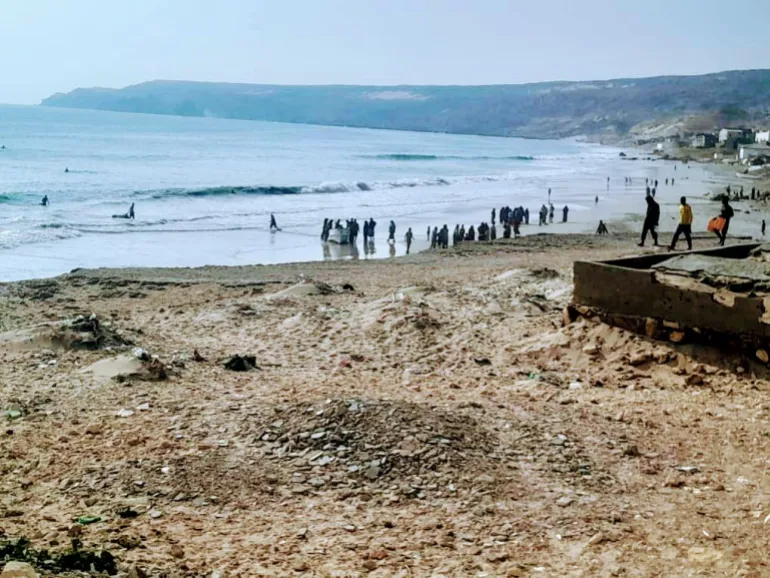
Mogadishu, Somalia – The fishing town of Bander Beyla, on Somalia’s Puntland coast, has become a focal point of the renewed piracy crisis. But beyond the hijackings and international security operations, residents are struggling to protect their livelihoods as fishing restrictions, arrests and surveillance reshape daily life.
Abdifatah Mohamed has spent 20 years fishing off Somalia’s coast. He began at 15, but says declining catches and foreign trawlers have made it increasingly difficult to support his family.
“I don’t catch as much fish anymore, and the prospects for catching lobsters have become rare,” the 35-year-old said.
“Foreign trawlers are emptying out the seas,” he added.
Somalia’s central government collapsed in 1991, weakening maritime oversight and leaving its waters vulnerable to illegal fishing. Some fishermen, angered by foreign vessels exploiting the country’s resources, have turned to piracy.
“We’re [fishermen] no match for the foreign trawlers, who possess capabilities far greater than us, which impacts the livelihoods of our families on land,” Mohamed said.
He added, “Some from our community have taken up arms at sea, but deep down I know it’s hurting our community.”
Piracy has surged off Somalia since late April 2026. The reported number of hijackings varies according to whether counts include commercial ships, fishing vessels and dhows. Several seized vessels have been held near Bander Beyla, bringing the crisis close to the town’s fishing community.

In late August, local authorities restricted fishermen from going to sea amid concerns that pirates were disguising themselves as fishermen.
“The local authorities gave an order the last week of August preventing us from going out at sea, which would remain in effect for two months,” Mohamed said.
“Our families depend on what we catch at sea. Even though our catches [of fish] have gone down in recent years, it helped provide for our families at home. But it’s like we were being punished for crimes we have nothing to do with, and our families have suffered for it.”
For fishermen, Mohamed said, going to sea has become a risk whether they obey the restrictions or defy them.
“It’s a two-way risk, because if the authorities know you went out to sea, they could accuse you of piracy or even transporting supplies to the ships that were hijacked,” he noted.
“While out at sea, you could face arrest or violence from international navies, and get mistaken for pirates, and taken away to a jail in a foreign land. It’s happened to a lot of men from this town.”
Abdirizak Said, who has fished in Bander Beyla for 15 years, said the crackdown has deepened the hardship faced by residents.
“Dozens have been arrested, most of them after they brought food or khat to the pirates, when the ships were anchored near Bander Bayla,” he said.
“Businesses and stores were even ordered by the [local] government not to sell anything to pirates, and if they do, they’ll be viewed as pirates themselves.”
The networks behind piracy
Some of the people involved in the hijackings come from the same town now bearing the consequences.
“Some of the pirates involved in the hijackings are from Bander Bayla and hail from this community,” Said added.
Jethro Norman, a senior researcher at the Danish Institute for International Studies (DIIS), said that piracy cannot be understood solely as a criminal activity at sea. It also depends on networks on land that can provide money, equipment, manpower and protection.
“Kinship networks can effectively function as a form of financial and social infrastructure, and for piracy, this is no different,” he said. “Pirate groups have historically been able to mobilise credit, and get equipment, manpower and protection.”
“In other words, clan relationships can underwrite the practical resources and act of mobilising that make piracy possible. This is precisely why effective counter piracy requires understanding the land-based networks that make those operations possible,” Norman added.
These networks also help explain why efforts to disrupt piracy reach into ordinary commercial life. Said noted that the consequences extend beyond fishing: boats carrying supplies from Yemen to Somalia have stopped arriving, for instance.
“The boats that used to bring supplies from Yemen have also ceased, because of these [pirate] attacks,” he said.
Residents push back
Despite the disruption, Mohamed said that some residents have tried to prevent young men from joining the attacks.
“Recently there was an attempt by local youth with guns trying to go out at sea, but the residents told them not to do it and that they would be harming their community even more,” Mohamed said.
“It was civilians that took the initiative to stop them and not the government because it’s the civilians in this town that will suffer the blowback if they launch attacks from here,” he added.
![A woman sells tea at the local fish market in Bander Beyla, on Somalia’s Puntland coast [Al Jazeera]](https://i0.wp.com/www.aljazeera.com/wp-content/uploads/2026/10/image00008-1792088705.jpeg?w=640&ssl=1)
Two local government officials, speaking anonymously because they were not authorised to talk to the press, confirmed that restrictions had been imposed to weaken the local support networks supplying pirates.
“The security restrictions were lifted on October 1 after successful anti-piracy operations led to the release of three ships,” the first local official said.
The International Maritime Organization confirmed on October 2 that three hijacked vessels, Honour 25, Seamull (also known as Sibu 1) and Eureka, had been freed. It said 44 seafarers were released and reported that five crew members died during the rescue operation involving Honour 25.
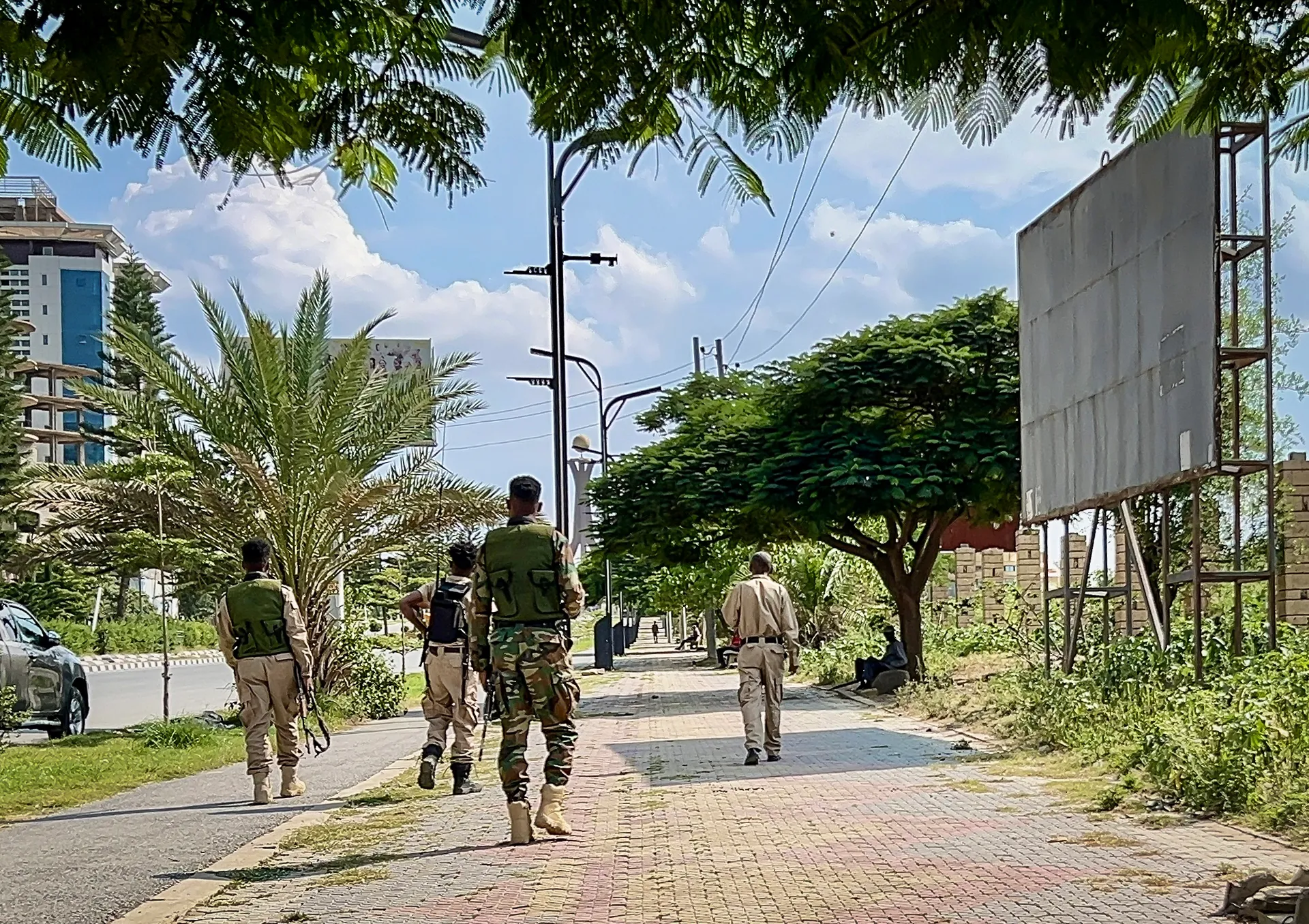
The lifting of restrictions has not ended the visible security presence around Bander Beyla, according to the officials.
“Military helicopters flying inland from the sea routinely hover over the town, and these flyovers are more frequent in the nearby remote coastal areas,” one local government official added.
“They’re looking for any movements of armed individuals on the coast,” a second local government official said.
Both officials said the helicopters belonged to the European Union Naval Force, which has conducted counter-piracy operations in the region for years.
Security forces stretched thin
The renewed attacks have emerged amid wider regional instability and competing demands on maritime security forces. Abdinur Abdella, a Somali political and security analyst, said international naval attention shifted after Houthi attacks began in the Red Sea and Gulf of Aden in late 2023.
“When Houthis began carrying out attacks in the Red Sea and Gulf of Aden in late 2023 in response to the conflict in Gaza, it saw international navies change their focus and efforts to the Houthi threat, which allowed armed groups active on the Somali coast to take advantage of the lax in security,” Abdella said.
Norman said Puntland’s maritime forces have also been diverted by other security challenges.
“The PMPF [Puntland Maritime Police Force] has been stretched thin by its fight against ISIS in the Al-Miskad mountains. It also lost some personnel to the 2023 anti-Somaliland rebellion in Las Anod,” he told Al Jazeera. “Some Dhulbahante fighters from Puntland’s forces, including the PMPF, joined the uprising, which wrested roughly a third of Somaliland’s claimed territory from its control.”
![The local fish market in Bander Beyla, on Somalia’s Puntland coast [Al Jazeera]](https://i0.wp.com/www.aljazeera.com/wp-content/uploads/2026/10/image00007-1-1792089331.jpeg?w=640&ssl=1)
“Again, this links back to the clan dimension, and the strength of kinship ties and obligations as essential to understanding contemporary piracy networks and counter piracy initiatives,” Norman added.
For residents of Bander Beyla, these overlapping security pressures are not abstract geopolitical developments. They determine whether fishermen can work, whether supplies arrive and whether people risk being mistaken for pirates.
Said noted that the presence of aircraft remains a reminder that even after restrictions were lifted, fishermen are still being watched.
“We can hear the sound of aircraft and the louder it gets, the closer they are, so we know they’re watching,” he said. “I just want to make a living without worrying whether I’ll make it back to shore safely.”