SoCal

Public defenders target Trump federal prosecutor Bill Essayli in SoCal

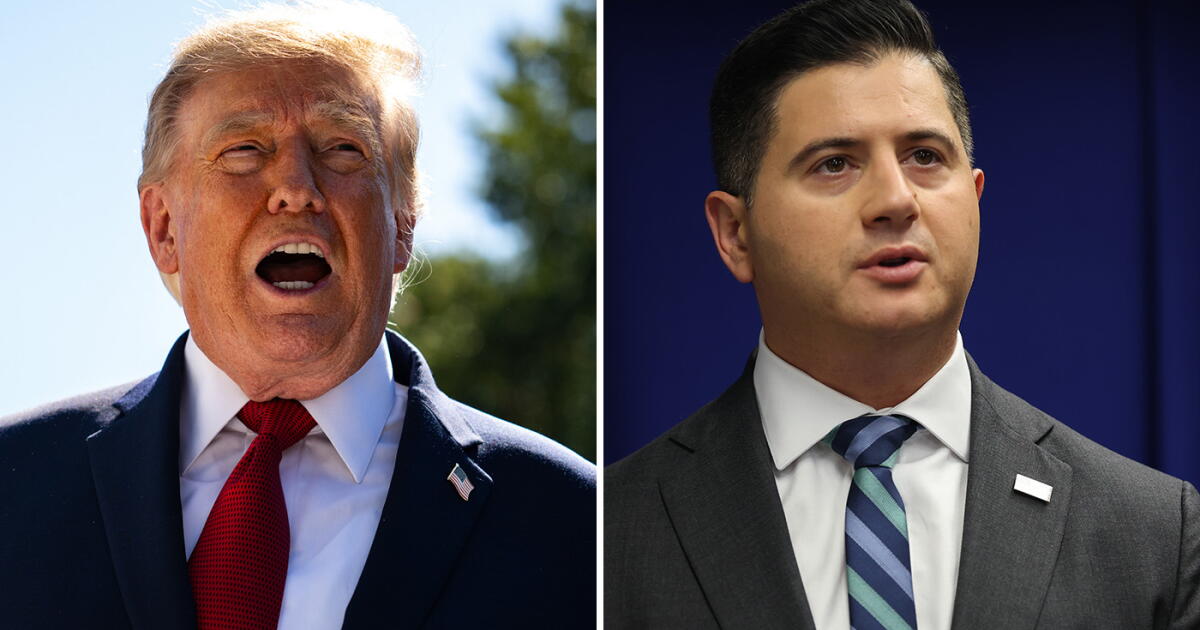
The Los Angeles federal public defender’s office on Friday joined a renewed effort to oust Bill Essayli, the top federal prosecutor in Southern California, accusing the government of “playing shadow games with the most consequential powers a government can wield against its population.”

Citing a recent order from the 9th Circuit Court of Appeals in United States v. Jackson, the public defender’s office renewed a motion seeking to disqualify Essayli from participating in or supervising the prosecution of their client, Jaime Ramirez.

The federal appellate court ruled last month that the Department of Justice cannot keep an official who has not been confirmed by the Senate in charge of a U.S. attorney’s office simply by giving that person a different title and the full powers of the job.

In their motion filed Friday, James Anglin Flynn and Ayah A. Sarsour, deputy federal public defenders, accused the government of asking them “to trust that there are some undisclosed limits on Essayli’s authority that render it valid.”

“The buck should stop here, and it should stop now,” they wrote.

The U.S. attorney’s office in L.A. did not immediately respond to a request for comment.

H. Dean Steward, a defense attorney, first kicked off the renewed effort last week, filing a motion asking Senior U.S. District Judge J. Michael Seabright to reconsider his prior ruling. Steward argued that Essayli should not be allowed to continue leading the office.

Seabright previously disqualified Essayli as acting U.S. attorney in October, finding he was “not lawfully serving” in the top role. But Seabright — who was appointed to the bench by President George W. Bush — said the court had “no basis to preclude Essayli from performing the lawful duties” of first assistant U.S. attorney, which left the door open for him to remain in charge.

Seabright scheduled a hearing for Oct. 13 on the latest motion. At a Zoom hearing on Aug. 28, Seabright appeared to signal which way he is leaning.

“I’m not sure if the government is just saying my decision was different from Jackson and therefore it stands. I’m not sure that passes muster given how the 9th Circuit ruled in Jackson,” Seabright said. “I think there’s going to have to be more in-depth briefing than the government has given me to date.”

The federal appellate court ruling stemmed from a challenge to the authority of Nevada’s top federal prosecutor, Sigal Chattah, whom the Justice Department had designated “first assistant” U.S. attorney. With no one above her in the office, Chattah has seemingly been calling the shots on federal prosecutions in the state, handling cases referred by the FBI, the Drug Enforcement Administration and other law enforcement agencies.

The Justice Department previously said it disagreed with the 9th Circuit’s decision and plans to appeal it to the Supreme Court. The agency did not respond to questions about what effect the ruling could have on Essayli.

The Trump administration has used a similar workaround to keep Essayli running the U.S. attorney’s office in L.A. without going through the Senate confirmation process, where he likely would have faced strong opposition from California’s elected representatives.

Essayli, 40, has continued leading the federal prosecutor’s office in the Central District of California as “first assistant” despite a federal judge’s ruling last year that said he was unlawfully serving as the acting U.S. attorney. The Justice Department did not appeal that ruling.

Instead, Essayli’s office has maintained that he can prosecute and supervise cases as first assistant. He also was appointed as a “special attorney” by the Trump administration, a title similarly held by Chattah in Nevada.

“To be sure, First Assistant Essayli may be the highest-ranking DOJ lawyer in the U.S. Attorney’s Office, and (like many in the office) he supervises others,” Assistant U.S. Atty. Alexander P. Robbins said in a filing last month. “But that cannot make him a “de facto” U.S. Attorney, and he does not purport to exercise “all of the functions of [that] office.”

Flynn and Sarsour pushed back on that claim in their motion, arguing that the government “is asking this Court to accept a theory that the Ninth Circuit rejected, nearly verbatim less than three weeks ago.” The government, they wrote, “appears to be asking this Court to consider and approve a hypothetical delegation to Essayli of some subset of the U.S. Attorney powers.”

“For over a year, this illegal exercise of prosecutorial powers has violated Mr. Ramirez’s constitutional rights and undermined the legitimacy of the criminal justice system in this district,” Flynn and Sarsour wrote. “In line with Jackson, two other Courts of Appeals have now affirmed the common-sense remedy that this illegality should be stopped.”

The deputy federal public defenders said a defense analysis identified invalid service as acting or de facto U.S. Attorneys in at least 16 districts across the country.

A former Republican member of the California state Assembly from Riverside, Essayli has used his position to act as one of Trump’s fiercest legal foot soldiers. He has pursued criminal charges against protesters, activists and immigrants while dropping cases involving administration allies and supporting lawsuits challenging transgender and environmental policies in California.

Essayli was sworn in as interim U.S. attorney in April 2025. Around the time he hit that role’s 120-day limit, he resigned from his interim role and was allowed to continue under his current titles by then-Atty. Gen. Pam Bondi.

Challenges to Essayli’s position were brought in several criminal cases, with defense lawyers arguing that charges filed under his watch are invalid and should be dismissed. The federal public defender’s office in L.A. had asked the judge to disqualify Essayli from participating in and supervising criminal prosecutions.
Source link

Cruise California 33, a quintessential SoCal driving route

Everyone knows the stars of Southern California’s driving landscape: Pacific Coast Highway, the cinematic connector of beach cities; Angeles Crest Highway, a stunning and winding mountain route; and “The Snake,” Mulholland Highway’s infamous roadway that reopened late last year.

A sign along California 33 near Ojai.

A sign along California 33 near Ojai.

(Eric Thayer / Los Angeles Times)

But there’s a less-traveled route that feels just as quintessentially SoCal: California 33 to Hudson Ranch Road, passing through Ojai, Maricopa, New Cuyama and Frazier Park.

Parts of this road curl in on themselves into tight, technical twisties — catnip to car enthusiasts and motorcyclists. But this two-lane motorway also showcases the splendor and diversity of the rugged region, from the forested mountains and canyons in Ventura to the jagged rocks and chaparral of the desert vistas, making it appealing to thrill seekers and sightseers alike. While roadways like the 5 serve to get you from one point to another quickly and efficiently, this one begs you to relish the journey.

“A road like this forces your mind to focus on the immediate needs of car control, while rewarding it with the beauty of the natural world,” says Dave Coleman, a Mazda R&D engineer from Long Beach who incorporates Hudson Ranch Road into his drives to and from the Bay Area. “While driving, there just isn’t enough mental bandwidth left to worry about the stressful things in life.”

This route brings people together, including me and my car enthusiast friends, who regularly go on these driving excursions — gas prices be damned. “We drive these roads for the excitement and euphoria, just like people go to Disneyland,” says Matt Kometer, a SkyLink supervisor from San Pedro who drives a 2026 Mazda MX-5 Miata. And, unlike Disneyland or the traditional getaways that involve a hotel stay or a flight, these outings can be put together in a manner of hours.

I was a passenger on a recent Sunday pleasure cruise with a caravan of nine cars, which started in Ojai and ended at the base of Mount Pinos in the Los Padres National Forest. That’s 28 miles as the crow flies, but our route, with a detour for lunch in Cuyama, swelled the journey to more than 100 miles.

An 2026 Audi RS 3 heading to the lunch stop in Cuyama.

An 2026 Audi RS 3 heading to the lunch stop in Cuyama.

(Caroline Pardilla)

If you’re planning a trip of your own, a few things to note before you hit the road: Always check the road conditions, top up the tank because there’s only one gas station in Cuyama, download maps because cell service is spotty, and, if you’re caravanning with friends, it’s nice to bring walkie-talkies to stay in contact. The tunnel section of 33 in Wheeler Springs will be closed Aug. 28-31. Check the Caltrans website for updates.

Here’s a play-by-play of our day on the road.

10 a.m.: Breakfast at Pinyon on Ojai Avenue

Arriving from all corners of the L.A. Basin, the drivers meet up and fuel up at Pinyon Ojai, a pizza restaurant on Ojai Avenue. The shop serves single-origin coffee from Ventura’s Beacon Coffee and breakfast sandwiches featuring house-made bagels. Street-side seating affords prime car spotting, which today includes a right-hand-drive Toyota Land Cruiser Prado SUV and an immaculate brown-on-tan Mercedes-Benz SL Pagoda two-seater. Those who time their trip for the second Sunday morning of every month can check out the cars and coffee event a few blocks away at Westridge Midtown Market.

In the restaurant, the friends catch up, chatting about the cars they drove here, the progress of their current car projects and the route for the day. There is an air of anticipation. For many in the group, it’s their first time driving this route. Miatas feature heavily in this crowd, but there are also high-performance rides, like a Porsche 911, a first-generation Audi R8 and an Audi RS 3.

Traveling the canyon on the two-lane highway through Wheeler Springs and Wheeler Gorge is beautiful but slow going, past houses and campgrounds as well as high rock walls that threaten to rain down scree. Three narrow, dark tunnels along the way throttle speeds because of the sudden contrasts from broad daylight. Highway 33, at a modest 3.5% grade, meanders over and along creeks that are invisible from the road but marked by riparian vegetation.

Drivers gather around their cars while stopping along State Route 33.

Drivers gather around their cars while stopping along State Route 33.

(Eric Thayer / Los Angeles Times)

After the road opens up, the drivers make short work of the curves while maintaining a respectful distance from one another. Occasionally, a leisure driver bunches up the group until they pull over at the next turnout to let the faster drivers pass. The series of switchbacks with hairpin turns offer a satisfying run up to Pine Mountain Summit. “That’s some world-class sports car fun there,” says Alex Vendler, a cinematographer from Glendale who drove up in a 2003 Miata. The 5,160-foot-high summit allows us to catch our breath and take in the views of the San Rafael Mountains in the west.

Chris Floren of Torrance poses in front of his "Viccup," a 1960s truck draped over a Ford Crown Victoria.

Chris Floren of Torrance poses in front of his “Viccup,” a 1960s truck draped over a Ford Crown Victoria.

(Caroline Pardilla)

1 p.m.: A break and more car talk at roadside motel Cuyama Buckhorn

The Buckhorn Restaurant at Cuyama Buckhorn, a midcentury roadside hotel refurbished in 2018, serves as the perfect respite. It’s about 10 miles off our route but is an air-conditioned oasis of burgers, pie a la mode and endless ice water.

If there’s a downside to stopping in the “hidden valley of enchantment,” it’s the distinct lack of shaded parking. But at least there are plenty of spots in front of the hotel. Through the diner’s large front-facing windows, we watched a cowboy mosey past on his horse, checking out the variety of vehicles.

A group of friends has lunch at the Buckhorn Restaurant at Cuyama Buckhorn.

A group of friends has lunch at the Buckhorn Restaurant at Cuyama Buckhorn.

(Eric Thayer / Los Angeles Times)

Even though there are 12 of us walk-ins, the hostess immediately pushes several tables together to accommodate the group. The dynamics of this long table invite several different conversations to break out — all about cars. “I have a Miata, and I want a Miata,” says Vendler. Apparently, his tablemate William Benedict, a software engineer from West Hollywood who drove the R8, was skeptical about all the love for the Mazda roadster. Elsewhere, motorsports manager Chris Floren of Torrance is getting props for the surprising prowess of his sleeper “Viccup” — a Ford Crown Victoria police car with a ’60s-era pickup body draped over it. Another group discusses how “One Battle After Another” features the most Nissan Sentra SE-R content of any movie.

After last-minute gulps of water, everyone filters back into the heat of the desert and hurries to air out the cars’ ovenlike cabins. There is a mini photo shoot with Floren’s truck in front of the vintage hotel sign, and then we jump in the cars and backtrack up the 33/166 toward Hudson Ranch Road.

The Hudson Ranch Road is more fun in a Mitsubishi Evo IX.

The Hudson Ranch Road is more fun in a Mitsubishi Evo IX.

(Caroline Pardilla)

3:30 p.m.: A ‘roller coaster’ of a road and a reunion in Pine Mountain Club

Unlike Maricopa Highway 33, Hudson Ranch Road features coarser asphalt, no guardrails and more passing zones than turnouts. Kometer said it should be a tarmac rally stage while professional stunt driver and Long Beach local Sarah Fairfield, who piloted the second ’26 MX-5 on this trip, equated it to a roller coaster. The road was originally built in the ’30s to accommodate traffic heading to the ski resort, which closed in the ’70s. Now, the group deems it the highlight of the day. “It let me enjoy the act of driving without having to go too fast,” says Karl Buchka, an aerospace engineer from El Segundo who drove up in the 911.

Although the friends were separated on this leg, having each taken the route at their own pace, they reunite at Pine Mountain General Store in Pine Mountain Club. The Village Center convenience store beckons with shaded parking and a freezer full of frozen treats. Between bites of a chocolate ice cream bar, Coleman proposes continuing on toward Santa Clarita, via the twisties on Bouquet Canyon and Spunky Canyon roads. With competing commitments, however, most of the drivers reluctantly bow out.

A look back at the caravan on the 166/33, heading toward Hudson Ranch Road.

A look back at the caravan on the 166/33, heading toward Hudson Ranch Road.

(Caroline Pardilla)

In any case, the daylong cruise served its purpose of resetting the week and reconnecting the friends. “A lot of what this hobby or lifestyle or whatever is about is ultimately an excuse to spend time with friends, and to make new ones,” says Jason Kavanagh, a turbopump engineer from Mid-City who brought a Mitsubishi Evo IX to the outing. “So, yeah, the road is a means to that end.”

July's drivers pose for a photo, leaning on the railing at the Pine Mountain Hotel

The drivers at Pine Mountain Club Village. From left, Matt Kometer, William Benedict, Alex Vendler, Dave Coleman, Sarah Fairfield, Jason Kavanagh, Chris Floren and Derek Dicker.

(Caroline Pardilla)


Source link