Top security adviser says transit through Strait of Hormuz not going smoothly, vows to seek alternative routes

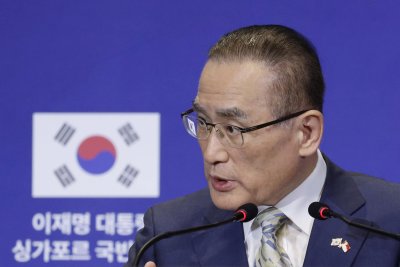
National Security Adviser Wi Sung-lac, seen here at a press conference in Singapore on March 2, 2026, said Friday the passage of ships through the Strait of Hormuz still remains largely blocked. Photo by Yonhap
National Security Adviser Wi Sung-lac said Friday the passage of ships through the Strait of Hormuz still remains largely blocked despite a two-week ceasefire between the United States and Iran, pledging that South Korea would continue to seek alternative shipping lanes.
Speaking at a press briefing at Cheong Wa Dae, Wi stressed that the government will continue efforts to secure alternative supplies of crude oil and naphtha amid concerns over Iran’s continued restrictions on traffic through the vital waterway.
“Shipping through the Strait of Hormuz remains disrupted,” Wi said. “Uncertainty in the supply chains is likely to continue for the time being.”
Wi noted that the number of vessels crossing the strait has not increased significantly since the ceasefire was agreed to on Tuesday (U.S. time).
“If around 2,000 vessels trapped in the strait attempt to leave all at once, it can take time, and securing safe shipping routes may also pose a challenge,” he said.
The government will continue to communicate with relevant countries to ensure the safety of all vessels and crew members, including 26 Korean-flagged ships that remain stranded in the Strait of Hormuz.
Copyright (c) Yonhap News Agency prohibits its content from being redistributed or reprinted without consent, and forbids the content from being learned and used by artificial intelligence systems.