SixthGen

Canada Throws A Curveball As It Signals Interest In Joining GCAP Sixth-Gen Fighter Program

In the latest twist in Canada’s long-running saga to field a new fighter, the country’s defense minister has said that Ottawa is “interested in learning more about” the Global Combat Air Program (GCAP) next-generation fighter. GCAP is currently a trinational effort, led by the United Kingdom and involving Italy and Japan. Its centerpiece is the Tempest crewed fighter. A demonstrator for this jet is currently taking shape with BAE Systems in the United Kingdom.

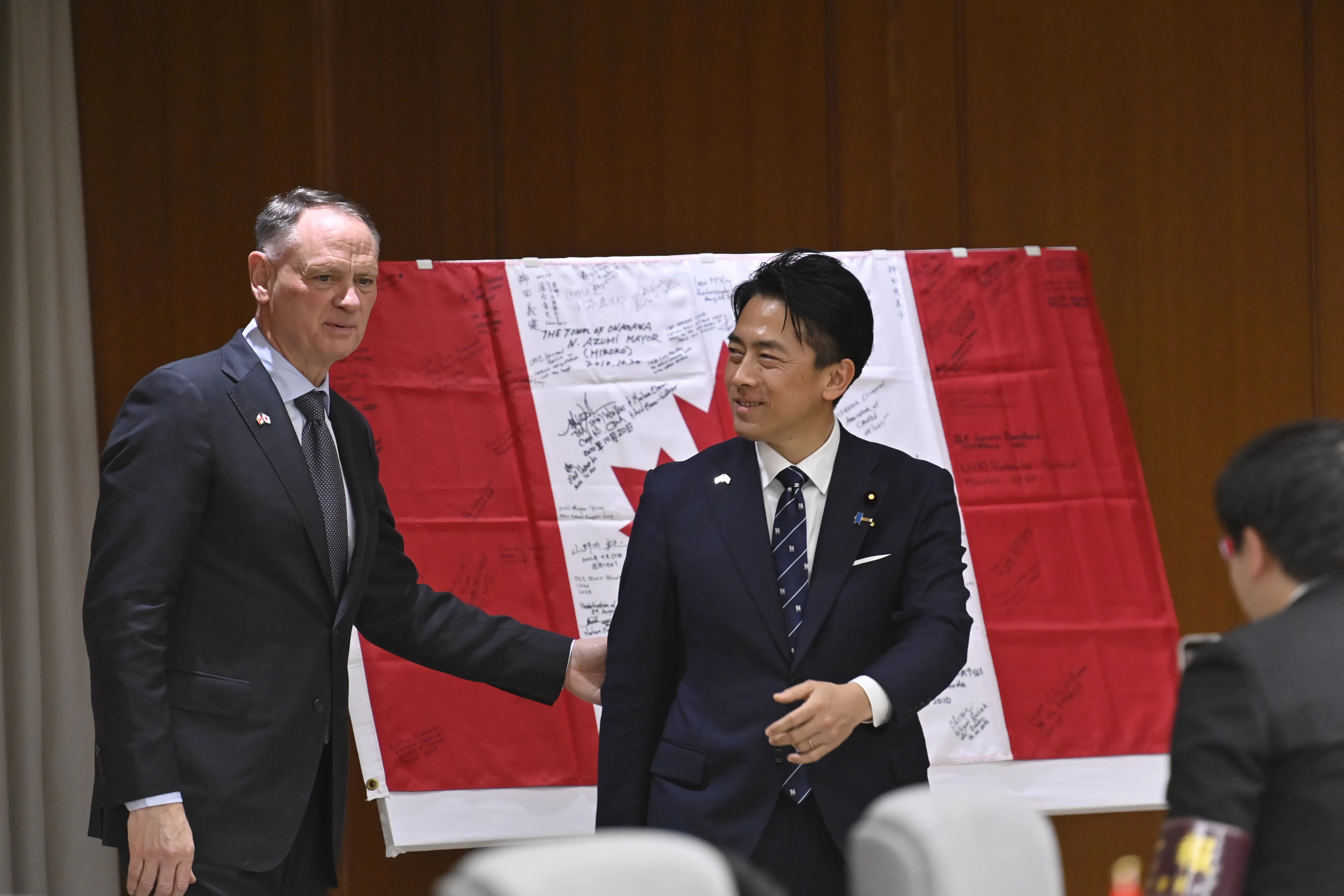
David McGuinty, the Minister of National Defense of Canada, made the remarks after a meeting in Tokyo with his Japanese counterpart, Shinjiro Koizumi. Breaking Defense reports that McGuinty confirmed he had spoken with Koizumi about the GCAP, which the Canadian official described as a “promising initiative.”

TOKYO, JAPAN - FEBRUARY 6: Japanese Defense Minister Shinjiro Koizumi and Canadian Defense Minister David McGuinty pose after signing the friendship memorial flag in turn before their meeting in Tokyo, Japan, on February 6, 2026. The flag stands as a symbol of remembrance, peace and reconciliation between Japan and Canada. (Photo by David Mareuil/Anadolu via Getty Images)
Japanese Defense Minister Shinjiro Koizumi and Canadian Defense Minister David McGuinty before an earlier meeting in Tokyo, Japan, on February 6, 2026. Photo by David Mareuil/Anadolu via Getty Images Anadolu

“We are interested in learning more about it. I’ll take it back to my team and see what it looks ‌like,” McGuinty told Reuters.

Until now, no senior Canadian official appears to have spoken publicly about interest in GCAP. However, the development comes as Ottawa weighs up the option of a split fighter buy, which would involve acquiring the U.S.-made F-35 and one other type. This thinking has been driven by a growing rift between Ottawa and Washington.

However, the possibility of Canada coming on board GCAP as an ‘observer’ had been raised in March of this year. According to The Asahi Shimbun, a Japanese daily newspaper, unnamed Japanese officials disclosed that, during a previous meeting, McGuinty and Koizumi discussed such an arrangement.

An official artist’s concept of a potential Tempest configuration, with Mount Fuji in the background. MHI

Canada’s joining GCAP with observer status would provide it access to information on the program and could be a stepping-stone to deeper involvement.

Earlier this week, Italian Defense Minister Guido Crosetto raised the possibility of other nations joining GCAP, noting that, were that to happen, “we would be completely willing, because the more there are, the greater the chances of creating something and bringing down costs.”

Crosetto then identified Canada as “the country most interested [in GCAP] at the moment.” He said he would be “fully open” to Canada joining as an observer.

For Canada, however, GCAP would require a rethink of Canada’s potential pursuit of a split-buy approach to its new fighter.

Until now, the Saab Gripen E had been identified as the most likely candidate to be bought alongside the F-35.

A pair of Gripen Es. Saab Linus Svensson @Saab

Sweden has made a strong push to sell Gripen to Ottawa, and Saab offered to build the jet in Canada, in an effort to secure support for its previous bid, which it lost to Lockheed Martin. Since then, Saab has also emerged as the preferred candidate to supply Canada with its future airborne early warning and control (AEW&C) via its GlobalEye.

In April of this year, McGuinty confirmed that Ottawa was still reviewing its earlier plan to buy 88 F-35s.

“The review of the purchase of the F-35s is continuing… We are taking the necessary time to study very, very closely the question of the fighter fleet,” McGuinty told the Senate’s defense committee.

The split-buy option emerged since Canada has already made a firm commitment to buy 16 F-35As to start replacing its aging CF-18 Hornets. Canada’s industry also has a significant degree of involvement in the Joint Strike Fighter program.

An infographic showing Canadian industrial participation in the F-35 program. Lockheed Martin

Canada currently has around 75 CF-18A/B+ jets and has also added 18 upgraded former Royal Australian Air Force (RAAF) F/A-18A/Bs, plus seven more as spares, to help bolster its fleet.

Of Canada’s first 16 F-35s, four have already been paid for in full, while parts for eight others have also been purchased. The first Canadian F-35s were expected to be delivered for training at Luke Air Force Base, Arizona, in 2026.

Back in 2023, Canada’s Liberal government announced plans to buy 88 F-35s, a decision that appeared to bring closure to what had already been a very protracted process. You can read about this here.

Infographic outlining the key features of Canada’s future F-35As. RCAF

However, amid growing trade tensions and a war of words with the United States, Liberal Prime Minister Mark Carney launched a review of the F-35 program shortly after taking office in the spring of 2025.

There are other arguments for a split buy, too. Back in 2019, the cost of buying the planned 88 F-35s was put at $19 billion. Now it has rocketed to $27.7 billion, not including weapons and infrastructure.

Bill Blair, who was Canada’s defense minister when the review of the F-35 buy was launched last year, pointed to the advantages of a mixed fleet, saying it would give the RCAF more options to handle different types of threats.

“What happens if you have to persist in that space for months and months and years? The tool that you use, is it the right tool to do that job?” Blair said. “We need to have a whole wide range of capability sets to deal with all the eventualities that we could face.”

Were Canada to procure the Tempest, it would surely have to wait longer than 2035 — the prospect of GCAP’s fighter entering service at this date, as planned, is highly unlikely. Canada would be fourth in line behind the three core partners. Ottawa would need to buy more F-35s, perhaps around two thirds of its original intended number, or around 60 aircraft, and also keep the best of its CF-18s in service for longer, if that’s even possible. The Hornets are getting very old and disappearing from service abroad. Supporting them will become increasingly problematic. When the Tempest finally arrived, it would provide a flipped high-low fighter mix. This is essentially the same approach that the United Kingdom, Italy, and Japan — all current F-35 operators — are taking.

BN2012-0408-02 November 22, 2012 Bagotville, QC A two-seater CF-18 flies over the Parc des Laurentides en route to Valcartier firing range. Photo: Corporal Pierre Habib, 3 Wing Bagotville © 2012 DND-MDN Canada ~ BN2012-0408-02 22 novembre 2012 Bagotville, Québec Le vol d'un CF-18 à deux places en route vers le champ de tir de Valcartier, au dessus du parc des laurentides. Photo : Caporal Pierre Habib, 3e Escadre Bagotville © 2012 DND-MDN Canada
A two-seat CF-18B flies en route to Valcartier firing range. DND-MDN Canada Négatif 2012; Négatif 2012

However, the Tempest does appear to be especially well-suited to Canada’s fighter requirement.

The design of the jet will stress extreme range and a large payload — roughly twice that of the F-35A. Senior GCAP officials have said the jet could potentially carry enough internal fuel to fly across the Atlantic without refueling.

A rendering of a pair of Tempests of the latest configuration overflying the U.K. coastline. BAE Systems

While these attributes are optimized for a future conflict in the Indo-Pacific region, they are equally applicable to dealing with the ‘tyranny of distance’ and the increasing Russian threat posed around Canada’s enormous land mass, which extends far into the highly strategic Arctic region.

“Both China and Russia have fifth-generation fighter aircraft and fifth-generation missiles that are able to go at much greater speeds and with much more that are holding Western allies at risk at this moment in time,” the commander of the Royal Canadian Air Force (RCAF), Lt. Gen. Jamie Speiser-Blanchet, said in the past.

Plans to arm the Tempest with larger air-to-air missiles offering a longer range than those currently used by any of the three GCAP partner countries have also been revealed, as you can read about here.

If Canada decides it wants a sixth-generation combat aircraft to tackle current and emerging threats from China and Russia, the GCAP might be the only realistic choice. The rival pan-European Future Combat Air System (FCAS) has collapsed, and there is little chance of Canada getting its hand on the Boeing F-47.

But any kind of split buy “would duplicate a certain amount of infrastructure and training,” Speiser-Blanchet admitted.

In some cases, however, there could be cost-benefit arguments in having a mixed fighter fleet, as well as the important factor of not relying entirely upon one source of this type of combat equipment.

There is also the question of how feasible it would be for Canada to join GCAP at this point, at least in terms of industrial participation and steering requirements. The latter point seems next to impossible, with national requirements already set, and most of the workshare agreement has also been divided up between the three partners.

The same applies to India, which has also looked at joining GCAP in the past.

There has been talk of Saudi Arabia possibly joining GCAP in some capacity, and, more recently, Poland has been reported as being interested in buying the aircraft, too.

With that in mind, Canada’s best shot might be to buy the jet ‘off the shelf,’ rather than hope for industrial windfalls.

At the same time, Canada and the United Kingdom are partners on some other key military programs, including the Royal Canadian Navy’s future River class Canadian Surface Combatants, derived from BAE Systems’ Type 26 design for the U.K. Royal Navy. 

Meet The River-Class Destroyer - State-of-the-art WARSHIP! thumbnail

Meet The River-Class Destroyer – State-of-the-art WARSHIP!


Returning to the Tempest, the broader GCAP program still has to survive considerable challenges, both technical and political, that lie ahead.

As we have explained many times in the past, the process of creating an all-new fighter, especially one incorporating stealth technologies, brings very lengthy development times and high costs.

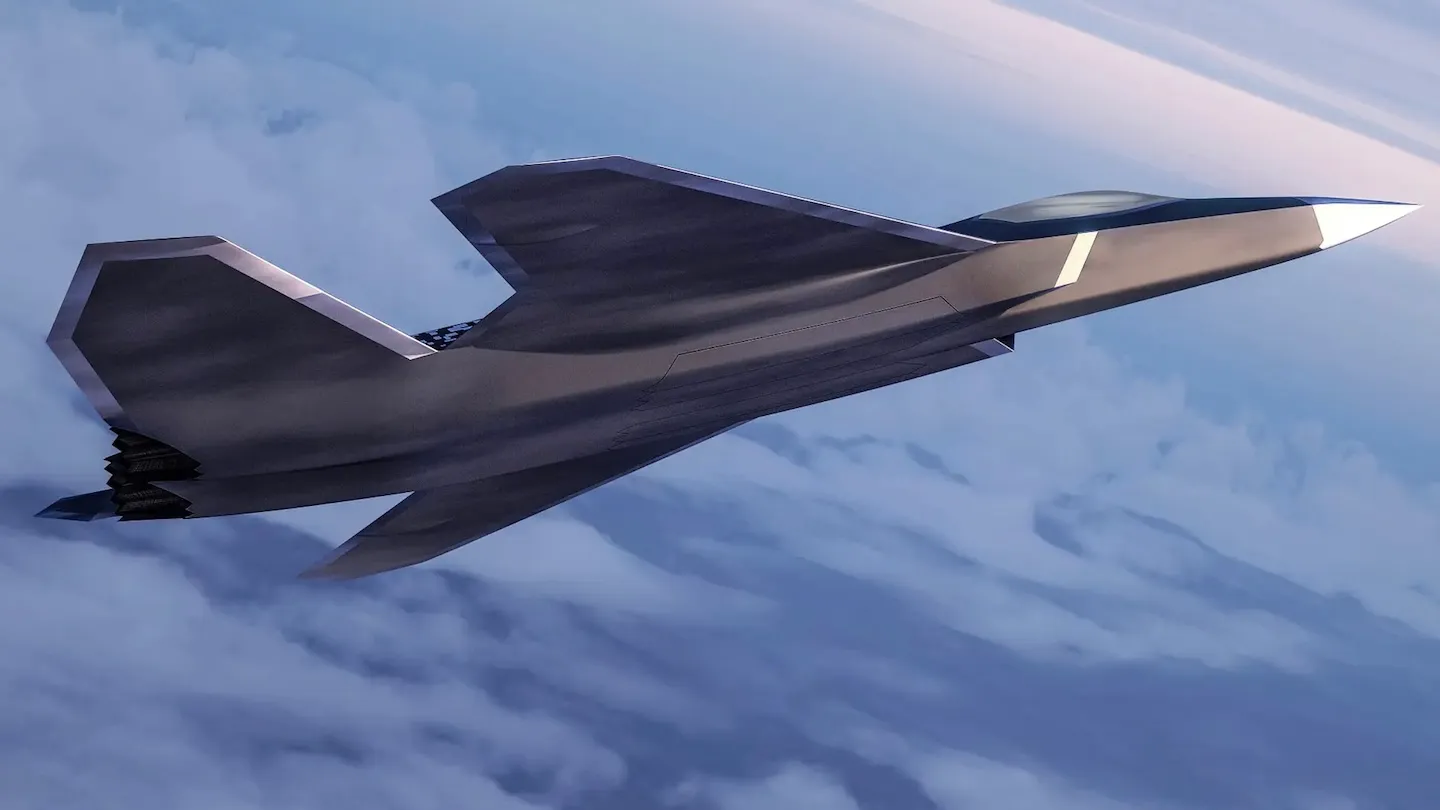
At this point, BAE Systems is in the process of building a demonstrator as part of the GCAP program, with a first flight planned by the end of 2027.

The latest rendering of that demonstrator appears at the top of the story. Notably, it retains the Typhoon’s EJ200 turbofan engines, with non-stealthy nozzles. The Tempest will have an all-new powerplant.

As we have argued in the past, the more time that passes, and the more deeply intertwined with the F-35 Canada becomes, the arguments in favor of a split fighter buy become harder to justify. Buying the Tempest would certainly not be the cheapest option, and would force a rethink of timelines, but it does underscore the fact that Canadian officials are casting their net wider, looking at very high-end capabilities, and seeking to build deeper strategic relationships outside of the United States.

Contact the author: thomas@thewarzone.com
Thomas Newdick is a staff writer at TWZ, where he covers military aviation, defense technology, weapons systems, and international security. Based in Berlin, Germany, he reports on conflicts, military modernization efforts, and emerging aerospace technologies around the world, with a particular interest in airpower and its role in contemporary warfare. His reporting is informed by deep expertise in modern and historical airpower, particularly in Europe, with a focus on military aviation, air campaigns, and aerospace developments across the continent and beyond.


Source link

Airbus Looks To Sweden’s Saab As Europe’s Sixth-Gen Fighter Plans Unravel

With the pan-European Future Combat Air System (FCAS), which is supposed to include a crewed New Generation Fighter (NGF) aircraft, mired in difficulty, Airbus has raised the possibility of teaming with Saab on the manned tactical component of it — the fighter. As well as France and Germany, Spain is a part of the pan-European FCAS as a junior partner, while Belgium has also joined it. The recent statements mark one of the clearest indications yet that Airbus is actively exploring post-FCAS alternatives, or, at the least, a major overhaul of the program’s structure.

Speaking on the sidelines of the Airbus Defense Summit at Airbus Defense & Space’s Manching site near Munich last week, that company’s CEO, Michael Schoellhorn, said that he was keen to cooperate with Sweden and Saab on a new fighter.

Concept artwork of the NGF future fighter. Dassault Aviation

Schoellhorn’s words were provided in an exclusive interview by Johan Wendel, a reporter and analyst for the Swedish Dagens Industri financial newspaper.

At this point, it’s worth recalling that the FCAS nomenclature is also used by the British and Swedish future combat air initiatives. The British effort is now mainly known as the Global Combat Air Program (GCAP).

FCAS System of Systems thumbnail

FCAS System of Systems


Noting that FCAS was in trouble in its current guise, he confirmed that Airbus has been in contact with both the Swedish and German governments on the issue, with “productive but confidential” discussions.

“We are open to a number of things. For Airbus, the crewed fighter aircraft is still an open question,” Schoellhorn told Dagens Industri, when asked if the company is considering developing a crewed fighter together with Saab.

The Airbus boss then reiterated that the company “will be involved in the development of a sixth-generation fighter aircraft.”

Schoellhorn recently visited Sweden and reflected that “Sweden and Saab are candidates with extensive expertise” in the field of fighter design and production. “We have difficulties that everyone knows about. That is why it is time to actively explore other options, which is what we are now doing,” he added, in reference to the FCAS program.

BRUSSELS, BELGIUM - MARCH 13: Michael Schoellhorn, CEO of Airbus Defence and Space, speak during a keynote conference at the inaugural edition of the Brussels European Defence Exhibition & Conference (BEDEX) on March 13, 2026 in Brussels, Belgium. The new BEDEX event has been created in partnership with the Belgian Ministry of Defence and Armed Forces to showcase the European and NATO defence industries, as Belgium and other European countries increase defence spending in response to the current geopolitical climate. (Photo by Omar Havana/Getty Images)
Michael Schoellhorn, CEO of Airbus Defense and Space. Photo by Omar Havana/Getty Images

As TWZ only recently reported, questions around FCAS continue to grow.

For a long time, tensions have been evident within the FCAS program, with its two main partners, France and Germany, increasingly at odds. German defense officials are reportedly frustrated by what they see as disproportionate French demands for control and workshare in the project. For a while now, there have been reports that Germany is exploring alternative paths, including the possibility of separating itself from France within the program entirely.

Within France, Dassault CEO Éric Trappier recently declared the FCAS project dead if Airbus refuses to cooperate, while President Emmanuel Macron has made efforts to resuscitate the program.

French group Dassault Aviation Chief Executive Eric Trappier poses in front of the full-scale model of the Systeme de Combat Aerien Futur (SCAF), the Future Combat Air System (FCAS) on the Dassault Aviation's static display during the International Paris Air Show on June 18, 2019 at Le Bourget Airport, near Paris. (Photo by ERIC PIERMONT / AFP) (Photo by ERIC PIERMONT/AFP via Getty Images)
French group Dassault Aviation Chief Executive Eric Trappier poses in front of the full-scale model of the NGF. Photo by ERIC PIERMONT/AFP via Getty Images

Now, Sweden, with its position as a builder of tactical aircraft in the West, has emerged as a possible lifeline for FCAS, something that Schoellhorn acknowledged to Dagens Industri.

“We will be involved in the development of such an aircraft. The structure within FCAS could be improved. That could lead to two fighter aircraft within FCAS, or to another form of cooperation, and Sweden and Saab are candidates with extensive expertise in this field.”

When asked whether this was an Airbus tactic to put pressure on Dassault, Schöllhorn pointed to “many” previous cooperations between his company and Saab.

“We are not flirting,” he added. “We want to build sixth-generation fighter aircraft as soon as possible. I do not want to see sixth-generation fighter aircraft bought from the United States, as Europe did with the fifth generation.”

Here, he pointed to the growing customer base for the U.S.-made F-35 in Europe and the prospect that, in the future, the sixth-generation F-47 might also be offered for export in the region, although this might only be in a watered-down form.

Shown is a graphical artist rendering of the Next Generation Air Dominance (NGAD) Platform. The rendering highlights the Air Force’s sixth generation fighter, the F-47. The NGAD Platform will bring lethal, next-generation technologies to ensure air superiority for the Joint Force in any conflict. (U.S. Air Force graphic)
A rendering of the U.S. Air Force’s sixth-generation fighter, the F-47. U.S. Air Force graphic Secretary of the Air Force Publi

Of course, GCAP, the British-led rival to FCAS, with the Tempest crewed fighter as its centerpiece, could be another option, but there are big questions surrounding the future of that program, too. As well as the United Kingdom, GCAP involves Italy and Japan.

An artist’s impression of the Tempest future fighter. BAE Systems

“We must act now,” Schöllhorn said, to prevent Europe from looking beyond the pan-European FCAS for its next crewed fighter.

“If we are to have something that can be called sixth generation and that is airborne before the 2040s, we have to act now. We are waiting impatiently to see what the politicians will decide. If we are still in limbo at the end of the year, that would be very challenging,” Schöllhorn added.

As for GCAP, in which Sweden previously had a limited involvement, before stepping away from it, Schöllhorn also refused to rule out rolling the different projects together.

“GCAP is an existing alternative that could be considered,” he explained. “The defense industry submits proposals; the politicians decide what is to be done.”

Then there is the drone issue, or, more accurately, the Collaborative Combat Aircraft, or CCA, issue.

While cooperative projects to develop fighters and their surrounding ecosystems have floundered, CCAs, as a concept, have forged ahead.

The Air Force’s Experimental Operations Unit, under Air Combat Command, concluded a critical exercise with Collaborative Combat Aircraft recently at Edwards Air Force Base, California, putting principles of the new Warfighting Acquisition System into practice. The exercise employed the YFQ-44A aircraft and represents a shift toward the new concept of earlier, operator-driven experimentation to inform tactics and procedures that will accelerate the delivery of this transformative capability to the warfighter.
The Anduril YFQ-44A is one of the first two aircraft ordered under the U.S. Air Force’s Collaborative Combat Aircraft program. U.S. Air Force U.S. Air Force photo by Ariana Ortega

“Everyone has seen the need for CCA. There is a European race underway to find the model for CCA in various European countries,” said Schöllhorn.

The Airbus CEO underlined the fact that the company is also developing combat drones and that future uncrewed fighters are part of the plan. “There will not be a one-size-fits-all solution,” Schöllhorn added. “Perhaps we should not all go into the same niche, such as air-to-ground. The goal is to deliver the versatility, but also the scale that Europe will need.”

Airbus and Kratos are already pitching the stealthy XQ-58A Valkyrie drone to Germany, and Airbus has also been working on a stealthy CCA-like concept of its own, known as Wingman. Meanwhile, Boeing Australia has teamed up with Rheinmetall, the largest arms manufacturer in Germany, to offer the MQ-28 Ghost Bat drone to the German military.

A rendering of the Airbus Wingman CCA-like drone. Airbus

Once again, Sweden could provide a key partner to Airbus on CCA-type developments, whether part of a broader FCAS effort or separate.

As we have reported in the past, Sweden is also moving ahead with plans for a new-generation combat aircraft, with Saab undertaking continued conceptual studies for future fighter systems. However, it remains unclear if there will definitely be a crewed successor to the Swedish Air Force’s current Gripen fighter, or if the ongoing studies will lead to a combat air ‘ecosystem’ comprised of different types of drones. A combination of crewed and uncrewed platforms remains possible, too.

A Saab study for a supersonic uncrewed platform with a weight of more than five tons, as part of its F-series. SVT screencap via X

Interestingly, Schöllhorn also put forward the possibility of Airbus working alongside Sweden for the airborne early warning and control (AEW&C) segment, specifically Saab’s GlobalEye aircraft.

“If we were to join forces, we could be a very capable team that could contribute many future capabilities,” said Schöllhorn of this idea.

The CEO noted that a NATO procurement decision on its future AEW&C platform is currently under review. Meanwhile, France has chosen the GlobalEye to replace its E-3F Sentry Airborne Warning & Control System (AWACS) fleet.

Only today, Canada announced plans to buy GlobalEye, ​rather than the competing Boeing E-7 Wedgetail, which has suffered from delays and cost overruns.

Saab currently installs the GlobalEye system on the Canadian-made Bombardier Global 6500 airframe, but Schöllhorn does not rule out the possibility of a new AEW&C aircraft based on an Airbus airframe. Here, the Airbus boss pointed to the ongoing program to furnish the Indian Air Force with AEW&C aircraft based on A320 airliner airframes.

Returning to the issue of a sixth-generation crewed fighter for Europe, whether Airbus and Saab ultimately forge a formal partnership, the broader situation is abundantly clear. With the pan-European FCAS stalled by political and industrial infighting, GCAP facing its own uncertainties, Europe’s future fighter landscape is at something of a crossroads. The pressure to deliver a credible European sixth-generation combat aircraft is intensifying.

Contact the author: thomas@thewarzone.com

Thomas is a defense writer and editor with over 20 years of experience covering military aerospace topics and conflicts. He’s written a number of books, edited many more, and has contributed to many of the world’s leading aviation publications. Before joining The War Zone in 2020, he was the editor of AirForces Monthly.


Source link