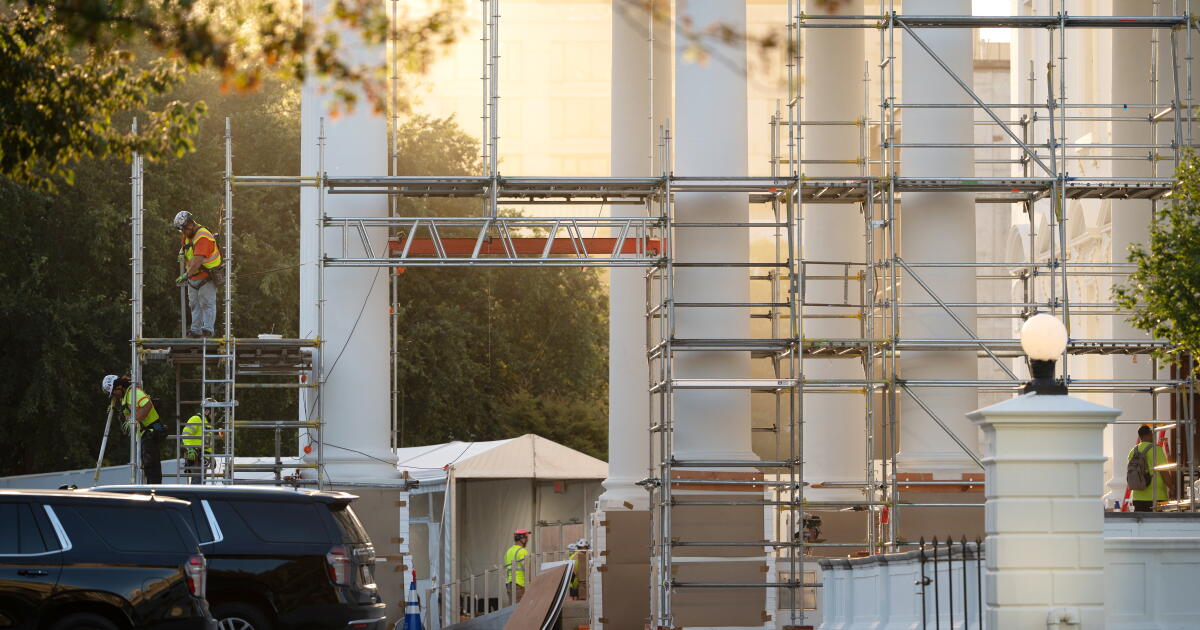
Trump’s White House North Portico project nears completion with shroud and scaffolding taken down
WASHINGTON — Work on the White House North Portico appears to be nearing completion before Chinese President Xi Jinping’s state visit to the United States in late September.
Scaffolding was being taken down Tuesday after workers over Labor Day weekend removed a shroud that had obscured the work. The Executive Mansion’s front columns had been covered since July. The work, ordered by President Trump, began in June.
The portico was first completed in 1830 during Andrew Jackson’s presidency. Administration officials said previously that stonework and plaster on the structure were being refurbished because of routine damage from age and weather exposure.
Trump has said he noticed it was in “deplorable condition” before insisting on repairs. The work is part of the president’s sweeping overhaul of the White House and other federal property in the nation’s capital — with most of his more ambitious moves drawing lawsuits and criticism from preservationists.
Trump said last week that workers finished construction of a helipad on the South Lawn.
His signature project, a White House ballroom and underground bunker, continues as legal fights play out. Multiple lawsuits were filed after Trump demolished the East Wing before going through the usual regulatory steps for major work on historic federal buildings in Washington. The massive project will add more square footage than what the existing White House footprint comprises.
That means Trump must host Xi’s state dinner, scheduled for Sept. 24, in existing spaces and in a construction zone — a circumstance that will afford the president a new opportunity to extol his ballroom project.
Barrow and Martin write for the Associated Press. Barrow reported from Atlanta.