Shohei

What Shohei Ohtani needs to do after losing MVP to Pete Crow-Armstrong

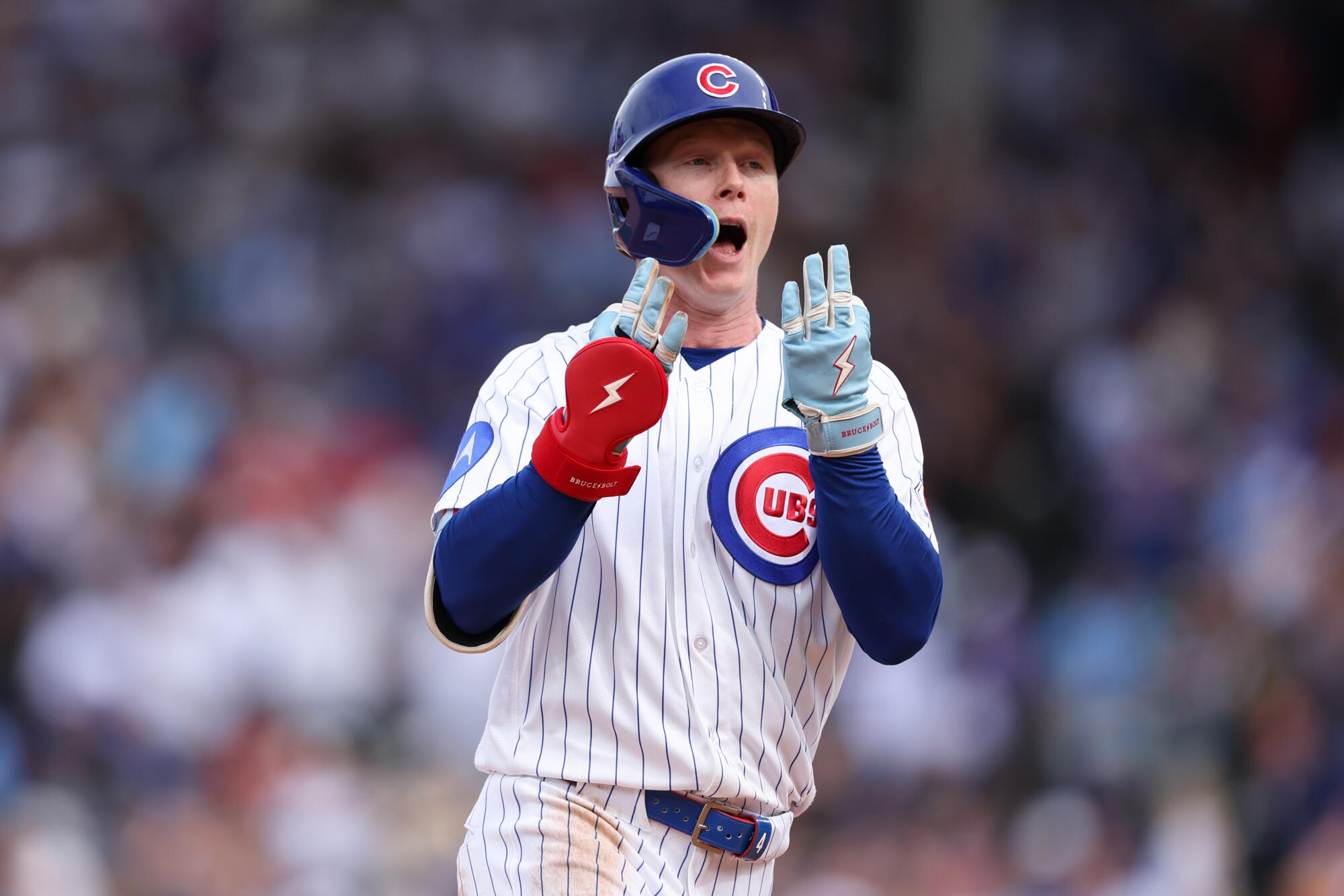
When the Dodgers and Cubs met at the beginning of August, it was notable that Cubs center fielder Pete Crow-Armstrong was even challenging Dodgers superstar Shohei Ohtani for National League most valuable player.

Ohtani was on a streak of three straight MVP seasons and working to return to the mound after what was expected to be a temporary shutdown around the All-Star break. So even as Ohtani and Crow-Armstrong traded leadoff home runs, it felt like a peak in a race that could tilt in Ohtani’s favor in the final months of the season.

Tilt it did — the other way.

Ohtani never did return to the mound, and his offense suffered as injuries mounted down the stretch. Crow-Armstrong never cooled off and ran away with the MVP, officially claiming the award Thursday in a unanimous vote. He was the 11th unanimous NL MVP in the history of the award. Ohtani finished second.

Ohtani’s two-way skill set is so unique that any time he pitches and hits for an entire season, he’s practically guaranteed the MVP — he won the award twice with the Angels in 2021 and 2023 before winning two with the Dodgers in 2024 and 2025. But the Dodgers’ first attempt at guiding him though a full two-way season crashed and burned in the wake of a lingering left knee injury and recurring right biceps issue.

Pete Crow-Armstrong of the Chicago Cubs.

Pete Crow-Armstrong of the Chicago Cubs.

(Isaac Wasserman / Getty Images)

The Dodgers are set on having Ohtani return to two-way duties in 2027. But now they’re left to diagnose what went wrong this year and figure out how to avoid the same pitfalls moving forward.

“The good thing is, it’s going to be a normal offseason,” general manager Brandon Gomes said, referring to Ohtani’s health status. “And as we get deeper into the offseason, understanding what our roster looks like, and then having those conversations of, ‘How do we best lay this out to set everybody up to be as good as they can come October?’

“And that’s always the goal. I know it’s so boring and we pound it into the ground. But I think for Sho in particular, it’s like, ‘Hey, let’s get back to feeling 100%, have the normal offseason, like you’re going to have, and then have that conversation based on what our team looks like and rotation and all of that.”

The Dodgers have made clear that plotting Ohtani’s pitching plan will be a collaborative effort that will involve conversations throughout the year. But they have plenty of options for how they could manage his workload.

They could pull him from the batting order on days he pitches, and/or build in more full recovery days after his starts on the mound. They add more days in between his pitching starts. They could have him lighten his pitching load midseason and then ramp up again for the postseason. They could delay his return to the mound.

“I think Shohei’s open to putting the team in the best position to win,” Gomes said. “And I think that is the number one thing that he’s shown over and over again, is that he cares deeply about the Dodgers winning and puts that at the forefront. So I think that’s why these conversations are really important.”

The Dodgers are missing one major piece of information that will affect their path forward: the length of the 2027 season.

Privately, baseball agents and executives’ estimates span a wide range of possibilities, from a sub-100-game season, to a late start but no games lost. It will remain ambiguous well into the lockout, which owners are expected to impose when the current collective bargaining agreement expires on Dec. 1.

So, pitchers across MLB will have the unenviable task of planning their offseason buildup without the clarity of an opening-day target.

In that kind of environment, it could be in Ohtani’s best interest to put off a pitching ramp-up at least until the lockout ends and the season schedule is set. But he and the Dodgers have a little over two weeks to talk through those decisions. Once the lockout begins, teams will be restricted from communicating with the players on their 40-man rosters.

Said Gomes: “I feel strongly that Sho will have himself prepared in the way that he feels is best to go out and dominate next year.”
Source link

Letters to Sports: Debating Shohei Ohtani’s two-way workload

p]:text-cms-story-body-color-text”>

Given the problem the Dodgers have with their pitchers staying in the rotation for the whole season, and the way Shohei Ohtani was lunging for sweepers, I would say, “Don’t allow him to hit anymore.” Bill Plaschke says Ohtani led them to two championships. In 2024, the 55/55 year, he indeed did, although I would argue that Freddie Freeman did even more. But last year, many others were responsible for their ultimate victory, not Ohtani. Use him as a pitcher and a part-time hitter.

Mike Schaller
Temple City

So Bill Plaschke has momentarily stopped playing psychic and has morphed into general manager, saying the Dodgers should either force Shohei Ohtani to stop pitching or trade him. Is Plaschke part of the medical staff of the Dodgers so he knows the root causes of Ohtani’s injuries this year, or what it might take this offseason to fix them?

He has written a lot of inane columns making bold statements that he usually has to eat crow on, and trading Ohtani while he is still one of the best players on the planet would fall into that category. Ohtani will eventually get to the point where his body can’t do both, but I’m sure no one is using Bill Plaschke’s medical expertise to determine when that might be.

Danny Balber Jr.
Pasadena

OK, so now Plaschke is ready to give the boot to Shohei Ohtani, the baseball GOAT, as he much as he was gleefully behind basketball GOAT LeBron James’ departure based upon his controlling of the team’s condition, from trades to draft picks. This takes more chutzpah than Ohtani’s insistence to continue as a two-way player.

When will the L.A. Times decide they’ve had enough of him?

Ron Brumel
West Los Angeles

Source link

Dodgers must get better at keeping Shohei Ohtani healthy

Two things can be true: The Dodgers’ season ended prematurely and, for Shohei Ohtani, the offseason couldn’t come soon enough.

Thursday’s elimination — a no-doubt-about-it sweep at the hands of the Milwaukee Brewers, who vanquished the Dodgers in the same fashion Ohtani and Co. had summarily eliminated them last season — was apparently the only way to get the two-way superstar out of the lineup.

Now he can get some much-needed rest and recovery, a reality check and, possibly, some surgical procedures to repair the knee and biceps injuries that plagued him this season.

Ohtani didn’t rule anything out in his postgame scrum, several rows deep, in front of his locker after the Dodgers’ 6-4 defeat in Game 4 of the National League Championship Series.

“Hard to tell at this point,” the 32-year-old Ohtani said in Japanese, via interpreter Will Ireton. “It’s something that’s going to be analyzed, discussed over the offseason, and see if that’s a viable thing to do.”

Hopefully, for the Dodgers’ sake and for baseball’s, Ohtani and his team will see their way to a reasonable load management plan. Hopefully they’ll find a viable injury management strategy.

Especially if he continues to pitch, as Ohtani said he plans to: “Yes, definitely, and looking forward to having a better season.”

Hopefully this bumpy season — his first as a Dodger to end short of the championship following the 2024 and 2025 title runs — will make Ohtani better. Wiser. More willing to listen to his body and to communicate what it’s telling him with the ball club that relies on him so much.

“I’ll always trust Shohei,” Dodgers manager Dave Roberts said. “He’s the best player on the planet, and he’s not completely healthy. But I just give him a lot of respect for not running from it, still wanting to participate, still wanting to play when he’s not 100%.”

But hopefully when Ohtani’s knee barks next time, he won’t pitch through it. Hopefully when his right arm tightens up, he’ll step out of the box. Even — or especially — if it takes longer than a 15-day IL stint to make him right.

Hopefully he’s learned that irrespective of a sense of duty or pride or a selfish streak, the cold-hitting fact is that a compromised version of Ohtani leaves the Dodgers’ whole team — a $400 million investment — compromised, as it was this postseason.

“I don’t really want to take it for granted for the opportunity to be able to play with these guys,” Ohtani said. “But honestly, I think I’m just very disappointed.”

In eight playoff games against the Atlanta Braves and Brewers, Ohtani hit .192 (five for 26). He struck out 10 times. He didn’t get an extra-base hit or drive in a run until Thursday, in the season finale, which reminded us of Ohtani’s power — he walloped his first home run since Aug. 18, a three-run missile in the second inning that traveled 428 feet — and his pain.

Roberts looked, for a moment, like a genius for continuing to keep Ohtani in the lineup — and to pencil him in as the Dodgers’ leadoff hitter after batting him sixth on Wednesday.

For that one shining moment.

Shohei Ohtani celebrates after hitting a three-run home run in the second inning against Milwaukee.

Shohei Ohtani celebrates after hitting a three-run home run in the second inning of the Dodgers’ 6-4 loss to the Milwaukee Brewers in Game 4 of the NLCS on Thursday night at Dodger Stadium.

(Gina Ferazzi / Los Angeles Times)

But Ohtani also struck out three times Thursday — made to look foolish in a much-too-familiar way.

The Dodgers needed a healthy Ohtani to deal with a young, hungry ballclub like the Brewers.

To have a chance against a team that was, as Dodgers utility man Kiké Hernández said, “almost playing perfect baseball,” they needed him dialed in and not tinkering, not staying late searching.

They need the version of him that delivered the perfect game a year ago, his three-home-run, 10-strikeout masterpiece that sent Milwaukee home in Game 4 of the NLCS.

“Ohtani is arguably the best player in the world,” Brewers manager Pat Murphy said.

“He’s proven that to us. He had the greatest game I’ve ever seen played by an individual player last year against us.”

The Dodgers need that guy striking fear into opponents. Not him striking out, or getting stranded helplessly on base.

Shohei Ohtani tosses his bat after hitting a three-run home run against the Milwaukee Brewers.

Shohei Ohtani tosses his bat after hitting a three-run home run against the Milwaukee Brewers during the Dodgers’ 6-4 loss in Game 4 of the NLCS on Thursday at Dodger Stadium.

(Robert Gauthier / Los Angeles Times)

And they got a glimpse of that guy Thursday with that second-inning home run, a shot that had him throwing his arms up and screaming toward his dugout, as emotive as we’ve seen him, relieved and exulting after giving the Dodgers a 4-0 lead — and a fleeting expectation that they’d play a Game 5 on Friday.

“It was a lot of pent-up anger, frustration,” Roberts said. “It was the best ball he hit in probably two, three months, and it was a big hit.”

“It was like,” Max Muncy said, “that’s the swing we’ve been waiting for.”

Now we all wait for baseball to return — and then to learn what this season taught Ohtani, one of the most unique athletes in the history of the game.

“Not quite satisfied with how things shaped up on the pitching side at the end of the year,” Ohtani said. “… I haven’t been able to really come to grips in terms of what I’ve learned overall. It’s something that I’m going to kind of go back to the drawing board in terms of treatment, training program, and see what I can come up with for next season.”

Source link