shines

Alysa Liu shines, while Amber Glenn makes big mistake in figure skating

She’s the only U.S. skater still in medal contention. Alysa Liu is the last person to care.

The unbothered 20-year-old is the only American who finished in the top six of the women’s short program Tuesday and is holding the weight of an Olympic medal drought that’s as old as she is. But after placing third in the short program, she said she hadn’t even looked at the standings. She is angling more for an invitation to the post-competition gala than a medal.

“A medal?” Liu asked with a sarcastic scoff and giggle. “I don’t need a medal. I just need to be here, and I just need to be present. And I need people to see what I do next.”

Next will be the women’s free skate Thursday, where Liu will try to be the first U.S. woman to stand on an Olympic podium for singles figure skating since Sasha Cohen in 2006.

The United States entered the Milan-Cortina Games with three strong contenders to end the drought, but will need comeback performances from the other two “Blade Angels.”

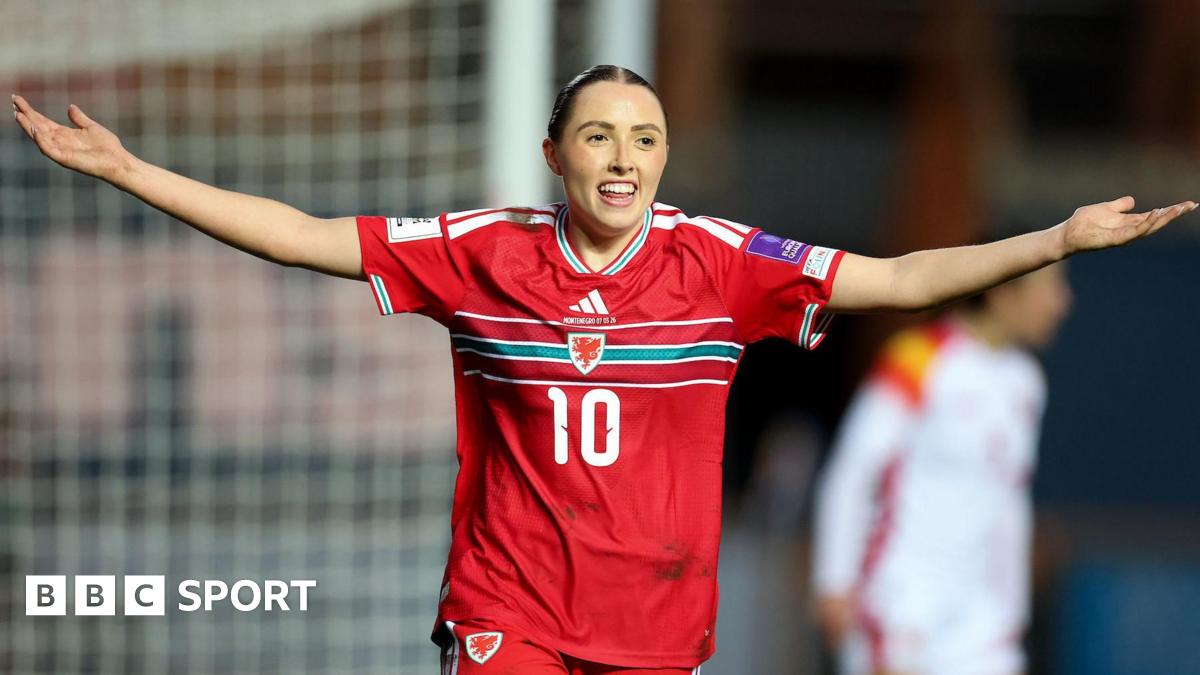
Alysa Liu strikes a pose with her left arm overhead and right arm outstretched to the right.

Alysa Liu is the top hope for the U.S. in women’s singles figure skating after finishing third in the short program.

(Robert Gauthier / Los Angeles Times)

Isabeau Levito skated cleanly in her Olympic debut but finished the short program in eighth with 70.84 points, almost eight points back from leader Ami Nakai’s 78.71.

Amber Glenn appeared poised to join Liu in medal contention after she started her “Like a Prayer” program with a steady triple axel. Looking inspired from a good luck message from Madonna this week, Glenn executed a strong triple-triple combination with her second jumping pass. The crowd at Milano Ice Skating arena roared.

Then Glenn popped her last planned triple jump. She earned zero points on the element. Her face fell immediately.

Glenn went through the motions of her step sequence but she looked lifeless, and after her program, she clutched the necklaces on her burgundy lace dress and knelt at center ice. She broke down in tears when she hugged her coach.

“I had it,” Glenn said through sobs.

With 67.39 points in 13th place, the three-time national champion is well outside the medal race led by Nakai and three-time world champion Kaori Sakamoto, who is in second with 77.23 points. Levito, skating in her mother’s hometown and paying homage to iconic Italian actress Sophia Loren with her short program, is less than six points out of podium position behind Liu’s 76.59 points.

Snoop Dogg and Martha Stewart, wearing bedazzled headphones in a booth at the top of the arena, were shown on the video screen after Glenn’s skate clapping for her performance. U.S. teammate Ilia Malinin cheered behind them.

Malinin could empathize as Glenn held back tears on the ice. The United States won the team figure skating competition with a dramatic one-point victory but hasn’t secured any of the individual gold medals that appeared likely. Malinin, whose free skate collapse was one of the most stunning moments of the Milan-Cortina Games, cited the intense Olympic pressure.

Isabeau Levito competes during the women's short program Tuesday.

Isabeau Levito competes during the women’s short program Tuesday.

(Robert Gauthier / Los Angeles Times)

After a shaky performance in the team competition, Glenn tried to escape the spotlight by training with U.S. teammates at a facility in Bergamo, 50 minutes outside of Milan. She tried to commit to rest and recovery and shy away from social media. She said after training Monday that she felt physically strong and had refocused enough to make the competition feel like any other world championship.

Knowing how hard it was for Glenn to get one jump away from putting herself into medal contention made the sight of her mistake all the more painful for Liu.

“She works so freaking hard,” Liu said after seeing Glenn’s skate on TV screens in the interview area. “Genuinely, such a hard worker, and she’s overcome a lot, and I just want her to be happy.”

Liu received some of the loudest applause of the night. Before beginning her program, she skated by the boards and high-fived both of her coaches, who hugged and hopped for joy when Liu executed her tricky triple lutz-triple loop combination jump. After hitting her ending pose, Liu covered her face to hide the tears that often well up in her eyes after her program set to “Promise.”

The reigning world champion returned to her second Olympics seemingly oblivious to any sort of pressure after a two-year retirement changed her perspective on skating. In Beijing, she was a 16-year-old who skated as she was told. She executed the jumps, performed to the music and wore the costumes that she was given.

But she laid the road to Milan all by herself and on her own terms.

One strong free skate away from her first individual Olympic medal — and second overall after helping the United States to team gold last week — Liu can’t be bothered to fret about how she’ll prepare for her last Olympic competition. Instead, she said she wants fans to see her new gala program.

A new dress just arrived and the choreography is almost done. All she needs is an invitation.

Source link

‘Calle Málaga’ review: Carmen Maura shines in defiant, complex portrayal

To age is to find one’s appreciation for life’s daily joys sharpen, especially as more inconvenient realities assert themselves. Lifelong Tangier resident Maria Angeles (Carmen Maura), part of the bustling Moroccan city’s entrenched Spanish community, is one such grateful senior. We see her at the beginning of “Calle Málaga” in a state of smiling contentment, walking her neighborhood streets and being greeted by vendors.

What she surely isn’t expecting, however, as she buys food and makes croquetas in preparation for an eagerly awaited visit from her daughter from Madrid, is that this trip will threaten all she holds dear. That’s because Clara (Marta Etura), a divorced mom struggling to pay the bills, arrives with the news that she’s selling the grand old apartment her widowed mother has lived in for 40 years. Won’t it be nicer for Maria to live with her in Spain and be closer to her grandchildren? Or at the very least be taken care of locally in Spanish-specialized assisted living?

The look on Maura’s face — this celebrated actor’s most well-honed tool — suggests a range of emotions regarding forced elderhood or grannydom that are far less accommodating.

How Maria handles her imminent uprooting is at the core of Moroccan filmmaker Maryam Touzani’s third feature, her follow-up to the similarly sensitive family drama “The Blue Caftan.” “Calle Málaga,” written with Touzani’s husband Nabil Ayouch, is not a passive narrative, though, merely content with the internalized ache of acceptance. It is to some extent an emotional heist film and protest tale in delicate harmony, in that after initially agreeing to be placed in that Tangier senior center while her possessions are boxed up or sold, Maria schemes to steal her life back from under her absent daughter’s nose.

If you don’t look too closely at the details of Touzani’s charming scenario — which requires that a lot of things to fall into place, if enjoyably so — the movie becomes a sweet and spicy counternarrative to stories about aging that patronize their protagonists. (Another noteworthy example was last year’s rapturous American indie “Familiar Touch.”) Maria essentially becomes a crafty squatter in her own up-for-sale apartment, reclaiming some items from a hard-nosed but increasingly understanding antiques dealer (a well-cast Ahmed Boulane) and engineering a clever way to earn money with the help of friendly neighborhood kids who adore her. Her gambit even opens the door for unexpected romance, giving her frequent chats with Josefa (María Alfonsa Rosso), a childhood friend, an increasingly eye-opening frankness.

It’s hard to imagine anyone other than Maura, her almond-shaped eyes as powerfully suggestive as ever, conveying Maria’s rejuvenated spirit and sensuality with as much magnetism. Touzani, an unfussy, patient director with a fondness for the simplicity of human interaction, implicitly trusts her star to carry the film’s effervescence and complexity, although you may wish the filmmaking was a little less straightforward.

There is, after all, a reckoning for Maria’s situation we can’t help but keep in the back of our mind. Because our first brief glimpse of Clara is a sympathetic one — as opposed to conveniently antagonistic — we know “Calle Málaga” won’t settle for a tidy resolution. And it doesn’t, save leaving us with a view of Maria’s bid for freedom that, like the rose petal that is one of Touzani’s go-to visuals, beautifies the air whether still connected to the roots or separated and strewn like so much that’s fragile in life.

‘Calle Málaga’

In Spanish and Arabic, with subtitles

Not rated

Running time: 1 hour, 56 minutes

Playing: Opens Friday, Feb. 13 at Laemmle Monica Film Center and Laemmle Town Center, Encino

Source link

Maxim Naumov shines in Olympics spotlight on strength of parents

Maxim Naumov typically trembles as he waits in his opening position before the music begins. But on Tuesday, the 24-year-old U.S. figure skater stood firm at center ice with the Olympic rings beneath his feet and his right fist raised. A white gold ring with a single diamond on his ring finger glittered in the light.

It was his father’s ring.

A year after his parents, Vadim Naumov and Evgenia Shishkova, were among 67 people killed in a Washingon, D.C. plane crash, Naumov carried their strength during his Olympic debut and delivered an emotional season’s best 85.65 in the men’s short program that qualified him for the free skate.

U.S. teammate Andrew Torgashev also scored a season’s best in his Olympic debut, qualifying for Thursday’s free skate with an 89.94. His coaching team, which includes Irvine-based Rafael Arutyunyan, fist-bumped after Torgashev hit the final combination jump of his program. Skating to “Maybe I Maybe You” by the Scorpions, Torgashev flashed the rock-and-roll symbol to the crowd as he saluted.

Instead of the raw emotion Naumov released after the U.S. championship that clinched his Olympic spot last month, he smiled purely and breathed deeply while the crowd at Milano Ice Skating Arena showered him with applause. He looked toward the rafters and spoke to his parents.

“Look what we just did,” Naumov said. “We did it.”

Maxim Naumov holds a photo of his parents after competing during the men's free skate at the U.S. championships.

Maxim Naumov holds a photo of his parents after competing during the men’s free skate at the U.S. championships.

(Stephanie Scarbrough / Associated Press)

The elder Naumov and Shishkova were three-time world pairs skating medalists and two-time Olympians. The 1994 world champions coached at the Skating Club of Boston and remained at the 2025 U.S. championships in Wichita, Kan., after the competition to coach a development camp.

Maxim Naumov, who had finished fourth at the U.S. championships for the third time in a row, returned home immediately after the competition. In one of their last discussions as a family, Naumov’s father laid out the plan to ensure they could reach the Olympics in one year. The talk lasted about 45 minutes. After the first 30 minutes, Naumov said he was rolling his eyes the way children often do, but he understood the message: They were going to work together and revamp everything they do.

After the crash on Jan. 29, 2025, Naumov struggled to leave the house. He couldn’t bear to tie his skates. Going to the rink felt unimaginable.

At every moment, Naumov wanted to lay in bed and rot. He instead chose to find the thing that felt like the most difficult task and attack it. At first it was simply waking up. Then it was getting out of bed. Then it was going to work and coaching his parents’ former students. Now they’re his students.

“The only way out is through,” Naumov said. “Everyone has the ability to do that: to remain strong in your mind, have willpower and do things out of love instead of fear. I think if you’re able to do that, whatever it is that you’re going through, however big or small, you can have small wins every single day, and you can do things that you never thought that you could.”

Naumov earned his Olympic spot by finishing third at last month’s U.S. championships. The emotions of the national competition that would decide the family’s dream were so heavy that after he finished his free program, he found a secluded corner in the tunnel and sobbed.

Finally on the Olympic stage, Naumov felt nothing but stillness. Naumov said he felt his parents’ presence and the support of the entire figure skating community “like a hand on my back pushing me forward.”

Looking at old videos can still be painful for Naumov. But he mustered the strength to look through the family’s large photo album ahead of the U.S. championships and pick out several photos he brought to the competition. His parents had always been in the kiss-and-cry with him. With his spot on the Olympic team at stake, he wanted them there again.

Waiting for his score in Milan, Naumov flashed a photo he picked. He is flanked by his parents standing on the ice for the first time at about 3 years old.

Two decades later, he was stepping off Olympic ice.

“To be able to just have 2 minutes and 50 seconds to show what you’ve been working on for 19 years, and to be able to make it happen when it matters and when it counts, there’s no feeling like it at all ever,” Naumov said, still breathless from the emotional performance more than 30 minutes after he nailed the final note. “I just hope that I made everyone proud.”

U.S. flags waved on every side of the rink as he saluted the crowd. He knows his mother would have not been there watching in person because she was too nervous to attend. Refreshing the online score tracker to keep up with Naumov’s program, she would always find a way to send a message of support to her son.

Before his program, Naumov sent a message of his own.

“Mom and dad,” the videoboard in the arena read, “this is for you.”

Source link