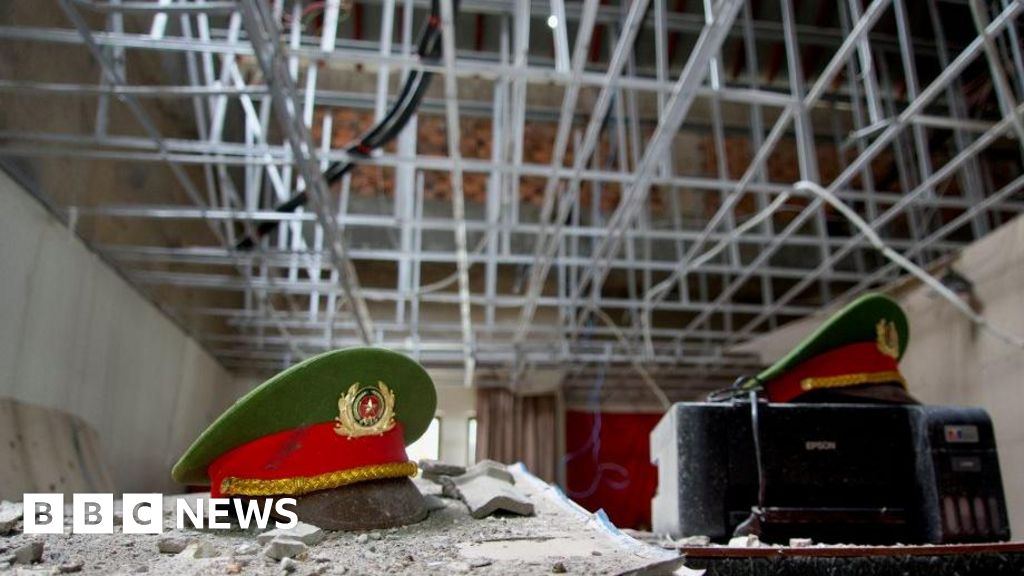
Fake Australian, Chinese and Brazilian police stations: BBC goes inside a seized scam compound
Almost nothing was known about the Royal Hill casino until the Thai military took control of it in December.
Source link
Almost nothing was known about the Royal Hill casino until the Thai military took control of it in December.
Source link
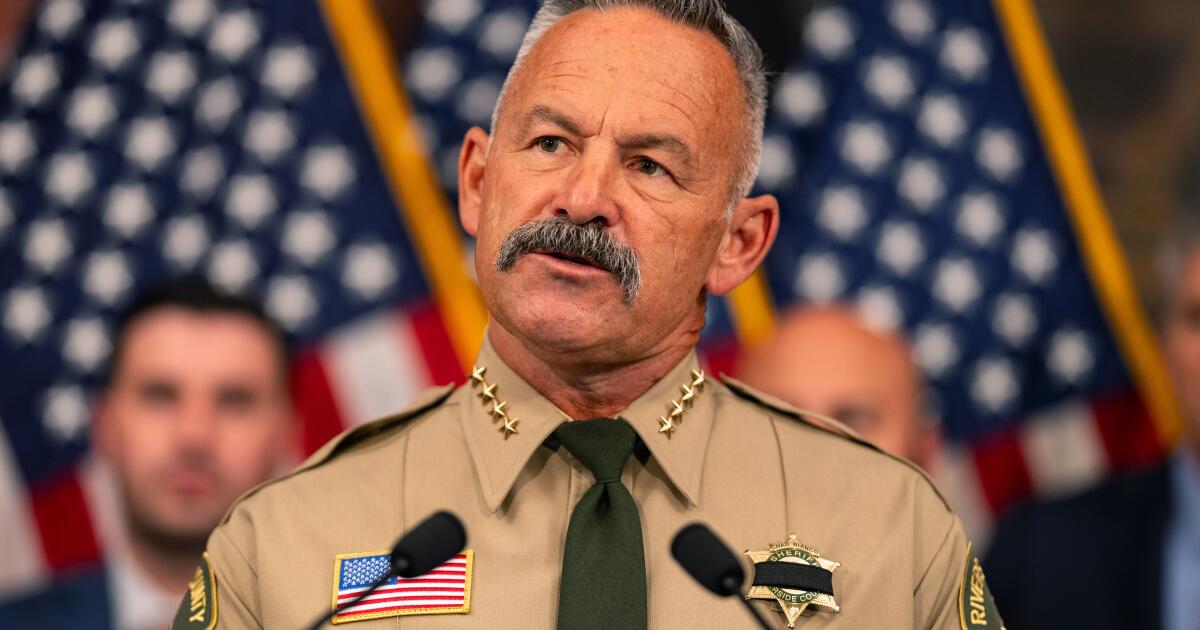
Riverside County Sheriff Chad Bianco says he’d like to be our governor, but more and more, it’s looking to me like the real goal for the far-right provocateur is just to be MAGA-famous.
That’s cool. That’s fine. Honestly, who in Southern California hasn’t dreamed of their 15 minutes? And he certainly has the cop-stache to play the role of rogue Wild West lawman.
But Bianco’s bid for celebrity may help extremists take down American elections, and that is a problem — one California needs to deal with quickly, before the midterms suffer from his antics. There are two separate issues at play here, both of which state courts will be asked to weigh in on in coming days — Bianco apparently is putting his so-called investigation on hold until those cases bring some measure of clarity, and hopefully sanity.
First, are California sheriffs answerable to anyone, or are they a law unto themselves? Second, who in California can legally handle and count ballots according to law, if state law does in fact matter?
The fact that these two issues are coming up now — together— is no accident. President Trump’s election fraud claims have been moving toward this moment for years, largely out of the consciousness of mainstream voters, but very much intentionally pushed by those who would like to see MAGA officials remain in power, even at the cost of democracy.
The real question being answered right now in Riverside — the one we should all be clear on — is, if Republicans want to invalidate election results that don’t go their way this November, what’s the nitty-gritty of actually doing that?
Bianco is attempting an answer.
“This is about more than just what Sheriff Bianco is doing,” said Matt Barreto, faculty director of the UCLA Voting Rights Project. “… It shouldn’t happen. And again, it doesn’t matter if Democrats are winning or Republicans are winning, no sheriff should come in and take over possession or counting of ballots.”
By now, you’ve probably heard that Bianco has obtained multiple secret, sealed search warrants from a buddy judge that allowed him to spirit away hundreds of thousands of ballots in his county from November’s Proposition 50 election.
Bianco claims he has the right to seize these ballots and investigate as he sees fit — and it’s not our business or anyone else’s, not even state Atty. Gen. Rob Bonta, who ordered Bianco to stop what he was doing until Bonta could review it.
Bianco has largely ignored that order, instead scooping up even more ballots late last week — all but giving Bonta a certain finger reserved for simple communication. Fox News loved it. Bianco’s admission Monday that he is pausing his effort is the first hint that even he may see he’s gone too far.
But Bianco’s hubris is in line with the attitude of many so-called constitutional sheriffs, a national movement by some far-right elected lawmen that Bianco has been associated with, though he’s never claimed outright affinity.
These extremist sheriffs misguidedly believe that they are above both state and federal law, and get to decide for themselves what’s constitutional or not in their jurisdictions — and therefore what’s law and what’s not.
Since about 2020, empowered by successes in ignoring pandemic restrictions, these sheriffs have dived deeper and deeper into the election fraud movement that Trump loves so much, claiming increasing rights to investigate alleged fraud. Though their national organization doesn’t publish its membership list, media and other tracking show there are at minimum dozens of these like-minded lawmen across the country, likely closely watching Riverside County.
Some election experts now worry that if Bianco is successful in the courts in retaining the right to take ballots, it will give a dangerous legal precedent that empowers other constitutional sheriffs to do the same at the midterms. Only then it would be fresh, uncounted ballots — leaving these far-right sheriffs in charge of providing results instead of trained, trusted elections officials.
“What happens if the ballots have not been properly counted by the right people yet and a sheriff decides they want to go confiscate them?” said Chad Dunn, co-founder of UCLA’s Voting Rights Project and the trial lawyer who successfully halted Texas’ gerrymandering effort, for now anyway.
“Once the chain of custody … is broken, as they have been with these, you’ll never count them in a way that you’ll be able to get reasonable confidence from the public,” Dunn said. “It puts the entire election process in jeopardy.”
The constitutional sheriffs would become the boots on the ground for Trump’s election deniers to implement their will, seizing ballots as they see fit and creating such a crisis of confidence that it’s likely we the voters would never accept the results, Republican or Democrat.
It could even give Republican Speaker of the House Mike Johnson a plausible reason — an ongoing fraud investigation — not to seat elected Democrats, stalling as he did with Arizona’s Adelita Grijalva last year after she won a special election.
The Voting Rights Project, along with Democratic gubernatorial candidate Xavier Becerra, filed a lawsuit last week asking the state Supreme Court to uphold the laws that govern how ballots are handled in California — basically protecting that chain of custody and making it clear sheriffs can’t ignore it and are not part of it.
“They do not, under California law, have the right to take ballots away from the Registrar of Voters, and they do not, under California law, have the right to count or handle ballots,” Barreto said. “There’s no question that it violates California election law.”
Separately, Bonta’s office filed its own action, with that issue of constitutional sheriffs front and center. Bonta is asking courts to tell Bianco that he’s not a law unto himself, and does in fact answer to the state attorney general.
This issue of whether sheriffs have any legal duty to listen to the state’s top law enforcement officer has long been one of Bonta’s fights — he argued about it with then-L.A. Sheriff Alex Villanueva in another public corruption fiasco over then-L.A. County Supervisor Sheila Kuehl.
I’m guessing Bianco will refer Bonta back to that simple communication of a single finger, much the same as Villanueva did.
But it’s long past time that the state decide just how powerful sheriffs are, for the good of the country this time. The state Legislature has repeatedly kicked the can on clarifying the issue, a failure on their part.
Legislators could amend the state Constitution to make sheriffs appointed instead of elected — the same as police chiefs. Then boards of supervisors could hire and fire them just like other law enforcement leaders.
With the Legislature’s resounding absence on the issue, we have to rely on courts. That’s likely to be a long battle.
In the meantime, Bianco is up to his mustache in attention. This has become a national story, boosting his profile throughout the MAGA-verse as a champion of election deniers everywhere.
Whether Bianco wins or loses these legal battles, resumes his investigation or not, he’s won the attention battle — he’s even polling at the top in the gubernatorial race, thanks to the 8 million Democrats who refuse to drop out.
Riverside County, once as red as it comes, is increasingly purple, Barreto points out. Bianco’s tenure as elected sheriff may not last forever. His shot at governor, despite the polls, is unlikely.
But maybe Fox News will be so impressed with his aggressive rants that he’ll get an offer. Maybe Trump, known for watching it, will like what he sees. So many possibilities from the publicity.
And so much real damage to democracy.
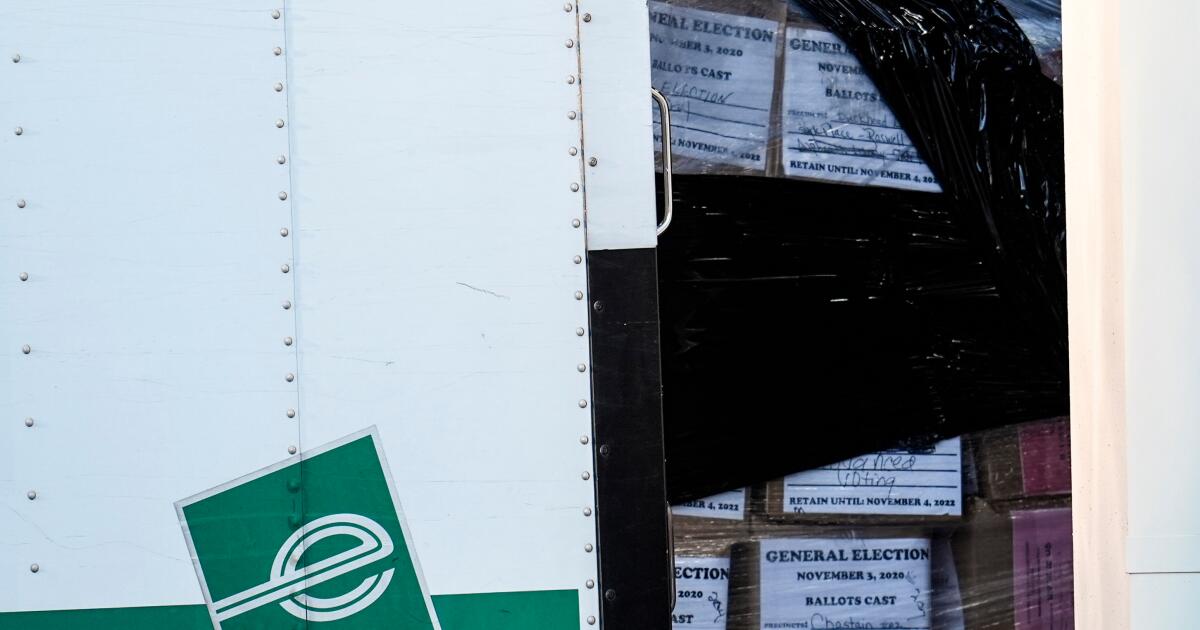
ATLANTA — Attorneys for Georgia’s Fulton County and President Trump’s administration squared off in court Friday over the county’s demand that the FBI return seized ballots and other materials from the 2020 election.
Abbe Lowell, an attorney representing Fulton County, noted that the January raid was “unusual” because it involved an old election and allegations that have already been investigated in the years since Trump, a Republican, lost the county and the state to Joe Biden, a Democrat.
Lowell contended that the Trump administration seized the materials because it grew impatient with litigation the Justice Department filed to obtain them last year. “There’s abundant law that the left hand of the department needs to know what the right hand is doing,” Lowell told U.S. District Judge J.P. Boulee.
Michael Weisbuch, representing the federal government, replied that the separate civil litigation wasn’t “relevant in any respect.” He said the administration has already provided Fulton County with digital copies of everything taken and needs to retain physical copies to carry out its own investigation.
Boulee wrote in a scheduling order that the hearing was needed after the two sides failed to reach an agreement in court-ordered mediation.
The Jan. 28 seizure from a warehouse near Atlanta targeted the elections hub in Georgia’s most populous county, which is heavily Democratic and includes most of Atlanta. Fulton County has been at the center of unfounded claims by Trump and his allies that widespread election fraud cost him reelection.
The FBI’s move was among several actions by the Trump administration that have alarmed Democrats and many election officials who are concerned it’s using law enforcement to pursue the president’s personal grievances and is planning ways to interfere in this year’s midterm elections. The FBI also used a subpoena earlier this month to obtain records related to an audit of the 2020 presidential election in Maricopa County in Arizona, another battleground state Trump lost that year.
At the same time, the Justice Department is fighting numerous states in court for access to voter data that includes sensitive personal information. Election officials, including some Republicans, have said handing over the information would violate state and federal privacy laws.
Lawyers for Fulton County argued in a court filing that the seizure of its documents was “improper and unjustified” and demonstrates “callous disregard” for the Fourth Amendment protection against unreasonable search and seizure. The Justice Department seeks to “set a precedent that would grant the federal government unchecked power to interfere with the local administration of elections,” it wrote.
Justice Department attorneys argued that preparing a detailed affidavit and presenting it to a judge “is the exact opposite of ‘callous disregard’” for those constitutional rights. “Their goal to disrupt an ongoing federal criminal investigation is clear,” they wrote of Fulton County officials.
The Justice Department said it is investigating “irregularities that occurred during the 2020 presidential election in the County” and identified two laws that might have been violated. One requires election records to be maintained for 22 months, while the other prohibits procuring, casting or tabulating false, fictitious or fraudulent ballots.
The filing said the FBI is looking into whether Fulton County properly retained ballot images; whether some ballots were scanned and counted multiple times; whether unfolded, unmailed ballots were counted as mail-in absentee ballots; and potential irregularities concerning tabulator tapes from the scanners used to count ballots.
Fulton County’s lawyers wrote that the “deficiencies” or “defects” in the county’s handling of the 2020 election cited in the affidavit are the kinds of human errors that commonly occur without any intentional wrongdoing and cannot establish probable cause.
To support their claims, Fulton County officials submitted a sworn declaration from Ryan Macias, an election technology and security expert who advised the county during the 2020 election. He said the affidavit contains “a multitude of false or misleading statements and omissions” and offered explanations for the alleged “deficiencies.”
Investigations by the Georgia secretary of state and independent reviews contradict the core allegations of the affidavit, which is “rife with statements from witnesses lacking credibility, with extraordinary and undisclosed biases,” Fulton’s lawyers argued.
Georgia’s votes in the 2020 presidential race were counted three times, including once by hand, and each count affirmed Biden’s win.
Federal government lawyers rejected the idea that the FBI agent who wrote the affidavit “intentionally or recklessly misled” the judge, writing that “the supposed misrepresentations and omissions flagged by Petitioners are illusory and/or immaterial.” They also asserted that a lapse of the statute of limitations on the potential crimes does not negate probable cause.
The Justice Department also noted that a federal magistrate judge reviewed the FBI affidavit and signed off on the search warrant. Fulton County sought to have the FBI agent who wrote the affidavit testify at Friday’s hearing, but the Justice Department objected and the judge sided with the federal government.
Brumback writes for the Associated Press. AP writer Nicholas Riccardi in Denver contributed to this report.
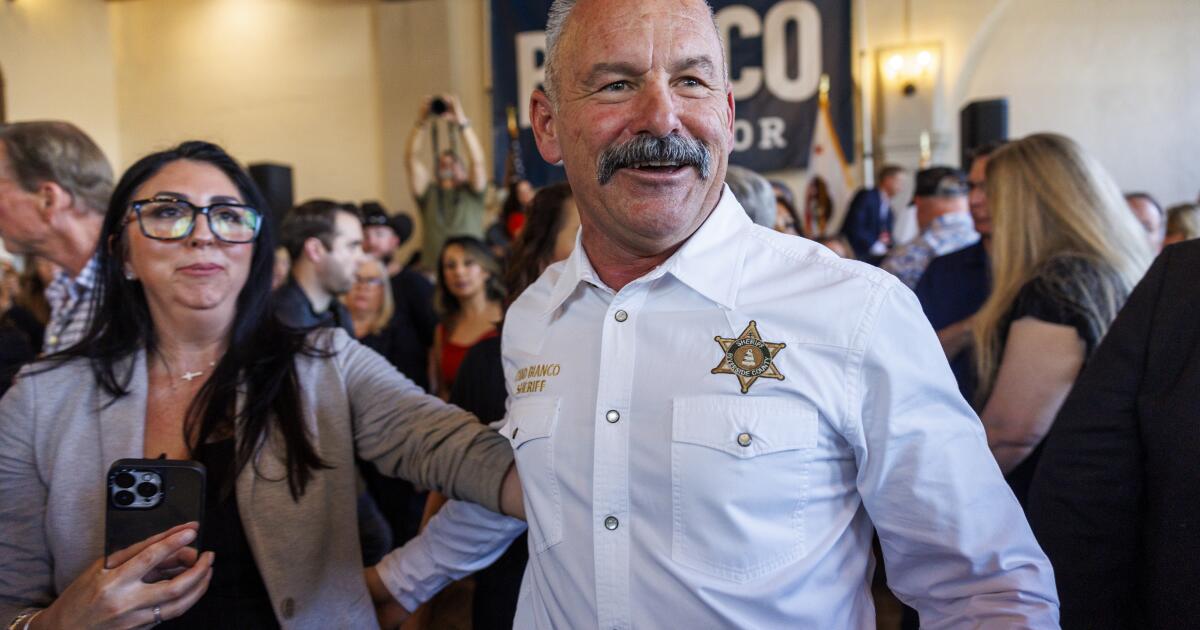
The feud between California Atty. Gen. Rob Bonta and Riverside County Sheriff Chad Bianco has escalated after Bonta asked a court to stop Bianco’s investigation into alleged election fraud.
In a 70-page petition filed with the Fourth Appellate District Monday, Bonta wrote that “the Sheriff’s misguided investigation threatens to sow distrust and jeopardize public confidence” in upcoming elections. The investigation, which he also called “sweeping and unprecedented,” is an abuse of the criminal process, he wrote.
Bianco, who is a leading Republican candidate for governor, last month seized more than 650,000 ballots cast in Riverside County in the November election for Proposition 50, which temporarily redrew the state’s congressional districts to favor Democrats.
The sheriff has said that his investigators are looking into allegations by a local citizens group that “did their own audit” and found that the county’s tally was falsely inflated by more than 45,000 votes — a claim that local election officials have emphatically rejected.
Bianco has described his probe as a “fact-finding mission” to determine if votes were fraudulently counted. He has accused the attorney general, a Democrat, of improperly interfering with what he says is a lawful criminal investigation.
In Riverside County, the proposition passed by more than 82,000 votes. Statewide, it passed with about 64% of the vote and a margin of more than 3.3 million ballots.
“Well, well, well, the political corruption in California just gets bigger and bigger,” Bianco said in a social media video Monday night in response to Bonta’s petition.
“Why in the world would Rob Bonta want that count stopped unless he was afraid of what that count would uncover?” he added. “We have an extremely politically biased appeals court, so this is going to be interesting.”
Political observers have said that Bianco, an outspoken supporter of President Trump, appears to be vying for attention from Trump, who has called on the federal government to “nationalize” state-run elections, remains fixated on his 2020 election loss and has falsely claimed widespread fraud.
Kim Nalder, a political science professor and director of the Project for an Informed Electorate at Sacramento State, said that Bianco’s investigation appears to be “an electoral ploy.”
“At this stage in the election, most voters haven’t really tuned into the gubernatorial race, and there are a ton of candidates,” she said. “People who don’t know his background will know now. This is clear signaling.”
The sheriff has denied the probe has anything to do with his campaign.
A poll released last week by UC Berkeley’s Institute of Governmental Studies and co-sponsored by The Times showed Bianco and conservative commentator Steve Hilton leading the crowded field of gubernatorial candidates by slim margins, with the Democratic vote split among multiple candidates in a left-leaning state.
Bonta’s office said in a statement Monday evening that it was asking the court to pause the investigation “while we work to understand its basis.”
Bonta’s petition revealed that — in addition to warrants issued on Feb. 9 and 23 — the sheriff obtained a third warrant from the Riverside County Superior Court on March 19 to restart a paused recount of the ballots. The warrants now are under seal.
Bonta’s office called the warrants and the affidavits supporting them legally deficient because “the Sheriff has not identified any particular crime that may have been committed by anyone — a necessary predicate to obtain a criminal search warrant.”
Bonta had earlier questioned whether Bianco had concealed important information from the magistrate judge who approved the warrants.
In his petition, Bonta wrote that the sheriff’s department had planned to assign “12 employees working four days a week, five to seven hours each day” to count the votes.
David Becker, executive director of the Center for Election Innovation & Research and a former senior trial attorney overseeing voting enforcement for the Department of Justice’s Civil Rights Division, agreed with Bonta’s assessment that the sheriff’s probe is a legally deficient “fishing expedition.” He questioned how Bianco got a judge to sign off on three warrants.
“You can’t use a warrant as a PR tool, as something to help your political campaign,” Becker said. “You have to meet certain standards in order to obtain a warrant, because a warrant is extraordinary. A warrant is saying we believe there is probable cause to seize evidence, and we need it now.”
Bianco said in a news conference Friday that a Riverside County Superior Court judge had ordered the appointment of a special master to oversee the count. His investigators had already begun counting, but the tally would start over under the court’s guidance, Bianco said.
“This isn’t about counting yes and no votes,” Bianco said in his social media video Monday. “This is simply counting the total ballots and comparing that total with the number of votes. … Plain and simple. Common sense.”
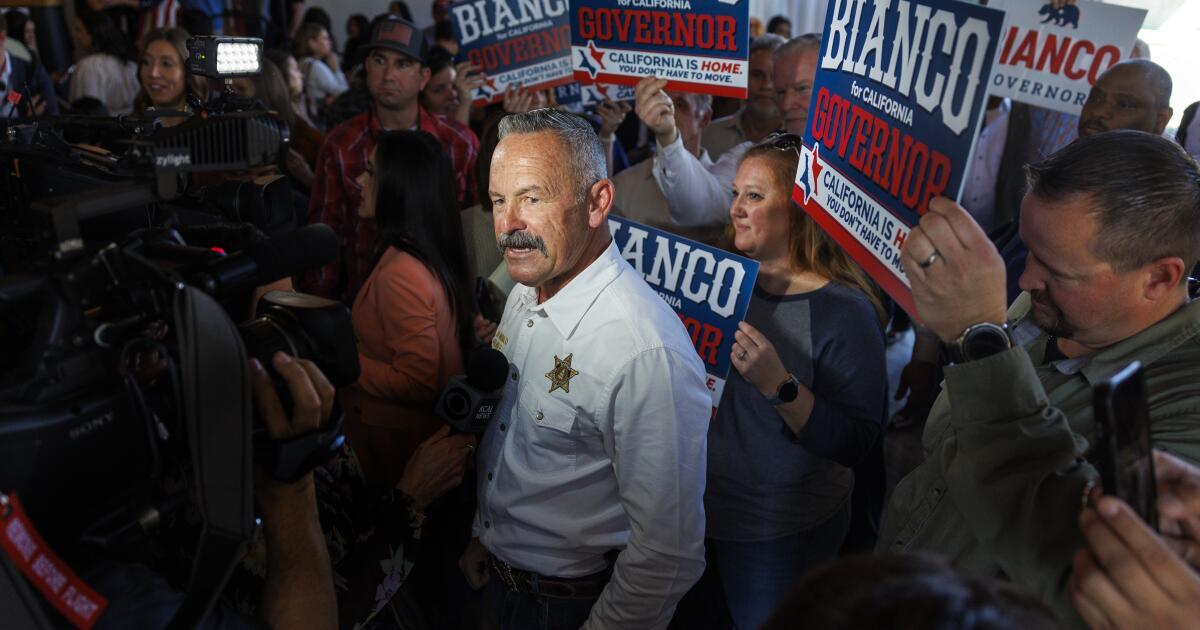
Chad Bianco, the Riverside County sheriff and a leading Republican candidate for governor, has seized more than 650,000 ballots from last November’s election as part of an investigation that he called a “fact-finding mission” to determine if they were fraudulently counted.
Atty. Gen. Rob Bonta, the state’s top law enforcement official, has sharply criticized the probe, which he called “unprecedented in both scope and scale.”
In a March 4 letter to the sheriff, Bonta said the seizure of the ballots “sets a dangerous precedent and will only sow distrust in our elections.” He threatened to seek legal recourse if Bianco does not halt his investigation.
Bianco said Friday that his investigators are looking into allegations by a local citizens group that “did their own audit” and found that the county’s tally was falsely inflated by more than 45,000 votes — a claim that local election officials have emphatically rejected.
Here is what we know.
According to Bonta’s office, Bianco’s department on Feb. 26 took about 1,000 boxes of ballot materials in Riverside County related to the November election for Proposition 50, which temporarily redrew the state’s congressional districts to favor Democrats in response to partisan redistricting in Republican states, including Texas.
Bianco said that it’s his “constitutional duty” to investigate a potential crime and that he is not trying to change the election results.
The investigation includes all of the ballots cast in the county, where Proposition 50 passed with 56% of the vote, a margin of more than 82,000 ballots. Statewide, it passed with 64% of the vote, a margin of more than 3.3 million ballots.
Bianco said he had been contacted by “a group of citizen volunteers” that said it performed an audit finding that 45,896 more ballots were counted than were cast. He did not name the group, but the allegations match those made by a group called the Riverside Election Integrity Team.
In a February presentation to the Riverside County Board of Supervisors, Registrar of Voters Art Tinoco disputed the group’s allegations and said they were based on a misunderstanding of raw data that had not been fully processed.
The actual discrepancy, Tinoco said, was 103 votes — a variance of 0.016%.
Bianco said his department served the registrar with a warrant “approved and signed by a judge” on Feb. 9.
According to Bonta’s office, an additional warrant was issued on Feb. 23. Bianco said the warrants are now sealed.
In the March 4 letter to Bianco, the attorney general said he had “serious concerns” about whether the sheriff had probable cause to seize the election materials.
Bonta questioned whether Bianco had concealed information from the magistrate judge who approved the warrants, including details from the registrar’s analysis of the citizen group’s allegations.
An official from Bonta’s office told The Times that the attorney general “found out in the middle of the week that [Bianco] was going to execute the warrants on a Friday.” Bonta’s office asked the sheriff to slow down and share information about the investigation, but “instead of waiting, he actually moved it up” and seized the ballots sooner than planned, said the official, who would only speak on background.
Bianco said a Riverside County Superior Court judge ordered the appointment of a special master to oversee the ballot count. His investigators had already begun counting, but the tally would start over under the court’s guidance, Bianco said.
California law requires county officials to keep election materials — including ballots and voter identification envelopes — for 22 months for elections involving a federal office and for six months for all other contests.
The materials must be sealed and then destroyed at the end of the retention period.
The Proposition 50 election took place on Nov. 4, so the ballots are scheduled to be destroyed in May.
Political observers say that Bianco — a leading gubernatorial candidate — appears to be vying for attention from President Trump and his supporters.
Kim Nalder, a political science professor and director of the Project for an Informed Electorate at Sacramento State, said the investigation appears to be “an electoral ploy.”
“At this stage in the election, most voters haven’t really tuned into the gubernatorial race, and there are a ton of candidates,” she said. “People who don’t know his background will know now. This is clear signaling.”
Trump has repeatedly called on the federal government to “nationalize” state-run elections. He remains fixated on his 2020 election loss and has falsely claimed widespread fraud.
In January, the FBI raided the elections office in Fulton County, Ga., seizing 2020 presidential election records. And this month, the Republican leader of Arizona’s state Senate said he had handed over 2020 election records to the FBI, complying with a federal grand jury subpoena for records related to a controversial audit of the election in Maricopa County.
Bianco is an outspoken Trump supporter.
A poll released last week by UC Berkeley’s Institute of Governmental Studies and co-sponsored by The Times showed Bianco and conservative commentator Steve Hilton leading the crowded field of gubernatorial candidates by slim margins, with the Democratic vote split among multiple candidates in a left-leaning state.
The top two vote getters, regardless of party, will advance to the November election.
Bianco said the investigation was “not a recount” for Proposition 50 and had nothing to do with his campaign for governor.
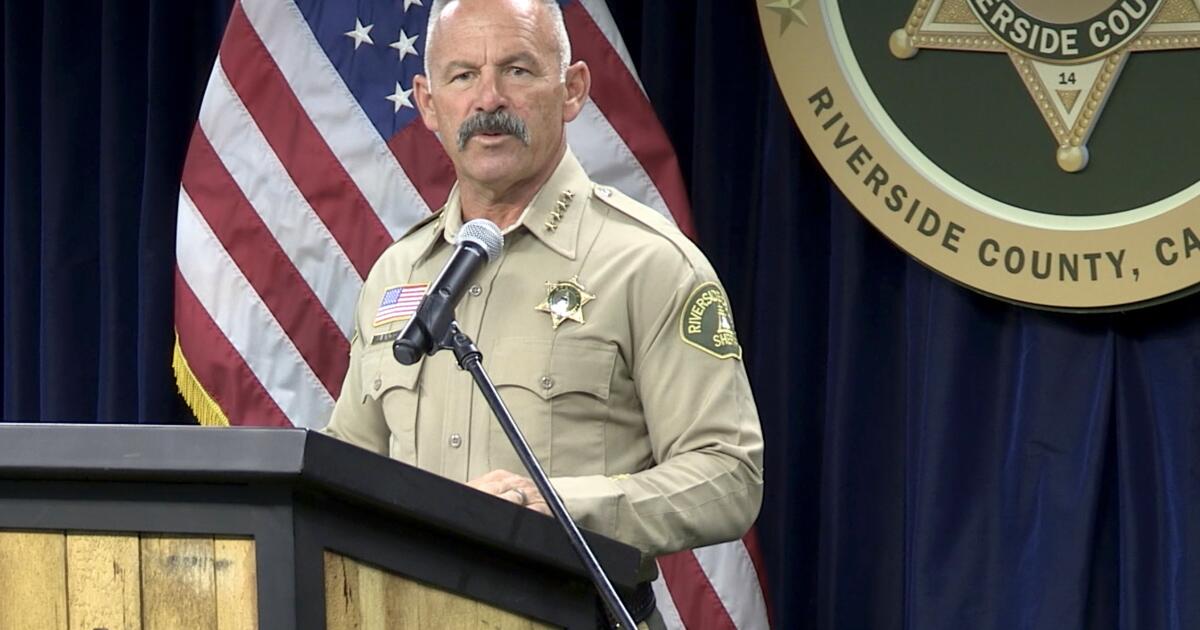
Riverside County Sheriff Chad Bianco, who is a leading Republican candidate for governor, has seized more than 650,000 ballots from last November’s election and is investigating whether they were fraudulently counted.
“This investigation is simple: Physically count the ballots and compare that result with the total votes recorded,” Bianco said at a news conference Friday.
The unusual probe drew a sharp rebuke from California Atty. Gen. Rob Bonta, who said in a statement Friday that it is “unprecedented in both scope and scale” and appears “not to be based on facts or evidence.”
“There is no indication, anywhere in the United States, of widespread voter fraud,” Bonta said. “Counts, recounts, hand counts, audits, and court cases all support this.”
According to Bonta’s office, Bianco’s department on Feb. 26 seized about 1,000 boxes of ballot materials in Riverside County related to the November election for Proposition 50, which temporarily redrew the state’s congressional districts to favor Democrats in response to partisan redistricting in Republican states, including Texas.
The sheriff said his investigators are looking into allegations by a local citizens group that “did their own audit” and found that the county’s tally was falsely inflated by more than 45,000 votes — a claim that local election officials have rejected.
President Trump, who remains fixated on his 2020 election loss, continues to amplify election conspiracy theories and has repeatedly called for the federal government to “nationalize” state-run elections to counter what he says is widespread fraud.
Bonta and California Secretary of State Shirley Weber, both Democrats, have vowed to fight federal interference that could affect voting in California, including efforts to seize election records, as the FBI recently did in Georgia.
Bianco is an outspoken Trump supporter who said in an endorsement video in 2024 that, after 30 years of putting criminals in jail, he figured it was “time to put a felon in the White House — Trump 2024, baby” — referencing Trump’s conviction by a New York jury for falsifying business records while paying hush money to a porn actor.
Bianco’s investigation, which includes all the ballots cast in Riverside County in November, raises questions about how he would handle the election denialism movement if elected governor.
A poll released last week by UC Berkeley’s Institute of Governmental Studies and co-sponsored by The Times showed Bianco and conservative commentator Steve Hilton leading the crowded field of gubernatorial candidates by slim margins, in a left-leaning state.
Last fall, Proposition 50 passed in Riverside County with 56% of the vote — a margin of more than 82,000 ballots.
A citizens group called the Riverside Election Integrity Team has said it performed an audit finding that 45,896 more ballots were counted than were cast.
In a lengthy February presentation to the Riverside County Board of Supervisors, Registrar of Voters Art Tinoco disputed that figure, saying it was based on a misunderstanding of raw data that had not been fully processed.
The actual discrepancy, Tinoco said, was 103 votes, a variance of 0.016% that was far below what he said was the state’s preferred 2% margin of error for certifying results.
Bianco on Friday said that there “is no acceptable error, small or large, in our elections.”
The sheriff did not name the Riverside Election Integrity Team, but his description of the allegations brought to him by “a group of citizen volunteers” matched theirs.
Bianco said the investigation was “not a recount” for the Proposition 50 contest and was “just as much to prove the election is accurate as it is to show otherwise — we will not know until the count is complete.”
Bonta said his office has “attempted to work cooperatively” with the Sheriff’s Department to understand the basis for the probe. The sheriff, Bonta said, “has delayed, stonewalled, and otherwise refused to work with us in good faith” and failed to provide most of the requested documents.
“We’re concerned that there is not sufficient justification for seizing every ballot that was cast in this very largely populated county,” an official in Bonta’s office said in an interview Friday night.
In a March 4 letter to Bianco, the attorney general cited Bianco’s plan to use Sheriff’s Department staffers, “who are not trained and have no experience,” to count the ballots.
“Let me be clear: this is unacceptable,” Bonta wrote. “Your decision to seize ballots and begin counting them based on vague, unsubstantiated allegations about irregularities in the November special election results sets a dangerous precedent and will only sow distrust in our elections. You are also flagrantly violating my directives.”
At his news conference Friday, Bianco fired back by calling Bonta “an embarrassment to law enforcement.”
A Riverside County Superior Court judge, Bianco said, has ordered the appointment of a special master to oversee the ballot count.
In a statement Friday, Secretary of State Weber said “the Sheriff’s assertion that his deputies know how to count is admirable. The fact remains that he and his deputies are not elections officials and they do not have expertise in election administration.”