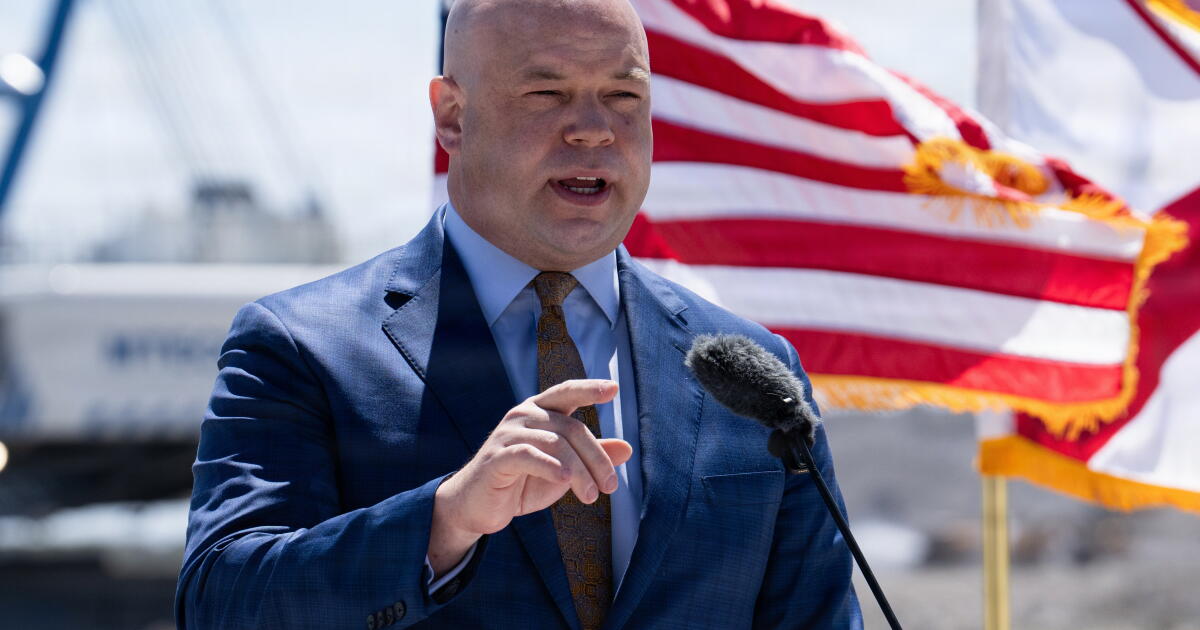
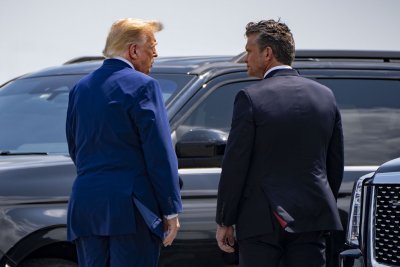
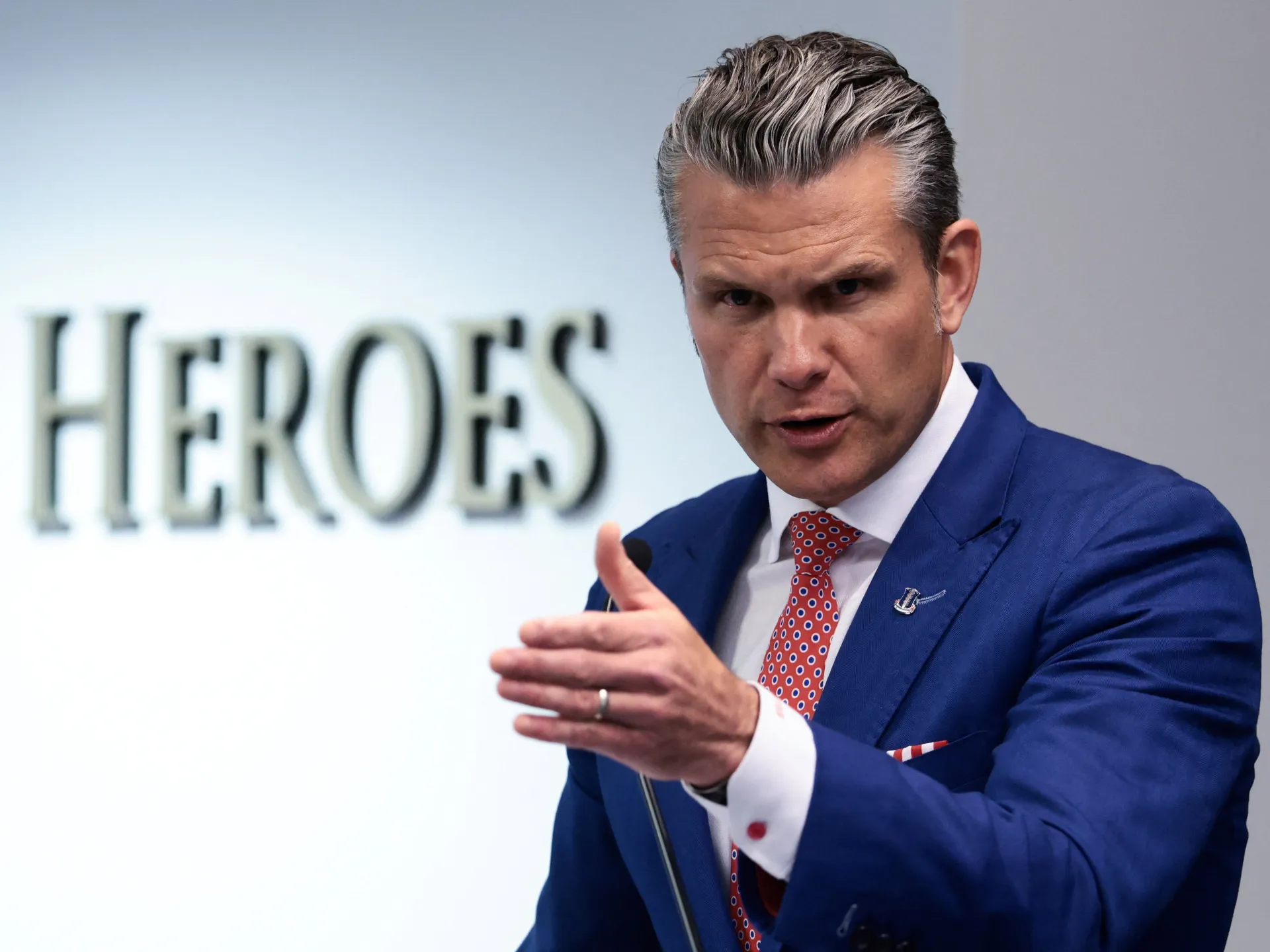
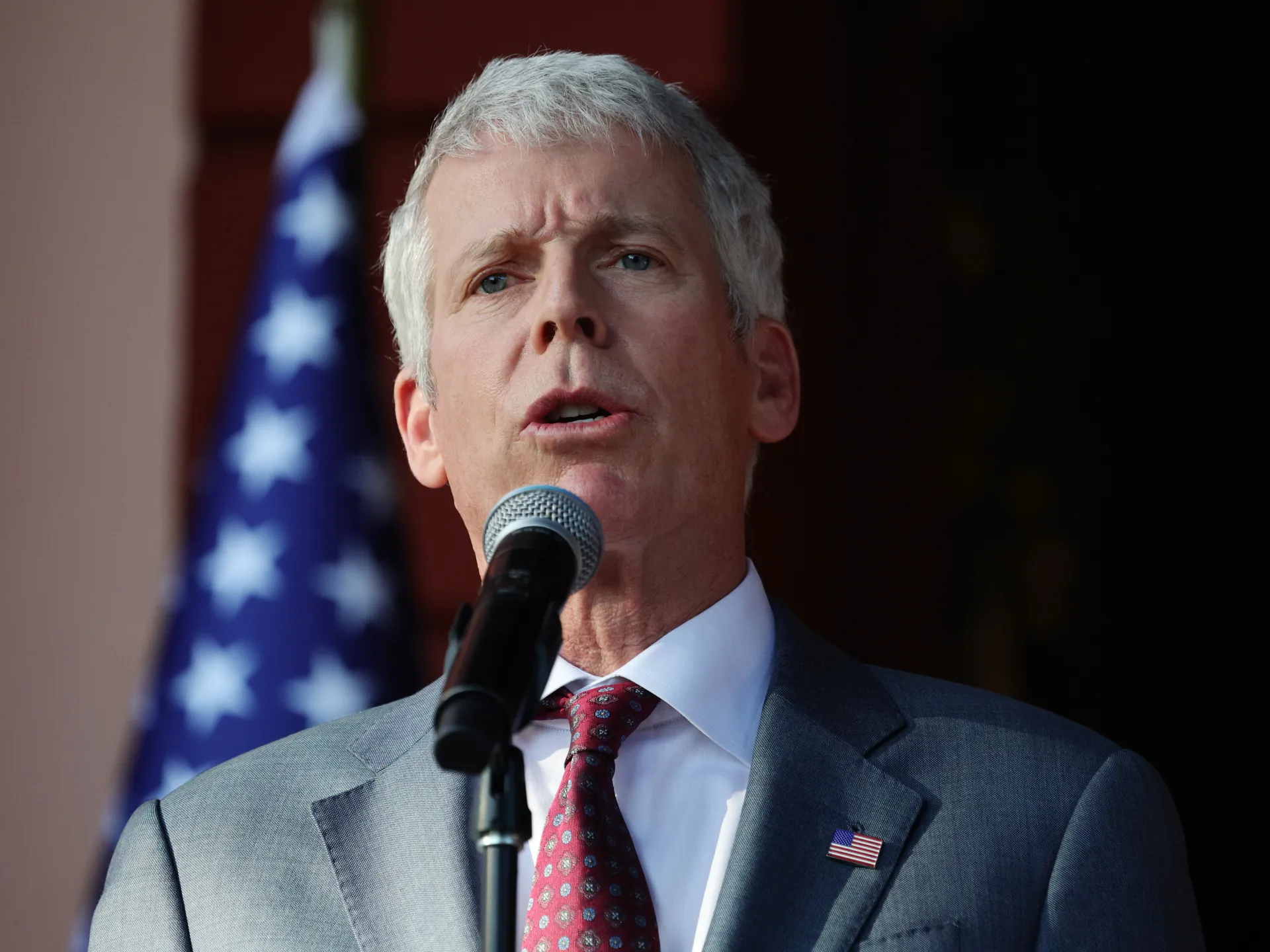
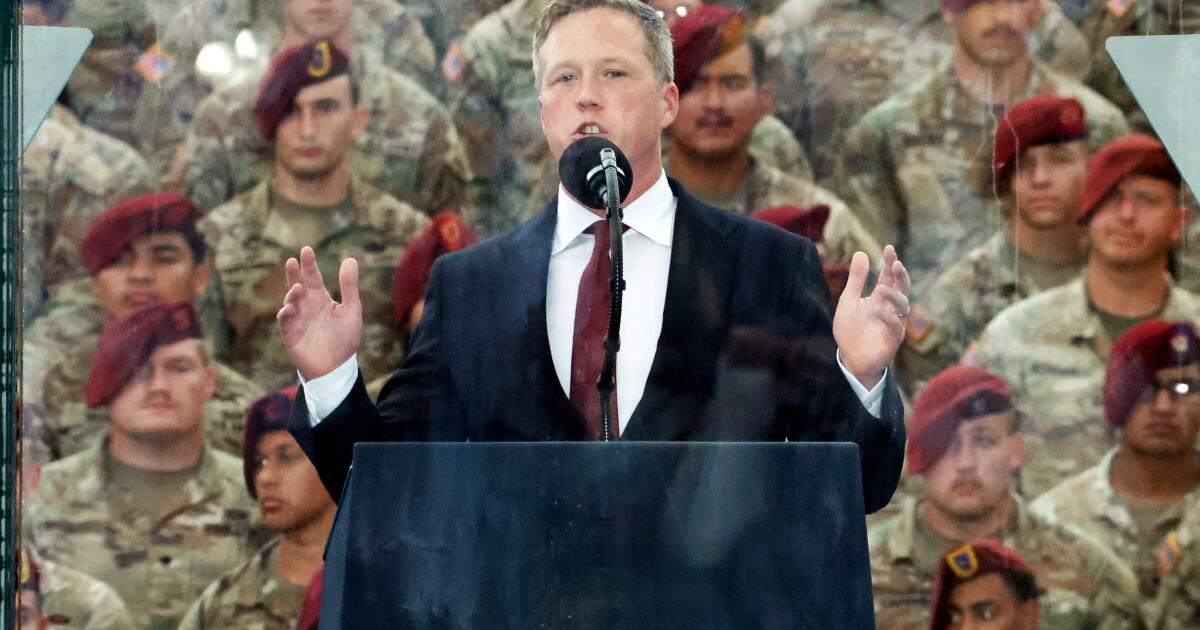
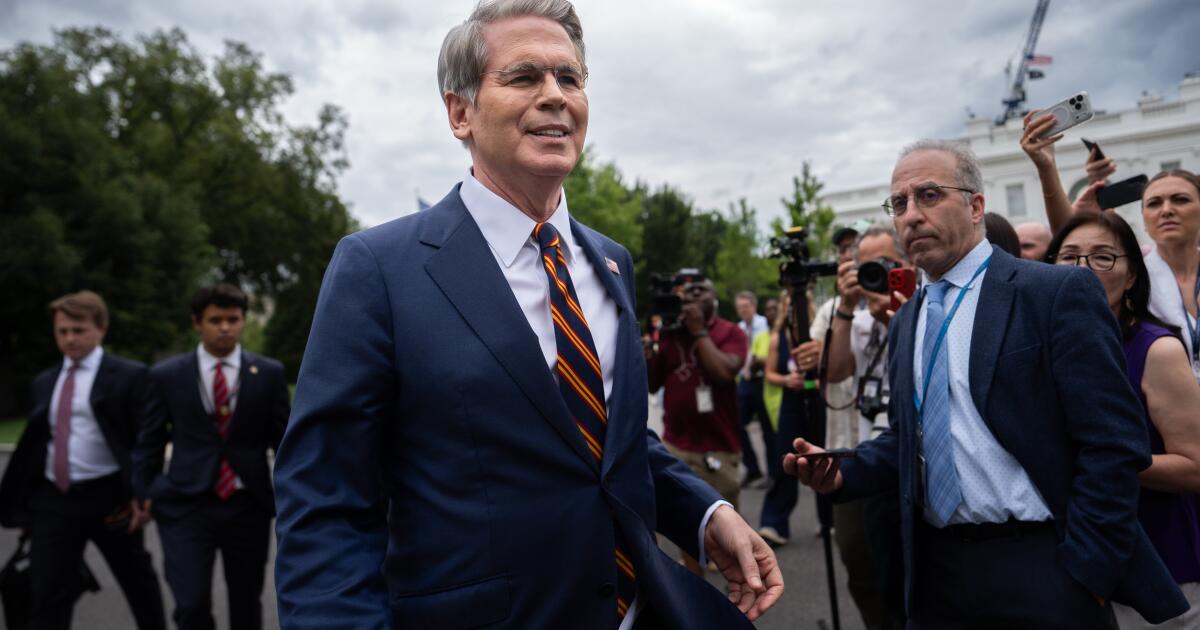
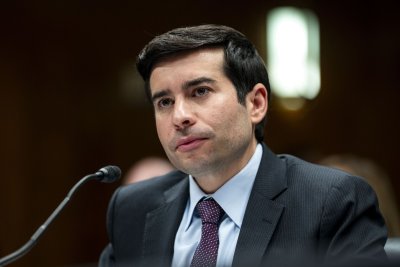
WASHINGTON — President Trump on Thursday named Adam Telle, a civilian leader in the U.S. Army Corps of Engineers, as the acting Army secretary following the departure of Dan Driscoll amid widespread reports of tensions with Defense Secretary Pete Hegseth.
Telle is currently the assistant secretary of the Army for civil works. But he spent more than 20 years working for Republican senators as well as in the White House during Trump’s first term, serving as the president’s chief liaison to the Senate, according to an Army bio.
“He is a Great Patriot, who is respected by all,” Trump wrote in a Truth Social post.
Hegseth echoed that in his own post on X.
“Huge congrats to Adam. Strong and whip smart,” Hegseth wrote. “He is indeed a great Patriot — and will be an immediate asset to the @USArmy.”
Driscoll gave no explanation for his decision to quit this week as the Army’s top civilian official. His clashes with Hegseth have been widely reported, and some of Driscoll’s allies in the Army were ousted this year by Trump’s Pentagon chief.
Telle has been at the Army Office of Civil Works since August 2025, according to Legistorm, a website that tracks lawmakers and Capitol Hill staffers. Before that, Telle worked as chief of staff for Republican Sen. Bill Hagerty of Tennessee from 2021-25.
Telle spent 18 months working in the White House during Trump’s first term and 10 years working for the late Republican Sen. Thad Cochran of Mississippi, according to Legistorm.
Telle also worked as the chief staff member on the Senate Appropriations Committee’s Homeland Security Subcommittee, according to Hagerty’s remarks when Telle was nominated for the civil works job in May 2025.
In his most recent job, Telle focused on matters involving commercial navigation, flood damage reduction and permitting under the Clean Water Act. Telle issued a statement in August about the approval of a company’s plans to reroute an aging oil pipeline around a Wisconsin tribal reservation. In May, he was quoted in a story in the Forum, a newspaper in Fargo, N.D., about a $3.2-billion flood control project that will protect more than 200,000 people.
Telle will now be overseeing the nation’s largest fighting force at a time when the U.S. is still engaged in conflict with Iran and significant Army forces are stationed in the Middle East.
The war has significantly contributed to the U.S. military’s shortfall in critical weapons like the Patriot and THAAD defense missile interceptors systems, which are operated by the Army.
Driscoll, an Army veteran who served in Iraq, is a friend of Vice President JD Vance and had good relationships with both Republicans and Democrats in Congress.
His allies in the Army who were ousted by Hegseth included its top uniformed leader, Gen. Randy George. Gen. Christopher LaNeve took over as the Army’s acting chief of staff and recently pulled the plug on a drone modernization program that Driscoll had championed.
Driscoll spoke with Trump on the current state of the Army before he submitted his resignation, the Associated Press has reported.
Driscoll did not allude to any problems in the only public statement on his departure, saying Tuesday that it has been “the honor of a lifetime” to serve as Army secretary under Trump and Hegseth.
Democrats and Republicans lamented Driscoll’s departure, with some blaming Hegseth directly.
Sen. Thom Tillis, a North Carolina Republican who is retiring and sometimes has clashed with Trump, said on social media that Hegseth “is creating a leadership void at the top of our military ranks.”
Sept. 4 (UPI) — President Donald Trump has named Adam Telle, current assistant secretary for the Army for Civil Works, acting secretary of the Army amid an ongoing shakeup of the U.S. military.
In a brief statement posted on his Truth Social media platform, Trump announced that Telle would be assuming the position immediately, while describing him only as “a Great Patriot, who is respected by all.”
Trump named Telle days after his predecessor, Dan Driscoll, reportedly submitted his resignation following months of reported tension with Defense Secretary Pete Hegseth, an exit that has raised concern among some as there has been a steady stream of resignations, early retirements and firings among Pentagon leadership during the second Trump administration.
On Tuesday evening, Driscoll made his resignation public, saying in an online statement Wednesday would be his last day.
“As a third-generation Army veteran, it has been the honor of a lifetime to serve as the secretary of the Army under President Trump and Secretary Hegseth,” he said.
“Our soldiers, civilians and their families are our nation’s very best, and they have inspired me every day. I am sincerely thankful for their service and sacrifice.”
On Wednesday, Sen. Thom Tillis, a Republican from North Carolina, called on Trump to fire Hegseth, a former Army National Guard major who took office with less senior government and military leadership experience than any other secretary of Defense, saying he has “never witnessed more inept management of the brave men and women who serve our country.”
Hegseth has overseen a sweeping overhaul of the department, including a purge of two dozen generals, admirals and senior civilian defense officials who have either resigned, announced early retirement or been fired. Several left following reported clashes with the secretary, who has plunged into culture-war issues, eliminating policies he has characterized as “woke.”
“He is indeed a great Patriot — and will be an immediate asset to the @USArmy.”
Sen. Bill Hagerty, R-Tenn., was among Republicans quick to congratulate Telle for being chosen to lead the Army and Trump for picking him.
“This is a critical position for our nation’s defense, and I can’t imagine a better leader for the world’s greatest warriors,” Hagerty said in a social media statement.
“He knows how to inspire, lead and equip the Army for success. Given the challenges we face today, Adam is the ‘man for the moment.'”
Sept. 3 (UPI) — Sen. Thom Tillis has called on President Donald Trump to fire Pete Hegseth as secretary of Defense following a series of high-profile exits and firings of senior Pentagon officials in recent months.
Tillis’ comments on Wednesday are the strongest yet from a Republican politician amid mounting GOP criticism of Hegseth’s leadership of the Department of Defense, and came two days after Army Secretary Dan Driscoll resigned following months of reported of clashes with Hegseth.
“I have never witnessed more inept management of the brave men and women who serve our country. He is intimidated by competence and retreats to ginning up culture wars instead of soberly attending to the vital work of our national defense and the health and well-being of our fighting force,” Tillis said on X.
“I urge the president to find a new leader at the Pentagon who will retain and empower our military talent rather than diminish it.”
Hegseth, a former Army National Guard major who took office with less senior government and military leadership experience than any other secretary of Defense, has overseen a sweeping overhaul of the department, which has seen nearly two dozen generals, admirals and senior civilian defense officials resign, retire early or be fired. Several have left following reported clashes with Hegseth.
Critics have accused the former Fox News host of politicizing the traditionally nonpartisan position, highlighting his purge of senior leadership and his effort to eliminate policies he has characterized as “woke.”
In his statement, Tillis, who served on the Senate Armed Services Committee, thanked Driscoll for his leadership and praised him and Gen. Randy George, who stepped down at Hegseth’s request in April, for having initiated “a transformative period of innovation in how we array our forces and equip our soldiers.”
“If we had a @SecWar who maintained the same priorities and forward-thinking, he would be fighting to retain talented leaders like Dan and the many flag officers he has forced into retirement,” he said. “Instead, he is creating a leadership void at the top of our military ranks.”
Hegseth faced strong criticism from Democrats over his lack of experience and alleged issues with alcohol and high-profile allegations of sexual misconduct and abuse, but there has been a growing chorus of Republicans who have voiced concerns since the U.S. war with Iran began on Feb. 28.
A former Trump supporter whom Trump endorsement ahead of his successful 2020 re-election bid, Tillis became a target of the president after saying he could not support his so-called One Big Beautiful spending and tax cut bill. In June 2025, Tillis announced he would not seek another term.
“My Senate colleague Thom Tillis is right,” Sen. Mark Kelly, D-Ariz., said in response to the Republican’s statement.
“Pete Hegseth has long passed his expiration date as SecDef. He needs to go.”
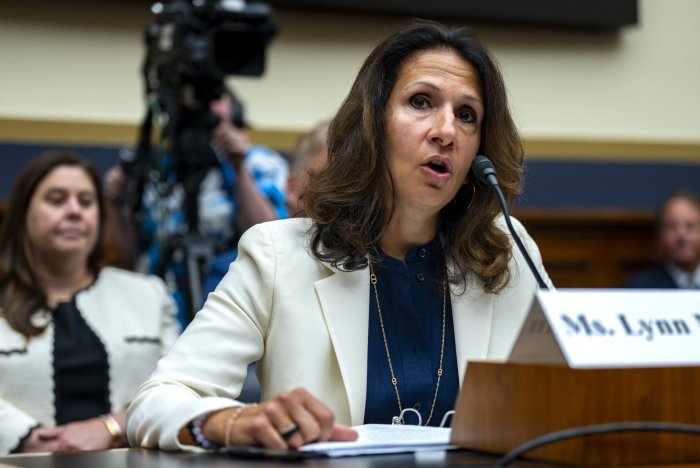
President of the New York Stock Exchange Lynn Martin speaks during a House Financial Services Committee hearing on the economy at the U.S. Capitol on Wednesday. Photo by Bonnie Cash/UPI | License Photo
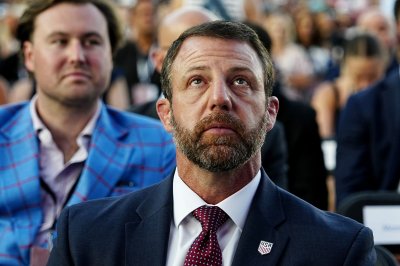
Sept. 2 (UPI) — A Coast Guard jet with Homeland Security Secretary Markwayne Mullin onboard made an emergency landing Wednesday afternoon near Washington, after the jet suffered a mid-flight engine failure.
“The United States Coast Guard pilots made the single-engine landing feel routine,” Mullin said online, confirming the incident.
“No panic, just straight professionalism. After we landed, the pilots told me that was a first for them! We could not have been in better hands.”
Ronald Reagan Washington National Airport confirmed the C-37A with 14 people onboard landed safely at 1:35 p.m. EDT. No other flights were disrupted, it added.
According to audio of communication between the plane’s pilots and air traffic control, the aircraft had lost its right engine, and had requested an emergency landing at the airport, which was granted.
Ronald Reagan Washington National Airport is located in Arlington County, Va.
Senator Thom Tillis accuses Pentagon chief of ‘inept mismanagement’ as US military is strained by war on Iran.
United States Senator Thom Tillis has called on President Donald Trump to fire Secretary of Defence Pete Hegseth for creating a “leadership void” within the military amid the ongoing war with Iran.
In a social media post on Wednesday, Tillis contrasted Hegseth unfavourably with former Army Secretary Dan Driscoll, who submitted his resignation on Monday amid reported disagreements with the Pentagon chief.
Recommended Stories
list of 3 itemsend of list
“I have never witnessed more inept management of the brave men and women who serve our country. He is intimidated by competence and retreats to ginning up culture wars instead of soberly attending to the vital work of our national defense and the health and well-being of our fighting force,” the North Carolina senator wrote.
“I urge the President to find a new leader at the Pentagon who will retain and empower our military talent rather than diminish it.”
Tillis is a member of Trump’s Republican Party. But in recent years, he has become an increasingly vocal critic from within the party over policies he fears harm democracy.
In June 2025, amid criticism from Trump, Tillis announced he would not be seeking re-election in November’s congressional midterm polls. His term ends in January.
Early in Trump’s second term as president, Tillis was among the senators who voted to confirm Hegseth, a military veteran and former TV host, despite criticisms of his conduct towards women and his past work.
Tillis only confirmed his vote in favour of Hegseth at the last minute, appearing to share some of the concerns being debated in the Senate.
Since taking office as defence secretary, Hegseth has pursued controversial changes to the Pentagon, including attempts to limit journalistic access to the Defence Department.
He has also undertaken a wide-ranging effort to root out what he calls “wokeness” from the military.
That effort has reportedly included firing top military leaders, blocking promotions, removing transgender service members and reviewing admissions standards for top military academies.
In Wednesday’s post, Tillis pointed to some of those efforts, questioning why Hegseth appeared fixated on culture war issues rather than modernising the military.
He pointed to evolving forms of warfare in Russia’s invasion of Ukraine, and in the US-Israeli war against Iran.
“Our understanding and assumptions of warfare are being challenged in places like Ukraine and Iran, and Dan [Driscoll] understands the old way of doing business no longer applies,” said Tillis.
The senator then proceeded to imply that Driscoll’s departure was a direct result of Hegseth’s mismanagement.
“If we had a Secretary of Defense who maintained the same priorities and forward-thinking, he would be fighting to retain talented leaders like Dan and the many flag officers he has forced into retirement. Instead, he is creating a leadership void at the top of our military ranks,” Tillis added.
Hegseth has faced growing scrutiny in recent months as the US struggles to achieve its goals in the war on Iran, launched on February 28. The war hit its six-month mark last week with no end in sight.
Media reports indicate that the war has left the Pentagon struggling with shrinking munitions stockpiles that could hinder the US military in future actions.
The war has also taken a toll on the popularity of the Trump administration, which has seen approval numbers sink ahead of the November congressional election.
Since the war began, fuel prices have skyrocketed, and the conflict has spread across the Middle East.
More than two-thirds of Americans disapprove of the administration’s handling of the war, according to a University of Massachusetts poll released on August 31.
America’s second-largest oil company is preparing to deepen its presence in a country most of its rivals abandoned two decades ago.
ADVERTISEMENT
ADVERTISEMENT
An unnamed US official briefed reporters and said Chevron executives would appear alongside US Energy Secretary Chris Wright in Venezuela to unveil fresh investment, which would be the first corporate move to follow the agreement that just cleared Venezuela’s National Assembly.
Wright landed in Caracas late on Tuesday after the Venezuelan vote, with the signing set for Wednesday.
Chevron is the only major American producer to have stayed in Venezuela since Hugo Chávez completed the nationalisation of the industry in 2007, a move that drove Exxon and ConocoPhillips out.
A vote and an argument about the fine print
Speaking in Spanish for an interview posted online on Tuesday, US Secretary of State Marco Rubio described the arrangement in blunt terms.
“Essentially, this is now an agreement with the US government, specifically involving the Defense Department, which holds a special account allowing it to take possession of a certain percentage of these assets,” Rubio said, adding that American backing would help the company attract the private investment needed to develop the fields.
The “vast majority” of the 17 fields had been in Chinese and Russian hands, Rubio pointed out as the White House has also cast the agreement as a reassertion of the Monroe Doctrine.
Those fields come with 100-year rights for North American Blue Energy Partners and hold 65 billion barrels. A new company will be created in which the US Department of War’s Office of Strategic Capital takes a 35% stake, with the US State Department entitled to buy 20% of output at production cost.
US citizens must form a majority of the board, and Washington holds a veto over appointments.
Venezuelan lawmakers approved the agreement by a show of hands, though some opposition members abstained, saying they had not seen the terms.
“We need and are obliged to know what is written in the fine print,” said opposition lawmaker Luis Emilio Rondón.
“Who benefits from this oil if it stays underground?” argued the National Assembly chief Jorge Rodríguez in return.
NABEP is owned by Alejandro Betancourt, who has faced investigations over alleged money laundering in Spain and Switzerland without charges being filed and has been accused of involvement in a corruption scheme at state producer PDVSA.
An unnamed US official called him a “proven operator” while conceding that geopolitics sometimes means dealing with imperfect figures.
“I’m not nominating anyone for sainthood here,” the official said. “What I am telling you is that this is a person that, in the past, has been helpful to the United States government.”
What the deal has not settled
Analysts remain sceptical that output can be revived quickly, with estimates ranging from one to ten years before new barrels reach the market. Washington is not investing money in the venture, officials say, arguing its backing alone will attract the capital needed.
US President Donald Trump suggested on Monday that others would follow Chevron.
“We have Exxon going in, we have Chevron going in. We have our big oil companies going in,” Trump stated.
However, Exxon’s position appears unchanged as a spokesman said on Tuesday that “nothing has changed” after CEO Darren Woods also called Venezuela “uninvestable” earlier this year.
For the US administration, the urgency is domestic.
US President Donald Trump just met oil executives at the White House on Tuesday as petrol prices climbed because of new US strikes on Iranian targets near the Strait of Hormuz, posting afterwards that “we are unleashing American Energy Dominance!”
Cheaper fuel is a priority before November’s midterm elections, in which Republicans could lose control of both the House and the Senate.
Venezuela’s National Assembly voted to back the 65-billion-barrel oil deal, despite no details being publicly released.
By AFP and The Associated Press
Published On 1 Sep 20261 Sep 2026
United States Energy Secretary Chris Wright is set to travel to Venezuela, after the South American country has approved a deal that will see the US seize effective control of a large portion of its oil reserves.
An anonymous US official told reporters that Wright will travel to Venezuela on Tuesday, as the administration of President Donald Trump presses forward with the controversial energy deal.
Recommended Stories
list of 3 itemsend of list
“First and foremost, it furthers the national interest of the United States,” the official said, adding that it is “critically important” for the US to be able to “to buy oil at cost reliably”.
Details are still emerging about the arrangement, likened by critics to deals imposed by colonial powers.
Still, the interim government of Venezuelan President Delcy Rodriguez has defended the agreement as a boon to her country’s beleaguered economy. The National Assembly, led by her brother Jorge Rodriguez, voted to back the measure on Tuesday.
“Support for the binational energy treaty between the Bolivarian Republic of Venezuela and the United States of America … is approved,” Jorge Rodriguez said.
But even within the National Assembly, there was pushback. Some opposition lawmakers abstained from the vote and denounced the fact that the terms of the agreement have yet to be published.
“We need and are obliged to know what is written in the fine print,” lawmaker Luis Emilio Rondon said, calling for “the full and complete text of what has been agreed”.
While details about the arrangement are still emerging, the deal is slated to give the US access to 65 billion barrels of proven oil reserves in Venezuela, about one-fifth of the country’s total.
As part of the deal, the US is expected to enter into a partnership with a private company to extract fuel from 17 large Venezuelan oil fields. The lease over the oil fields will run 100 years, according to reports.
The White House confirmed on Monday that it is partnering with North American Blue Energy Partners (NABEP), helmed by Venezuelan businessman Alejandro Betancourt who is a former ally of the late Venezuelan President Hugo Chavez.
The agreement would create a new company, wherein the US Defence Department would take a 35 percent ownership stake and the State Department would have the right to buy 20 percent of the oil produced at cost.
Betancourt has faced criminal investigations for alleged money laundering in Spain and Switzerland.
But a US official who spoke anonymously defended the partnership, arguing that Betancourt is not facing any criminal charges in the US.
“I’m not nominating anyone for sainthood here,” the official said. Instead, the official framed the deal as “a geopolitical opportunity to secure fields that primarily had largely been under the influence of Chinese and Russian companies”.
Asked about the possibility of democratic elections in Venezuela, the official said they were not feasible in the immediate future.
Periods of transition, the official added, “almost invariably requires you to work with elements of the existing structure, even as you are creating a new one”.
Separately, oil giant Chevron is expected to sign an agreement to expand operations in Venezuela on Wednesday.
Venezuela’s energy sector has become dilapidated, with critics blaming heavy US sanctions and government mismanagement.
While the Trump administration has pushed for greater international participation in Venezuela’s oil sector, some companies have expressed scepticism about investing there.
The 65-billion-barrel oil deal was announced on August 27 in a post on Trump’s Truth Social platform.
His administration has exercised increasing influence over Venezuela’s government, since it launched a January 3 military operation to abduct and imprison Venezuelan President Nicolas Maduro.
Trump and Maduro had frequently clashed. In the wake of Maduro’s abduction, Trump backed the socialist leader’s vice president, Rodriguez, to take over Venezuela’s government, holding her up as a model of cooperation.
Secretary of Health and Human Services Robert F. Kennedy Jr. listens as Administrator of the Centers for Medicare and Medicaid Services Mehmet Oz whispers to him behind President Donald Trump at an announcement on healthcare affordability on Monday. On Tuesday, Kennedy hosted a symposium on children’s screen time. Photo by Annabelle Gordon/UPI | License Photo
Sept. 1 (UPI) — The U.S. Department of Health and Human Services encouraged families to reduce screen time for their children during a symposium Tuesday in Washington, D.C.
The event, called the Live Real Life Symposium, was held at the Hubert H. Humphrey Building and brought together “leaders from technology, medicine, research, education, government, and advocacy groups to examine the harms of screen use in children and discuss actionable approaches to supporting healthier childhood development,” a press release from HHS said.
The symposium also introduced The Magic Tablet, a children’s book released by HHS meant to communicate the Live Real Life principles in a children’s book format.
“Our children get one childhood, and we cannot allow screens to replace the real-world experiences they need to grow and thrive,” HHS Secretary Robert F. Kennedy Jr. said in a statement. “Through the Office of the Surgeon General’s ‘Live Real Life initiative,’ we are giving families practical tools to put technology in its proper place and get children back to playing, exploring, connecting and experiencing the world around them.”
The event was meant to build on the Surgeon General’s Warning on the Harms of Screen Use issued earlier this year, which outlines how factors such as age, content, design, purpose and duration influence when screen engagement may be beneficial and when it’s harmful.
“The well-being of children is not just important today, but must be an ongoing priority for the public health communities,” said Dr. Stephanie Haridopolos, director of national health communications for the Office of the Surgeon General and principal deputy assistant secretary for health. “Technology has a place in our lives, but it should never come at the expense of our children’s health.
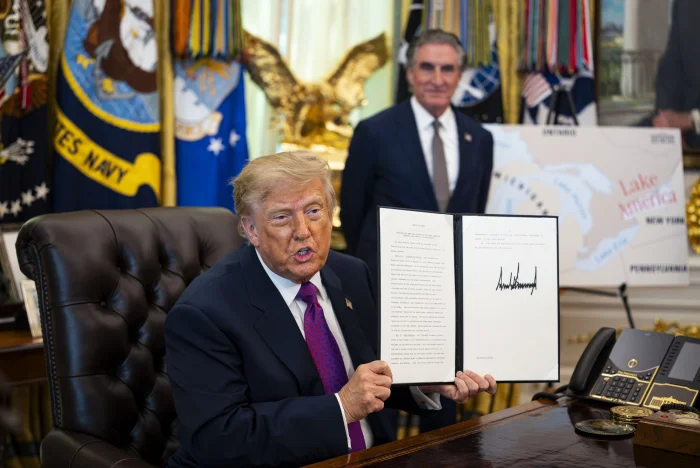
President Donald Trump signs an executive order to rename Lake Ontario as Lake America in the Oval Office of the White House on Thursday. Photo by Al Drago/UPI | License Photo
WASHINGTON — Army Secretary Dan Driscoll is stepping down after 18 months on the job, the White House said Monday, in the latest departure of a top military leader during the Trump administration.
No reason was given for the departure of Driscoll, who is a friend of Vice President JD Vance, but tensions with Defense Secretary Pete Hegseth have been widely reported. It marks the latest in a series of shakeups of the military leadership, with the Army especially seeing major upheaval.
“Secretary Driscoll has been highly effective in advancing President Trump’s agenda to Make America Strong Again at the Department of the Army by providing outstanding leadership during historic military operations, restoring an emphasis on readiness and lethality, assisting with negotiations between Russia and Ukraine, and more,” White House spokeswoman Anna Kelly said in a statement.
“The United States Army is more powerful than ever thanks to his work alongside the Commander-in-Chief and Secretary of War,” she added.
A U.S. Army official, who was not authorized to comment publicly and spoke on condition of anonymity, said Driscoll spoke with President Trump on the current state of the Army and submitted his resignation. The official did not provide additional details. The Pentagon referred questions to the Army. Driscoll’s resignation was reported earlier Monday by The Wall Street Journal.
Exit follows other Army departures, rollback of drone program
Driscoll’s departure follows the ouster of one of his allies from the Army as well as the rollback of a drone program he had championed. Hegseth had suddenly ousted the service’s top uniformed leader, Gen. Randy George, in April, while the Army’s commander in Europe and Africa, Gen. Christopher Donahue, unexpectedly stepped down in June.
Gen. Christopher LaNeve, who has made a meteoric rise under Hegseth, took George’s place as the Army’s acting chief of staff. Under LaNeve, the service is pulling the plug on a drone modernization program. An Army unit based in Europe was building its own drones before LaNeve directed it to end its efforts and return to being a traditional infantry battalion, officials said in August.
Driscoll was a George ally and lamented his departure, along with both Republican and Democratic lawmakers. He told Congress in April that he and his family drove to George’s house following his resignation “and we all gave him a hug.”
“That being said, the civilian leadership, the design of our system, is that they get to pick the leaders that they want,” Driscoll added.
Republicans and Democrats respond to departure news with praise for Driscoll
Rep. Steve Womack, an Arkansas Republican who had served in the Army National Guard, said on X that Driscoll is “a transformative leader who brought common sense and discipline to the Department of the Army.”
“I had the pleasure of working with him closely, and appreciated how engaged he was from mentoring cadets at West Point to leading the Army at the Pentagon,” Womack wrote. “The Army is better equipped and prepared to tackle emerging threats because of his leadership that strengthened the force while putting our Soldiers first.”
Rep. Jason Crow, a Colorado Democrat and former Army Ranger, told reporters that he worked well with Driscoll despite their policy differences.
“It was actually nice, I will say, having somebody who was smart, that knew the policy, that wanted to do the work, that had a background in these issues,” Crow said, adding that “it’s unfortunate that somebody like that can’t last in this administration.”
Crow, who serves on the House Armed Services Committee and co-chairs the House Army Caucus, said the “Pentagon right now is, in some cases, rudderless,” with so many senior leaders gone. “So, I’m gravely concerned about it,” he said.
Rhode Island Sen. Jack Reed, the ranking Democrat on the Senate Armed Services Committee, said in a statement that Driscoll “worked to transform the Army for the battlefield of the future, and he engaged with Congress candidly and consistently.”
“Secretary Hegseth is cultivating a culture where dissent is punished and competence is secondary to personal allegiance,” said Reed, a former Army officer, while noting that “hundreds of thousands of soldiers are deployed around the world, many in combat zones.”
Driscoll was an unlikely negotiator in Ukraine-Russia war
Driscoll is an Iraq war veteran, tech investor and former adviser to Vance, whom Driscoll met at Yale Law School. When nominating Driscoll in 2024, Trump called him “a disruptor and change agent.”
As Army secretary, Driscoll was tapped for the unusual role of key negotiator to try to end the war between Russia and Ukraine. He was also a major force behind trying to cut the red tape for military contractors to quickly develop more drones and counter-drone capabilities as warfare rapidly changes around the world.
The Senate confirmed him in February 2025, voting 66-28, following an Armed Services Committee hearing that was largely unconfrontational and focused on how the Army could modernize its systems, improve recruiting and beef up the military industrial base.
Driscoll noted that his father and grandfather served in the Army, and he vowed to be a secretary focused on the needs of soldiers. According to the Army, Driscoll served as an armor officer from August 2007 to March 2011, deploying to Iraq from October 2009 to July 2010.
He also ran unsuccessfully in the Republican primary for a North Carolina congressional seat in 2020, getting about 8% of the vote in a crowded field of candidates.
His departure comes after Hegseth ousted several other generals and admirals, including the head of the Navy.
The Pentagon abruptly announced in April that Navy Secretary John Phelan was leaving the job, becoming the first head of a military service to depart during Trump’s second term.
Finley and Madhani write for the Associated Press.
Aug. 28 (UPI) — Treasury Secretary Scott Bessent announced Friday that the United States is working to cut off bank branches in the United Arab Emirates from the U.S. financial system, part of his campaign to target financial systems that enable Iran.
The Department of the Treasury said it is proposing a rule that will ban U.S. banks from facilitating transactions involving the UAE-based branches of Banque Misr, one of Egypt’s largest banks.
“Iran’s enablers cannot continue to enjoy access to the U.S. dollar and the global financial system,” Bessent said in a statement. “Banque Misr UAE decided to find out the hard way, and today, we are taking the first step in holding it accountable for its continued, egregious support of the Iranian regime.”
Bessent on Monday announced a new pressure campaign called Operation Economic Outcast to force countries to sever ties with Iran.
The department accused Manque Misr’s operations in the UAE of being “a significant conduit for Iranian shadow banking.” It said the bank allows Iranian entities access to U.S. dollars, circumventing U.S. sanctions.
Treasury said it had found 103 potential front companies that moved $1.8 billion through Banque Misr UAE accounts from January 2024 to June 2026.
Bessent is invoking powers under the Patriot Act that allow the treasury secretary to take action against foreign banks that are a “primary money-laundering concern” to the U.S.
It also said the Treasury will sanction the general manager of the Dubai branch of Bank Melli and a Hong Kong-based company it alleges is laundering money for Iran.
Earlier this month the UAE said it was suspending all trade with Iran.
President Donald Trump signs an executive order to rename Lake Ontario as Lake America in the Oval Office of the White House on Thursday. Photo by Al Drago/UPI | License Photo
WASHINGTON — A Massachusetts woman who told police that she brought homemade firebombs to the U.S. Capitol to kill Treasury Secretary Scott Bessent was sentenced on Tuesday to just over six years in prison.
Riley English, a 26-year-old transgender woman, said she was in the grips of a mental health crisis and abusing drugs when she drove to Washington in January 2025 and told Capitol police that she was there to kill Bessent on the day of his Senate confirmation.
“I never wanted to hurt anyone,” she told U.S. District Judge Rudolph Contreras. “I’m not a political person. I’m not a violent person.”
Contreras, who was nominated to the bench by Democratic President Barack Obama, sentenced English to six years and one month of imprisonment followed by three years of supervised release. English has remained jailed since her arrest and will get credit for the nearly 20 months that she already has spent in custody. She pleaded guilty in March to two weapons charges.
“You’ve had a very difficult life,” Contreras told English. “Hopefully, the progress you’ve made in jail to this date has set you on the right path.”
Nobody was injured, and Contreras said her plan to harm Bessent had an “exceedingly low or non-existent” chance of success. Bessent wasn’t at the Capitol when English arrived on Jan. 27, 2025. The Molotov cocktails that English brought to the Capitol appeared to be incapable of igniting, the judge noted.
Prosecutors had recommended a prison sentence of 10 years and one month for English. Assistant U.S. Attorney Brendan Horan said English had been planning the “attempted political assassination” for at least a month at a time when the threat of politically motivated violence has been mounting in the U.S.
“This was not a chance encounter or an impulsive act,” Horan said.
The case against English fits a pattern of politically motivated violence that has plagued the U.S. over the past decade. In a letter addressed to the judge, Bessent said he worries the country “cannot survive this assault.”
“Political violence is an attack on the rule of law and on representative government itself,” Bessent wrote. “It also deprives our country of service by talented men and women with ability and integrity who may reasonably decide that no job is worth threats to themselves and their families.”
English’s prosecution drew comparisons to the case against California resident Sophie Roske, who was sentenced last October to over eight years in prison for attempting to assassinate U.S. Supreme Court Justice Brett Kavanaugh at his Maryland home. Prosecutors had recommended a prison sentence of no less than 30 years for Roske, a transgender woman. They appealed Roske’s sentence by U.S. District Judge Deborah Boardman, calling it unreasonably lenient.
Defense attorney Maria Jacob said English was “terrified and traumatized” by fears of what would happen to transgender people under the second Trump administration.
“Our argument is that she was in a diminished mental state,” Jacob said.
Investigators said they found a folding knife, two homemade firebombs and a lighter in English’s possession at the Capitol.
English, of South Deerfield, Massachusetts, told police that she was influenced by Luigi Mangione, the man who was charged with fatally shooting the CEO of UnitedHealthcare. She said she was “on a mission” and “had been thinking about this for a while because of Luigi Mangione,” prosecutors said. English told officers that she was terminally ill and “wanted to do something before I go,” according to prosecutors.
English also said she traveled from Massachusetts to Washington intending to kill other Republican political figures — Defense Secretary Pete Hegseth and House Speaker Mike Johnson — and to burn down the Heritage Foundation, a conservative think tank, according to police. English changed her target to Bessent after reading an internet post about his confirmation hearing, police said.
Jacob said English’s actions last year were “a cry for help.”
“There was no indication that she was acting rationally that day,” the judge said.
Leavitt is departing her role to spend more time with family after giving birth to her second child, according to Trump.
Published On 12 Aug 202612 Aug 2026
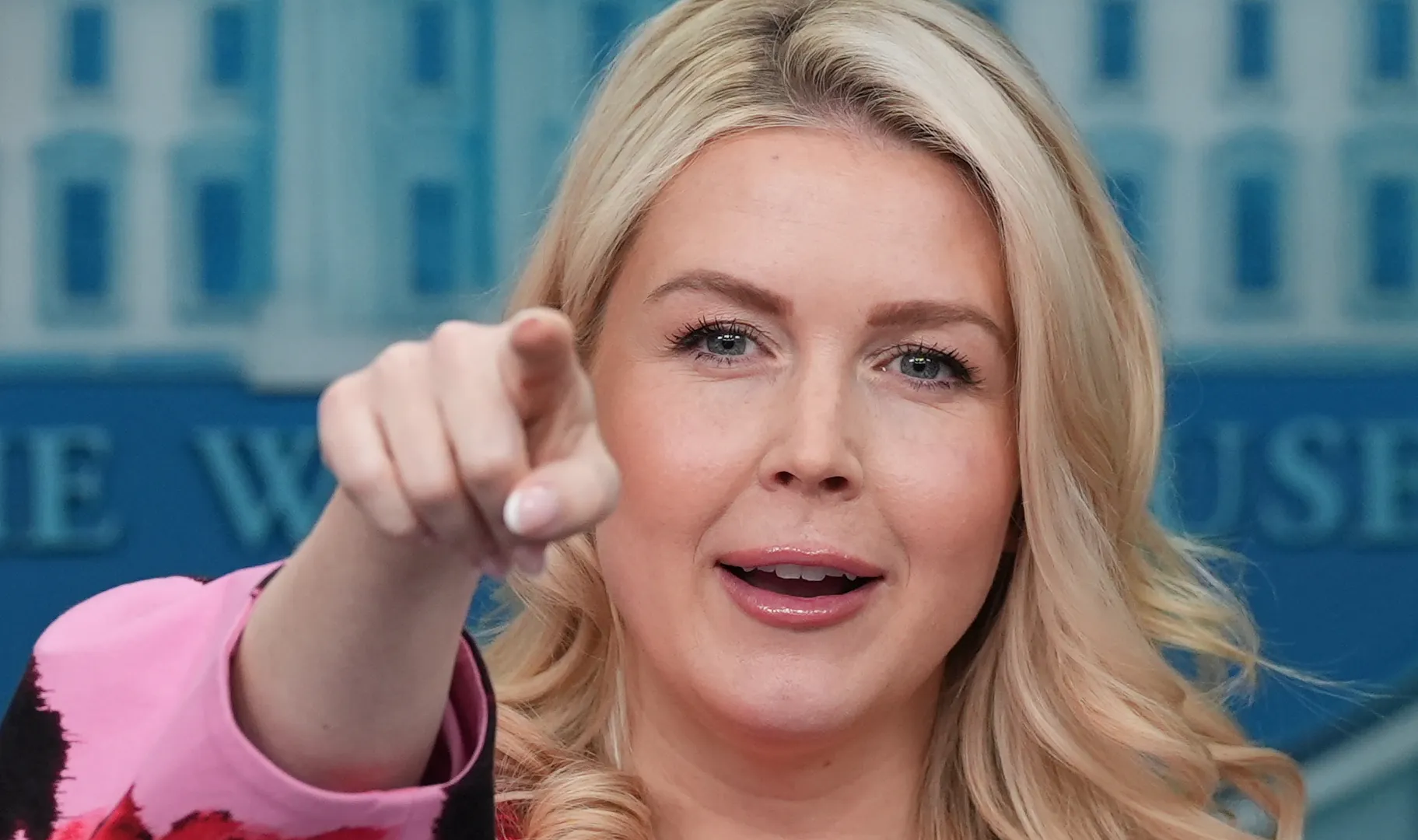
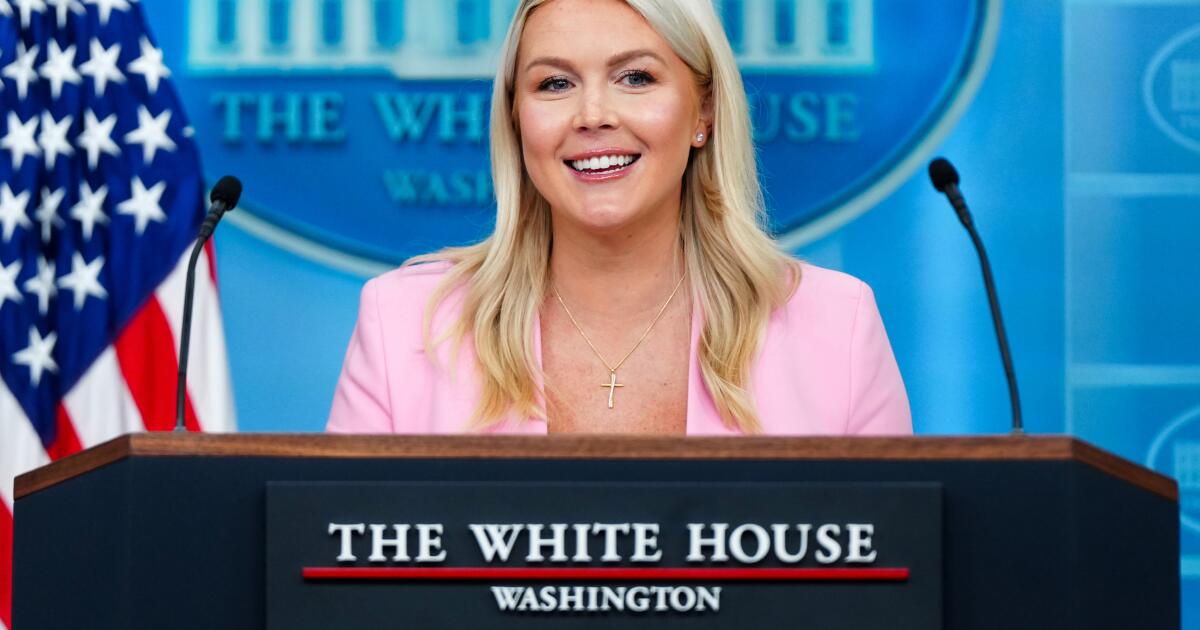
White House Press Secretary Karoline Leavitt will be departing her role at the end of the month to prioritise her family, United States President Donald Trump announced on Truth Social.
“Karoline has been a real leader in the White House, and has done a phenomenal job fighting for Justice, Liberty, and Freedom, since 2018,” Trump wrote in a post on Wednesday, revealing the staffing shake-up.
He noted that Leavitt would remain one of his “top outside advisors” and an “influential voice within the Republican Party”.
Leavitt is the latest in a series of senior Trump officials to step down from his second administration.
Since the start of this year, high-level figures like former Attorney General Pam Bondi and ex-Secretary of Homeland Security Kristi Noem have been fired.
Other officials — including former Secretary of Labour Lori Michelle Chavez-DeRemer and Todd Lyon, acting head of Immigration and Customs Enforcement (ICE) — have resigned amid scrutiny over their leadership.
Leavitt’s departure, however, comes on the heels of her maternity leave. She and her spouse Nicholas Riccio gave birth to their second child, a baby girl named Viviana, in early May.
The 27-year-old stepped away from her duties as White House press secretary in late April. She returned to the White House podium for her first formal press briefing in mid-July.
“Karoline has been one of the best White House Press Secretaries in the History of the Office”, Trump said in his post.
He added that Leavitt would continue to serve his administration as the Republican Party seeks to “conclusively win the Midterm Elections” in November.
WASHINGTON — White House press secretary Karoline Leavitt, the youngest person to hold the role, will leave at month’s end, President Trump announced Wednesday.
Leavitt, 28, just recently returned to the White House after taking a brief leave for the birth of her second child in May.
Leavitt, who served Trump as a press aide during his first go-around in the White House, has been one of the most visible advocates of Trump’s “Make America Great Again” movement. The Republican president described her as one of his “most trusted aides” in a social media post announcing her departure.
He said Leavitt “will be departing her role at the end of the month so she can spend more time with her beautiful young children and family, a decision I totally understand and respect! Karoline will now be one of my top outside advisers, and an influential voice within the Republican Party, as we work to defy History, and conclusively win the Midterm Elections.”
Leavitt recently returned to work after taking leave following the birth of her second child, a daughter, in May. She also has a two-year-old son.
“The truth is since returning to the White House after the birth of my daughter, I have felt in my heart that I cannot be the best mom my two young children deserve while devoting the constant time, energy, and attention required of the White House Press Secretary — and that is why I have ultimately made the bittersweet decision to depart the White House and embark on a new chapter in my life,” Leavitt said in a social media post.
Trump did not outline plans for who might replace her in the high-profile role.
WASHINGTON — Calling Donald H. Rumsfeld energetic was like calling the Pacific wide. When others would rest, he would run. While others sat, he stood. But try as he might, at the pinnacle of his career as Defense secretary, he could not outmaneuver the ruinous politics of the Iraq war.
Regarded by former colleagues as equally smart and combative, patriotic and politically cunning, Rumsfeld had a storied career in government under four presidents as well as nearly a quarter century in corporate America. After retiring in 2008 he headed the Rumsfeld Foundation to promote public service and to work with charities that provide services and support for military families and wounded veterans.
The two-time Defense secretary and one-time presidential candidate died Tuesday, surrounded by his family in Taos, N.M. He was 88.
“Rummy,” as he was often called, was ambitious, witty, engaging and capable of great personal warmth. But he irritated many with his confrontational style. An accomplished wrestler in college, Rumsfeld relished verbal sparring and elevated it to an art form; biting humor was a favorite weapon.
Still, he built a network of loyalists who admired his work ethic, intelligence and impatience with all who failed to share his sense of urgency.
From his earliest years in Washington, he was seen by friend and foe alike as a formidable political force. Bryce Harlow, an associate of President Nixon who helped persuade Rumsfeld to resign from Congress and join Nixon’s Cabinet as director of the Office of Economic Opportunity in 1969, called him “rough and ready, willing to tangle” and “the kind of guy who would walk on a blue flame to get a job done.”
Don Rumsfeld was a remarkable and committed public servant. He was also a good friend and a steady presence throughout the many trials of the post-9/11 world. I will miss him as a colleague and as a friend. Joyce and the family will be in my thoughts and prayers.
Rumsfeld is the only person to serve twice as Pentagon chief. The first time, from 1975 to 1977, he was the youngest ever. The next time, from 2001 to 2006, he was the oldest.
He made a brief run for the 1988 Republican presidential nomination, a spectacular flop that he once described as humbling after being used to success at the highest levels of the government, including stints as White House chief of staff, a U.S. ambassador and a member of Congress.
For all Rumsfeld’s achievements, it was the setbacks in Iraq in the twilight of his career that will likely etch the most vivid features of his legacy.
::
By the time he arrived at the Pentagon in January 2001 for his second stint as Defense secretary, the military that Rumsfeld inherited was in a slow-motion transition from the Cold War era to a period dominated by ethnic conflicts in the Balkans, humanitarian crises in the Horn of Africa and spasms of terrorism around the globe. Among the other prominent worries: China’s military buildup and the nuclear ambitions of Iran and North Korea.
But nine months into his tenure, on Sept. 11, Rumsfeld found himself facing a threat that would consume the remaining years of his tenure. When a hijacked American Airlines jetliner slammed into the Pentagon, he was in his third-floor office, meeting with nine House members. He later recalled that at the instant of impact, the small wood table at which they were working trembled.
Rumsfeld was among the first to reach the smoldering crash site, and he helped carry the wounded in stretchers before returning to his duties inside the building.
The nation suddenly was at war. U.S. forces invaded Afghanistan on Oct. 7, and with Rumsfeld at the Pentagon helm, the Taliban government in Kabul was toppled within weeks. Frequently presiding at televised briefings on the war, Rumsfeld became something of a TV star, known for his plainspokenness.
Within months of that success, President George W. Bush’s attention shifted to Iraq, which had played no role in the Sept. 11 attacks. Rumsfeld and others in the administration asserted that Iraqi President Saddam Hussein was armed with nuclear, biological or chemical weapons, and that the U.S. could not afford the risk of Hussein one day providing some of those arms to Al Qaeda or other terrorist groups.
The U.S.-led invasion of Iraq was launched in March 2003 with a go-ahead from Congress but no authorization from the United Nations Security Council. Baghdad fell quickly, but U.S. and allied forces soon became consumed with a violent Iraqi insurgency. Critics faulted Rumsfeld for dismissing the public assessment of the Army’s top general, Eric K. Shinseki, that several hundred thousand allied troops would be needed to stabilize Iraq.
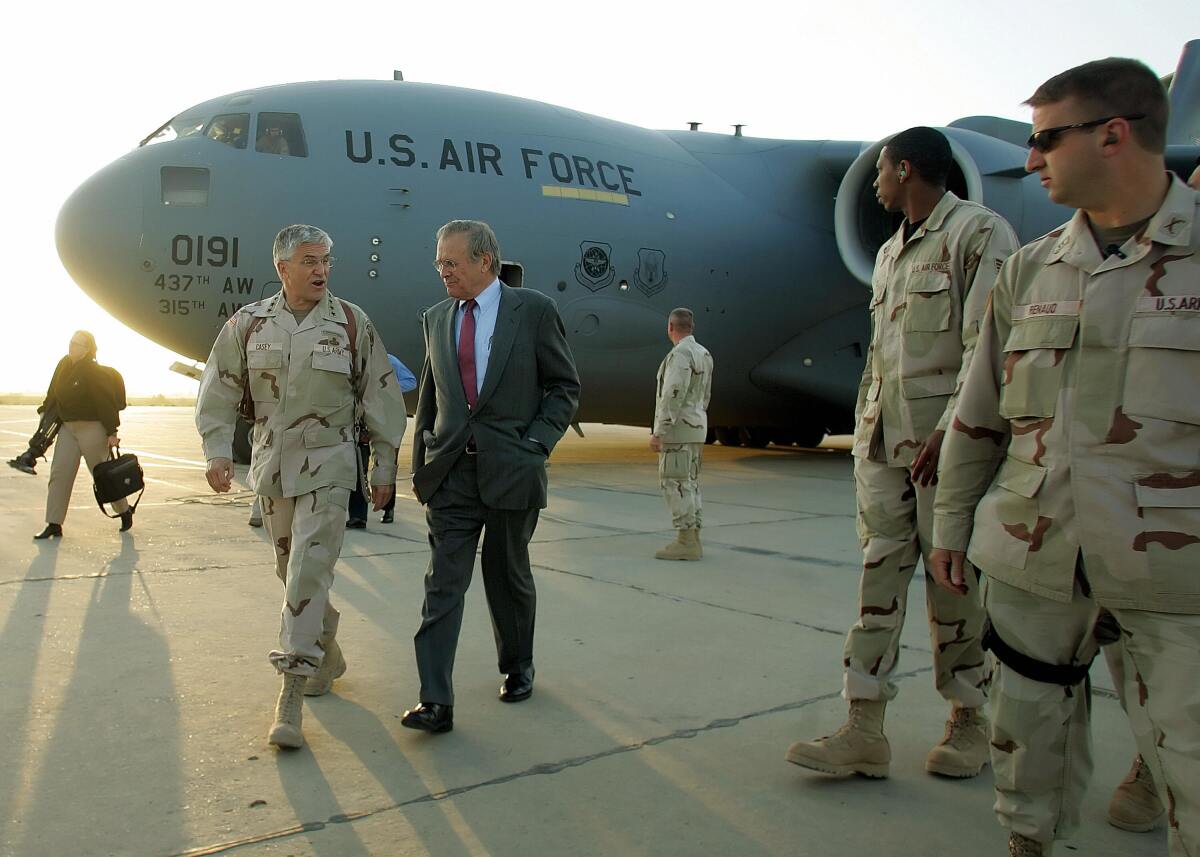
Defense Secretary Donald H. Rumsfeld arrives in Baghdad in April 2006 to meet with U.S. and new Iraqi government officials.
(Jim Watson / AFP/Getty Images)
Square-jawed with an acid tongue, Rumsfeld grew combative in defense of the war effort, and became a lightning rod for Democrats’ criticism. Years afterward, the degree of blame that should be shared among the White House, Rumsfeld and the U.S. military for the disasters in Iraq remained in debate.
In “By His Own Rules,” a 2009 biography of Rumsfeld, author Bradley Graham wrote that it was “both incorrect and unfair to heap singular blame” for Iraq on Rumsfeld.
“But much of what befell Rumsfeld resulted from his own behavior,” Graham wrote. “He is apt to be remembered as much for how he did things as for what he did. And here, too, he was an internal contradiction. Capable of genuine charm, kindness and grace, he all too frequently came across as brusque and domineering, often alienating others and making enemies where he needed friends.”
In his 2011 memoir, “Known and Unknown,” Rumsfeld offered no hint of regret about Iraq, but acknowledged that its future remained in doubt.
“While the road not traveled always looks smoother, the cold reality of a Hussein regime in Baghdad most likely would mean a Middle East far more perilous than it is today,” he wrote.
He seemed unconvinced that the failure to find weapons of mass destruction in Iraq poked a hole in the justification for invading, writing: “Our failure to confront Iraq would have sent a message to other nations that neither America nor any other nation was willing to stand in the way of their support for terrorism and pursuit of weapons of mass destruction.”
Rumsfeld twice offered his resignation to Bush in 2004 amid disclosures that U.S. troops had abused detainees at Iraq’s Abu Ghraib prison — an episode he later referred to as his darkest hour as Defense secretary.
Not until November 2006, after Democrats gained control of Congress by riding a wave of antiwar sentiment, did Bush finally decide he had to go. Rumsfeld left office in December and was replaced by another Republican, Robert M. Gates.
Defiant to the end, Rumsfeld expressed no regrets in his farewell ceremony, at which point the U.S. military’s death toll in Iraq had surpassed 2,900. The number would eventually exceed 4,400.
“It may well be comforting to some to consider graceful exits from the agonies and, indeed, the ugliness of combat,” he told his colleagues. “But the enemy thinks differently.”
::
Born in Chicago in 1932 as the second child of George and Jeannette Rumsfeld, Donald Rumsfeld wrote in his memoir that he and his father shared a favorite sports team: the Chicago Bears. He recalled that while listening to a Bears game on the radio at home one Sunday in 1941, the announcer interrupted the broadcast to announce that Japanese airplanes had launched a surprise attack on Hawaii.
Rumsfeld was 9.
“I could feel that something terrible had happened,” he wrote. “I saw it in my parents’ faces and heard it in the tense voices reporting the news of the attack.”
After Pearl Harbor, Rumsfeld’s father joined the Navy at age 38, and the family moved frequently to be near him on the West Coast.
In high school Rumsfeld met his future wife, Joyce Pierson. He attended Princeton on a partial scholarship and joined the campus Navy ROTC program to cover his other expenses. In June 1954, Rumsfeld graduated and was commissioned an ensign in the Navy. Six months later he married Joyce.
Rumsfeld launched his Washington career in 1957 as an assistant to Rep. David Dennison (R-Ohio). Soon he was serving as a congressman himself, first elected to represent Illinois in 1962. He served four terms.
One of his early acts as a member of the Nixon White House was to hire a young Dick Cheney, starting a lifelong friendship.
Rumsfeld was working as U.S. ambassador to NATO in Brussels when he was recalled to Washington to lead President Ford’s transition team after Nixon resigned in August 1974. He became the new president’s chief of staff, and in November 1975, his Defense secretary.
After leaving the Pentagon in 1977, Rumsfeld embarked on a successful business career, including as chief executive officer, president and then chairman of G.D. Searle & Co., a major prescription drug manufacturer.
He still dabbled in government service, including serving as a special envoy to the Middle East for President Reagan from 1983 to 1984. It was in that capacity that he met with Saddam Hussein in Baghdad in December 1983, while Iraq was at war with Iran.
“None of us in the Reagan administration bore any illusions about Saddam,” Rumsfeld wrote in his memoir. “Like most despots, his career was forged in conflict and hardened by bloodshed. He had used chemical toxins in the war he initiated with Iran three years earlier. But given the reality of the Middle East, then as now, America often had to deal with rulers who were deemed ‘less bad’ than the others.”
Two decades later, he was again dealing with Hussein, this time overseeing a U.S. invasion that toppled the Iraqi leader — and led to Rumsfeld’s own downfall.
He is survived by his wife, Joyce; three children; and his grandchildren.
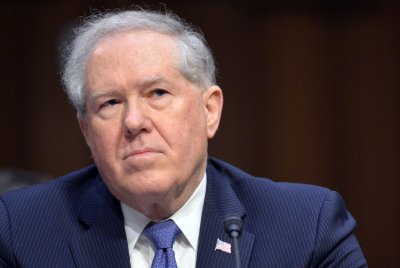
Aug. 7 (UPI) — The Defense Department on Friday revoked Frank Kendall’s access to classified information, accusing the former secretary of the Air Force of leaking sensitive information to the press.
Pentagon spokesman Sean Parnell said Frank was the source who told reporters that President Donald Trump‘s new Qatari-gifted jet lacked certain security features.
Parnell said the Defense Department revoked Kendall’s “eligibility for access to classified information and his ability to hold any sensitive position.”
“This action follows his unauthorized disclosure of classified information regarding Air Force One‘s capabilities to a media outlet,” the spokesman wrote on X. “Safeguarding classified information is a non-negotiable duty.
“Those who violate that trust forfeit the privilege of access and any role requiring it.”
Kendall, a lawyer and engineer, served as U.S. secretary of the Air Force from 2021 to 2025 under the Biden administration.
When asked about the new Qatari jet, Kendall told CNN it would take three to four years to get the plane on-par with the expectations of an aircraft serving as Air Force One.
The New York Times first reported that Trump’s new Air Force One, a Boeing 747-8, lacked advanced security features such as antimissile capabilities.
The plane was a $400 million gift from Qatar, but despite retrofitting, did not reach the level of safety required of the U.S. president’s main aircraft, The Times reported.
Trump denied the report and called for the prosecution of leakers, though days later he said the plane would be taken out of commission to be “maxed out” — tacitly admitting it wasn’t fully upgraded already.
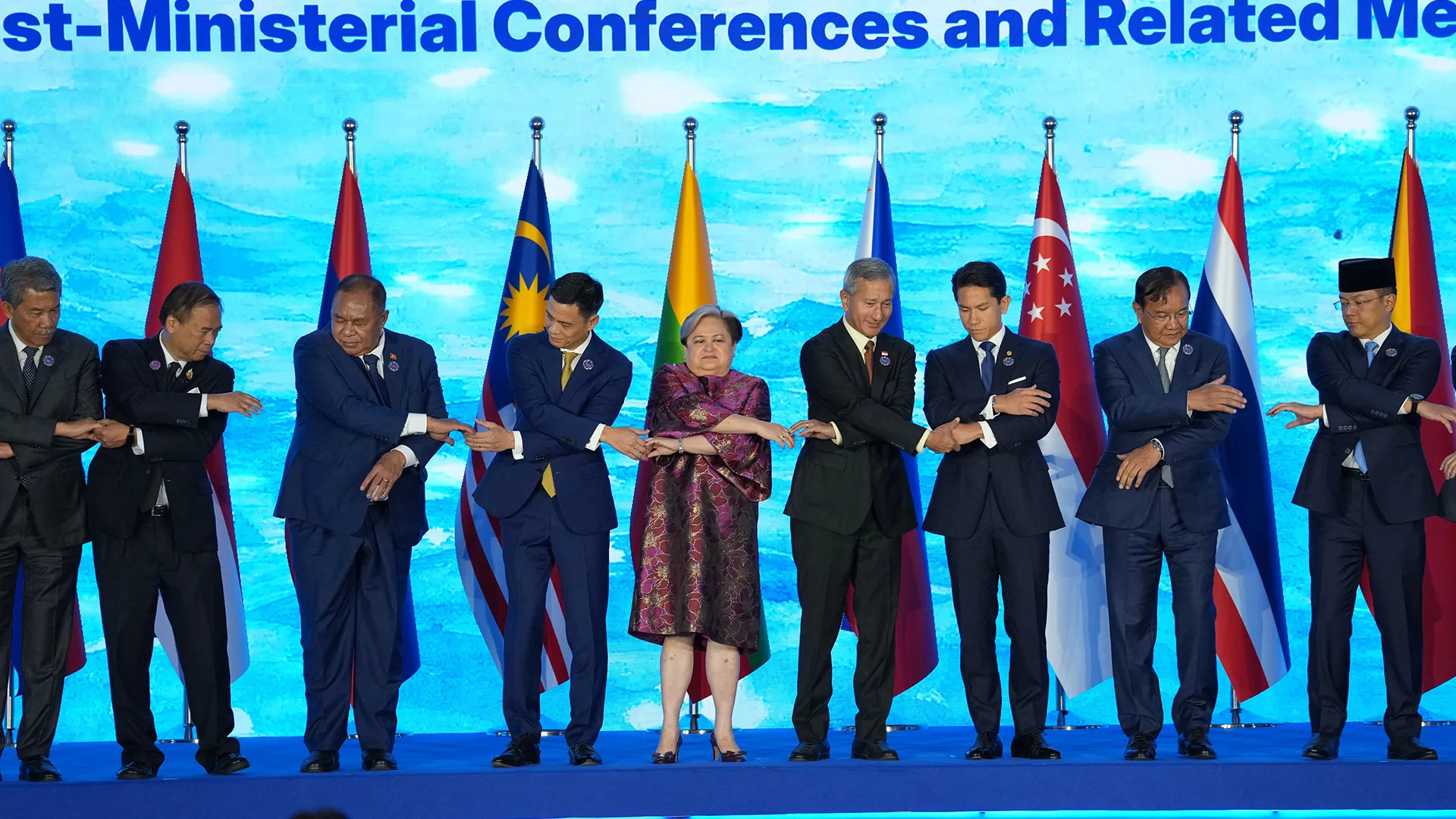
Philippine Foreign Secretary Theresa Lazaro said the Association of Southeast Asian Nations (ASEAN) must work together to shield external pressures, as the group holds a summit in Manila.
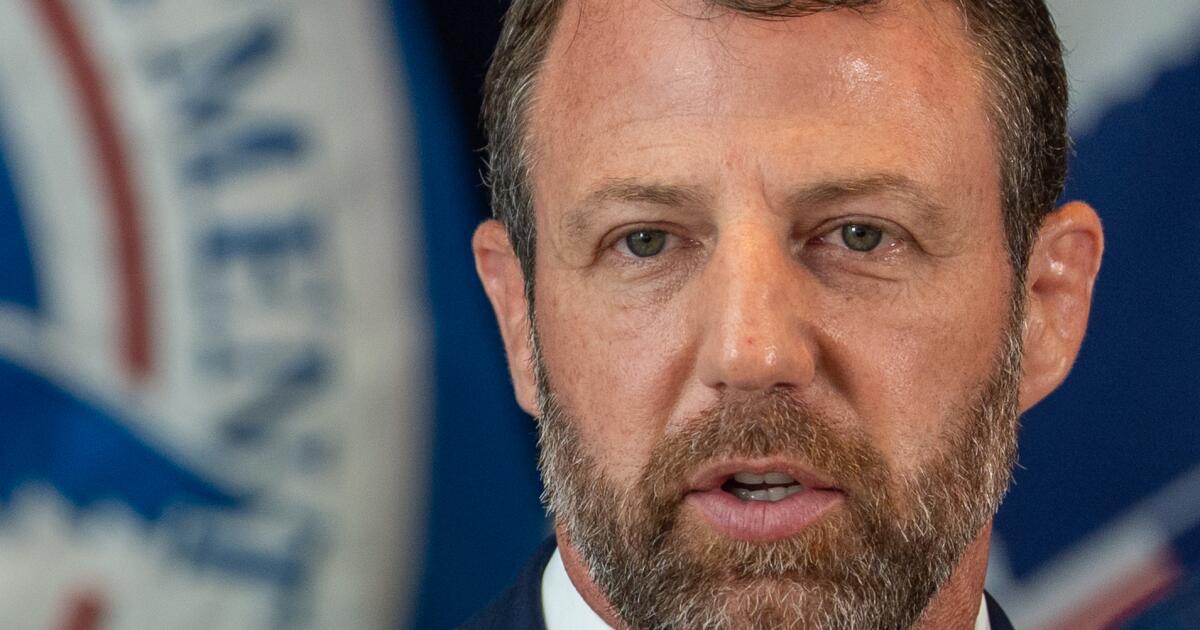
WASHINGTON — When Markwayne Mullin took over as Homeland Security secretary from fired Kristi Noem, he pledged to get the department responsible for carrying out the Trump administration’s mass deportations policy out of the headlines.
But just months into Mullin’s time in office, the department is squarely in the center of controversy again after three people were killed in encounters with Immigration and Customs Enforcement officers in the span of less than a week.
The events are the first major test for Mullin, who promised a steady hand for a department roiled by his predecessor’s conduct and the Trump administration’s immigration crackdown.
As he navigates the uptick in violence, he is being forced into a balancing act that has him juggling pressures from a White House eager to carry out mass deportations and his former colleagues in Congress seeking answers — all while attempting to ease tensions in American cities over the deaths.
“When he took his position, Secretary Mullin said that his goal was to get the department off the front page of the news,” Democratic Rep. Seth Magaziner said on the House floor Tuesday. Then, waving a newspaper, he said: “Well, you’re back on the goddamn front page now.”
Mullin’s approach is a marked change from his predecessor, Kristi Noem
Mullin, a former senator from Oklahoma, was a surprise pick to run the sprawling department after Noem was fired in the wake of two deadly shootings of American protesters at the hands of federal immigration officers in Minneapolis earlier this year.
As the secretary in charge of carrying out the administration’s mass deportations vision, Noem pushed an aggressive style of immigration enforcement where she was front and center, including most famously, a visit to a Salvadoran detention center. She was quick to speak publicly on controversial events, weighing in on both Minneapolis shootings with statements accusing the killed protesters of being agitators.
President Trump, who made mass deportations a central promise of his second administration, ultimately soured on Noem over a $200 million ad campaign and her handling of the Minneapolis operation.
Mullin promised a different approach, while still pledging to deliver on the president’s priorities. His first trip as secretary was not to promote immigration enforcement but to observe hurricane recovery efforts in North Carolina. Noem frequently went out on immigration raids with her officers — Mullin has not.
Since he became secretary and in the aftermath of the Minneapolis violence, the administration has also moved away from high-profile and unpopular immigration operations in American cities to a quieter approach to enforcement that has largely shifted media attention away from the crackdown. Under Mullin, Immigration and Customs Enforcement is also retreating from a plan to use warehouses to detain migrants.
But immigration arrests continue under Mullin and often with little fanfare: ICE arrested 10,000 people over a five-day period in late June, averaging out to about to 2,000 arrests per day. And legal pathways to immigration have also faced new restrictions.
Trump, during Mullin’s tenure, has hailed the secretary as “so incredible,” and “amazing,” lauding him for giving up his Senate seat to run DHS.
For months, it appeared as though Mullin’s change in approach was taking hold. While advocates and civil rights activists accused the department of mistreating immigrants under his leadership, Mullin’s less confrontational approach seemed to keep the department out of the spotlight.
But the events of the past week have posed a new challenge for Mullin as he walks a tightrope between his softer approach and the president’s demands.
“Trying to deal with competing policy objectives is a challenge for any Cabinet secretary, but Mullin has this worse than most,” said Tom Warrick, a former counterterrorism official at Homeland Security who’s now at the Atlantic Council.
“In the case of Homeland Security, the White House wants both to meet their immigration quotas at the same time that they keep public trust, and how you do that — even with the funding that Mullin has — is a really difficult challenge.”
ICE officers in Houston and Maine shot and killed individuals in their cars during immigration operations. In Florida, a man fleeing ICE officers was killed in a car crash.
Mullin has not spoken publicly about the deaths while the department’s public affairs office has released only brief statements following each.
Behind the scenes, Mullin, who frequently talks about how he shares his cellphone number with members of Congress and encourages them to call him directly, has talked with lawmakers and shared information, including talking with both senators from Maine.
And after the second shooting death in Maine, as criticism surged from both protesters and Mullin’s former colleagues in Congress, ICE was ordered to suspend most vehicle stops.
Trump heaps pressure on Mullin over vehicle stop order
That decision infuriated Trump’s supporters.
Conservative influencer Nick Sorter called it a “TOTAL CAPITULATION to the left,” in a post on X. Conservative activist Mike Davis accused Mullin of heeding the advice of Maine Sen. Susan Collins, who said she’d suggested the vehicle stop pause to the secretary.
A day later, Trump appeared to contradict the guidance to ICE, saying in a social media post “we must be strong, tough and smart and we CANNOT give up one of ICE’s most important and effective Crime Fighting tools, THE TRAFFIC STOP!”
Mullin then reposted Trump’s words, adding that people in the country would be “arrested and deported wherever they are.” He later said on X that he and the president are “on the same page.”
It was not immediately clear whether vehicle stops were back on.
But it showed the friction between Mullin’s attempts to maintain calm and the president’s demands that illegal immigrants, which the administration has in many instances portrayed as criminals, be arrested in large numbers.
Democrats have slammed the new secretary, saying that they see little change at the department.
“Secretary Mullin, if he wants to, and if he has the backing of the White House, he has the ability to get ICE under control and make them follow the law,” said Rep. Joaquin Castro, a Democrat from Texas. “So either he has no interest in doing that, or the White House is not backing him up, or the agents are simply out of control.”
Republican lawmakers have come to Mullin’s defense.
“I think the Secretary has lived up to what he’s wanted to do to try to change the atmosphere over there,” said Rep. Andrew Garbarino of New York, who as chair of the congressional Homeland Security Committee has requested a bipartisan briefing on ICE’s use of force policies from DHS.
“I don’t think anybody is celebrating that ICE is back in the headlines,” Garbarino said.
Santana writes for the Associated Press. AP writer Lisa Mascaro contributed to this report.
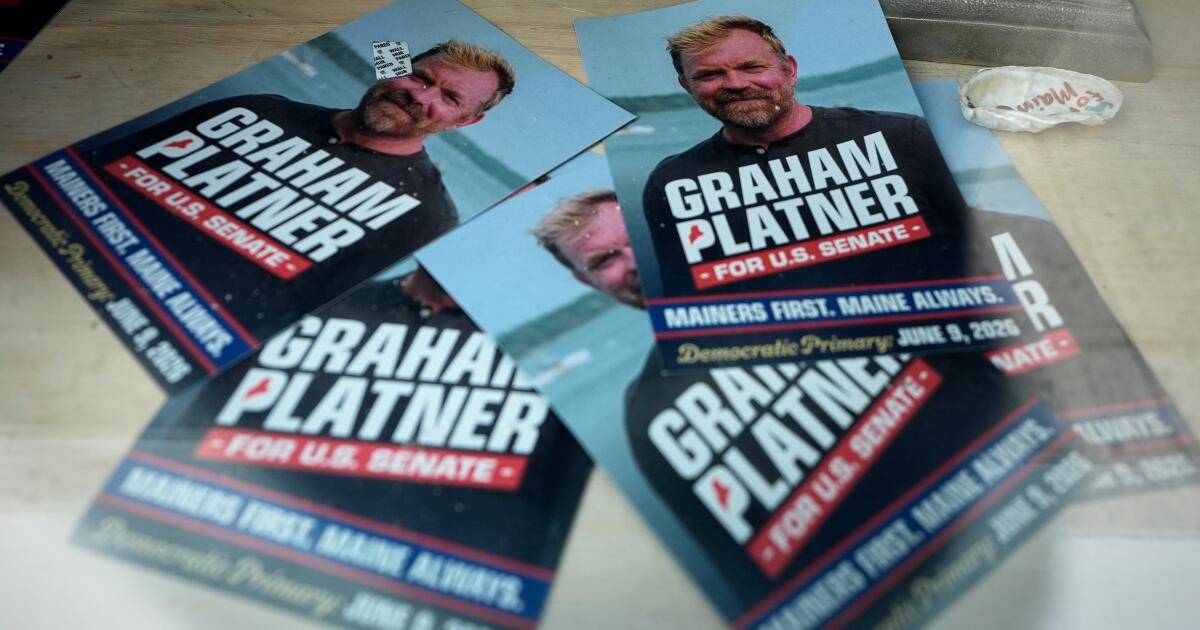
PORTLAND, Maine — Graham Platner on Friday submitted his paperwork to formally withdraw from Maine’s U.S. Senate race, officially ending an upstart yet troubled campaign, the dissolution of which threatens Democrats’ pursuit of chamber control.
Platner’s paperwork was received by the Maine secretary of state’s office and reflected shortly thereafter in its online withdrawal list.
In a letter to the secretary of state’s office, which Platner also posted on social media, he wrote that the Mainers who had nominated him “voted for a new kind of politics” that is “representative of people down here in the real world — not billionaires, oligarchs, or the political establishment.”
It was the same outsider chord that had been a trademark of his tumultuous campaign, in which Platner drew backing from progressive leaders including Vermont Sen. Bernie Sanders and U.S. Rep. Ro Khanna of California. Both are among many who have since withdrawn their endorsements.
“I seek to further the movement we have built together and the future we believe in,” he went on, without elaborating.
Maine is considered a key state for control of the narrowly divided Senate, and Democrats were desperate for a candidate capable of defeating Republican Sen. Susan Collins.
The formal withdrawal comes two days after Platner said he would quit the race, facing an allegation of sexual assault that he has denied. Maine Democrats are seeking a new nominee, and several candidates have already begun jockeying for position.
State law includes a provision for Democrats to replace Platner before the general election, but the replacement must by named by July 27.
Just before Platner’s Wednesday announcement, more than 100 state Democratic Party committee members signed off on holding a nominating convention, in the event of his withdrawal, to choose the nominee. The state party has not publicly released details of when the convention will be held. Officials with the party did not immediately respond to a request for comment Friday.
Several Democrats have announced plans to run for the Senate nomination this week. They include three candidates who lost the June primary for governor — former Maine Center for Disease Control and Prevention director Nirav Shah, Secretary of State Shenna Bellows and former Maine Senate President Troy Jackson.
Others who have announced runs include Maine Beer Co. co-founder Dan Kleban; former 2nd Congressional District candidates Jordan Wood and Paige Loud; and former Maine Senate candidates David Costello and Andrea LaFlamme. State Rep. Valli Geiger has also expressed interest in the post but has not formally announced.
Kinnard and Whittle write for the Associated Press.
President Trump’s administration is threatening to withhold some federal funding from states that don’t make changes to voting practices and is warning state election officials that they face arrest if they don’t remove noncitizens from voter rolls.
Letters to states and grant application details are the latest in a line of actions by Trump’s administration to shape details of running elections that have long been the job of states.
Courts have largely rejected the administration’s previous efforts, which reflect untrue claims about widespread voting fraud and come less than four months ahead of crucial midterm elections where Democrats seek to take control of one or both chambers of Congress and check Trump’s power.
“The overall point is that Trump is trying to use whatever levers of power and persuasive power that he might have to try to interfere with how states and localities are going to conduct the 2026 election,” said Rick Hasen, a UCLA law professor and the director of the Safeguarding Democracy Project. “Some of this is aimed at changing how the rules are conducted. Some of it appears to be aimed at undermining voter confidence in the integrity of the election process.”
Justice Department warns election officials of prosecution
In letters sent Tuesday, to election officials for all 50 states and the District of Columbia — often secretaries of state — the Department of Justice’s Civil Rights Division said they and other election administrators could face criminal charges if they knowingly allow nonvoters to vote or remain on voting rolls.
It also called on the states to tell the federal government within five days how they intend to comply with the law.
Derek Muller, a law professor at the University of Notre Dame who specializes in election law, said it’s not clear the 50-state letter means anything except to restate some parts of the law, with a request to follow up, “which I’m sure many states will ignore.”
The letter also warns that anyone who knowingly and willfully gives false information in registering to vote or voting would face criminal prosecution.
Antiterrorism grants include election requirements
A Federal Emergency Management Agency antiterrorism grant announcement in June includes a list of election-related requirements, saying that 20% of grants for states and urban areas would be withheld until they comply.
The program includes more than $1 billion for states and local and tribal governments for a variety of programs aimed at preventing terror at crowded places, online, with border security — and around elections. FEMA expects to award 56 grants.
“Recipients can ensure that their efforts contribute to a secure, transparent, and resilient electoral process, thereby reinforcing public trust and the integrity of democratic institutions,” the grant announcement says, noting that securing election infrastructure is a national security priority.
The list of items for states includes verifying the citizenship of all registered voters and election workers.
Places that use electronic voting systems that use bar codes or QR codes to count votes would have to submit plans to switch to hand-marked paper ballots. Every jurisdiction would have to show it audits results.
UCLA’s Hasen said it could be difficult even for states that want to comply. It’s too close to the midterm election to make some of the changes, he said, and some would require state legislatures to pass new laws.
The White House on Wednesday referred questions to FEMA, which did not immediately respond to an interview request.
Response from states appears to be partisan
Some states are pushing back, while others are defending the latest actions.
They seem to be breaking along party lines.
Oregon’s secretary of state, Democrat Tobias Read, accused the Justice Department of “knocking on our door again with more threats and no evidence to back up their fever dreams about non-existent voter fraud.”
Oregon elections are secure, accurate, and fair, he said, adding that he isn’t “intimidated by political threats or manufactured controversy.”
The Michigan secretary of state’s office, headed by Democrat Jocelyn Benson, said it has discussed its work repeatedly with the Justice Department and in public statements, congressional hearings and court testimony — information that it said “is either in the DOJ’s possession or easy reach.”
“We will be happy to provide it again to help address any confusion,” the office said in a statement.
In a statement, Ohio Republican Secretary of State Frank LaRose defended the Justice Department’s missive to states, saying it’s reminding them of their legal obligation regarding election integrity. A lot of states aren’t taking it seriously, he said without giving examples or citing evidence. He said Ohio has worked with the federal government to ensure that its voter rolls are accurate and that only U.S. citizens vote.
Georgia’s secretary of state’s office says the state has already taken many of the actions required in the FEMA grant, including a citizenship audit of voter rolls.
Several of Trump’s election actions have faced resistance
Trump has repeatedly and wrongly asserted that fraud cost him reelection in 2020, and his administration has put forth a series of policies and actions aimed at how elections are run.
In recent days, courts have rejected the Justice Department’s effort to collect the names and contact information for every election worker in Georgia in the 2020 election and others trying to force New Hampshire and Pennsylvania to turn over detailed information about registered voters. With those rulings, the federal government has lost similar cases more than 10 times around its requests for details from 30 states and the District of Columbia.
Last week, a group of Democratic governors asked the U.S. Postal Service to withdraw its proposed rule seeking to implement an order from Trump to create a list of eligible voters — and potentially limit who can receive a ballot in the mail. A court previously put the order on hold, saying it was unconstitutional.
Also last week, the Supreme Court rebuked Trump and ruled that states can count mailed ballots that arrive after Election Day.
Mulvihill and Levy write for the Associated Press. AP writers Gabriela Aoun Angueira, Bill Barrow, Kate Brumback and Josh Kelety contributed to this report.
June 30 (UPI) — President Donald Trump has nominated Keith Sonderling to be the U.S. secretary of labor, a position the attorney has held on the interim basis since Lori Chavez-DeRemer resigned in April.
Trump announced his nomination of Sonderling to the post permanently on Monday in a statement, describing Sonderling as a man who has throughout his career “proven his dedication to delivering strong results for the Hardworking People of our Country, and I know he will do an incredible job in his new role.”
Sonderling served as deputy and acting administrator of the Department of Labor’s Wage and Hour Division during Trump’s first term, and as deputy secretary — the department’s chief operating officer — during Trump’s second.
The 43-year-old was made interim head of the department on April 20, replacing Chavez-DeRemer, who had resigned as she faced a series of allegations of professional misconduct.
She stepped down as a Labor Department inspector general’s investigation was examining allegations that she kept a stash of alcohol in her office, maintained a relationship with a member of her security team and used agency resources for a variety of personal activities.
In a statement Monday, Sonderling said he was “deeply grateful to President Trump for his trust and confidence.”
“Serving in both President Trump’s administrations has been the greatest honor of my life,” he said on social media.
“If confirmed by the Senate, I look forward to continuing that service as secretary of labor and advancing the president’s agenda on behalf of America’s workers, families, unions and job creators.”
Following Trump’s announcement, a number of Republicans congratulated Sonderling on his nomination.
“Congratulations to Keith Sonderling on his nomination to be secretary of labor,” Sen. Bill Cassidy, R-La., said online.
“He is the kind of pro-worker leader that Americans deserve.”
British Defense Secretary John Healey, pictured leaving 10 Downing Street in London in March, on Thursday resigned from his position after a proposed military budget settlement was half the requested funding, which he said could pose future danger to the United Kingdom. File Photo by David Cliff/EPA
June 11 (UPI) — U.K. Defense Secretary John Healey resigned on Thursday after criticizing his government for spending “well short” of what it should on the military.
Healey resigned from the position in a letter addressed to British Prime Minister Keir Starmer, which was posted on X, because the country’s Defense Investment Plan does not meet requirements and could “reduce the readiness of our forces.”
Hours after Healey’s resignation, junior defense minister Al Carns also resigned from his post because of his own concerns about the “level of investment I know to be inadequate to the task,” NBC News reported.
Starmer said after Healey quit that he is “proud of our record on funding” and that he believes the funding plan that has been agreed to between the Parliament and Defense ministry “will provide the resources our military needs to keep us safe,” The BBC reported.
The prime minister has in recent weeks been called on to resign after less than great election results last month, and Healey is the second member of his cabinet to resign recently after former health secretary Wes Streeting quit because he’d “lost confidence” in Starmer.
In addition to Healey and Carns, Starmer’s parliamentary assistant to the Defense Ministry also left her role over “delays and difficulties” to fund the United Kingdom’s military readiness goals.
“We came into government recognizing Britain faced a new era of threat which demanded a new era for defense,” Healey wrote in the letter.
“Since then, you have been unable, and the Treasury has been unwilling, to commit the resources that the nations needs to defend the country at this time of rising threats,” he wrote.
Starmer on Thursday named former security minister Dan Jarvis to be the secretary of defense, whose job it will be to finalize the new defense funding plan, which is reportedly expected to be about half of the $37 million the ministry had requested.
Among the goals that had been set out in the most recent U.K. strategic defense review were increases in ammunition stockpiles, next-generation warplanes, drones and updated submarines.
The Ultimate Fighting Championship (UFC) arena is seen as preparations continue for the UFC Freedom 250 event on the South Lawn of the White House on Thursday. Photo by Bonnie Cash/UPI | License Photo
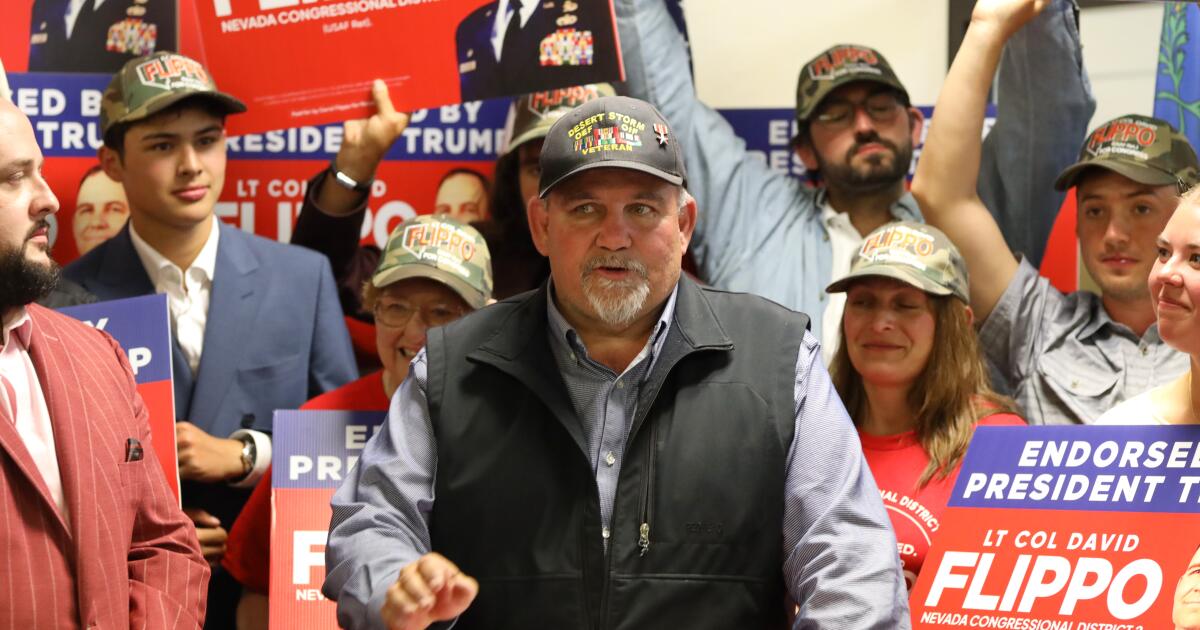
LAS VEGAS — Retired Air Force Lt. Col. David Flippo has won the Republican primary in Nevada’s 2nd Congressional District after securing President Trump’s endorsement in the closing weeks of the campaign.
The race, which was called Wednesday, put Trump opposite Republican Nevada Gov. Joe Lombardo and retiring Rep. Mark Amodei, who both backed former state Sen. James Settelmeyer. Amodei announced he was retiring after 15 years, opening up a competitive primary for Nevada’s only Republican-held House seat.
Flippo said he will fight “relentlessly” for secure borders, American energy, tax cuts, national defense and “the America First agenda our country needs.”
“Nevada deserves a fighter, and that’s exactly what I will deliver,” he said in a statement.
Democrats had hoped for a Flippo victory, thinking it would make it easier for them to win over less partisan voters in November in the conservative-leaning district. They nominated the chief of staff to state Atty. Gen. Aaron Ford, former majority floor leader Teresa Benitez-Thompson.
“I will ensure that Nevada families have an authentic Nevadan voice fighting for their needs in Washington DC,” Benitez-Thompson said in a Wednesday morning statement.
The 2nd District race is one of several Nevada contests that will be watched closely this year. In southern Nevada’s 3rd Congressional District, Democratic Rep. Susie Lee will face Marty O’Donnell, a composer known for writing the soundtrack to the video game “Halo.”
Trump won the 3rd district in 2024 and backed O’Donnell, who thanked Trump in his victory statement.
Tuesday’s primary also set the general election contest for governor, with Ford defeating a progressive candidate in the Democratic primary and moving on to face Gov. Lombardo. The incumbent, a former Clark County sheriff, is running on his record of public safety and job creation while pledging to work on housing affordability in a second term.
Ford is tying Lombardo to Trump in placing blame for soaring prices across the state and has pledged to lower costs for families. He would be the state’s first Black governor if elected in November.
In other races for statewide offices, Republican primaries for attorney general and secretary of state included several candidates who had pushed election conspiracy theories or been skeptical of election operations. Adriana Guzmán Fralick, who has expressed concerns about voting security, won the GOP nomination for attorney general and will face Democratic state Senate Majority Leader Nicole Cannizzaro.
The Republican primary for secretary of state, the office that oversees elections, included Jim Marchant, a former state lawmaker who has said the 2020 election “ was probably stolen,” and Sharron Angle, a former state lawmaker who was part of an effort to block the certification of Nevada’s 2020 election results. Another candidate who was competitive in the race, Shirley Folkins-Roberts, is an attorney who has denied that there is widespread voting fraud in Nevada.
In the 2nd District race, Flippo said he understands issues important to the region, including mining, water rights and fuel prices. He sought to turn Settelmeyer’s long political record into a liability, pointing to votes he said did not match conservative values.
He moved to the district this election cycle after losing a race in southern Nevada in 2024. The 2nd District covers all northern Nevada. It mostly rural but includes the major battleground county of Washoe, home to Reno.