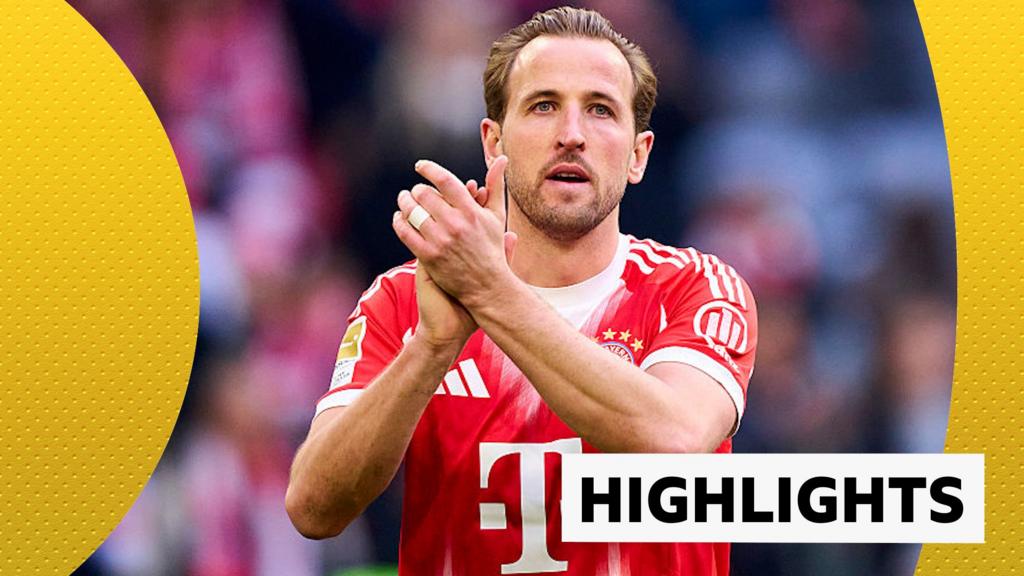
Kane & Olise score as Bayern beat Union Berlin
Bayern Munich put four past Union Berlin, including a goal from Harry Kane that moves him within 10 of the Bundesliga single-season goals record.
Source link
Bayern Munich put four past Union Berlin, including a goal from Harry Kane that moves him within 10 of the Bundesliga single-season goals record.
Source link
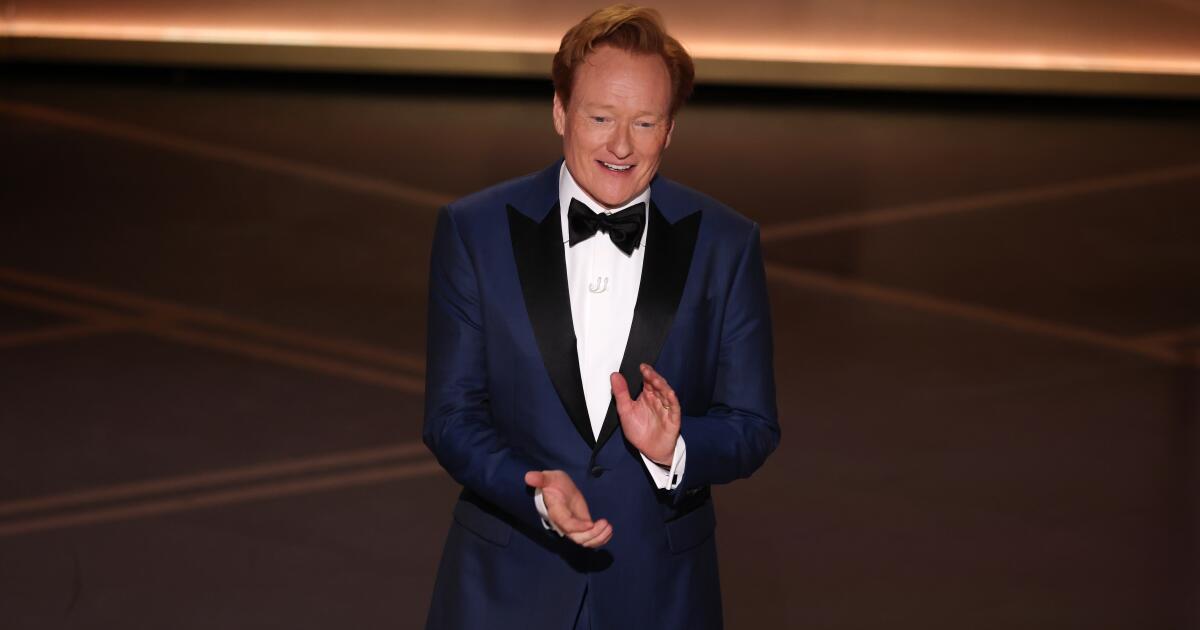
ABC’s Sunday telecast of the 98th Oscars averaged 17.9 million viewers, ending a four-year streak of audience increases.
The figure from Nielsen is down 9% from the 19.7 million viewers who watched the telecast on ABC and Hulu in 2025.
After ratings for the Oscars cratered to an all-time low of 10.5 million viewers in 2021, the event’s audience levels ticked back up in recent years.
But the show has not topped 20 million viewers since 2019, as younger viewers are content to watch highlights of the ceremony on social media, rather than sit through a three-hour-plus telecast on traditional TV.
The awards held at the Dolby Theatre in Hollywood honored “One Battle After Another” for best picture, Michael B. Jordan for lead actor in “Sinners,” and Jessie Buckley for lead actress in “Hamnet.” Conan O’Brien was the host for the second straight year.
Critics said the ceremony was light on political statements about President Trump, whose name was not mentioned during the telecast. The show’s highlight was an extended “In Memoriam” segment that gave extra tribute to legendary actor and filmmaker Robert Redford and slain actor, director and producer Rob Reiner.
ABC had success in selling out the commercials for the Oscars, which is perennially the most watched non-sports telecast of the year. But the network will only have the event for two more years as the Academy of Motion Picture Arts and Sciences chose to take a better financial offer from YouTube for the rights to the telecast starting in 2029.
O’Brien poked fun at the YouTube move. He closed with a video that shows him being appointed Oscars “host for life.” As he takes in the honor, poison gas seeps into the office he is given. After O’Brien’s lifeless body is wheeled out, a name plaque with a new host is put on the door. His successor is YouTube star Mr. Beast.
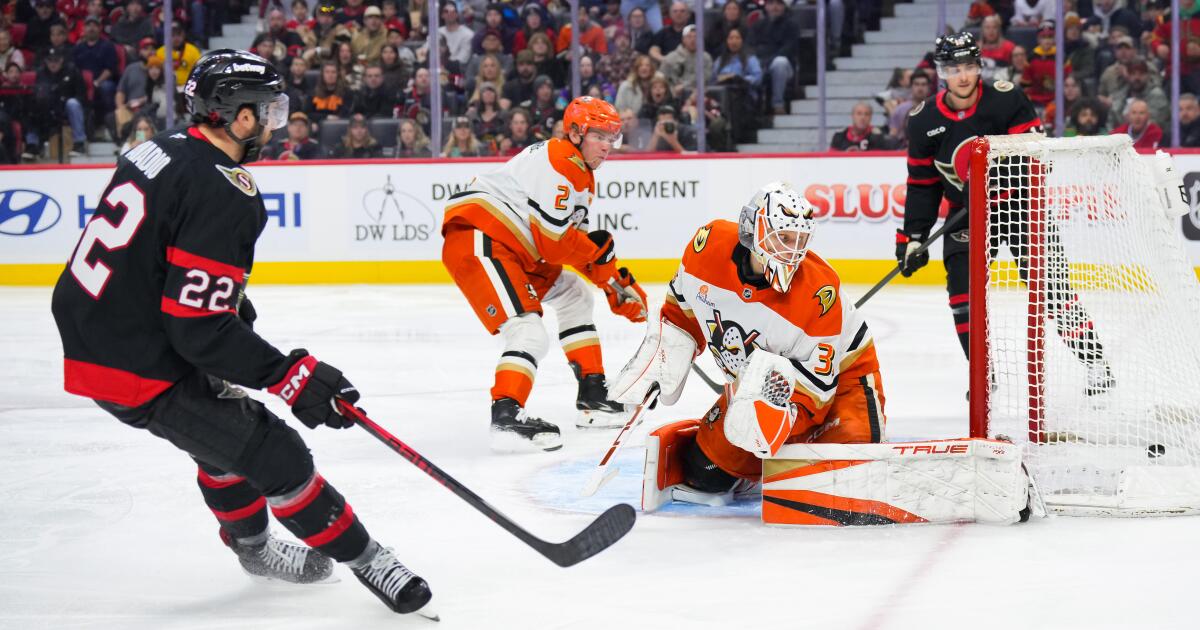
OTTAWA — Linus Ullmark made 23 saves for his second shutout of the season and the Ottawa Senators blanked the Ducks 2-0 on Saturday.
Michael Amadio and Thomas Chabot scored for Ottawa. Shane Pinto had two assists. It was the 14th shutout of Ullmark’s career. The Senators have won four of five.
Ville Husso stopped 27 shots for the Ducks.
Nick Cousins won a battle along the boards, which sprung Pinto down the ice. Pinto fed Amadio on a 2-on-1 and he made no mistake, beating Husso short-side 3:54 into the second period.
At the 9:21 mark of the second period, the Senators capitalized on a turnover. Pinto intercepted a pass and found Chabot in the high slot for his seventh goal of the season and second career short-handed score.
Anaheim challenged for goaltender interference but was unsuccessful.
Warren Foegele had a couple of chances from close range in the opening period, but just couldn’t settle a bouncing puck.
Husso then stopped Amadio on a short-handed 2-on-1 breakaway.
Amadio later drew a penalty, but Husso made a big glove save on Tim Stutzle on the Senators’ power play.
Up next: Ducks: at Montreal on Sunday; Senators: host San Jose Sharks on Sunday.
From Mirjam Swanson: Wham, Bam, pfft.
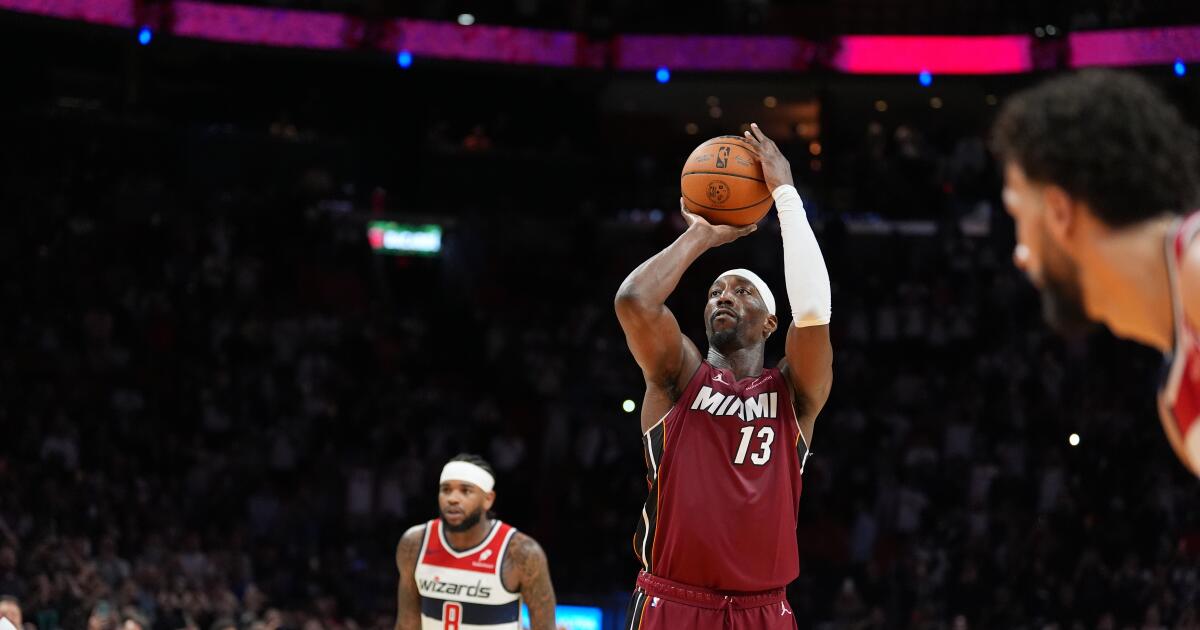
Miami Heat center Bam Adebayo scored 83 points Tuesday night, the second most in an NBA game in history, surpassing Kobe Bryant’s iconic 81 points two decades ago.
Congrats to Adebayo, I guess.
The way it went down was highly questionable. Nothing romantic or real about it. We thought flopping and foul-baiting made for unethical hoops, but those are but basketball misdemeanors; Adebayo’s big night was felonious.
Tuesday’s game featured intentional clock-stopping, game-extending fouls by the Heat. And it was ripe with free-throw-abetting fouls by the Washington Wizards, an actively tanking team that got itself blown out, 150-129.
So, no. Bryant’s necessary, organic 81 this was not. The Lakers trailed that game against the Toronto Raptors on Jan. 22, 2006, at halftime and actually needed Kobe’s 55 second-half points to pull away for the win.
The Heat were up by as many as 28 points in the fourth quarter with Adebayo continuing to play pop-a-shot in the historic farce — which also moved him past LeBron James, whose 61 points in 2014 stood as Miami’s previous franchise record.
Now a Laker, LeBron cheered the effort on X, writing: “BAM BAM BAM” with a bunch of fire emojis.
Kawhi Leonard scored 45 points and the Clippers routed the Minnesota Timberwolves 153-128 on Wednesday night, moving above .500 with their third straight victory and sixth in seven games.
Eighth in the Western Conference at 33-32 after opening 6-21, the Clippers had their highest point total of the season. They blew out Minnesota after beating New York on Monday night to open a five-game homestand.
Leonard was 15 of 20 from the the field, six of nine on threes and made nine of 10 free throws. Los Angeles made 19 of 37 threes.
From Luke DeCock: The eventual end of the USC men’s basketball season came the same way that it fizzled out during the past month, with yet another second-half collapse that featured the added pain of overtime.
Tuesday’s 83-79 overtime loss to Washington in the Big Ten tournament, the Trojans’ eighth straight defeat, brought to a close what USC coach Eric Musselman called the toughest stretch of his coaching career. It included not only USC’s longest losing streak in a decade, but a pair of 19-point losses to UCLA and the dismissal of leading scorer Chad Baker-Mazara from the team in the past 10 days alone.
The Trojans led the Huskies by 13 in the second half and had chances to win at the end of regulation and overtime, only to miss all three potential game-winning or game-tying shots and go 2-for-5 from the free-throw line in overtime. For a team that was once in NCAA tournament consideration before stumbling, that failure to finish was a persistent flaw.
From Kevin Baxter: Iran’s sports minister said his nation will not participate in this summer’s World Cup following the attacks on the country by the U.S., one of the tournament’s hosts.
The U.S. bombing campaign against Iran, which began two weeks ago, has triggered a region-wide conflict and killed more than 1,300 Iranians including Ayatollah Ali Khamenei, the country’s supreme leader, according to Iran’s U.N. ambassador Amir-Saeid Iravani.
“Considering that this corrupt regime has assassinated our leader, under no circumstances can we participate in the World Cup,” sports minister Ahmad Donyamali said on state television Wednesday.
“Our players do not have security, and fundamentally the conditions for participation do not exist.”
Donyamali’s statement came just hours after FIFA president Gianni Infantino said he had received assurances from President Trump that Iran would be allowed to participate in the tournament, which will be played in the U.S., Mexico and Canada.
1937 — The first National Association of Intercollegiate Athletics (NAIA) men’s basketball tournament is won by Central Missouri State. Central Missouri wins the eight-team, single-elimination tournament by defeating Morningside College (Iowa) 35-24.
1966 — In the last race of his 40-year career, John Longden wins the San Juan Capistrano Handicap at Santa Anita, aboard George Royal. He retires with a then-record number of victories, 6,032.
1984 — Jayne Torvill and Christopher Dean of Britain become the first ice dancing team to record nine perfect marks of 6.0 during the world championships.
1985 — Larry Bird scores 60 points, including Boston’s last 16, to set a Celtics record and lead them to a 126-115 victory over Atlanta.
1994 — The Arkansas men’s track and field team wins its 11th straight NCAA Indoor Championship with a meet-record 94 points. The 54-point victory margin is the biggest in the meet’s 30-year history.
2002 — Siena (17-18), with an 81-77 victory over Alcorn State in the play-in game, becomes first team in 47 years to win an NCAA men’s basketball tournament game with a losing record.
2003 — Damian Costantino’s NCAA-record hitting streak ends at 60 games, one day after he broke Robin Ventura’s 16-year-old mark. Costantino, an outfielder for Division III Salve Regina of Newport, R.I., fails to get a hit in the first game of a doubleheader against Baldwin-Wallace. It’s the first time he finishes a game hitless since March 25, 2001.
2005 — Bode Miller becomes the first American in 22 years to win skiing’s overall World Cup title. He finishes ahead of his only remaining challenger, Benjamin Raich of Austria, in the season’s final giant slalom to capture the crown.
2008 — The Houston Rockets are the third team in NBA history to win 20 straight games and ties for the second-longest winning streak with an 83-75 victory over the Atlanta Hawks.
2009 — Syracuse outlasts Connecticut in the second-longest Division I game ever played, capping a Big East tournament quarterfinal doubleheader in which the second- and third-ranked teams in the nation both lose. Andy Rautins hits a three-pointer 10 seconds into the sixth overtime to give the Orange their first lead since regulation and they go on to a 127-117 victory over the third-ranked Huskies. Much earlier in the evening, West Virginia beats No. 2 Pittsburgh 74-60.
2011 — The No. 21 Connecticut Huskies win their seventh Big East championship by winning five games in as many days. Kemba Walker shatters the tournament scoring record, getting 19 points in the ninth-seeded Huskies’ 69-66 victory over No. 14 Louisville.
2017 — Joakim Jensen finally ends what is believed to be the longest game in hockey history, scoring in the eighth overtime in the Norwegian League playoffs. More than 8 1/2 hours after the game started — and after 217 minutes, 14 seconds of play — Jensen breaks through to give the Storhamar Dragons a 2-1 victory over the Sparta Warriors. Storhamar leads the best-of-seven quarterfinal series 3-2.
2018 — Alex Ovechkin scores twice to reach 600 goals as the Washington Capitals beat the Winnipeg Jets 3-2 in overtime. The Russian winger is the 20th player and fourth-fastest in NHL history to reach 600 goals.
2018 — Marc-Andre Fleury makes 38 saves to become the 13th goalie in NHL history with 400 wins, and Ryan Carpenter scores the winning goal with 2:40 left to lead the Vegas Golden Knights over the Philadelphia Flyers 3-2.
2020 — 2020 NCAA men’s basketball tournament is cancelled over concerns of the spread of COVID-19; first time ‘March Madness’ not held since it began in 1939; women’s tournament also cancelled.
2020 — NHL announces the pausing of the 2019-20 season due to the COVID-19 pandemic.
Compiled by the Associated Press
That concludes today’s newsletter. If you have any feedback, ideas for improvement or things you’d like to see, email me at houston.mitchell@latimes.com. To get this newsletter in your inbox, click here.
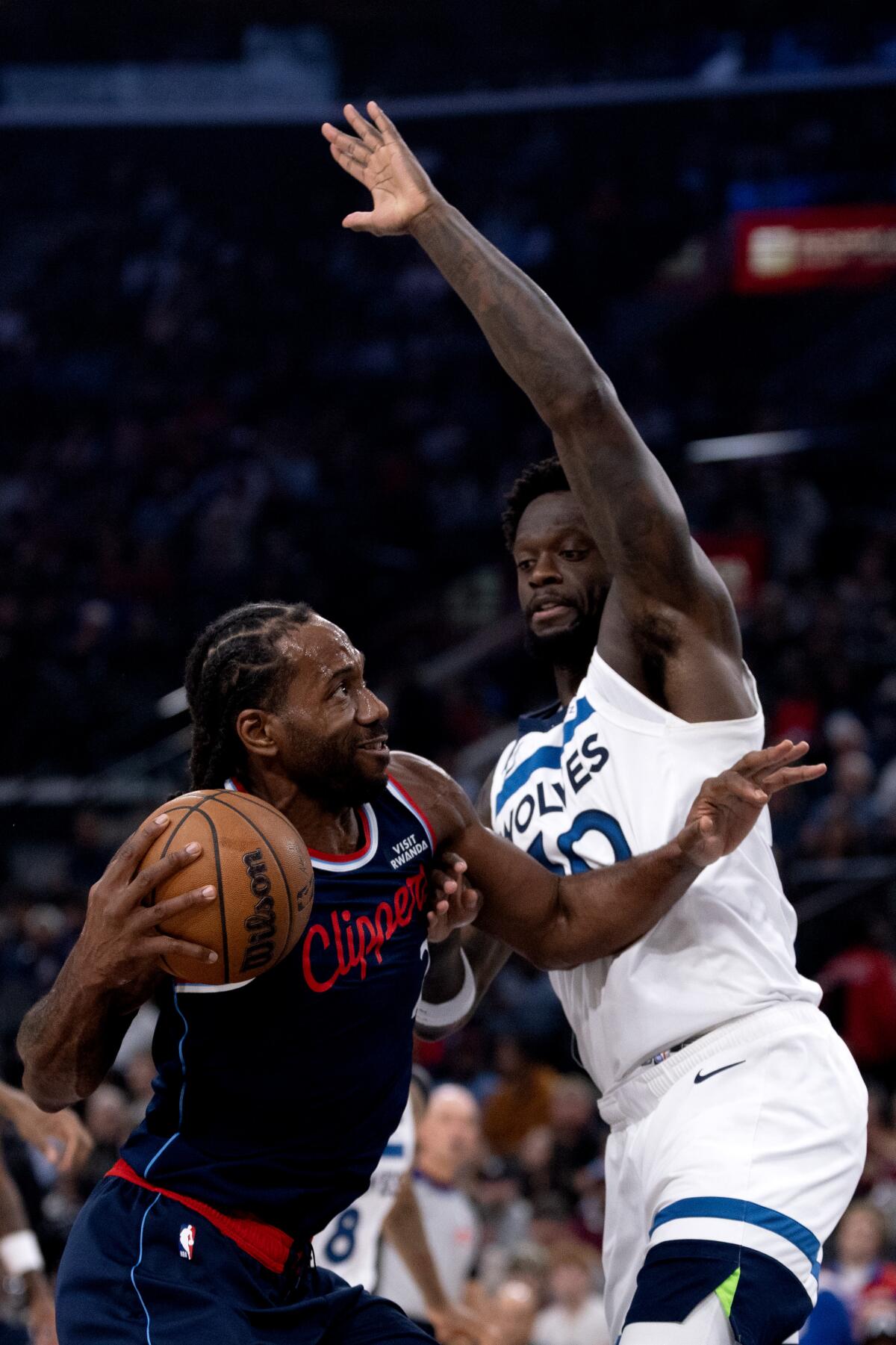
Kawhi Leonard scored 45 points and the Clippers routed the Minnesota Timberwolves 153-128 on Wednesday night, moving above .500 with their third straight victory and sixth in seven games.
Eighth in the Western Conference at 33-32 after opening 6-21, the Clippers had their highest point total of the season. They blew out Minnesota after beating New York on Monday night to open a five-game homestand.
Leonard was 15 of 20 from the the field, six of nine on threes and made nine of 10 free throws. Los Angeles made 19 of 37 threes.
Bennedict Mathurin scored 22 points for the Clippers and Darius Garland had 21, hitting five three-pointers.
Anthony Edwards led Minnesota with 36 points and Naz Reid had 18.

Kawhi Leonard goes to the basket against Julius Randle in the first half.
(Eric Thayer / Los Angeles Times)
Minnesota dropped to sixth in the tight Western Conference, but only a half-game behind the third-place Lakers. The Timberwolves have lost three in a row after winning five straight. They lost to the Lakers on Tuesday night to open four-game trip.
Leonard scored 18 points in the first quarter to help the Clippers take a 38-27 lead. He had 28 at the half, with the Clippers up 74-65, and went to the fourth with 39 and his team ahead 109-98. The Clippers had a 44-30 edge in the fourth.
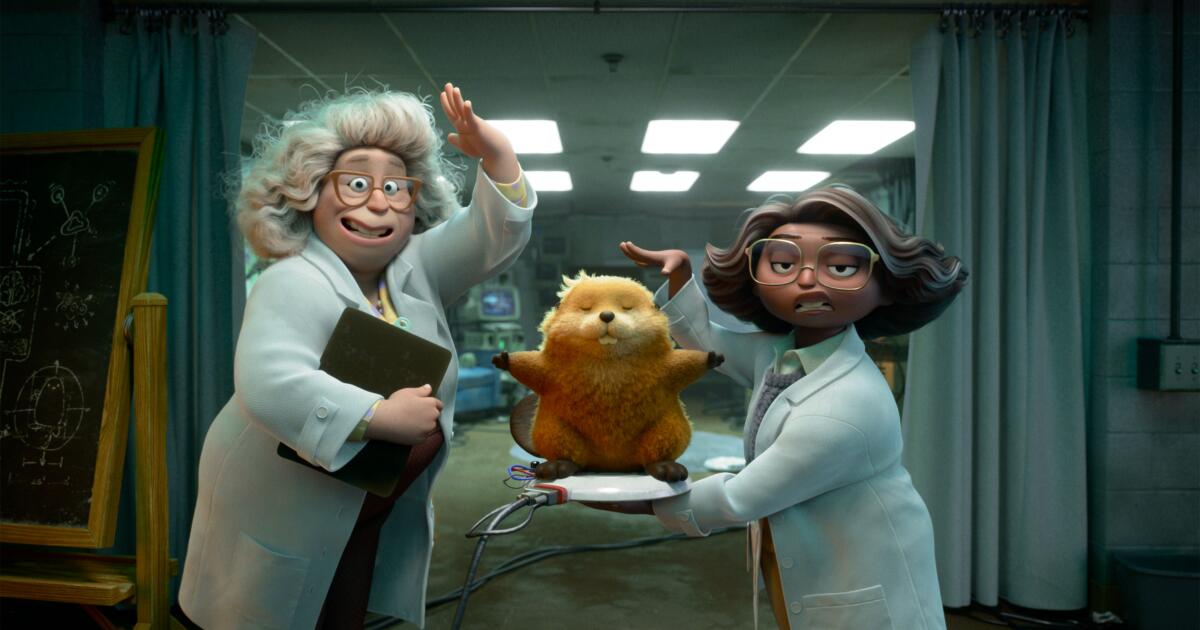
Walt Disney Co. and Pixar’s “Hoppers” took the box office crown this weekend in an encouraging sign for the company’s original animated films.
The film generated $46 million in ticket sales in the U.S. and Canada, marking the highest domestic opening for an original animated movie since 2017’s “Coco,” according to studio estimates. The global box office total for “Hoppers” was $88 million.
The zany movie features a young environmental advocate who “hops” her consciousness into a robotic beaver and bands together with other woodland creatures to stop a planned freeway expansion through a glade.
The film is directed by Daniel Chong, who created the Cartoon Network animated series “We Bare Bears.”
The muscular debut for “Hoppers,” as well as the strong performance from Sony Pictures Animation’s “Goat” last month, has been a positive sign for audience interest in original animated films.
Since the pandemic, theatrical returns for animated sequels have far surpassed that of original films. Disney’s “Zootopia 2,” for instance, has now grossed more than $1.8 billion in global box office revenue, with more than $426 million domestically. Disney and Pixar’s 2024 hit “Inside Out 2” also crossed more than $1.6 billion globally.
By contrast, Disney and Pixar’s 2025 original film “Elio” brought in about $154 million in worldwide box office revenue.
Original films are vital to Pixar’s future, as the Emeryville-based studio built its reputation on its string of nearly uninterrupted original blockbuster hits, including 1995’s “Toy Story” and 2004’s “The Incredibles.”
Paramount Pictures and Spyglass Media Group’s “Scream 7” came in second at the box office with $17.3 million in its second weekend in theaters. Warner Bros. Pictures’ “The Bride!,” Sony’s “Goat” and Warner Bros.’ “Wuthering Heights” rounded out the top five at the box office, according to data from Comscore.
With several strong releases, as well as popular holdover films from 2025 that continue to bring in revenue, the first few months at the box office have been a notable improvement over last year’s dismal first quarter.
Domestic box office revenue so far is up more than 12% compared to the same time period in 2025, according to Comscore.
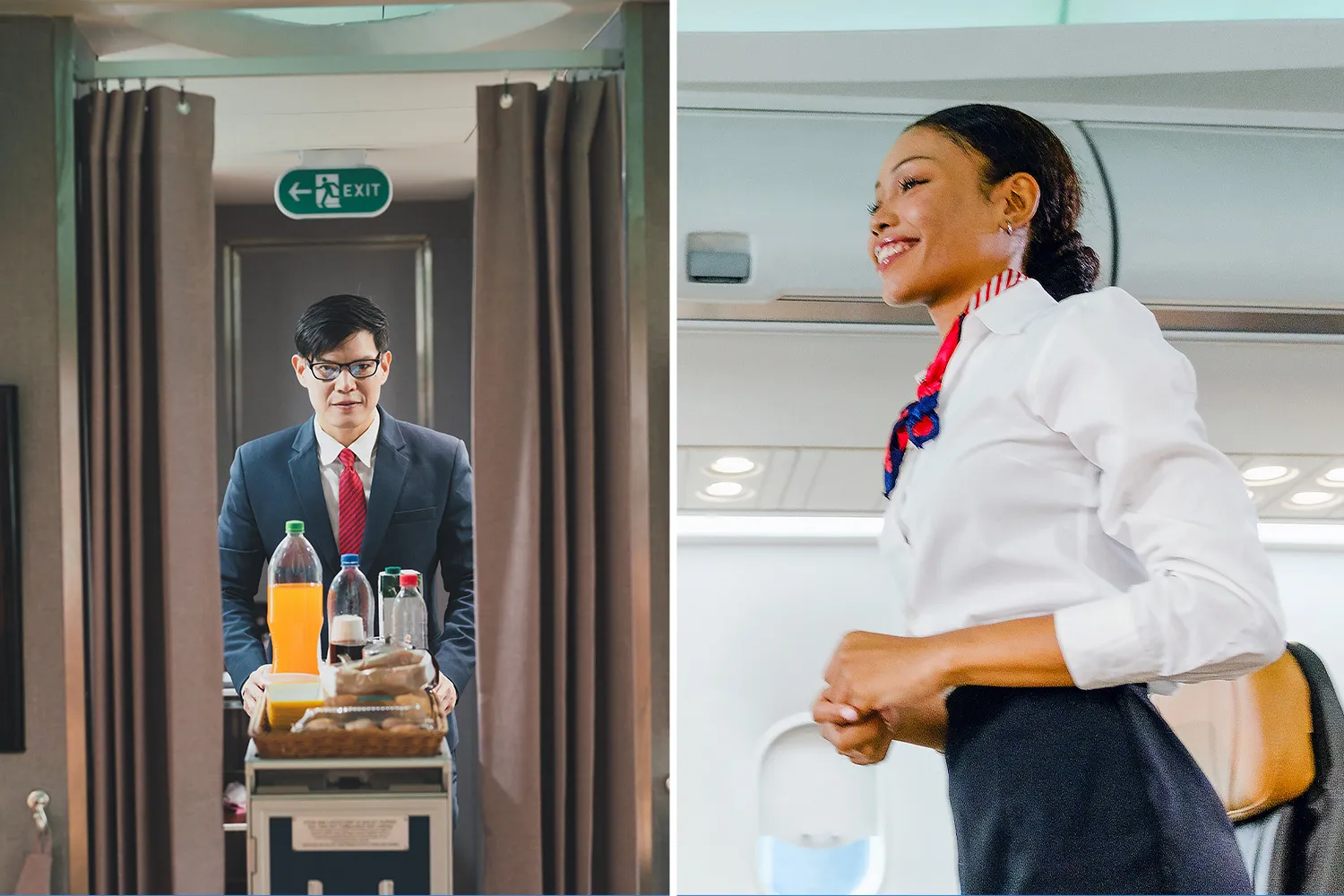

A FLIGHT attendant has opened up on secrets of the trade and revealed how you can earn brownie points in the air to score freebies.
The flight attendant, who has been serving major airlines for two decades, said it is easier than you think to win the favor of those working on planes.


Sandra White has lifted the lid on her veteran experience serving the skies.
“You draw more bees with honey,” she said, meaning rude or impatient flyers will likely not get anything for free – especially not any “off-menu” items.
She shared several tips with Shermans Travel, ranging from how to get a free drink, how to score a better seat, and how not to be the most annoying person on the plane.
“Scoring a free beer on a flight is not all that hard,” she admitted.
According to White, there are a few reasons why she’ll give a customer a free drink, but it all comes down to one thing: being nice – really nice.
If a plane is having mechanical problems and passengers have been sitting on the tarmac for hours – without being rude – she’ll likely comp them a drink.
“I’m sure they need it,” she said.
She noted that if a flyer happens to only have cash on them, while most airlines only accept cards, she’ll just hand you the drink.
“Basically, kindness goes a long way,” she said.
And as far as a better seat goes, politely asking if there is any availability could help you to win big.
White shared that she’s more than happy to make sure a guest is as comfortable as possible.
When it comes to seats on the plane, that typically comes down to the gate agent’s discretion – but occasionally, flight attendants will send you up to first class if there’s space, and if they ask nicely.
It is not a guarantee, but it never hurts to be friendly to the person serving you peanuts.
The worst passengers, however, are those that come onto the plane having had too much fun while in the airport.
That is, flyers who are already drunk on the flight.
“Annoying drunks” are the bane of a flight attendant’s existence, according to White, thinking their funnier than they are and ordering more drinks before beverage service has even started.
White said these flyers should not even bother getting on the plane.
“I’ve only had to cut off two people – you really don’t want to make a drunk angry at 36,000 feet,” she said.
“They might defecate on the beverage cart. Yes, this really happened to a co-worker.”

SOUTHERN CALIFORNIA REGIONALS
THURSDAY’S RESULTS
SEMIFINALS
BOYS
DIVISION I
#1 Mater Dei 2, #4 El Camino Real 1
#3 Del Norte 0, #2 Orange Lutheran 0 (Del Norte wins 4-1 in shootout)
DIVISION II
#4 San Pascual 1, #8 Sultana 0
#2 Mira Monte 2, #3 Fontana 1
DIVISION III
#1 Bishop Amat 3, #4 Palisades 1
#6 Los Alamitos 2, #7 Mt. Carmel 0
DIVISION IV
#1 Irvine University d. #5 Chatsworth, forfeit
#2 Granite Hills 2, #6 Santa Ana Valley 1
DIVISION V
#5 Kern County Taft 2, #1 Ontario Christian 1
#3 Garfield 3, #7 San Diego Lincoln 0
GIRLS
DIVISION I
#1 Santa Margarita 3, #4 Cleveland 0
#2 Mater Dei 2, #6 Oaks Christian 0
DIVISION II
#8 Westview 2, #5 Sherman Oaks Notre Dame 0
#2 Westlake 1, #3 Garces Memorial 0
DIVISION III
#4 Quartz Hill 1, #1 Del Norte 0
#2 Millikan 0, #3 Ayala 0 (Millikan wins 4-1 in shootout)
DIVISION IV
#5 Coachella Valley 4, #8 Segerstrom 1
#3 San Jacinto 3, #7 Del Sol 2
DIVISION V
#8 Coastal Academy 3, #5 Bravo 0
#3 Delano Kennedy 1, #2 Santa Monica Pacifica Christian 0
SATURDAY’S SCHEDULE
(Games at 5 p.m. unless noted)
FINALS
BOYS
DIVISION I
#3 Del Norte vs. #1 Mater Dei at Fred Kelly Stadium
DIVISION II
#2 Mira Monte at #1 San Pascual
DIVISION III
#6 Los Alamitos at #1 Bishop Amat
DIVISION IV
#2 Granite Hills at #1 Irvine University
DIVISION V
#5 Kern County Taft at #3 Garfield, 5 p.m.
GIRLS
DIVISION I
#2 Mater Dei vs. #1 Santa Margarita at Tesoro
DIVISION II
#8 Westview at #2 Westlake
DIVISION III
#4 Quartz Hill at #2 Millikan
DIVISION IV
#5 Coachella Valley at #3 San Jacinto
DIVISION V
#8 Coastal Academy at #3 Delano Kennedy
Note: State Championships March 13-14 at Matomas High in Sacramento (times TBA).
The Lakers were looking to stack wins and are not in position to judge an opponent by its win-loss record.
So, when the Lakers encountered a Pelicans team that arrived at Crypto.com Arena on Tuesday night with a 19-43 record, they knew they couldn’t afford to overlook New Orleans. Especially since the Pelicans had won four of their past five and because they have a talented core of young talent that includes Zion Williamson, Herbert Jones, Trey Murphy III and Dejounte Murray.
It took all five starters scoring in double figures and it took a strong defensive effort in the fourth quarter for the Lakers (37-24) to pull out a 110-101 win over a stubborn Pelicans team.
“Well, we knew we weren’t playing against their record tonight,” said LeBron James, who was one of the starters to score in double figures with 21 points to go along with seven rebounds, seven assists and two blocks. But he also had five turnovers.
“It’s the first time they’ve been whole in quite a while,” James, who was eight-for-12 from the field, continued. “And we know when they’ve been whole what kind of team they’ve been. So, we came in with that mindset, understanding what kind of team we were playing and they won their last four out of five before tonight, or something like that.
“But we didn’t come in with the notion that we were playing against their record. We came in with the notion that we were playing a very athletic team that’s been playing exceptional basketball of late.”
The Lakers have been a better team as of late as well, winning their third straight game after losing three straight.
They won this one over the Pelicans with just enough offense and some timely defense.
Luka Doncic led the Lakers with 27 points, 10 rebounds and seven assists. But he was just 10-for-22 from the field and three-for-10 from three-point range and he had seven turnovers.
“I think we responded in a good way,”: Doncic said. “Sometimes you got to win playing bad. That’s what good teams do. I think that’s what it is today. Obviously it wasn’t our best game, but we managed to get a win.”
Austin Reaves had 15 points on four-for-15 shooting and two for seven on three-pointers, eight rebounds and five turnovers.
Reaves injured his arm late in the fourth quarter after stripping the basketball away from Williamson. But after a quick time out, Reeves returned to the game.
“I just hit my funny bone,” Reaves said. “Whole hand went numb, called a time out, kind of went away and was able to play.”
Deandre Ayton had 13 points and eight rebounds.
There also was the defense and energy Marcus Smart and Jaxson Hayes provided the Lakers.
Smart had 10 points, four steals and three blocks. He also was big on offense, drilling a three-pointer with 1:34 left for a 105-98 Lakers lead.
Hayes had eight points, six rebounds and two blocks.
“Jaxson was guarding Zion, which is not easy,” Doncic said. “So, I think he had some big, big plays for us. And obviously Smart has been the key to our wins (this season).”
The Lakers had 20 turnovers through three quarters, which didn’t help their cause.
They had just one in the fourth quarter and that came on a late-game 24-second violation when they were running out the clock.
The Lakers didn’t help themselves by losing their composure.
Doncic was given a technical foul in the second quarter. Luke Kennard received a technical foul in the third quarter and Ayton got a technical foul in the fourth quarter after being called for a foul blocking a shot by Williamson.

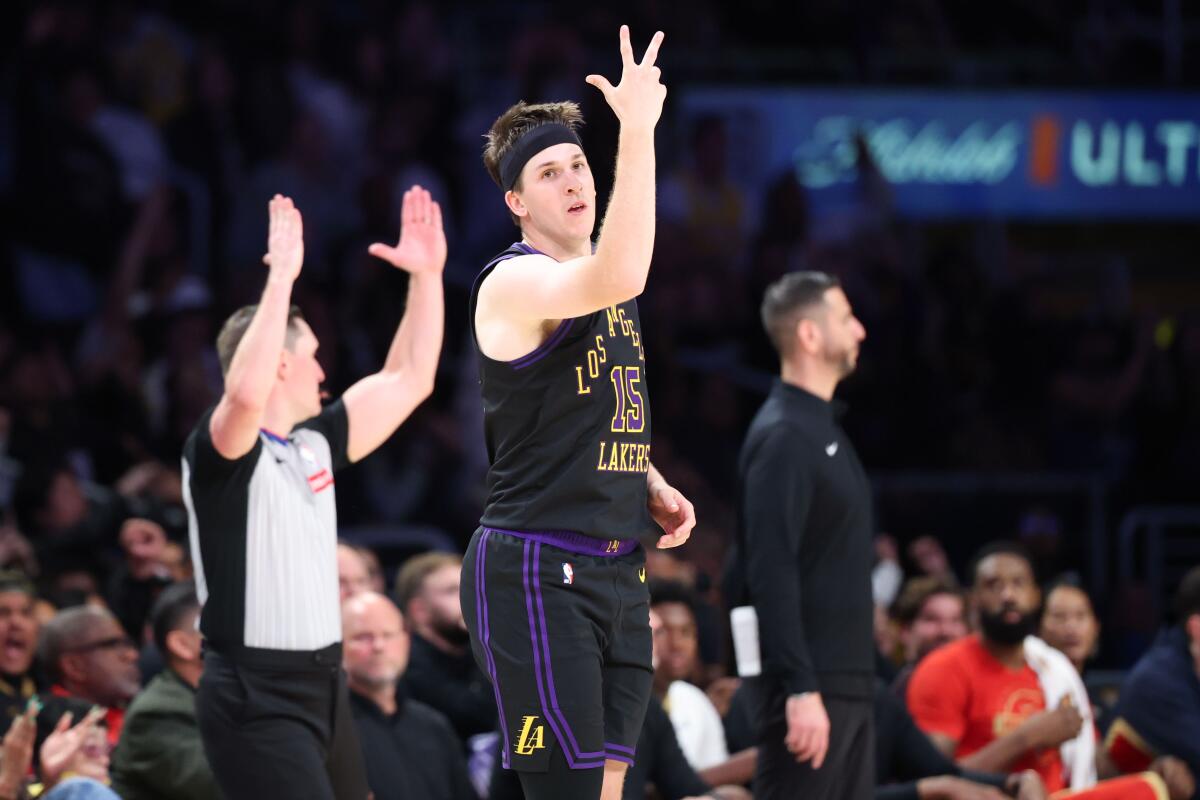
Austin Reaves celebrates after making a three-pointer in the second half.
(Allen J. Schaben/Los Angeles Times)
The Lakers had 12 blocks for the game and seven in the decisive fourth quarter.
They held the Pelicans to 35% shooting in the fourth and just 23 points.
“I think we’ve made some strides defensively,” James said. “I think we didn’t play much at all zone tonight. We started the game with it, we kind of went away from it. So, I thought our man-to-man defense was pretty good. I thought Jaxson and Marcus were great on that end and then everyone else kind of trickled in as well.”

PHOENIX — Two nights after losing to the Orlando Magic in a heartbreaker, the Lakers focused on trying to beat a Phoenix Suns team missing key players.
In the end, the result was the same — disappointment.
The Lakers lost 113-110 after Austin Reaves missed a three-pointer as time expired, the Suns coming up with the clutch shot on Royce O’Neale‘s three with nine-tenths of a second left to send the Lakers to their third consecutive loss Thursday night.
On the final play, Marcus Smart inbounded the ball and LeBron James and Maxi Kleber set a double-screen to get Reaves open. Reaves floated to the corner and took a cross-court pass but his shot bounced off the rim, sending the Lakers to another loss despite Luka Doncic‘s 41 points, eight rebounds and eight assists.
The fourth quarter was a back-and-forth affair before the Suns built a 12-point lead with 6:28 left. The Lakers quickly recovered and tied the score on a Reaves three-pointer with one minute left. O’Neale scored on an offensive rebound to give the Suns a 110-108 lead before James scored on a put-back to tie the score.
The Suns then called a timeout to set up O’Neale’s winning shot.
Phoenix, which had lost six of eight, played without All-Star guard Devin Booker (right hip strain), Dillon Brooks (left hand fracture) and Jordan Goodwin (left calf strain).
Still, the Lakers (34-24) knew the Suns (34-26) would play hard and throw up a lot of three-pointers — Phoenix shot 22 for 50 from three-point range.
When the Lakers went up by three early in the fourth, things looked good. But then the Suns went on a 13-3 run.
Lakers coach JJ Redick was forced to call a timeout after Oso Ighodaro rolled in for an uncontested dunk, putting the Lakers down 96-86 with 7:43 left.

The Lakers went down by 10 points in the second quarter, but took a two-point lead late in the quarter on a Reaves three-pointer. But Grayson Allen scored on a layup to tie the score 49-49 at halftime.
The Lakers opened a 13-point lead in the third quarter, but ended up tied 80-80 entering the fourth.
Allen carried the Suns in the third, scoring 16 points. He missed just one of his shots and just one of his five three-pointers in the third.
James finished with 15 points, six rebounds and five assists. Reaves scored 14 points and Smart had 13 points.
The Lakers lost to Orlando on Tuesday by one point on a botched play when Doncic didn’t shoot a three-pointer and instead passed the ball to James, who missed a last-second three-point attempt.
It was a tough way for the Lakers to end their eight-game homestand, going 4-4 over that stretch.
Redick was asked if it is easy to move on after a tough loss.
“Well, I think that’s not in general,” Redick said. “I think there are specific times throughout the season where you talk about what just happened, more than just your normal review. You’re not going to do that after every game. So, we had a great practice and meeting on Monday after the Boston game and you don’t need to belabor every single loss.”
Lakers forward Rui Hachimura didn’t play against the Suns because of an illness, the team said. But backup center Jaxson Hayes, who missed the last game with right ankle soreness, played 21 minutes against the Suns, finishing with eight points and three rebounds.
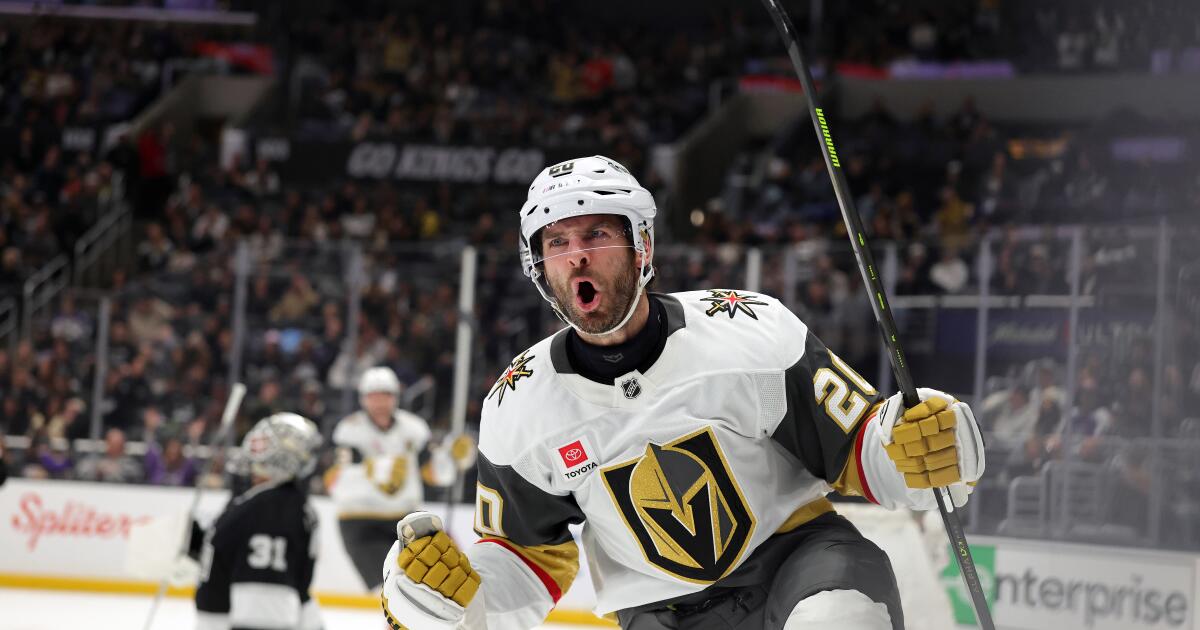
Pavel Dorofeyev had two goals and the Vegas Golden Knights spoiled Artemi Panarin’s Kings debut by scoring five third-period goals to rally for a 6-4 win Wednesday night.
Colton Sissons, Brandon Saad and Reilly Smith scored three goals in a span of 4:14 midway through the third and the shorthanded Golden Knights overcame the absence of five players who participated in the gold medal game at the Milan Cortina Olympics on Sunday. Ivan Barbashev added a late empty-netter, and Adin Hill made 15 saves.
Vegas played without United States center Jack Eichel and defenseman Noah Hanifin and Canada forwards Mark Stone and Mitch Marner and defenseman Shea Theodore, all of whom are expected to be available when their five-game trip continues against the Capitals in Washington on Friday night.
Quinton Byfield had two goals, Adrian Kempe and Brandt Clarke scored, while Panarin had two assists in his team debut, but the Kings dropped their fourth straight game.
Panarin, who was acquired in a trade from the New York Rangers on Feb. 4, set up the Kings’ opening goal by putting his pass in off Byfield’s skate on the power play late in the first period and had the secondary assist on Kempe’s goal in the second period.
Anton Forsberg made 19 saves for the Kings, who came out of the Olympic break three points out of a wild-card berth.
The Golden Knights found themselves trailing after two periods as Panarin reached the 40-assist mark for the 11th straight season. But they responded with a strong final 20 minutes, including Dorofeyev’s power-play goal with 4:01 remaining that made it 5-3.
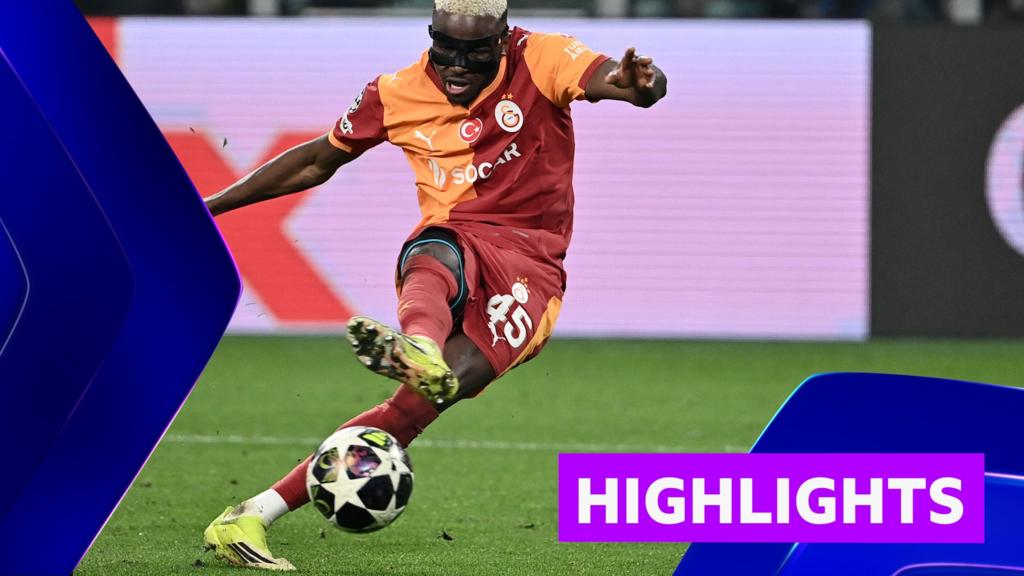
Galatasaray survived a 10-man Juventus comeback, scoring twice in extra time to win 7-5 on aggregate, despite Lloyd Kelly’s red card.
Source link
