Can the Gaza Ceasefire Hold? Stakes, Challenges, and Scenarios
More than two months after a ceasefire between Israel and Hamas ended two years of intense fighting in Gaza, both sides claim the other has violated the agreement, and there is no progress on the more challenging steps that follow.
The ceasefire involves three main documents. The most comprehensive is a 20-point plan by former U. S. President Donald Trump, which proposes that Hamas disarm and cease its governing role in Gaza, accompanied by an Israeli withdrawal. Although a more limited agreement was made on October 9, it mainly focused on hostages, a halt to hostilities, partial Israeli withdrawal, and a boost in aid. This agreement was supported by a United Nations Security Council resolution that aimed to set up a transitional governing body and an international force in Gaza.
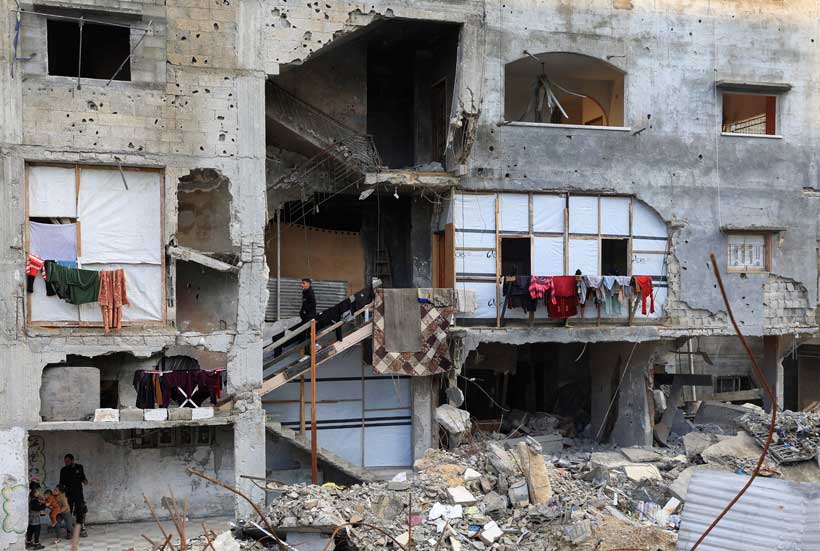
The results of the ceasefire have seen all surviving hostages returned and hundreds of Palestinian prisoners released. However, the return of deceased hostages has been slow. Aid distribution has become contentious, with Hamas claiming that fewer aid trucks are entering Gaza than promised. Aid organizations report a significant shortfall in necessary supplies, while Israel asserts it is fulfilling its commitments under the truce. The Rafah border crossing with Egypt remains closed, with Israel stating it will only open it once the last hostage’s body is returned. The living conditions in Gaza are dire, with many residents constructing makeshift shelters from debris, and a large number of children suffering from malnutrition, worsened by floods affecting temporary shelters and sanitation.
Some violence persists, as Palestinian militants have attacked Israeli forces, resulting in casualties on both sides. A proposed international stabilisation force intended to maintain order in Gaza is still undefined, with disagreements over its composition and tasks. Plans for a Palestinian governing body, independent of Hamas, have also not been clarified. The Palestinian Authority, which governs parts of the West Bank, is expected to implement reforms before taking a role in Gaza, but no details have been shared.
The possibility of lasting peace remains uncertain. Israel suggests military action may resume if Hamas does not disarm, yet a return to full-scale war does not seem imminent. Both Israelis and Palestinians are skeptical about the long-term success of the Trump plan and fear it may lead to a continued, unresolved conflict. Many Israelis are concerned about the potential for Hamas to rearm, while Palestinians worry about ongoing Israeli control and lack of resources for rebuilding Gaza.
Trust between Israelis and Palestinians is at a low point, with the two-state solution, considered vital for lasting peace, appearing increasingly distant. Despite international support for Palestinian statehood, Israeli leadership continues to reject this notion, raising doubts about future negotiations and outcomes.
With information from Reuters