
Scales

Iconic Fawlty Towers star Prunella Scales left whopping £3.2million in her estate after death aged 93 last year

ICONIC Fawlty Towers star Prunella Scales left a huge £3.2million in her estate, The Sun can reveal.

The acting icon sadly died last October aged 93 following a decade-long battle with dementia.

The actress was best known for playing Sybil Fawlty, the stern wife of John Cleese’s Basil Fawlty Credit: PA:Press Association
Prunella was diagnosed with dementia in 2014 Credit: PA:Press Association

Documents obtained by The Sun show she passed on 40 per cent of her fortune to children Samuel West and Joseph West, who she had with late actor husband Timothy West, and 20 per cent to stepdaughter Juliet.

She also made a string of donations to charities close to her heart.

Court records show the star left an estate worth £3,376,585.

It was reduced to £3,166,554 after taxes, debts and costs were deducted.

i don’t

‘Sachsgate’ victim Georgina Baillie, 40, calls off wedding to DJ fiance, 68


STAR GONE

Fawlty Towers actress who starred alongside John Cleese dies aged 89

Timothy and Prunella tied the knot in 1963 Credit: Rex
Fawlty Towers ran for two series of six episodes each in 1975 and 1979 Credit: Alamy

Her will was signed in 2020 and a grant was issued by the High Court earlier this week.

In the six-page document, Scales asked her trustees to delay selling her South London home by up to a year to let grandson Clement, who lived at the property, move out.

She also revealed she and husband Timothy had gifted son Sam £300,000 to help renovate his home.

Charities to benefit from her will included the Snipe Charitable Trust, which was given £10,000, the Campaign to Protect Rural England, which got £1,000, and the Royal Horticultural Society, which also got £1,000.

Prunella had continued to travel around the world into her 90s after a glittering 70-year career in TV, film and theatre.

The actress was best known for playing Sybil Fawlty, wife of John Cleese’s hot-headed hotelier Basil in classic Seventies sitcom Fawlty Towers.

The show ran for two seasons in 1975 and 1979 and is considered one of the best British comedies ever made.

Episodes often featured Sybil trying to calm Basil down or putting him in his place.

The couple met while acting in a BBC television play Credit: alzheimers.org
The last known photo of Prunella Scales was taken alongside Grace Darling (L) and Sara Crowe (R) after their performance of Queen Victoria Credit: Steve Bealing/Landmark Media

Cleese, 84, led tributes to his screen wife, branding her “a really wonderful comic actress”.

He added: “Scene after scene, she was absolutely perfect.”

Prunella also appeared in Coronation Street between in 1961 as bus guard Eileen Hughes.

She played Queen Victoria more than 400 times in a one-woman play, An Evening with Queen Victoria, written for her by Katrina Hendrey in 1979.

She would reprise the role of Victoria in the 2003 BBC docu-drama Victoria: An Intimate History.

In August 2024, aged 92, she reprised the role again for a voice over at the Edinburgh Fringe Festival.

The production, Queen, saw Prunella play an 81-year-old Victoria, reading out letters in the final year of her life.

Asked in 2024 if she liked playing royals, Prunella told The Times: “I don’t.

“When you say ‘like playing queens’ there aren’t any queens that I want to play.

“But the queens I have played have all been interesting people with interesting jobs and interesting lives.”

Prunella also appeared on Great Canal Journeys, a Channel 4 series celebrating her and Timothy’s love of narrow boating.

She continued to front the show despite a 2014 dementia diagnosis.

Timothy, her husband of 61 years, said of the condition: “The sad thing is that you just watch the gradual disappearance of the person that you knew and loved and were very close to.”

Prunella was born in Surrey in 1932, the daughter of actress Catherine Scales and cotton salesman John Richardson Illingworth.

She started her career as an assistant stage manager at the Bristol Old Vic in 1951 before moving into acting.

The star was appointed a Commander of the Order of the British Empire in the 1992 Birthday Honours List, and awarded the Freedom of the City of London in 1999.

Timothy, who died in November 2024, left the bulk of his £110,000 estate to charity, including theatre schools and Guide Dogs for the Blind.

BBC Comedy director Jon Petrie said: “She was a national treasure whose brilliance as Sybil Fawlty lit up screens and still makes us laugh today.”
Source link

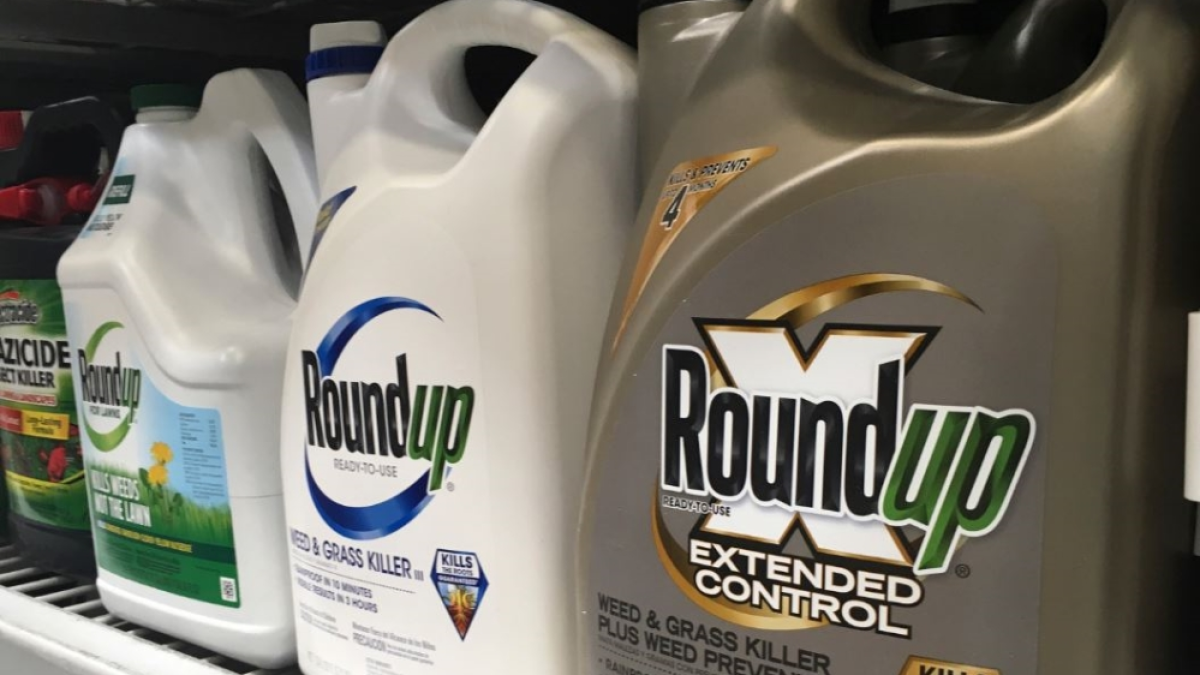
US Supreme Court scales back Roundup cancer lawsuits in victory for company | Courts News

The United States Supreme Court has sided with the maker of Roundup weedkiller in a ruling expected to block thousands of lawsuits alleging it failed to warn people the product could cause cancer.

The ruling on Thursday was tied to a case that came before the justices after a tidal wave of litigation that included some multibillion-dollar verdicts against the global agrochemical manufacturer Bayer, a Germany-based company that acquired Roundup when it bought its original producer Monsanto in 2018.

Recommended Stories

list of 4 itemsend of list

The decision is a victory for US President Donald Trump’s administration, but one that could be tricky politically since allies in the “Make America Healthy Again” movement want to rein in pesticide use.

The high court, in a 7-2 ruling, found that the company cannot face failure-to-warn lawsuits in state courts because federal regulations have found a cancer link unlikely and do not require a warning label.

The justices overturned a jury verdict in Missouri awarding $1.25m to a man named John Durnell who said he was diagnosed with non-Hodgkin lymphoma after years of exposure to glyphosate in Roundup. The Supreme Court agreed with Bayer that a US law that governs pesticides precludes failure-to-warn claims that are brought under state law from moving forward in court.

Bayer shares jumped nearly 18 percent following the ruling.

Trump’s administration had backed Bayer in the case.

Conservative Justice Brett Kavanaugh, who authored the ruling, said the US Environmental Protection Agency, or EPA, has concluded glyphosate does not cause cancer and has not required a cancer warning on Roundup.

The law preempts Durnell’s claim because it “would require Monsanto to add a cancer warning to Roundup’s label even though federal law requires Monsanto to use the EPA-approved label without a cancer warning”, Kavanaugh wrote.

Liberal Justice Ketanji Brown Jackson, in a dissent joined by conservative Justice Neil Gorsuch, said that Durnell’s claim would impose equivalent labelling requirements on Monsanto that the federal law requires and so should not be preempted.

Jackson called the ruling “remarkable and regrettable, for it unjustifiably closes the courthouse doors to state tort plaintiffs like Durnell”.

Bayer acquired Roundup as part of its $63bn purchase of agrochemical company Monsanto in 2018. More than 100,000 plaintiffs have filed cases in US state and federal courts alleging a cancer link, and the German drugmaking and crop science company had said that the lawsuits could threaten its ability to supply the herbicide to farmers.

The torrent of litigation already prompted Bayer to remove glyphosate from its consumer version of Roundup. Bayer said before the Supreme Court ruled that a decision in its favour could largely end the Roundup litigation.

“The US Supreme Court decision is good for science, farmers, and industries that depend on regulatory clarity for innovation. It should help significantly contain the Roundup litigation after nearly a decade of legal battles. The ruling should result in the dismissal of current warning-based claims and bar future failure-to-warn claims,” Bayer spokesperson Tino Andresen said in a statement.

The company emphasised throughout the litigation that the EPA repeatedly found that glyphosate does not cause cancer and approved its product labels without a warning.

Facing billions of dollars in potential liability, Bayer announced in February a proposed $7.25bn settlement to resolve tens of thousands of current and future lawsuits. The settlement would not affect claims that stem from pending appeals or that fall outside the deal, according to the company. Those amount to nearly $1bn, it said.

‘Disaster for public health’

Environmental activists and others criticised the court’s ruling on Thursday.

“Once again, the Supreme Court has sided with big business over people and the environment. Today’s ruling is a disaster for public health,” said Tarah Heinzen, legal director at the advocacy group Food and Water Watch.

“The harm from this decision will perpetuate our cancer, infertility and general chronic disease epidemic for generations to come,” said Kelly Ryerson, co-executive director of advocacy group American Regeneration and a Make America Healthy Again activist who posts on social media under the moniker “The Glyphosate Girl”.

The sprawling dispute centres on a US law called the Federal Insecticide, Fungicide and Rodenticide Act, or FIFRA, that governs the sale and labelling of pesticides and bars states from imposing differing or additional requirements.

The measure prohibits pesticides that are “misbranded” with labels that lack an adequate warning to protect health and the environment.

Bayer has argued that Durnell’s claims are preempted by this law. The EPA has repeatedly approved labels without such a cancer warning, demonstrating that these products are not misbranded, the company said, adding that labels cannot be substantially changed without the agency’s approval.

Durnell’s lawyers said that despite the EPA’s registration of Roundup, the label may still be challenged as misbranded. They also said Durnell’s claims are not preempted because Missouri state law that requires products to adequately warn of dangers imposes the same requirements as FIFRA’s prohibition on misbranding.

‘A new era’

Union Investment fund manager Markus Manns called Thursday’s ruling a significant milestone for Bayer, adding that a decade after the Monsanto acquisition, the company is “entering a new era”.

“While future lawsuits are not entirely off the table, they will become considerably more difficult. A final breakthrough would come if the settlement is accepted by the plaintiffs and approved by the competent court in July. This would bring Bayer’s glyphosate litigation chapter to a definitive close, allowing management to fully refocus on operational and strategic matters,” Manns said.

Durnell sued Monsanto in Missouri state court in 2019, claiming it failed to warn users of the dangers associated with Roundup and glyphosate.

He was diagnosed with a rare and often aggressive form of non-Hodgkin lymphoma, a cancer that starts in the white blood cells, and attributed the disease to his exposure to Roundup starting in 1996. For about 20 years, he was the “spray guy” for a neighborhood association in St Louis, killing weeds at local parks without protective equipment, according to court papers.

A jury sided with Durnell in 2023, and in 2025, a state appeals court upheld that verdict.

Source link