

saving

Who Speaks for Palestinian Women? Unmasking the Politics of ‘Saving’ in Gaza”

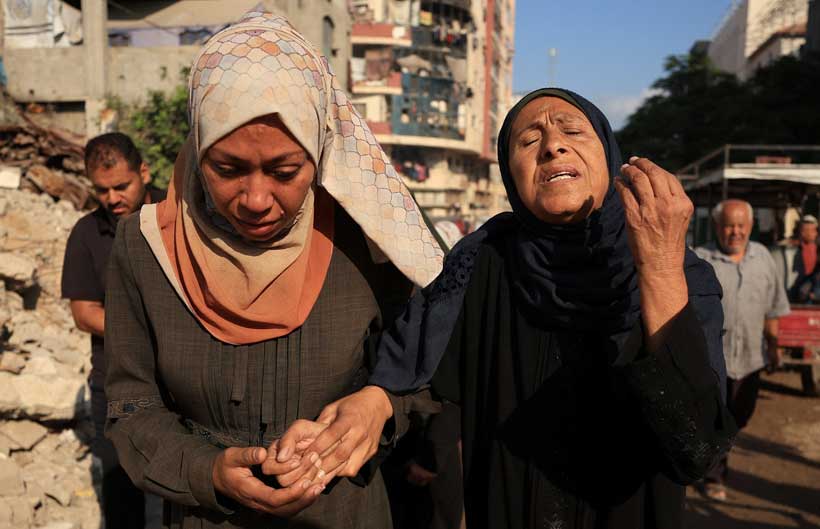
In the midst of the escalation of the Gaza conflict that has been going on since 2023, the world is once again witnessing the heartbreaking reality of women crying among the ruins of their homes and the burning of property, mothers who have lost children, and families separated by military attacks. Global media were quick to point to this event as a symbol of the suffering of civil society. But behind the empathy shown, there is also a question that is rarely asked: how exactly can Palestinian women be represented, and who can shape that narrative?

For decades, women in conflict zones, such as the Middle East, have often been portrayed in the same framework, as passive victims who need to be rescued and protected. In the context of Gaza, this pattern has resurfaced. Global media coverage often only highlights women’s plight without giving enough space for their voices, perspectives, and agency in conflict. This narrative does look humanistic, but it also contains an element of simplification that makes the world unaware of the more complex reality behind it.

This is where postcolonial feminism offers a sharper critique and helps us to look further at this issue as a form of epistemic violence. This perspective emphasizes that in understanding women’s experiences, it cannot be separated from considerations about the history of colonialism and global power relations. In the context of the Gaza conflict, this means that violence is experienced by women. Not only a patriarchal problem but also supported by aspects of colonialism, militarization, and inequality politics (Enloe, 2014).

This phenomenon cannot be separated from the thoughts of Lila Abu-Lughod, who mentioned “politics of saving” in her work entitled Do Muslim Women Need Saving? Abu-Lughod (2013) criticized how the Western world portrays Muslim women as an oppressed group in need of rescue. This narrative is not only a form of simplifying women’s representation but can also be used as a legitimacy for political, cultural, and even military intervention from external actors. Such as the concept of militarization of daily life raised by Enloe (2014), who explains that militarization does not only occur on the battlefield but also enters into the reality of daily life, including in how the media frames conflicts. Where in this context the representation of Palestinian women as passive victims is used to affirm certain narratives about war, security, and the legitimacy of power.

The term “security politics” in the Gaza conflict appears in a more subtle form. Palestinian women are positioned as a universal form of suffering but are rarely seen as political subjects with diverse experiences and aspirations. The suffering they experience in conflict becomes a global consumption, while structural contexts, such as colonialism and power inequality, are often ignored.

An important question then arises: who really has the right to speak on behalf of Palestinian women? This is where Spivak’s (2009) thoughts on the concept of the subaltern become relevant. Spivak himself argues that the subaltern group is a group that is in a marginalized position so that its voice is not heard in the dominant discourse. Even when they are “represented,” their voices are often mediated or even filtered by stronger actors.

In many news narratives about Gaza, Palestinian women rarely appear as the main narrator of their own experiences. Brand awareness is often told by foreign journalists and international organizations. Or humanitarian institutions as “representatives.” As a result, the narrative that is born is not a complete reflection of the reality they face, but rather a form of representation that has been framed according to the logic and direction of global media reporting.

This issue becomes more complex when we look at how the media tends to ignore the agency dimension. Palestinian women not only live in the shadow of conflict but also have active agency in various forms of resistance, both as activists, journalists, medical personnel, and community leaders. They have the capacity to build solidarity and even contribute to political struggles as well as peace. However, aspect II rarely gets the same spotlight as the narrative of suffering.

This disregard of agency can create an imbalance of representation. Palestinian women are only seen as passive victims, which makes them look like they also have no capacity as active actors. This inequality is not only a question of representation but also a question of power regarding who has the right to define reality for a particular purpose.

In the digital era, this is certainly starting to change. Social media provides a space for Palestinian women to be able to speak directly to a global audience. Through various social media platforms, they can share experiences and aspirations that are often not featured in the mainstream media. This ultimately opens up the possibility of a more authentic and diverse counternarrative.

However, the digital space is still full of limitations. Certain narratives can easily go viral, while others sink and disappear without a trace. In other words, while social media can offer opportunities, the space is not completely free from the influence of broader power structures.

Rereading the narrative of Palestinian women in the era of the Gaza conflict is a form of recognition that representation is not neutral. It is always related to interests, ideologies, and power relations. The narrative of “rescue” may seem like a form of concern from the surface, but if you look further, it can also be a form of control over the other party’s representation. Looking at the Gaza conflict through the lens of feminism is to question basic assumptions in global reporting. Do we really see them as individuals? Do we really hear their voices, or just voices about them?

Therefore, it is important to change our perspective. Instead of seeing Palestinian women as victims who need to be saved, we need to recognize them as subjects who have the capacity to speak, form agencies, and share their experiences in the form of real reality. This is not to ignore the real suffering but to place Palestinian women’s experiences in armed conflict in a broader, fairer, and closer context to reality. As Abu-Lughod (2013) reminds us, the more important question that arises is not how to save Muslim women, but how to understand the conditions and realities that shape their life experiences.

Ultimately, the lens of feminism, particularly postcolonial feminism, invites us to not only have empathy but also to be more critical. By looking further at how the narrative is formed, who can benefit, and which voices are ignored.

Perhaps the more relevant question is not whether Palestinian women need protection and rescue, but whether the world is ready to hear and see them as subjects who have the capacity to speak and move. Because what needs to change is not them, but the way we understand them.

Source link

Egypt enacts energy saving measures as Iran war affects import costs

March 29 (UPI) — Egypt is ordering stores and malls to close early, asking people to work from home and dimming street lights as energy costs have skyrocketed since since January.

The North African country put energy saving efforts into effect because the U.S. and Israeli war in Iran has sent the cost of importing oil and natural gas — which is how Africa gets the vast majority of its energy supplies — through the roof, The BBC and Anadolu Agency reported.

Many nations globally have seen the cost of fuel and natural gas increase, and several African and Asian nations have enacted efforts similar to Egypt, because Iran has blocked the Strait of Hormuz to attempt to get the two nations to end the airstrikes aimed at regime change there.

Roughly 20% of the world’s oil and natural gas supply moves through the Strait and choking it off has had a significant effect on Egypt.

Egypt imports liquefied natural gas from the United States and Qatar, among others, and recently signed a deal with Israel for gas that will be delivered via a pipeline, the Financial Times reported.

Although Egypt, with Pakistan and Turkey, are involved with talks to end the war, Egyptian Prime Minister Mostafa Madbouly said that because “there is no clarity about the duration of this war,” the energy reduction measures, which go into effect .

“These measures aim to mitigate the effects of energy import costs due to high global oil prices,” Madbouly said during a press conference.

Since January, Madbouly said that natural gas imports tripped from $560 million per month in January to $1.65 billion per month in March and that its petroleum bill more than doubled in the same time period from $1.2 billion per month to $2.5 billion per month.

Among the “exceptional measures” that will go into effect include stores, restaurants, cinemas and gathering places closing by 9:00 p.m. five nights per week; most employees being told to work from one or two days per week; street lighting and street advertisement lighting will be dimmed by 50% and government vehicles will see be required to use 30% less gas.

Despite talks starting to end the war, the price of Brent crude oil on Friday surpassed $111 per barrel as Iran continued to block most ships from passing through the Strait of Hormuz.

Although Iran allowed a handful of oil tankers through the Strait last week, which U.S. President Donald Trump called a show of good faith, global markets have been hit hard, even beyond energy, as a result of limited traffic transiting the passage.,

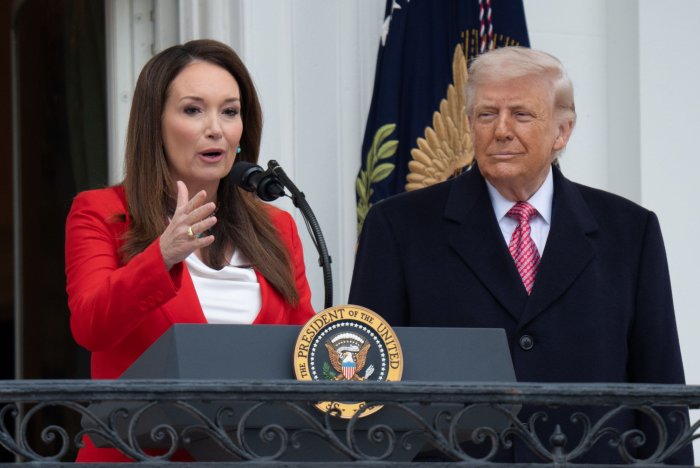
President Donald Trump stands with U.S. Secretary of Agriculture Brooke Rollins during an event celebrating farmers on the South Lawn of the White House on Friday. Photo by Aaron Schwartz/UPI | License Photo

Source link

TSA officers share how they’re scraping by without pay

A woman in Indiana who put off dental surgery because she doesn’t know if she can afford the copay. A Florida couple with young children who are depleting their savings. A grandmother in Idaho who plans to sell her car to pay the rent.

They are among about 50,000 Transportation Security Administration officers expecting to receive another $0 paycheck this week. A dispute in Congress over funding the Department of Homeland Security has held up their salaries since mid-February. With monthly bills coming due, many of these federal employees, who screen passengers and luggage at airports across the U.S., are making difficult choices about how to make ends meet.

High absentee rates at some major airports have produced long lines and frustrated passengers at understaffed security checkpoints. Union leaders and federal officials say empty gas tanks, child care expenses and the threat of eviction keep more screeners from showing up the longer the shutdown continues. At last count, more than 455 had quit instead of weathering the ongoing uncertainty, according to DHS.

“Stop asking me about the long lines. Ask me if somebody’s gonna eat today,” Hydrick Thomas, president of the national American Federation of Government Employees union council that represents TSA employees, told reporters Tuesday.

Indiana TSA agent turns to food pantry for groceries

Before starting her shift at Indianapolis International Airport on Monday, Taylor Desert stopped at a food bank for meat, eggs, vegetables and dairy products.

“I never thought I would be in a position where, working for the federal government, I would need to go to a food bank to supplement my groceries,” she said as she loaded bags into her car.

Desert, who has been a TSA officer for seven years, said her last full paycheck came on Feb. 14, the day the shutdown started.

She had some savings to draw on despite a record 43-day shutdown last fall but put some personal plans on pause.

For example, Desert needs to get her wisdom teeth removed but says the TSA isn’t approving time off during the shutdown. She also worries about costs from the surgery not covered by insurance.

Wednesday was the 39th day of the DHS funding lapse. If it goes another 21 days, Desert said she would seek another job.

“I don’t want to have to spend my entire savings just to afford to keep living,” she said.

Florida TSA couple worry about their young children

Oksana Kelly, 38, and her husband, Deron, 37, both work as TSA agents at Orlando International Airport. They have two young children and don’t know how they will keep supporting their family without any income coming in.

Kelly said they’re dipping into savings for now, but it’s running dry. If the shutdown persists, they will ask relatives for help or take out a loan, which she worries would put them deeper in debt.

Her husband has worked as a DoorDash delivery driver in his spare time since the shutdown in October and November. He’s considered resigning from the TSA to put the couple on more stable financial footing.

“It’s very mentally exhausting,” said Kelly, who is an organizer for the labor union representing TSA workers across central and northern Florida. “How do we even decide between being able to feed our kids or come to work?”

Kelly said strangers might criticize the couple for “putting all eggs in one basket” since both choose to work for the TSA for the past decade.

“All we want is to pay our bills and get the pay we deserve,” she said.

A veteran officer in Idaho fears homelessness

Rebecca Wolf cries every day. She tries to hide it from her grandchildren, ages 11 and 6.

“They don’t understand why grandma’s crying,” Wolf said. “I try not to cry in front of them, but sometimes it’s just too much.”

The 53-year-old TSA officer and union leader in Boise, Idaho, joined the agency soon after its creation in the wake of the Sept. 11 attacks. She was homeless at the time but turned her situation around with steady work and the benefits of federal employment.

Now, Wolf can’t help but dwell on where she was 24 years ago. “I don’t want to be in that position again,” she said.

Her Feb. 28 paycheck amounted to $13.53, sending her “into a spiral right away.”

With no savings to fall back on, she is preparing to sell her car to cover her rent due in a week. She calls nonprofits daily seeking rental assistance, but hasn’t had any luck.

Supporting six family members — four children and two grandchildren — has always been challenging, but the repeated shutdowns have made it nearly unsustainable.

Wolf, who serves as president of AFGE TSA Local 1127, is hesitant to walk away from both the job that turned her life around and her role advocating for fellow officers.

“I worked hard to get to where I am now, and the thought I might lose it all scares me,” she said, her voice breaking as she tried to stifle the sound of weeping.

Massachusetts agent digs into savings to get by

Mike Gayzagian, a TSA officer at Boston’s Logan International Airport, says long stretches without pay have become enough of a “new normal” that he’s prepared for them.

The 56-year-old says he has a financial cushion of about six months to tap but that his situation is “an exception to the rule.”

“The majority live paycheck to paycheck and don’t have those kinds of reserves available,” said Gayzagian, who is president of his local TSA union chapter.

It shouldn’t be this way for federal workers, he said.

“The financial situation adds an additional burden to what is already a stressful job,” Gayzagian said. “I didn’t go into public service to make a lot of money. I went into public service because it has a certain stability and reliability and predictability that other jobs don’t have.”

A father in Utah leaves TSA

Robert Echeverria quit his job as a TSA agent at Utah’s Salt Lake City International Airport about two weeks into the current shutdown.

The 45-year-old, who has a wife and three children, counted five government shutdowns in the nine years he worked for the agency. The toughest was last year’s record shutdown that ended in mid-November around the start of the holiday season.

Echeverria said his family skipped Christmas and took months to recover financially. He began looking for a new job in February when it became clear Congress was headed for another budget battle.

“Emotionally I was already distraught,” Echeverria said last week. “We were barely recovering from the last shutdown.”

He now works for the department that manages the airports in Utah’s capital. Leaving federal service “was a hard decision for me,” Echeverria said.

“I really believed in the mission of the TSA,” he said. “We took an oath, and it was a way for me to give back to the country that gave me so much.”

He’s still based at Salt Lake City International, where his 20-year-old daughter works as a TSA agent, and says that seeing his former colleagues struggling is difficult.

“They all feel betrayed by their government because they’re showing up to work,” Echeverria said. “They’re there, but they feel that the government doesn’t care for them,” he said.

Marcelo, Lamy and Yamat write for the Associated Press. Marcelo reported from New York, Lamy reported from Indianapolis and Yamat reported from Las Vegas.

Source link

Tourists devastated after jetting off to Tenerife after saving up for holiday

Storm Therese has battered the Canary Islands with severe weather warnings for storms, flooding, heavy rain, and strong winds – and the chaos is set to continue for several more days

Holidaymakers in Tenerife have been left furious after spending the entire year saving for a week of sunshine – only to arrive and find dreary weather greeting them. During March, Tenerife usually basks in temperatures ranging from 16 to 22 degrees, as Spain starts welcoming visitors back before its hectic summer period.

Yet the island has been battered by Storm Therese, delivering unexpectedly cold temperatures, gloomy conditions, flight cancellations, and even snow alerts in certain regions. Discussing the weather this week, TikTok user @seb_tenerife, who is presently residing on the island, remarked: “This might be the first or second of four bad days of weather.

“A storm – what is going on? It’s meant to have the best climate, I’d say, in Europe, and now we’re four days into a storm. You know we’re in a crisis – I’m in a full tracksuit. What has happened?”

He continued by explaining that visitors have been contacting him regarding the conditions, enquiring whether the weather is expected to improve. Nevertheless, he confessed the forecast keeps shifting every time he examines it, leaving him uncertain whether conditions will brighten up anytime soon.

Responding to his video, one user said: “Same in January. Was great at Christmas. Climate change.”

Another commented: “The last year has been a bit mad weather-wise there. I went in April and then December, and both weeks were overcast and a good few degrees colder than previous years. My friend said it was the coldest December she’s ever had in 10 years of spending Christmas and New Year there.”

A third user said: “Try going in August. I’ve been in April, August, and December for the last three years, and August wins every time – around 28 to 32 degrees last year.”

Content cannot be displayed without consent

The forecast

The Canary Islands have been battered by severe weather – and the chaos is far from over. An orange weather alert was issued after days of heavy rain and strong winds, with forecasters warning the miserable conditions could drag on for at least another five days – potentially ruining holiday plans for Brits abroad.

Shocking scenes in Tenerife showed the usually sun-soaked hotspot covered in snow, with icicles forming in some areas. Stunned tourists filmed the whiteout conditions in Teide National Park, where several roads were forced to close.

Snow is expected to continue falling in higher above 1,800 to 2,000 metres, as Storm Therese continues to lash the islands. Torrential rain has already triggered flash flooding and landslides in some areas.

Warnings have been issued for multiple types of extreme weather, including storms, flooding, strong winds, heavy rainfall and dangerous waves. Wind gusts have exceeded a staggering 74mph in places – with the sunshine holidaymakers expect nowhere to be seen. The wild weather has also caused travel chaos, with at least seven flights cancelled or diverted on Thursday alone, following 36 cancellations the day before.

Conditions are expected to worsen on Friday, which could mark the peak of Storm Therese. Orange rain alerts are in place for Tenerife, El Hierro, La Palma, and La Gomera. Forecasters warn up to 111mm of rain could fall within 12 hours in some areas, while Gran Canaria is under an amber alert, with up to 80mm expected.

Sea conditions are also turning dangerous, particularly between Tenerife and Gran Canaria, where waves could reach up to six metres alongside force eight winds. While the storm may ease slightly on Saturday, disruption is still expected. Orange alerts remain in place for Tenerife and La Palma, with winds of up to 55mph set to continue.

Tourists and locals have been urged to avoid unnecessary travel, stay away from coastal and mountainous areas, and follow official guidance. Schools across the islands have also been forced to close until conditions improve.

Source link