saved

How Coleen Rooney saved husband Wayne as ‘relaxed’ star impresses I’m A Celebrity viewers

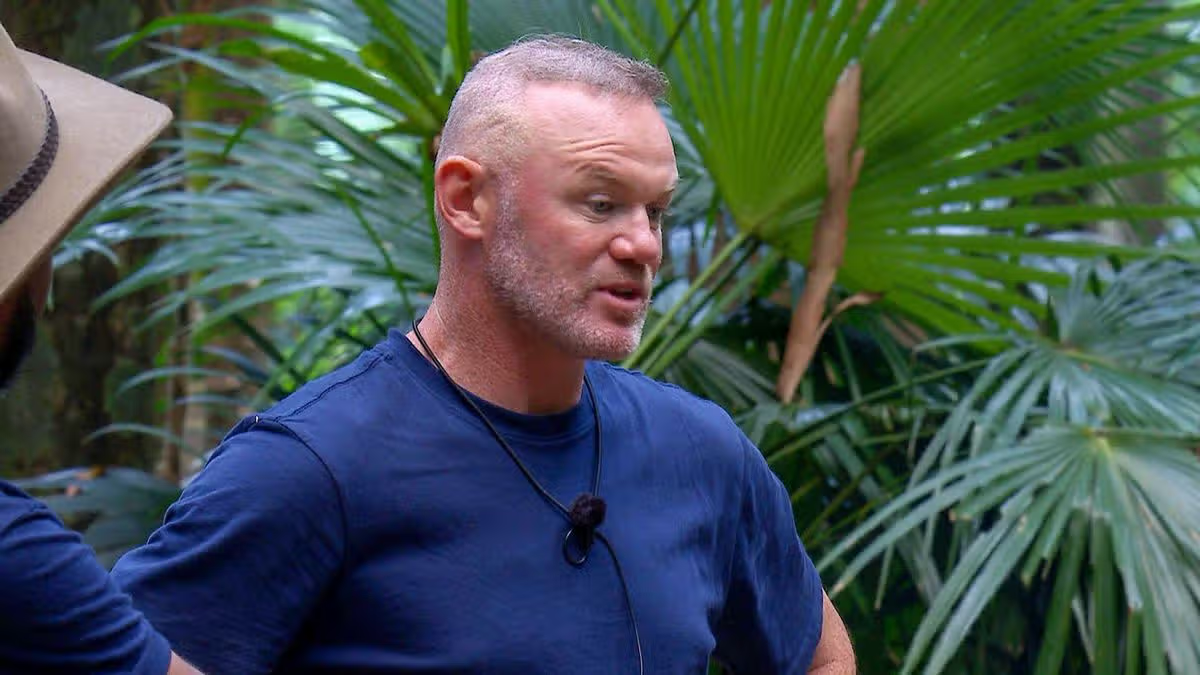
Wayne Rooney looks like a man enjoying himself in the I’m A Celebrity jungle. Fitter, healthier and more relaxed than we’ve seen him in years, the former England captain seems remarkably comfortable in his own skin.

When I caught up with him shortly before he entered camp, he was clearly in a good place when it came to his marriage too. Asked who his dream campmate would be, he sweetly replied: “Coleen.”

It is clear how much he owes not just to his wife, but also the whole family network. This week in a pre-recorded interview Wayne revealed how he turned to Coleen and his mum during the darkest period of his life, in which he contemplated taking his own life.

“I really struggled to deal with it all but it was only when I spoke to Coleen, I spoke to my mum, and I opened up (that) I knew I needed help to get through it,” he said.

It was a remarkable admission from one of England’s greatest footballers, and a powerful reminder of just how much those closest to him had helped him through his bleakest days.

Having had a small glimpse into the Rooney family myself while covering I’m A Celebrity in Australia two years ago, I know just how close-knit they are.

Coleen’s mum Colette and husband Tony had arrived on the Gold Coast with their grandkids Kit and Cass to cheer on their daughter, who was going down a storm in the jungle.

Amid all the usual craziness at the upmarket celebrity hotel in Surfers Paradise, the family were a breath of fresh air. Colette was genuinely one of the nicest people I met during my time there. Warm, funny, kind and completely down to earth, she was a proud mum from Liverpool who adored her family.

One of the things I remember most clearly was her talking about the family’s holidays when Coleen was growing up. They had a caravan which cost just £200, and the children would play outside and wash in a tin bath.

“These were all the memories she’s kept,” Colette told me. And although Wayne grew up in a different household, he came from much the same sort of down-to-earth background, where football, friends and relatives were at the centre of everything.

I suspect that’s part of why he feels so at home with Coleen’s family. They understand where he comes from, and they knew him before the rest of the country did.

That familiarity must have mattered when Wayne burst onto the scene as a teenage prodigy. He was just 16 when he scored that sensational goal against Arsenal for Everton in 2002.

After making his England debut, Wayne recalled returning to his mum’s house and finding a photographer waiting outside.

“I was like, ‘What is going on?’ I wanted to be a football player. That’s all I wanted to be. But then I was starting to see the other side of it, and I hated it and really struggled,” Wayne said this week.

Soon he was being thrust into a whirlwind of interviews and press conferences for which he felt completely ill-equipped.

“I just wanted to be that kid….and still go and play with my mates. And so that was really difficult for me,” he said. And it wasn’t just Wayne whose life had been turned upside down.

Coleen was still a teenager too, suddenly finding herself followed by photographers and having her every move scrutinised. Imagine being their parents, watching your children become two of the most famous teenagers in Britain almost overnight.

They could offer support and reassurance, but there was little they could do to protect them from the attention. And, as I discovered when I spoke to Colette, that intrusion has never entirely gone away.

She told me how difficult Wayne found it simply trying to watch his eldest son Kai play football without being approached by supporters wanting photographs and autographs.

“The boys feel it… they want the dad to be with them,” she said, “People come up to him, sadly, thinking it’s their right. It’s not that easy to refuse them, but he just wants to spend time with his own children.”

I remember finding that terribly sad. But it gives you some idea of the difficulties Wayne and Coleen have faced trying to preserve a normal family life.

Of course, Wayne went on to enjoy a career beyond anything he could have imagined. He won five Premier League titles and the Champions League with Manchester United and became the club’s record goalscorer. But away from the pitch, he was struggling badly.

In his interview with Gabby Logan, Wayne described how he would shut himself away in a games room and drink alone for two days. He would then turn up for training using eye drops and chewing gum to disguise the effects.

And because he was still scoring goals at the weekend, he found himself trapped in a cycle.

“I can look back and say I was selfish but I was going through something which I was really struggling to deal with,” he said, “I got to a place where I was contemplating suicide. I didn’t want to be around anyone, I didn’t want to see anybody in the street, in the shops. I was always comfortable on a football pitch, but everything else I struggled with.”

Alluding to the off-field scandals that affected his relationship with Coleen, he added: “I couldn’t deal with the pressures of everything and I made stupid choices when I was younger, off the pitch, and I really struggled to deal with it all to be honest.”

For Wayne, even admitting he needed help was difficult. He explained that, growing up, he had been taught to fight his own battles and never show weakness.

After eventually opening up to Coleen and his mum, the whole family pulled together, and clasped a protective arm around him. As Colette pointed out to me two years ago, her daughter and Wayne are “happiest, when they’re around family.”

Seeing him shine in the jungle, that much is obvious…

Like this story? For more of the latest showbiz news and gossip, follow Mirror Celebs on TikTok , Snapchat , Instagram , Twitter , Facebook , YouTube and Threads.
Source link

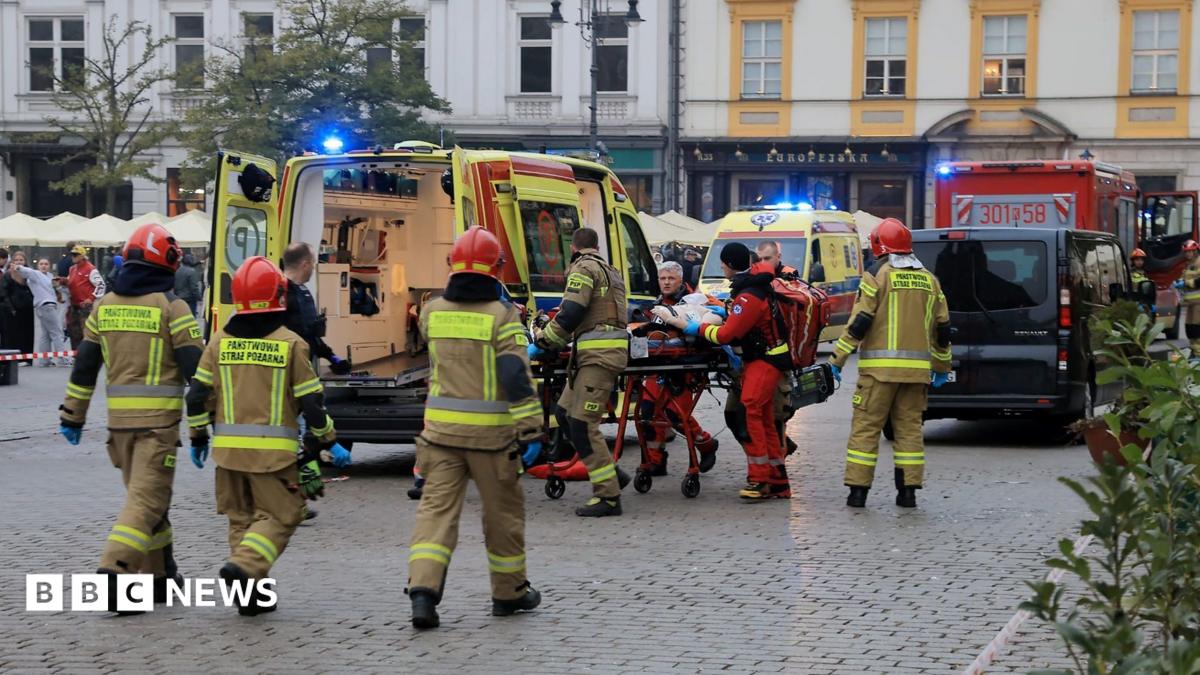
Poland shooting: Surgeon who assisted wounded police officer ‘undoubtedly saved his life’

The attacker has not yet been named by authorities.

When his house was searched after the attack in central Krakow, the bodies of his parents and sister were found.

The National Public Prosecutor’s Office in Poland launched an investigation into the attack with a unit specialising in “terrorist offences” taking the lead.

Separately, reports emerged that six Dublin Civil Defence volunteers also assisted in the aftermath of the shooting.

James McConnell, an officer, told RTE News the group were on a city break and were close to the main square, external when the shooting happened.

The volunteers who are trained to provide medical care immediately sought to help injured people, providing “CPR and haemorrhage control”.

Witnesses who were close to the attack described panic and confusion around the square as it unfolded.

Ruby Catherine Warren, from London, heard gunfire and “yelled at my friends to run and we all sprinted for our lives”.

Not knowing where the gunman was – or if there was more than one – they “just kept sprinting”, eventually finding a hotel to hide inside.

Source link

Studios destroyed, traditions saved: Artists fight to save Sudan’s culture | Arts and Culture News

Port Sudan, Sudan – Awad Haroun, 45, a visual artist and theatre director, fled his home in Al-Halfaya, Khartoum North, after war destroyed a life he had worked hard to build in the capital.

He moved to Port Sudan with his wife and son, leaving behind his home, artistic workspace and the tools he needed to work, shortly after fighting erupted between the Sudanese Armed Forces (SAF) and Rapid Support Forces (RSF) paramilitary in April 2023.

Recommended Stories

list of 3 itemsend of list

When he fled, he carried little: Two shirts, two pairs of trousers, two books and a few torn drawing papers, expecting to return soon. Instead, he has been forced to rebuild his life far from home.

He lost not only his home but also the tools and materials he relied on to work and make a living.

In Port Sudan, he looked to use his skills in sculpture, design and decoration for some money. He has since participated in theatrical performances at Wasel Festival, organised by Ahalina Cultural Group in partnership with UNESCO, and led traditional arts workshops with cultural groups.

Awad founded Ahalina cultural group in 2013 with a group of young people, using theatre, visual arts, music and puppetry to engage with young people and promote peace and social cohesion.

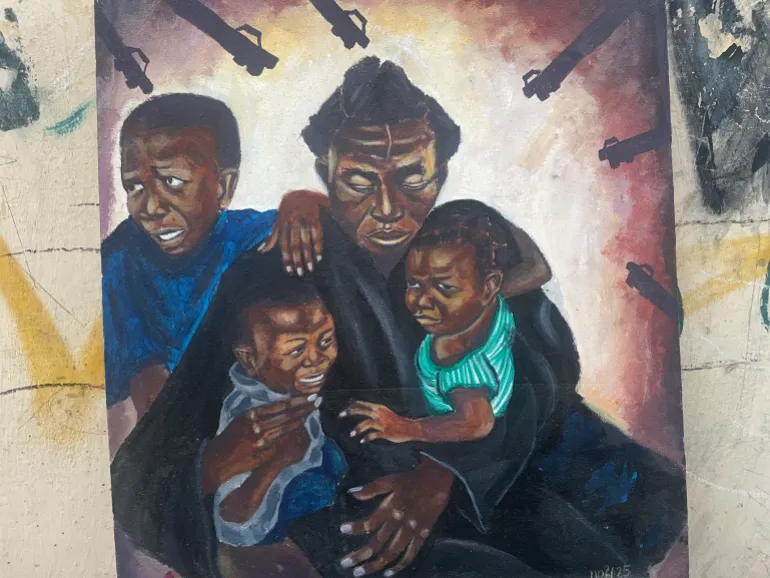
Paintings inspired by the war in Sudan between the SAF and RSF [Fatime Edam/Al Jazeera]

Drawing, storytelling, music and play have also given children opportunities to express themselves and connect with others.

“Losing my tools does not mean I have lost my skills, and losing my workspace does not mean I have lost my ability to create,” Awad told Al Jazeera.

Awad and other displaced artists found shelter at an old school in Port Sudan, where they helped clean and prepare the building for families forced from their homes.

“Now, concerns about the possibility of eviction have left us uncertain about where we will go next,” he said.

While art cannot replace a lost home or end the war, Awad believes it can preserve memories, bring communities together and offer children space to play and express themselves.

“From the ashes, we will rise” is the motto of Ahalina cultural group. This is more than a slogan for Awad; it is a reminder to keep creating, despite everything the war has taken from him.

The war has taken a heavy toll on Sudan’s cultural life, damaging heritage sites and disrupting the livelihoods of artists across the country.

In June 2026, UNESCO estimated that Sudan’s cultural sector faced a $30m funding gap. But behind this figure are deeply personal losses: Artists killed by the war or forced to leave behind studios, galleries, artworks and the tools they need to create.

In April 2024, UNESCO reported that the Artists and Writers Union in Port Sudan had provided shelter to more than 112 displaced artists and other cultural professionals.

The challenges remain significant, but cultural initiatives have continued. In April 2026, UNESCO said its initiatives in Port Sudan had benefitted more than 350 artists, women, girls and internally displaced cultural professionals, supporting efforts to sustain Sudan’s cultural life amid the conflict.

Paintings from displaced in Sudan [Fatime Edam/Al Jazeera]
Paintings from the displaced in Sudan [Fatime Edam/Al Jazeera]

Asim Abdelaziz, 31, a musician and filmmaker, left El Obeid, the capital of North Kordofan state, amid escalating fighting and repeated drone attacks. He arrived in Port Sudan in November 2023, hoping to find safety and work.

Separated from his family, who are scattered between Omdurman and El Obeid, Asim lives alone in a shelter for displaced artists. The war has uprooted his life and disrupted his career, but he continues to use music to preserve Sudan’s cultural heritage and bring communities together.

In Port Sudan, he has worked with the local Artists and Writers Union, UNESCO and community organisations.  He has also collaborated with the Ministry of Culture and Information and other artists on music programmes to address social issues, including hate speech and racism.

Asim said the war has spurred hate speech and deepened divisions between Sudan’s different communities. He believes art can counter these differences by promoting diversity, mutual acceptance and peaceful coexistence.

“I have seen firsthand how hate speech affects people’s lives,” Asim told Al Jazeera. “Through music, I try to remind Sudanese people that we are all brothers and sisters, and that war does not represent who we are.”

Mokhalaya, a project he founded to document and archive traditional music and rhythms from across the country a year ago, is one avenue for this.

“I hope to take the project to international festivals, introducing audiences abroad to [showcase] Sudan’s rich musical traditions and cultural diversity,” he said.

Paintings at a shelter for displaced artists in Port Sudan reflect the cultural diversity of eastern and western Sudan [Fatime Edam/Al Jazeera]

Preserving heritage is not just about safeguarding the past, but also about keeping Sudan’s cultural identity alive during a war that has displaced communities and disrupted lives, he said.

Abdelqader Hashem, secretary of the Red Sea State Writers and Artists Union, told Al Jazeera the union has supported artists and their families who fled fighting in other parts of Sudan since the war began on April 15, 2023.

“We worked to establish a shelter for displaced artists in a school in Port Sudan and sought support from local and international organisations to provide for their basic needs,” he said.

Beyond providing shelter, the union has helped displaced artists take part in the city’s cultural activities, contributing to community awareness programmes that address important societal issues such as the dangers of drug use, a growing concern in Sudan.

“We have also implemented projects in partnership with UNESCO to train children in displacement camps in handicrafts, including concrete crafts,” Hashem said.

“Most of the displaced artists have since returned to their homes in Khartoum following the Sudanese army’s recapture of the capital.”

Source link