Sanctions

Trump Issues Venezuela Regime Change Threats as US Steps Up Naval Blockade

The Bella 1 tanker has reportedly avoided capture. (MarineTraffic)

Caracas, December 23, 2025 (venezuelanalysis.com) – US President Donald Trump made new regime change threats against Venezuela and President Nicolás Maduro.

In a Monday press conference, Trump answered “probably” when asked if Washington intended to oust the Venezuelan leader but said it was up to Maduro to leave power.

“That’s up to him what he wants to do. I think it’d be smart for him to do that. But again, we’re gonna find out,” the US president told reporters in Mar-a-Lago, Florida.

Trump went on to warn the Venezuelan president not to “play tough.” “If he plays tough, it’ll be the last time he’s ever able to play tough,” he said.

The US president also said that land strikes against alleged drug cartels would start soon. He has issued such a threat on repeated occasions since September. He likewise repeated past unfounded claims that Venezuela sent “millions of people” to the US, many of them prisoners and mental patients.

Trump’s escalated rhetoric against Caracas followed ramped-up efforts to enforce a naval blockade and paralyze Venezuelan oil exports. On Saturday, the US Coast Guard boarded and seized the Centuries tanker east of Barbados in the Caribbean Sea.

The Panama-flagged ship had recently loaded a reported 1.8 million barrels of Merey crude at José terminal in eastern Venezuela for delivery in China. According to maritime vessel sources, the tanker is owned by a Hong Kong company and had transported Venezuelan oil several times in recent years. 

The takeover operation was led by the US Coast Guard, with White House officials sharing footage of the boarding on social media.

The Centuries’ seizure followed a similar operation targeting the Skipper tanker on December 10. However, unlike the Skipper, the Centuries was not blacklisted by the US Treasury Department. 

US officials referred to the tanker as transporting “sanctioned oil.” Analysts argued that the ambiguous definition is meant to allow US authorities to go after any vessel moving Venezuelan crude in an effort to drive shipping companies away from the Caribbean nation’s oil sector.

The White House’s threats and vessel seizures have already led several tankers to reverse course while en route to Venezuela, with customers reportedly demanding greater oil discounts in Venezuelan crude purchases. The South American oil industry might soon be forced to cut back production if it runs out of storage space.

On Sunday, US forces attempted to board a third tanker, the Guyana-flagged Bella 1 that was headed to Venezuela to load oil. However, the ship’s captain allegedly refused to allow the US Coast Guard’s boarding and turned the vessel back toward the Atlantic Ocean. According to reports, US forces continue to pursue the Bella 1.

Trump announced a naval blockade while demanding that Venezuela return “oil, land and other assets” that were “stolen,” in reference to nationalizations in past decades. Foreign corporations that saw their assets expropriated either agreed to compensation or pursued international arbitration.

The tanker seizures, alongside renewed sanctions targeting the Venezuelan oil industry, came amid a massive US military deployment in the Caribbean on the edge of Venezuelan territory. The build-up was originally declared as an anti-narcotics mission before Washington shifted the discourse toward oil and regime-change.

China and Russia express support

The Venezuelan government has condemned the US military threats and attacks against the oil industry. In a communique issued on Saturday, Caracas decried the second tanker seizure as a “serious act of piracy” and vowed to denounce it before multilateral bodies.

In recent days, the Maduro government received backing from China and Russia, two of its most important allies.

In a Monday press conference, Chinese Foreign Ministry spokesperson Lin Jian criticized the tanker seizures as violations of international law and stated Beijing’s opposition to “unilateral and illegal actions.” The official urged a response from the international community.

Likewise on Monday, Venezuelan Foreign Minister Yván Gil held a phone call with Russian counterpart Sergei Lavrov. According to Gil, Moscow’s top diplomat reiterated support for Venezuela in the face of “US hostilities.”

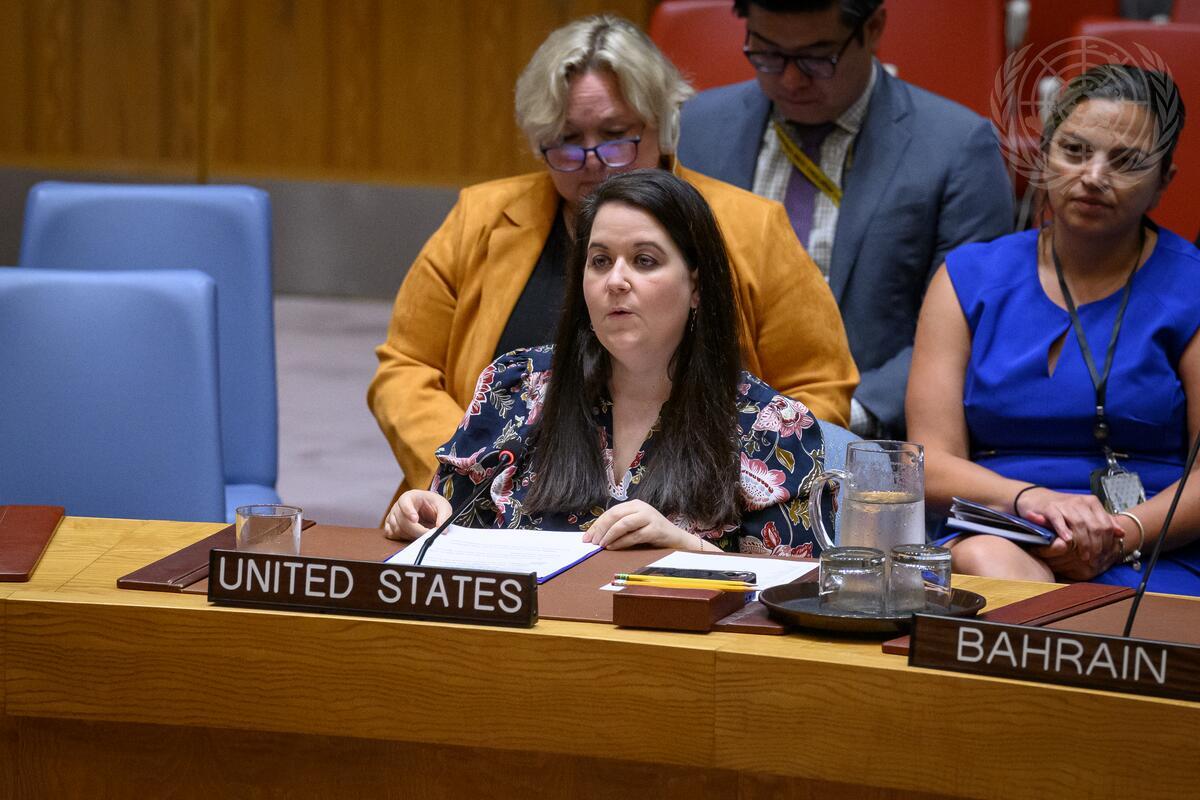
The UN Security Council is scheduled to meet on Tuesday afternoon at Venezuela’s request to address the most recent US escalations.

Source link

US Blockades Venezuela in a War Still Waiting for an Official Rationale

The Trump administration has shifted from a “narcoterrorism” campaign to economic coercive measures. (Countercurrents)

In our Donald-in-Wonderland world, the US is at war with Venezuela while still grasping for a public rationale. The horrific human toll is real – over a 100,000 fatalities from illegal sanctions and over a hundred from more recent “kinetic strikes.” Yet the officially stated justification for the US empire’s escalating offensive remains elusive. 

The empire once spun its domination as “democracy promotion.” Accordingly, State Department stenographers such as The Washington Post framed the US-backed coup in Venezuela – which temporarily overthrew President Hugo Chávez – as an attempt to “restore a legitimate democracy.” The ink had barely dried on The New York Timeseditorial of April 13, 2002 – which legitimized that imperial “democratic” restoration – before the Venezuelan people spontaneously rose up and reinstated their elected president.

When the America Firsters captured the White House, Washington’s worn-out excuse of the “responsibility to protect,” so beloved by the Democrats, was banished from the realm along with any pretense of altruism. Not that the hegemon’s actions were ever driven by anything other than self-interest. The differences between the two wings of the imperial bird have always been more rhetorical than substantive. 

Confronted by Venezuela’s continued resistance, the new Trump administration retained the policy of regime change but switched the pretext to narcotics interdiction. The Caribbean was cast as a battlefield in a renewed “war on drugs.” Yet with Trump’s pardon of convicted narco-trafficker and former Honduran President Juan Orlando Hernández – among many other contradictions – the alibi was wearing thin.

Venezuelan oil tankers blockaded

The ever-mercurial US president flipped the narrative on December 16, announcing on Truth Social that the US would blockade Venezuelan oil tankers. He justified this straight-up act of war with the striking claim that Venezuela had stolen “our oil, our land, and other assets.”

For the record, Venezuela had nationalized its petroleum industry half a century ago. Foreign companies were compensated.

This presidential social media post followed an earlier one, issued two weeks prior, ordering the airspace above and surrounding Venezuela “closed in its entirety.” The US had also seized an oil tanker departing Venezuela, struck several alleged drug boats, and continued to build up naval forces in the region.

In response to the maritime threat, President Nicolás Maduro ordered the Venezuelan Navy to escort the tankers. The Pentagon was reportedly caught by surprise. China, MexicoBrazil, BRICS, Turkey, along with international civil society, condemned the escalation. Russia warned the US not to make a “fatal mistake.”

The New York Times reported a “backfire” of nationalist resistance to US aggression among the opposition in Venezuela. Popular demonstrations in support of Venezuela erupted throughout the Americas in Argentina, Panama, Ecuador, Peru, Mexico, Brazil, Colombia, Honduras, and the US.

Trump’s phrasing about Venezuela’s resources is not incidental. It reveals an assumption that precedes and structures the policy itself: that Venezuelan sovereignty is conditional, subordinate to US claims, and revocable whenever it conflicts with Yankee economic or strategic interests. This marks a shift in emphasis, not in substance; drugs have receded from center stage, replaced by oil as the explicit casus belli.

The change is revealing. When Trump speaks of “our” oil and land, he collapses the distinction between corporate access, geopolitical leverage, and national entitlement. Venezuelan resources are no longer considered merely mismanaged or criminally exploited; they are portrayed as property wrongfully withheld from its rightful owner.

The day after his Truth Social post, Trump’s “most pointless prime-time presidential address ever delivered in American history” (in the words of rightwing blogger Matt Walsh) did not even mention the war on Venezuela. Earlier that same day, however, two House resolutions narrowly failed that would have restrained Trump from continuing strikes on small boats and from exercising war powers without congressional approval.

Speaking against the restraining resolutions, Rep. María Elvira Salazar – the equivalent of Lewis Carroll’s Red Queen and one of the far-right self-described “Crazy Cubans” in Congress – hailed the 1983 Grenada and 1989 Panama invasions as models. She approvingly noted both were perpetrated without congressional authorization and suggested Venezuela should be treated in the same way.

The votes showed that nearly half of Congress is critical – compared to 70% of the general public – but their failure also allows Trump to claim that Congress reviewed his warlike actions and effectively granted him a mandate to continue.

Non-international armed conflict

In this Trumpian Wonderland, a naval blockade with combat troops rappelling from helicopters to seize ships becomes merely a “non-international armed conflict” not involving an actual country. The enemy is not even an actual flesh and blood entity but a tactic – narco-terrorism.

Trump posted: “Venezuelan Regime has been designated a FOREIGN TERRORIST ORGANIZATION.” Yet FTOs are non-state actors lacking sovereign immunities conferred by either treaties or UN membership. Such terrorist labels are not descriptive instruments but strategic ones, designed to foreclose alternatives short of war.

In a feat of rhetorical alchemy, the White House designated fentanyl a “weapon of mass destruction.” Trump accused Venezuela of flooding the US with the deadly synthetic narcotic, when his own Drug Enforcement Administration says the source is Mexico. This recalls a previous disastrous regime-change operation in Iraq, also predicated on lies about WMDs.

Like the Cheshire Cat, presidential chief of staff Susie Wiles emerges as the closest to a reliable narrator in a “we’re all mad here” regime. She reportedly said Trump “wants to keep on blowing boats up until Maduro cries uncle,” openly acknowledging that US policy has always been about imperial domination.

The oil is a bonus for the hegemon. But even if Venezuela were resource-poor like Cuba and Nicaragua, it still would be targeted for exercising independent sovereignty.

Seen in that light, Trump’s claim that Venezuela stole “our” oil and land is less an error than a confession. It articulates a worldview in which US power defines legitimacy and resources located elsewhere are treated as imperial property by default. The blockade is not an aberration; it is the logical extension of a twisted belief that sovereignty belongs to whoever is strong enough to seize it. Trump is, in effect, demanding reparations for imperialists for the hardship of living in a world where other countries insist their resources belong to them.

Roger D. Harris is a founding member of the Venezuela Solidarity Network and is active with the Task Force on the Americas and the SanctionsKill Campaign.

Source: Countercurrents

Source link

US sanctions more relatives, associates of Venezuelan President Maduro | Donald Trump News

The United States Department of the Treasury has announced new sanctions on several family members and associates of Venezuelan President Nicolas Maduro, as the Trump administration increases pressure on Caracas and continues to build up US forces on Venezuela’s borders.

The sanctions announced on Friday come as the US military continues attacks on boats off the country’s coast, which have killed more than 100 people. The US military has also seized a Venezuelan oil tanker and imposed a naval blockade on all vessels arriving and departing from Venezuelan ports that are under US sanctions.

Recommended Stories

list of 4 itemsend of list

Announcing the new sanctions, US Secretary of the Treasury Scott Bessent said in a statement that “Maduro and his criminal accomplices threaten our hemisphere’s peace and stability”.

“The Trump Administration will continue targeting the networks that prop up his illegitimate dictatorship,” Bessent added.

The new sanctions target seven people who are family members or associates of Malpica Flores, a nephew of Maduro, and Panamanian businessman Ramon Carretero, who were named in an earlier round of US sanctions that also targeted six Venezuela-flagged oil tankers and shipping firms, on December 11.

Flores, who is one of three of Maduro’s nephews by marriage, dubbed “narco-nephews” by the US Treasury Department, is wanted because he “has been repeatedly linked to corruption at Venezuela’s state-run oil company, Petroleos de Venezuela, SA”, the Treasury said in a statement.

It was not immediately clear how Flores’s role in Venezuela’s state-run oil company related to “propping up Nicolas Maduro’s rogue narco-state”, which Bessent said in his statement was the reason for widening sanctions to additional family members and associates of the president.

The US has claimed that tackling drug trafficking is the primary reason for its military escalation in the region since September, including the strikes on vessels in the eastern Pacific and Caribbean, which international law experts say amount to extrajudicial killings.

Despite the Trump administration’s repeated references to drug trafficking, its actions and messaging appear increasingly focused on Venezuela’s oil reserves, which are the largest in the world. The reserves have remained relatively untapped since sanctions were imposed on the country by the US during the first Trump administration.

Homeland Security adviser and top Trump aide Stephen Miller said last week that Venezuela’s oil belongs to Washington.

“American sweat, ingenuity and toil created the oil industry in Venezuela,” Miller claimed on X. “Its tyrannical expropriation was the largest recorded theft of American wealth and property,” he added.

US sanctions, particularly those targeting Venezuela’s oil industry, have contributed to an economic crisis in the country and increased discontent with Maduro, who has governed Venezuela since 2013.

For his part, Maduro has accused the Trump administration of “fabricating a new eternal war” aimed at “regime change” and seizing Venezuela’s vast oil reserves.

The European Union has also imposed targeted sanctions on Venezuela, which it renewed last week until 2027.

The European sanctions, first introduced in 2017, include an embargo on arms shipments to Venezuela, as well as travel bans and asset freezes on individuals linked to state repression.

INTERACTIVE - Crude oil reserves vs exports-1756989578


Source link

Belarus releases 123 political prisoners after U.S. eases sanctions

Belarusian President Alexander Lukashenko, pictured at a press conference in January, agreed to release 123 political prisoners on Saturday in exchange for the United States dropping its crippling sanctions against the potash industry in Belarus. File Photo by Belarus President Press Service/EPA-EFE

Dec. 13 (UPI) — President Donald Trump on Saturday ended U.S. sanctions on potash fertilizers from Belarus in exchange for Belarusian President Alexander Lukashenko releasing 123 political prisoners.

Lukashenko freed the prisoners, who include Nobel Peace Prize laureate Ales Bialiatski and political opposition figure Maria Kolesnikova, in an effort to improve the Russia-allied nation’s relations with the United States, Bloomberg and the Los Angeles Times reported.

“In accordance with President Trump’s instructions, the United States is lifting sanctions on potash,” U.S. Special Envoy John Coale told Belta, Belarus’ official news agency.

“I believe this is a very good step by the United States for Belarus,” Coale said. “We are lifting them now.”

Belarus has been sanctioned by the U.S. and other Western nations since 2021 because of Lukashenko’s authoritarian rule and decades of political repression.

Sanctions have ramped up since 2022 because Lukashenko also allowed Russian President Vladimir Putin to launch his invasion of Ukraine from Belarus.

In 2024, Lukashenko started releasing prisoners in order to appease Western leaders, including Trump, and get sanctions lifted that have crippled the Belarusian potash industry.

Since July 2024, before Saturday’s prisoner release, Belarus has freed more than 430 political prisoners.

According to Coale, the United States is “constantly talking” to Belarus and lifting the U.S. sanctions on potash — European sanctions, which have been called more consequential than the U.S. sanctions, remain in place — is a step toward reaching a point where all sanctions against the country have been removed.

“As relations between the two countries normalize, more sanctions will be lifted,” Coale said.

Source link

Belarus frees 123 prisoners including Ales Bialiatski as US lifts sanctions | News

DEVELOPING STORY,

Nobel Peace Prize winner among dozens released as United States removes potash sanctions.

Belarus has freed 123 prisoners, including Nobel Peace Prize winner Ales Bialiatski and leading opposition figure Maria Kalesnikava, in exchange for sanctions relief from the United States.

John Coale, the US special envoy for Belarus, announced the lifting of sanctions on potash on Saturday after two days of talks with Belarusian President Alexander Lukashenko in Minsk.

Belarus is a leading global producer of potash, a key component in fertilisers,

The prisoner release was by far the biggest by Lukashenko since Trump’s administration opened talks this year with the close ally of Russian President Vladimir Putin. Western governments had previously shunned him because of his crushing of dissent and backing for Russia’s war in Ukraine.

Separately, Ukraine’s prisoner of war coordination centre said it had received 114 prisoners released by Belarus, including Ukrainian citizens accused of working for Ukrainian intelligence and Belarusian political prisoners.

The centre’s statement said the released captives would receive medical attention, adding that the Belarusian citizens who so wished would subsequently be transported to Poland or Lithuania.

More to come.

Source link

US sanctions family of Venezuela’s Maduro, 6 oil tankers in new crackdown | Nicolas Maduro News

The Trump administration has imposed new sanctions on Venezuela, targeting three nephews of President Nicolas Maduro’s wife, Cilia Flores, as well as six crude oil tankers and shipping companies linked to them, as Washington steps up pressure on Caracas.

Two of the sanctioned nephews were previously convicted in the United States on drug trafficking charges before being released as part of a prisoner exchange.

Recommended Stories

list of 3 itemsend of list

The US is also targeting Venezuela’s oil sector by sanctioning a Panamanian businessman, Ramon Carretero Napolitano, whom it says facilitates the shipment of petroleum products on behalf of the Venezuelan government, along with several shipping companies.

The US Treasury Department said on Thursday that the measures include sanctions on six crude oil tankers it said have “engaged in deceptive and unsafe shipping practices and continue to provide financial resources that fuel Maduro’s corrupt narco-terrorist regime”.

Four of the tankers, including the 2002-built H Constance and the 2003-built Lattafa, are Panama-flagged, with the other two flagged by the Cook Islands and Hong Kong.

The vessels are supertankers that recently loaded crude in Venezuela, according to internal shipping documents from state oil company PDVSA.

‘An act of piracy’

In comments on Thursday night, Trump also repeated his threat to soon begin strikes on suspected narcotics shipments making their way via land from Venezuela to the US.

His remarks followed the US seizure of an oil tanker off Venezuela’s coast.

White House Press Secretary Karoline Leavitt said the US would take the tanker to a US port.

“The vessel will go to a US port, and the United States does intend to seize the oil,” Leavitt said during a news briefing. “However, there is a legal process for the seizure of that oil, and that legal process will be followed.”

Maduro condemned the seizure, calling it “an act of piracy against a merchant, commercial, civil and private vessel,” adding that “the ship was private, civilian and was carrying 1.9 million barrels of oil that they bought from Venezuela”.

He said the incident had “unmasked” Washington, arguing that the true motive behind the action was the seizure of Venezuelan oil.

“It is the oil they want to steal, and Venezuela will protect its oil,” Maduro added.

Maduro’s condemnation came as US officials emphasised that the latest sanctions also targeted figures close to the Venezuelan leader.

Nicolas Maduro
Venezuela’s President Nicolas Maduro holds a sword which belonged to Ezequiel Zamora, a Venezuelan soldier [FILE: Leonardo Fernandez Viloria/Reuters]

Maduro’s relatives targeted

Franqui Flores and Efrain Antonio Campo Flores, nephews of Venezuelan first lady Cilia Flores, were also sanctioned. The two became known as the “narco nephews” after their arrest in Haiti in 2015 during a US Drug Enforcement Administration sting.

They were convicted in 2016 on charges of attempting to carry out a multimillion-dollar cocaine deal and sentenced to 18 years in prison, before being released in a 2022 prisoner swap with Venezuela.

A third nephew, Carlos Erik Malpica Flores, was also targeted. US authorities allege he was involved in a corruption scheme at the state oil company.

Maduro and his government have denied links to criminal activity, saying the US is seeking regime change to gain control of Venezuela’s vast oil reserves.

Beyond the individuals targeted, the US is also preparing to intercept additional ships transporting Venezuelan oil, the Reuters news agency reported, citing sources.

Asked whether the Trump administration planned further ship seizures, White House spokesperson Leavitt told reporters she would not speak about future actions but said the US would continue executing the president’s sanctions policies.

“We’re not going to stand by and watch sanctioned vessels sail the seas with black market oil, the proceeds of which will fuel narcoterrorism of rogue and illegitimate regimes around the world,” she said on Thursday.

Wednesday’s seizure was the first of a Venezuelan oil cargo amid US sanctions that have been in force since 2019. The move sent oil prices higher and sharply escalated tensions between Washington and Caracas.

White House Press Secretary Karoline Leavitt
White House Press Secretary Karoline Leavitt holds a news briefing [Jonathan Ernst/Reuters]

Source link

US Congress advances bill to nix Caesar Act sanctions on Syria | Business and Economy News

The US has rolled back a series of restrictive economic sanctions put in place during the rule of Bashar al-Assad.

The United States House of Representatives has voted forward a bill that would end the restrictive Caesar Act sanctions on Syria, originally imposed during the rule of former leader Bashar al-Assad.

The bid to repeal the sanctions was passed on Wednesday as part of a larger defence spending package, known as the National Defense Authorization Act, or NDAA.

Recommended Stories

list of 3 itemsend of list

“With this NDAA, as many know, we are repealing sanctions on Syria that were placed there because of Bashar al-Assad and the torture of his people,” Representative Brian Mast of Florida said. “We’re giving Syria a chance to chart a post-Assad future.”

Mast had previously been opposed to dropping the sanctions. In his statement on the House floor on Wednesday, he warned that, under the bill, the White House could “reimpose sanctions if the president views it necessary”.

The bill now heads to the Senate and is expected to be voted on before the end of the year.

If passed, the NDAA would repeal the 2019 Caesar Act, which sanctioned the Syrian government for war crimes during the country’s 13-year-long civil war.

It would also require the White House to issue frequent reports confirming that Syria’s new government is combating Islamist fighters and upholding the rights of religious and ethnic minorities.

Human rights advocates have welcomed the easing of heavy sanctions that the US and other Western countries imposed on Syria during the war.

They argue that lifting those economic restrictions will aid Syria’s path towards economic recovery after years of devastation.

The Caesar Act was signed into law during President Donald Trump’s first term.

But in December 2024, shortly before Trump returned to office for a second term, rebel forces toppled al-Assad’s government, sending the former leader fleeing to Russia.

Trump has since removed many sanctions on Syria and met with President Ahmed al-Sharaa, who led the push that ousted al-Assad.

But some sanctions can only be removed by Congress, a step that Trump has encouraged lawmakers to take.

This month, Syrians celebrated the one-year anniversary of al-Assad’s overthrow with fireworks, prayer and public displays of pride. But the country continues to face challenges as it recovers from the destruction and damage wrought by the war.

Syrian officials have urged the repeal of remaining sanctions, saying that it is necessary to give the country a fighting chance at economic stability and improvement.

Syrian central bank Governor Abdulkader Husrieh called US sanctions relief a “miracle” in an interview with the news service Reuters last week.

The United Nations Security Council also voted to remove sanctions on al-Sharaa and Interior Minister Anas Khattab, who were previously on a list of individuals linked to ISIL (ISIS) and al-Qaeda.

Source link