Japan’s Plan To Put SAMs On Strategic Island 70 Miles From Taiwan Could Be Just The Beginning
For the second time in a week, Japanese fighters scrambled to intercept a suspected Chinese drone flying near the island of Yonaguni. The events come amid growing tensions between the Asian neighbors and highlight the increasing strategic importance of Japan’s southernmost island, which has seen an expanded presence of Japanese and U.S. forces.
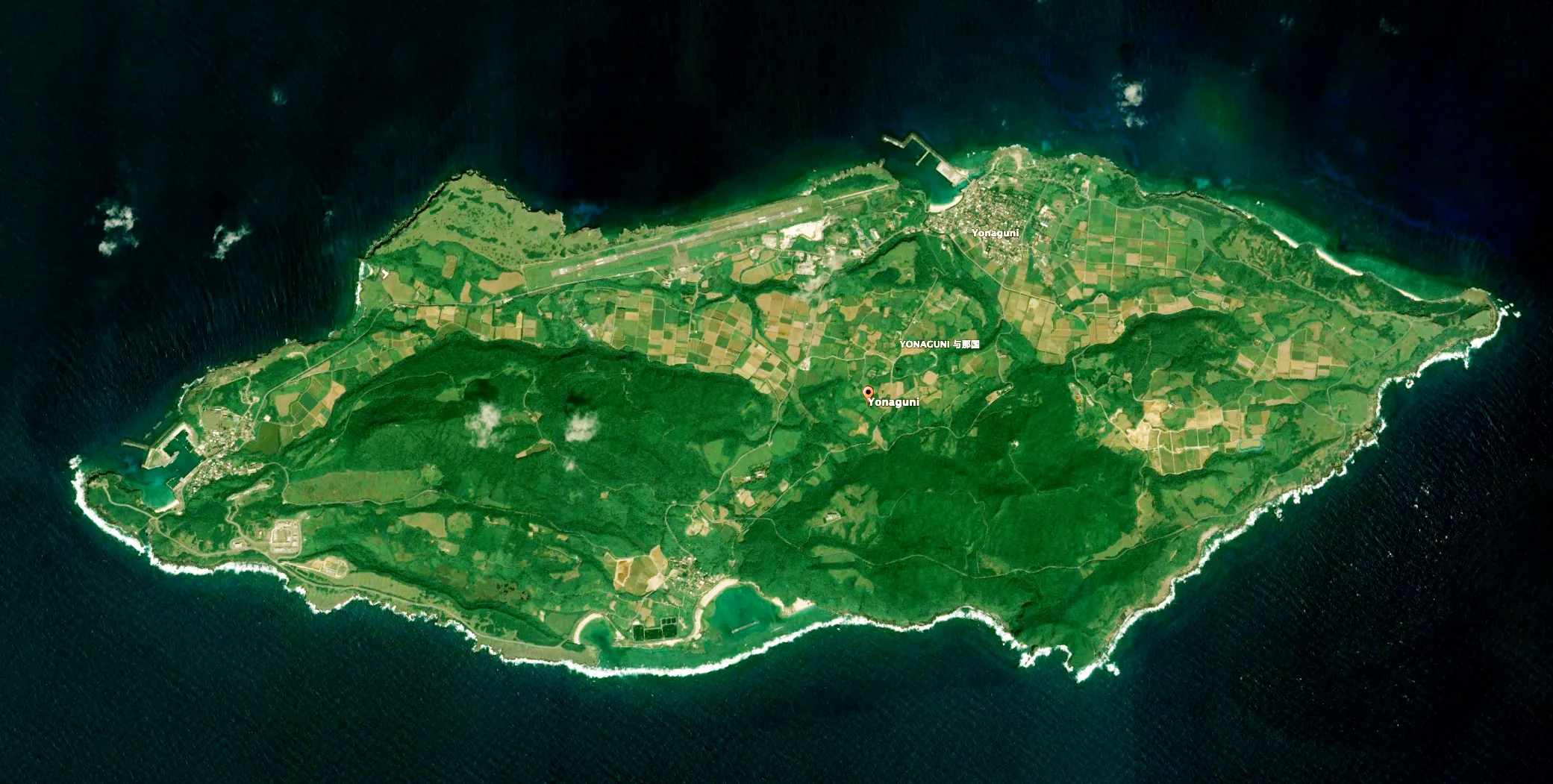
Located just 70 miles east of Taiwan, Yonaguni is an increasingly important part of the allied effort to defend the so-called first island chain from Chinese aggression. It is roughly seven miles long and three miles across at its widest point, it has two small ports and an airfield. It’s where Japan wants to set up an air defense system. It’s also where the U.S. Marine Corps recently set up a forward arming and refueling point (FARP), its first that close to the breakaway Chinese nation.


Amid all this tumult, U.S. President Donald Trump spoke with leaders of both nations today and Monday to discuss the future of Taiwan, among other issues. We’ll address that more later in this story.
“On November 24…we confirmed that an estimated Chinese unmanned aerial vehicle had passed between Yonaguni Island and Taiwan, and in response,” the Japanese Ministry of Defense (MoD) stated on X. “We scrambled fighter jets from the Air Self-Defense Force’s Southwest Air Defense Force to intercept it.”
Once detected, the suspected drone flew south for about 250 miles, then cut east for about another 100 miles before returning along the same route, according to a map published by the Japanese MoD, which provided no additional details about the incident.
Meanwhile, Taiwan’s Ministry of Defense reported a Chinese drone and a helicopter traveled along a similar route on Monday, but it is unclear if the two incidents are related.
Monday’s interception by Japan followed a similar incident a week earlier.
Chinese drone flights are fairly routine along this path around Taiwan and during major drills, the skies see a heavier presence of Chinese military aviation assets. However, tensions have increased between the two nations with a long history of sometimes violent enmity. In particular, Beijing is enraged by Tokyo’s announcement that it will place surface-to-air missiles (SAMs) on Yonaguni and Japan considers any attack on Taiwan an existential threat. China has made no secret about wanting to subsume Taiwan, by force if necessary, a concern we have frequently addressed.
Speaking to reporters during a visit to Yonaguni on Sunday, Japan’s defense minister said his country is moving forward with plans to deploy an unspecified number of air defense systems on the island.
“The deployment can help lower the chance of an armed attack on our country,” Shinjiro Koizumi explained. “The view that it will heighten regional tensions is not accurate.”
In January, former Defense Minister Gen Nakatani said Tokyo wanted to base Type 03 Chu-SAM missiles on Yonaguni, Bloomberg News noted.
The medium-range Chu-SAM was first introduced in 2003, according to the U.S. Army, and its missiles can hit aerial targets up to roughly 30 miles away.
“The SAM’s vehicle chassis is based on the Kato Works Ltd/Mitsubishi Heavy Industries NK series heavy crane truck,” the Army explained. “It uses a state-of-the-art active electronically scanned array radar.”
The Chu-SAM system includes a command center, radar unit, launcher, and transloader, with each unit equipped with six missiles that travel at Mach 2.5, the Army noted, adding that it “can track up to 100 targets simultaneously and target 12 at the same time, engaging fighter jets, helicopters, and cruise missiles.”
Given its stated range, the Chu-SAM system can engage aerial targets roughly halfway between Yonaguni and Taiwan’s east coast (likely even farther in reality), an area Chinese aviation assets are likely to fly should it plan to invade the island nation.
Once again, this could be just one system, Japan also has the U.S. Patriot system, as well.

Koizumi’s comments about the Chu-SAM raised hackles in Beijing.
“Japan’s deployment of offensive weapons in the southwest Islands close to China’s Taiwan region is a deliberate move that breeds regional tensions and stokes military confrontation,” Chinese Foreign Ministry spokesperson Mao Ning told reporters on Monday. “Given Japanese Prime Minister Sanae Takaichi’s erroneous remarks on Taiwan, this move is extremely dangerous and should put Japan’s neighboring countries and the international community on high alert.”
Mao was referencing another Chinese point of contention.
The newly elected Japanese Prime Minister recently stated that a Chinese military blockade of Taiwan would constitute a “survival-threatening” situation, thereby enabling “collective defense” alongside U.S. military forces, Newsweek reported.
“It was the first time such an explicit remark had been made by a sitting prime minister of Japan, which like the United States has long been deliberately vague as to whether it would intervene militarily in the event of an attack on Taiwan,” NBC News posited.
As this turmoil unfolded, a Chinese company released a video simulating an attack on Japanese ships and other targets using its newly introduced YKJ-1000 hypersonic missile. Although it isn’t clear if the timing is related, it is another indicator of the increasingly bellicose messaging between the two neighbors.
Trump has taken a mixed approach toward Taiwan.
The American president has at times expressed a degree of thinly veiled skepticism about Taiwan’s value to the U.S., The Diplomat noted. He has also implied the U.S. is committed to Taiwan’s freedom. In his latest administration, Trump has signed off on a $700 million deal to sell Taipei National Advanced Surface-to-Air Missile System (NASAMS) medium-range air defense systems, a plan first put forward under the Biden administration. In addition, Trump authorized a $330 million deal to sell Taiwan aircraft parts.

Meanwhile, as we mentioned earlier in this story, the Trump administration has also authorized the temporary deployment of Marines to Yonaguni to set up a FARP to extend the range of helicopter patrols from the island.
“No U.S. Marine CH-53E has ever before landed that far southwest in Japan, nor has a FARP ever been established there,” Maj. Patrick X. Kelly, executive officer of Marine Heavy Helicopter Squadron (HMH) 462, said in a statement. “This evolution not only validated that MAG’s [Marine Aircraft Group 36] organic heavy-lift assault support helicopters, in support of its adjacent units and our JGSDF [Japan Ground Self-Defense Force] partners, can generate tempo anywhere the commander should choose, but also served as a huge leap forward in our relations between the U.S. Marines and the JGSDF.”
“FARPs significantly extend MAG-36’s operational reach,” said Col. Lee W. Hemming, commanding officer of MAG-36. “Our ability to rapidly establish and disassemble these sites in austere environments enhances our capacity to respond to, and support, disaster relief and other critical operations throughout the region – particularly in conjunction with our Japanese Self-Defense Forces partners. This collaborative FARP capability underscores our commitment to regional security and humanitarian assistance.”

Given its proximity to Taiwan, Yonaguni also makes sense as a forward staging area for standoff weapons to strike Chinese targets, including ships, and advanced radars to track their movement, if Japan decides to go that route. Marine Corps doctrine calls for troops to be staged in China’s weapons engagement zone ahead of any conflict, and more islands in the region will likely become increasingly armed, but none are as close to Taiwan as this one.
The U.S. Army’s Typhon ground-based missile system, which can fire Tomahawk cruise missiles and SM-6 multi-purpose missiles, was recently deployed to Japan, but some 1,200 miles to the northeast on Honshu Island. Last year, we wrote about reported plans for the U.S. Marine Corps units and their High Mobility Artillery Rocket System (HIMARS) to be rushed to the southwestern Japanese islands near Taiwan in case of a Chinese invasion. The anonymously sourced Kyodo News report about that move didn’t specifically mention Yonaguni, but it makes sense that it could be a destination for such future efforts.

Another Marine weapons system that might even make more sense for Yonaguni is Navy-Marine Expeditionary Ship Interdiction System (NMESIS) armed with Naval Strike Missiles (NSMs). In previous reporting, we noted that these highly mobile missile systems have been deployed to Luzon in the Philippines. The NSM is well suited for fighting in the littorals. With the baseline NSM’s range of around 110 nautical miles, placing these systems on Yonaguni would hold Chinese vessels operating near the northern part and the backside of Taiwan at risk. They can also strike fixed targets on land. NMESIS is highly mobile on land, making its launchers very hard to target at distance by adversary forces.

While weapons like NMESIS on Yonaguni could pose a real threat to Chinese forces trying to take the island, getting them there in the case of a Chinese move on Taiwan will likely be a great challenge. The idea would be to have them there permanently or rush them there at the start of a crisis, before the shooting begins. This would work as a deterrent to keep the fighting from starting, as well as tactical capability once the fighting begins.
Still, Beijing has a very large arsenal of missiles, aircraft and ships on hand and in development that could rain fire on Yonaguni. Any U.S. logistic missions having to push materiel forward in a time of crisis to the island would be traveling deep within China’s anti-access bubble, as well, which may be entirely unsurvivable. So, once things light off, if weapons are fired from the island, or even preemptive action by China, could widen the conflict significantly, and any forces on the island could be cutoff and under fire.
As previously mentioned, amid the boiling tensions, Trump spoke with both Chinese President Xi Jinping and Takaichi on Monday.
“Taiwan’s return to China is an important component of the post-war international order,” Xi told Trump, according to an official account of the conversation by China’s state media. For his part, Trump affirmed that the U.S. “understands the importance of the Taiwan issue to China,” Chinese media said.
“Takaichi said Trump briefed her on his overnight phone call with China’s Xi and the current state of U.S.-China relations,” according to The Associated Press. “She said that she and Trump also discussed strengthening the Japan-U.S. alliance and ‘development and challenges that the Indo-Pacific region is faced with.’”
“We confirmed the close coordination between Japan and the United States,” the Japanese leader added, declining to give any other details of her talks with Trump, citing diplomatic protocol.
Regardless of diplomatic platitudes, when it comes to Yonaguni Island, moving surface-to-air missiles there is largely a defensive overture. It’s also the first step in providing protection for additional assets, should Japan choose to allow their deployment. But for now, it certainly has gotten Beijing’s attention.
Contact the author: [email protected]